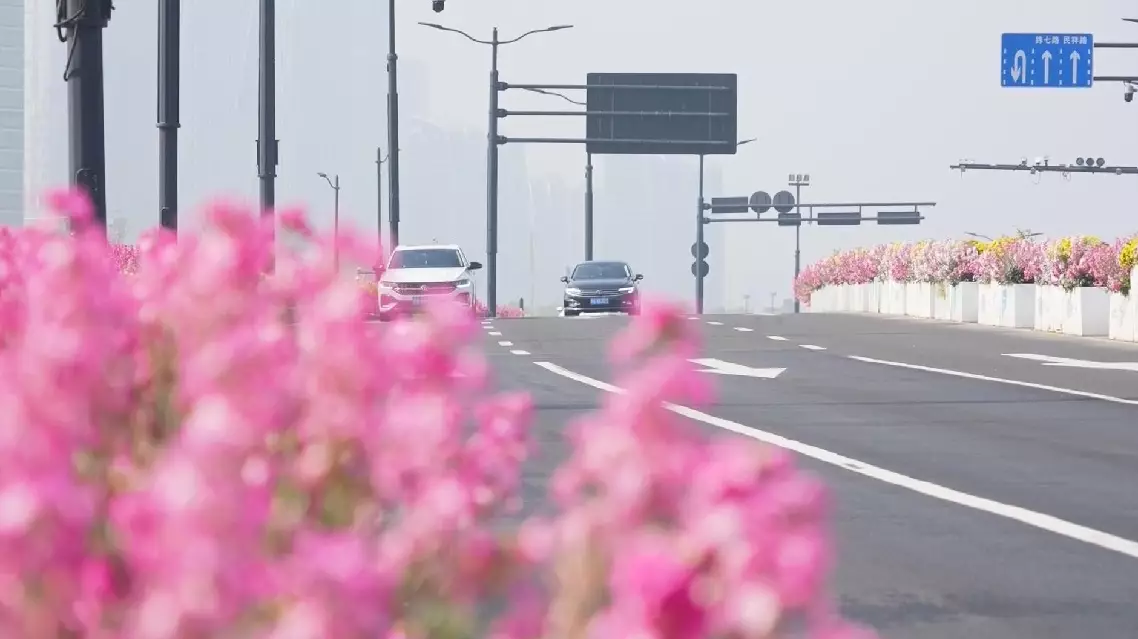
With flowers in full bloom across Hangzhou in east China's Zhejiang Province, the city is enjoying a spell of idyllic spring weather, drawing local residents and tourists alike to embrace the season and fueling a vibrant spring economy.
At Qianjiang Century City, a new urban center for Hangzhou located in Xiaoshan District, about 160 hectares of rapeseed flowers are blooming. The city seamlessly blended its high-rise buildings with natural beauty, delivering a striking visual contrast that has made the area an ideal destination for residents to enjoy the springtime.
Hangzhou's sea of blossoms has drawn not only local residents but also tourists from across the region and beyond. According to statistics, the city has recorded an estimated 300,000 visits in just one month since late February as people flocked to enjoy the spring flowers.
In addition, the vibrant spring landscape has also become a key driver for the city's new consumer scenes. The influx of flower-viewing crowds has directly boosted foot traffic and consumption in commercial districts, with average daily foot traffic increasing by more than 25 percent month on month, and consumption rising by 15 percent.
In a pet-friendly community currently under development, it has become popular for residents to enjoy springtime walks with their dogs. Local authorities have responded by increasing patrols and providing guidance on dog-walking regulations, striking a balance that creates a welcoming environment for pet owners while safeguarding the rights of all residents.
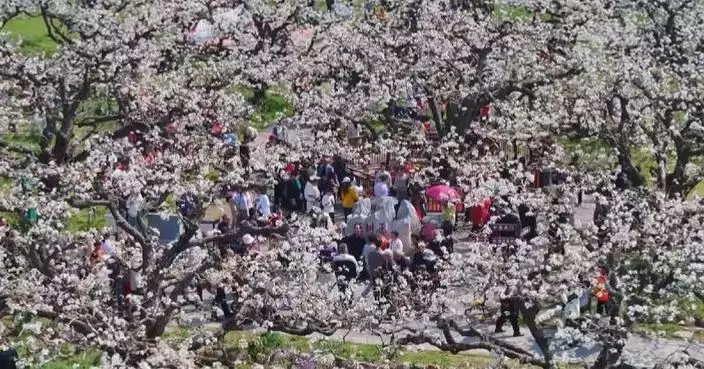
Beyond the city, spring is in full swing in the countryside. In the Liangzhu Cultural Village, a community developed adjacent to the Archaeological Ruins of Liangzhu City with eco-friendly living and leisure functions, the cherry blossoms are now at their peak.
The continuous stretch of cherry blossoms forms a stunning spring scene. Many visitors are taking advantage of the fine weather to enjoy the flowers, attend outdoor concerts, and explore creative markets.
"The combination of music and the beautiful cherry blossoms has really enriched my experience," said Ye Chuning, a visitor.
The cherry blossom-themed market featured more than 170 stalls offering food, beverages and cultural products. Visitors can taste local snacks and buy creative souvenirs.
"It's quite novel -- especially the handmade items. You don't see things like these in regular shopping malls. They're really creative, and the atmosphere is fantastic," said another visitor Wang Doubeng.
Starting the start of March, the Liangzhu Cultural Village has been rolling out seasonal activities across different zones, with themes ranging from cherry blossom viewing to reading salons and performances.
The cherry blossom season, which lasts just 10 days depending on the bloom period, is currently attracting more than 50,000 visitor trips a day and generating daily sales of more than 1.5 million yuan (about 217,020 U.S. dollars).
Flowers wow visitors, fuel booming spring economy in east China's Hangzhou