The Organization of the Petroleum Exporting Countries (OPEC) and its allies, known as OPEC+, on Sunday decided to increase oil output by 206,000 barrels per day in May, according to an OPEC statement.
The decision was announced following a virtual meeting attended by Saudi Arabia, Russia, Iraq, the United Arab Emirates, Kuwait, Kazakhstan, Algeria, and Oman, which reviewed global market conditions and outlook.
Amid the ongoing military conflict in the Middle East, the eight OPEC+ countries underscored the critical importance of safeguarding international maritime routes to ensure the free flow of energy supplies.
The eight countries also expressed concern over attacks on energy infrastructure, which harmed the overall supply availability. They stressed that it is both costly and takes a long time to restore damaged energy assets to full capacity.
They are scheduled to meet again on May 3 to make further decisions.
Since the U.S.-Israeli strikes on Iran beginning Feb 28, the conflict in the Middle East has severely disrupted regional energy flows, with crude oil and refined product shipments declining significantly.
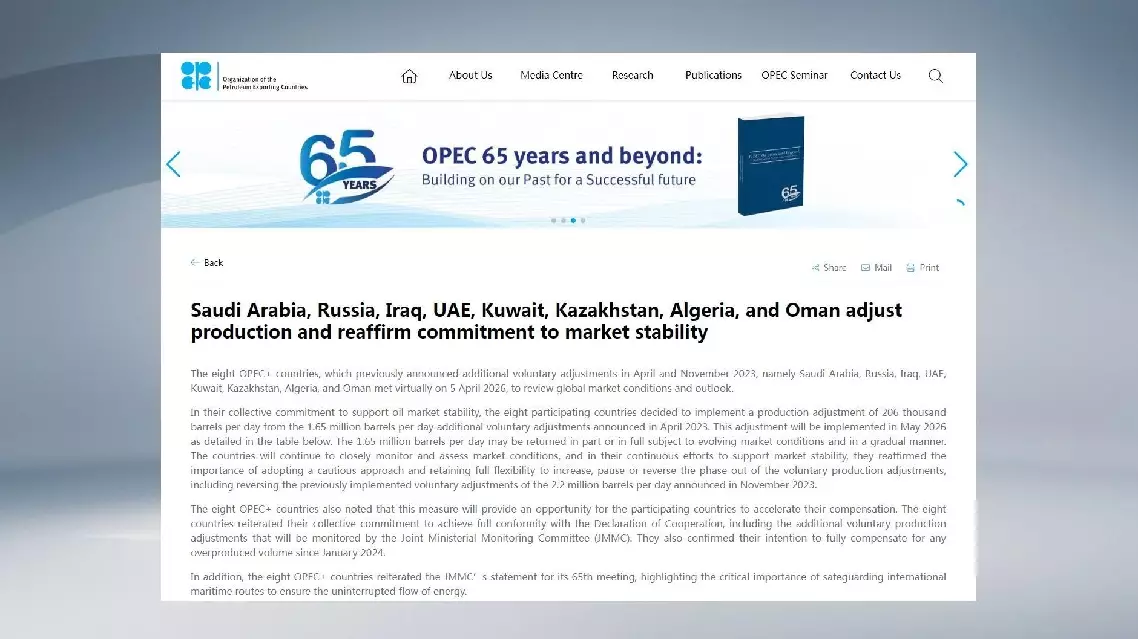
OPEC+ to ramp up oil output in May amid global energy crisis
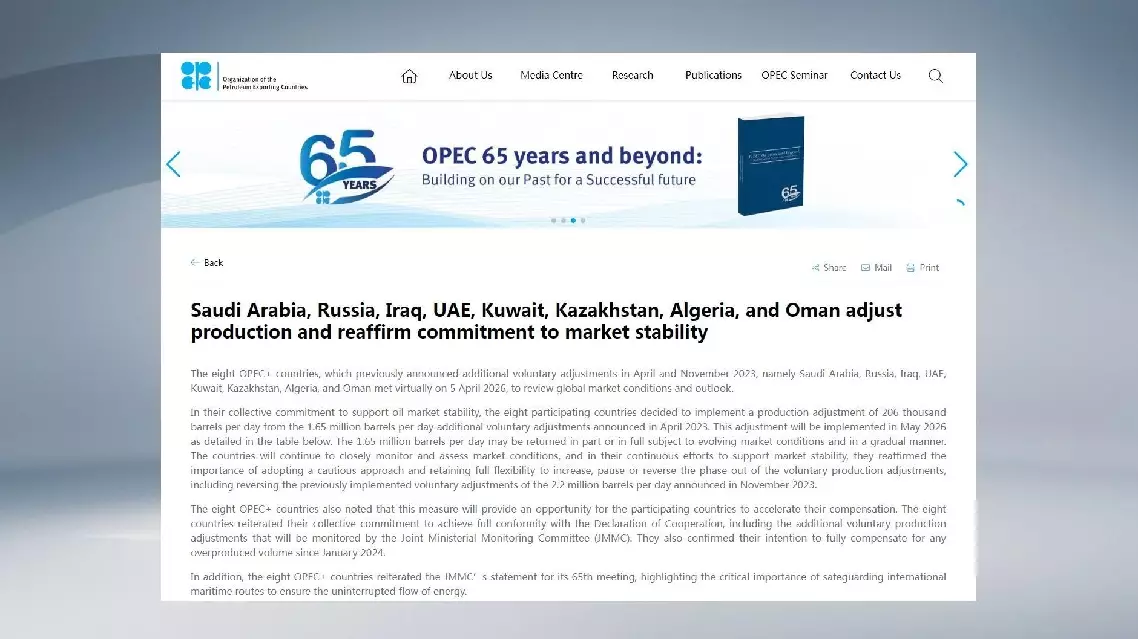
OPEC+ to ramp up oil output in May amid global energy crisis
Chinese Premier Li Qiang on Thursday presided over a State Council executive meeting that studied work on building a unified national market and reviewed and approved a plan for the development of a modern emergency response system during the 15th Five-Year Plan period (2026-2030).
Noting that building a unified national market is essential to advancing high-quality development, the meeting called for deepening institutional frameworks in areas such as property rights protection, market access, fair competition, social credit and market exit mechanisms.
The meeting also urged efforts to advance high-standard connectivity of market infrastructure to facilitate smooth economic circulation and effectively reduce logistics costs across society.
Emergency management is critical to protecting people's lives and property, the meeting said. It called for accelerating the development of a modern emergency response system, deepening reform and innovation in emergency management, and improving coordinated response mechanisms.
Efforts should be made to strengthen risk prevention at the source, enhance monitoring, forecasting and early warning, and accelerate a shift in governance toward proactive prevention, according to the meeting.
A draft revision of the Law on the People's Bank of China was also discussed and approved in principle at the meeting, which decided to submit the draft to the Standing Committee of the National People's Congress for deliberation.
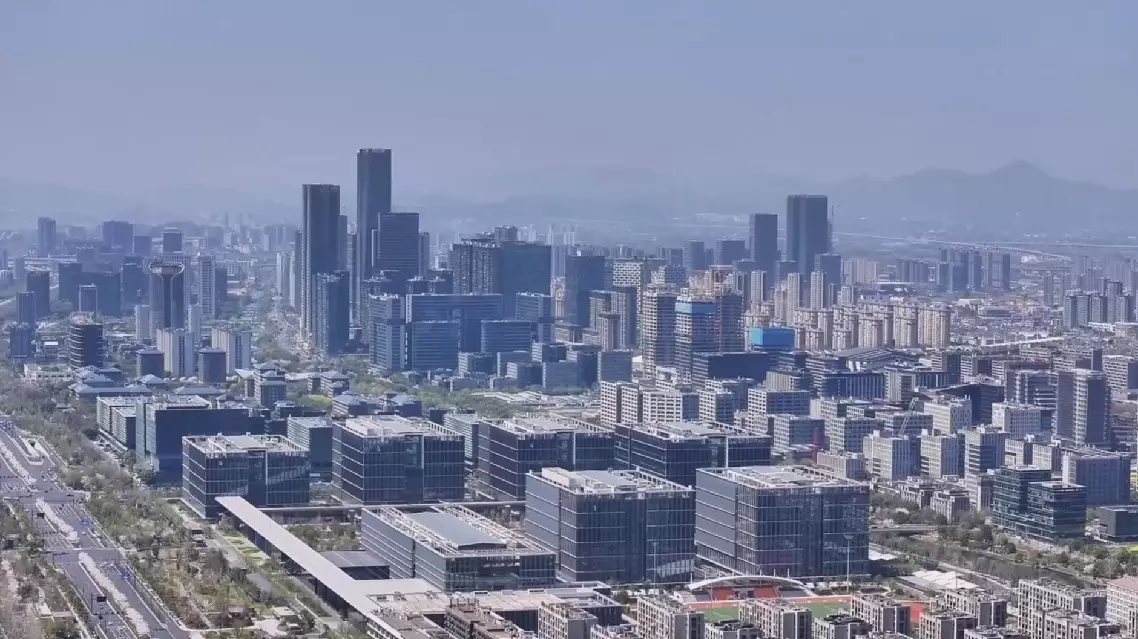
Chinese premier chairs State Council executive meeting