RIO DE JANEIRO (AP) — When 33-year-old Brazilian woman Emily de Souza heard about a program allowing her to shave off four days from her prison sentence by reading a book, she seized the opportunity to reconnect with a cherished habit.
Like tens of thousands of detainees across the country — including former President Jair Bolsonaro — she signed up for a sentence reduction program that encourages inmates to immerse themselves in literary works in exchange for reducing their sentences by up to 48 days per year.
Click to Gallery
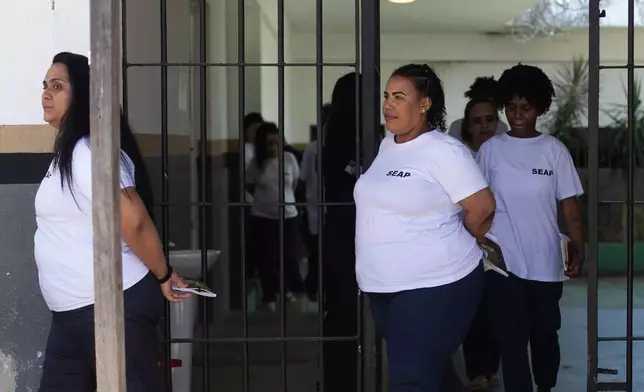
Incarcerated women leave after participating in a program part of the Federal University of Rio de Janeiro's "Literature, Existence and Resistance" project, at the Djanira Dolores de Oliveira women's prison in Rio de Janeiro, Wednesday, March 25, 2026. (AP Photo/Bruna Prado)
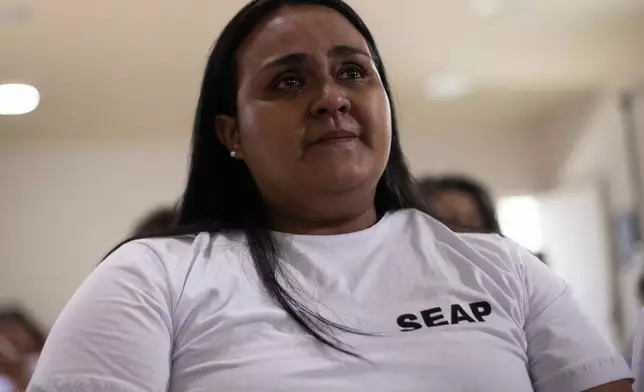
Emily de Souza cries during a program part of the Federal University of Rio de Janeiro's "Literature, Existence and Resistance" project, at the Djanira Dolores de Oliveira women's prison in Rio de Janeiro, Wednesday, March 25, 2026. (AP Photo/Bruna Prado)
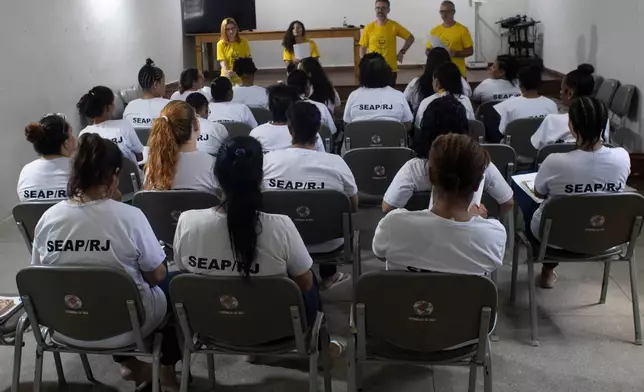
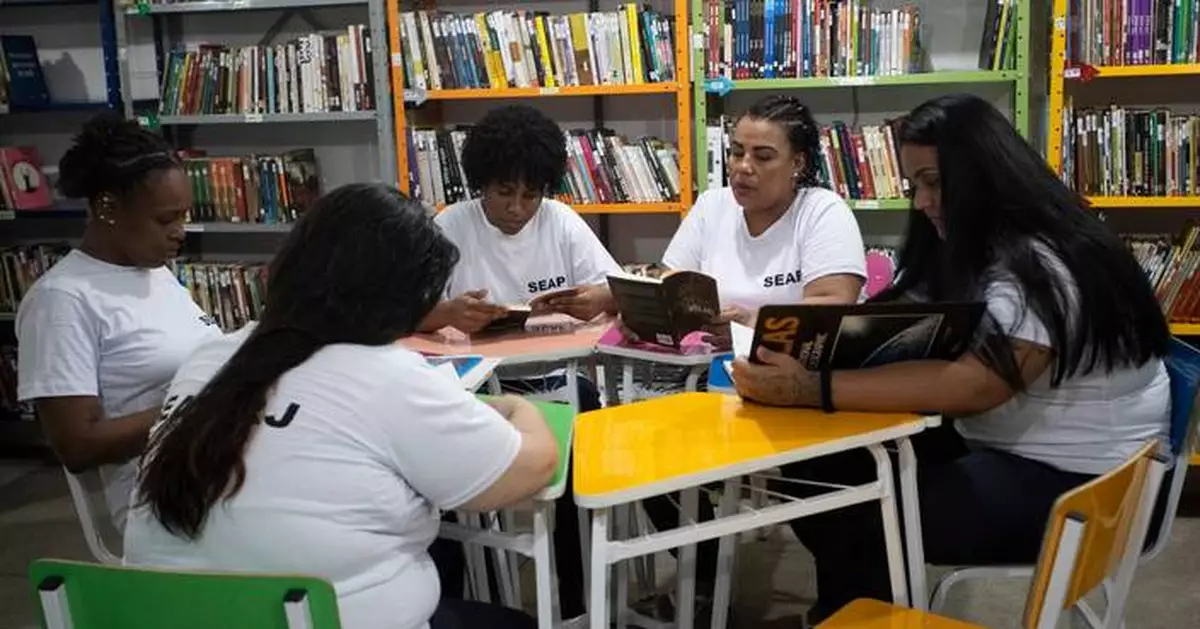
Incarcerated women participate in a reading program part of the Federal University of Rio de Janeiro's "Literature, Existence and Resistance" project, at the Djanira Dolores de Oliveira women's prison in Rio de Janeiro, Wednesday, March 25, 2026. (AP Photo/Bruna Prado)
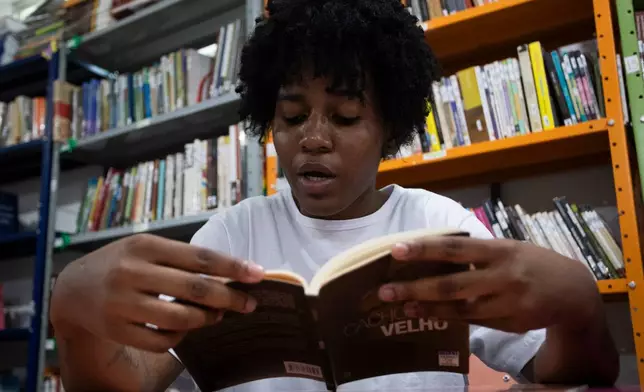
Joseane Silva de Oliveira, who is incarcerated, reads a book in the library of the Djanira Dolores de Oliveira women's prison in Rio de Janeiro, Wednesday, March 25, 2026. (AP Photo/Bruna Prado)
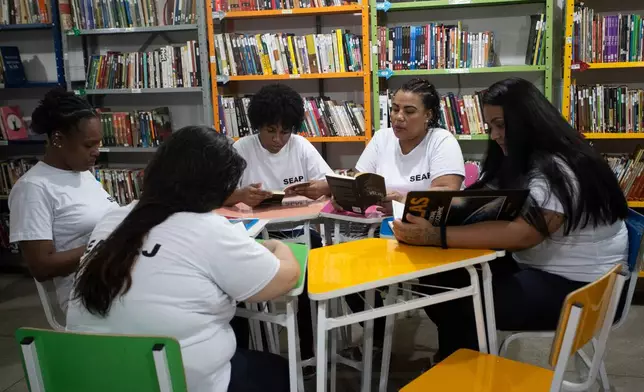
Incarcerated women read books in the library of the Djanira Dolores de Oliveira women's prison in Rio de Janeiro, Wednesday, March 25, 2026. (AP Photo/Bruna Prado)
The possibility of reuniting earlier with her 9-year-old autistic son, who her mother and aunt are looking after, only ramped up her motivation to participate in the project.
“One day is an eternity because it feels like it’s never going to end,” said de Souza, who is incarcerated at the Djanira Dolores de Oliveira Women’s Prison in Rio de Janeiro, which houses approximately 820 female detainees.
Reading is “a kind of escape, to get out of this environment for a bit, to think about other things: other stories, other people, not just me,” she said.
Like most of her fellow inmates, de Souza was sentenced for drug-trafficking. She said she received five-year prison term for selling a cannabis-infused Brazilian chocolate treat known as “brigadeiro” in Portuguese. She arrived last November, but hopes to progress to Brazil's semiopen prison regime in August, which would allow her to leave prison during the day to work.
Brazil, which has one of the highest per-capita incarceration rates in Latin America, stands out for having one of the most formalized and nationwide systems for sentence remission via reading in the world. The rapidly growing program, which was first formally regulated in 2012 and then standardized across Brazil in 2021, received renewed attention earlier this year after the Supreme Court authorized Bolsonaro — who is serving a 27-year sentence for attempting a coup — to take part.
Andréia Oliveira, coordinator of female prisons and LGBTIQ+ inclusion in Rio state’s prisons, said that access to reading programs and schools helps the individual once they have left prison — but also society. “When we encourage education, ludic activities, knowledge, we return to society someone who can reconnect, respect rules,” she said.
Since 2022, literature professor Paulo Roberto Tonani has been conducting workshops in prisons so detainees in Rio can benefit from the measure.
Participants choose or are given a book in the initial kick off activity. They then discuss their book in the next encounter and finally, in a third meeting, they produce a review or a drawing that demonstrates comprehension.
Detainees have read “Captain of the Sands” by renowned Brazilian author Jorge Amado, “Crime and Punishment” by Fyodor Dostoevsky and “ The Color Purple ” by Alice Walker.
A much-loved favorite of participants is the illustrated book “Father Francisco,” by Marina Miyazaki Araujo, which tells the story of an incarcerated father from the child’s perspective, said Tonani. Many detainees in Brazilian prisons are from a poor background and did not complete basic education.
Some participants in the late March workshop at the Djanira Dolores de Oliveira prison were reading “Unsubmissive Tears of Women” by Brazilian writer Conceição Evaristo — including Celina Maria de Conceição, a 50-year-old woman originally from the northern state of Pernambuco.
De Conceição, who took part in the workshops last year and signed up again, said she developed the taste for reading thanks to the project.
“It helps us a lot because we’re locked up and it gets very stressful, very noisy,” she said. “We get to go to somewhere else, interact with other people and talk about good things, like the book we’re studying.”
But she said she had to put down Evaristo’s book, which explores the impact of violence on Black women’s lives, after it upset her.
“It wasn’t good for me, because it stirs up our emotions, and we’re in a place where the environment is already truly heavy,” she said.
Brazilian prisons are renowned for overcrowding and harsh conditions. In 2023, the Supreme Court recognized mass human rights violations in the prison system and ordered the federal government to develop a plan to resolve the situation. Called “Just Punishment,” it was launched in 2025 and among other goals seeks to expand study and work opportunities.
While progress has been made, access to earning time off by reading remains unequal across Brazil, said Rodrigo Dias, head of education, culture and sport in the country’s National Secretariat of Penal Policies.
In the northeastern state of Alagoas, some prisoners were handed a Kindle with 300 literary works on them, whereas other, more conservative states have heavy bureaucracy which hinders access, Dias said.
A 2023 government report found that some 30% of Brazilian prison units do not have libraries or adequate reading spaces. But Dias pointed to the secretariat’s data, which shows that the number of remission requests via reading has increased sevenfold since 2021.
Like de Conceição, once people began participating, they often want to continue. “The book gives them the possibility to dream, and often to ‘talk’ with other people — not those who are imprisoned or working in the facility, but with the characters in the stories,” Dias said.
While Elionaldo Fernandes Julião, co-author of the book “Sentence Remission Through Reading in Brazil: The Right to Education in Contest” and a professor at the Fluminense Federal University, underscores the importance of accessing books in prisons, he argues that oftentimes Brazil's sentence reduction programs through reading are used as a substitute for developing access to education, which is much more costly.
Julião also said that access to the policy and books often depends on local projects. “Unfortunately, these are very easy to eliminate or shut down as quickly as possible,” he said.
During the recent workshop, de Souza read out loud a poem written by formerly imprisoned Argentine writer Liliana Cabrera. One of the lines affirms the narrator is “Also something more / than the letters in black / of a court case.”
De Souza shared that the words resonated deeply.
“Someone knew how to explain with beautiful terms (…) that I’m a lot more than a court case, a lot more than the mistake I made, that I’m a human with my story,” she said.
Follow AP’s coverage of Latin America and the Caribbean at https://apnews.com/hub/latin-america
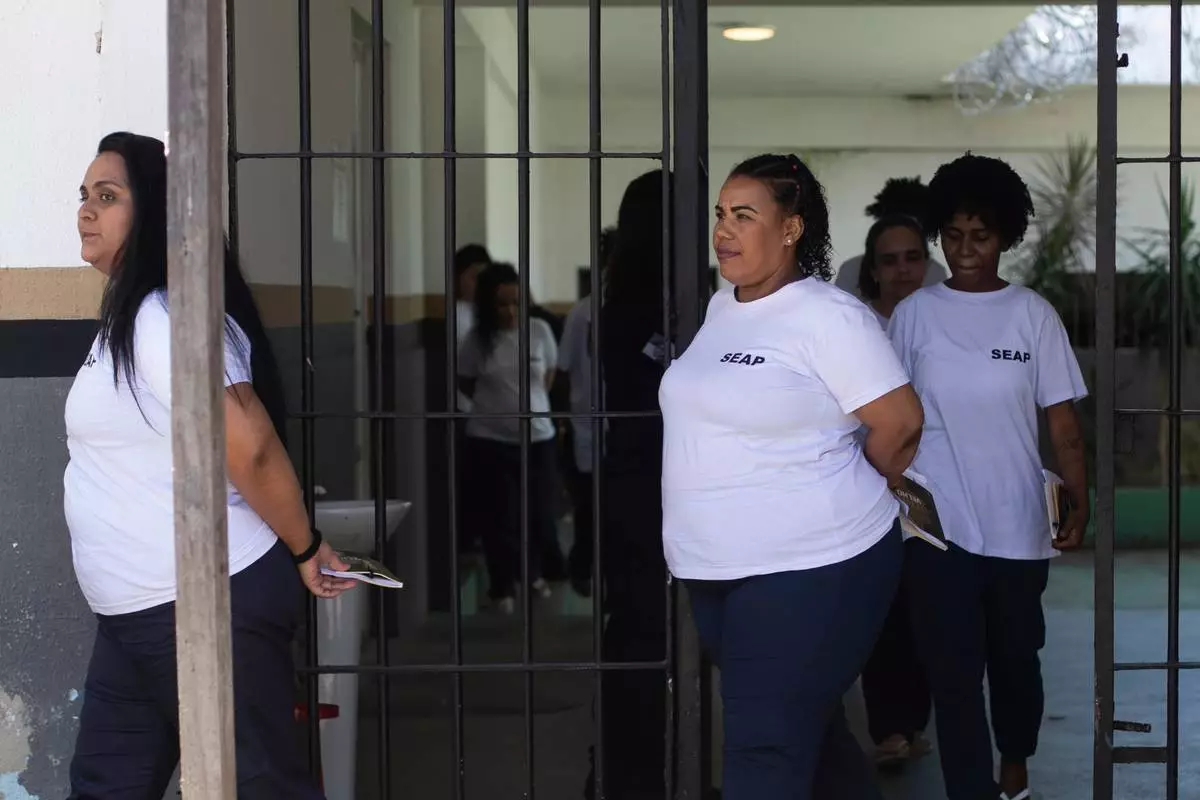
Incarcerated women leave after participating in a program part of the Federal University of Rio de Janeiro's "Literature, Existence and Resistance" project, at the Djanira Dolores de Oliveira women's prison in Rio de Janeiro, Wednesday, March 25, 2026. (AP Photo/Bruna Prado)
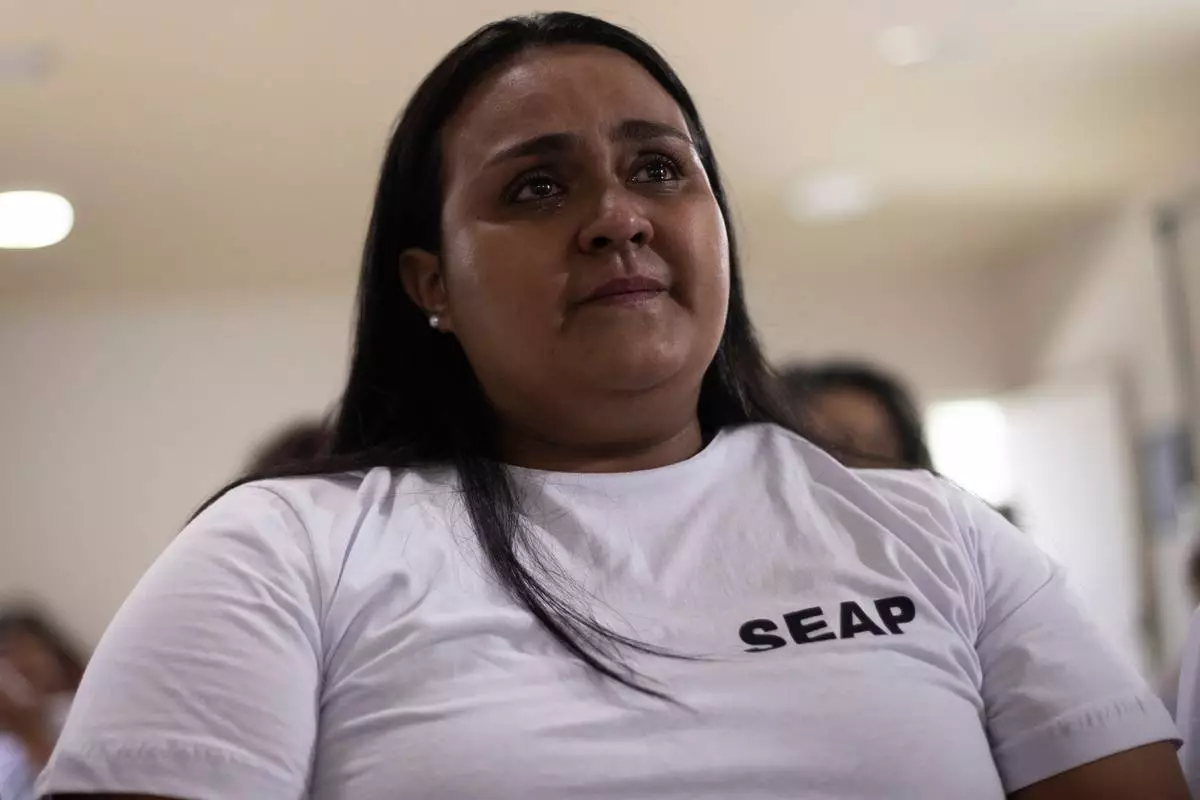
Emily de Souza cries during a program part of the Federal University of Rio de Janeiro's "Literature, Existence and Resistance" project, at the Djanira Dolores de Oliveira women's prison in Rio de Janeiro, Wednesday, March 25, 2026. (AP Photo/Bruna Prado)
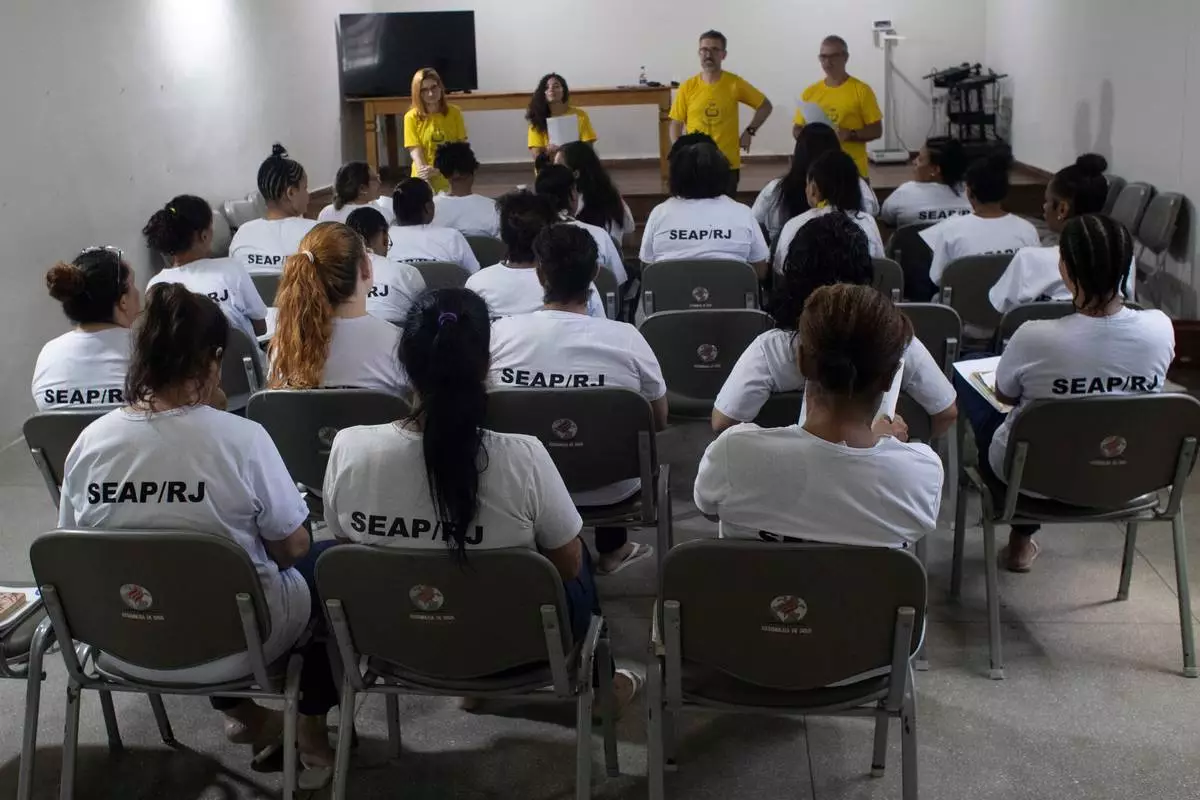
Incarcerated women participate in a reading program part of the Federal University of Rio de Janeiro's "Literature, Existence and Resistance" project, at the Djanira Dolores de Oliveira women's prison in Rio de Janeiro, Wednesday, March 25, 2026. (AP Photo/Bruna Prado)
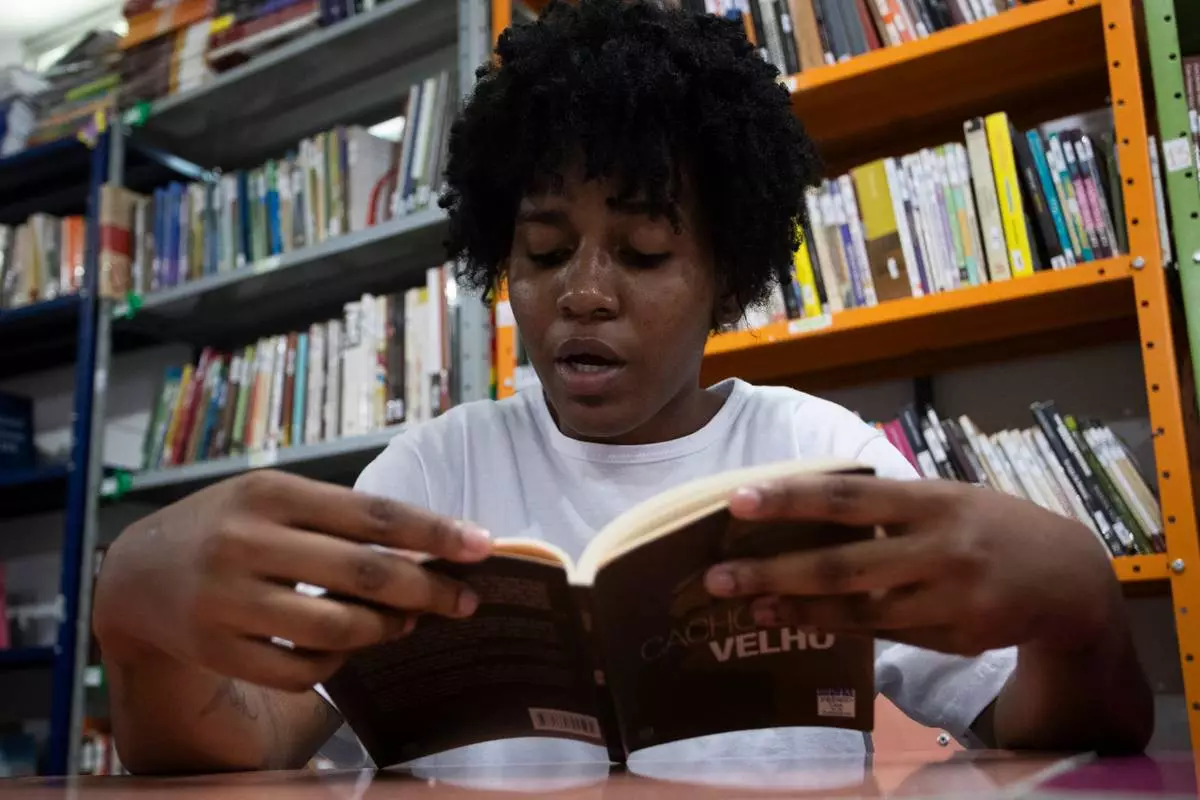
Joseane Silva de Oliveira, who is incarcerated, reads a book in the library of the Djanira Dolores de Oliveira women's prison in Rio de Janeiro, Wednesday, March 25, 2026. (AP Photo/Bruna Prado)
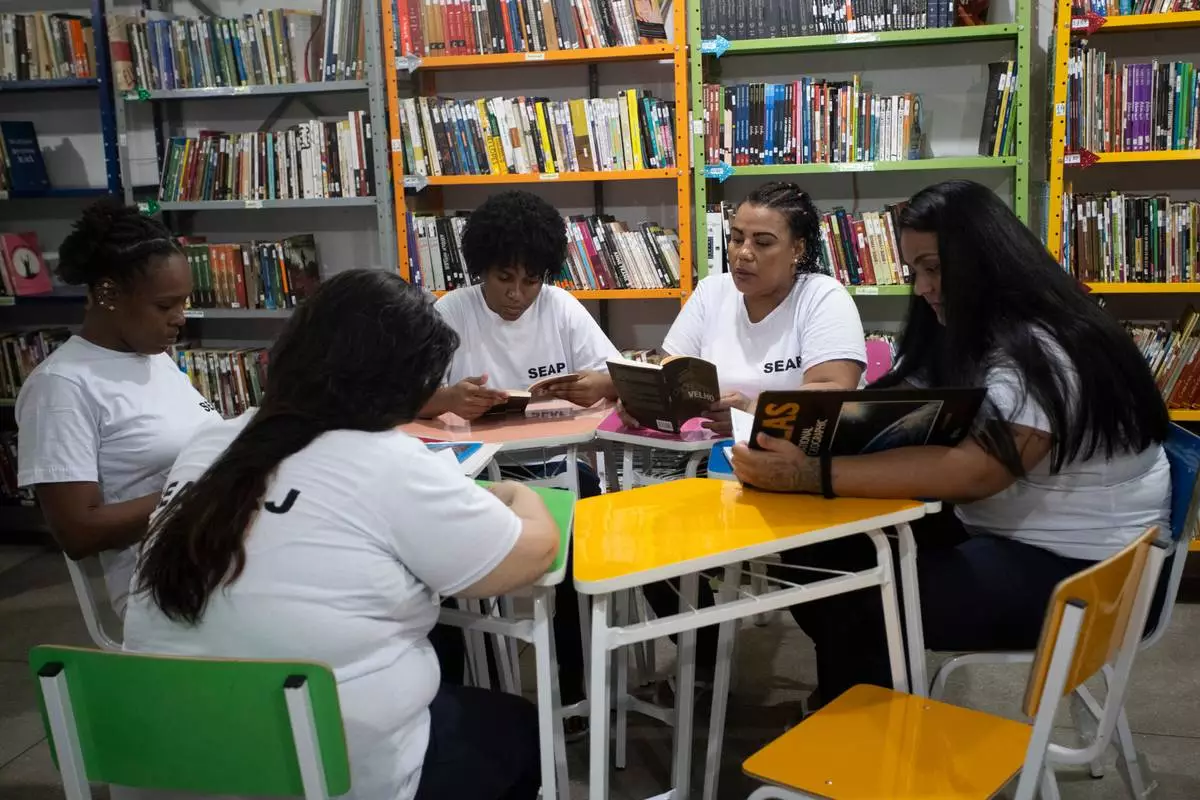
Incarcerated women read books in the library of the Djanira Dolores de Oliveira women's prison in Rio de Janeiro, Wednesday, March 25, 2026. (AP Photo/Bruna Prado)