TEL AVIV, Israel (AP) — Israel’s parliament on Monday passed its annual budget in a marathon overnight session, ensuring that Prime Minister Benjamin Netanyahu’s government can complete its term until the fall.
Israel needed to pass a budget before April 1 in order to avoid triggering early elections. Netanyahu still reserves the right to call early elections before then if he wants.
Israel’s opposition slammed the budget for increasing funding to Israel’s ultra-Orthodox communities at a time when the country is facing soaring costs over its war in Iran and is still reeling from a two-year war in Gaza.
Opposition leader Yair Lapid called it “the greatest theft in the state’s history.”
“The government of gluttony and evasion carried out a nocturnal heist,” former Prime Minister Naftali Bennett, who is expected to challenge Netanyahu in upcoming elections, wrote on X.
Opposition parties were especially furious over a last-minute amendment providing an additional $250 million to ultra-Orthodox schools. Anger has increased at the ultra-Orthodox community for its refusal to allow its young men to serve in the military while it is stretched to its breaking point and is in desperate need of additional soldiers. Military service is mandatory for most Jews.
Far-right Finance Minister Bezalel Smotrich praised the budget for “taking care of all Israeli citizens, without exception.”
Netanyahu’s government is in the final months of its four-year term and is required to hold elections by the end of October. Israeli governments rarely last their full terms, though the budget’s passage means Netanyahu, whose popularity has dropped since Hamas' Oct. 7, 2023, attack, is now likely to complete his term.
The budget passed 62-55. Sirens warning of missiles launched from Iran toward Jerusalem interrupted the discussions three times, according to the parliament's spokesperson. The session took place in the building's auditorium, rather than the plenum, because it is located closer to a bomb shelter.
The $270 billion budget, Israel’s largest ever, included a 20% increase for the Ministry of Defense due to the ongoing war against Iran. The ministry's budget has swollen to $45 billion, forcing cuts in other government ministries.
Recent opinion polls in Israel indicate that while Israelis overwhelmingly support the war, Netanyahu and his political coalition don’t appear to be benefiting.
Iran continues to fire missiles at Israel each day, disrupting the lives of millions of anxious and exhausted voters. Israel’s war with Hezbollah militants in Lebanon also is intensifying, while the disruption of the flow of oil from the Persian Gulf has upended the global economy.
Pushing off elections until the fall could allow Netanyahu to harness momentum from the Iran war once middle-of-the night sirens are a more distant memory for Israelis. But the election would also fall close to the anniversary of the Oct. 7 attack, the worst in Israel's history.
Israel’s military recently extended its wartime guidelines for civilians, which prevent large gatherings and encourage people to stay within a certain distance of bomb shelters, for an additional week. This means the wartime guidelines will include at least the first part of the weeklong Passover holiday, which starts on Wednesday.
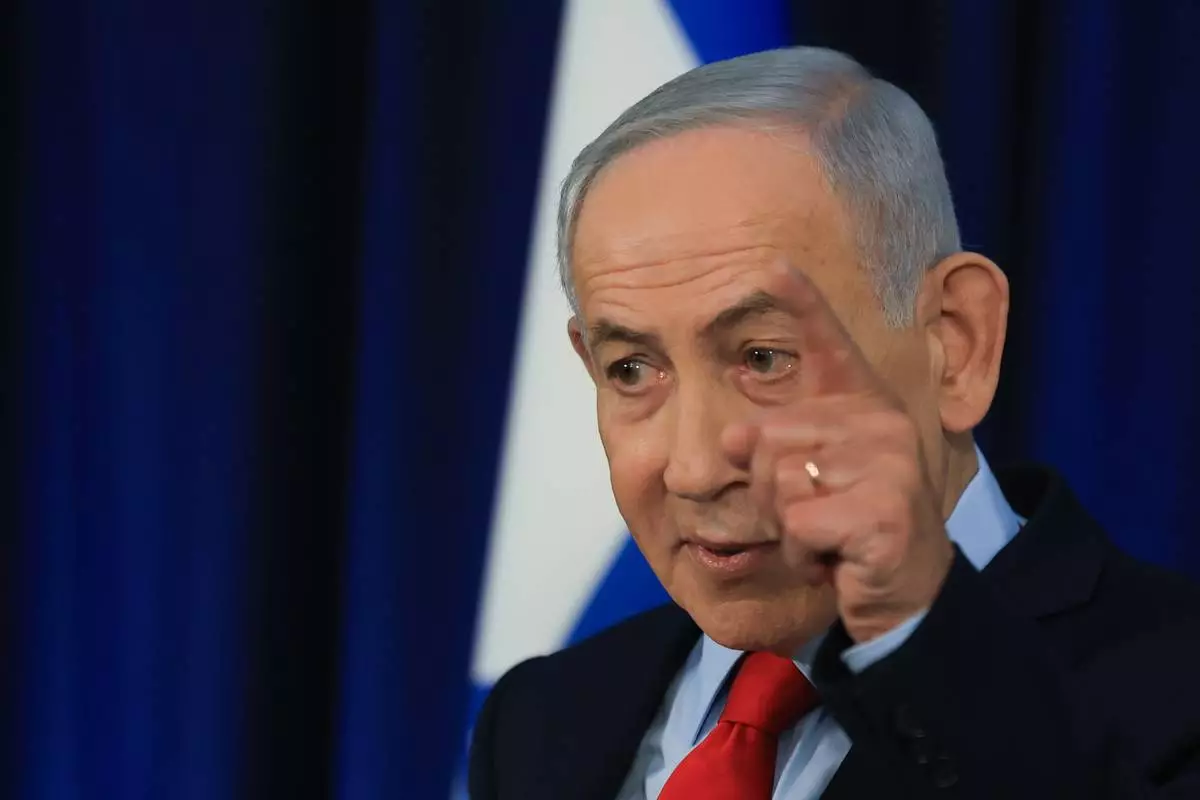
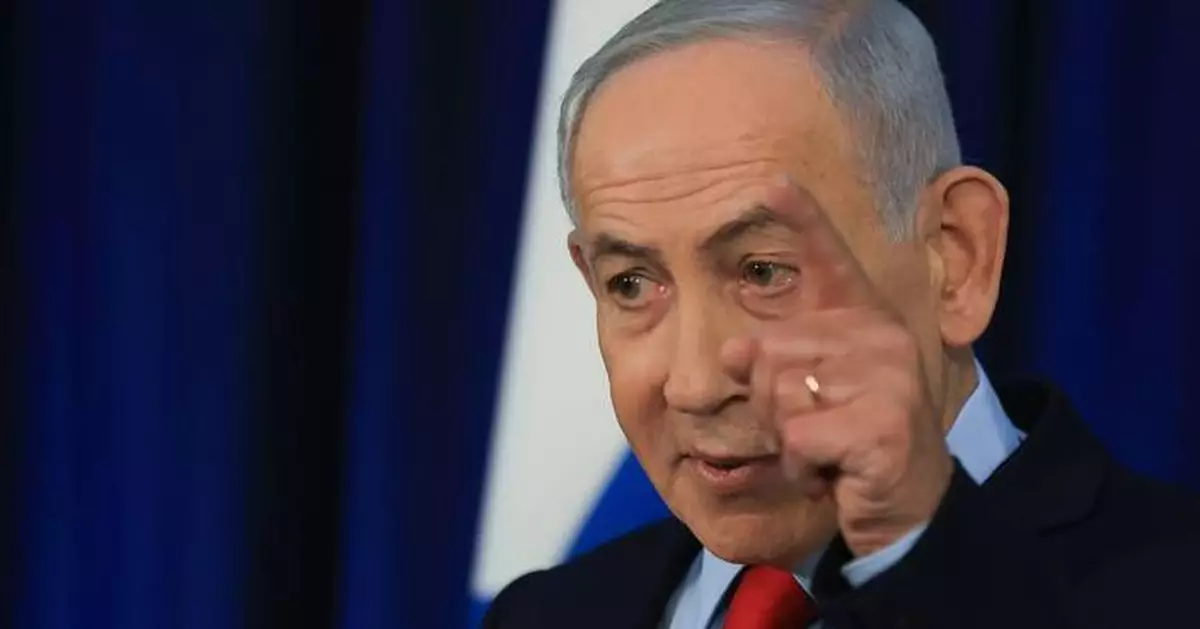
Israeli Prime Minister Benjamin Netanyahu speaks during a press conference in Jerusalem, Thursday, March 19, 2026. (Ronen Zvulun, Pool Photo via AP)
DUBAI, United Arab Emirates (AP) — President Donald Trump openly mused about seizing Iran’s Kharg Island oil terminal in the Persian Gulf and the United States and Israel kept up their attacks Monday on the Islamic Republic, even as there were signs of progress in nascent ceasefire talks. Tehran, meanwhile, struck a key water and electrical plant in hard-hit Kuwait, part of its ongoing campaign targeting the Gulf Arab states.
As a diplomatic effort being facilitated by Pakistan toward ending the war moved ahead, Trump said Iran had agreed to allow 20 oil tankers through the Strait of Hormuz starting Monday as “a sign of respect.” At the same time, with 2,500 U.S. Marines now in the region and a similar sized contingent on its way, he raised the idea of taking Iran's Kharg Island.
“Maybe we take Kharg Island, maybe we don't,” he told the Financial Times in an interview published early Monday. “We have a lot of options.”
Sirens sounded at dawn near Israel's main nuclear research center, a part of the country that has been targeted repeatedly in recent days. Israel's military also said it had taken out two drones launched from Yemen, where the Iranian-backed Houthi rebels entered the war on Saturday with its first missile attack.
Iran kept up the pressure on its Gulf Arab neighbors, as Saudi Arabia intercepted five missiles targeting its oil-rich Eastern Province, Bahrain sounded a missile alert, and a fireball erupted over Dubai as an incoming missile was taken out by defenses.
In Kuwait, an Iranian attack hit a power and desalination plant, killing one worker and injuring 10 soldiers, the state-run KUNA news agency reported.
Desalination plants remain crucial to water supplies in the Gulf Arab states, and an Iranian attack previously damaged a desalination plant in Bahrain during the war. The facilities are typically paired with power plants, because of the large amount of energy required to remove salt from the water to make it drinkable.
Israel’s military launched a new wave of attacks on Iran, saying it was striking “military infrastructure” across Tehran. Iranian media also reported that one of the facilities of Tabriz Petrochemical was struck in a northern province of the country. They said no hazardous materials had been released.
In Lebanon, which Israel has invaded by ground, an Indonesian peacekeeper was killed and three others wounded when a projectile exploded near a village in the south.
Over the weekend, Israeli Prime Minister Benjamin Netanyahu said the military will widen its invasion, expanding the “existing security strip” in that country’s south as it targets the Iran-linked Hezbollah militia.
Iran's attacks on the energy infrastructure of the region and its stranglehold on the Strait of Hormuz, through which a fifth of the world's oil is shipped in peacetime, has sent oil prices skyrocketing and given rise to growing concerns about a global energy crisis.
In early trading, the spot price of Brent crude oil, the international standard, was around $115, up nearly 60% from when the U.S. and Israel started the war with attacks on Iran on Feb. 28.
As pressure has grown on Trump to bring an end to the conflict, the U.S. has presented Iran a 15-point plan that includes it agreeing to open the Strait of Hormuz to shipping. Iran, meantime, has produced a five-point plan with its own terms, including maintaining its sovereignty over the key waterway.
Pakistan announced Sunday that it would soon host talks between the U.S. and Iran, though there was no immediate word from Washington or Tehran, and it was unclear whether discussions on the monthlong war would be direct or indirect.
Pakistan’s Foreign Minister Ishaq Dar the talks would be held "in the coming days.”
Trump told reporters aboard Air Force One late Sunday that the U.S. was negotiating “directly and indirectly” with Iran, though Iran has insisted that it has not been in any talks with Washington.
"We’re doing extremely well in that negotiation but you never know with Iran because we negotiate with them and then we always have to blow them up,” Trump said.
Earlier, Iran’s parliament speaker, Mohammad Bagher Qalibaf, dismissed the talks in Pakistan as a cover after more U.S. troops to get to the area. He said Iranian forces were “waiting for the arrival of American troops on the ground to set them on fire and punish their regional partners forever,” according to state media.
In the interview with the Financial Times, Trump suggested it could mean a longer-term commitment if the U.S. decided to try and take Kharg Island, saying “it would mean we had to be there for a while.”
“I don’t think they have any defense," he added. "We could take it very easily.”
The U.S. already launched airstrikes once that targeted military positions on the island. Iran has threatened to launch its own ground invasion of Gulf Arab countries and mine the Persian Gulf if U.S. troops land on its territory.
To get an amphibious invasion force to Kharg would mean transiting the Strait of Hormuz and most of the Persian Gulf. Experts say that holding the island would also be a challenge, because in addition to its missiles and drones, it would be well within artillery range from the Iranian mainland.
In Lebanon, officials said more than 1,200 people have been killed and more than 1 million have been displaced. Five Israeli soldiers have also lost their lives.
In Iran, authorities say more than 1,900 people have been killed, while 19 have been reported dead in Israel.
In Iraq, where Iranian-supported militia groups have entered the conflict, 80 members of the security forces have died.
In Gulf states, 20 people have been killed. Four have been killed in the occupied West Bank.
Thirteen U.S. service members have been killed in the war.
Rising reported from Bangkok. Associated Press writers Darlene Superville aboard Air Force One, Giovanna Dell'Orto in Miami, Florida and Munir Ahmed in Islamabad contributed to this story.
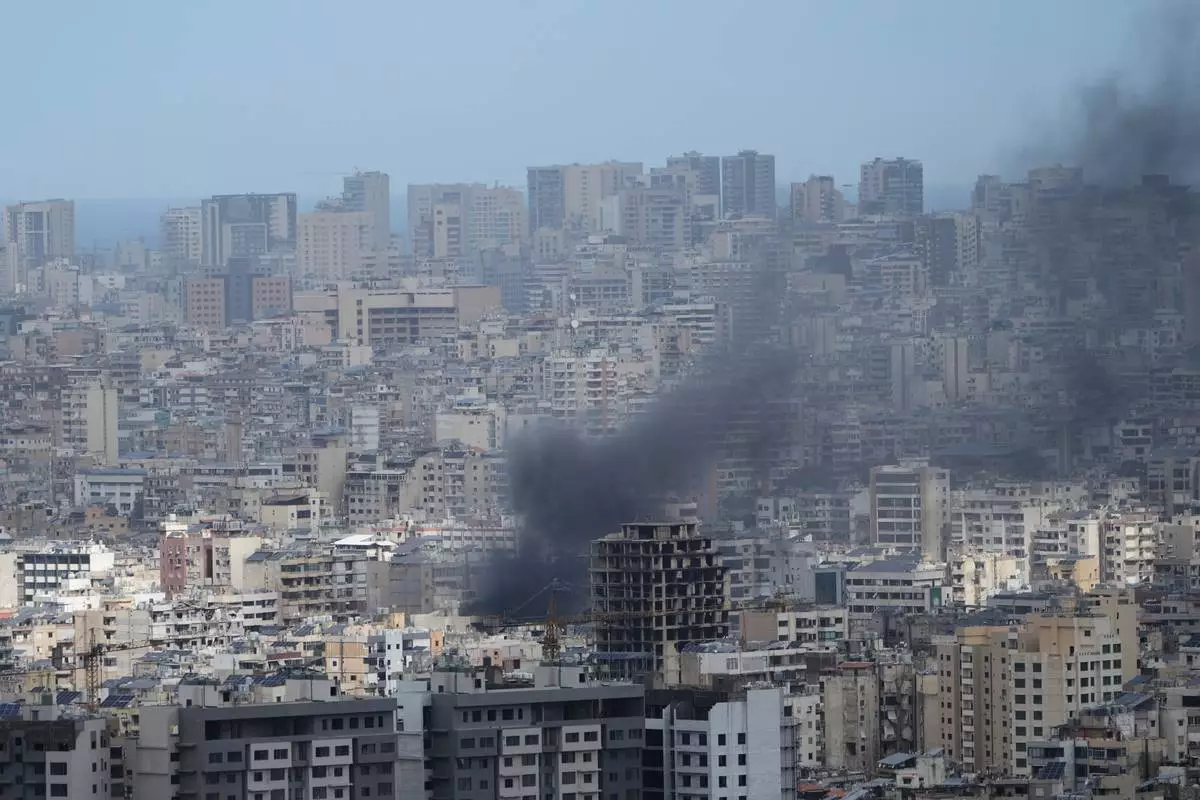
Smoke rises following an Israeli airstrike in Dahiyeh, Beirut's southern suburbs, Lebanon, Monday, March 30, 2026. (AP Photo/Bilal Hussein)
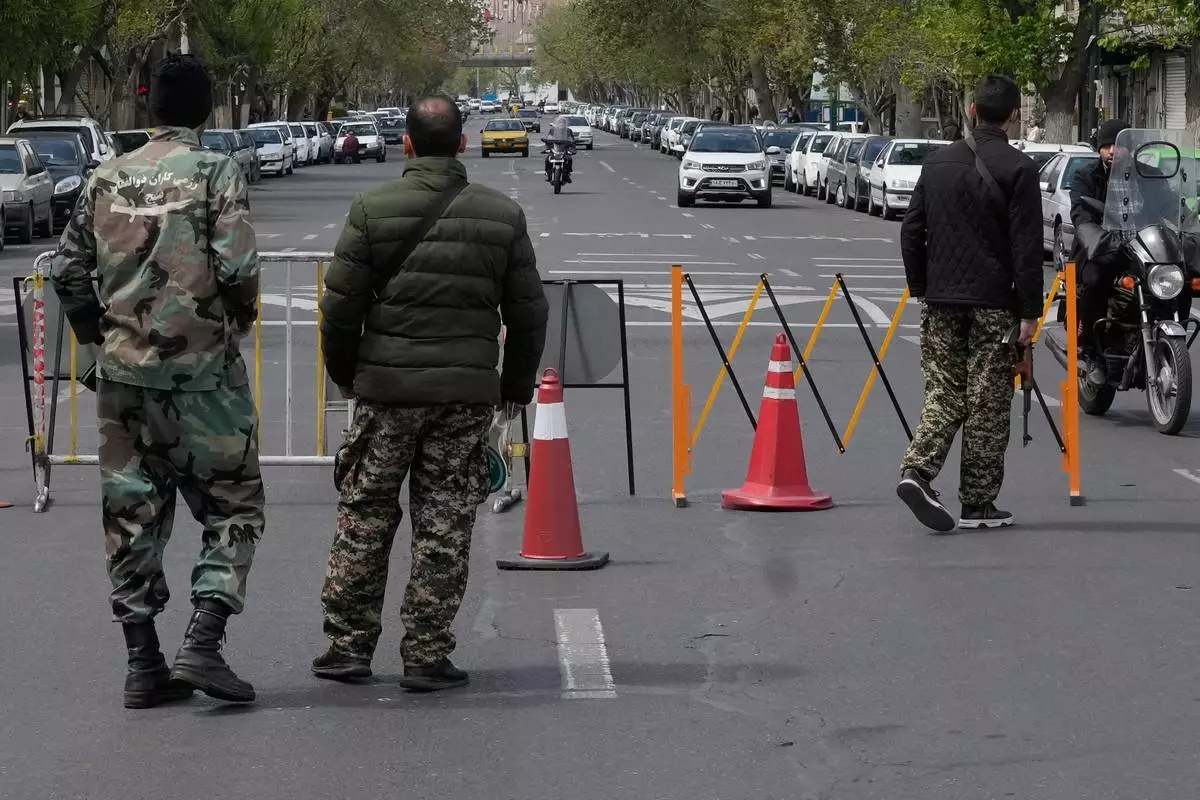
Members of the Basij paramilitary force stand at a checkpoint in Tehran, Iran, Sunday, March 29, 2026. (AP Photo/Vahid Salemi)
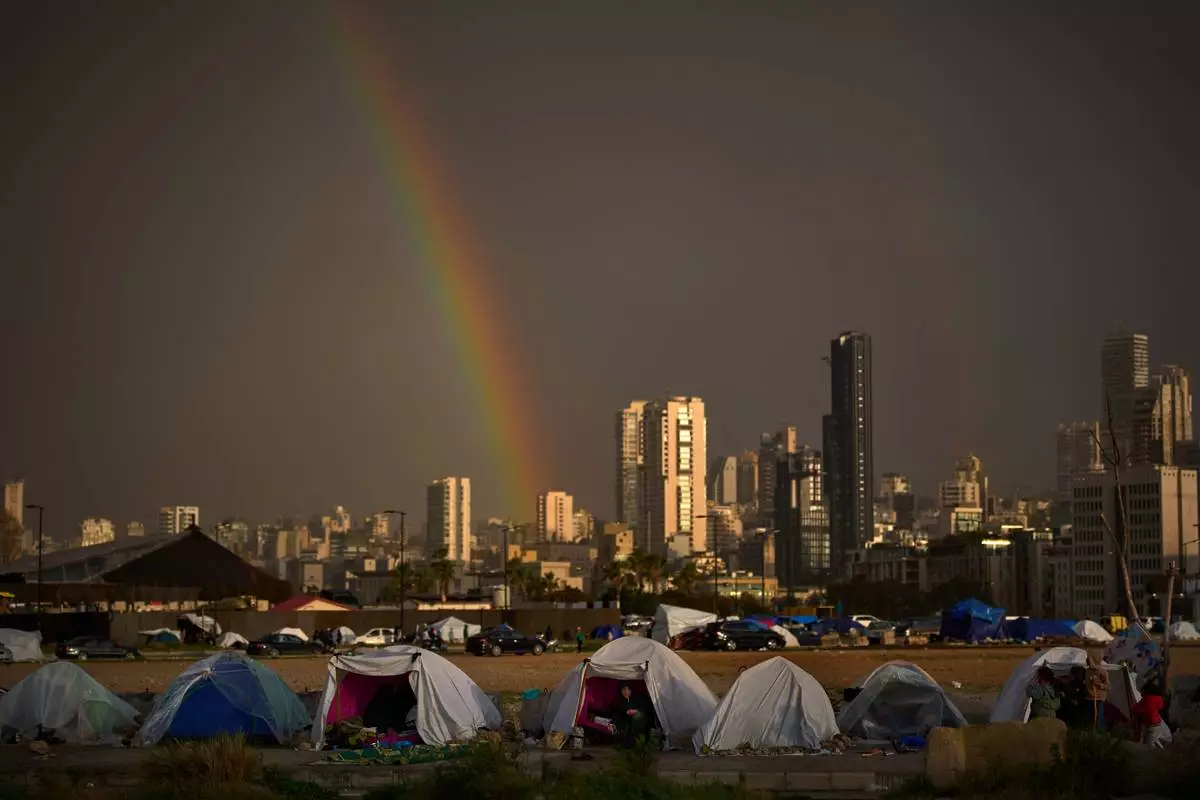
Displaced people who fled Israeli strikes in southern Lebanon sit inside tents used as shelters as a rainbow breaks through the rain in Beirut, Lebanon, Sunday, March 29, 2026. (AP Photo/Emilio Morenatti)
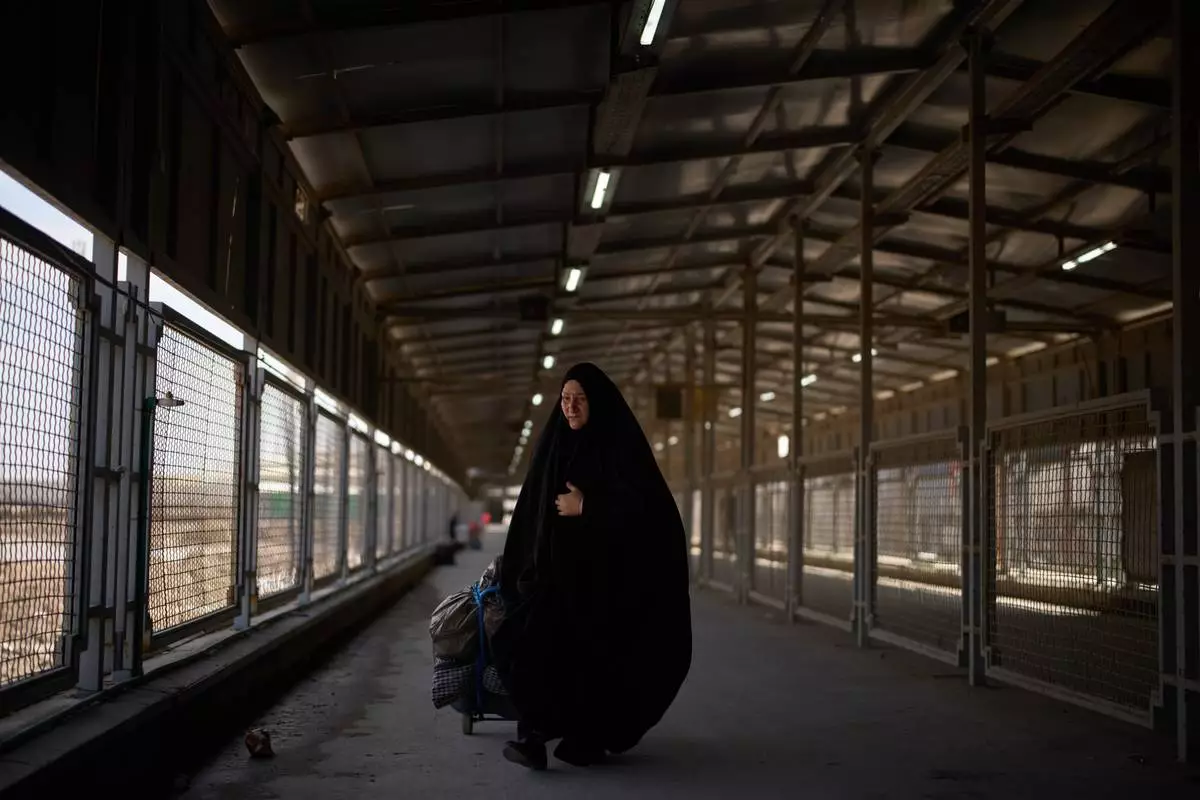
Carrying her belongings a woman crosses the Shalamcheh border crossing between Iran and Iraq, near Basra, Iraq, Sunday, March 29, 2026. (AP Photo/Leo Correa)
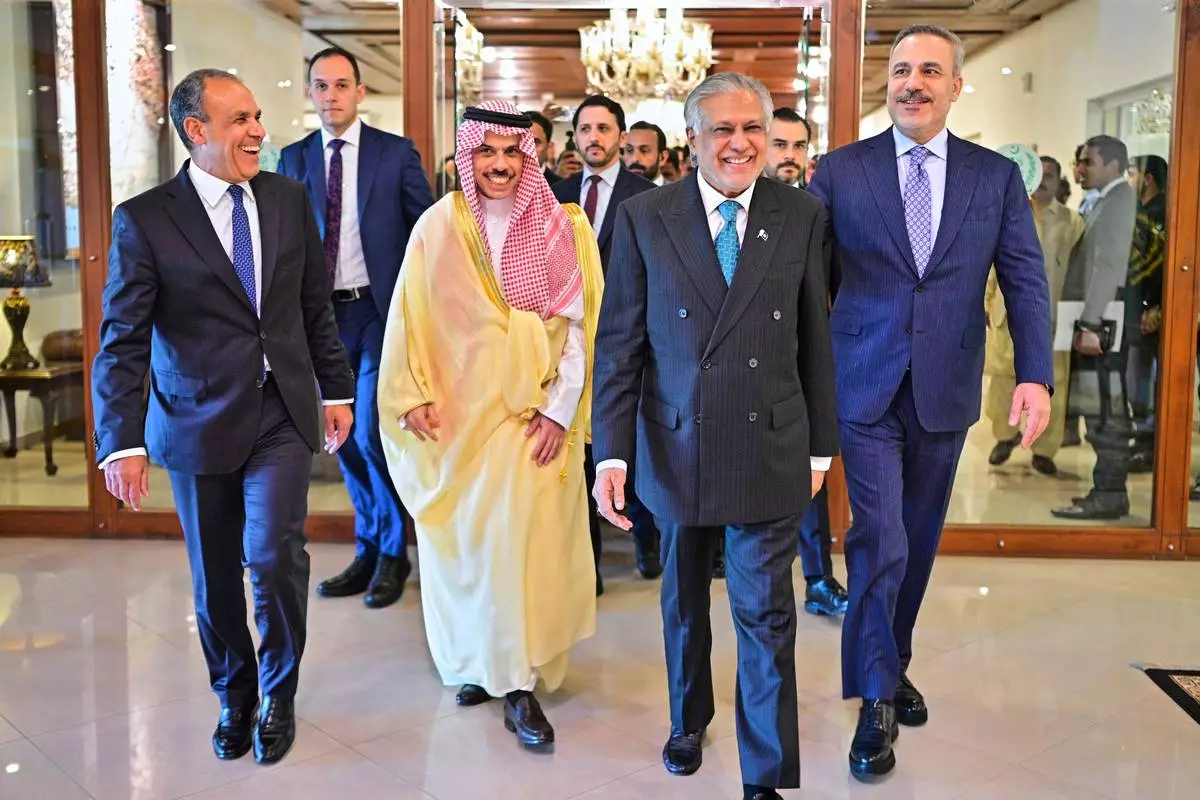
In this photo released by the Pakistan Ministry of Foreign Affairs, from left, Egyptian Foreign Minister Badr Abdelatty, Saudi Arabia's Foreign Minister Prince Faisal bin Farhan Al-Saud, Pakistan's Foreign Minister Ishaq Dar and Turkish Foreign Minister Hakan Fidan walk prior to their meeting to discuss the Middle East war, in Islamabad, Pakistan, Sunday, March 29, 2026. (Pakistan Ministry of Foreign Affairs via AP)
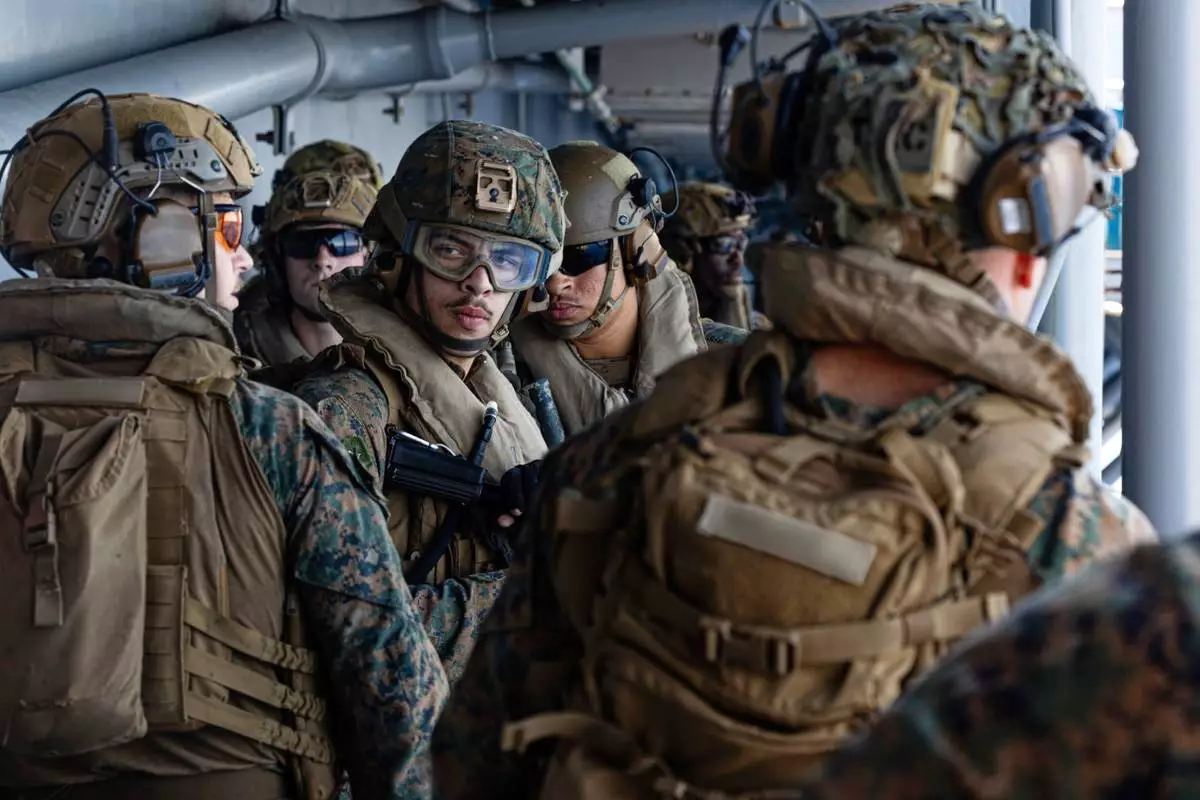
This image from video provided by U.S. Central Command shows U.S. Sailors and Marines aboard USS Tripoli (LHA 7) arriving in the U.S. Central Command area of responsibility, March 27, 2026. (U.S. Central Command via AP)