Sudan’s war-battered economy, already reliant on imports, is reeling from the spillover of the ongoing U.S.-Israel-Iran conflict.
Prolonged conflict in Sudan has sharply contracted the economy, damaged industrial capacity and left the country more dependent on imported manufactured products, making it highly vulnerable to external shocks.
At the same time, disruptions in the Strait of Hormuz have delayed shipments of oil, gas, fertilizers and chemicals, while surging energy prices are driving up logistics costs and squeezing Sudan’s supply chains.
Port Sudan, on the country's eastern Red Sea coast, is Sudan's critical maritime hub and the main gateway for imported goods. Over the past month, the volume of cargo arriving at the port has fallen noticeably, while import costs have continued to climb.
"I estimate prices in Sudan won’t just rise slightly, They will increase significantly. The conflict in the Gulf has dealt a major blow to the retail sector. As shipping costs and oil prices keep rising, the prices of food and many other commodities have surged, and this increase is gradually spreading across the country," said Amin Ali Hassan, a member of the Red Sea's State Chamber of Commerce.
In recent days, tensions in the Red Sea and the Bab el-Mandeb Strait have also intensified after Yemen's Houthi group announced it would intervene in the conflict, further amplifying spillover risks. For Sudan’s import-dependent economy, the deepening instability along regional sea lanes is estimated to bring even greater supply-chain strain.
"They will hit the production, will hit the supply chains, will hit the oil sector,industry sector. But if this war extends to the Red Sea, the situation will be very bad and worse. And I hope this war is stopped there and not extend to the Red Sea," said Ahmed Alarsh, an expert in marine insurance industry.
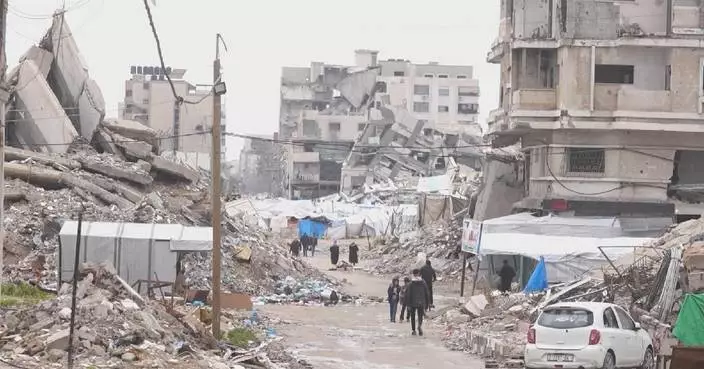
Since the armed conflict between Sudan’s military and the paramilitary Rapid Support Forces erupted in April 2023, Khartoum has endured mass displacement, food shortages, disease outbreaks and heavy casualties. Repeated ceasefire calls from the United Nations and regional mediators have failed to bring calm.
Iran’s move to block the Strait of Hormuz, a corridor for a fifth of global oil and nearly a third of fertilizer shipments, has further amplified the supply-chain strain facing Sudan, underscoring how regional conflicts are compounding the country’s economic crisis.

Sudan's import supply chains strained as shipping, energy costs rise