Iraq is facing mounting economic strain as the Middle East conflict blocks its oil exports through the Strait of Hormuz, a chokepoint for one-fifth of the world's oil, triggering a collapse in crude production and plunging the economy into crisis.
The bottleneck follows joint U.S.-Israeli strikes on Iran on Feb. 28 and Iran's retaliatory attacks across the Middle East.
The shock is reverberating from oil fields to households, with crude production plunging nearly 80 percent, from a pre-war level of 4.3 million barrels per day to just 800,000. Since the attacks, wholesale oil and gas prices have surged as missile and drone strikes disrupted energy production and transport across the Middle East, adding to the strain on households worldwide.
The collapse in oil revenues, which provide the vast majority of Iraq's state income, is already hitting ordinary Iraqis, with households across the country feeling the pinch of growing financial strain.
"I'm a retired Iraqi army officer, and my pension is 750,000 dinars. It’s not enough to support a family. By around the twentieth of each month, we have to borrow money. It doesn't cover food, medicine, or clothing, nor even basic social obligations like attending condolence gatherings," said Mohammad Abdulla, a retired Iraqi Army officer.
Abdulla's plight is far from unique. Millions of Iraqis depend on public sector salaries and state benefits, and there are growing warnings that any disruption to these payments could have severe social and political consequences for the country.
"In my view, Iraq is facing a very serious test. Any delay in salaries could lead to unrest and cause the government to leave. That's why efforts are being made to reduce corruption," said Ahmad Al-Saraji, a government employee.
Faced with mounting public concern and economic pressure, Iraq's Oil Ministry has sought to reassure the public, acknowledging the toll of the regional conflict while stressing that it is taking concrete steps to keep critical services running and ensure state salaries are paid on time.
"Daily gasoline production is currently around 29 million liters, with strategic reserves of about 200 million liters. This means the situation is under control. Natural gas continues to reach residential areas," said Abdul-Sahib Bazoun Al-Hasnawi, spokesperson for the Iraqi Ministry of Oil.
The ministry says the government has done some studies and found multiple alternatives and channels for exporting Iraqi oil. For example, the pipeline from Kirkuk through Mosul and Fishkhabur to the Turkish port of Ceyhan is expected to be repaired and become operational soon.
Still, with exports constrained and revenues under pressure, analysts warn that unless alternative routes are secured quickly, Iraq risks not only economic collapse but also political upheaval that could reverberate across the wider region.
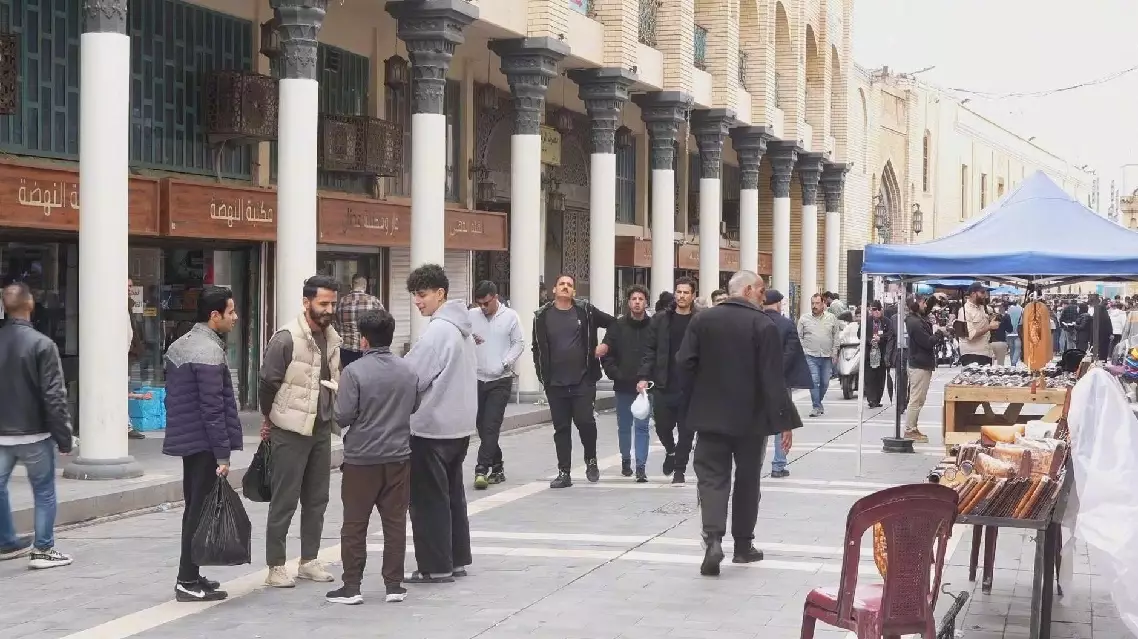
Middle East conflict chokes Iraq's oil exports, deepens economic crisis
Middle East conflict chokes Iraq's oil exports, deepens economic crisis