WASHINGTON (AP) — One of the first things an Argentine emigre did after her son was born in Florida last year was get him a U.S. passport.
She saw the passport as tangible evidence that he's an American. But now people like her are in a legal fight over President Donald Trump's executive order that would deny U.S. citizenship to children born in the United States to people who are in the country illegally or temporarily.
“It’s funny because I actually booked him for his passport application appointment even before he was born,” the 28-year-old woman said, as her now 7-month-old son napped nearby. She spoke to The Associated Press on the condition of anonymity, insisted upon by her lawyers, out of fear of possible retribution by the Republican administration if she were publicly identified.
“I would say that I am definitely relieved that at least he is protected,” she said.
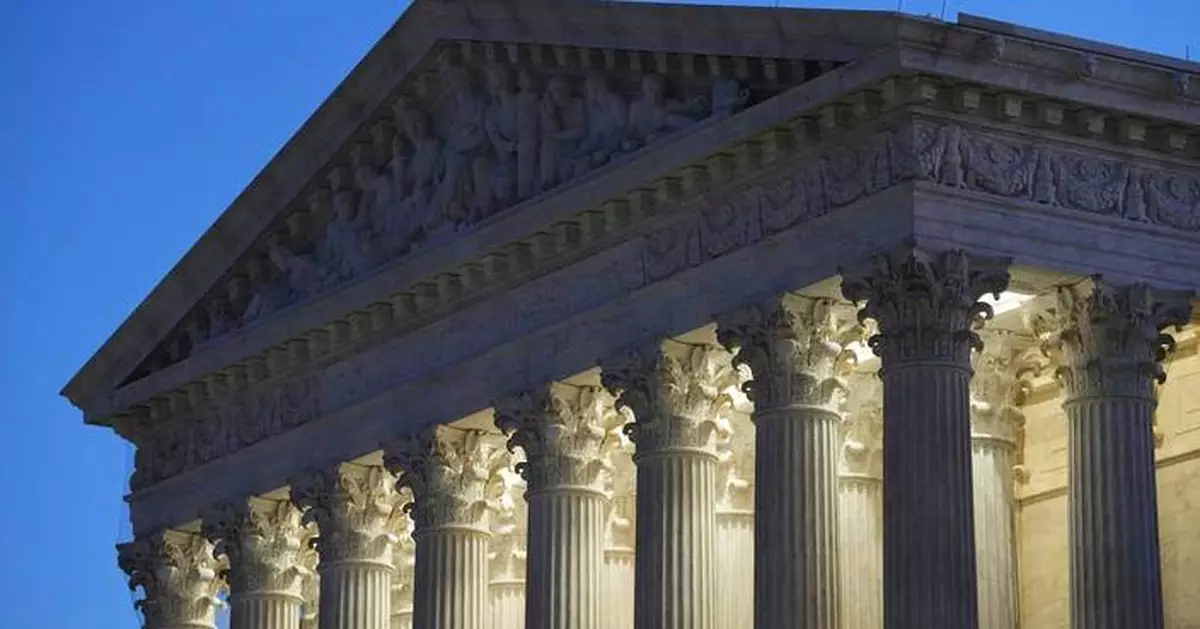
The Supreme Court is hearing arguments on Wednesday over whether Trump's order, signed on Jan. 20, 2025, his first day back in office, comports with the post-Civil War 14th Amendment and an 86-year-old federal law that has been widely understood to make citizens of everyone born in the country, with narrow exceptions for the children of foreign diplomats and invading armies. Every court to have considered the issue has found the order to be illegal and prevented it from taking effect.
The call to repeal birthright citizenship is part of the Trump administration's broader crackdown on immigrants that has included stepped-up deportations, drastic reductions in the number of refugees allowed into the U.S., suspension of asylum at the border and stripping temporary legal protections from people fleeing political and economic instability.
The case presents another test for a high court that has allowed some anti-immigration efforts to continue, even after lower courts had blocked them. The case before the court comes from New Hampshire, where U.S. District Judge Joseph N. LaPlante ruled that the order “likely violates” both the Constitution and federal law.
The first sentence of the 14th Amendment, the Citizenship Clause, makes citizens of “all persons born or naturalized in the United States, and subject to the jurisdiction thereof.” The case turns on the meaning of the final phrase about jurisdiction, which also was used in citizenship laws enacted in 1940 and 1952.
Trump's view, asserted in the order titled “Protecting the Meaning and Value of American Citizenship” and backed by some conservative legal scholars, is that people here illegally or temporarily are not “subject to the jurisdiction” of the United States and therefore their U.S.-born children are not entitled to citizenship.
The court should use the case to set straight "long-enduring misconceptions about the Constitution’s meaning,” Solicitor General D. John Sauer wrote.
In that regard, Sauer likened the case to the seminal 1954 decision in Brown v. Board of Education, which outlawed segregation in public schools, and the landmark 2008 Heller case, which declared that people have a constitutional right to keep guns for self-defense.
Last year, Justice Sonia Sotomayor called the Trump administration's effort to defend the order "an impossible task in light of the Constitution’s text, history, this Court’s precedents, federal law, and Executive Branch practice.”
Sotomayor was joined by the other two liberal justices in a dissent from a decision by the court’s six conservative justices that used an earlier round of the birthright citizenship dispute to limit the use of nationwide injunctions by federal judges.
The pregnant mothers and their advocates challenging the order, as well as lower-court judges who have blocked it, have said the Trump administration's arguments lack merit.
"We have the president of the United States trying to radically reinterpret the definition of American citizenship,” said Cecillia Wang, the American Civil Liberties Union legal director who will face off against Sauer on Wednesday.
More than one-quarter of a million babies born in the U.S. each year would be affected by the executive order, according to research by the Migration Policy Institute and Pennsylvania State University’s Population Research Institute.
While Trump has largely focused on illegal immigration in his rhetoric and actions, the birthright restrictions also would apply to people who are legally in the United States, including students and applicants for green cards, or permanent resident status.
The woman from Argentina said she came to the U.S. in 2016 on a visa to attend college and has since applied for a green card.
She described a moment of panic following the court’s June ruling, when it was at least possible that the restrictions could take effect, particularly in states such as Florida that had not challenged Trump's order. Lower-court rulings over the summer ensured the order remained on hold and set up the current Supreme Court case.
On top of the predictable worries of a first-time mother, she said, “I never thought that, you know, so close to the end of my pregnancy that I would have to be even thinking about ... the executive order and how it would have impacted my baby.”
She has not reconsidered her decision to come to the United States or her desire to stay, she said, as her son stirred.
“And so nothing that happens, politically or otherwise, would have changed my views of the country, I mean, because it gave me the most beautiful thing I have today, which is my family,” she said.
Follow the AP's coverage of the U.S. Supreme Court at https://apnews.com/hub/us-supreme-court.
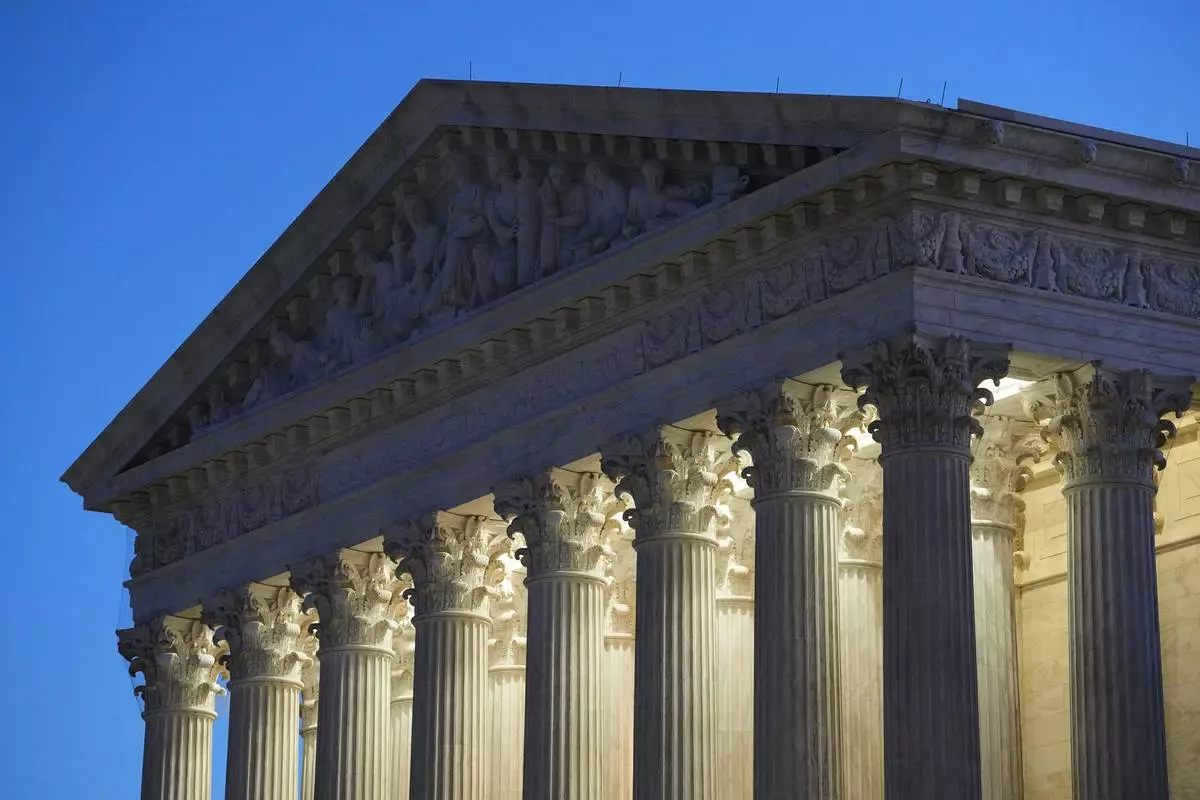
FILE - The U.S. Supreme Court is seen in Washington on Feb. 24, 2026. (AP Photo/Matt Rourke, File)
Dr. Jacquelyn Means knew that being pregnant in her late 30s would be challenging.
“It is definitely harder on your body. You just feel a lot more fatigued. There are certain complications to watch out for,” said Means, a Texas OB-GYN who had her first child at 37 and her second at 39. “It’s usually going to be fine, but there are things to be aware of.”
Like Means, more and more women are having babies later in life. A federal report showed that 21% of all births in the U.S. were to women 35 and older in 2023, up from 9% in 1990. And this “advanced maternal age” raises risks for both moms and babies.
Older pregnant women are more likely to have conditions like high blood pressure and obesity, for example, and are more prone to developing pregnancy complications. They’re more likely to undergo cesarean sections and give birth to twins or babies with some genetic abnormalities.
But don't be too worried. Risks are generally low; they're just higher than average. And while most older moms have normal pregnancies, doctors say there are ways lower to risk and prevent problems before, during and after pregnancy.
“Moms over 35 can still have a healthy pregnancy and a happy baby,” said Dr. Michael Warren, chief medical and health officer for the March of Dimes, a nonprofit that works to improve the health of mothers and babies.
Dr. Ashley Zink, a maternal-fetal specialist at the University of Texas Southwestern, said optimizing your health is like “building your baby’s first home.”
That involves following the time-honored advice of eating a well-balanced diet, staying active and avoiding risky behaviors like smoking.
“Make sure those good health habits that you’ve established over the course of your life are still in place,” Warren added. “If you have chronic diseases, make sure those are well-managed. Make sure you’re getting regular preventive medical care.”
Being as healthy as possible is important, Zink said, because pregnancy can be as rigorous as a marathon.
“Your volume of blood expands; it’s harder work for your heart,” she said. “And just the discomforts of pregnancy — all kinds of things — are a little bit better tolerated if you’re in good physical condition.”
A checkup before trying to conceive can be helpful, doctors said, allowing you to discuss health concerns, get treated for any conditions that might affect your pregnancy and make sure you’re up to date on vaccinations.
Doctors suggest getting a first-trimester ultrasound, which can measure the size of the fetus, help confirm the due date and check for multiple fetuses.
Women over 35 tend to produce more of the hormone that stimulates the ovaries to produce eggs, and they also may use in vitro fertilization to get pregnant. Both of these things increase the likelihood of twins or triplets, which puts you at a higher risk of complications such as premature birth.
Older women may also want to consider having blood drawn for noninvasive prenatal testing, which can screen for chromosomal abnormalities in a fetus such as Down syndrome and trisomy 13 or 18. According to Stanford Medicine Children's Health, the risk of Down syndrome is about 1 in 1,250 for a woman who conceives at age 25 and rises to about 1 in 100 for a woman who conceives at 40.
If the screening suggests the fetus is at risk, a doctor may recommend more invasive diagnostic tests. These include amniocentesis, in which a small amount of amniotic fluid is taken from the uterus; or chorionic villus sampling, in which cells are taken from the placenta.
Zink said older women can also ask about a “growth ultrasound” at around 32 or 34 weeks of pregnancy.
“It shows us if the placenta is still doing a good job,” she said. “Do you have normal fluid? Do you have normal growth?”
Ultrasounds late in pregnancy may also spot problems with the fetus.
“We know that when women are pregnant later in life, there’s an increased risk of birth defects,” particularly cardiac defects, Warren said.
There’s also a higher risk of stillbirth, although the risk is still very small.
“As the delivery date gets closer,” Warren said, “it’s so important to be mindful for those cues like fetal movement. Can you still feel the baby moving and kicking?”
The percentage of babies delivered by C-section rises with maternal age, averaging 48% of live births for women 40 and older, according to the March of Dimes, which looked at the years 2022 to 2024. Women who undergo C-sections have a significantly higher risk of maternal complications such as infection and bleeding than those who deliver vaginally.
Medical reasons for C-sections include having chronic health conditions that may make vaginal birth risky, such as diabetes or high blood pressure, the March of Dimes said. Other reasons include complications during labor, such as having a very large baby, which can happen when a mom has gestational diabetes, which is diabetes you develop during pregnancy and can affect your and your baby's health.
Placenta problems, which can result in dangerous bleeding before or during labor, are also more likely in older women. (Like other issues, they don't occur that often. Placental abruption, when the placenta separates from the uterus, happens in about 1 in 100 pregnancies overall.)
Means gave birth to both of her children vaginally but had placenta-related issues. She also had gestational diabetes with both of her pregnancies.
After giving birth to her first child, a daughter, in 2023, some of her placenta was retained and had to be removed, and she needed treatment for a postpartum hemorrhage. A week after giving birth to her son last year, she suffered severe bleeding and had to be treated at the hospital.
“So both of my babies tried to kill me a little bit,” she joked. “Once I got past all those bleeding issues, I’ve been fine … And both my kids are super healthy, so I’m thankful for that.”
The Associated Press Health and Science Department receives support from the Howard Hughes Medical Institute’s Department of Science Education and the Robert Wood Johnson Foundation. The AP is solely responsible for all content.
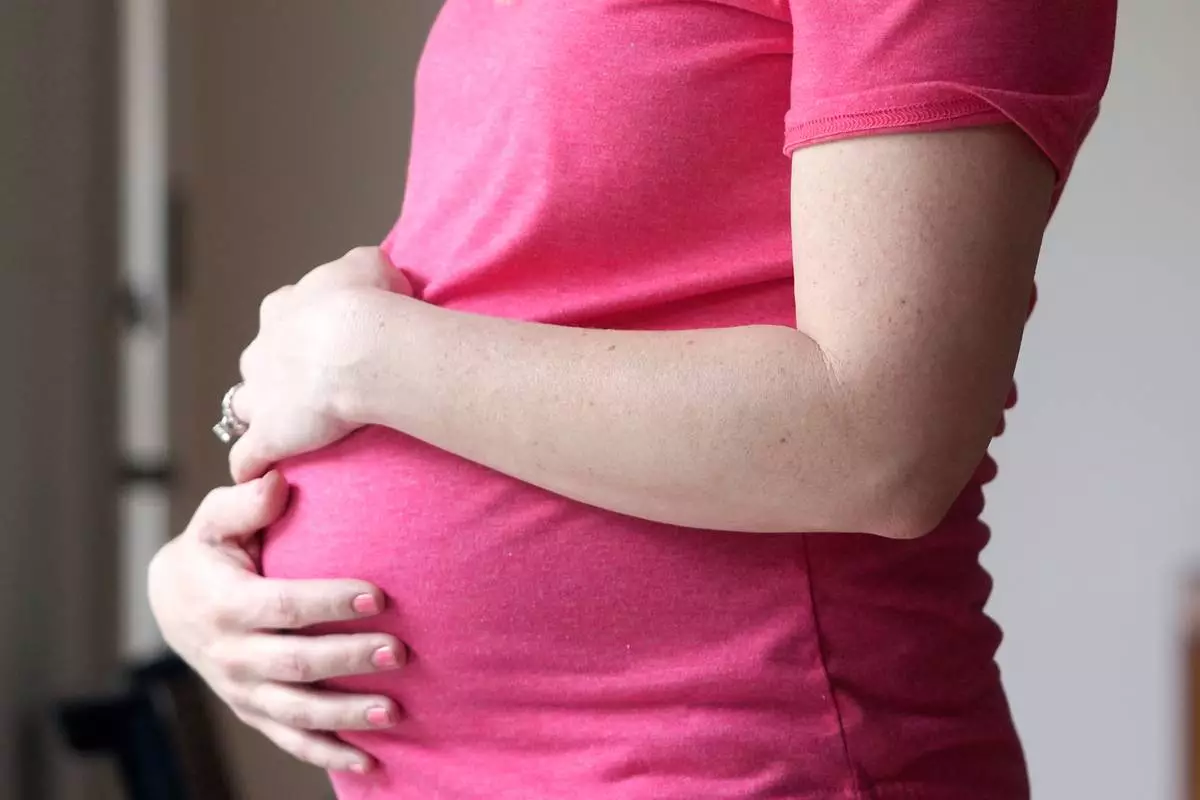
FILE - A pregnant woman stands for a portrait in Dallas, May 18, 2023. (AP Photo/LM Otero, File)