Skip to Content Facebook Feature Image

Tapping, twirling and "T" signs: Sports replays have a language all their own

Sport

Tapping, twirling and "T" signs: Sports replays have a language all their own
Sport

Sport

Tapping, twirling and "T" signs: Sports replays have a language all their own

2026-03-30 22:18 Last Updated At:22:30

Every moment of pretty much any major sporting event can be dissected in high-definition these days, and officials and umpires are spending more and more time staring at a TV screen to review close calls.

It's also led to a type of sign language unique to the sports world.

There's the twirling motion with a finger that's ubiquitous during NBA games when anyone believes their team has been wronged. In the NFL, it's a red challenge flag thrown by coaches that's often mimicked by fans.

It's not just a U.S. phenomenon, either: There’s the rectangular box drawn in the air that’s everywhere in international soccer for VAR (Video assistant referee). In cricket, certain players can make a “T” sign with their hands, signaling they would like a replay from the DRS (Decision review system). Then the umpire draws a rectangular box in the air, similar to soccer.

Now Major League Baseball has a new entry to the lexicon: A couple pats on the head.

The Automated Ball-Strike Challenge System is now officially part of MLB games, with cameras that track each pitch and judge whether it crossed home plate within the strike zone. Human umps still call every pitch, but each team has the ability to challenge two calls per game.

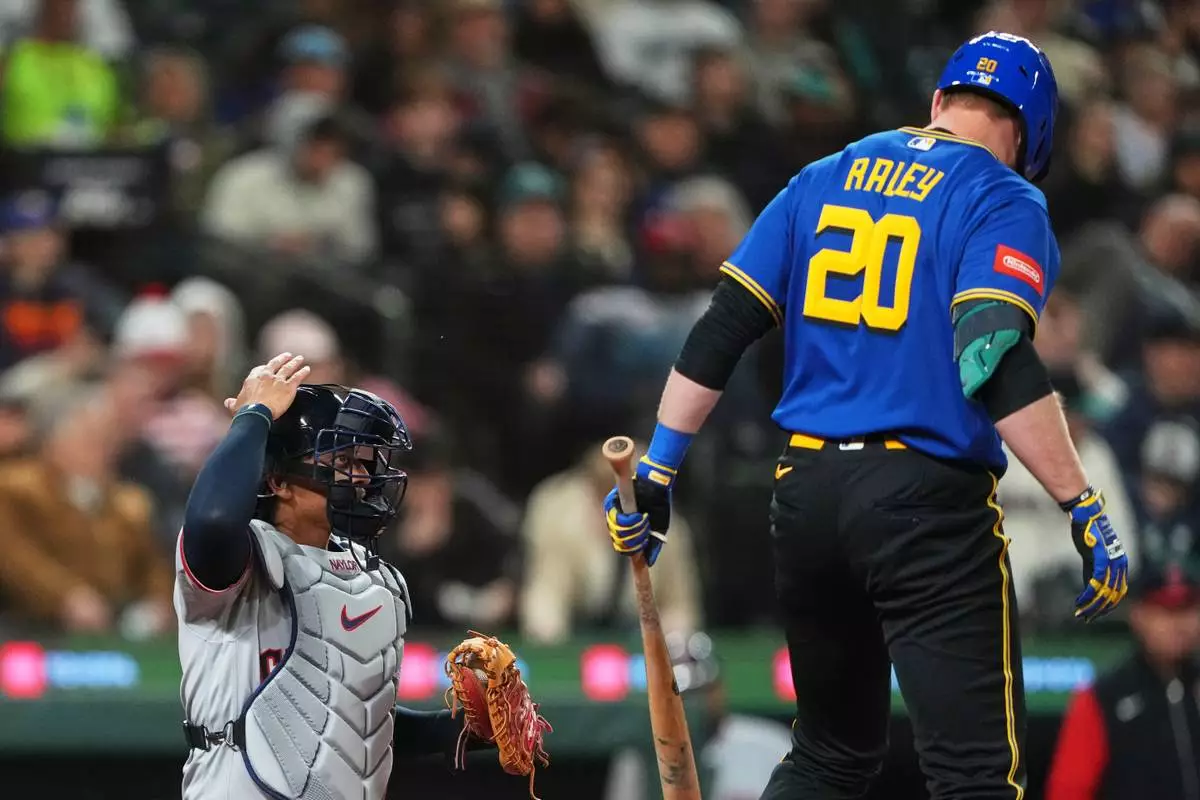
When a batter, pitcher or catcher believes a ball-strike call has been missed, they can pat their head a few times and also verbally confirm they want a challenge. It hasn't taken long for fans to get in on the lingo, patting their heads when they think there's a bad call.

“Everybody now knows what touching the top of their hat means,” D-backs manager Torey Lovullo said, laughing. “It's definitely caught on fast. I think it's a great thing — everyone wants to get the calls right.”

Sometimes, the hand signals can be seen as a sign of disrespect.

Tampa Bay Rays infielder Taylor Walls was ejected from a regular season game last season after disagreeing with a call, patting his helmet a few times while arguing with the umpire. ABS was used in spring training in 2025 on an experimental basis, but wasn't allowed during regular season games.

Walls maintained it was an innocent gesture. Plate umpire Nic Lentz disagreed and sent Walls to the clubhouse early.

Lovullo said he doesn't expect many misunderstandings in the future.

“There's the verbal command, too, so that should help,” he said.

In many sports, the expanding video review procedures have created new strategies to get challenges right. Many times it's quick non-verbal cues that make the process work.

Many NBA teams have an assistant coach or staff member on the bench who has a tablet and can view the broadcast, reviewing plays quickly. Players sometimes make emotional decisions in the heat of the game — twirling their finger in the air when they believe their team should challenge. (Spoiler alert: Players always think they're right.)

But the final say comes from the bench.

For the New York Knicks, assistant coach Jordan Brink is the man who advises head coach Mike Brown.

“If he does this (nodding his head up and down), then you do this (twirls his finger). If he does this (shaking his head side to side), then you just go ‘Hmm...’ and got to tell your players sorry," Brown said.

Cleveland Cavaliers coach Kenny Atkinson said “you really got to control yourself” because replay reviews are usually emotional situations. Los Angeles Clippers coach Ty Lue had no clue how the finger twirl became the NBA's go-to symbol for a review, but in his typical deadpan manner, said its prevalence could occasionally be annoying.

“I’m sick of looking at it. Let’s take a look at that,” Lue said, drawing laughs from reporters. "Now they’re doing it in college, too, everybody’s doing it.”

MLB now has a pair of replay review signals. Managers can call for reviews of out-safe calls and some other rulings by tapping their hands over their ears, mimicking umpires putting on headsets to discuss plays with MLB's replay center. That and the ABS head-pat have taken over at a time when some of the longtime hand signals of baseball are disappearing. For more than a century, catchers called pitches with their fingers, sometimes relying on an elaborate sequence of signs to keep the opposing team from figuring out the next pitch.

That all started to change following the 2017 Houston Astros cheating scandal, which was uncovered in 2020. Now there's a system called PitchCom that can relay pitch calls and infield positioning decisions without hand signals.

“You used to have signals from the dugout to watch for a bunt, or watch for a delayed steal, but now all you have to do is hit a few buttons,” Lovullo said.

But the low-tech system of hand signals in sports is still very much a thing. In a strange juxtaposition, the high-tech world of video replay is one of the main reasons.

AP Pro Basketball Writer Brian Mahoney, AP Sports Writer Joe Reedy and AP freelance writer Dan Greenspan contributed to this story.

AP MLB: https://apnews.com/hub/MLB
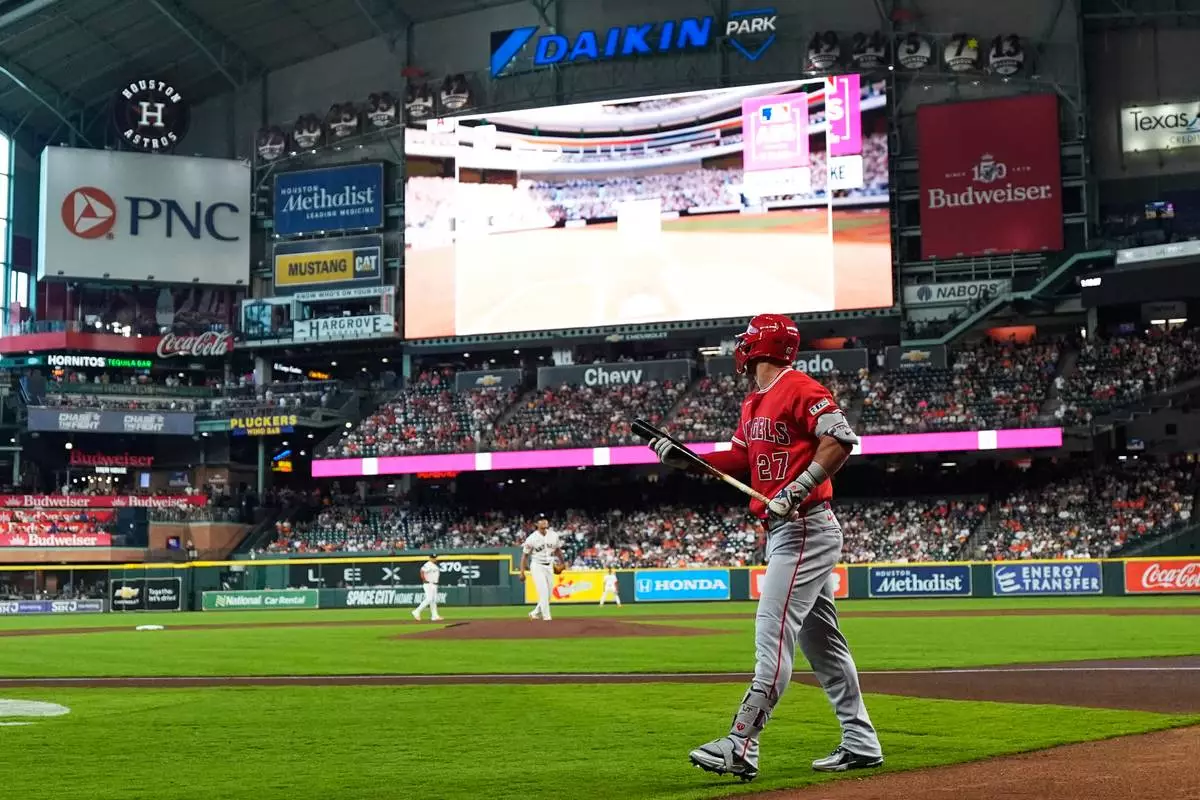
Los Angeles Angels designated hitter Mike Trout reacts after striking out as the ABS replay shows on the screen during the first inning of a baseball game against the Houston Astros in Houston, Sunday, March 29, 2026. (AP Photo/Ashley Landis)
Los Angeles Angels designated hitter Mike Trout reacts after striking out as the ABS replay shows on the screen during the first inning of a baseball game against the Houston Astros in Houston, Sunday, March 29, 2026. (AP Photo/Ashley Landis)

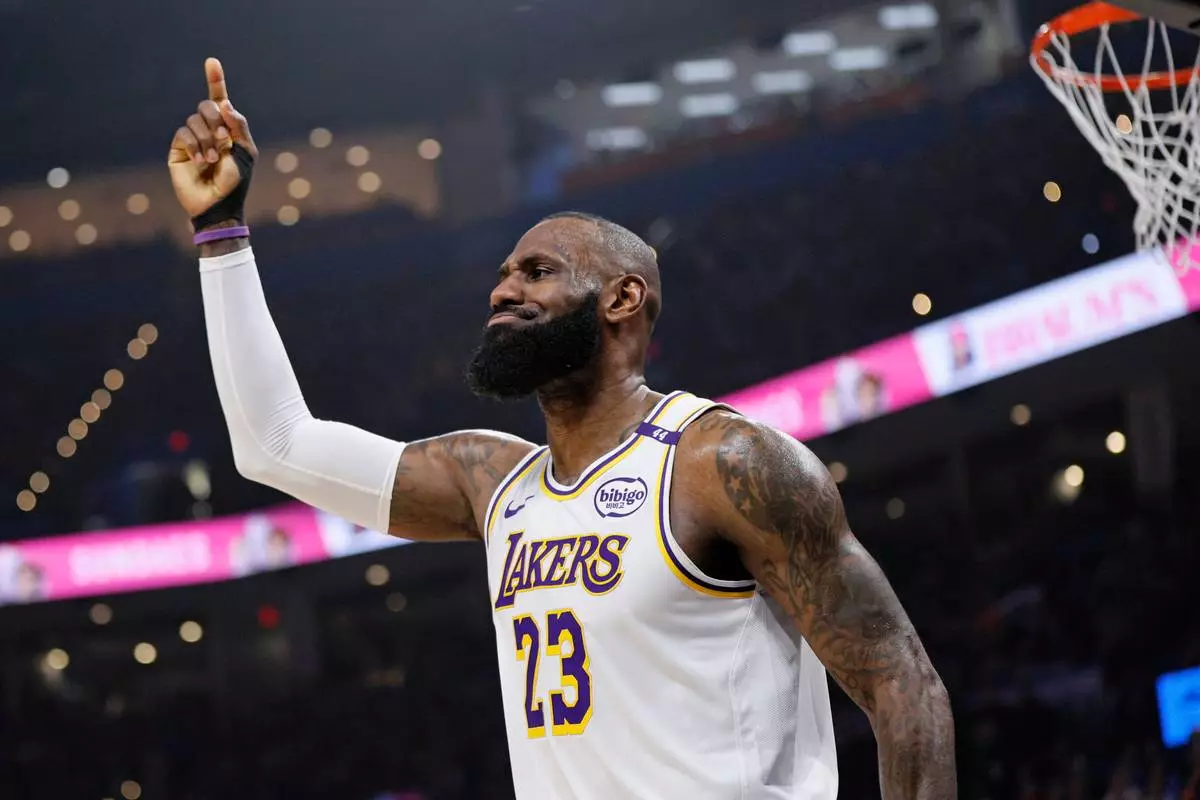
FILE - Los Angeles Lakers forward LeBron James signals that he wants a review of an official's call during the first half of an NBA basketball game against the Oklahoma City Thunder, Sunday, April 6, 2025, in Oklahoma City. (AP Photo/Nate Billings, file)
FILE - Los Angeles Lakers forward LeBron James signals that he wants a review of an official's call during the first half of an NBA basketball game against the Oklahoma City Thunder, Sunday, April 6, 2025, in Oklahoma City. (AP Photo/Nate Billings, file)

FILE - Cleveland Guardians catcher Bo Naylor challenges a call during an at-bat by Seattle Mariners' Luke Raley during the fourth inning of a baseball game, Friday, March 27, 2026, in Seattle. (AP Photo/Lindsey Wasson, filr)
FILE - Cleveland Guardians catcher Bo Naylor challenges a call during an at-bat by Seattle Mariners' Luke Raley during the fourth inning of a baseball game, Friday, March 27, 2026, in Seattle. (AP Photo/Lindsey Wasson, filr)
NEW YORK (AP) — U.S. stocks are swinging again Monday as oil prices keep climbing because of uncertainty about when the war with Iran could end.

The S&P 500 inched up by 0.1% in morning trading, coming off its worst week since the war with Iran began. The Dow Jones Industrial Average was up 164 points, or 0.4%, as of 10 a.m. Eastern time, and the Nasdaq composite was 0.1% lower.

That followed gains for stock markets in much of Europe, but caution was still prevalent throughout financial markets. On Wall Street, the S&P 500 quickly gave up nearly all its gain of 0.9% from the start of trading. Stocks in some Asian markets fell sharply, while the price for a barrel of Brent crude delivered in June rose 3.2% to $108.73.

The mixed movements followed a whirlwind of action in the war over the weekend, none of which cleared up when the fighting may end. The main issue for investors worldwide is whether oil and natural can resume their full flow from the Persian Gulf to customers and prevent a brutal blast of inflation.

Shortly before the U.S. stock market opened for trading Monday, President Donald Trump said on his social media network that “great progress has been made” with “A NEW, AND MORE REASONABLE, REGIME to end our Military Operations in Iran.”

But he also threatened the possibility of “blowing up and completely obliterating” Iranian power plants if a deal is not reached shortly and if the Strait of Hormuz, an integral waterway for the flow of oil, is not opened immediately.

The statement fit and condensed last week’s pattern, where Trump would tout progress being made in talks and offer some optimism for the market, only for doubts to rise quickly afterward about whether the war can end soon.

All the back and forth has some investors saying they’re giving Trump’s pronouncements less weight than before. But stock prices are nevertheless cheaper than they were before the war, which has some investors waiting for an opportune time to buy.

The S&P 500 finished last week 7.4% below its all-time high, which was set in January. The Dow and Nasdaq both were more than 10% below their records, a steep-enough fall that professional investors call it a “correction.”

Taking into account how much profits are expected to grow in the coming year for companies in the S&P 500, the index looks 17% cheaper than before the war, by one measure. That’s in a similar range as where prior growth scares for the market ended, as long as they didn’t result in a recession or the Federal Reserve hiking interest rates, according to strategists at Morgan Stanley.

That’s one of the signs that the strategists led by Michael Wilson point to as “growing evidence the S&P 500 correction is getting closer to its ending stages.”

Of course, the Federal Reserve could upset that if it decides oil prices are threatening to stay so high that it needs to raise interest rates. Higher interest rates would help keep a lid on inflation, but they would also slow the economy and push down on prices for all kinds of investments.

Treasury yields have been leaping in the bond market since the war began because of such worries, but they eased somewhat on Monday.

The yield on the 10-year Treasury fell to 4.35% from 4.44% late Friday. That’s a significant move for the bond market and offers some breathing room for Wall Street, though it remains far above its 3.97% level from before the war.

On Wall Street, Alcoa jumped 10.7% on thoughts it could get more revenue after Iranian attacks damaged rival aluminum facilities in the Middle East over the weekend.

Sysco fell 11.8% after it said it was buying Jetro Restaurant Depot for $21.6 billion in cash and enough Sysco shares to value the company at about $29.1 billion.

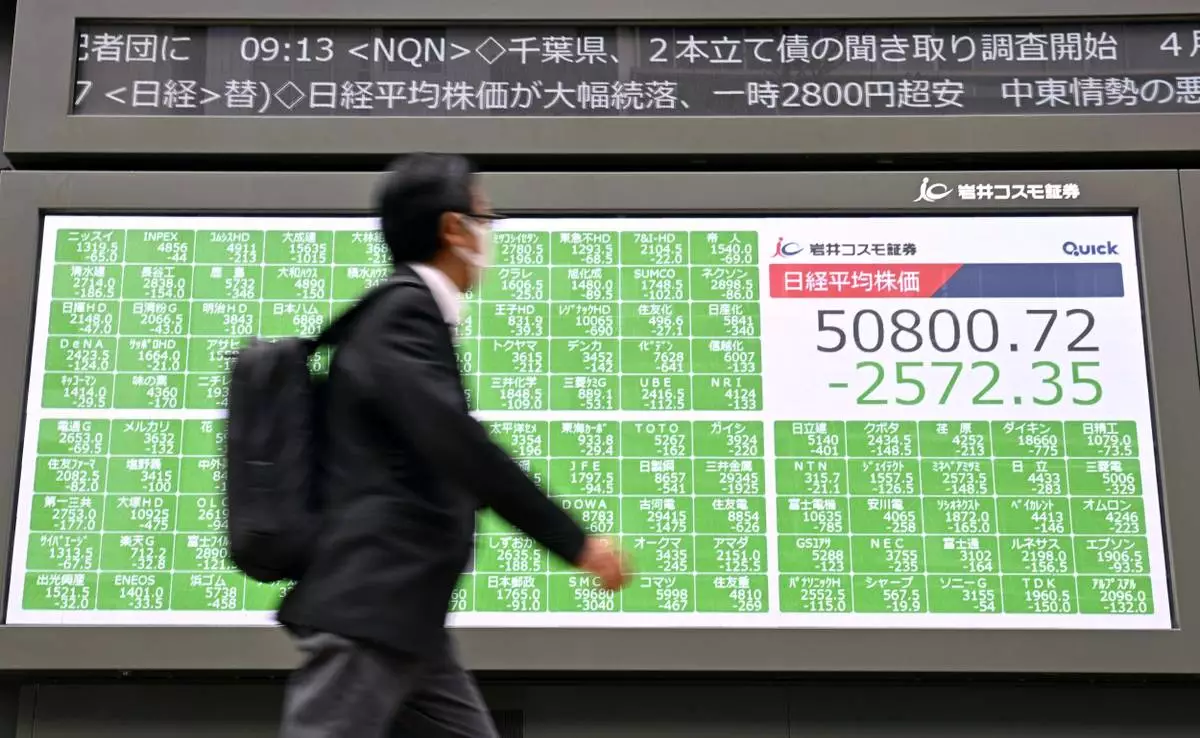
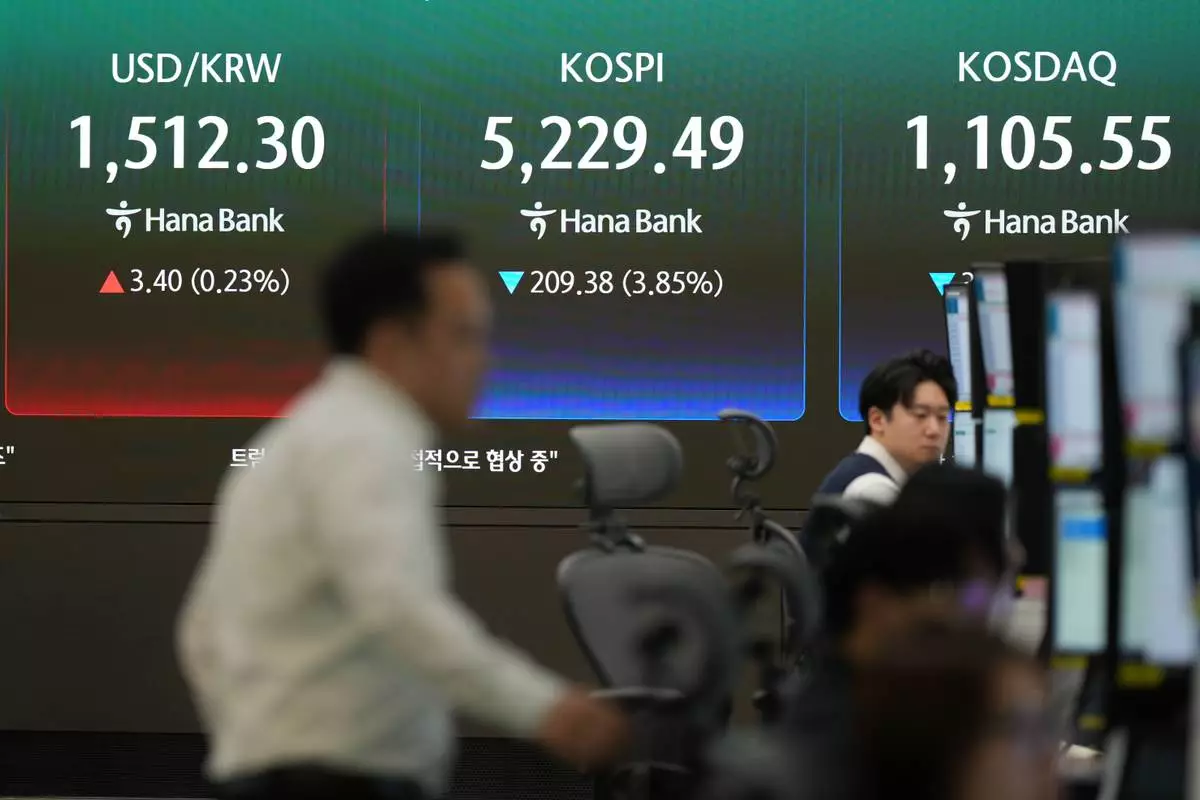
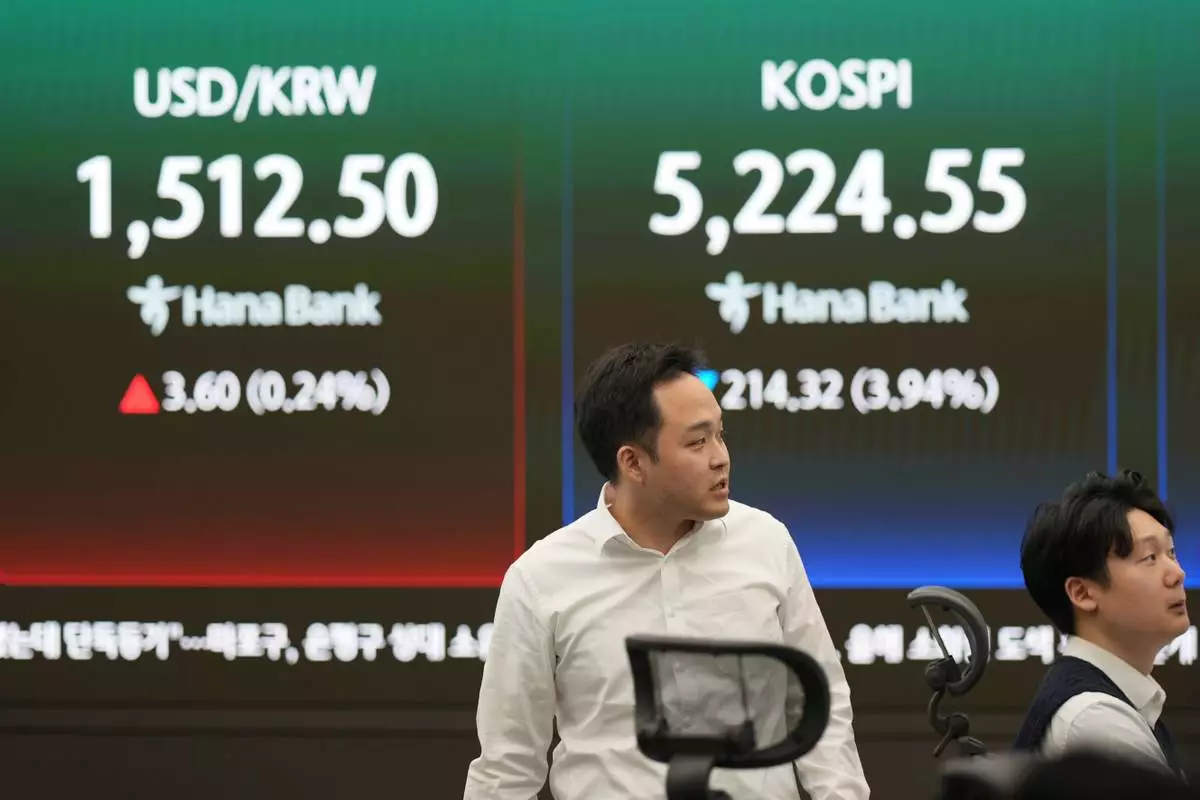
In stock markets abroad, the FTSE 100 in London climbed 1.1%, and the CAC 40 in Paris rose 0.4%. That followed drops of 3% for Seoul’s Kospi, 2.8% for Tokyo’s Nikkei 225 and 0.8% for Hong Kong’s Hang Seng.

AP Business Writers Yuri Kageyama and Matt Ott and AP journalist Ayaka McGill contributed to this report.

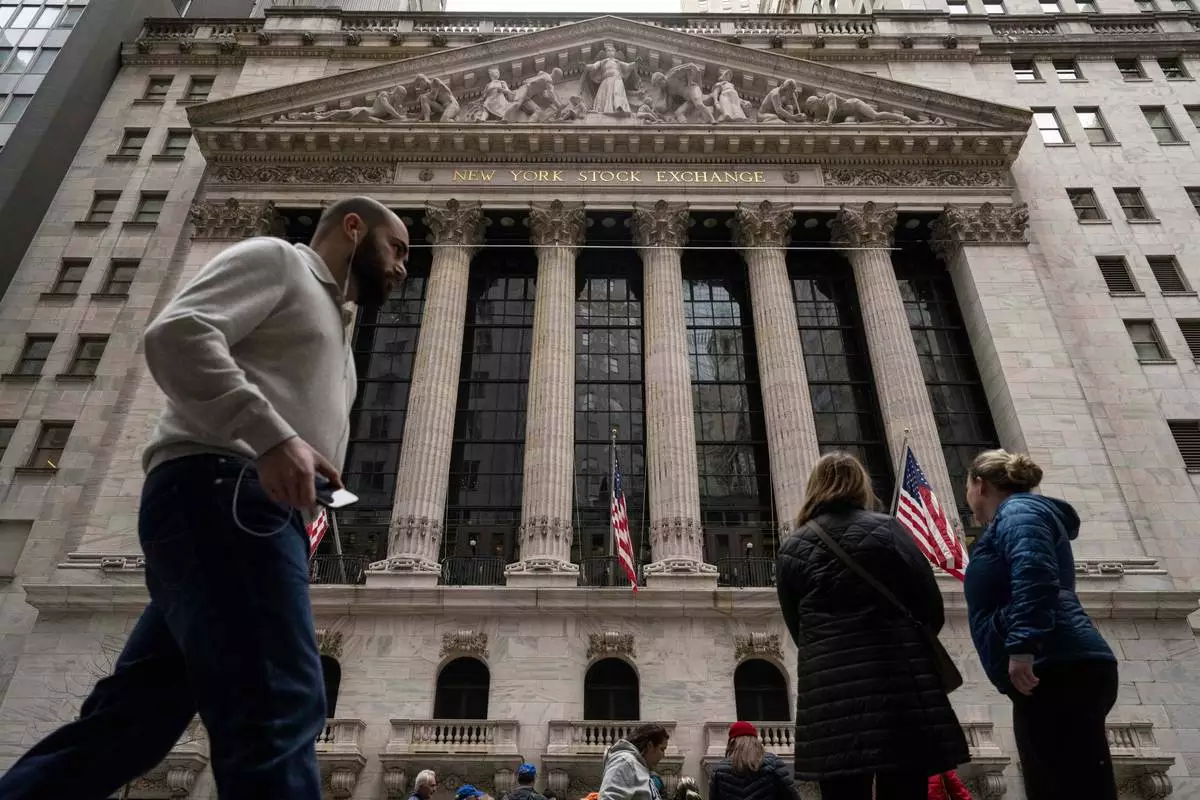
People walk past the New York Stock Exchange, Friday, March 27, 2026, in New York. (AP Photo/Yuki Iwamura)

People walk past the New York Stock Exchange, Friday, March 27, 2026, in New York. (AP Photo/Yuki Iwamura)

A general view shows the New York Stock Exchange, Friday, March 27, 2026, in New York. (AP Photo/Yuki Iwamura)

A general view shows the New York Stock Exchange, Friday, March 27, 2026, in New York. (AP Photo/Yuki Iwamura)

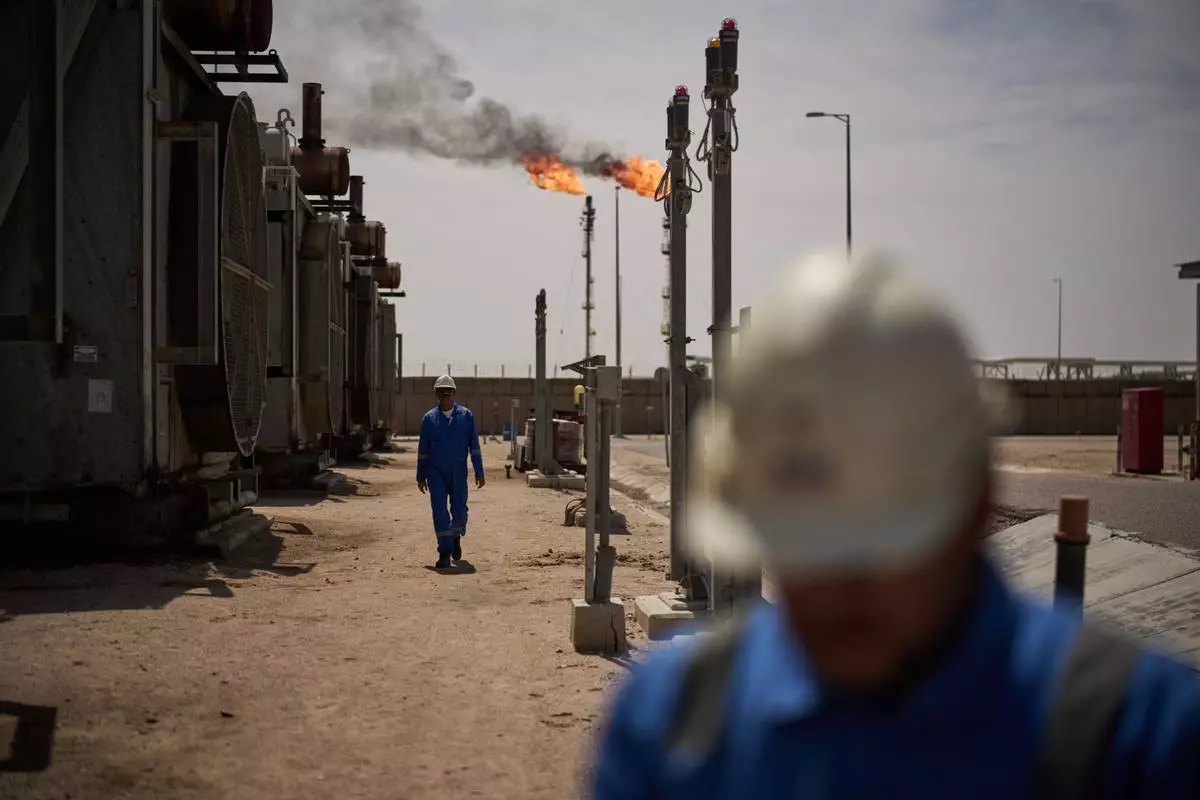
Workers walk in an area at a degassing station in Zubair oil field, whose operations have being reduced due to the Mideast war triggered by the U.S. and Israeli attacks on Iran, near Basra, Iraq, Saturday, March 28, 2026. (AP Photo/Leo Correa)

Workers walk in an area at a degassing station in Zubair oil field, whose operations have being reduced due to the Mideast war triggered by the U.S. and Israeli attacks on Iran, near Basra, Iraq, Saturday, March 28, 2026. (AP Photo/Leo Correa)

A person walks by an electronic stock board showing Japan's Nikkei index in Tokyo Monday, March 30, 2026. (Yusuke Hashizume/Kyodo News via AP)

A person walks by an electronic stock board showing Japan's Nikkei index in Tokyo Monday, March 30, 2026. (Yusuke Hashizume/Kyodo News via AP)

A dealer walks near the screens showing the Korea Composite Stock Price Index (KOSPI), the foreign exchange rate between U.S. dollar and South Korean won and the Korean Securities Dealers Automated Quotations (KOSDAQ) at a dealing room of Hana Bank in Seoul, South Korea, Monday, March 30, 2026. (AP Photo/Lee Jin-man)

A dealer walks near the screens showing the Korea Composite Stock Price Index (KOSPI), the foreign exchange rate between U.S. dollar and South Korean won and the Korean Securities Dealers Automated Quotations (KOSDAQ) at a dealing room of Hana Bank in Seoul, South Korea, Monday, March 30, 2026. (AP Photo/Lee Jin-man)

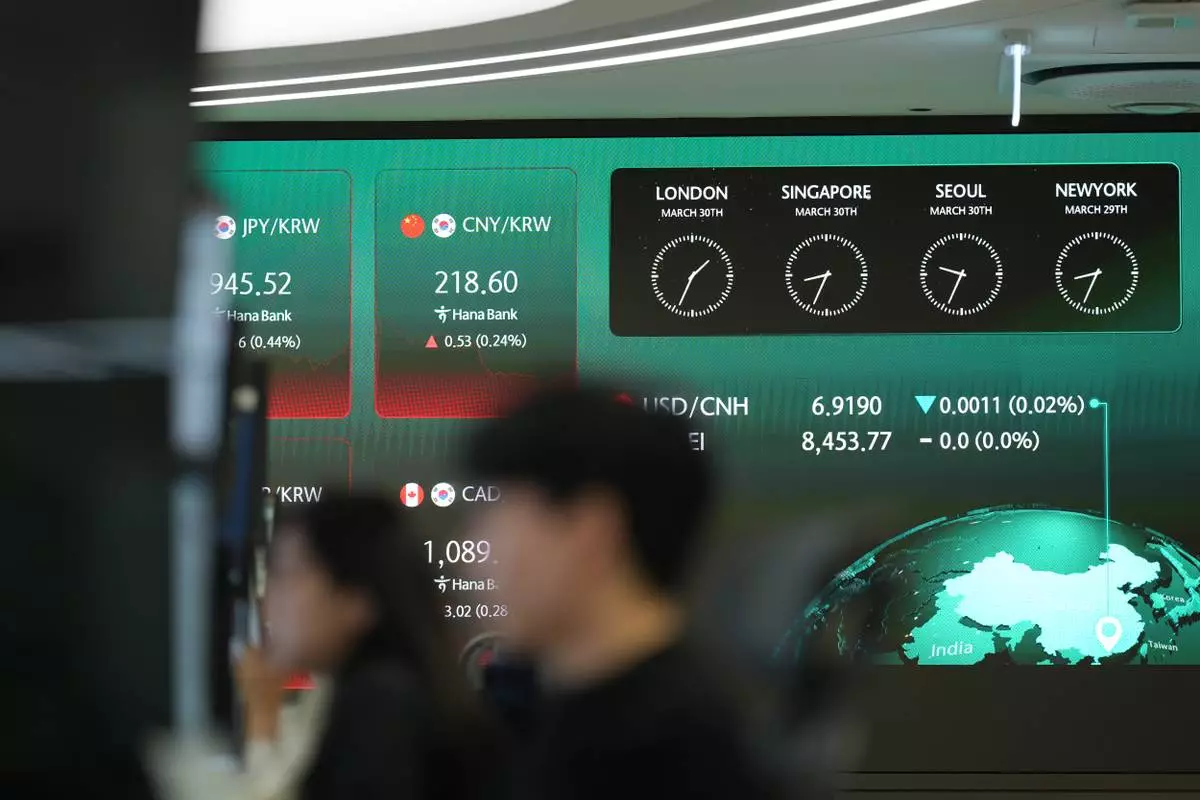
Dealers work near the screens showing the foreign exchange rates at a dealing room of Hana Bank in Seoul, South Korea, Monday, March 30, 2026. (AP Photo/Lee Jin-man)

Dealers work near the screens showing the foreign exchange rates at a dealing room of Hana Bank in Seoul, South Korea, Monday, March 30, 2026. (AP Photo/Lee Jin-man)

Dealers work near the screens showing the Korea Composite Stock Price Index (KOSPI), right, and the foreign exchange rate between U.S. dollar and South Korean won at a dealing room of Hana Bank in Seoul, South Korea, Monday, March 30, 2026. (AP Photo/Lee Jin-man)

Dealers work near the screens showing the Korea Composite Stock Price Index (KOSPI), right, and the foreign exchange rate between U.S. dollar and South Korean won at a dealing room of Hana Bank in Seoul, South Korea, Monday, March 30, 2026. (AP Photo/Lee Jin-man)

Recommended Articles