NEW YORK--(BUSINESS WIRE)--Mar 30, 2026--
Elysian, the first AI-native Third-Party Administrator (TPA) purpose-built for complex commercial claims, today announced the appointment of Zack Moy as Chief Technology Officer. Moy has spent 15 years working on a specific class of engineering problem: how to give structure to unstructured data so that knowledge workers can make better, faster decisions. At Elysian, that work meets its most consequential application yet. Commercial claims generate dense, ambiguous information from dozens of sources simultaneously. The ability to process that information accurately, at speed, and in a form that supports expert judgment is what separates outcomes at Elysian from outcomes anywhere else in the industry.
This press release features multimedia. View the full release here: https://www.businesswire.com/news/home/20260330216243/en/
Moy began his engineering career at Google before co-founding Pattern, an enterprise tool for organizing and acting on complex, unstructured information, acquired by Workday. At Workday, he served as a founding team member of Workday Cloud Platform and rose to Director of Engineering for Workday Extend, leading the development of infrastructure that enterprise organizations use to build and operate mission-critical software at scale. He went on to co-found Afterword, an AI platform serving 20,000+ families through funeral home operations, leading technology in a domain where the margin for error carries direct human consequences. After this, Moy founded Waystone Labs, a research lab dedicated to agentic workflow design.
Across his career, Moy has consistently taken on the same class of problem at greater levels of scale and consequence, building software infrastructure for knowledge workers operating in high-pressure environments where accuracy determines outcomes. His experience is directly applicable to the technical demands of complex commercial claims administration, where Elysian's platform must perform reliably across an enormous volume of ambiguous, time-sensitive information.
"The technical challenge at Elysian is not a simple one. We are building AI infrastructure that has to perform accurately and reliably on the most complex claims in commercial insurance, while scaling a business and deepening client relationships simultaneously. Zack has done this kind of work before, at multiple companies, across different contexts. He has the engineering depth to lead the platform forward and the founder instincts to know what matters as we grow."
said Grace Hanson, Founder and CEO of Elysian.
As CTO, Moy will oversee Elysian’s technical strategy and the continued development of its proprietary Claim Conductor platform. He will work in close collaboration with Head of Product Martin Schwitzner, as well as Founding Engineer, Dylan Hanson, to advance the technical capabilities that underpin Elysian's claims outcomes.
"Commercial claims are informationally complex in ways most AI systems are not designed to handle. Medical records, legal filings, coverage analysis, and live adjuster judgment all run in parallel, under time pressure. Elysian has approached this problem with real technical seriousness. The knowledge infrastructure underlying the platform reflects how expert adjusters actually think and what good outcomes actually require. That is what makes this work worth doing."
said Zack Moy, Chief Technology Officer of Elysian.
Moy's appointment underscores Elysian's commitment to building a technology organization capable of delivering on the complexity of commercial claims at scale. Among its accolades, the company was named to the CB Insights Insurtech Top 50 list, and won the State Farm Startup Pitch Competition at ITC Vegas in 2025. Most recently, Elysian was selected for Lloyd's Lab Cohort 16, a globally competitive program ranked the number-one insurance-focused startup hub by the Financial Times. Under Moy’s leadership, Elysian is well-positioned to advance its platform capabilities and significantly deepen its impact across the commercial insurance market.
About Elysian
Founded in late 2024, Elysian is the first AI-native TPA proven to achieve superior outcomes in commercial insurance. Elysian combines AI-orchestrated claims processing with elite adjusting talent to handle complex commercial claims with unprecedented efficiency. Intrinsic multimodal AI-agent orchestration, purpose-built machine learning, statistical optimization and autonomous decision systems deliver precise insights that empower adjusters to make the right decisions. Learn more at www.elysian.is

Zack Moy, Chief Technology Officer, Elysian
NEW YORK (AP) — U.S. stocks are swinging again Monday as oil prices keep climbing because of uncertainty about when the war with Iran could end.
The S&P 500 rose 0.5% in midday trading, coming off its worst week since the war with Iran began. The Dow Jones Industrial Average was up 411 points, or 0.9%, as of 11:50 a.m. Eastern time, and the Nasdaq composite was 0.4% higher.
That followed gains for stock markets in much of Europe, but caution was still prevalent throughout financial markets. After jumping to an initial gain of 0.9%, the S&P 500 quickly erased virtually all of it before drifting back upward. Stocks in some Asian markets fell sharply, while the price for a barrel of Brent crude delivered in June rose 1.9% to $107.28.
The mixed movements followed a whirlwind of action in the war over the weekend, including an entry into the fighting by Houthi rebels in Yemen. The main issue for investors is whether oil and natural gas can resume their full flow from the Persian Gulf to customers worldwide and prevent a brutal blast of inflation.
Shortly before the U.S. stock market opened for trading Monday, President Donald Trump said on his social media network that “great progress has been made” with “A NEW, AND MORE REASONABLE, REGIME to end our Military Operations in Iran.”
But he also threatened the possibility of “blowing up and completely obliterating” Iranian power plants if a deal is not reached shortly and if the Strait of Hormuz, an integral waterway for the flow of oil, is not opened immediately.
The statement fit and condensed last week’s pattern, where Trump would tout progress being made in talks and offer some optimism for the market, only for doubts to rise quickly afterward about whether the war can end soon.
All the back and forth has some investors saying they’re giving Trump’s pronouncements less weight than before. But stock prices are nevertheless cheaper than they were before the war, which has some investors waiting for an opportune time to buy.
The S&P 500 finished last week 8.7% below its all-time high, which was set in January. The Dow and Nasdaq both were more than 10% below their records, a steep-enough fall that professional investors call it a “correction.”
Taking into account how much profits are expected to grow in the coming year for companies in the S&P 500, the index looks 17% cheaper than before the war, by one measure. That’s in a similar range as where prior growth scares for the market ended, as long as they didn’t result in a recession or the Federal Reserve hiking interest rates, according to strategists at Morgan Stanley.
That’s one of the signs that the strategists led by Michael Wilson point to as “growing evidence the S&P 500 correction is getting closer to its ending stages.”
Of course, the Federal Reserve could upset that if it decides oil prices are threatening to stay high for long enough that it needs to raise interest rates. Higher interest rates would help keep a lid on inflation, but they would also slow the economy and push down on prices for all kinds of investments.
Treasury yields have been leaping in the bond market since the war began because of such worries, but they eased somewhat on Monday.
The yield on the 10-year Treasury fell to 4.33% from 4.44% late Friday. That’s a significant move for the bond market and offers some breathing room for Wall Street. But it remains far above its 3.97% level from before the war.
Easing bond yields can help the real estate industry in particular. Not only do they lower borrowing costs, they can also make real-estate stocks that pay relatively high dividends look more attractive relative to bonds. Alexandria Real Estate, which owns megacampuses for life-sciences companies across the country, rose 2.5%.
Alcoa jumped 12.4% for one of the market's biggest gains on speculation it could get more business after attacks damaged rival aluminum facilities in the Middle East over the weekend.
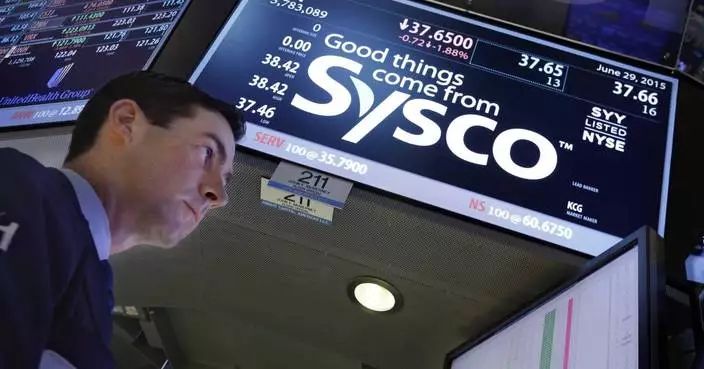
Sysco fell 13.1% after it said it was buying Jetro Restaurant Depot for $21.6 billion in cash and enough Sysco shares to value the company at about $29.1 billion.
In stock markets abroad, the FTSE 100 in London climbed 1.4%, and the CAC 40 in Paris rose 0.9%. That followed drops of 3% for Seoul’s Kospi, 2.8% for Tokyo’s Nikkei 225 and 0.8% for Hong Kong’s Hang Seng.
AP Business Writers Yuri Kageyama and Matt Ott and AP journalist Ayaka McGill contributed to this report.
This story has been corrected to show that the S&P 500 finished last week 8.7% below its record.
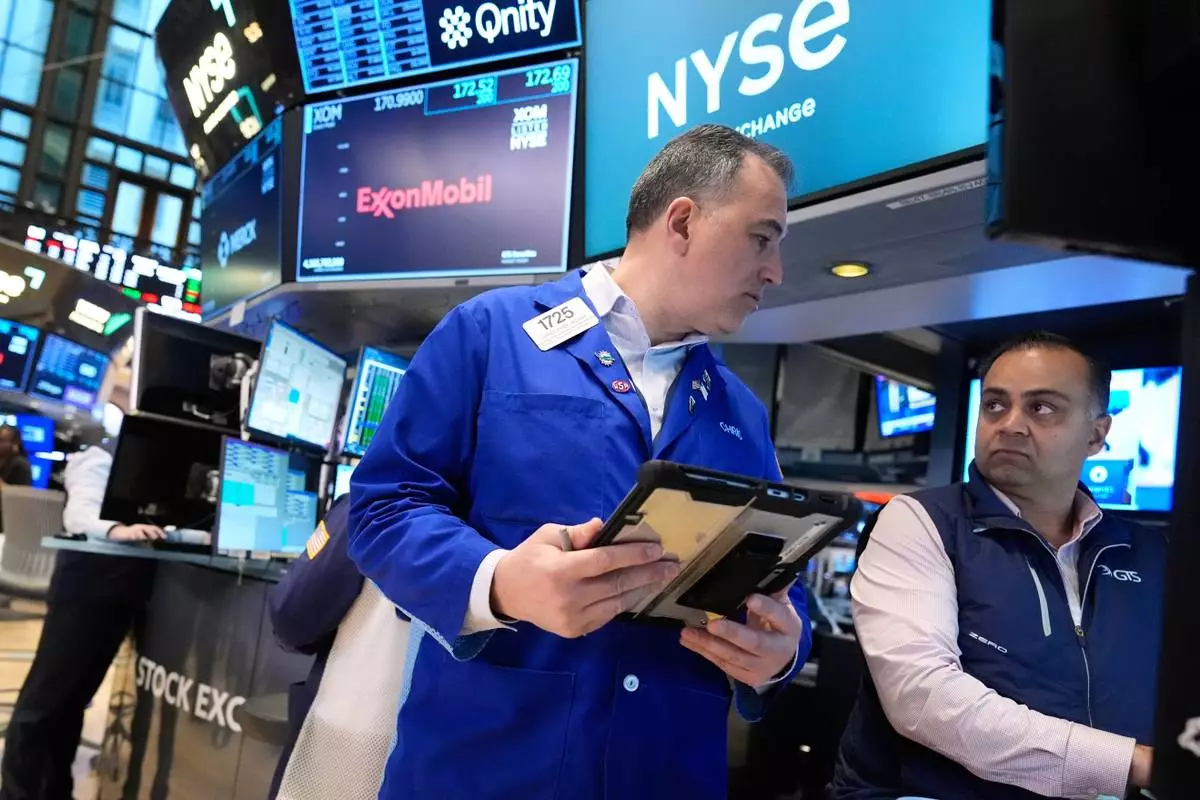
Christopher Lagana, left, and Dilip Patel work on the floor at the New York Stock Exchange in New York, Monday, March 30, 2026. (AP Photo/Seth Wenig)
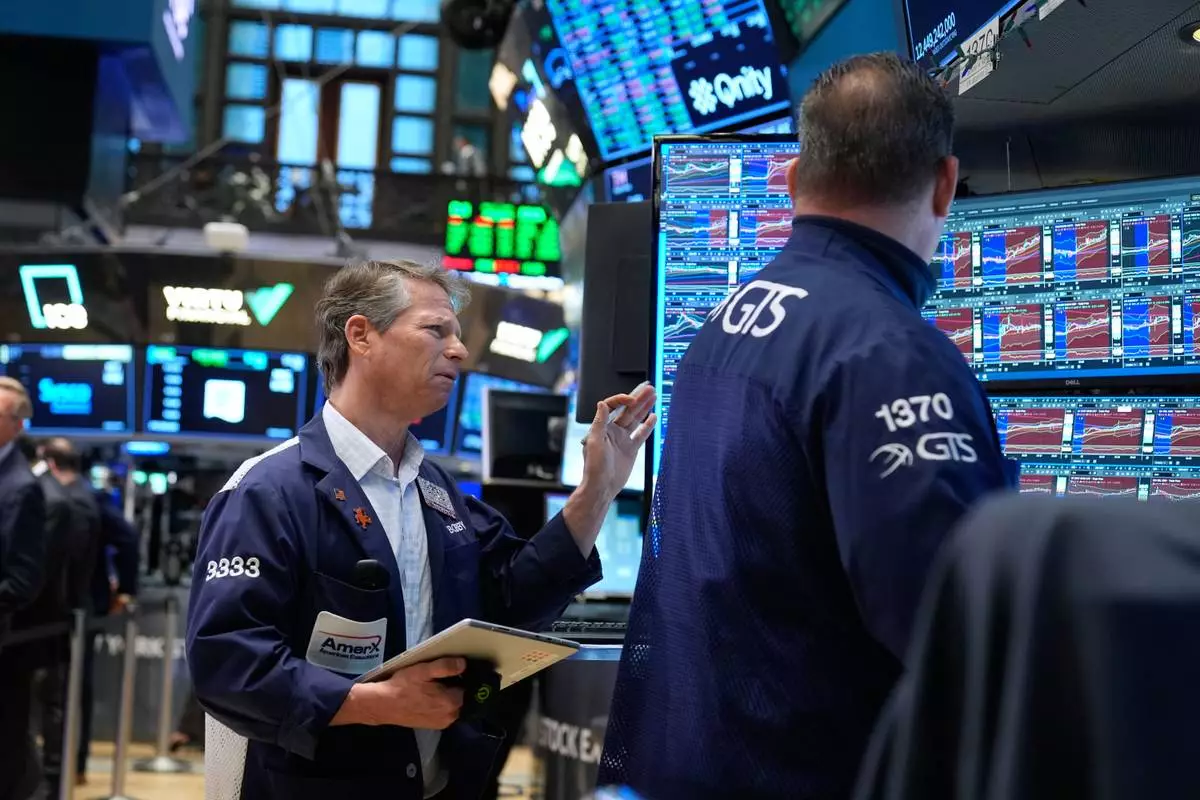
Bobby Charmak works on the floor at the New York Stock Exchange in New York, Monday, March 30, 2026. (AP Photo/Seth Wenig)
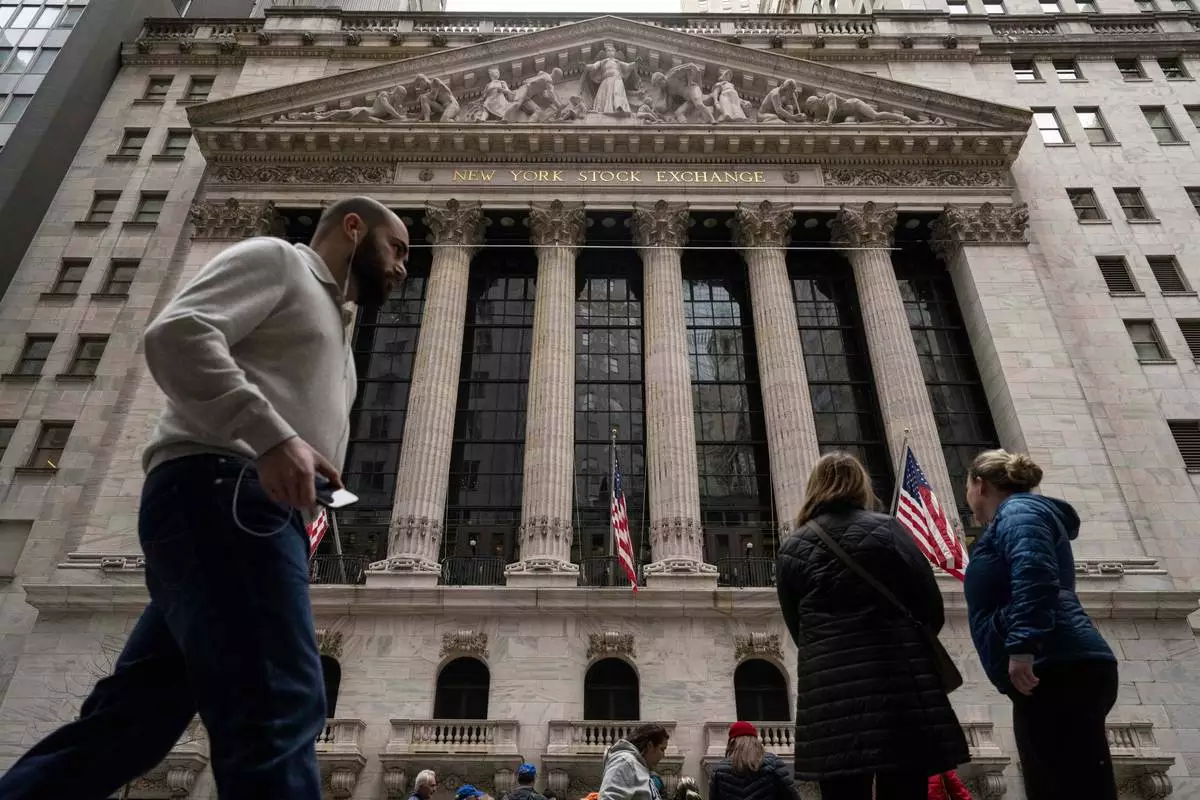
People walk past the New York Stock Exchange, Friday, March 27, 2026, in New York. (AP Photo/Yuki Iwamura)

A general view shows the New York Stock Exchange, Friday, March 27, 2026, in New York. (AP Photo/Yuki Iwamura)
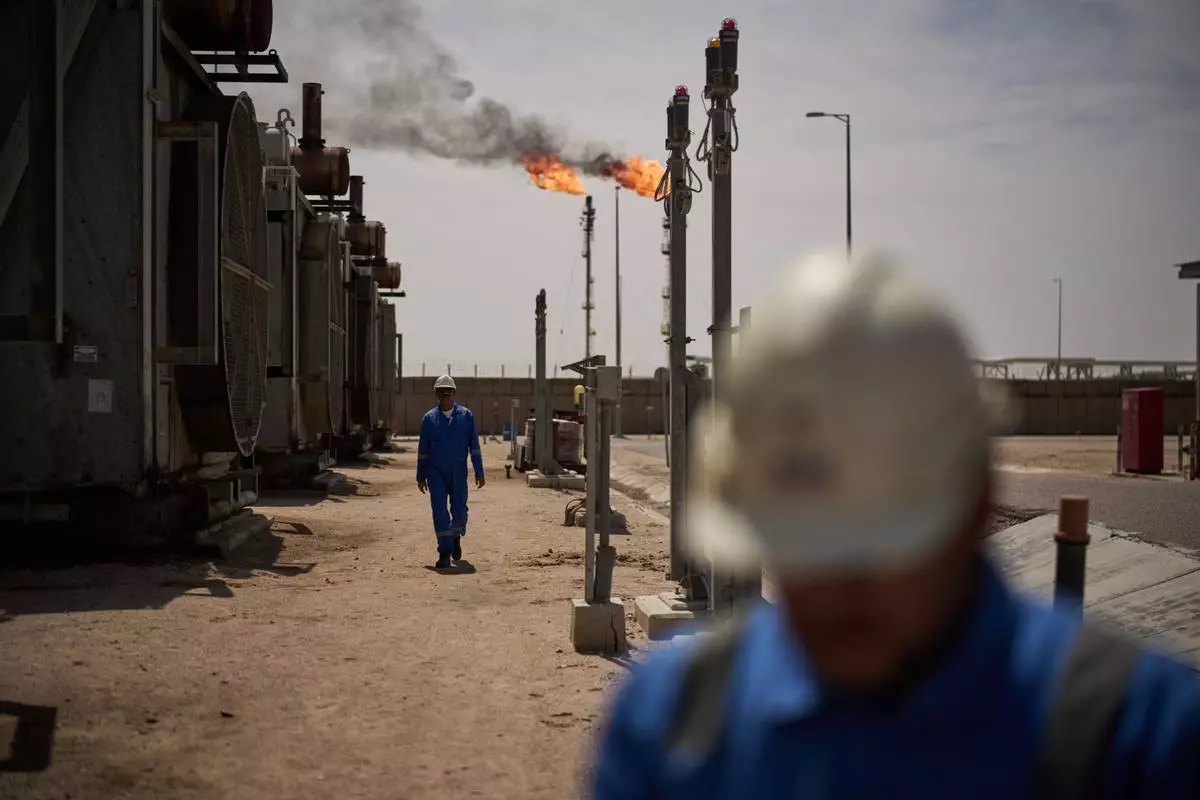
Workers walk in an area at a degassing station in Zubair oil field, whose operations have being reduced due to the Mideast war triggered by the U.S. and Israeli attacks on Iran, near Basra, Iraq, Saturday, March 28, 2026. (AP Photo/Leo Correa)
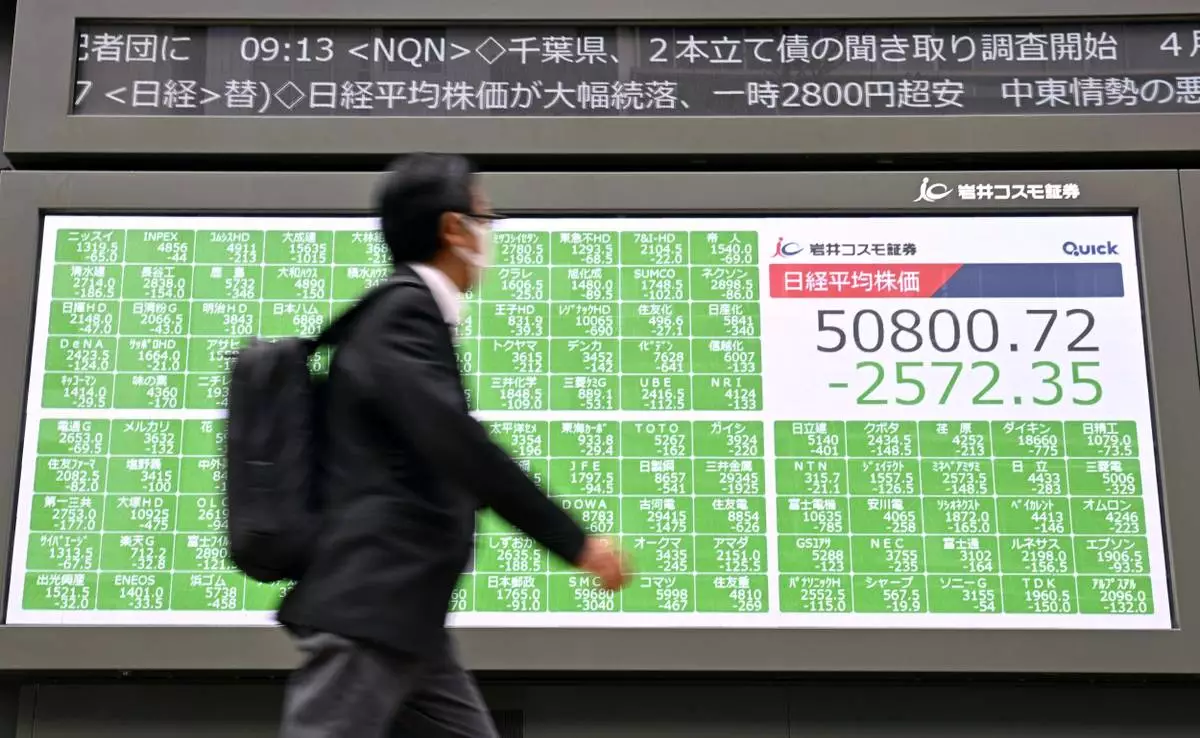
A person walks by an electronic stock board showing Japan's Nikkei index in Tokyo Monday, March 30, 2026. (Yusuke Hashizume/Kyodo News via AP)
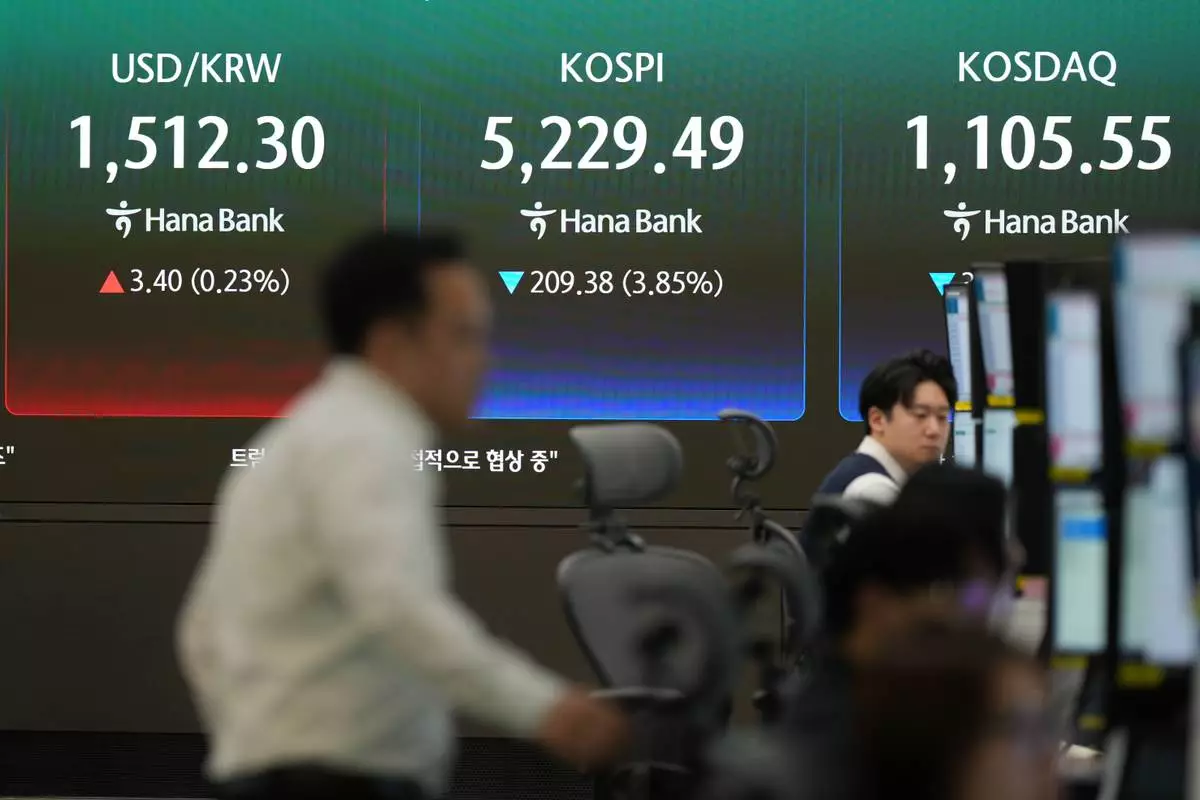
A dealer walks near the screens showing the Korea Composite Stock Price Index (KOSPI), the foreign exchange rate between U.S. dollar and South Korean won and the Korean Securities Dealers Automated Quotations (KOSDAQ) at a dealing room of Hana Bank in Seoul, South Korea, Monday, March 30, 2026. (AP Photo/Lee Jin-man)
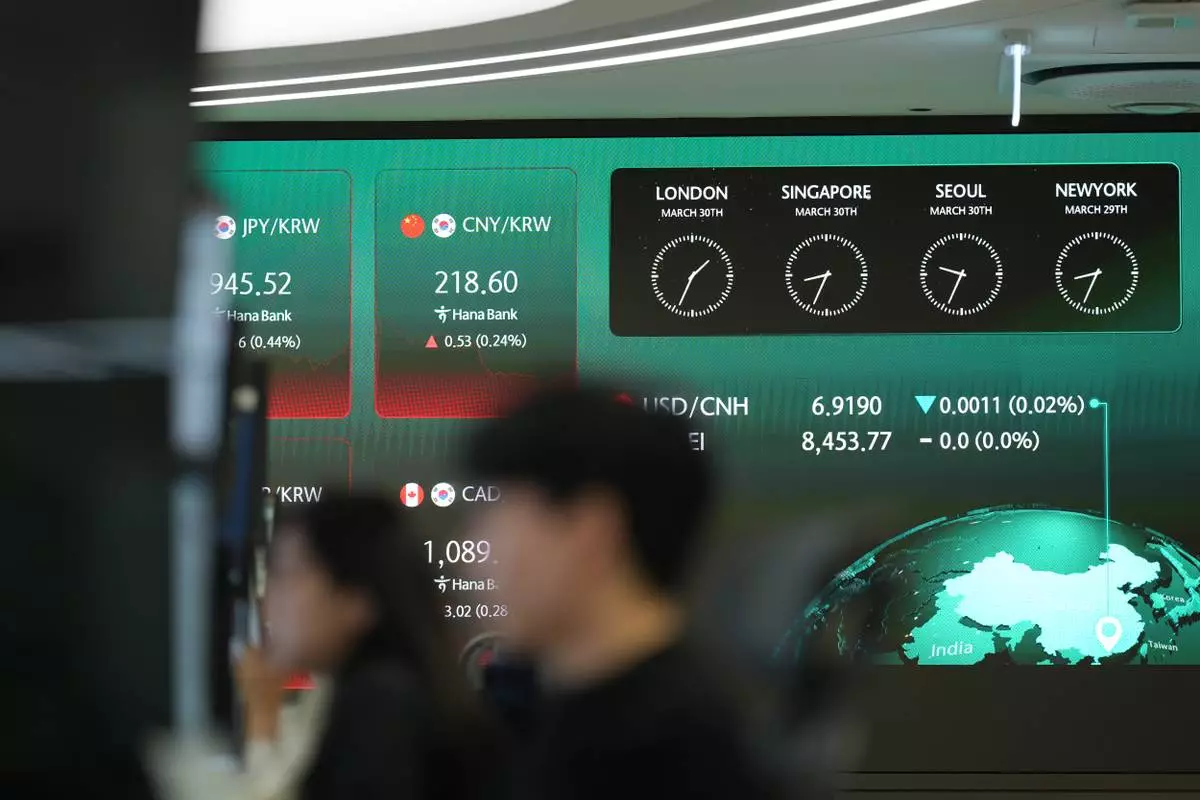
Dealers work near the screens showing the foreign exchange rates at a dealing room of Hana Bank in Seoul, South Korea, Monday, March 30, 2026. (AP Photo/Lee Jin-man)
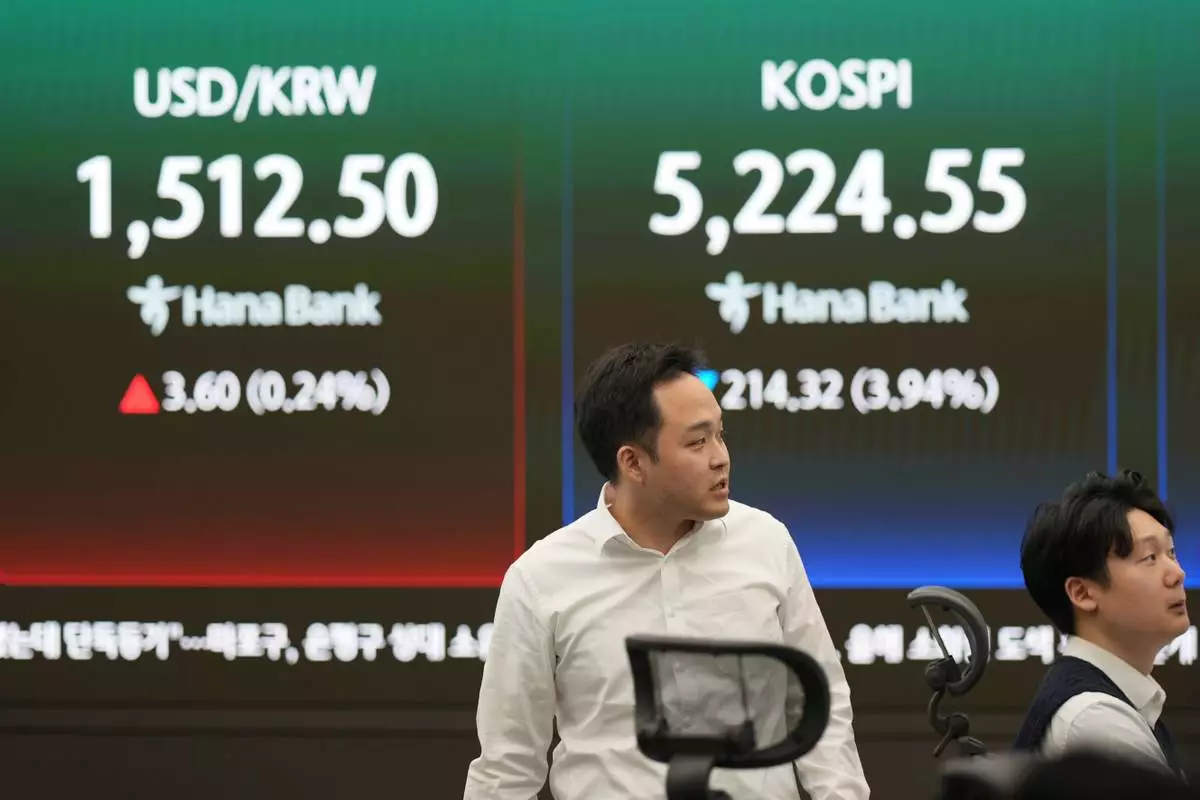
Dealers work near the screens showing the Korea Composite Stock Price Index (KOSPI), right, and the foreign exchange rate between U.S. dollar and South Korean won at a dealing room of Hana Bank in Seoul, South Korea, Monday, March 30, 2026. (AP Photo/Lee Jin-man)