Skip to Content Facebook Feature Image

The Mississippi Department of Public Safety uncovers rare KKK artifacts in one of its offices

News

The Mississippi Department of Public Safety uncovers rare KKK artifacts in one of its offices
News

News

The Mississippi Department of Public Safety uncovers rare KKK artifacts in one of its offices

2026-03-31 05:33 Last Updated At:05:40

A notebook with meeting minutes and a ledger are among Ku Klux Klan-related items that the Mississippi state government uncovered while clearing out an office, offering new glimpses into the violent white supremacist group known for its secrecy and links to law enforcement.

All the objects have been transferred to the Mississippi Department of Archives and History. Officials say it will take months to process all the materials.

More Images
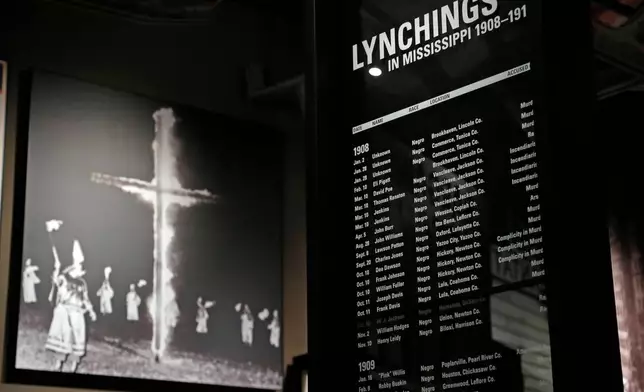
FILE - A monolith listing the names, dates and rationale for the lynching of African-American residents rests in the foreground of a photograph of a burning Ku Klux Klan cross on display in the Mississippi Civil Rights Museum in Jackson, Miss, Nov. 10, 2017. (AP Photo/Rogelio V. Solis, file)
FILE - A monolith listing the names, dates and rationale for the lynching of African-American residents rests in the foreground of a photograph of a burning Ku Klux Klan cross on display in the Mississippi Civil Rights Museum in Jackson, Miss, Nov. 10, 2017. (AP Photo/Rogelio V. Solis, file)

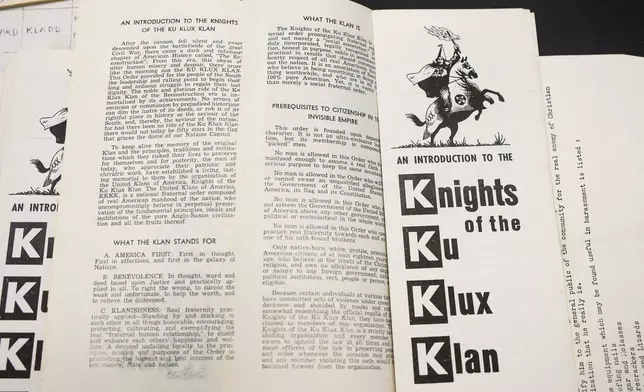
This photo provided by the Mississippi Department of Archives & History shows a Ku Klux Klan handbook Thursday, March 19, 2026, in Jackson, Miss., found inside a closet in the Mississippi Department of Public Safety as employees were preparing to move. (Mississippi Department of Archives & History via AP)
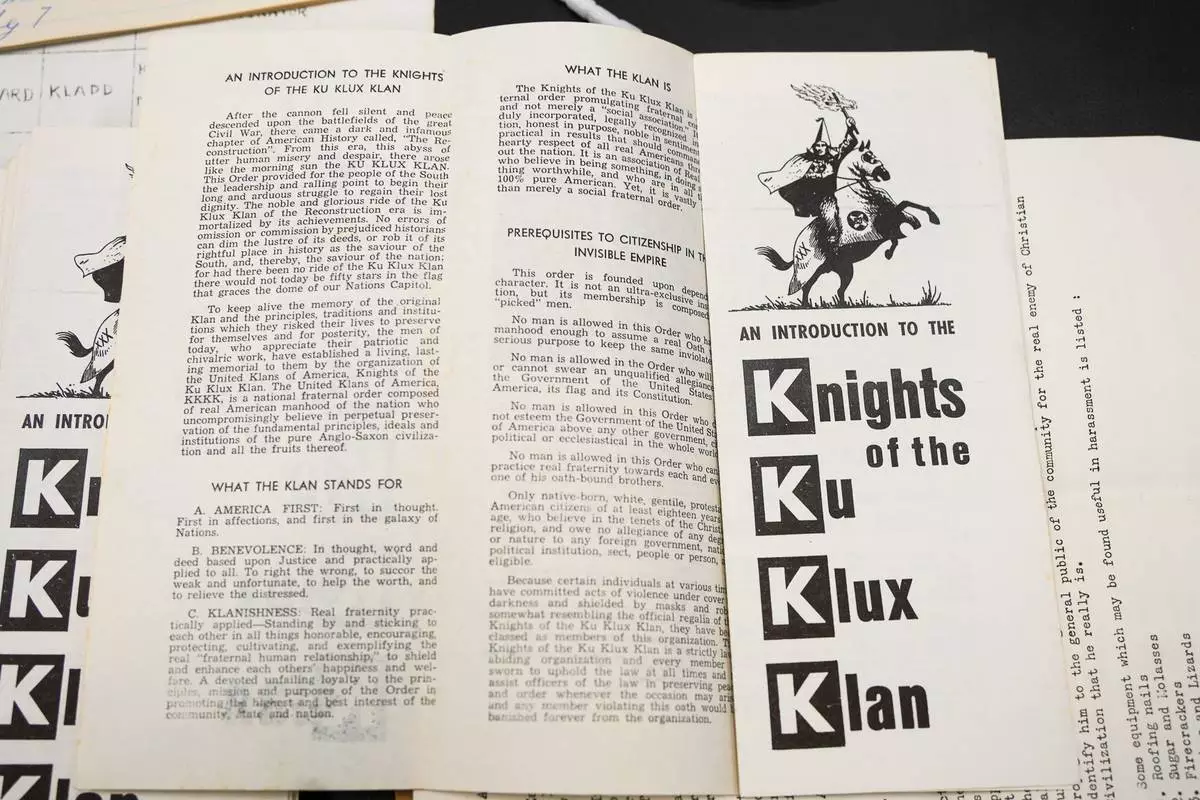
This photo provided by the Mississippi Department of Archives & History shows a Ku Klux Klan handbook Thursday, March 19, 2026, in Jackson, Miss., found inside a closet in the Mississippi Department of Public Safety as employees were preparing to move. (Mississippi Department of Archives & History via AP)
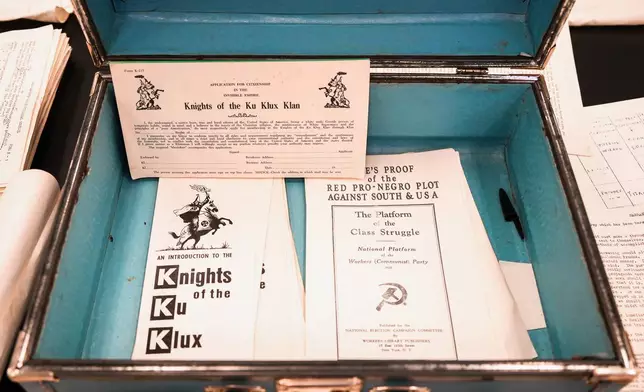
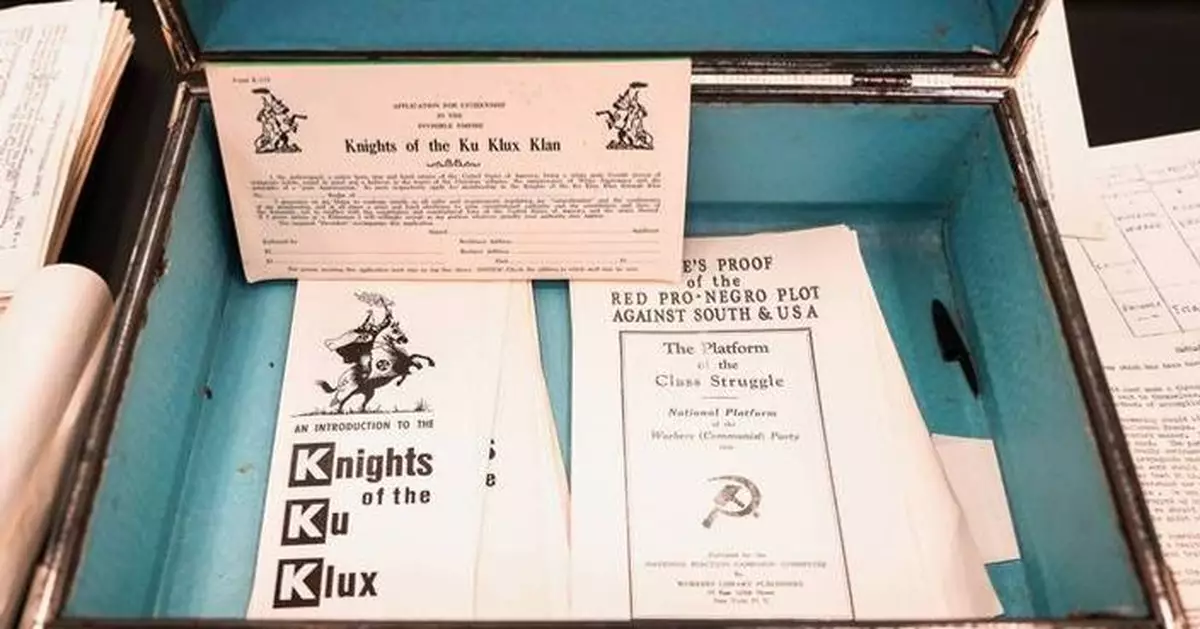
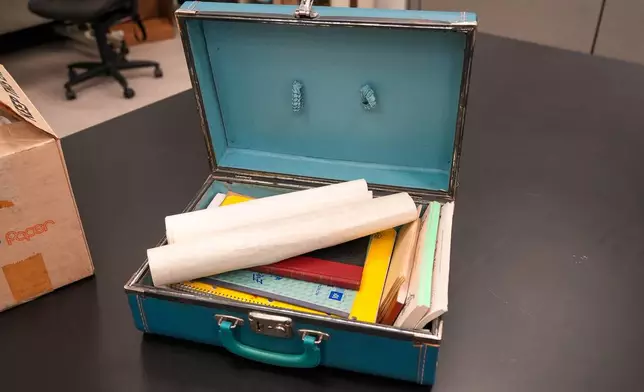
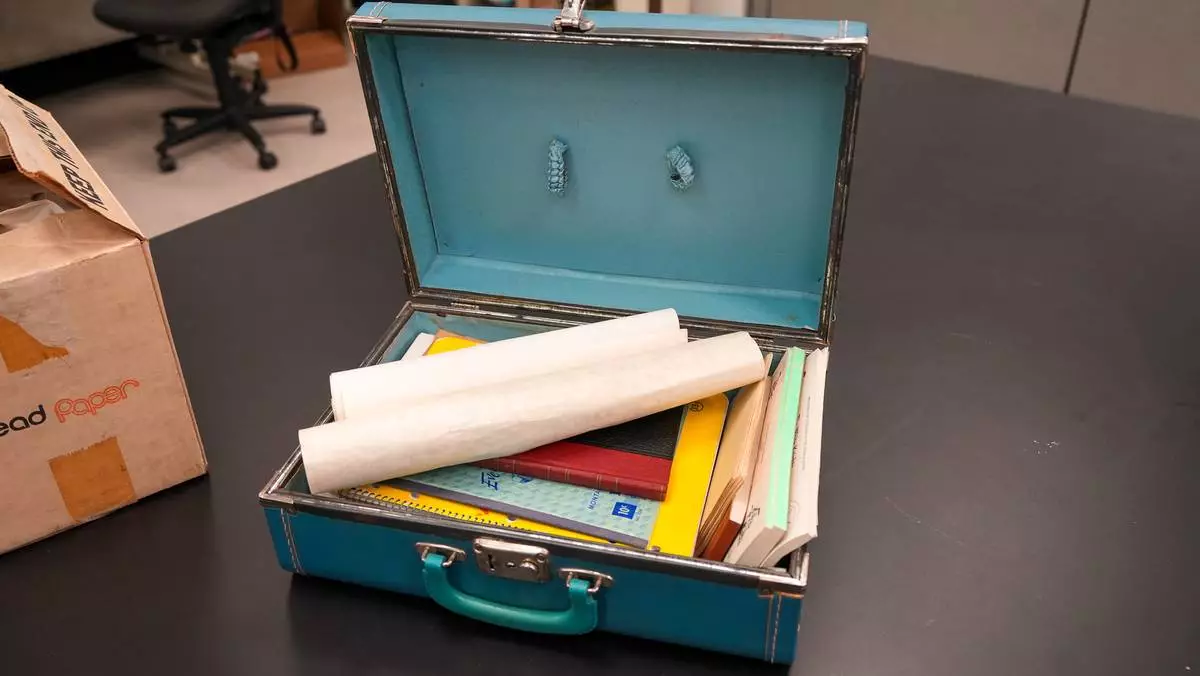
This photo provided by the Mississippi Department of Archives & History shows a briefcase containing Ku Klux Klan-related items, Thursday, March 19, 2026, in Jackson, Miss., found inside a closet in the Mississippi Department of Public Safety as employees were preparing to move. (Mississippi Department of Archives & History via AP)

This photo provided by the Mississippi Department of Archives & History shows a briefcase containing Ku Klux Klan-related items, Thursday, March 19, 2026, in Jackson, Miss., found inside a closet in the Mississippi Department of Public Safety as employees were preparing to move. (Mississippi Department of Archives & History via AP)

This photo provided by the Mississippi Department of Archives & History shows a briefcase containing Ku Klux Klan-related items Thursday, March 19, 2026, in Jackson, Miss., found inside a closet in the Mississippi Department of Public Safety as employees were preparing to move. (Mississippi Department of Archives & History via AP)

This photo provided by the Mississippi Department of Archives & History shows a briefcase containing Ku Klux Klan-related items Thursday, March 19, 2026, in Jackson, Miss., found inside a closet in the Mississippi Department of Public Safety as employees were preparing to move. (Mississippi Department of Archives & History via AP)

They can serve as a reminder of the Klan's history in the state and highlight the importance of preserving history so it is not repeated, according to Black civil rights advocates.

“I’m glad these stories are coming out because it was a real pain,” said Charles Taylor, executive director of the Mississippi State Conference of the NAACP.

The Mississippi Department of Public Safety last week disclosed the discovery of several KKK objects while preparing to relocate to new headquarters. Unearthed inside a suitcase were a handbook for the White Knights of the Ku Klux Klan, Klan charters, a Klan robe, KKK recruitment materials, propaganda such as a "The Ugly Truth about Martin Luther King" pamphlet, meeting notes, ledgers and a list of members who paid and didn’t pay their dues.

Officials with the Department of Archives and History said they are not shying away from the discovery.

“Mississippi Highway Patrol Troopers and agents with the Mississippi Department of Public Safety have worked for decades with our federal law enforcement partners to shed light on the darkness in which groups like the Ku Klux Klan chose to operate,” said DPS Commissioner Sean Tindell. “By preserving these artifacts and shedding light on such organizations, we help ensure that future generations are never led astray by such hate.”

Formed just months after the end of the Civil War by six former Confederate officers, the Klan originally seemed more like a college fraternity with ceremonial robes and odd titles for its officers. But they began terrorizing freed Black citizens. Congress effectively outlawed the Klan in 1871 but it resurrected during World War I. With the enactment of the South's Jim Crow laws, the Klan's presence grew. By the 1960s, the Klan was responsible for lynchings, burning of churches and other attacks, Taylor said.

In 1964, Klan members abducted and killed three civil rights workers in what became known as the “Mississippi Burning killings.” The Klan also bombed the state's only synagogue in 1967. An arsonist set fire to the same synagogue in January.

Taylor says the newly found artifacts remind us that it wasn’t that long ago and underscores the importance of ensuring that no law enforcement officers serving now have the same beliefs as the KKK.

“It’s one thing to be able to say very clearly this was here but it was at their place," Taylor said. "Folks were studying (propaganda) as they were supposed to be providing safety for all Mississippians.”

Department of Archives and History Commissioner Barry White said items like administrative records and a charter are significant, as the Klan was notoriously secretive.

“MDAH is grateful to Commissioner Tindell for recognizing the historical significance of this material and transferring it to the archives," White said. “These records will give researchers broader access to documentation that deepens our understanding of Ku Klux Klan activities in Mississippi during the 1960s.”

Stephanie Johnson-Toliver, president of the Black Heritage Society of Washington State, which focuses on archiving Black history, said protecting history even in this context is important.

Making the inventory accessible will allow members of the public to “look at the history that definitely harmed and was traumatic and remains to be harmful and traumatic here in the United States,” Johnson-Toliver said.
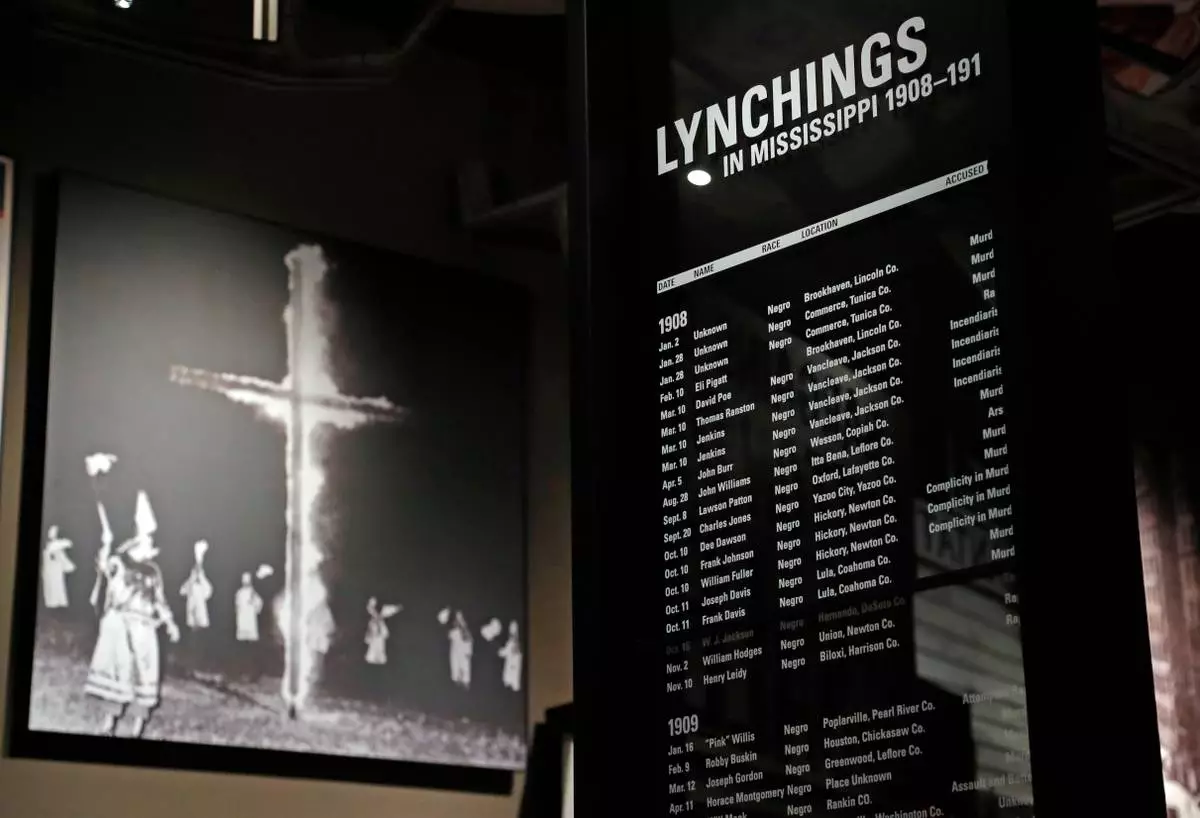
FILE - A monolith listing the names, dates and rationale for the lynching of African-American residents rests in the foreground of a photograph of a burning Ku Klux Klan cross on display in the Mississippi Civil Rights Museum in Jackson, Miss, Nov. 10, 2017. (AP Photo/Rogelio V. Solis, file)
FILE - A monolith listing the names, dates and rationale for the lynching of African-American residents rests in the foreground of a photograph of a burning Ku Klux Klan cross on display in the Mississippi Civil Rights Museum in Jackson, Miss, Nov. 10, 2017. (AP Photo/Rogelio V. Solis, file)

This photo provided by the Mississippi Department of Archives & History shows a Ku Klux Klan handbook Thursday, March 19, 2026, in Jackson, Miss., found inside a closet in the Mississippi Department of Public Safety as employees were preparing to move. (Mississippi Department of Archives & History via AP)
This photo provided by the Mississippi Department of Archives & History shows a Ku Klux Klan handbook Thursday, March 19, 2026, in Jackson, Miss., found inside a closet in the Mississippi Department of Public Safety as employees were preparing to move. (Mississippi Department of Archives & History via AP)
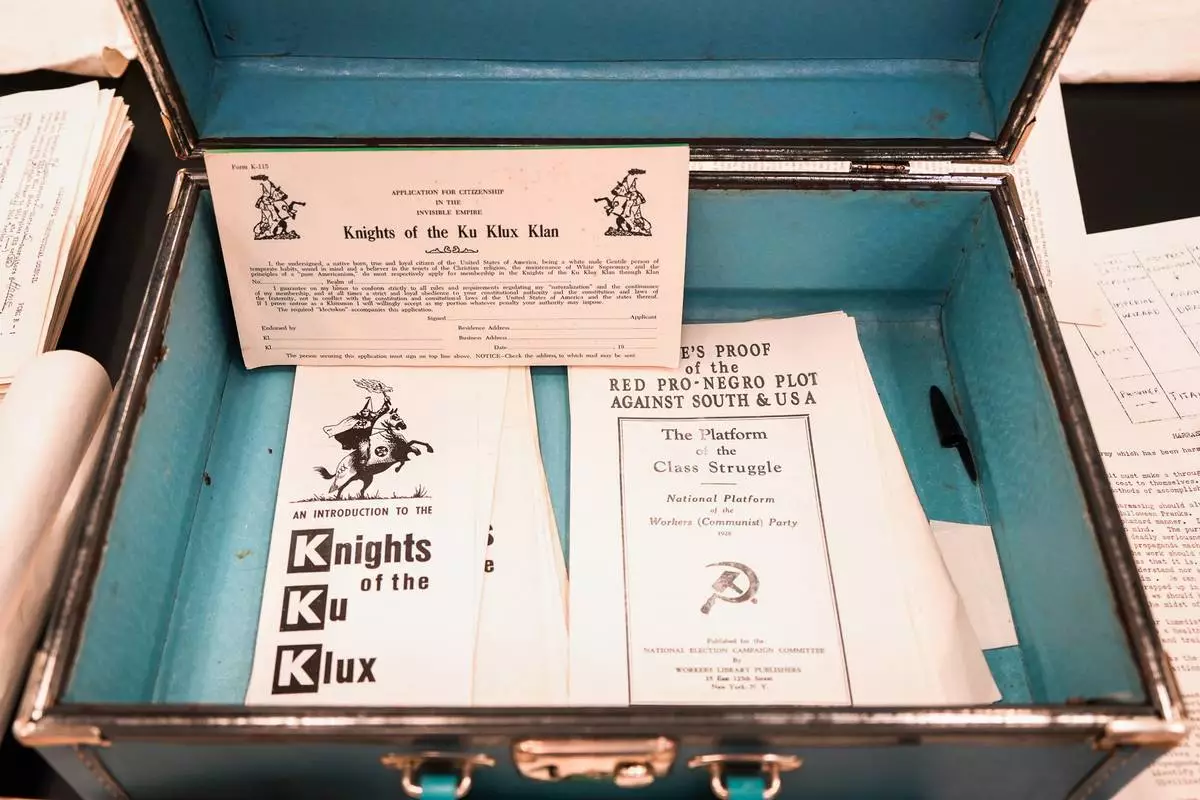
This photo provided by the Mississippi Department of Archives & History shows a briefcase containing Ku Klux Klan-related items, Thursday, March 19, 2026, in Jackson, Miss., found inside a closet in the Mississippi Department of Public Safety as employees were preparing to move. (Mississippi Department of Archives & History via AP)


This photo provided by the Mississippi Department of Archives & History shows a briefcase containing Ku Klux Klan-related items, Thursday, March 19, 2026, in Jackson, Miss., found inside a closet in the Mississippi Department of Public Safety as employees were preparing to move. (Mississippi Department of Archives & History via AP)

This photo provided by the Mississippi Department of Archives & History shows a briefcase containing Ku Klux Klan-related items Thursday, March 19, 2026, in Jackson, Miss., found inside a closet in the Mississippi Department of Public Safety as employees were preparing to move. (Mississippi Department of Archives & History via AP)

This photo provided by the Mississippi Department of Archives & History shows a briefcase containing Ku Klux Klan-related items Thursday, March 19, 2026, in Jackson, Miss., found inside a closet in the Mississippi Department of Public Safety as employees were preparing to move. (Mississippi Department of Archives & History via AP)
MINNEAPOLIS (AP) — The Trump administration sued Minnesota and its school athletics governing body on Monday, carrying out a threat to punish the state for allowing transgender athletes to compete in girls sports.

The lawsuit is part of a broader fight over the rights of transgender youth. More than two dozen states have laws prohibiting transgender women and girls from participating in certain sports and some have barred gender-affirming surgeries for minors. Courts have blocked some of those policies.

In the lawsuit filed Monday, the Justice Department alleges the state Department of Education and the Minnesota State High School League are violating Title IX, a federal law against sex discrimination in educational programs that receive federal money.

“The Trump Administration does not tolerate flawed state policies that ignore biological reality and unfairly undermine girls on the playing field,” Attorney General Pamela Bondi said in a statement.

Democratic Minnesota Attorney General Keith Ellison called the lawsuit “a sad attempt to get attention” over an issue that has already been in litigation for months. He said he'll keep fighting.

“It is astonishing that any president would try to target, shame, and harass children just trying to be themselves, let alone a president with so many actual problems to address,” Ellison said in a statement.

The League does not comment on threatened or pending lawsuits, spokesman Tim Leighton said.

The administration has filed similar lawsuits against Maine and California, and has threatened the federal funding of some universities over transgender athletes, including San Jose State in California and the University of Pennsylvania.

Minnesota officials have long resisted the federal push to ban trans athletes from girls sports. Ellison filed a preemptive lawsuit last April, saying Minnesota's human rights act supersedes executive orders issued by President Donald Trump last year. The lawsuit also says the state is already in compliance with Title IX. A ruling is pending on the federal government's motion to dismiss that case.

The Justice Department said in a statement that Minnesota violates Title IX “by requiring girls to compete against boys in athletic competitions that are designated exclusively for girls and allowing boys to invade intimate spaces designated exclusively for girls, such as multi-person locker rooms and bathrooms.”

To buttress its claims that trans athletes have an unfair advantage, the lawsuit highlights the case of a trans pitcher on the Champlin Park High School girls varsity fastpitch softball team who helped lead the school to a 6-0 victory in a state championship game in 2025.

The Trump administration also reversed the Biden administration's interpretation of Title IX, which held that its provisions prohibiting discrimination on the basis of sex also extended to gender identity.

According to the Justice Department, Minnesota's Department of Education receives more than $3 billion annually in federal funding from the U.S. departments of Education and Health and Human Services. It says that funding is contingent on compliance with Title IX.

The lawsuit asks a federal court in Minnesota to declare the state in violation of Title IX and order it to prohibit transgender girls from competing in girls' prep sports.

The civil rights offices at the Education and Health and Human Services put the state and league on notice last September that they faced legal action if they didn't stop violating the federal law.

Attorney General Pam Bondi listens during a Cabinet meeting at the White House, Thursday, March 26, 2026, in Washington. (AP Photo/Alex Brandon)

Attorney General Pam Bondi listens during a Cabinet meeting at the White House, Thursday, March 26, 2026, in Washington. (AP Photo/Alex Brandon)

Recommended Articles