PROVIDENCE, R.I. (AP) — Providence basketball player Duncan Powell pleaded not guilty Monday to domestic assault and disorderly conduct charges stemming from a weekend altercation that started in Providence and continued in the suburb of Cranston.
Powell, who just finished his fifth college season and was a backup forward in his only year with the Friars, was arraigned in Providence County District Court after a woman alleged her knee was injured when Powell threw a water bottle at her during an argument at his apartment in Providence on Saturday.
He is scheduled to appear in court in Cranston on Thursday on charges of domestic violence and disorderly conduct for allegedly tracking down the woman to a residence there early Sunday and threatening to kill everyone in the house and then himself.
A judge in Providence released Powell on a personal recognizance bond and ordered him to have no contact with the woman.
The attorneys for Powell listed in court records, Elizabeth Payette and William J. Lynch, did not immediately respond to phone messages seeking comment.
The 24-year-old woman reported the Saturday morning assault after Powell's arrest in Cranston. According to Providence police, she told Powell she was ending their relationship. Powell became upset and threw the water bottle, causing bruising and swelling to her right knee.
The woman later went to visit friends in Cranston. Powell made multiple calls to the woman while she was at a Cranston residence and told her he knew where she was and that he was coming to the house to cause harm.
Frightened, she left, and people who stayed at the house turned out the lights and hid when Powell arrived and began knocking on the door. Police had been called by then, and they located Powell a short time later and took him into custody at gunpoint.
Duncan was suspended three games after his hard foul on St. John's Bryce Hopkins sparked a fight that resulted in seven players getting ejected from a game Feb. 14.
Hopkins was attempting a fast-break layup when he was raked across the head and face by Powell’s arm, taking him to the ground. Powell was ejected for a Flagrant 2 foul and issued a technical foul for fighting.
Get poll alerts and updates on the AP Top 25 throughout the season. Sign up here and here (AP mobile app). AP college basketball: https://apnews.com/hub/ap-top-25-college-basketball-poll and https://apnews.com/hub/college-basketball

This booking photo provided by the Cranston, R.I., Police Department shows Duncan Powell, Sunday, March 29, 2026. (Cranston Police Department via AP)
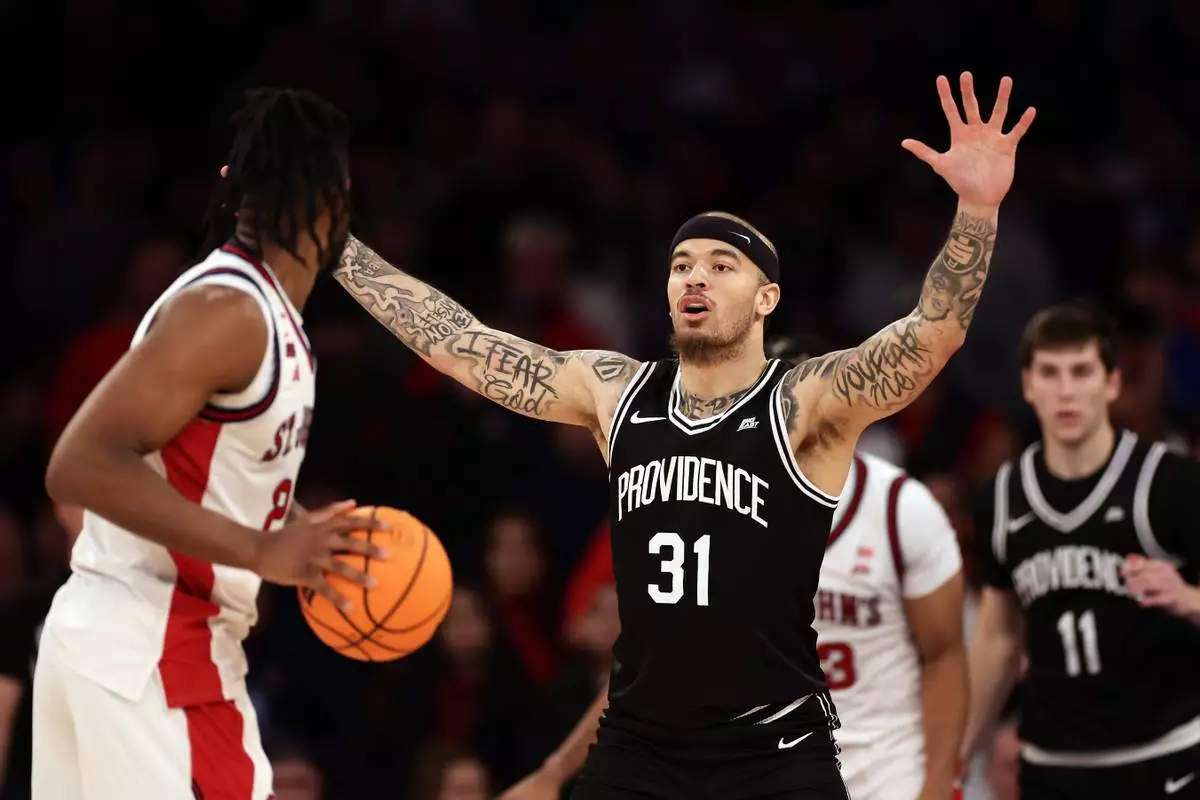
FILE - Providence forward Duncan Powell (31) defends against St. John during the first half of an NCAA college basketball game Jan. 3, 2026, in New York. (AP Photo/Adam Hunger, File)
NEW YORK (AP) — U.S. stocks swung Monday as oil prices kept climbing because of uncertainty about when the war with Iran could end.
The S&P 500 slipped 0.4% and deepened its loss since the war began to pull 9.1% below its record set early this year. The Dow Jones Industrial Average added 49 points, or 0.1%, and the Nasdaq composite fell 0.7%.
Caution was prevalent throughout financial markets. After jumping to an initial gain of 0.9%, the S&P 500 quickly erased nearly all of it before seesawing lower. Stock indexes rose in Europe but fell sharply in some Asian markets, while the price for a barrel of benchmark U.S. crude rose 3.3% to settle at $102.88
The mixed movements followed a whirlwind of action in the war over the weekend, including an entry into the fighting by Houthi rebels in Yemen. None of it gave any clarity for the main questions weighing on financial markets: When will oil and natural gas resume their full flows from the Persian Gulf to customers worldwide, and will it be soon enough to prevent a brutal blast of inflation?
Shortly before the U.S. stock market opened for trading Monday, President Donald Trump said on his social media network that “great progress has been made” with “A NEW, AND MORE REASONABLE, REGIME to end our Military Operations in Iran.”
But he also threatened the possibility of “blowing up and completely obliterating” Iranian power plants if a deal is not reached shortly and if the Strait of Hormuz, an integral waterway for the flow of oil, is not opened immediately.
The statement fit and condensed last week’s pattern, where Trump would tout progress being made in talks and offer some optimism for the market, only for doubts to rise quickly afterward about whether the war can end soon.
All the back and forth has some investors saying they’re giving Trump’s pronouncements less weight than before. But stock prices are nevertheless cheaper than they were before the war, which has some investors looking for an opportune time to buy.
The S&P 500 finished last week 8.7% below its all-time high, which was set in January. The Dow and Nasdaq both were more than 10% below their records, a steep-enough fall that professional investors call it a “correction.”
Taking into account how much profits are expected to grow in the coming year for companies in the S&P 500, the index looks roughly 17% cheaper than before the war, by one measure. That’s in a similar range as where prior growth scares for the market ended, as long as they didn’t result in a recession or the Federal Reserve hiking interest rates, according to strategists at Morgan Stanley.
That’s one of the signs that the strategists led by Michael Wilson point to as “growing evidence the S&P 500 correction is getting closer to its ending stages.”
Of course, the Federal Reserve could upset that if it decides oil prices are threatening to stay high for long enough that it needs to raise interest rates. Higher interest rates would help keep a lid on inflation, but they would also slow the economy and push down on prices for all kinds of investments.
Treasury yields have been leaping in the bond market since the war began because of such worries, but they eased somewhat on Monday.
The yield on the 10-year Treasury fell to 4.35% from 4.44% late Friday. That’s a significant move for the bond market and offers some breathing room for Wall Street. But it remains far above its 3.97% level from before the war.
On Wall Street, Sysco fell 15.3% to help lead the market lower after it said it was buying Jetro Restaurant Depot for $21.6 billion in cash and enough Sysco shares to value the company at about $29.1 billion.
Alcoa rose 8.2% for one of the market’s biggest gains on speculation it could get more business after attacks damaged rival aluminum facilities in the Middle East over the weekend.
All told, the S&P 500 fell 25.13 points to 6,343.72. The Dow Jones Industrial Average added 49.50 to 45,216.14, and the Nasdaq composite sank 153.72 to 20,794.64.
In stock markets abroad, the FTSE 100 in London climbed 1.6%, and the CAC 40 in Paris rose 0.9%. That followed drops of 3% for Seoul’s Kospi, 2.8% for Tokyo’s Nikkei 225 and 0.8% for Hong Kong’s Hang Seng.
AP Business Writers Yuri Kageyama and Matt Ott and AP journalist Ayaka McGill contributed to this report.
This story has been corrected to show that the S&P 500 finished last week 8.7% below its record.
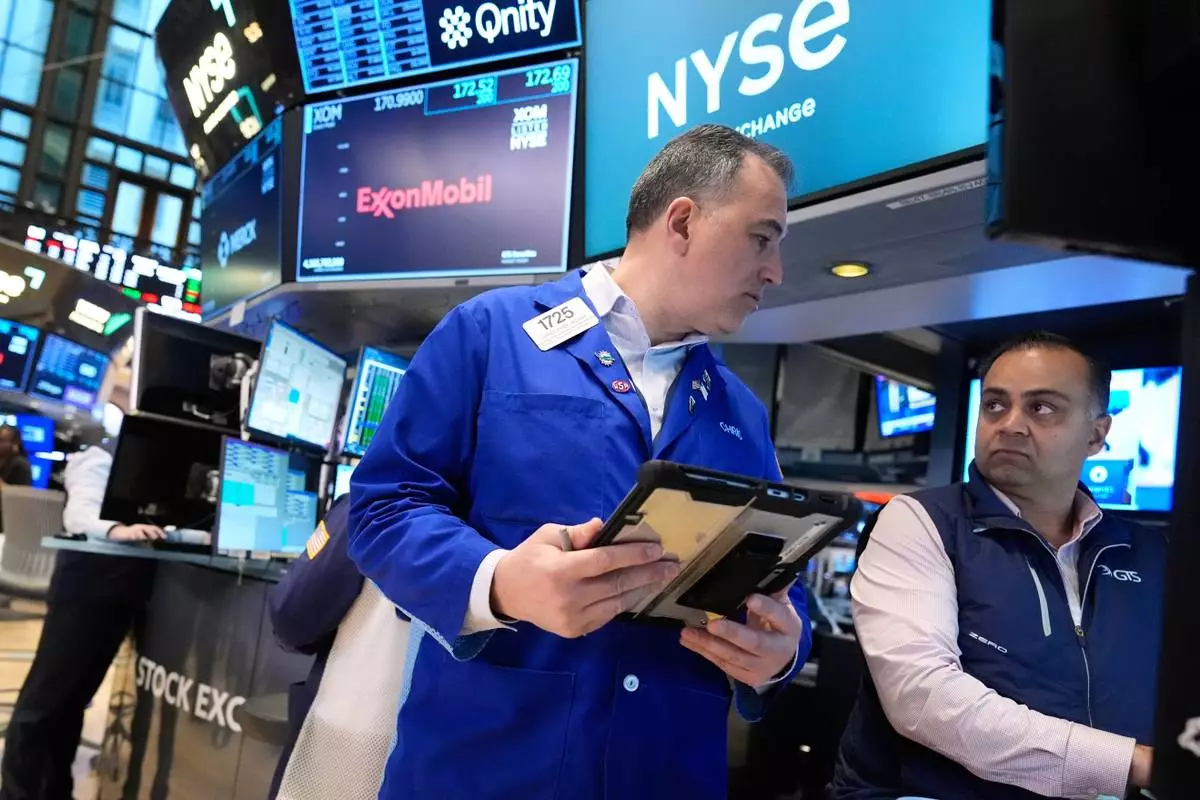
Christopher Lagana, left, and Dilip Patel work on the floor at the New York Stock Exchange in New York, Monday, March 30, 2026. (AP Photo/Seth Wenig)
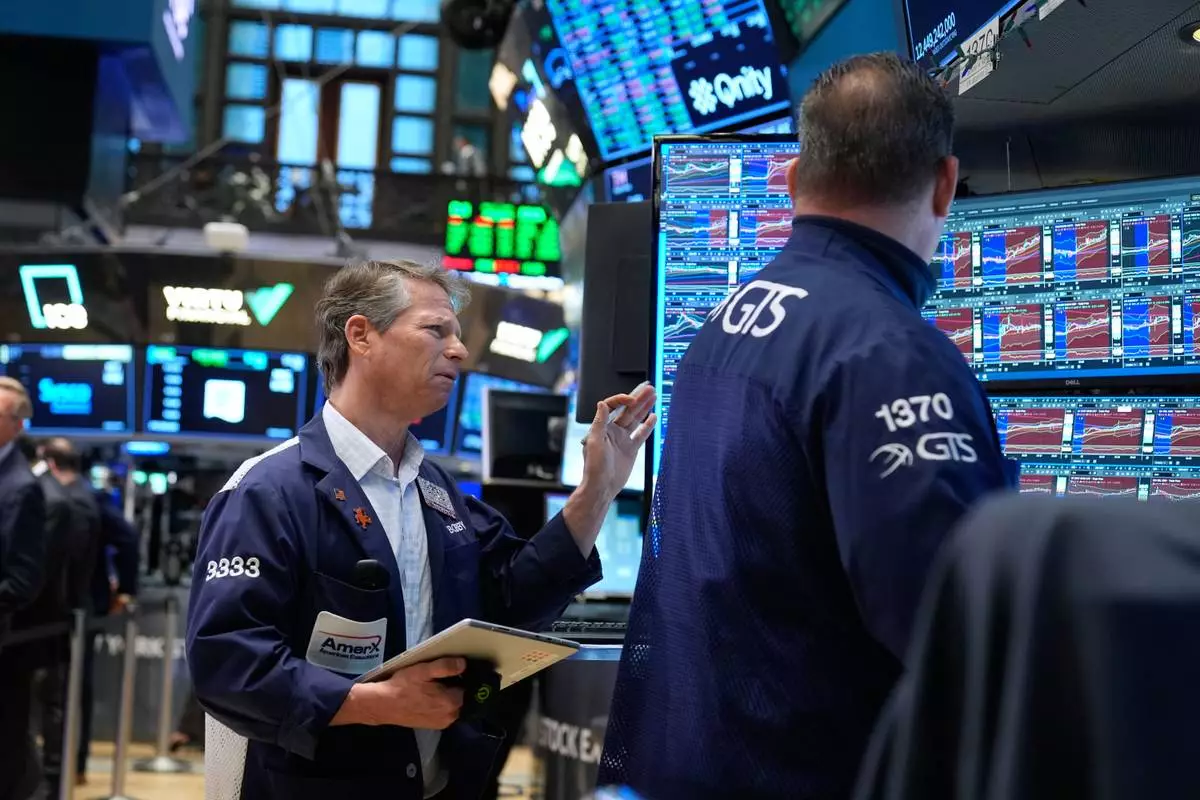
Bobby Charmak works on the floor at the New York Stock Exchange in New York, Monday, March 30, 2026. (AP Photo/Seth Wenig)
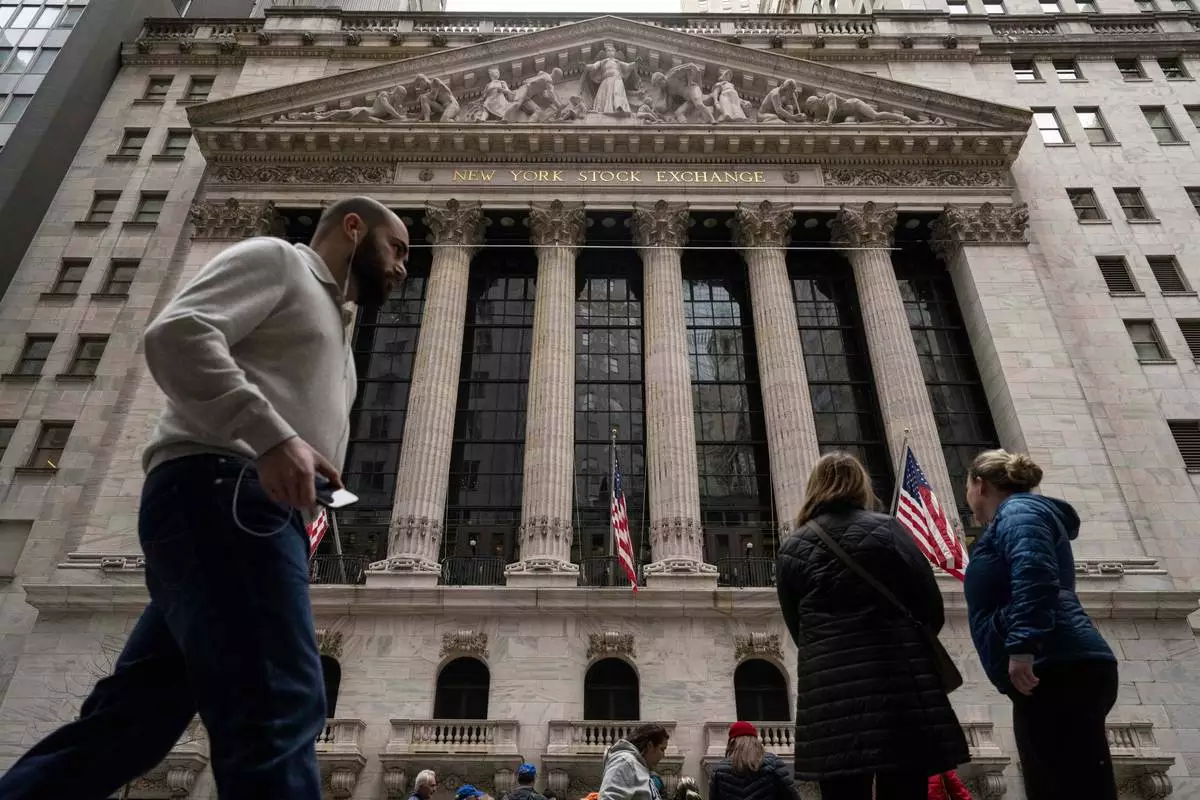
People walk past the New York Stock Exchange, Friday, March 27, 2026, in New York. (AP Photo/Yuki Iwamura)

A general view shows the New York Stock Exchange, Friday, March 27, 2026, in New York. (AP Photo/Yuki Iwamura)
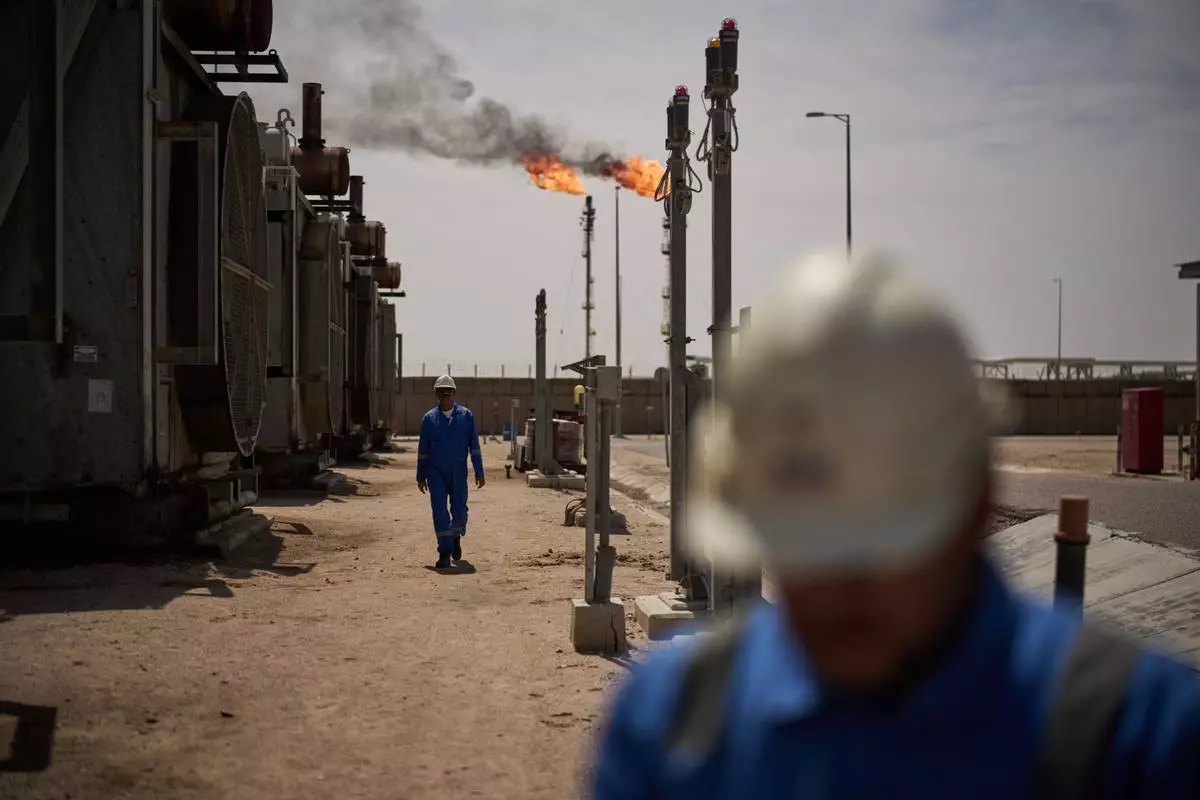
Workers walk in an area at a degassing station in Zubair oil field, whose operations have being reduced due to the Mideast war triggered by the U.S. and Israeli attacks on Iran, near Basra, Iraq, Saturday, March 28, 2026. (AP Photo/Leo Correa)
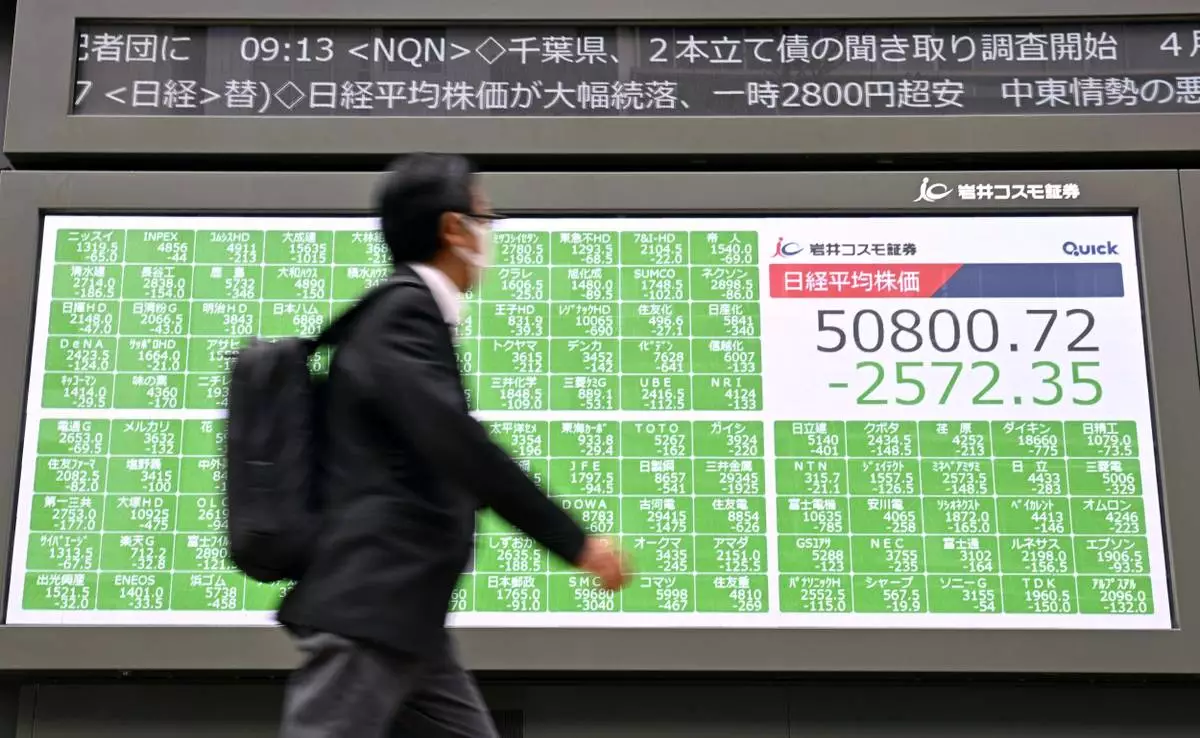
A person walks by an electronic stock board showing Japan's Nikkei index in Tokyo Monday, March 30, 2026. (Yusuke Hashizume/Kyodo News via AP)
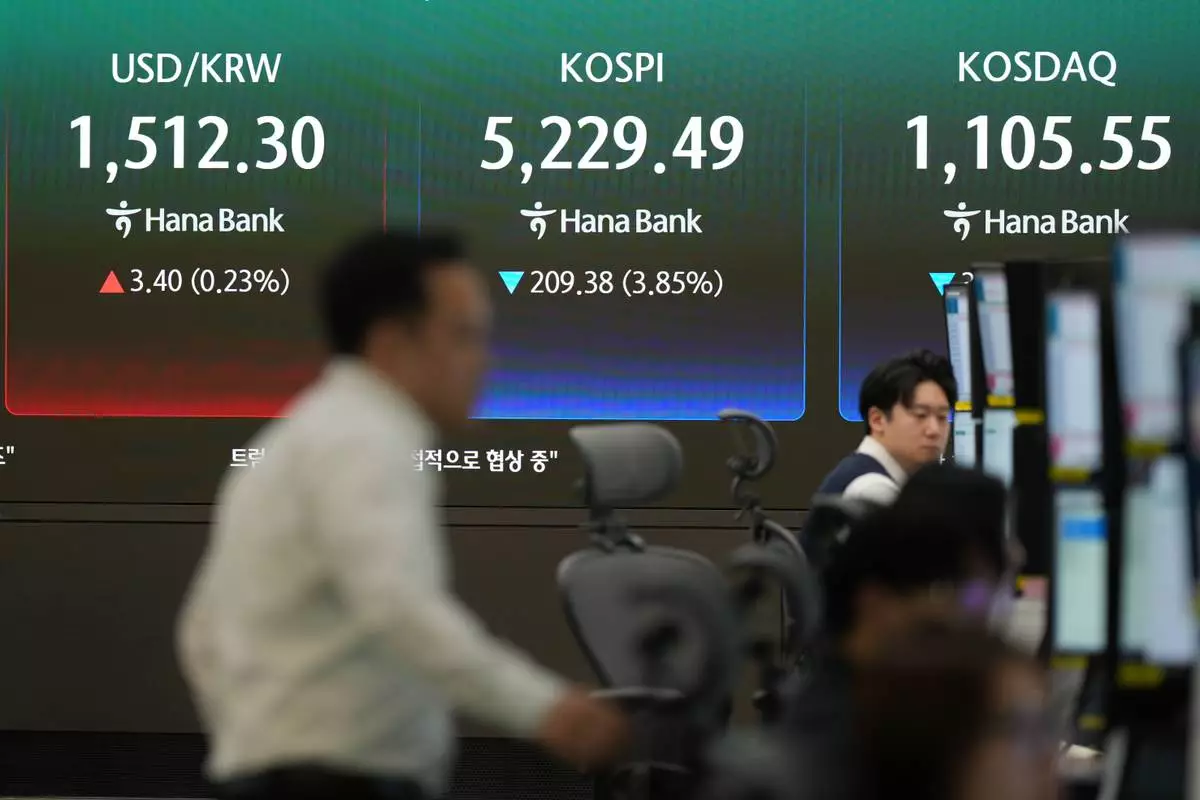
A dealer walks near the screens showing the Korea Composite Stock Price Index (KOSPI), the foreign exchange rate between U.S. dollar and South Korean won and the Korean Securities Dealers Automated Quotations (KOSDAQ) at a dealing room of Hana Bank in Seoul, South Korea, Monday, March 30, 2026. (AP Photo/Lee Jin-man)
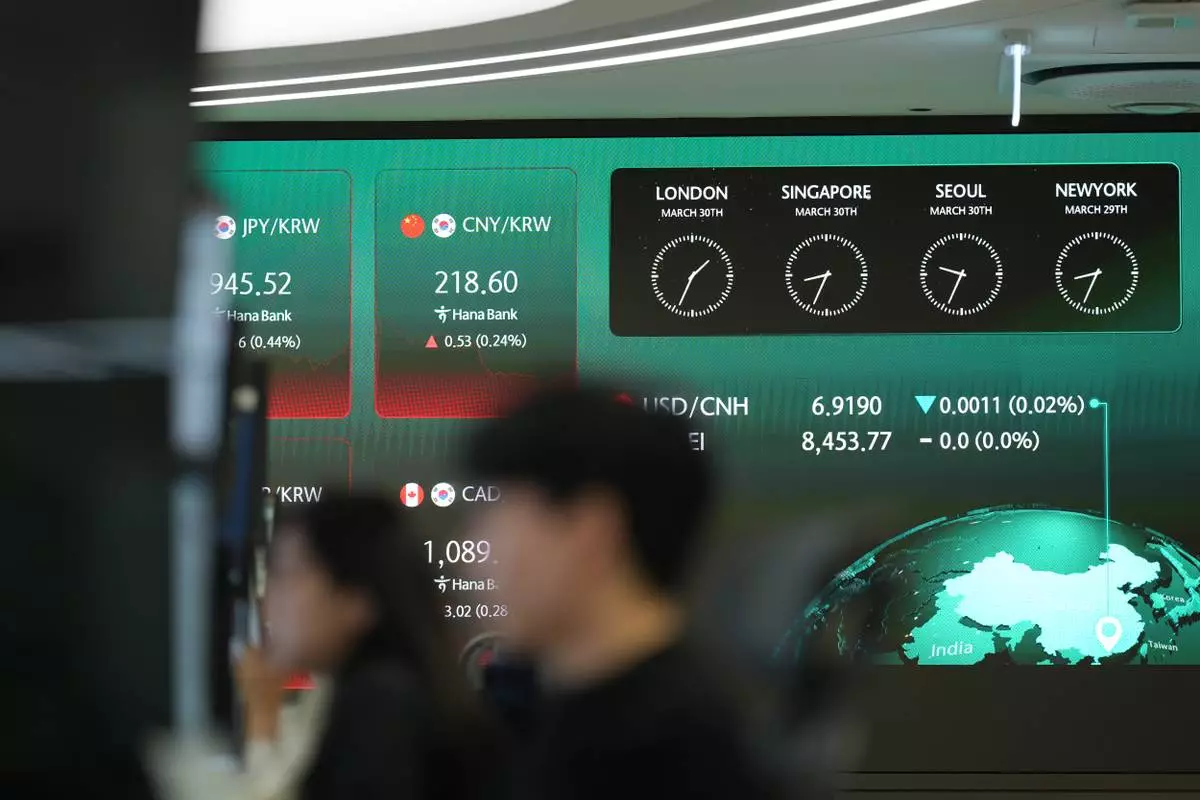
Dealers work near the screens showing the foreign exchange rates at a dealing room of Hana Bank in Seoul, South Korea, Monday, March 30, 2026. (AP Photo/Lee Jin-man)
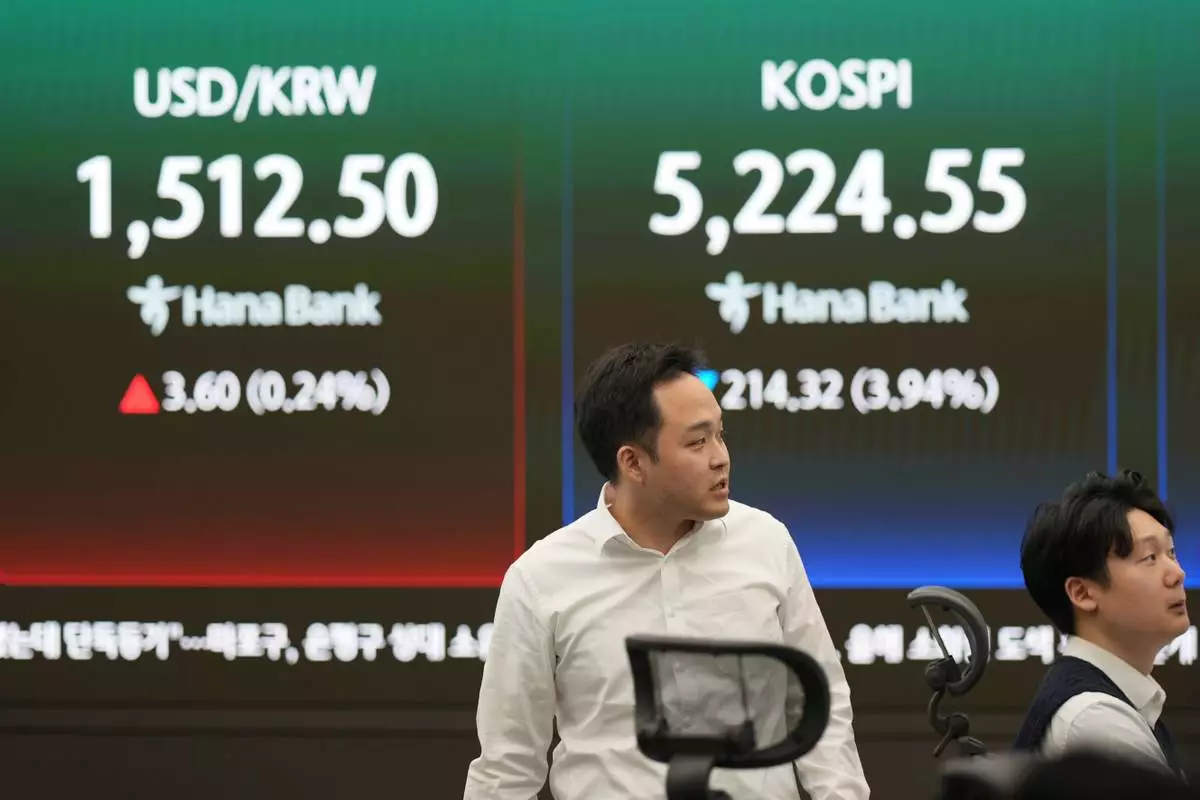
Dealers work near the screens showing the Korea Composite Stock Price Index (KOSPI), right, and the foreign exchange rate between U.S. dollar and South Korean won at a dealing room of Hana Bank in Seoul, South Korea, Monday, March 30, 2026. (AP Photo/Lee Jin-man)