LEAWOOD, Kan.--(BUSINESS WIRE)--Mar 30, 2026--
Today, Tallgrass announced that Crystal Heter has been appointed President and Chief Executive Officer effective March 27, 2026. Crystal succeeds Matt Sheehy, who has led the company as President since 2019 and has served as CEO and Chairman since 2022 and 2024, respectively. Additionally, Gary Watkins, currently the company’s Chief Financial Officer, will also assume the role of Chief Investment Officer.
This press release features multimedia. View the full release here: https://www.businesswire.com/news/home/20260330728909/en/
Most recently serving as Tallgrass’ Chief Operating Officer, Crystal was a key member of the team that founded Tallgrass in 2012, helping transition several core assets into the company at its inception. Since then, she has held senior leadership roles across the enterprise, including leading the company’s Natural Gas Transportation segment and serving as President of the Rockies Express Pipeline—experience that uniquely positions her to lead the company’s continued growth and execution across its core businesses.
“Crystal is a proven leader with deep industry expertise and a clear strategic vision,” said Matthew Runkle, Tallgrass Director and Senior Managing Director in Blackstone’s Infrastructure Group. “Her experience, leadership style, and focus on disciplined execution position Tallgrass well as we continue to build on our strong foundation and pursue opportunities across the evolving energy and power landscape.” Mr. Runkle will assume the role of Chairman of the Board.
The Board expressed its appreciation to Matt Sheehy for his leadership and significant contributions to Tallgrass, including growing the company to $1 billion in EBITDA, leading the acquisition of the Ruby Pipeline, and developing the nation’s largest CO2 transportation and sequestration infrastructure, among other accomplishments.
“When I rejoined Tallgrass, I knew what this company could become, and I could not be more grateful to our team, customers, and shareholders for our successes to date,” said Matt Sheehy. “Now Crystal — an already highly-accomplished leader — will build on everything we have built and go further than we ever imagined.”
“I am stepping into this role with a deep sense of responsibility and confidence in our team and path ahead,” said Crystal Heter, President and CEO of Tallgrass. “I’m thankful to Matt for his leadership over the past 13 years and for where he’s taken the company. Tallgrass has a strong team, high-quality assets, and a clear platform for growth. As we take this next step, I remain focused on safe, reliable operations and disciplined execution to build on our momentum and deliver long-term value for our stakeholders.”
About Tallgrass
Tallgrass is a leading infrastructure company focused on safely, reliably, and sustainably delivering the energy and services that fuel our nation and power our quality of life. Tallgrass is an established, industry-leading operator with large-scale, multicommodity infrastructure across 14 states, including more than 10,000 miles of pipelines. Learn more at Tallgrass.com.
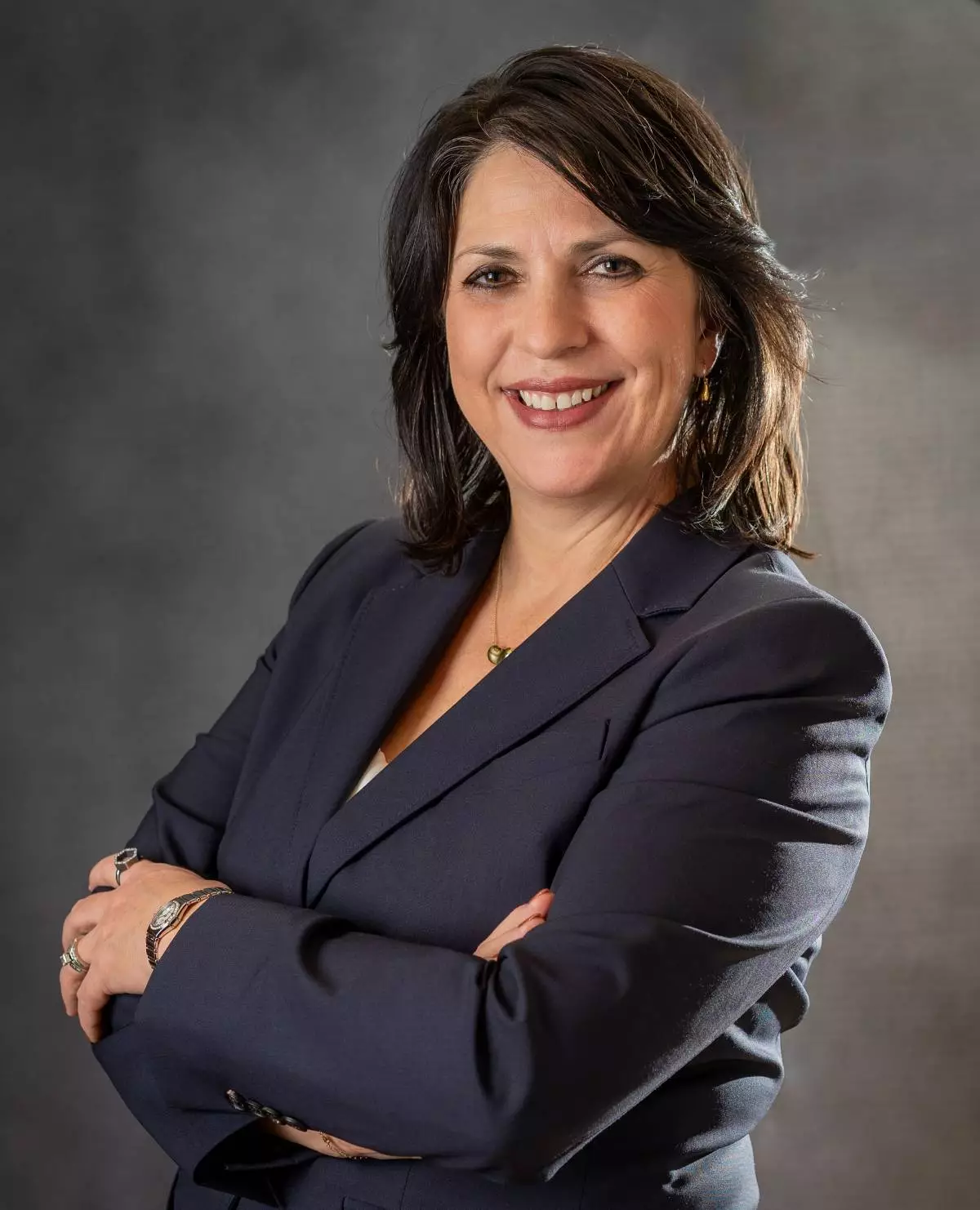
Crystal Heter, President and Chief Executive Officer of Tallgrass
PARIS (AP) — Stan Wawrinka waved a fond goodbye to the French Open after losing in the first round on Monday.
The 41-year-old Swiss, the 2015 champion and 2017 finalist, is retiring at the end of the season. He made his final Roland Garros appearance 21 years after his first.
Jesper de Jong finished off Wawrinka 6-3, 3-6, 6-3, 6-4 with a whipped forehand winner, then urged the fans to applaud Wawrinka, whose face was almost as red as the baking-hot clay. Temperatures in sun-soaked Paris hit 33 degrees C (91 F).
“It’s hard, it’s hard to say goodbye to you here,” an emotional Wawrinka said. “It’s because of Roland Garros that I wanted to become a tennis player.”
He was given an ovation at Court Simonne-Mathieu, where he got fans to do a Mexican wave before leaving. He was scheduled to face Arthur Fils but the rising French star pulled out of the tournament with a hip issue.
Wawrinka got the crowd going, at times asking for more encouragement with a broad grin. He applauded the spectators back, tapping his racket after winning a point. One fan held up a sign with “Stan the Man” written on it, another with “Stan still the Man.”
He knows it will be hard to let go — although he still has Wimbledon and the U.S. Open to come.
“For more than 20 years I experienced these emotions, you never want it to stop," Wawrinka said. "I have given everything for this sport.”
His stunning 2015 run to the title saw him defeat heavy favorite Novak Djokovic in the final after downing another all-time great, Roger Federer, in the quarterfinals. Wawrinka stood out that year as much for his eye-catching pink-checkered shorts as for his destructive backhand.
Those shorts fed his happy-go-lucky appearance and he reinforced that image by celebrating with Champagne long into the night. But as cavalier as he sometimes seemed, Wawrinka was anything but casual and always trained fiercely hard.
Later Monday, Gaël Monfils plays in the night session. The 39-year-old Frenchman is also retiring at the end of the year.
De Jong, who is 25, gave Wawrinka a timely reminder of his veteran status.
“He was playing against my coach (Bas Van Bentum) when I was a ball kid. I don’t want to say you’re that old,” De Jong said, drawing a smile from Wawrinka. “It’s all about Stan today, the way he was fighting.”
Wawrinka retorted: “I know I played against your coach, it doesn’t make me any younger.”
He was hugged on court by tournament director Amelie Mauresmo, before sitting and watching footage of his matches down the years. He was shown video messages from Federer, Rafael Nadal, Djokovic, men’s No. 1 Jannik Sinner, reigning champion Carlos Alcaraz, and Monfils.
At his physical peak, the barrel-chested Wawrinka had huge stamina and was one of the few who beat Nadal, Djokovic, Federer and Andy Murray at the Grand Slams.
Wawrinka beat Nadal in the the Australian Open final in 2014 and downed Djokovic again in the U.S. Open final in 2016, meaning all three of his majors were won against the No. 1 player. Nadal, however, dispatched him in straight sets in the 2017 French Open final.
He was an Olympic champion in doubles alongside Federer in 2008 and they won the Davis Cup for Switzerland in 2014.
“You are a legend of our sport,” said Monfils, who later faced countryman Hugo Gaston on Court Philippe-Chatrier.
AP tennis: https://apnews.com/hub/tennis

From left: Roland Garros tournament director and former tennis star Amelie Mauresmo, Stan Wawrinka of Switzerland and French tennis federation President Gilles Moretton pose for a picture after the first round men's singles tennis match between Stan Wawrinka of Switzerland and Jesper De Jong of the Netherlands at the French Open tennis tournament in Paris, Monday, May 25, 2026. (AP Photo/Thibault Camus)

Stan Wawrinka of Switzerland reacts after the first round men's singles tennis match against Jesper De Jong of the Netherlands at the French Open tennis tournament in Paris, Monday, May 25, 2026. (AP Photo/Thibault Camus)

Stan Wawrinka of Switzerland reacts after the first round men's singles tennis match against Jesper De Jong of the Netherlands at the French Open tennis tournament in Paris, Monday, May 25, 2026. (AP Photo/Thibault Camus)

Stan Wawrinka of Switzerland waves to fans after the first round men's singles tennis match against Jesper De Jong of the Netherlands at the French Open tennis tournament in Paris, Monday, May 25, 2026. (AP Photo/Thibault Camus)

Stan Wawrinka of Switzerland reacts after the first round men's singles tennis match against Jesper De Jong of the Netherlands at the French Open tennis tournament in Paris, Monday, May 25, 2026. (AP Photo/Thibault Camus)