Skip to Content Facebook Feature Image

What we know and don't know about the emerging deal to end the Iran war

News

What we know and don't know about the emerging deal to end the Iran war
News

News

What we know and don't know about the emerging deal to end the Iran war

2026-05-25 15:27 Last Updated At:15:30

CAIRO (AP) — A deal appears to be emerging between the United States and Iran to end the war and open the Strait of Hormuz, and U.S. President Donald Trump over the weekend said it had been “largely negotiated.”

It is not clear when or how the deal might be finalized and when its various parts will take effect. Trump spoke after calls with allies in the Middle East, including a separate call with Israel. Details come from two regional officials and a U.S. official who spoke on condition of anonymity to discuss the sensitive negotiations.

Here’s what we know and don’t know:

In the 12 weeks since the U.S. and Israel launched the war with attacks on Iran that killed senior officials including Supreme Leader Ayatollah Ali Khamenei, Tehran has insisted that any deal focus on ending the fighting on all fronts. That includes Lebanon, where the Iranian-backed Hezbollah militant group has been fighting Israel since two days into the war.

A fragile ceasefire has held since April 7. An end to the war would ease concerns throughout a region that saw Gulf havens and travel hubs like the United Arab Emirates struck by Iranian missiles and drones. It would allow for global shipping, including an estimated 20% of the world's oil and natural gas, to begin flowing through the Strait of Hormuz again. It also would allow the rebuilding of energy and other infrastructure in the region.

Both regional officials said the draft deal includes an end to the war between Israel and Hezbollah, as well as a commitment to not interfere in the domestic affairs of countries in the region including Iran. That’s a critical reference to Iran’s support for proxies, which also include the Houthi rebels in Yemen, Hamas militants in Gaza and Shiite armed groups in Iraq.

The U.S. wants Israel to have a free hand to respond to what it views as threats in Lebanon while Iran rejects it, one regional official said. The U.S. official said the deal would guarantee Israel’s right to act against imminent threats in self-defense.

Iran’s nuclear program, missile program and support for armed proxies were the stated reasons for the U.S. and Israel attacking Iran. But Tehran’s retaliatory grip on the Strait of Hormuz quickly shot to the top of global concerns as hundreds of ships carrying oil, natural gas, fertilizer and other supplies were stranded.

Under the emerging agreement, the strait would gradually reopen in parallel with the U.S. ending the blockade of Iran’s ports it launched on April 17, the regional officials said. The blockade has limited Iran’s ability to ship its oil and bring in badly needed cash for its long-suffering economy.

The U.S. would allow Iran to sell its oil through sanctions waivers, said one of the officials, who has been briefed on the negotiations. Sanctions relief and the release of Iran’s billions of dollars in frozen funds would be negotiated during a 60-day period, the official said.

Iran’s nuclear program and international concerns over its possible pursuit of a nuclear weapon underlie all tensions, and the U.S. and Israel have considered highly complex military operations to go in and take out its highly enriched uranium.

Under the potential deal, Tehran would agree to give up that stockpile of highly enriched uranium, according to the regional officials. One official, with direct knowledge of the negotiations, said how Iran would give it up would be subject to further talks over the 60-day period. Some would likely be diluted and the rest transferred to a third country, potentially Russia, the official said. Russia has offered to take it.

A U.S. official confirmed the 60-day period and said if Iran doesn’t give up its stockpile, there will be no sanctions relief.

Iran has 440.9 kilograms (972 pounds) of uranium that is enriched up to 60% purity, a short, technical step from weapons-grade levels of 90%, according to the International Atomic Energy Agency.

Iran says it has an “inalienable” right to nuclear technology while insisting its program is peaceful. On Sunday, President Masoud Pezeshkian told state TV they were ready “to assure the world that we are not after a nuclear weapon.”

Trump on Sunday on social media said that “our relationship with Iran is becoming a much more professional and productive one. They must understand, however, that they cannot develop or procure a Nuclear Weapon or Bomb.”

Other issues have not been mentioned in descriptions of the emerging deal, including the status of Iran's uranium enrichment.

Another is Iran's missile program, which Israel in particular has sought to destroy.

And while the United States and Israel entered the war with stated ambitions of seeing Iranians rise up against their government after nationwide protests early in the year, any discussion of leadership change in Tehran appears to be out.

As for Iran's past stated aims during negotiations, there appears to be no mention of any withdrawal of U.S. forces from the region, or for reparations for the damage the war has caused.

Superville reported from Washington and Anna from Lowville, New York.
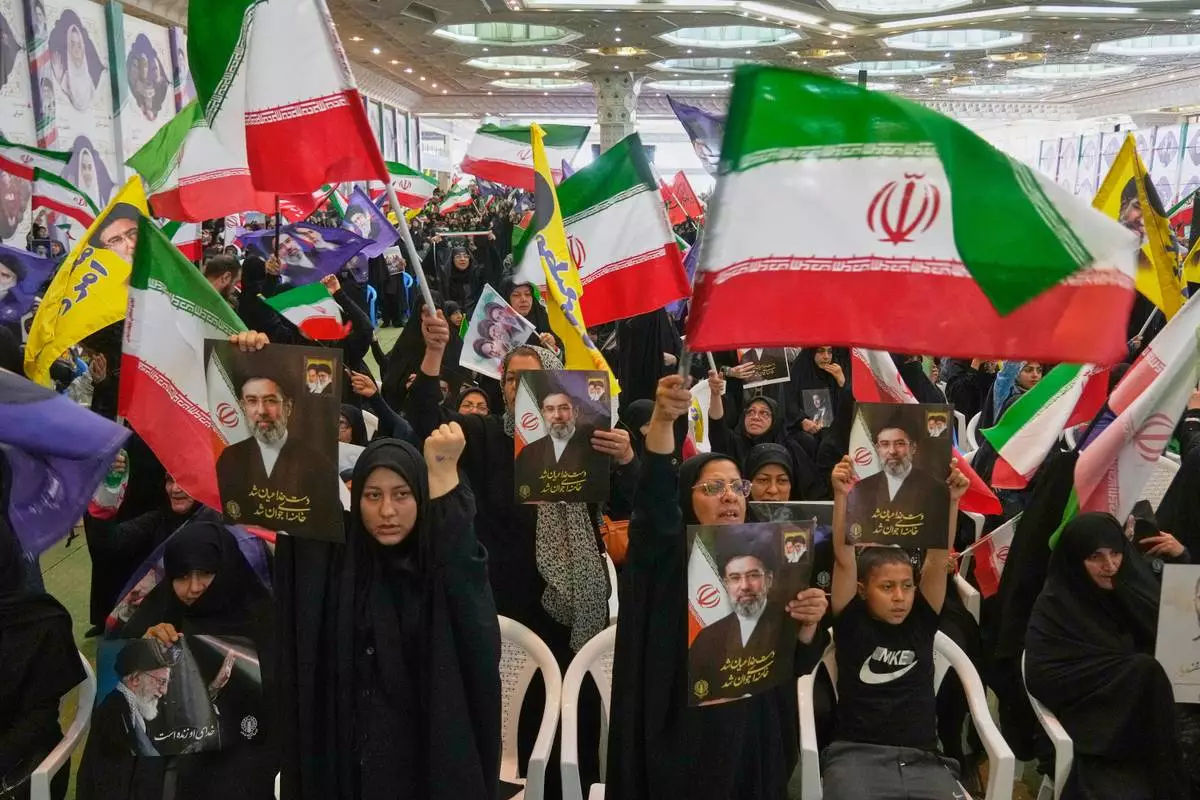
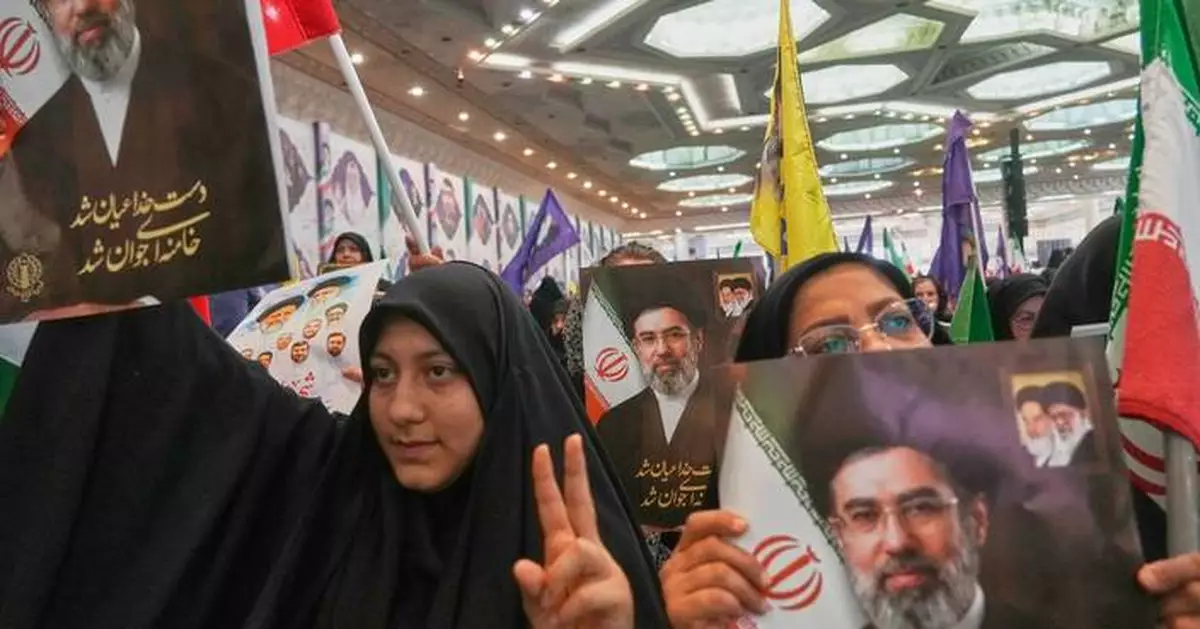
Government supporters hold Iranian flags and pictures of Iran's Supreme Leader, Ayatollah Mojtaba Khamenei, during a ceremony honoring the armed forces and those killed in the war with Israel and the U.S. at the Imam Khomeini Grand Mosque in Tehran, Iran, Sunday, May 24, 2026. (AP Photo/Vahid Salemi)
Government supporters hold Iranian flags and pictures of Iran's Supreme Leader, Ayatollah Mojtaba Khamenei, during a ceremony honoring the armed forces and those killed in the war with Israel and the U.S. at the Imam Khomeini Grand Mosque in Tehran, Iran, Sunday, May 24, 2026. (AP Photo/Vahid Salemi)

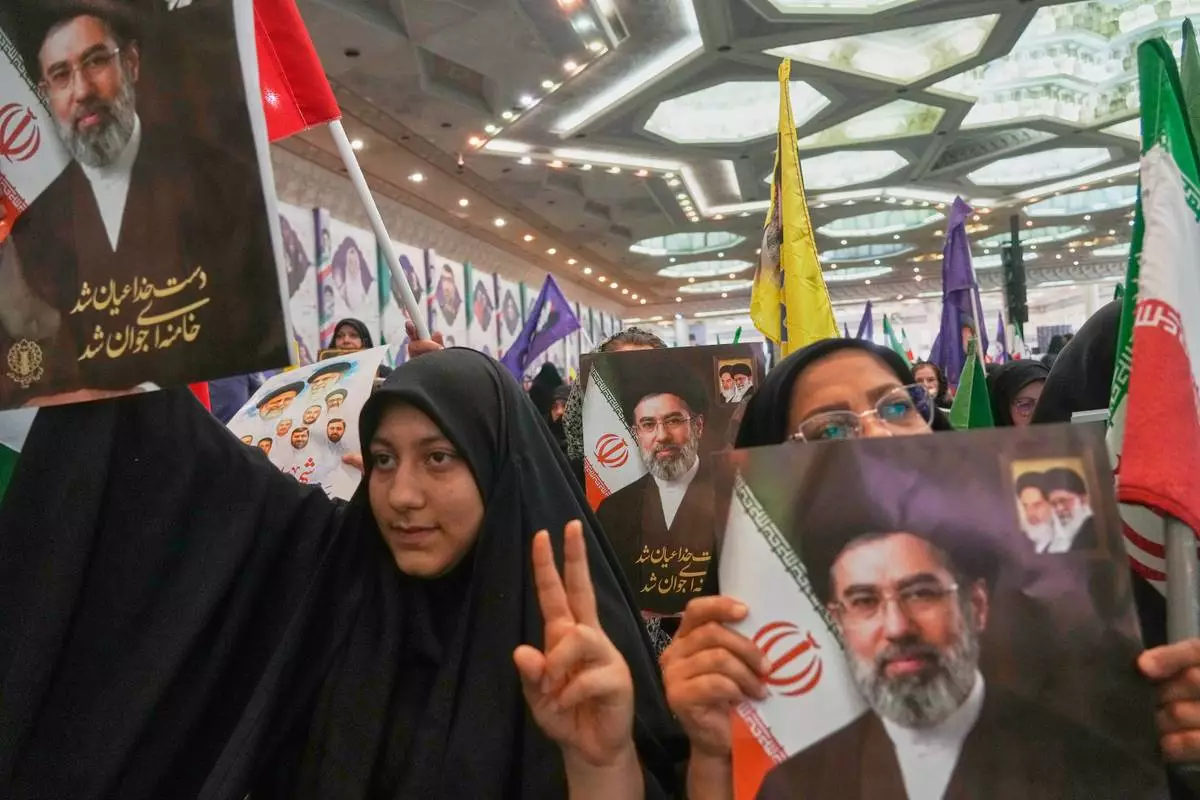
Women hold portraits of Iran's Supreme Leader, Ayatollah Mojtaba Khamenei, during a ceremony honoring the armed forces and those killed in the war with Israel and the U.S. at the Imam Khomeini Grand Mosque in Tehran, Iran, Sunday, May 24, 2026. (AP Photo/Vahid Salemi)
Women hold portraits of Iran's Supreme Leader, Ayatollah Mojtaba Khamenei, during a ceremony honoring the armed forces and those killed in the war with Israel and the U.S. at the Imam Khomeini Grand Mosque in Tehran, Iran, Sunday, May 24, 2026. (AP Photo/Vahid Salemi)
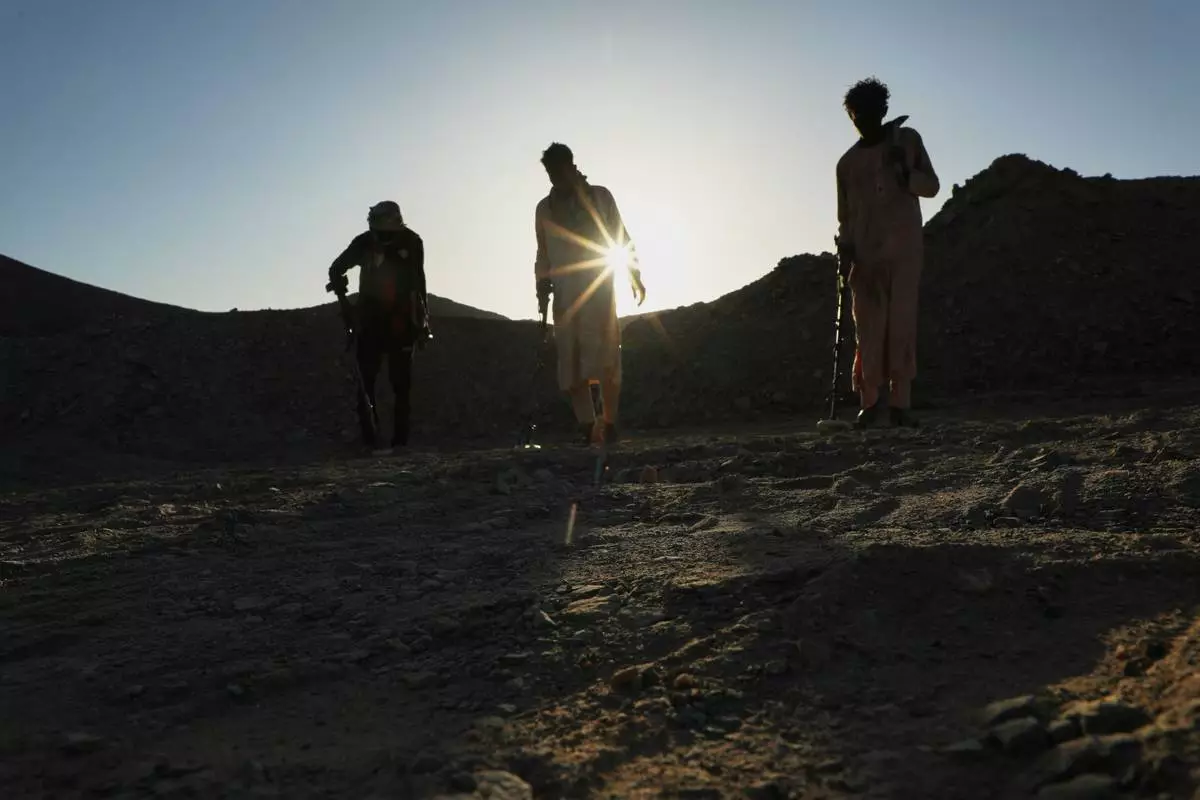
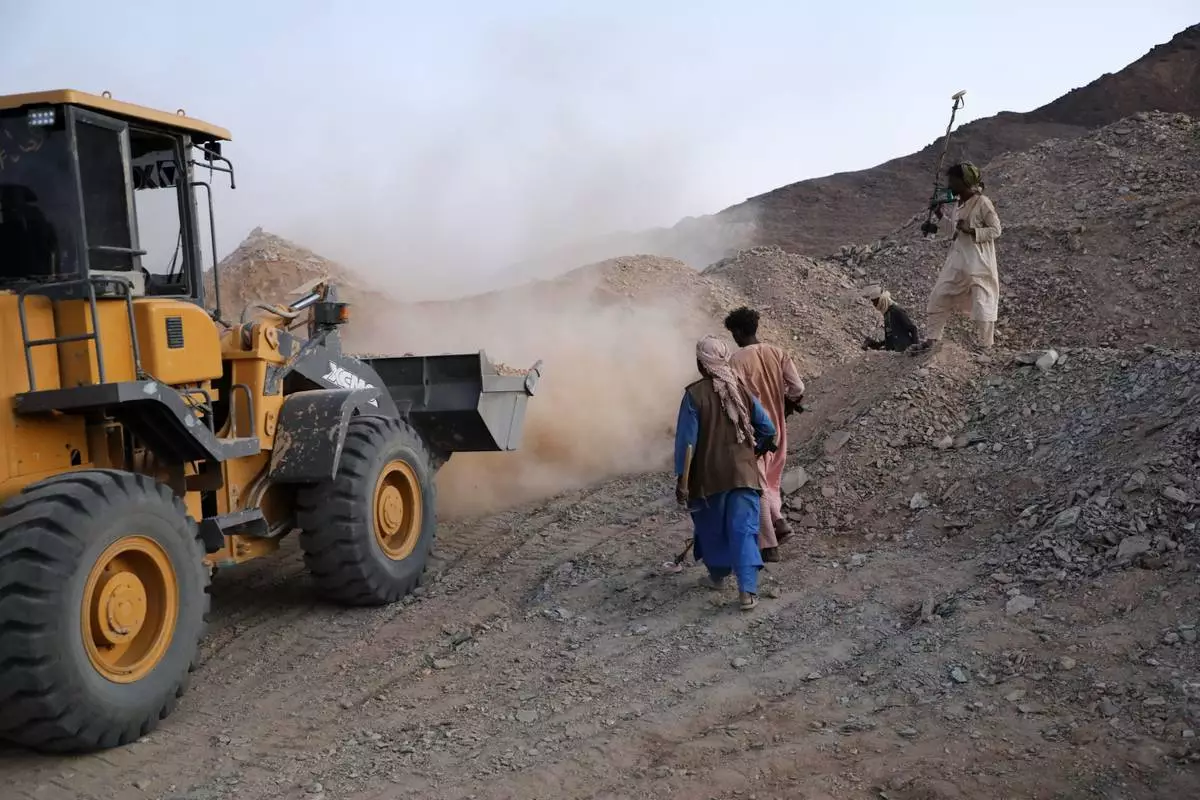
DAGALO MAHAS, Sudan (AP) — The men carried metal detectors as they scanned a mountainous area in northern Sudan in search of gold. One man knelt to examine the ground with a digging tool for the precious metal in an environment that lacks even the most basic safety measures.

They are unregulated miners working in a small-scale private gold mine in the northern town of Dalgo Mahas. The mine is one of thousands of small-scale and artisanal mines scattered across Sudan, part of a sector that is at the center of the devastating war that has at times pushed parts of the country into famine.

Gold has become a major source of funding for Sudan’s treasury after the country lost over two-thirds of its oil revenues with the secession of South Sudan in 2011. The precious metal accounted for 70% of national revenues in the years that followed South Sudan's departure, providing the Sudanese government with much-needed foreign currency.

Most recently, gold has been at the center of the ongoing war between the military and the paramilitary Rapid Support Forces. Large quantities of gold have been smuggled out of the country to finance paramilitaries, who control gold-producing areas in Darfur and Kordofan regions, according to United Nations-commissioned experts.

The conflict has killed at least 59,000 people, according to the Armed Conflict Location & Event Data Project, a U.S.-based war tracking group that says its toll is almost certainly an underestimate, given the difficulties in reporting.

The war also created the world’s largest humanitarian disaster, forcing over 10 million people to flee their homes. Many displaced people joined the mining industry in order to make ends meet for their families.

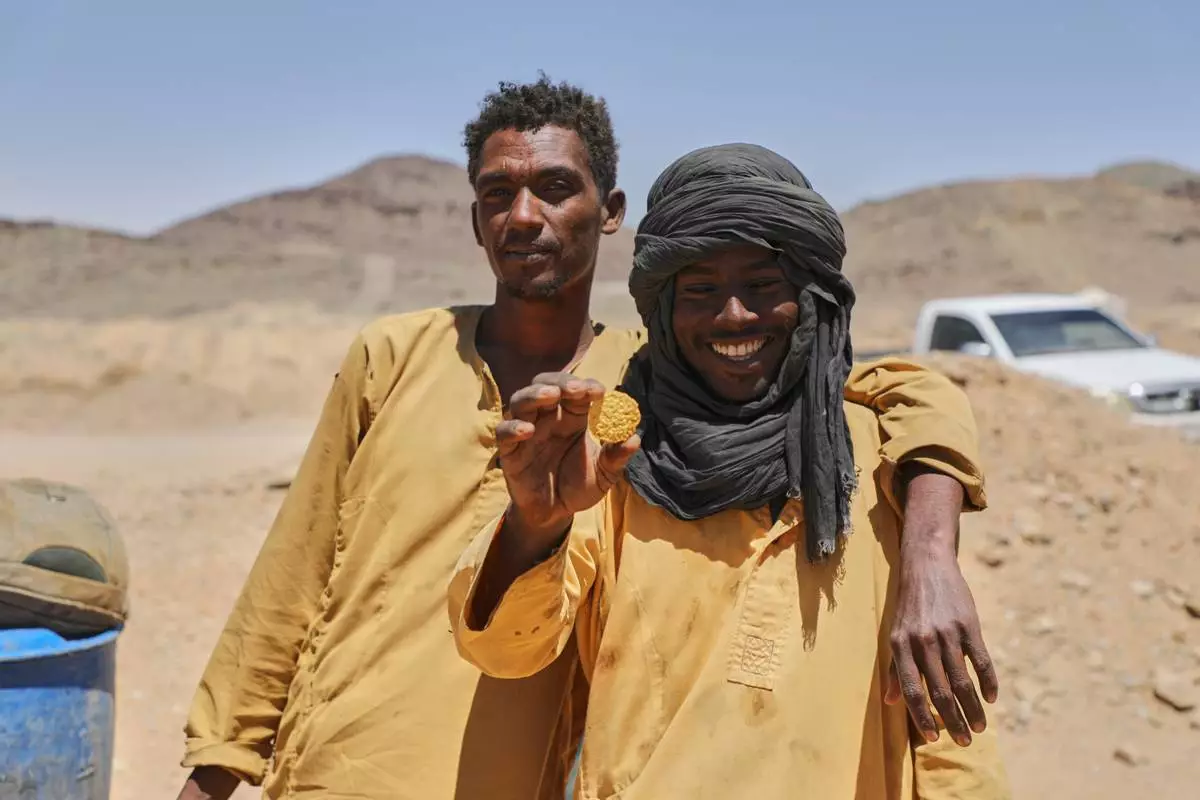
“Gold mining is the only thing I can rely on,” said Atta al-Khazin, a 28-year-old miner who abandoned his previous profession as a farmer. “Due to the high oil prices, agriculture no longer covered expenses.”

Zahir Adam, a 35-year-old father from the Darfur city of el-Fasher who worked in gold mining for more than a decade, said the sector has drawn many people since the war broke out over three years ago.

They had “no other option,” he said. “Many young people, and many families, depend on mining.”

Sudan produced 70 tons of gold last year, up from 64 tons in 2024, according to official figures, making it one of Africa’s top producers. Gold generated about $1.8 billion in revenues in 2025, figures from the state-run Sudanese Mineral Resources Company showed.

Artisanal and small-scale gold mining accounts for the majority of gold extracted in the sprawling country, where safety standards are largely ignored.

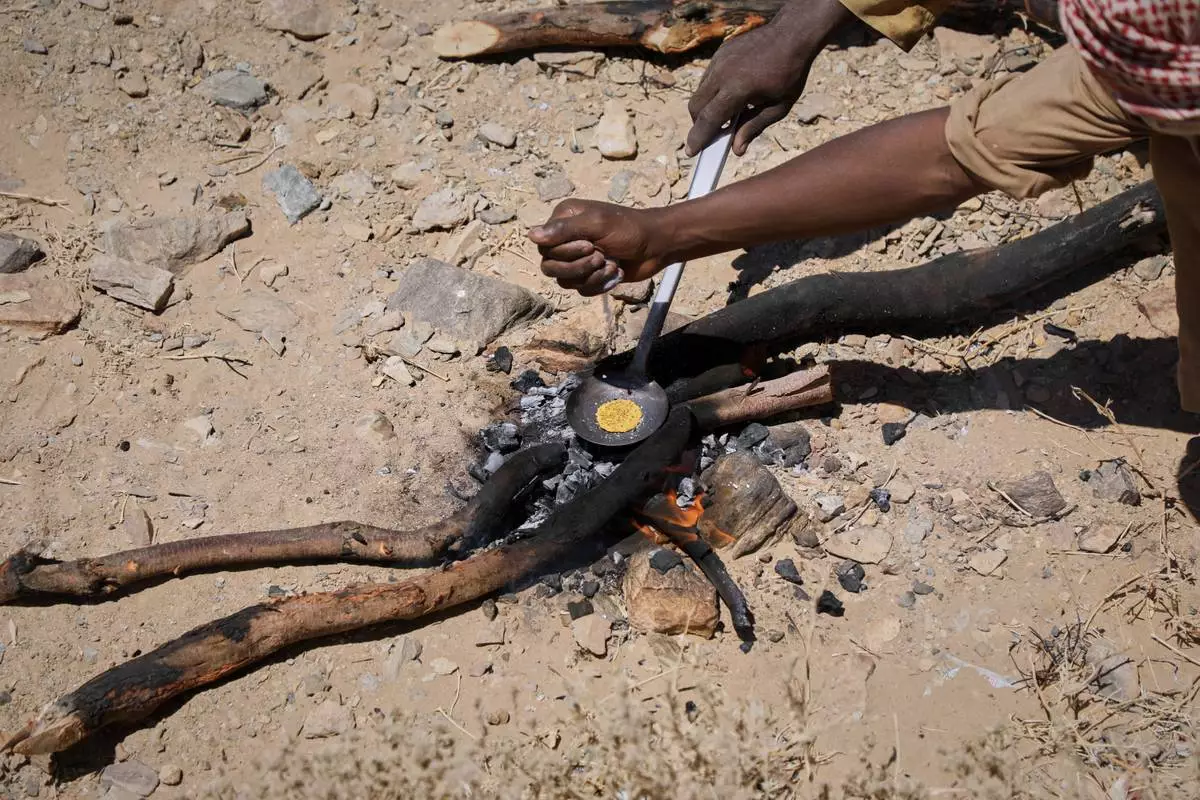
Artisanal miners like the men in Dalgo Nahas usually extract the gold, then crush the ore before applying toxic mercury to create the amalgam. The amalgam is then heated, usually on a stove, to evaporate the mercury and recover the gold.

The process, which includes using hazardous chemicals, is also risky for people living near the mines.

Many of these mines are not controlled by the government. The U.N. panel of experts said in their 2024 report that more than 50% of the gold mined in Sudan was not traded through formal channels but was smuggled out of the country.

Deadly mine collapses are not uncommon in Sudan, where safety standards are not widely applied. Last month, at least seven miners were killed in a mine collapse in the Red Sea province. Thirteen others were killed in another collapse in South Kordofan province in January.

A civilian transitional government that ruled the country for over a year after the military overthrow of longtime dictator Omar al-Bashir in April 2019 attempted to regulate the crucial industry.

However, its efforts were aborted by a military coup in October 2021, and the war that began in 2023.

Miners heat processed gold concentrate over an open fire at an artisanal mining site in Dalago Mahas, Sudan's Northern State, Friday, May 8, 2026.(AP Photo/Mohnd Blal)

Miners heat processed gold concentrate over an open fire at an artisanal mining site in Dalago Mahas, Sudan's Northern State, Friday, May 8, 2026.(AP Photo/Mohnd Blal)

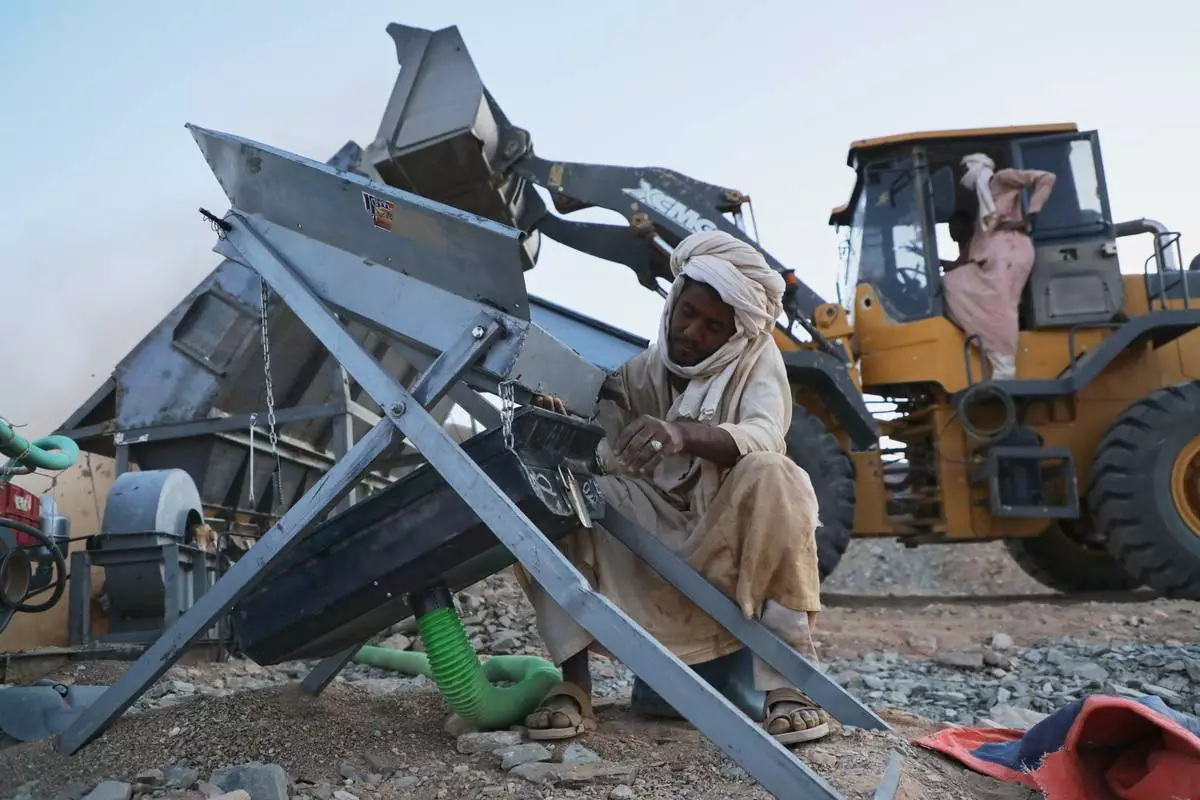
An artisanal miner operates an ore-processing machine used to separate gold-bearing material at a mining site in Dalago Mahas, Sudan's Northern State, Thursday, May 7, 2026.(AP Photo/Mohnd Blal)

An artisanal miner operates an ore-processing machine used to separate gold-bearing material at a mining site in Dalago Mahas, Sudan's Northern State, Thursday, May 7, 2026.(AP Photo/Mohnd Blal)

Miners use metal detectors to search for gold at an artisanal mining site in Dalago Mahas, Sudan's Northern State, Thursday, May 7, 2026. (AP Photo/Mohnd Blal)

Miners use metal detectors to search for gold at an artisanal mining site in Dalago Mahas, Sudan's Northern State, Thursday, May 7, 2026. (AP Photo/Mohnd Blal)

A front-loader loads dirt and crushed rock into a processing machine used to separate gold-bearing material at an artisanal mining site in Dalago Mahas, Sudan's Northern State, Thursday, May 7, 2026. (AP Photo/Mohaned Bilal)

A front-loader loads dirt and crushed rock into a processing machine used to separate gold-bearing material at an artisanal mining site in Dalago Mahas, Sudan's Northern State, Thursday, May 7, 2026. (AP Photo/Mohaned Bilal)

Miner Atta al-Khazin, right, shows a gold nugget produced by artisanal miners after processing ore at a mining site in Dalago Mahas, Sudan's Northern State, Friday, May 8, 2026.(AP Photo/Mohnd Blal)

Miner Atta al-Khazin, right, shows a gold nugget produced by artisanal miners after processing ore at a mining site in Dalago Mahas, Sudan's Northern State, Friday, May 8, 2026.(AP Photo/Mohnd Blal)

Recommended Articles