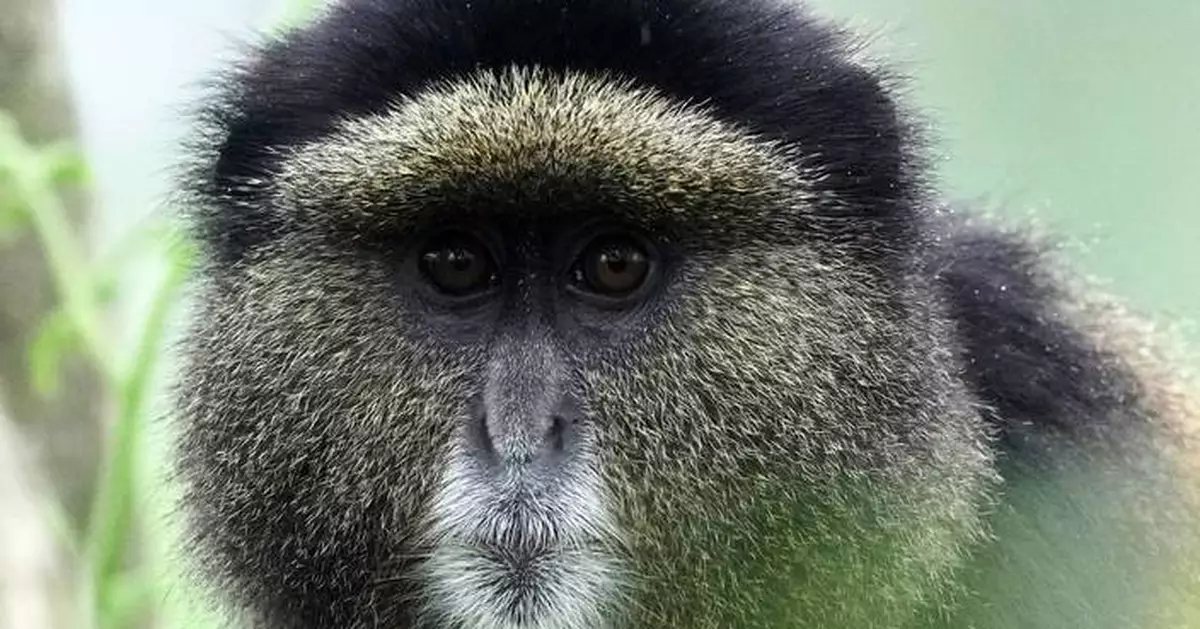
MUSANZE, Rwanda (AP) — A guide called out to endangered golden monkeys with grunts and clicks to signal he posed no threat, a familiar sound in the mist-covered forests of Rwanda ’s Volcanoes National Park.
Here in one of Africa's most well-known parks, steep ridges and dense vegetation often obscure even the largest mountain gorillas — also endangered — and scientists are turning to new technology to detect and protect them.
Click to Gallery
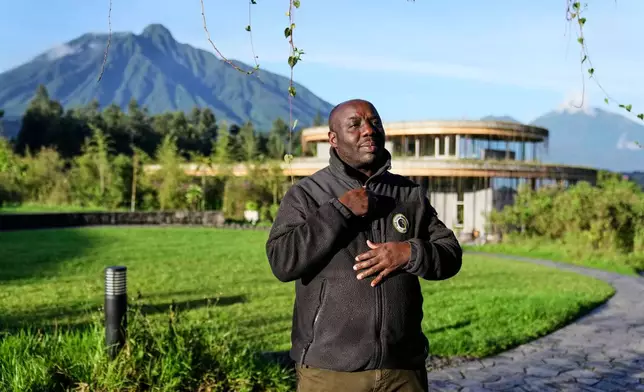
Deogratias Tuyisingize, a biodiversity researcher with the Dian Fossey Gorilla Fund, speaks during an interview in Volcanoes National Park, Kinigi, Rwanda, Thursday, March 19, 2026. (AP Photo/Brian Inganga)
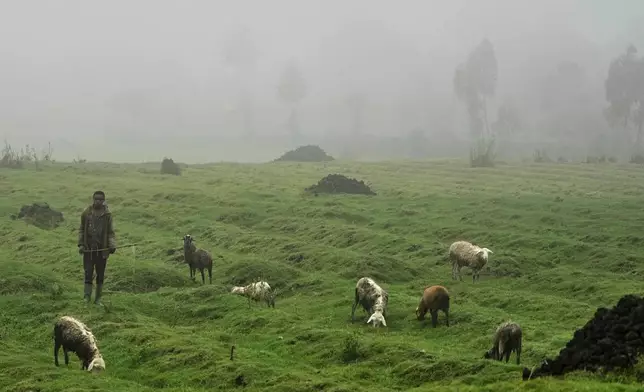
A boy tends livestock near Volcanoes National Park, Kinigi, Rwanda, Thursday, March 19, 2026. (AP Photo/Brian Inganga)
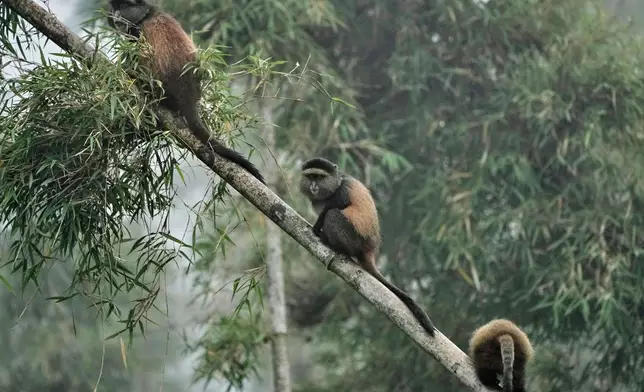
Golden monkeys play on a bamboo tree in Volcanoes National Park, Kinigi, Rwanda, Thursday, March 19, 2026. (AP Photo/Brian Inganga)
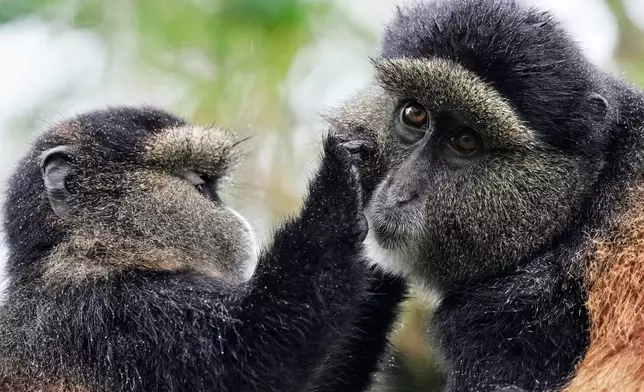
Golden monkeys groom each other, removing debris and parasites from their fur, in Volcanoes National Park, in Kinigi, Rwanda, Thursday, March 19, 2026. (AP Photo/Brian Inganga)
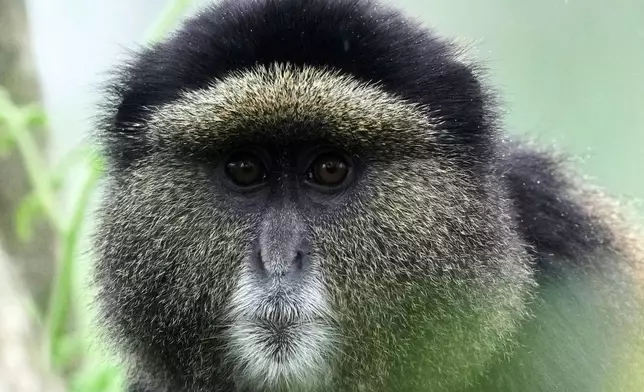
A golden monkey is seen in Volcanoes National Park in Kinigi, Rwanda, Thursday, March 19, 2026. (AP Photo/Brian Inganga)
Known as environmental DNA, or eDNA, the technology allows researchers to identify species using genetic material like fur or feces left in soil and water. This reduces the impact of human interaction during wildlife surveys that can leave researchers groping through the mist.
The technology, more often used in marine conservation work, was introduced by the African Wildlife Foundation in partnership with the Rwandan government. It aims to develop a list of all species in the country. That will help protect biodiversity that is threatened by climate change and population growth.
“We selected eDNA as a new technology to bring solutions and to complement existing methods used in ecological monitoring,” said the foundation’s country manager for Rwanda, Patrick Nsabimana.
Biodiversity monitoring for decades has relied on camera traps, which operate when animals trigger their sensors, and ranger observations.
But that is a challenge in rugged terrain such as the Virunga mountains that are central to Volcanoes National Park, which covers part of Rwanda, Uganda and Congo. Insecurity in the border area also can limit ranger movement.
Nsabimana said eDNA is a cost-effective monitoring approach in large ecosystems such as Virunga. Samples are taken from locations like downstream ponds that are likely to have traces of animals on higher ground. Then they are tested.
“With one sample, you can detect multiple species, mammals, birds, amphibians and many others,” said Deogratias Tuyisingize, a Rwanda-based biodiversity researcher with the Dian Fossey Gorilla Fund that is also involved in the project.
He said a combination of traditional methods and new technology is needed to ensure all species are monitored. Because of steep ravines and mountainsides, “we are sure we were missing some species."
Meanwhile, having a better sense of where endangered species are could help in patrolling against poachers, people with the project said.
The ability to generate a broad snapshot of biodiversity is critical for conservation, especially as Rwanda expands some of its national parks by rehabilitating previously agricultural land.
“We can see how species are colonizing these sites over time,” Tuyisingize said.
That allows conservationists to measure success by the return of rare or threatened species, and offers early warnings of invasive species.
But the eDNA technology is not without limitations. It cannot reliably estimate how many animals are present in an ecosystem. DNA can linger long after a species has left.
Being able to process samples in Rwanda is also a challenge, as the project's initial ones had to be sent to Europe for analysis.
Joshua Newton, who conducted research on eDNA for Curtin University’s Trace and Environmental DNA Laboratory, said challenges also include having cold storage to preserve DNA samples and ensuring samples are not contaminated.
Data gaps are another issue. Africa has relatively limited genetic reference libraries, despite decades of conservation work on the continent, making it harder to match DNA samples to known species.
Most genetic reference libraries come from Europe and America, said James Munyawera, a lab specialist with the Dian Fossey Gorilla Fund.
Researchers are now building region-specific databases.
The project in Volcanoes National Park has also begun training residents of local communities, along with rangers, to participate in monitoring efforts by collecting samples.
The Associated Press’ climate and environmental coverage receives financial support from multiple private foundations. AP is solely responsible for all content. Find AP’s standards for working with philanthropies, a list of supporters and funded coverage areas at AP.org.
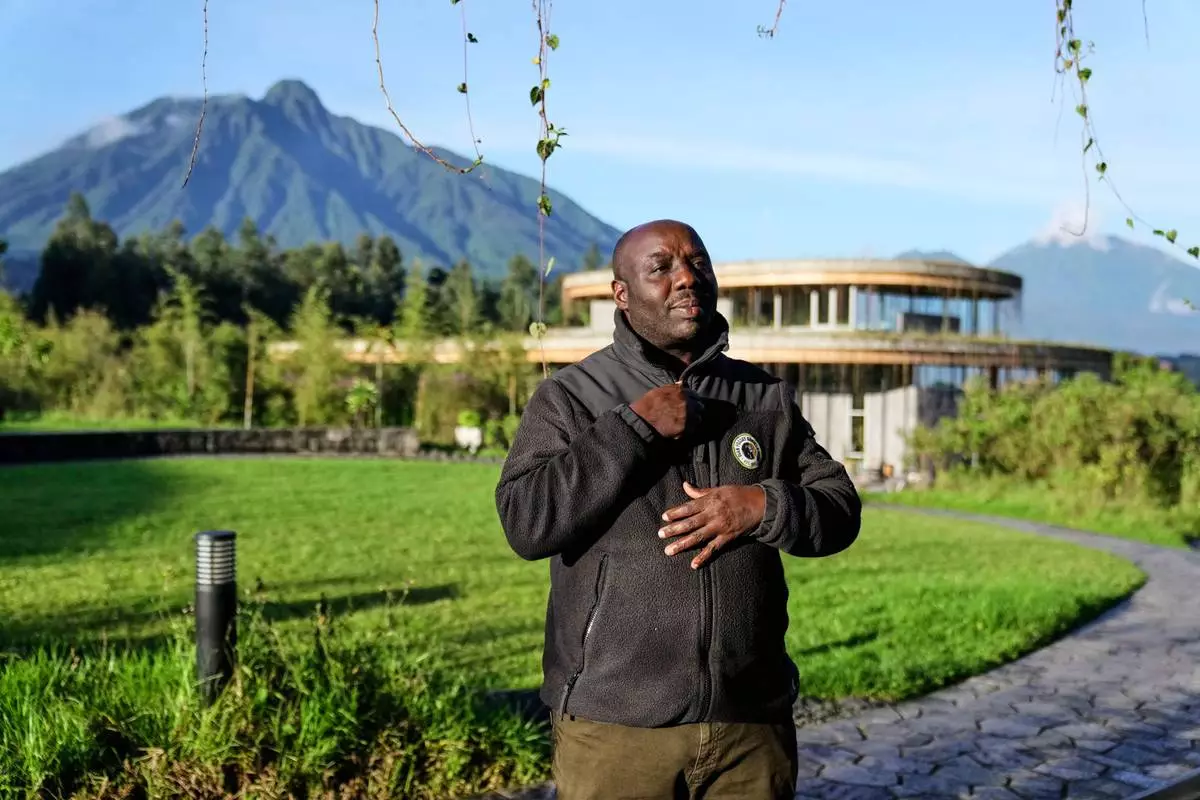
Deogratias Tuyisingize, a biodiversity researcher with the Dian Fossey Gorilla Fund, speaks during an interview in Volcanoes National Park, Kinigi, Rwanda, Thursday, March 19, 2026. (AP Photo/Brian Inganga)
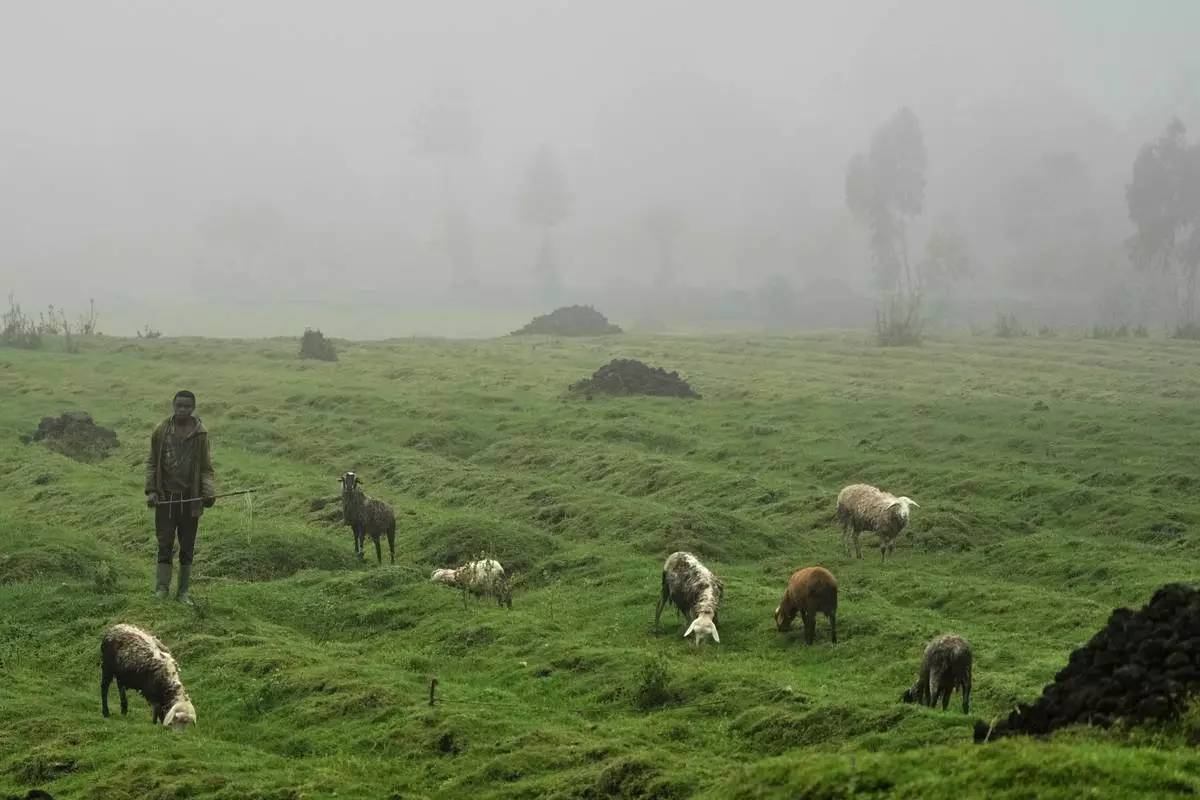
A boy tends livestock near Volcanoes National Park, Kinigi, Rwanda, Thursday, March 19, 2026. (AP Photo/Brian Inganga)
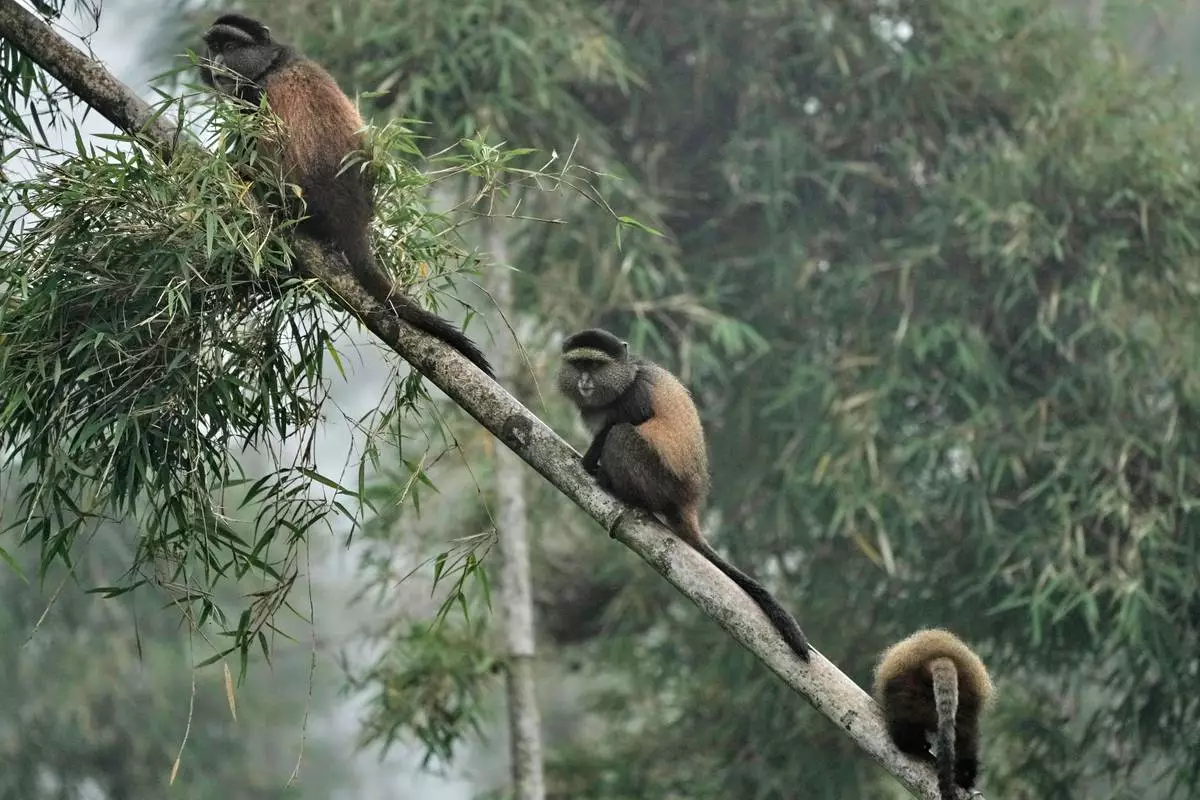
Golden monkeys play on a bamboo tree in Volcanoes National Park, Kinigi, Rwanda, Thursday, March 19, 2026. (AP Photo/Brian Inganga)
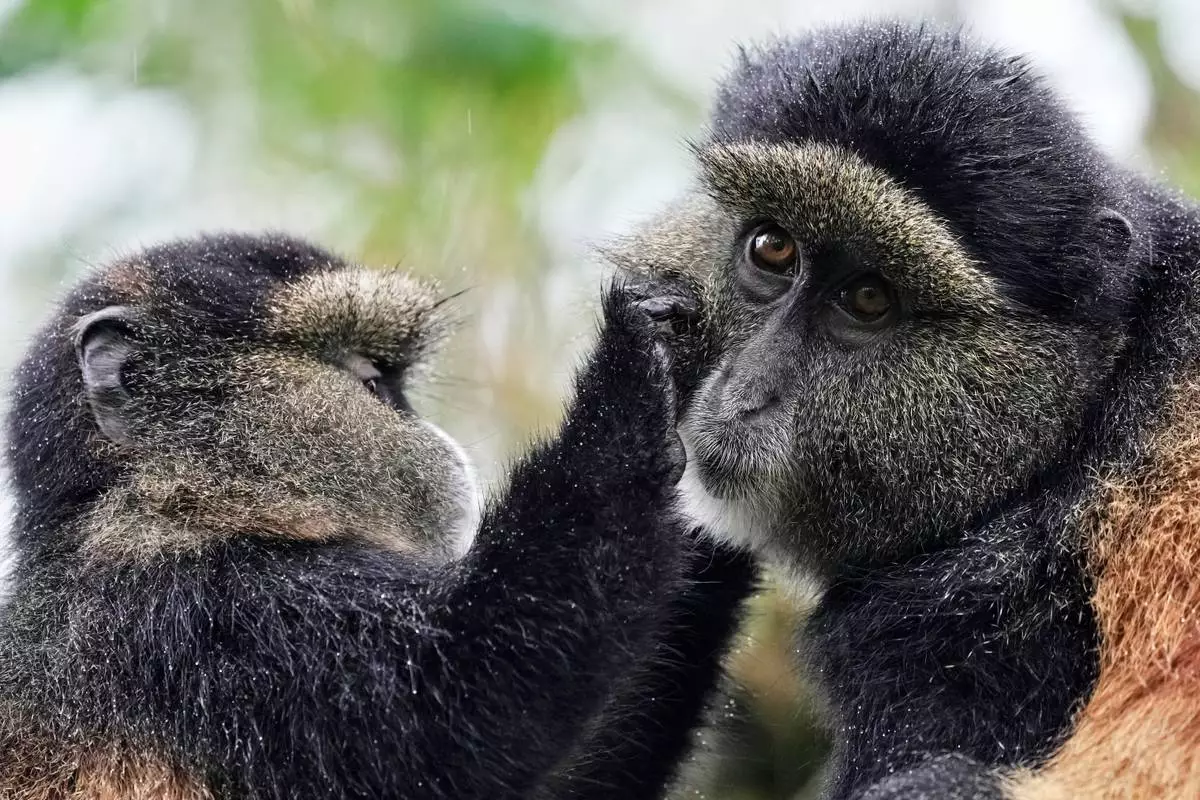
Golden monkeys groom each other, removing debris and parasites from their fur, in Volcanoes National Park, in Kinigi, Rwanda, Thursday, March 19, 2026. (AP Photo/Brian Inganga)
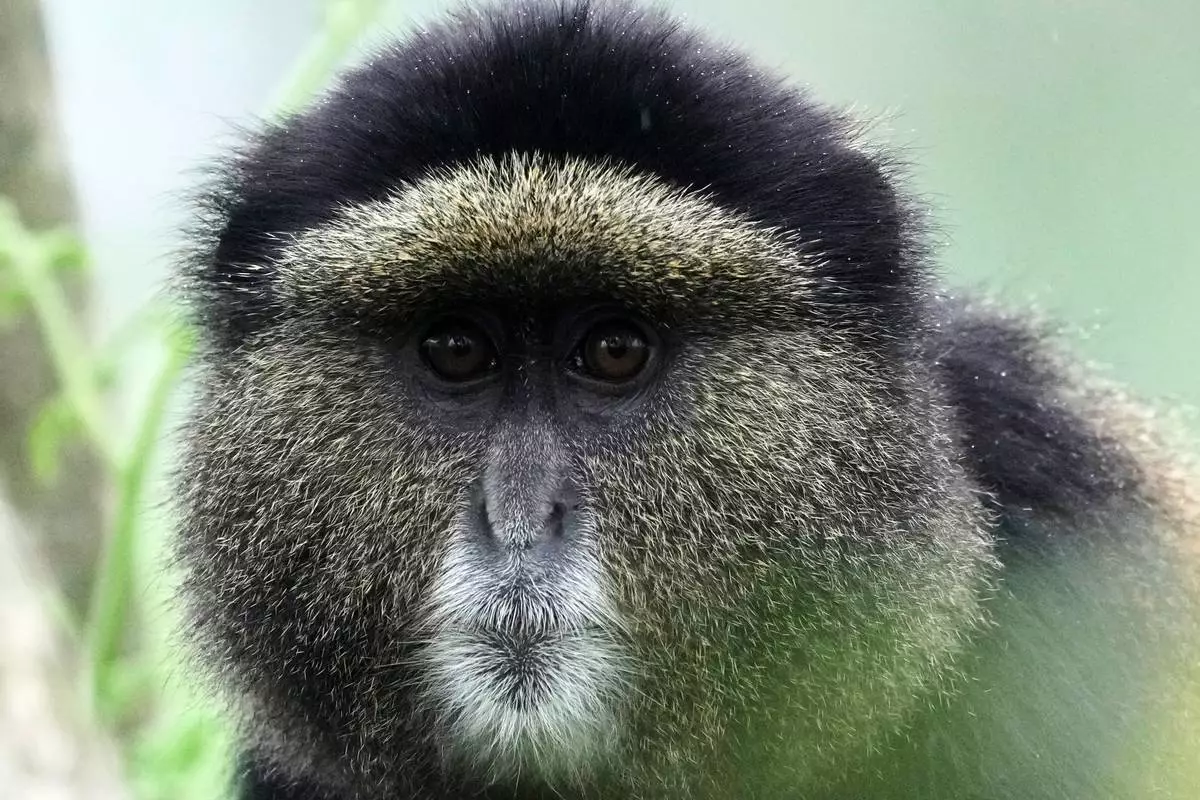
A golden monkey is seen in Volcanoes National Park in Kinigi, Rwanda, Thursday, March 19, 2026. (AP Photo/Brian Inganga)