MELBOURNE, Australia (AP) — An Australian spy agency boss told an inquiry on Monday he had pivoted resources away from counterterrorism to espionage and foreign interference investigations a few years before two gunmen massacred 15 people at a Sydney Hanukkah celebration.
Mike Burgess, director-general of the Australian Security Intelligence Organization, the nation’s main domestic spy agency known as ASIO, was testifying at a government inquiry into the spread of antisemitism in Australia ahead of the attack at Bondi Beach on Dec. 14.
ASIO reduced Australia’s National Terrorism Threat Level from “probable” to “possible” — the second-safest level on a five-tier scale -- in November 2022, after the Islamic State group in the Middle East had been defeated and was no longer recruiting fighters.
ASIO then shifted to increase its focus on foreign interference and espionage investigations, but left the organization’s “counterterrorism mission” with sufficient resources, Burgess said.
“Because terrorism has the potential to cause people to lose their lives or get harmed, it always remained a priority for us. There was just less activity that we were investigating because the nature of the environment had changed and the number of tasks we were looking at had reduced,” Burgess said.
“At the same time, every rock we lifted up we found espionage or foreign interference that needed to be inquired and investigated and so resources were moved over there,” Burgess added.
Five days after the Hamas-led attack on Israel on Oct. 7, 2023, Burgess said he took an unprecedented step for an ASIO boss by making a public statement warning that inflamed language could lead to violence.
“Before the Israeli government responded to that horrific attack, we saw the strong emotions appear in this country where we had people celebrating the Hamas terrorist attack,” Burgess said.
ASIO saw threatening and intimidating behavior directed at Jewish Australians through the end of 2023. That behavior escalated to target Jewish businesses and places of worship in October 2024, he said.
ASIO elevated Australia’s terrorism threat level again to “probable” in August 2024. ASIO's resources became stretched as antisemitic cases mounted, Burgess said.
'We knew we were busy and had a lot on our plate, but ... at no time did we have serious matters that we knew about that we were leaving untreated," Burgess said.
Royal Commission on Antisemitism and Social Cohesion, the highest form of inquiry in Australia, must report to the government before the first anniversary of what was the nation’s worst mass shooting since 1996.
The father and son gunmen, Sajid and Naveed Akram, were inspired by IS and brought handmade IS flags to Bondi, prosecutors allege.
Both were wounded in a gunfight with police, the father fatally, less than eight minutes after the shooting began. The son has been charged with committing a terrorist act, 15 counts of murder and 40 counts of attempted murder. He has entered no pleas.
Richard Lancaster, who leads a team of lawyers in his role as the Senior Counsel Assisting the Royal Commission, said only four police officers were at the event when the gunmen opened fire on a crowd of around 1,000 people.
Within 29 seconds of the start of the shooting, 10 people had been fatally shot and an 11th had been wounded, Lancaster said.
Within five minutes, 11 police officers were at the scene. Three of those officers were wounded, he said.
A Jewish security organization, the Community Security Group, had requested the New South Wales Police Force post officers at the beachfront park for the duration of the Hanukkah event, Lancaster said. Instead, officers were instructed to attend from time to time.
Police gave the Hanukkah celebration the lowest security priority on a three-tier scale, with police resources managed by a local commander, Lancaster said.
Jewish High Holy Days in September and October were top-tier events in which police resources were managed by the specialized Police Force Major Events Group in liaison with the paramilitary Police Force Counter Terrorism and Special Tactics Command.
“There is no evidence that any intelligence agency or law enforcement agency had any actual knowledge or specific information to suggest there might be an armed attack on the Hanukkah celebration,” Lancaster said.
“In that sense, it was a surprise attack,” he added.
This story has been corrected to show that Burgess said the agency’s counterterrorism mission was left with sufficient resources.
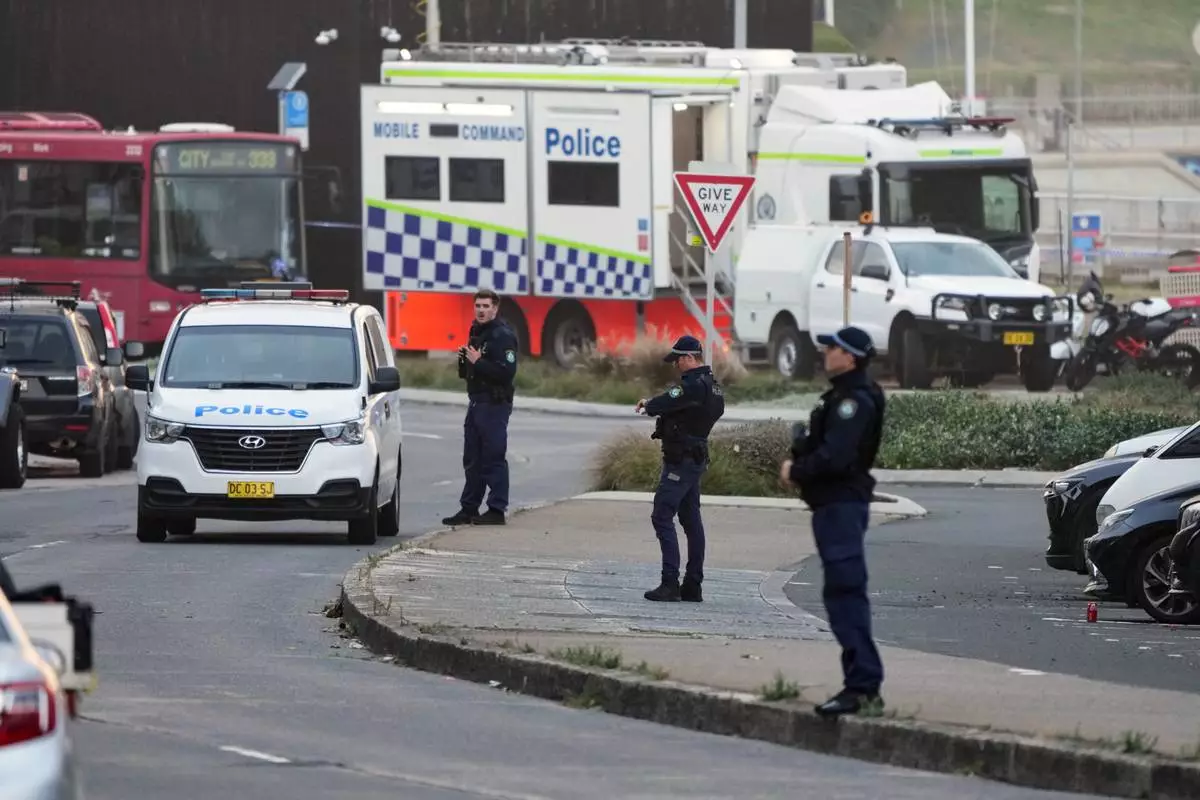
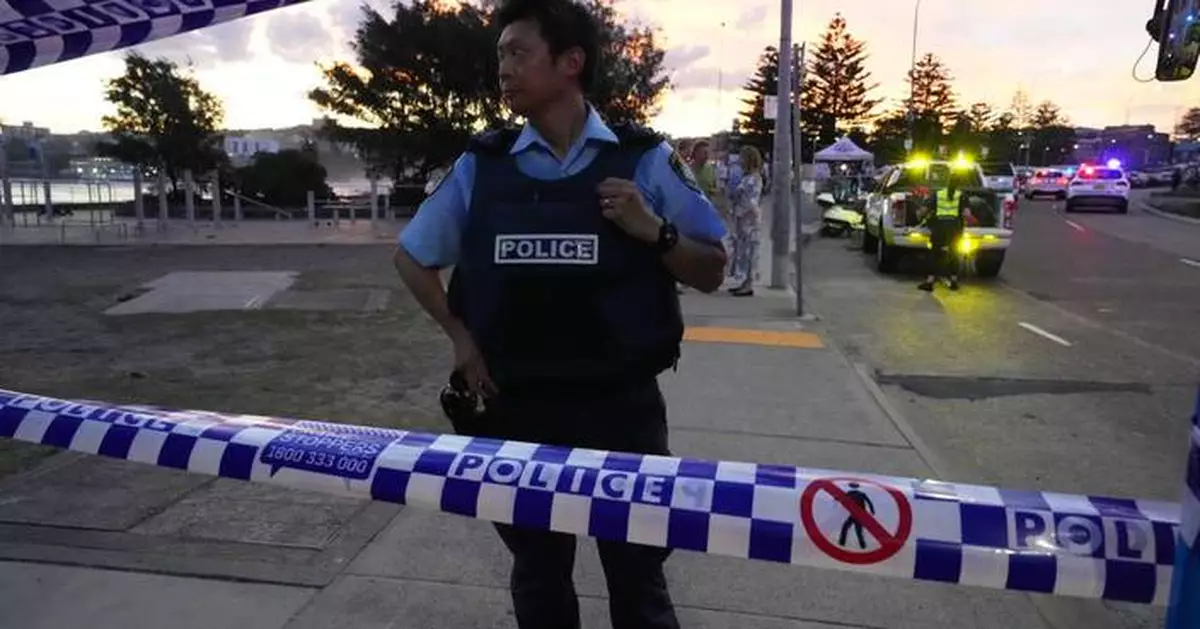
FILE - Police patrol in the early morning at Sydney's Bondi Beach, Dec. 15, 2025, following the previous day's shooting. (AP Photo/Mark Baker, File)
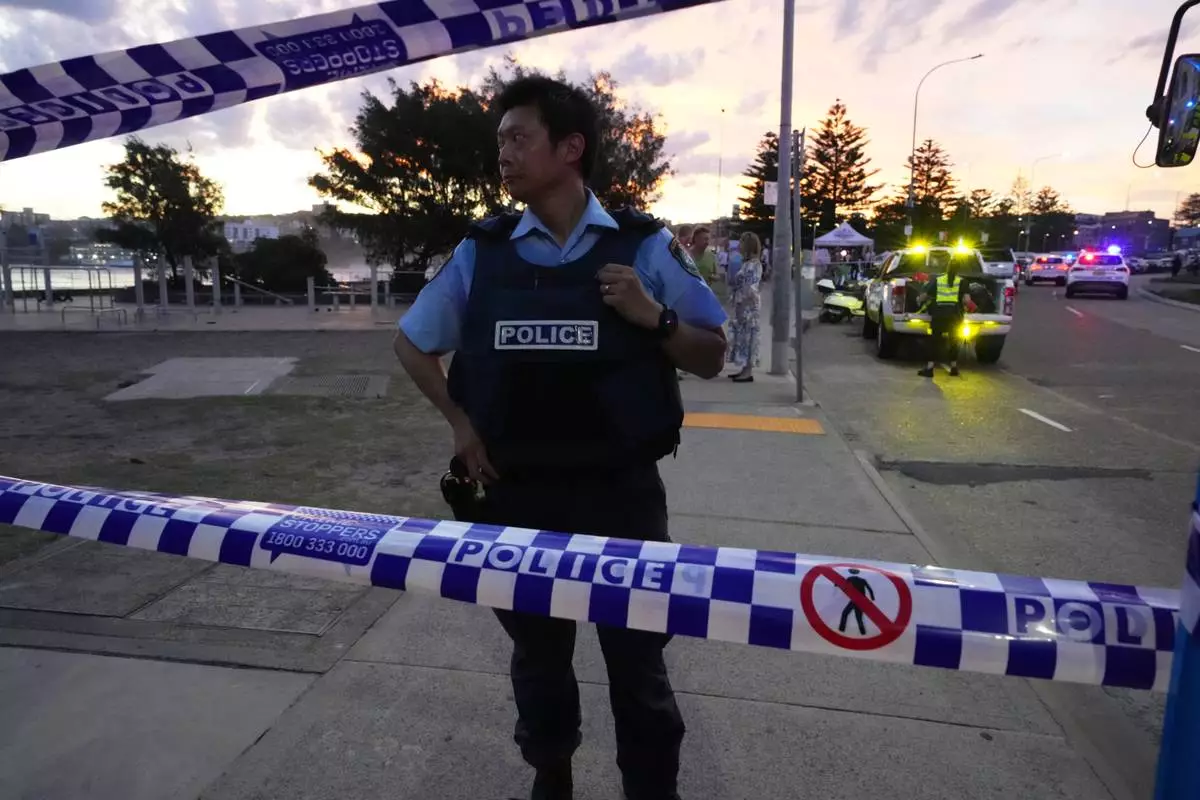
FILE - Police cordon off an area at Bondi Beach after a reported shooting in Sydney, Dec. 14, 2025. (AP Photo/Mark Baker, File)
CAIRO (AP) — A deal appears to be emerging between the United States and Iran to end the war and open the Strait of Hormuz, and U.S. President Donald Trump over the weekend said it had been “largely negotiated.”
It is not clear when or how the deal might be finalized and when its various parts will take effect. Trump spoke after calls with allies in the Middle East, including a separate call with Israel. Details come from two regional officials and a U.S. official who spoke on condition of anonymity to discuss the sensitive negotiations.
Here’s what we know and don’t know:
In the 12 weeks since the U.S. and Israel launched the war with attacks on Iran that killed senior officials including Supreme Leader Ayatollah Ali Khamenei, Tehran has insisted that any deal focus on ending the fighting on all fronts. That includes Lebanon, where the Iranian-backed Hezbollah militant group has been fighting Israel since two days into the war.
A fragile ceasefire has held since April 7. An end to the war would ease concerns throughout a region that saw Gulf havens and travel hubs like the United Arab Emirates struck by Iranian missiles and drones. It would allow for global shipping, including an estimated 20% of the world's oil and natural gas, to begin flowing through the Strait of Hormuz again. It also would allow the rebuilding of energy and other infrastructure in the region.
Both regional officials said the draft deal includes an end to the war between Israel and Hezbollah, as well as a commitment to not interfere in the domestic affairs of countries in the region including Iran. That’s a critical reference to Iran’s support for proxies, which also include the Houthi rebels in Yemen, Hamas militants in Gaza and Shiite armed groups in Iraq.
The U.S. wants Israel to have a free hand to respond to what it views as threats in Lebanon while Iran rejects it, one regional official said. The U.S. official said the deal would guarantee Israel’s right to act against imminent threats in self-defense.
Iran’s nuclear program, missile program and support for armed proxies were the stated reasons for the U.S. and Israel attacking Iran. But Tehran’s retaliatory grip on the Strait of Hormuz quickly shot to the top of global concerns as hundreds of ships carrying oil, natural gas, fertilizer and other supplies were stranded.
Under the emerging agreement, the strait would gradually reopen in parallel with the U.S. ending the blockade of Iran’s ports it launched on April 17, the regional officials said. The blockade has limited Iran’s ability to ship its oil and bring in badly needed cash for its long-suffering economy.
The U.S. would allow Iran to sell its oil through sanctions waivers, said one of the officials, who has been briefed on the negotiations. Sanctions relief and the release of Iran’s billions of dollars in frozen funds would be negotiated during a 60-day period, the official said.
Iran’s nuclear program and international concerns over its possible pursuit of a nuclear weapon underlie all tensions, and the U.S. and Israel have considered highly complex military operations to go in and take out its highly enriched uranium.
Under the potential deal, Tehran would agree to give up that stockpile of highly enriched uranium, according to the regional officials. One official, with direct knowledge of the negotiations, said how Iran would give it up would be subject to further talks over the 60-day period. Some would likely be diluted and the rest transferred to a third country, potentially Russia, the official said. Russia has offered to take it.
A U.S. official confirmed the 60-day period and said if Iran doesn’t give up its stockpile, there will be no sanctions relief.
Iran has 440.9 kilograms (972 pounds) of uranium that is enriched up to 60% purity, a short, technical step from weapons-grade levels of 90%, according to the International Atomic Energy Agency.
Iran says it has an “inalienable” right to nuclear technology while insisting its program is peaceful. On Sunday, President Masoud Pezeshkian told state TV they were ready “to assure the world that we are not after a nuclear weapon.”
Trump on Sunday on social media said that “our relationship with Iran is becoming a much more professional and productive one. They must understand, however, that they cannot develop or procure a Nuclear Weapon or Bomb.”
Other issues have not been mentioned in descriptions of the emerging deal, including the status of Iran's uranium enrichment.
Another is Iran's missile program, which Israel in particular has sought to destroy.
And while the United States and Israel entered the war with stated ambitions of seeing Iranians rise up against their government after nationwide protests early in the year, any discussion of leadership change in Tehran appears to be out.
As for Iran's past stated aims during negotiations, there appears to be no mention of any withdrawal of U.S. forces from the region, or for reparations for the damage the war has caused.
Superville reported from Washington and Anna from Lowville, New York.
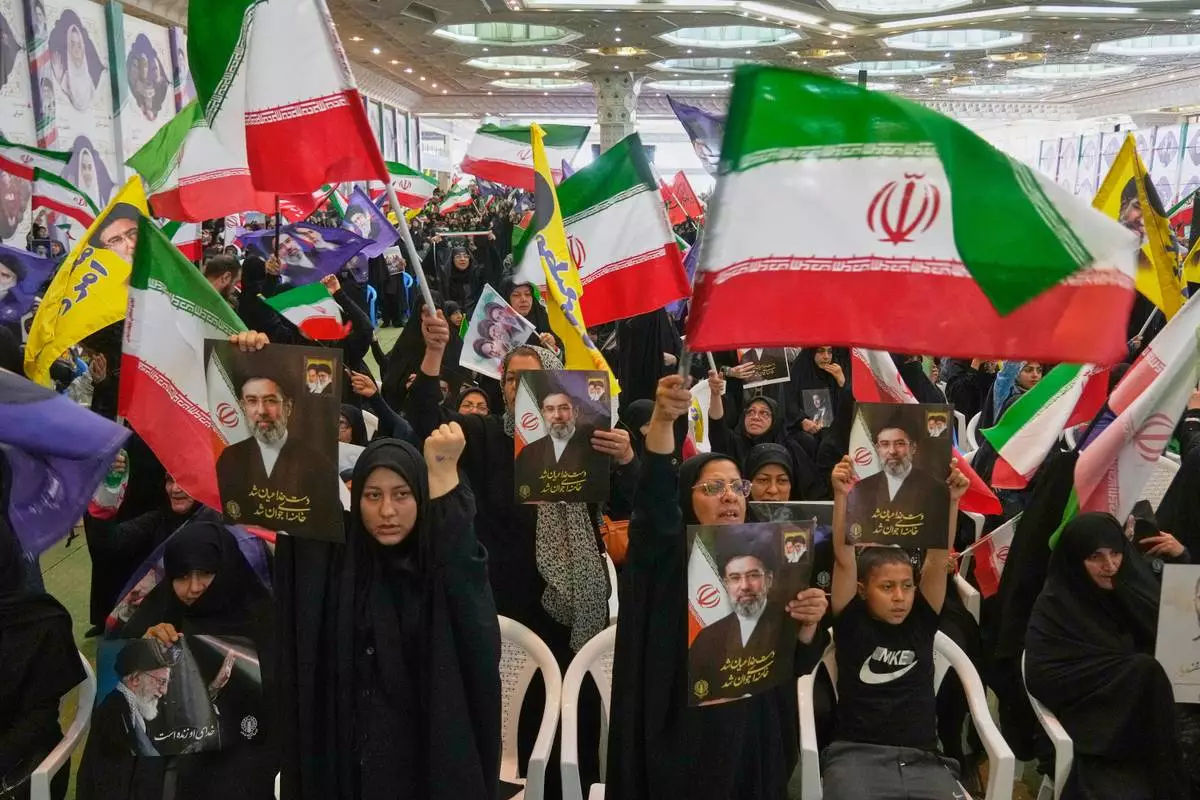
Government supporters hold Iranian flags and pictures of Iran's Supreme Leader, Ayatollah Mojtaba Khamenei, during a ceremony honoring the armed forces and those killed in the war with Israel and the U.S. at the Imam Khomeini Grand Mosque in Tehran, Iran, Sunday, May 24, 2026. (AP Photo/Vahid Salemi)
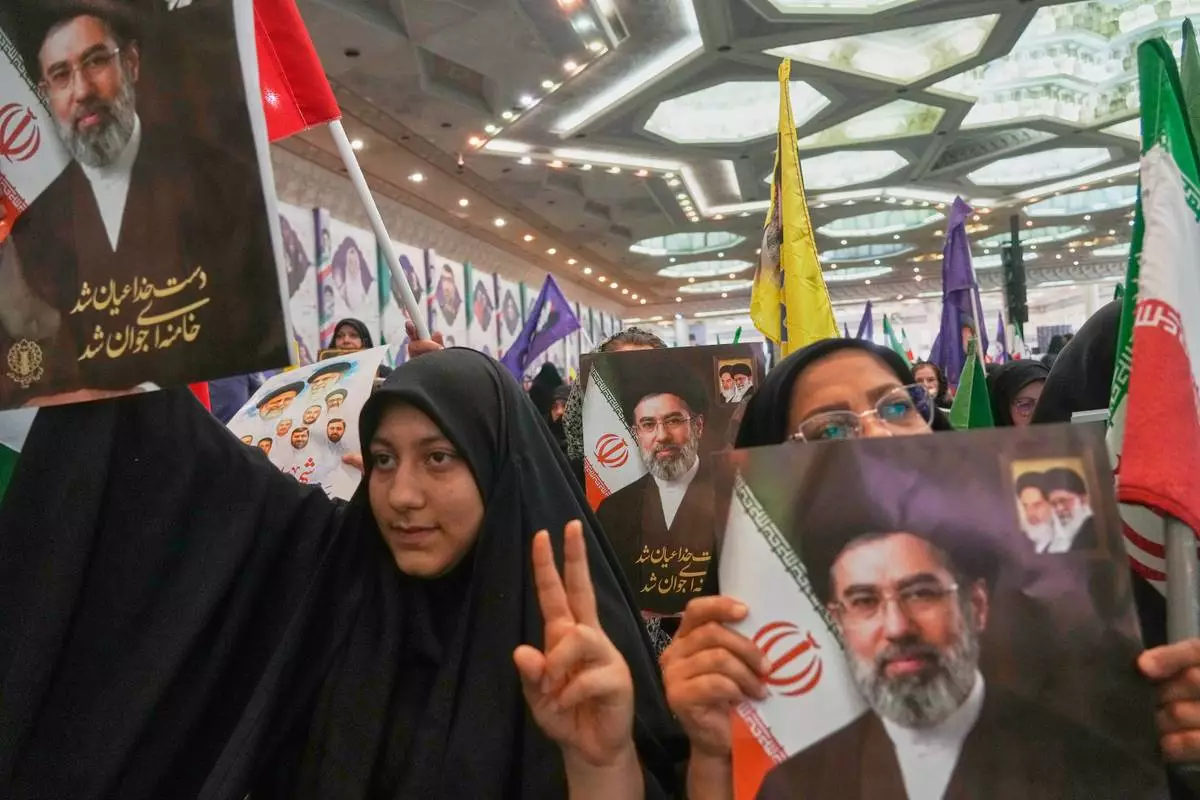
Women hold portraits of Iran's Supreme Leader, Ayatollah Mojtaba Khamenei, during a ceremony honoring the armed forces and those killed in the war with Israel and the U.S. at the Imam Khomeini Grand Mosque in Tehran, Iran, Sunday, May 24, 2026. (AP Photo/Vahid Salemi)