Skip to Content Facebook Feature Image

Drone attacks raise fears as Colombians vote to elect a new president

News

Drone attacks raise fears as Colombians vote to elect a new president
News

News

Drone attacks raise fears as Colombians vote to elect a new president

2026-05-25 15:02 Last Updated At:15:10

JAMUNDI, Colombia (AP) — Gladys Marín only has to cross the street to reach a school where polling stations will open Sunday in her small town in Colombia. But she's still not sure she'll make the short walk, because fears for her safety could outweigh the chance to vote for the country’s next president.

Her home in the southwestern village of Potrerito sits less than 100 meters (320 feet) from the police station, which has become a frequent target for drone-dropped explosives. Authorities blame the attacks on a rebel faction that rejected a peace agreement signed a decade ago with the Colombian government.

More Images
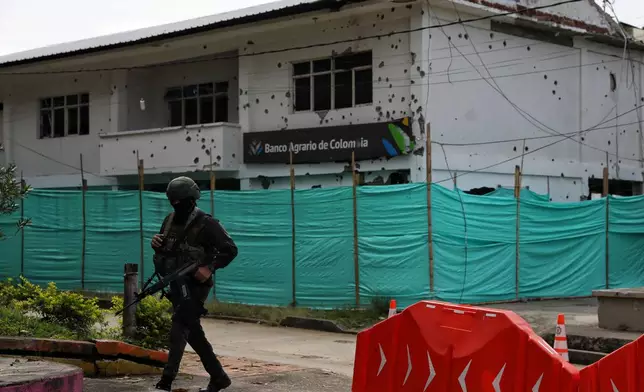
A police officer walks near a branch of the Banco Agrario damaged in an attack by dissidents of the former Revolutionary Armed Forces of Colombia, or FARC, in Buenos Aires, Cauca, ahead of Colombia's presidential election, Wednesday, May 20, 2026. (AP Photo/Santiago Saldarriaga)
A police officer walks near a branch of the Banco Agrario damaged in an attack by dissidents of the former Revolutionary Armed Forces of Colombia, or FARC, in Buenos Aires, Cauca, ahead of Colombia's presidential election, Wednesday, May 20, 2026. (AP Photo/Santiago Saldarriaga)

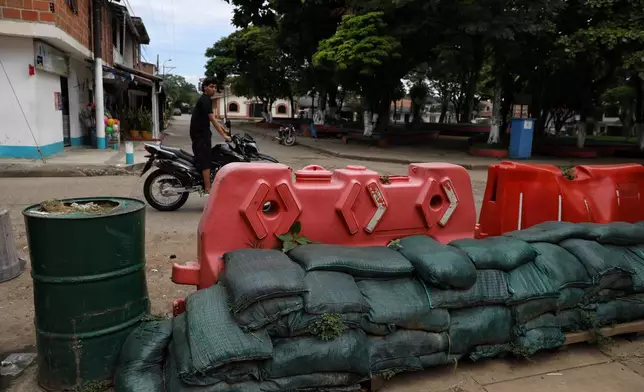
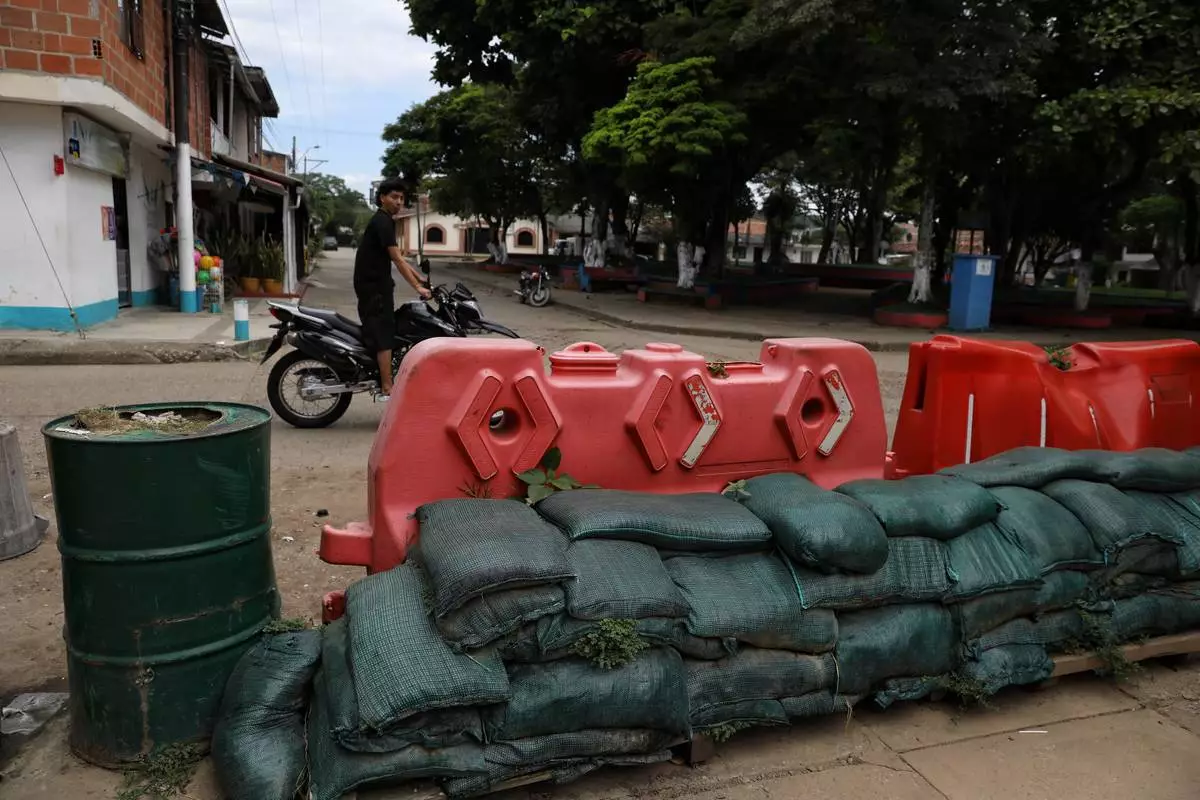
A man rides his motorcycle past a barricade blocking streets in Potrerito, Colombia, Tuesday, May 19, 2026, following attacks by dissidents of the former Revolutionary Armed Forces of Colombia, or FARC. (AP Photo/Santiago Saldarriaga)
A man rides his motorcycle past a barricade blocking streets in Potrerito, Colombia, Tuesday, May 19, 2026, following attacks by dissidents of the former Revolutionary Armed Forces of Colombia, or FARC. (AP Photo/Santiago Saldarriaga)

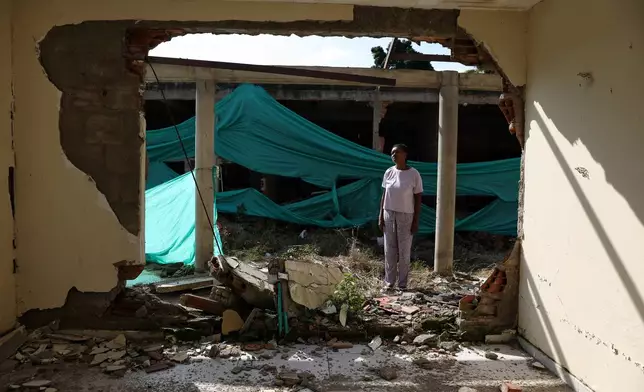
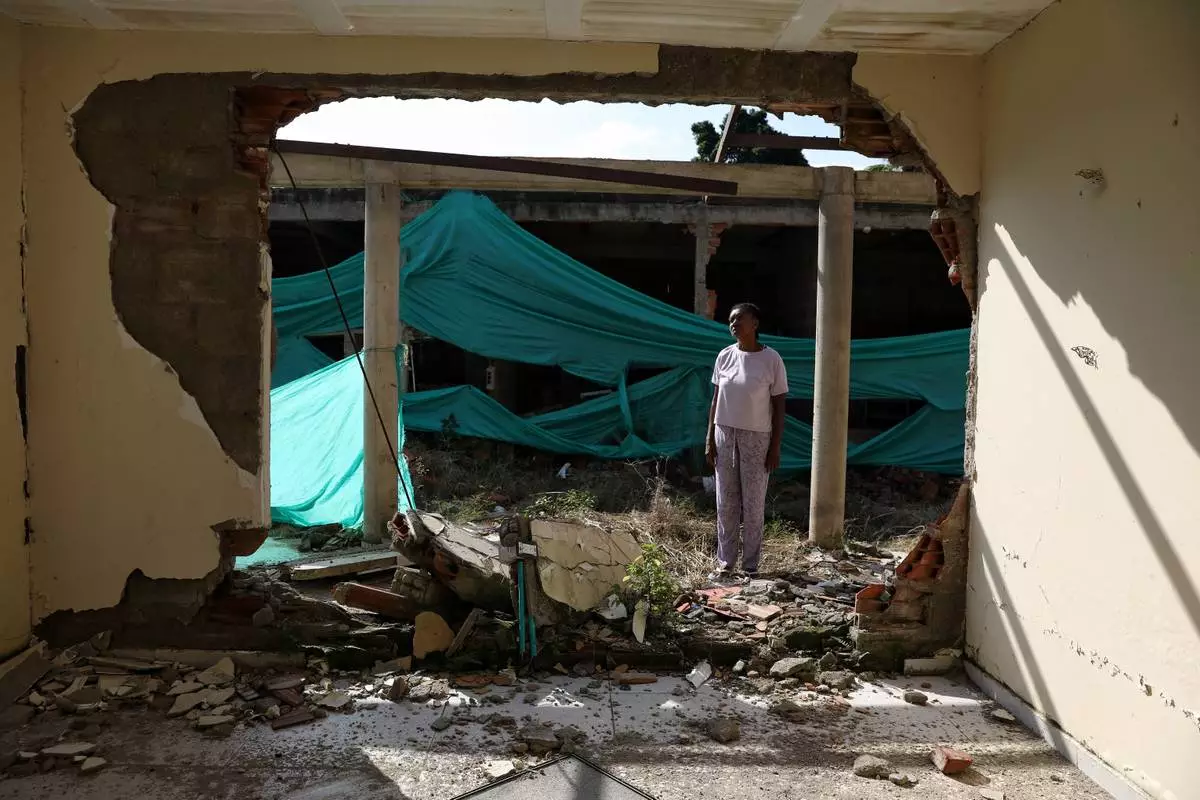
Eucaris Zamora stands in front of her home destroyed during an attack involving drones by a dissident branch of the former Revolutionary Armed Forces of Colombia, or FARC, guerrilla group in Robles, Colombia, Tuesday, May 19, 2026.(AP Photo/Santiago Saldarriaga)
Eucaris Zamora stands in front of her home destroyed during an attack involving drones by a dissident branch of the former Revolutionary Armed Forces of Colombia, or FARC, guerrilla group in Robles, Colombia, Tuesday, May 19, 2026.(AP Photo/Santiago Saldarriaga)

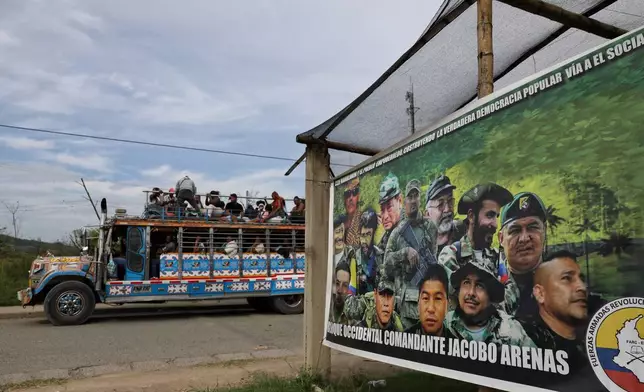
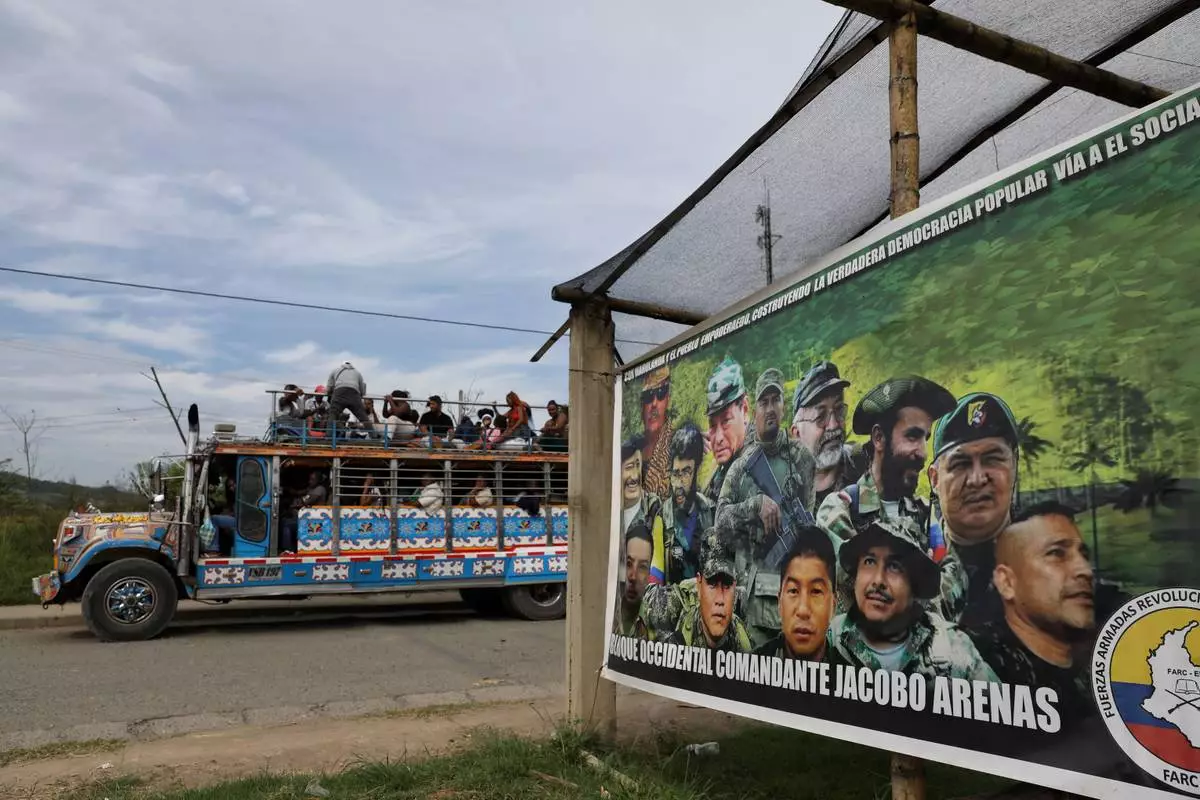
A sign set up by dissidents of the former Revolutionary Armed Forces of Colombia, or FARC, displaying guerrilla leaders stands by a road to Buenos Aires, Cauca, Colombia, Wednesday, May 20, 2026. (AP Photo/Santiago Saldarriaga)
A sign set up by dissidents of the former Revolutionary Armed Forces of Colombia, or FARC, displaying guerrilla leaders stands by a road to Buenos Aires, Cauca, Colombia, Wednesday, May 20, 2026. (AP Photo/Santiago Saldarriaga)

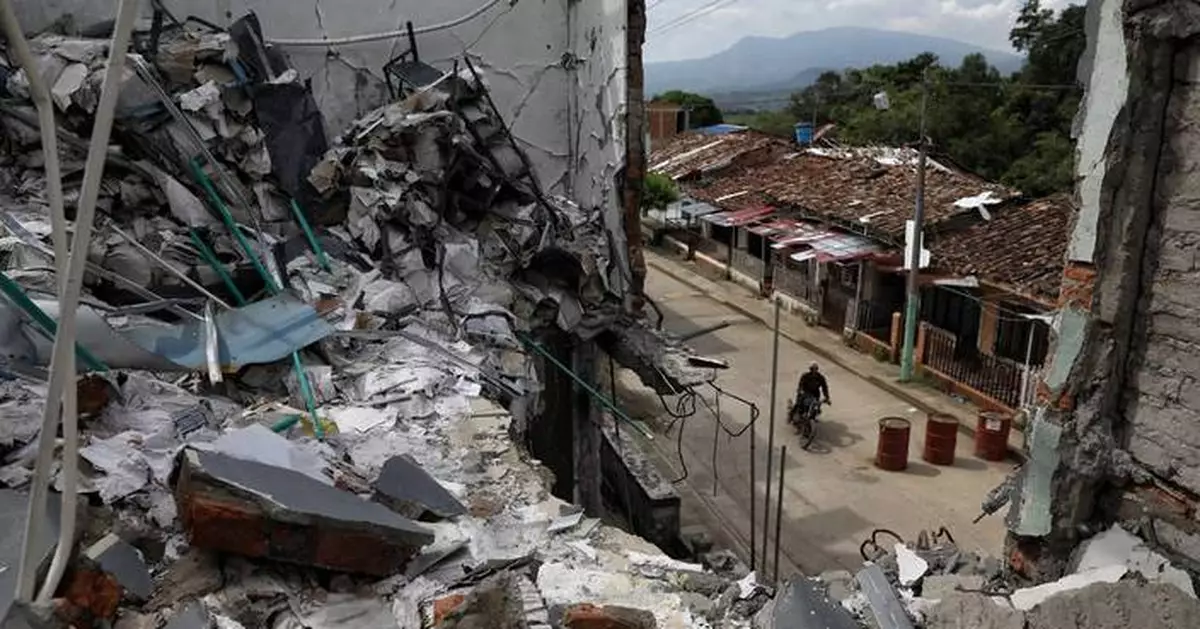
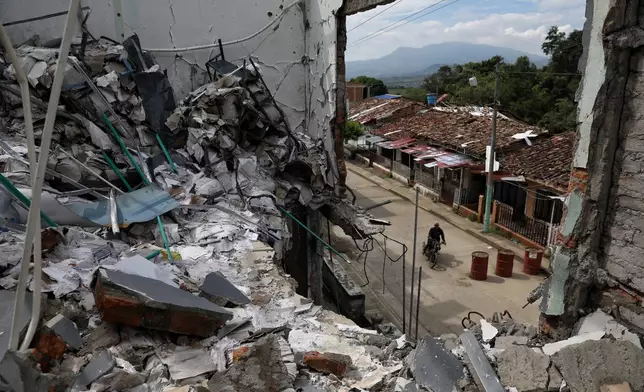
A man rides his motorcycle past the ruins of homes destroyed five months earlier in an attack by dissidents of the former Revolutionary Armed Forces of Colombia, or FARC, in Buenos Aires, Cauca, Colombia, Wednesday, May 20, 2026.(AP Photo/Santiago Saldarriaga)

A man rides his motorcycle past the ruins of homes destroyed five months earlier in an attack by dissidents of the former Revolutionary Armed Forces of Colombia, or FARC, in Buenos Aires, Cauca, Colombia, Wednesday, May 20, 2026.(AP Photo/Santiago Saldarriaga)

"You have to stay alert to what is happening, because we live very close to the police station,” Marín said from her porch in this town about 470 kilometers from the capital, Bogotá.

Colombia will elect a new president and vice president on May 31 in what has been cast as a referendum on President Gustavo Petro’s policies, most notably his controversial “total peace” initiative to negotiate with the country’s remaining rebel groups.

By most accounts, violence tied to armed groups has worsened under Petro's watch.

According to Colombia's Electoral Observation Mission, 386 municipalities, or about a third of the country, are vulnerable to violence from illegal armed groups, and data from the Ideas for Peace Foundation think tank indicates that roughly 27,000 people remain under arms nationwide.

In Robles, a neighboring town in the Jamundi municipality, the streets leading to the police station are blocked by improvised barricades. The police are entrenched in sentry posts, using shelters made of sandbags and black fabric to scan the sky for any approaching drones.

“You pass by the police station with this sense of dread, looking up, hoping you won’t run into a nasty surprise,” said Eucaris Zamora, who had to vacate her home after a cylinder bomb struck it in October, leaving the building partially destroyed.

Guillermo Londoño, a security official in the region of Valle del Cauca, where Jamundi is located, said illegal armed groups in the area have sought to maximize damage through simultaneous, “swarm-style” drone strikes, marking a shift from previous tactics, where attackers would launch attacks with a single drone, reload it, and then resume their assault.

Drones modified to drop explosives have altered the dynamics of Colombia’s armed conflict since 2024, posting one of the greatest threats to civilians and security forces alike, particularly along the Venezuelan border, in northern Bolivar province and in southwestern coastal areas.

Colombia's Defense Ministry reported that drone attacks hit 333 targets in 2025, up from 61 such incidents recorded in 2024. Meanwhile, the army has recorded 107 drone attacks so far this year, which have claimed the lives of two soldiers.

Officials here believe their region has become a casualty of Petro's “total peace” strategy, aimed at putting an end to one of the world’s longest-running conflicts.

Petro acknowledges that the initiative has failed to achieve its hoped-for outcome of disarming illegal networks, and his approach of being open to talk to every group has hardened up a notch. He has frozen negotiations with some groups due to their continuing violence, though he has kept dialogue open with other organizations.

A clear divide has emerged between candidates. On one side are those who favor continuing dialogue with illegal groups, such as Sen. Iván Cepeda, of Petro’s political movement. On the other are those who say they would dismantle such efforts and prioritize military pressure, such as Sen. Paloma Valencia, of the opposition Democratic Center, and Abelardo de la Espriella, a self-described admirer of Salvadoran President Nayib Bukele who has vowed to crack down on illegal armed groups.

Elizabeth Dickinson, a senior analyst at the International Crisis Group, believes the violence could worsen if a hawkish candidate is elected.

“Right-wing candidates propose a ‘hard-line’ response that could exacerbate the violence, because the armed groups will respond to pressure from security forces with terror-style attacks, as they lack the means to respond symmetrically, army-to-army,” Dickinson said.

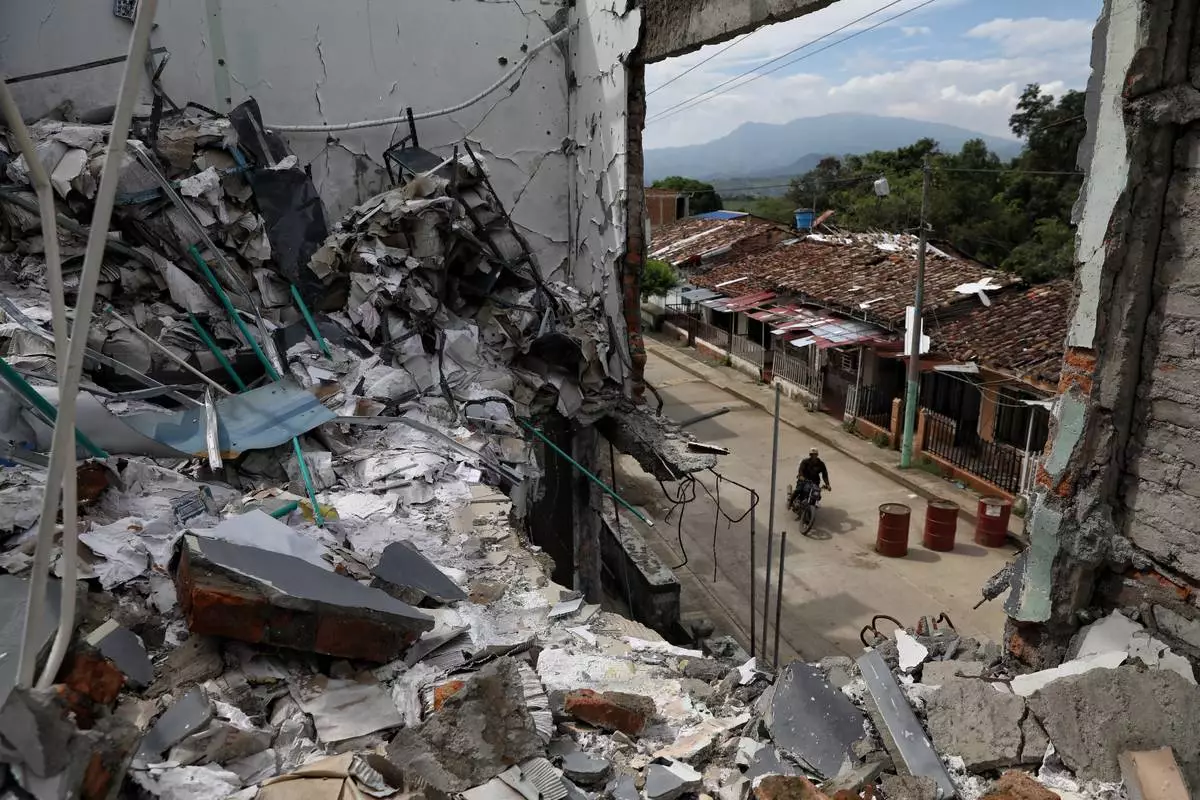
In December, gunmen sowed terror in the small southern town of Buenos Aires, launching an attack on the police station that left several officers injured and reduced a local bank and nearby homes to rubble.

Among the wreckage was the home of 89-year-old Celimo Enrique Aguilar.

“I haven’t lost faith that, someday, one might be able to live in peace,” he said.

Follow AP’s coverage of Latin America and the Caribbean at https://apnews.com/hub/latin-america
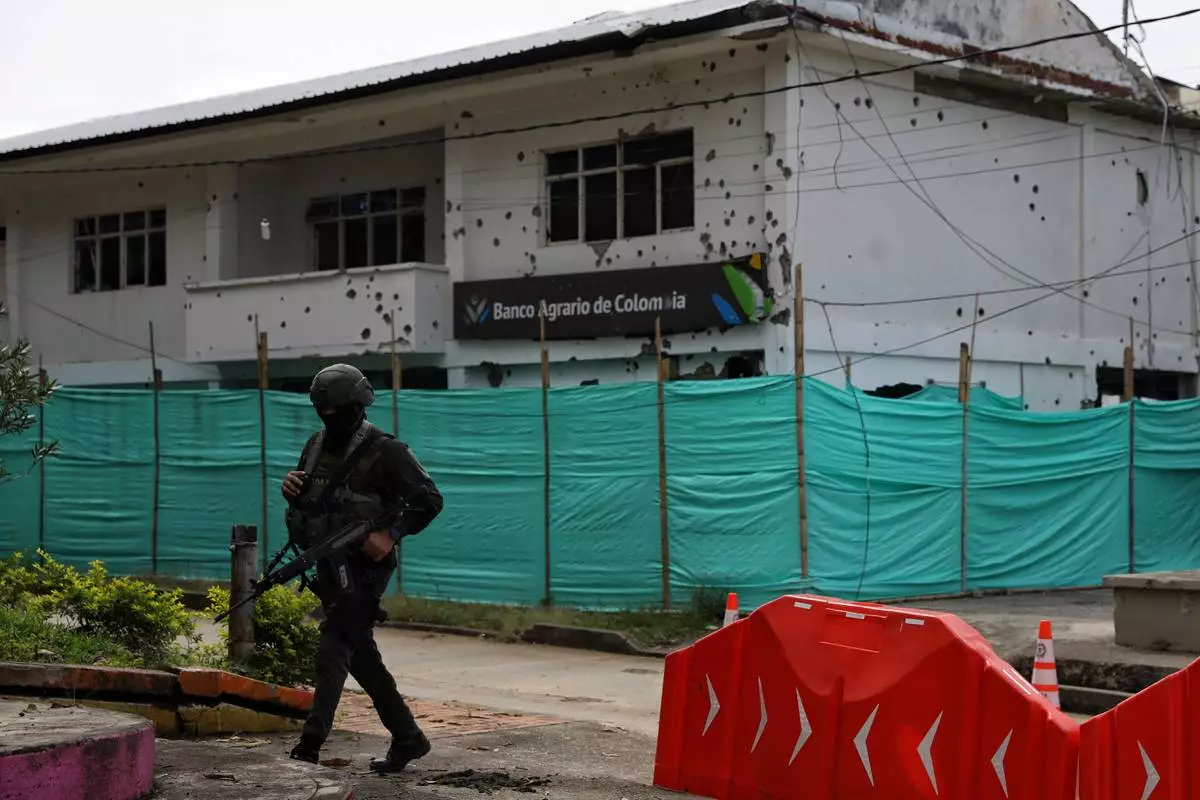
A police officer walks near a branch of the Banco Agrario damaged in an attack by dissidents of the former Revolutionary Armed Forces of Colombia, or FARC, in Buenos Aires, Cauca, ahead of Colombia's presidential election, Wednesday, May 20, 2026. (AP Photo/Santiago Saldarriaga)
A police officer walks near a branch of the Banco Agrario damaged in an attack by dissidents of the former Revolutionary Armed Forces of Colombia, or FARC, in Buenos Aires, Cauca, ahead of Colombia's presidential election, Wednesday, May 20, 2026. (AP Photo/Santiago Saldarriaga)

A man rides his motorcycle past a barricade blocking streets in Potrerito, Colombia, Tuesday, May 19, 2026, following attacks by dissidents of the former Revolutionary Armed Forces of Colombia, or FARC. (AP Photo/Santiago Saldarriaga)
A man rides his motorcycle past a barricade blocking streets in Potrerito, Colombia, Tuesday, May 19, 2026, following attacks by dissidents of the former Revolutionary Armed Forces of Colombia, or FARC. (AP Photo/Santiago Saldarriaga)

Eucaris Zamora stands in front of her home destroyed during an attack involving drones by a dissident branch of the former Revolutionary Armed Forces of Colombia, or FARC, guerrilla group in Robles, Colombia, Tuesday, May 19, 2026.(AP Photo/Santiago Saldarriaga)
Eucaris Zamora stands in front of her home destroyed during an attack involving drones by a dissident branch of the former Revolutionary Armed Forces of Colombia, or FARC, guerrilla group in Robles, Colombia, Tuesday, May 19, 2026.(AP Photo/Santiago Saldarriaga)

A sign set up by dissidents of the former Revolutionary Armed Forces of Colombia, or FARC, displaying guerrilla leaders stands by a road to Buenos Aires, Cauca, Colombia, Wednesday, May 20, 2026. (AP Photo/Santiago Saldarriaga)
A sign set up by dissidents of the former Revolutionary Armed Forces of Colombia, or FARC, displaying guerrilla leaders stands by a road to Buenos Aires, Cauca, Colombia, Wednesday, May 20, 2026. (AP Photo/Santiago Saldarriaga)

A man rides his motorcycle past the ruins of homes destroyed five months earlier in an attack by dissidents of the former Revolutionary Armed Forces of Colombia, or FARC, in Buenos Aires, Cauca, Colombia, Wednesday, May 20, 2026.(AP Photo/Santiago Saldarriaga)

A man rides his motorcycle past the ruins of homes destroyed five months earlier in an attack by dissidents of the former Revolutionary Armed Forces of Colombia, or FARC, in Buenos Aires, Cauca, Colombia, Wednesday, May 20, 2026.(AP Photo/Santiago Saldarriaga)
MUSANZE, Rwanda (AP) — A guide called out to endangered golden monkeys with grunts and clicks to signal he posed no threat, a familiar sound in the mist-covered forests of Rwanda ’s Volcanoes National Park.

Here in one of Africa's most well-known parks, steep ridges and dense vegetation often obscure even the largest mountain gorillas — also endangered — and scientists are turning to new technology to detect and protect them.

Known as environmental DNA, or eDNA, the technology allows researchers to identify species using genetic material like fur or feces left in soil and water. This reduces the impact of human interaction during wildlife surveys that can leave researchers groping through the mist.

The technology, more often used in marine conservation work, was introduced by the African Wildlife Foundation in partnership with the Rwandan government. It aims to develop a list of all species in the country. That will help protect biodiversity that is threatened by climate change and population growth.

“We selected eDNA as a new technology to bring solutions and to complement existing methods used in ecological monitoring,” said the foundation’s country manager for Rwanda, Patrick Nsabimana.

Biodiversity monitoring for decades has relied on camera traps, which operate when animals trigger their sensors, and ranger observations.

But that is a challenge in rugged terrain such as the Virunga mountains that are central to Volcanoes National Park, which covers part of Rwanda, Uganda and Congo. Insecurity in the border area also can limit ranger movement.

Nsabimana said eDNA is a cost-effective monitoring approach in large ecosystems such as Virunga. Samples are taken from locations like downstream ponds that are likely to have traces of animals on higher ground. Then they are tested.

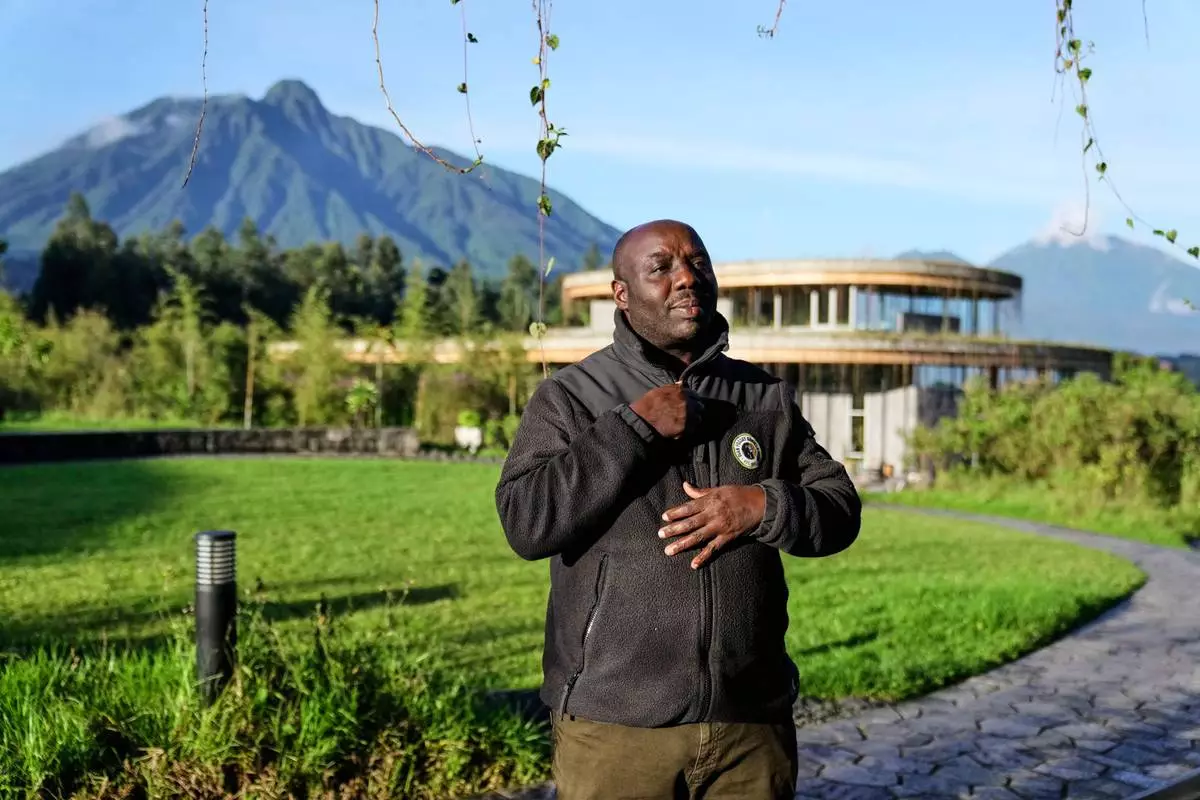
“With one sample, you can detect multiple species, mammals, birds, amphibians and many others,” said Deogratias Tuyisingize, a Rwanda-based biodiversity researcher with the Dian Fossey Gorilla Fund that is also involved in the project.

He said a combination of traditional methods and new technology is needed to ensure all species are monitored. Because of steep ravines and mountainsides, “we are sure we were missing some species."

Meanwhile, having a better sense of where endangered species are could help in patrolling against poachers, people with the project said.

The ability to generate a broad snapshot of biodiversity is critical for conservation, especially as Rwanda expands some of its national parks by rehabilitating previously agricultural land.

“We can see how species are colonizing these sites over time,” Tuyisingize said.

That allows conservationists to measure success by the return of rare or threatened species, and offers early warnings of invasive species.

But the eDNA technology is not without limitations. It cannot reliably estimate how many animals are present in an ecosystem. DNA can linger long after a species has left.

Being able to process samples in Rwanda is also a challenge, as the project's initial ones had to be sent to Europe for analysis.

Joshua Newton, who conducted research on eDNA for Curtin University’s Trace and Environmental DNA Laboratory, said challenges also include having cold storage to preserve DNA samples and ensuring samples are not contaminated.

Data gaps are another issue. Africa has relatively limited genetic reference libraries, despite decades of conservation work on the continent, making it harder to match DNA samples to known species.

Most genetic reference libraries come from Europe and America, said James Munyawera, a lab specialist with the Dian Fossey Gorilla Fund.

Researchers are now building region-specific databases.

The project in Volcanoes National Park has also begun training residents of local communities, along with rangers, to participate in monitoring efforts by collecting samples.

The Associated Press’ climate and environmental coverage receives financial support from multiple private foundations. AP is solely responsible for all content. Find AP’s standards for working with philanthropies, a list of supporters and funded coverage areas at AP.org.

Deogratias Tuyisingize, a biodiversity researcher with the Dian Fossey Gorilla Fund, speaks during an interview in Volcanoes National Park, Kinigi, Rwanda, Thursday, March 19, 2026. (AP Photo/Brian Inganga)

Deogratias Tuyisingize, a biodiversity researcher with the Dian Fossey Gorilla Fund, speaks during an interview in Volcanoes National Park, Kinigi, Rwanda, Thursday, March 19, 2026. (AP Photo/Brian Inganga)

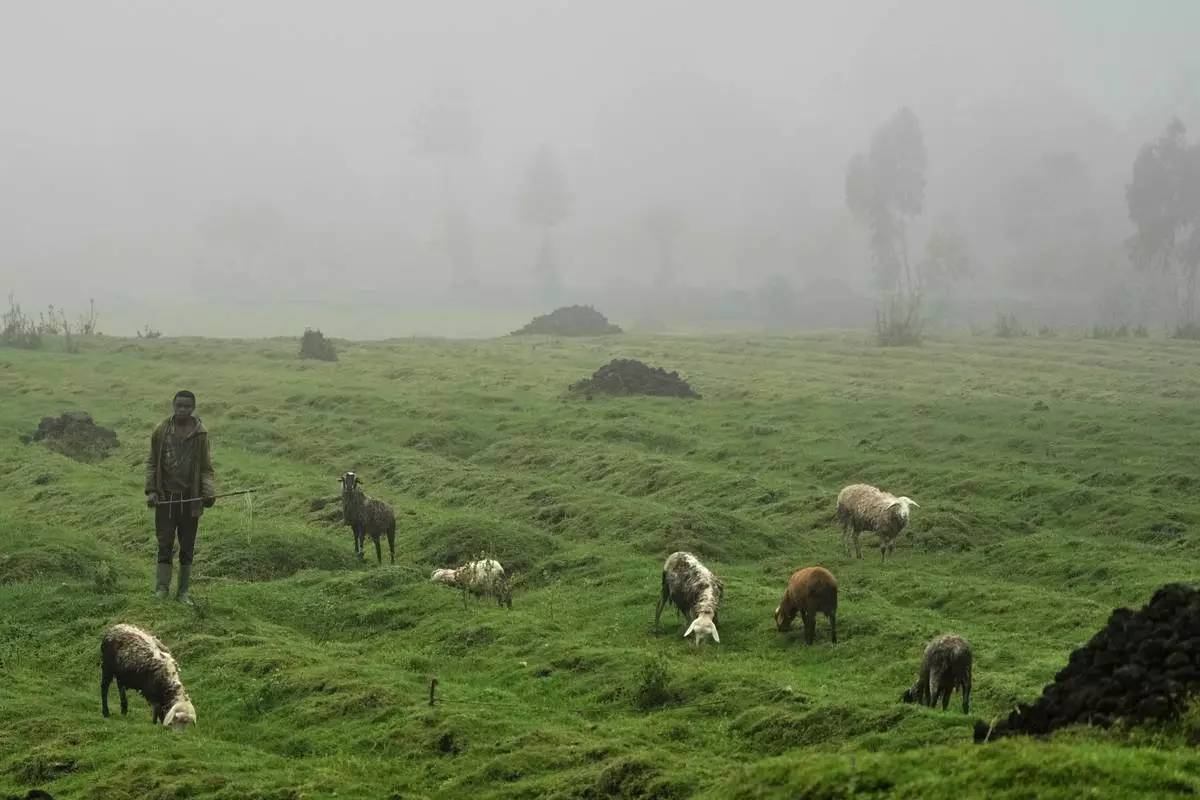
A boy tends livestock near Volcanoes National Park, Kinigi, Rwanda, Thursday, March 19, 2026. (AP Photo/Brian Inganga)

A boy tends livestock near Volcanoes National Park, Kinigi, Rwanda, Thursday, March 19, 2026. (AP Photo/Brian Inganga)

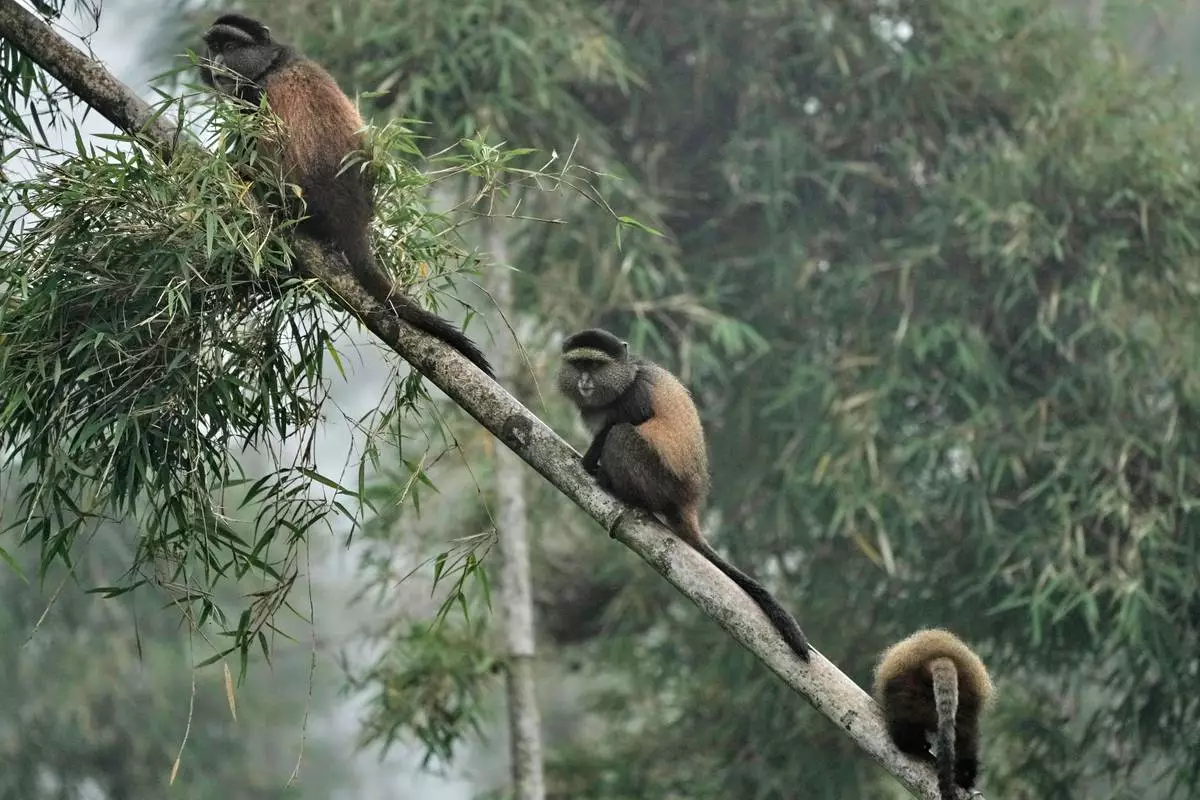
Golden monkeys play on a bamboo tree in Volcanoes National Park, Kinigi, Rwanda, Thursday, March 19, 2026. (AP Photo/Brian Inganga)

Golden monkeys play on a bamboo tree in Volcanoes National Park, Kinigi, Rwanda, Thursday, March 19, 2026. (AP Photo/Brian Inganga)

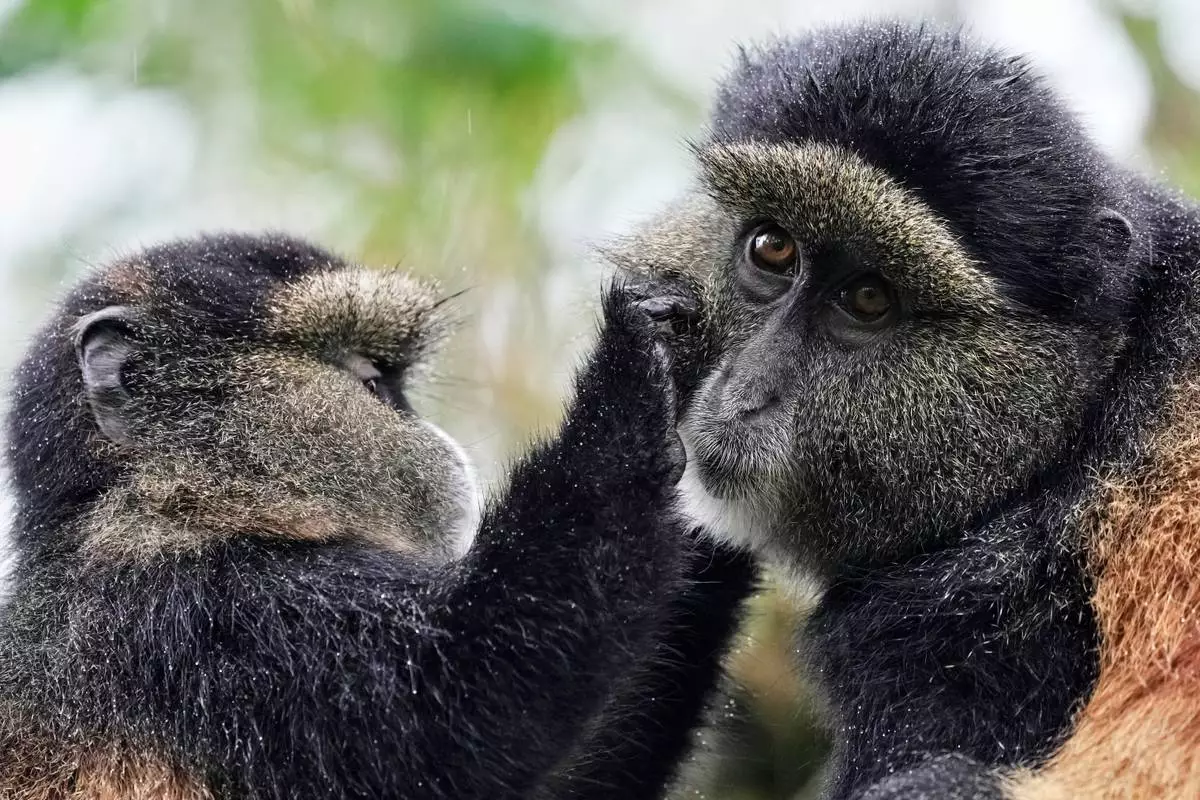
Golden monkeys groom each other, removing debris and parasites from their fur, in Volcanoes National Park, in Kinigi, Rwanda, Thursday, March 19, 2026. (AP Photo/Brian Inganga)

Golden monkeys groom each other, removing debris and parasites from their fur, in Volcanoes National Park, in Kinigi, Rwanda, Thursday, March 19, 2026. (AP Photo/Brian Inganga)

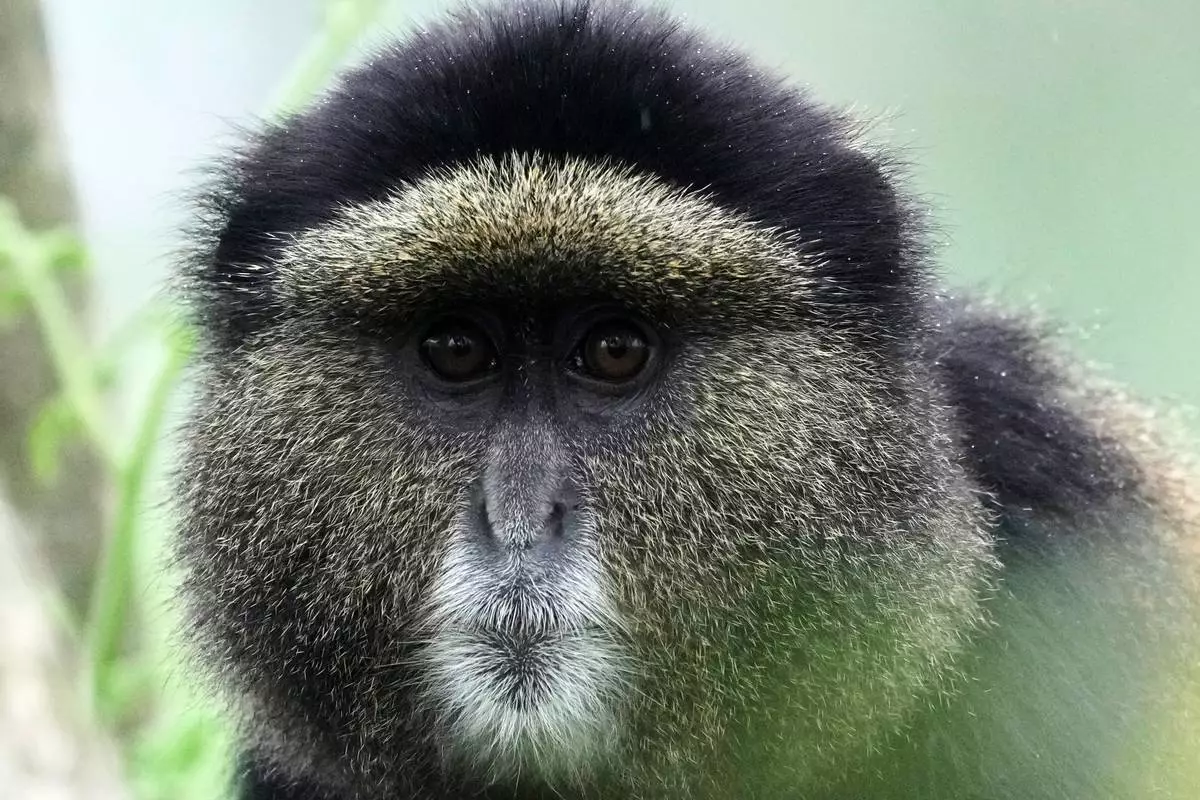
A golden monkey is seen in Volcanoes National Park in Kinigi, Rwanda, Thursday, March 19, 2026. (AP Photo/Brian Inganga)

A golden monkey is seen in Volcanoes National Park in Kinigi, Rwanda, Thursday, March 19, 2026. (AP Photo/Brian Inganga)

Recommended Articles