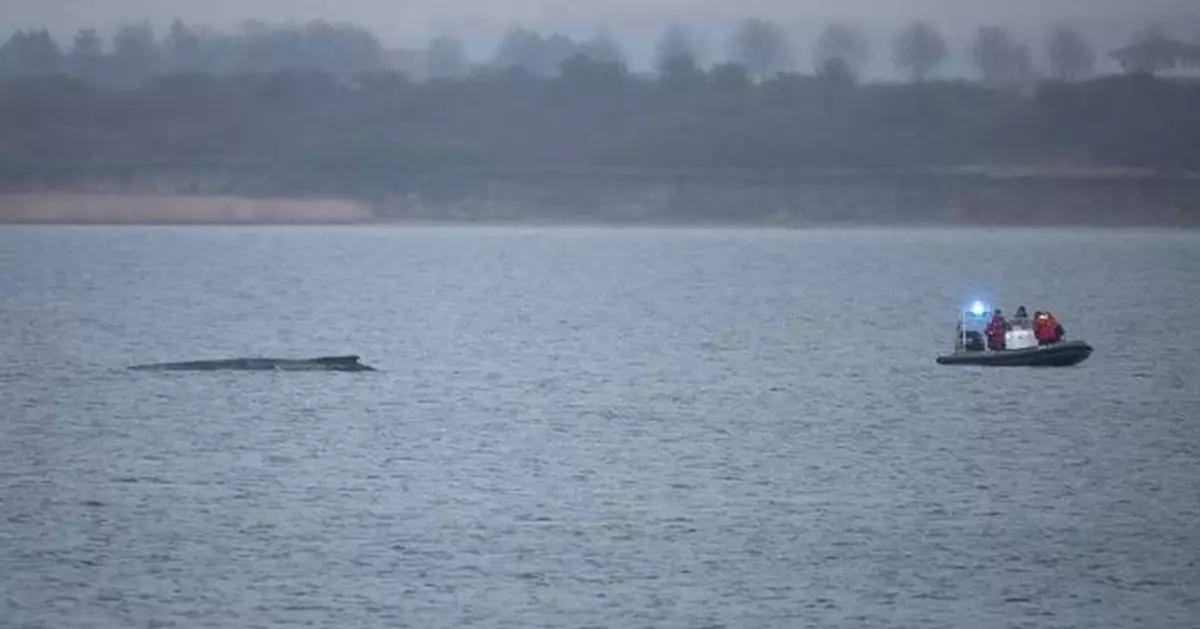
BERLIN (AP) — A humpback whale that got stranded in shallow coastal waters in the Baltic Sea has swum free again, and experts hope that they won't have to make another rescue attempt.
The whale, which is 12-15 meters (39-49 feet) long, swam free late Monday from the spot near the German port of Wismar where it had been stuck since the weekend, regional officials said. It initially headed toward the harbor but then turned toward the open sea.
The whale was sighted again off Wismar on Tuesday morning and wasn't stuck, the Ocean Museum Germany said.
An effort last week to rescue the whale from an underwater sandbank at Timmendorfer Strand, a nearby resort town, eventually succeeded with the help of an excavator. But the apparently exhausted whale was soon in trouble again, albeit in somewhat deeper water, and officials banked on giving it peace and quiet to gather enough strength to swim away.
The drama captivated Germans, with crowds gathering on shore while media have sent detailed updates on its progress and streamed live video from the scene.
But the whale is still far from its natural habitat, and faces a huge effort to find its way to the Atlantic Ocean through the North Sea.
“The whale swimming free yesterday is a first very good sign, but the way to the North Sea is still long and we can only keep our fingers crossed that it makes it there,” Burkard Baschek, the scientific director of the Ocean Museum Germany and the scientific coordinator of the rescue effort, told ZDF television.
He said it wouldn't be practical to try to escort the whale on that journey of several hundred kilometers (miles), pointing to whales' ability to dive. “That means that in principle we can only hope that it will make it under its own steam,” he added.
No tracker has been attached to the whale because its skin is in a poor state after long exposure to the relatively low salt concentration of the Baltic.
The whale was first spotted swimming in the region on March 3.
It is not clear why the whale swam into the Baltic Sea. Some experts say the animal may have lost its way when it swam after a shoal of herring, or during migration.
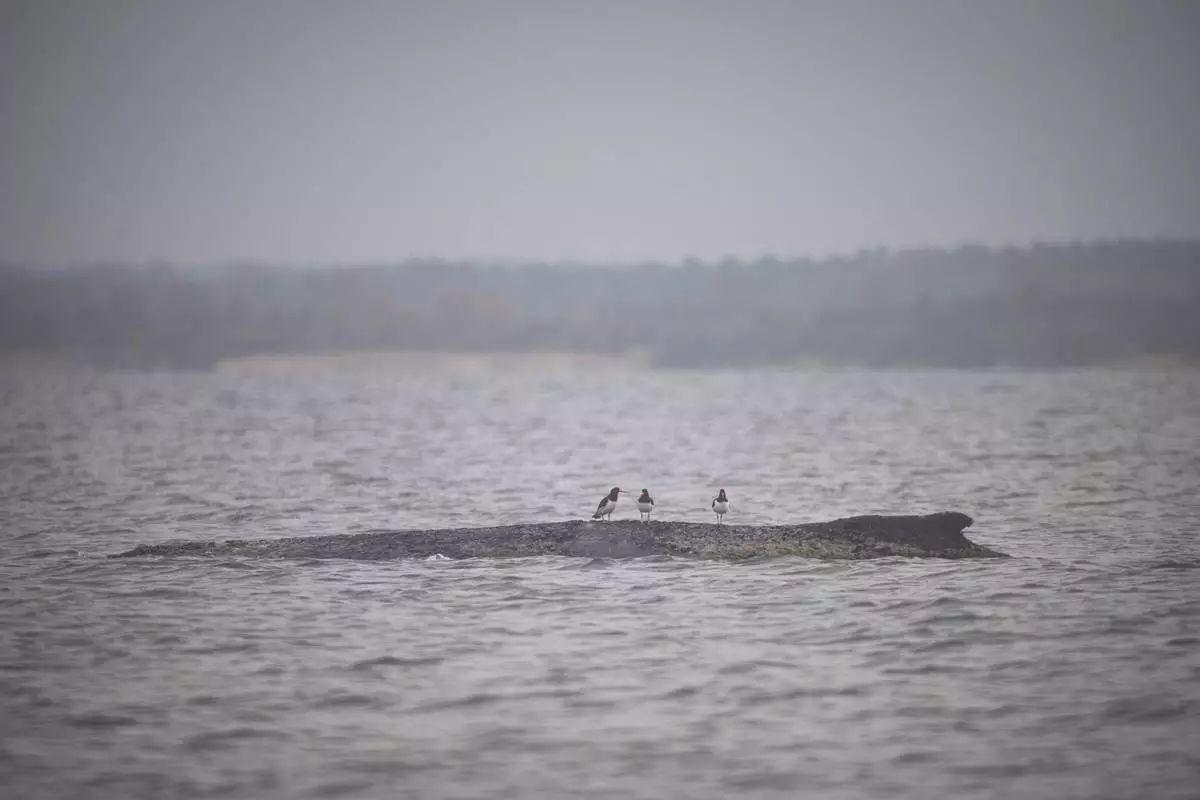
Three water birds sit on a humpback whale in the Wismar Bay near Wismar, Germany, Sunday, March 29, 2026. (Philip Dulian/dpa via AP)
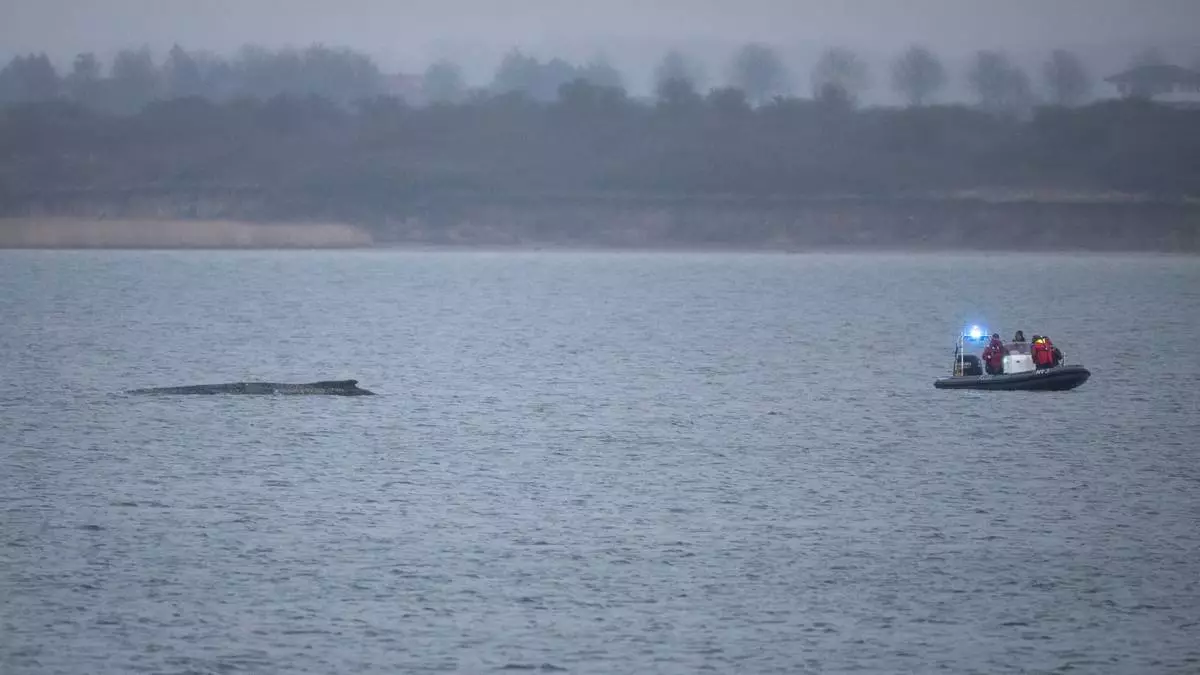
A police inflatable boat approaches a humpback whale lying in the Bay of Wismar, Germany, Monday, March 30, 2026. (Philip Dulian/dpa via AP)
SAINT-MAUR-DES-FOSSÉS, France (AP) — After surviving Auschwitz-Birkenau, Ginette Kolinka developed a stock answer to shut down questioners who'd ask about her experiences of the Nazi death camp and its horrors.
“'If I had a child, well, I would prefer to strangle them with my own hands than make them go through what I went through,'” she'd tell them.
“For me, that was an answer that said it all,” Kolinka says.
Now, at the tail end of a remarkably long and fruitful life, the feisty 101-year-old with an easy and generous smile has become a mighty warrior against antisemitism in France, seeing purpose in sharing her firsthand insight of murderous hatred and inhumanity.
So the lessons of the Holocaust aren't forgotten. So people who tune in to the countless interviews she gives cannot say that they didn’t know about the death camps and the extermination of 6 million European Jews by the Nazis and their collaborators. So school pupils who are thrilled to meet and listen to Kolinka inherit and embrace the duty of remembrance.
Kolinka credits Steven Spielberg for helping to precipitate her decision 30 years ago to start opening up about the mental and physical scars that she buried for decades, the survivor's guilt that tormented her, the eternal regret of goodbye kisses that she didn't get to give to her father, Léon, and 12-year-old brother, Gilbert, before Nazi guards sent to them to the gas chambers, and so many other cruelties.
After the 1993 release of “Schindler’s List,” Spielberg launched a foundation to collect testimonies from Holocaust survivors. When it contacted Kolinka, she was reticent, replying that talking to her would be a waste of time, she recounts in “Return to Birkenau,” her memoir.
But when its interviewer then sat down with her, in 1997, out the memories flowed, for nearly three hours. Tears, too. The foundation says it has since collected more than 60,000 testimonies and is still gathering more.
“For the first time, I found myself compelled to think about it again,” Kolinka says in her book, published in 2019.
In World War II, Nazi-occupied France deported 76,000 Jewish men, women and children, mostly to Auschwitz-Birkenau. Just 2,500 survived. It took France’s leadership 50 years to officially acknowledge the state’s involvement in the Holocaust, when then-President Jacques Chirac in 1995 described French complicity as an indelible stain on the nation.
Through her books, media appearances and school visits, Kolinka has become the most prominent remaining French survivor of Auschwitz-Birkenau.
Just a few dozen, perhaps fewer than 30, are still alive, according to the Paris-based Union of Auschwitz Deportees, a survivors' group.
Pupils hung on her every word when Kolinka dropped by the Marcelin Berthelot high school east of Paris recently to tell her story for the umpteenth time, with The Associated Press also present. Even the abbreviated version, squeezed into roughly 90 minutes, makes for tough listening — from her arrest in March 1944 to her return to France, skeletal and traumatized, after Nazi Germany's surrender in May 1945.
She described how she and other Jews were crammed aboard windowless animal-transport wagons in Paris and the violence and cruelty, with Nazi guards screaming orders and dogs barking, that greeted them at the other end three days later at Auschwitz-Birkenau. In her memoir, Kolinka says that the first German word she learned was “Schnell!” — meaning “Move it!”
The pupils listened in pin-drop silence as Kolinka explained that they were forced to strip naked and how that had been torture for the demure 19-year-old she was at the time.
“The Nazis' hatred of Jews was such that they hunted for every detail that could make us suffer, humiliate us,” she said.
Then, Kolinka rolled up her left sleeve so pupils could see the identification number — 78599 — that a camp orderly tattooed on her forearm.
“Some people’s numbers cover their entire arm,” she said. “But I have a nice little number.”
With time short and perhaps to spare their young imaginations, Kolinka didn't tell the teenagers that most of the 1,499 men, women and children transported with her to Auschwitz-Birkenau in convoy No. 71 from Paris were killed on arrival.
Kolinka was among a couple of hundred who were kept back from the gas chambers and crematoriums to be used instead as forced labor.
As a prisoner, Kolinka used to watch subsequent trains being unloaded, knowing that those aboard would soon be dead.
Focused on survival, she shut down her emotions.
“I became a robot,” she told the pupils.
After her talk, a group of them gathered around Kolinka to keep chatting and ask more questions, giving her rock-star treatment, not wanting the encounter to end.
Nour Benguella, 17, and Saratou Soumahoro, 19, were giddy with admiration. Simultaneously, they reached for the same word to describe Kolinka: “Extraordinary."
“An amazing woman. It’s wonderful to have her here in front of us. This strength of testimony, her mental fortitude," Benguella said.
“Keeping this history alive is the only thing that will permit us to not make the same mistakes.”
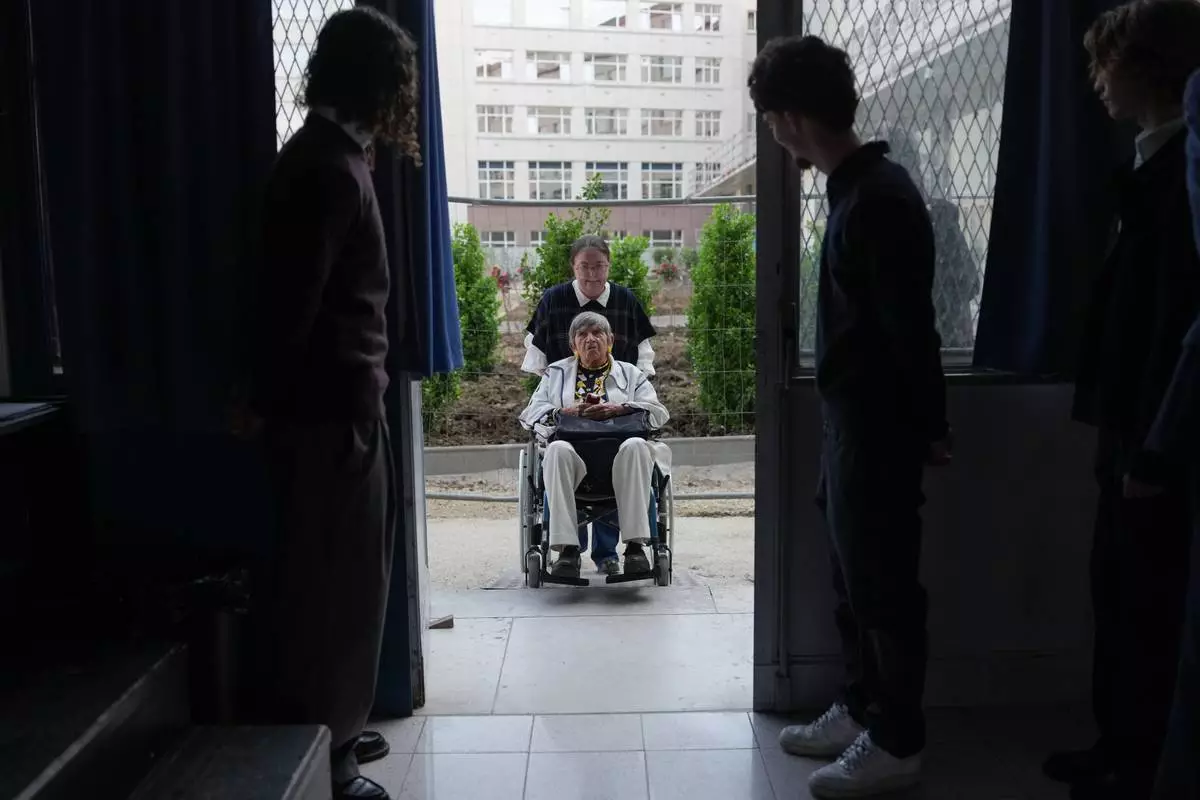
Ginette Kolinka, a 101-year-old survivor of Auschwitz, arrives to meet pupils in a Paris-region high school in Saint-Maur-des-Fosses, outside Paris, France, March 21, 2026. (AP Photo/Thibault Camus)
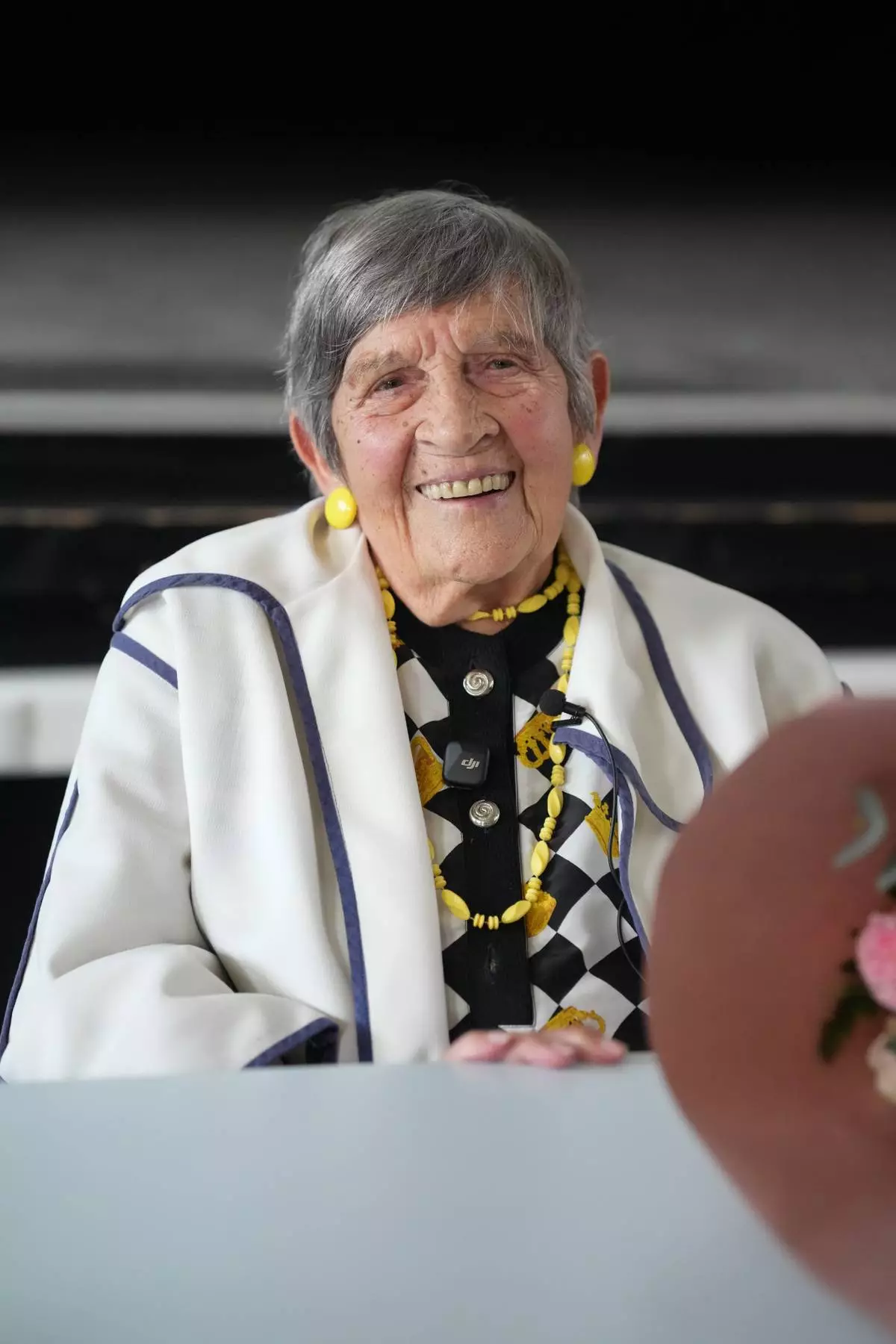
Ginette Kolinka, a 101-year-old survivor of Auschwitz, smiles after a meeting with pupils in a Paris-region high school in Saint-Maur-des-Fosses, outside Paris, France, March 21, 2026. (AP Photo/Thibault Camus)

Ginette Kolinka, a 101-year-old survivor of Auschwitz, during a meeting with pupils in a Paris-region high school in Saint-Maur-des-Fosses, outside Paris, France, March 21, 2026. (AP Photo/Thibault Camus)
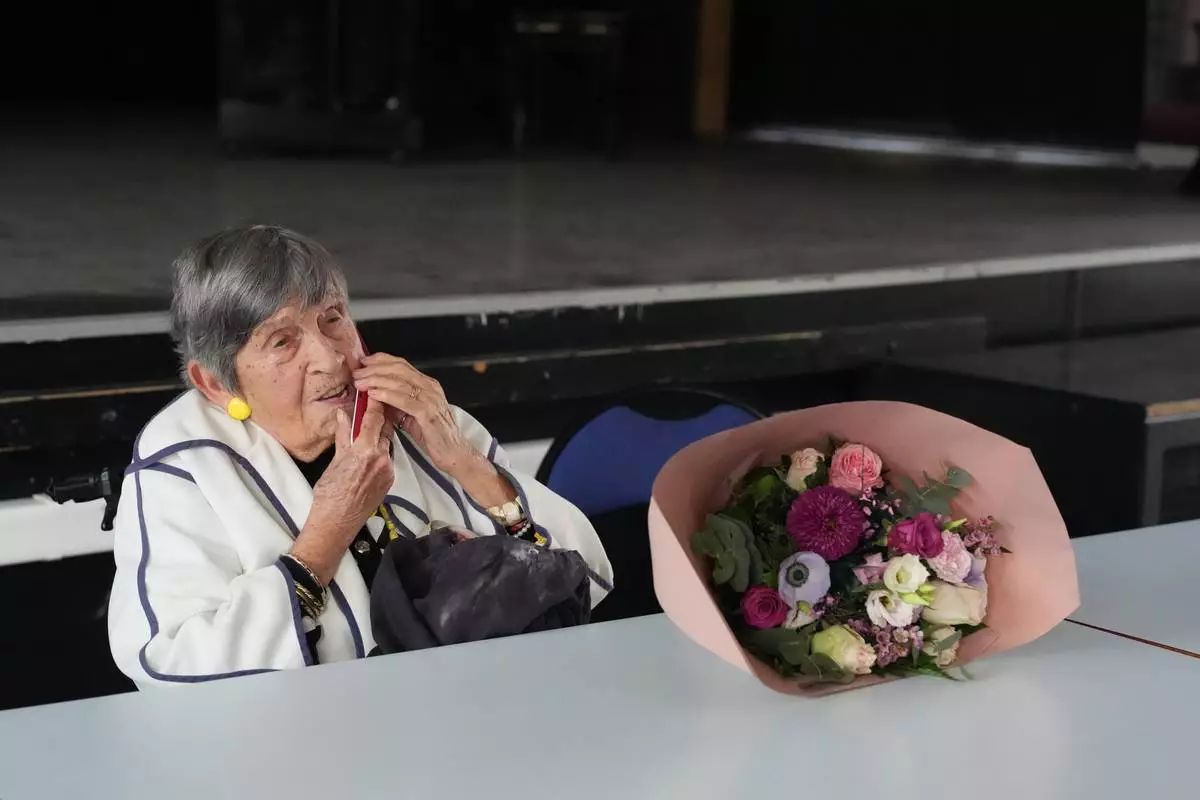
Ginette Kolinka, a 101-year-old survivor of Auschwitz, makes a phone call after she met some pupils in a Paris-region high school in Saint-Maur-des-Fosses, outside Paris, France, March 21, 2026. (AP Photo/Thibault Camus)
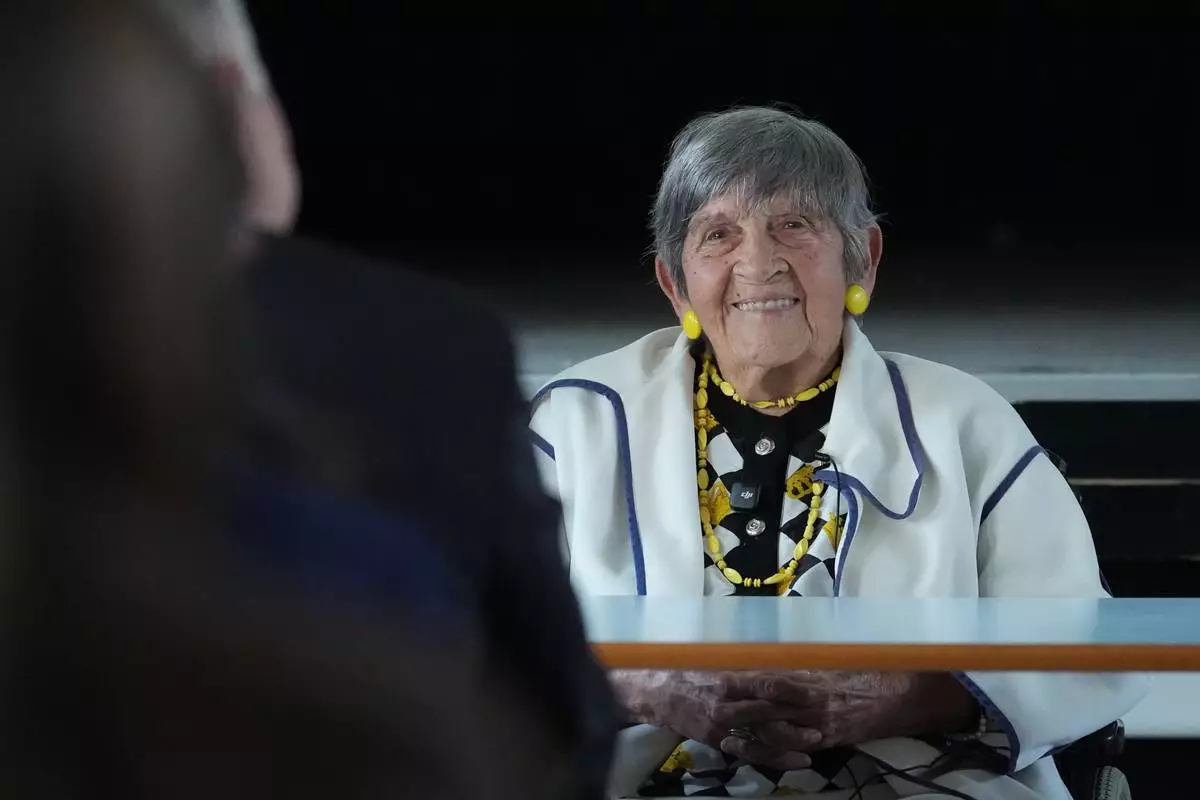
Ginette Kolinka, a 101-year-old survivor of Auschwitz, during a meeting with pupils in a Paris-region high school in Saint-Maur-des-Fosses, outside Paris, France, March 21, 2026. (AP Photo/Thibault Camus)
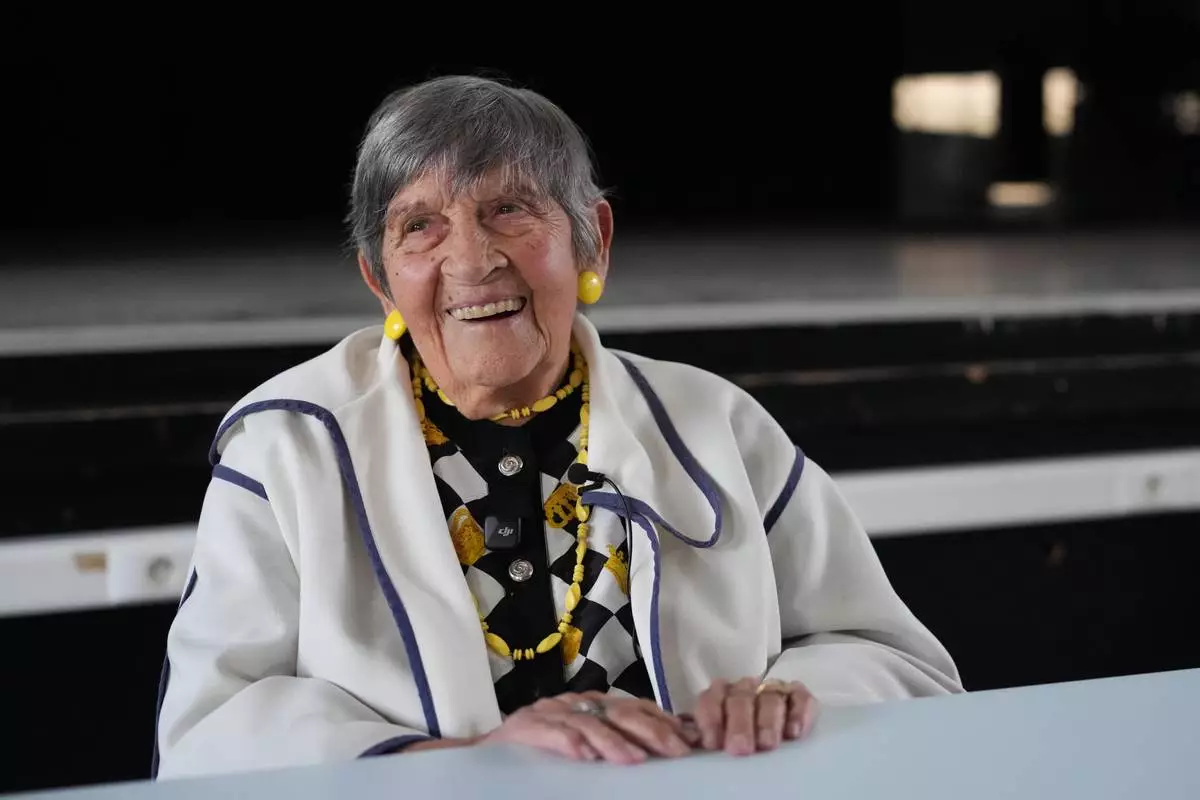
Ginette Kolinka, a 101-year-old survivor of Auschwitz, smiles after a meeting with pupils in a Paris-region high school in Saint-Maur-des-Fosses, outside Paris, France, March 21, 2026. (AP Photo/Thibault Camus)