China is fully capable of reaching its growth target for 2026 and remaining a primary driver of global economic expansion in the five years to come, a prominent Chinese economist said in Beijing on Monday.
Professor Justin Yifu Lin, dean of the Institute of New Structural Economics at Peking University, was speaking to the press at an event on China's economic development during the 15th Five-Year Plan period (2026-2030), which was held by the China Public Diplomacy Association, a Beijing-based national, non-profit social organization.
China has set a GDP growth target of 4.5 percent to 5 percent for this year. The world's second largest economy, in its sweeping 15th Five-Year Plan adopted by the national legislature this month, envisions a significant transformation of its traditional industries and global dominance in technologies of the future, such as artificial intelligence, robotics, biomedicine, and clean energy. These are crucial elements in the development of what officials call new quality productive forces, which refer to advanced productivity freed from the traditional economic growth model and productivity development paths. According to Lin, this strategy also puts China's growth target for 2026 completely within reach, due to the sustained momentum in emerging and future industries.
"A country's economic growth depends on the continuous improvement of its productivity. And sustained productivity growth requires constant technological innovation of the existing industries and the emergence of new industries with higher added value, which means the continued development of new quality productive forces. From this perspective, I have full confidence in China's ability to achieve the goals it has set for this year," Lin said.
He believes that China will continue to be a primary global growth engine during the coming half-decade and beyond.
"I believe it is entirely possible to achieve 4.5 percent to 5 percent growth in 2026. As long as there is no major upheaval in the external environment and we do our own work well, we could achieve a growth rate slightly higher than 5 percent. Throughout the 15th Five-Year Plan period, I think our annual growth targets will generally fall within this range. If China sustains such growth, I believe it will continue to contribute about 30 percent to global growth each year, remaining the primary engine of world economic growth," he said.
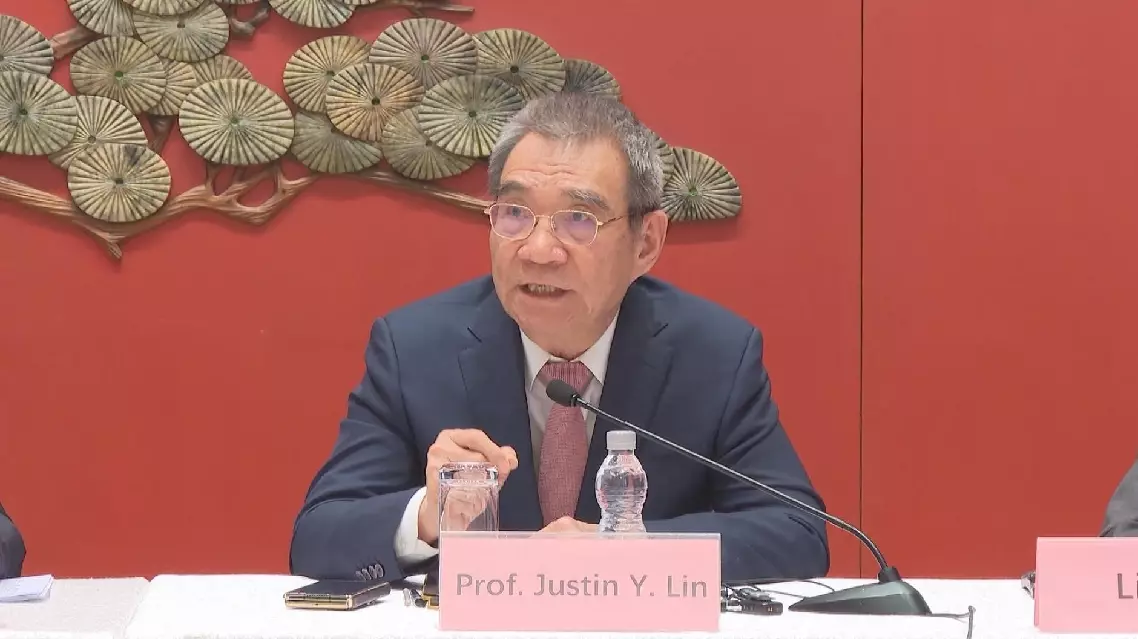
Economist underscores emerging industries as key to China's growth prospects in coming 5 years