NEW YORK (AP) — Spice and flavorings company McCormick announced on Tuesday that it’s combining with Unilever’s foods division, which includes brands like Hellmann’s and Knorr.
Companies in the packaged food sector have struggled with inflation and changing consumer tastes in recent years, and have taken strong actions to revitalize sales. Last year, both Keurig Dr Pepper and Kraft Heinz announced plans to unwind huge mergers, although Kraft later put that plan on hold. Mars recently bought Cheez-It maker Kellanova while Nutella maker Ferrero bought WK Kellogg.
The combined company will maintain McCormick’s name and leadership. But upon closing, Unilever and its shareholders are expected to own 65% of the food company's outstanding equity, amounting $29.1 billion. Unilever would also get $15.7 billion in cash. Meanwhile, McCormick shareholders will own 35.0%.
McCormick and its red-capped array of spices is a $15 billion company and the stable of brands it’s adding from Unilever are worth billions more. The companies said on Tuesday that McCormick and Unilever would have a combined revenue of $20 billion for the 2025 fiscal year.
McCormick said the deal will give it better access to high-growth regions like Latin America and Asia, where Unilever has an extensive presence. It will also expand Unilever's footprint in North America, where McCormick has a stronger profile.
The companies expect to grow their presence in food service. Unilever has traditionally been a stronger player in restaurant kitchens, while McCormick's products are often found more in the dining room, on tables.
The combined companies said they expect to generate $600 million in annual cost savings.
“Together, we will be better positioned to accelerate growth in attractive categories,” McCormick CEO Brendan Foley said in a prepared statement.
The transaction is expected to close by mid-2027, the companies said Tuesday, pending both shareholder and regulatory approval. The deal excludes Unilever’s food business in India, Nepal and Portugal.
Unilever, which is based in London, was founded nearly a century ago when Dutch margarine maker Margarine Unie merged with British soap maker Lever Brothers. The conglomerate now makes dozens of different brands, including Dove soap, Vaseline, Hellmann’s mayonnaise, Liquid I.V. hydration, Axe body spray and Pepsodent toothpaste.
In recent years, Unilever has been shifting away from food in favor of beauty and wellness categories, where it sees more potential for growth.
“For Unilever, this transaction is another decisive step in sharpening our portfolio and accelerating our strategy towards high-growth categories,” Unilever CEO Fernando Fernández said in a statement.
In 2024, Unilever announced it was spinning off its ice cream business, which included the Ben & Jerry’s, Magnum and Breyers brands. That business became the Magnum Ice Cream Co., which is based in Amsterdam. Last year, Unilever sold The Vegetarian Butcher, a plant-based meat brand, and Graze, a healthy snacking brand.
Unilever's food sales, which make up one-quarter of its total sales, fell by 3% last year. Many packaged food companies have been hurt in recent years as consumers shift to cheaper store brands or less processed foods.
McCormick, based in Hunt Valley, Maryland, has been expanding its portfolio to take advantage of consumers’ growing interest in global flavors and sauces. The 137-year-old company bought Reckitt Benckiser’s food division — including the French’s mustard and Frank’s RedHot sauce brands — in 2017. In 2020, it bought Cholula, a Mexican hot sauce brand.
Foley said spices and flavors have remained resilient, transcending age, culture, dietary preferences and income levels. McCormick's net sales grew 2% last year.
“Flavor is fully aligned with today’s health and wellness priorities, as consumers increasingly focus on cooking at home, adding more protein and produce and pursuing healthier lifestyles,” Foley said Tuesday during a conference call with investors.
Unilever shares fell 4% Tuesday morning, while McCormick's shares slid 6%.
FILE - This Tuesday Nov. 24, 2020 photo shows the logo for McCormick & Co. AP Photo/Donald King, File)
NEW YORK (AP) — U.S. stocks are jolting higher Tuesday as the spike for oil prices because of the war with Iran slows.
The S&P 500 leaped 1.6% and is heading toward its best day since the war, a day after it fell more than 9% below its all-time high set early this year. The Dow Jones Industrial Average was up 601 points, or 1.3%, as of 10:05 a.m. Eastern time, and the Nasdaq composite was 2% higher.
The rebound came as steadying oil prices took some pressure off Wall Street. The price for a barrel of Brent crude oil, the international standard, fell 0.6% to $106.73. Benchmark U.S. crude slipped 0.1%.
Oil prices have been dictating the U.S. stock market’s sharp swings since the war began, with Brent shooting from roughly $70 per barrel to as high as $119 at times. The worry is that the war may last a long time and keep oil and natural gas from the Persian Gulf out of global markets, which could create a brutal blast of inflation.
Analysts said optimism entered markets overnight following a report from The Wall Street Journal saying President Donald Trump told aides he’s willing to end the U.S. military campaign against Iran even if the Strait of Hormuz remains largely closed. The strait is a narrow waterway connecting the Persian Gulf to the open ocean, and a fifth of the world’s oil sails through it on a typical day.
To get the strait open, Trump could try diplomatic talks with Iran and then push allies in Europe and the Gulf to take the lead, according to the report.
On his social media network, Trump on Tuesday morning urged the United Kingdom and other countries to “build up some delayed courage, go to the Strait, and just TAKE IT.”
Trump’s own words have become less impactful for financial markets, after he touted what he called productive talks over the last week, only to turn around and threaten the “obliteration” of Iranian power plants.
Oil prices have already shot high enough that inflation in Europe accelerated to 2.5% in March, up from February’s 1.9%.
In the United States, the price for a gallon of gasoline topped $4 per gallon for the first time since 2022. That’s squeezing budgets for U.S. households and preventing them from spending on other things. More expensive oil could also result in higher prices set by companies that use any ships, trucks or planes to move their products.
Tuesday’s slowdown for oil prices helped boost stocks of companies that have big fuel bills. Norwegian Cruise Line Holding steamed 4.1% higher, and Delta Air Lines climbed 2.2%.
Tech stocks, meanwhile, were the strongest forces lifting the market in a widespread rally where nearly four out of every five stocks within the S&P 500 rose.
Marvell Technology climbed 6.9% after Nvidia invested $2 billion in the company and announced a partnership with it. Nvidia rose 2.7% and was the single strongest force lifting the S&P 500.
They helped offset a 5.6% drop for McCormick. The spice company is buying most of Unilever’s food business, including such brands as Hellmann’s, for cash and stock valuing it at $44.8 billion.
In the bond market, Treasury yields eased again. The yield on the 10-year Treasury fell to 4.31% from 4.35% late Monday and from 4.44% at the end of last week. That’s a significant move for the bond market.
Lower yields should pull downward on rates for mortgages and other loans for U.S. households and businesses, which have been screaming higher since the war began.
The yield on the 10-year Treasury was at just 3.97% in late February, before worries about high oil prices forced traders to erase bets for a possible cut to interest rates by the Federal Reserve this year.
Yields remained lower following a couple reports Tuesday on the U.S. economy that came in better than economists expected. One said confidence among U.S. consumers unexpectedly improved. The other said U.S. employers were advertising more job openings at the end of February than expected, though fewer than the month before.
In stock markets abroad, indexes rose in Europe following a tougher finish in Asia. South Korea’s Kospi fell 4.3%, and Japan’s Nikkei 225 lost 1.6% for two of the bigger moves.
AP Business Writers Chan Ho-him and Matt Ott contributed.
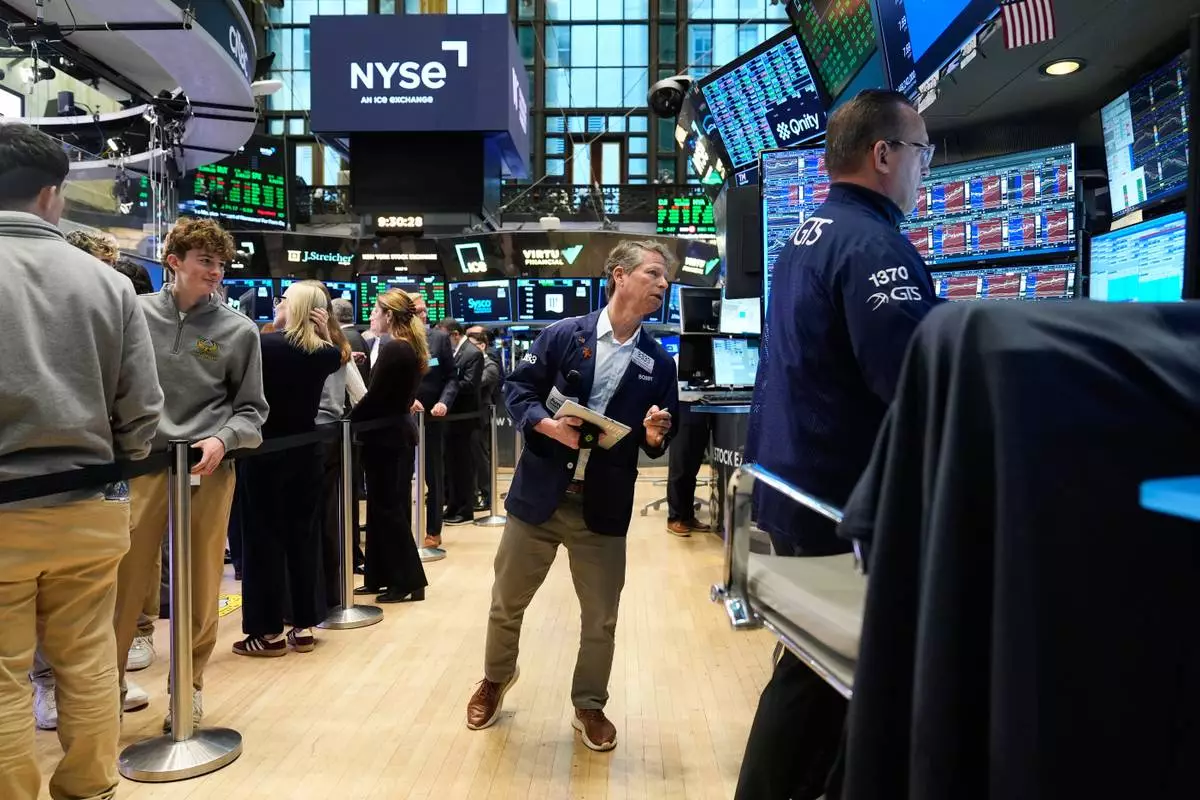
Bobby Charmak works on the floor at the New York Stock Exchange in New York, Monday, March 30, 2026. (AP Photo/Seth Wenig)

James Denaro works on the floor at the New York Stock Exchange in New York, Monday, March 30, 2026. (AP Photo/Seth Wenig)
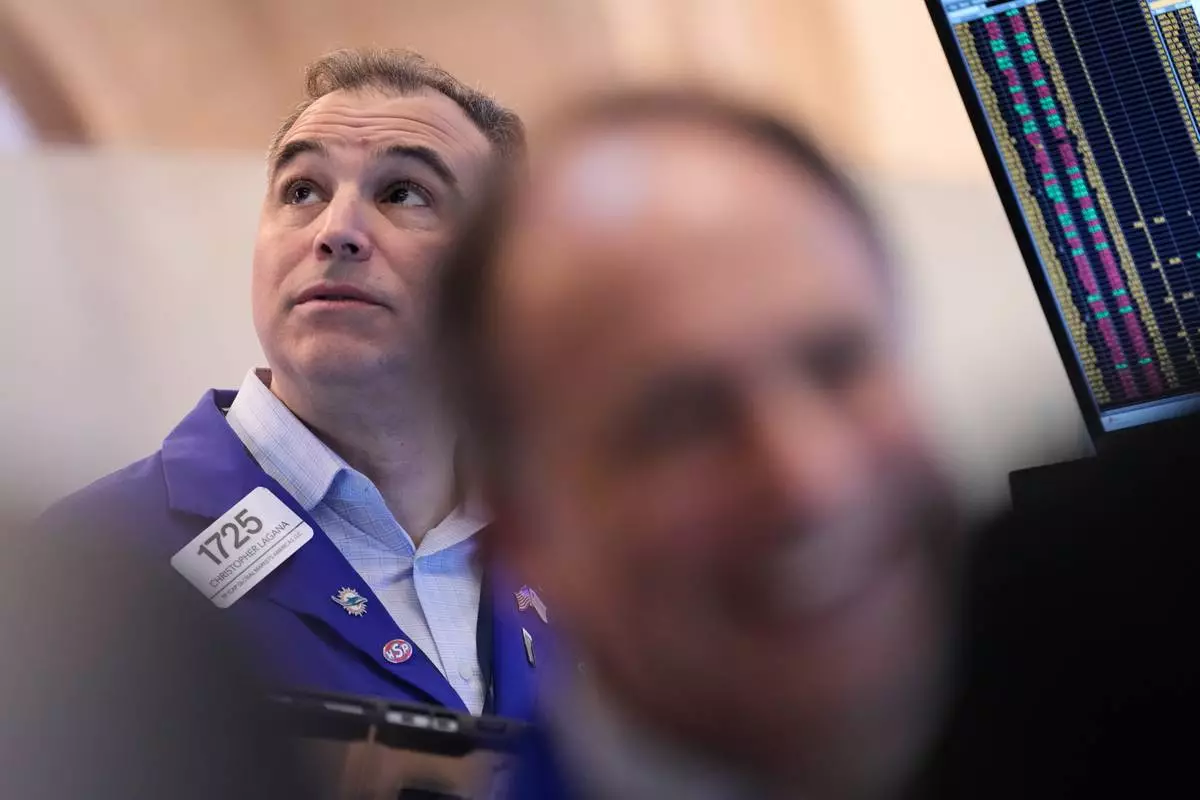
Christopher Lagana works on the floor at the New York Stock Exchange in New York, Monday, March 30, 2026. (AP Photo/Seth Wenig)

FILE - Liberia-flagged tanker Shenlong Suezmax, carrying crude oil from Saudi Arabia, that arrived clearing the Strait of Hormuz, is seen at the Mumbai Port in Mumbai, India, Thursday, March 12, 2026. (AP Photo/Rafiq Maqbool, file)
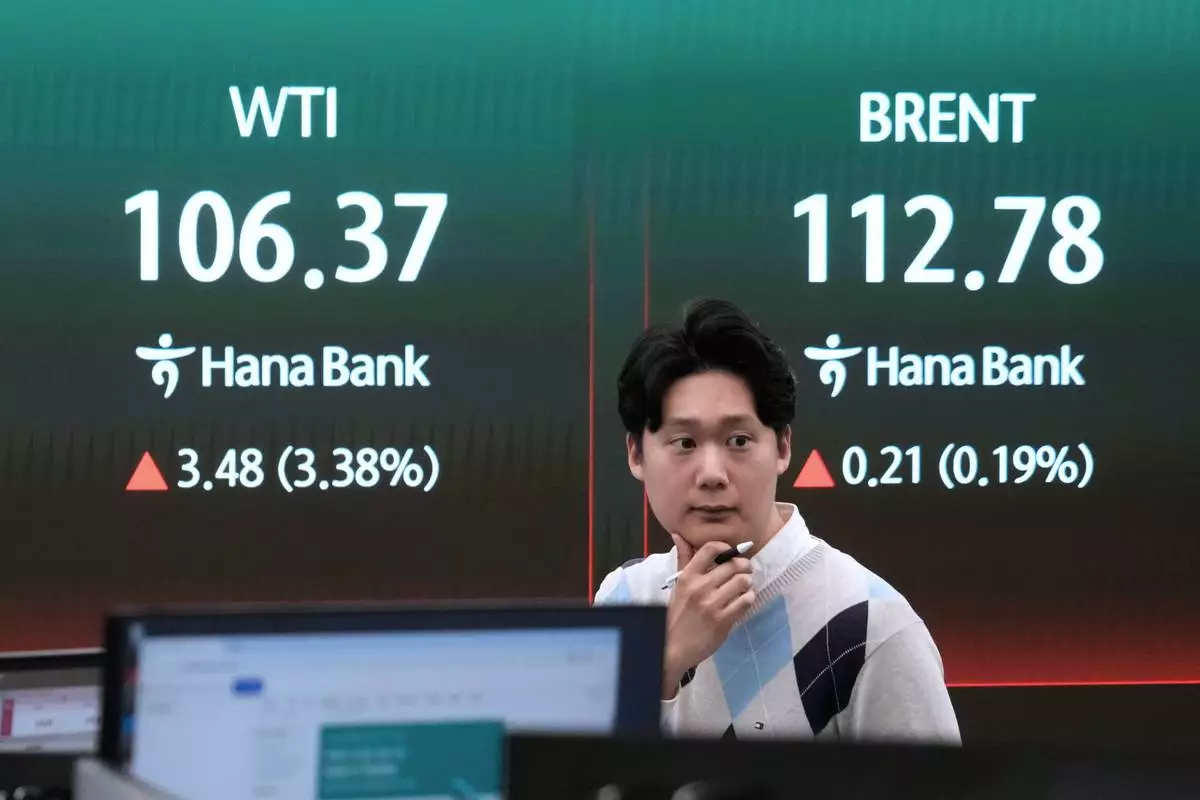
A currency trader reacts near a screen showing international oil prices at the foreign exchange dealing room of the Hana Bank headquarters in Seoul, South Korea, Tuesday, March 31, 2026. (AP Photo/Ahn Young-joon)
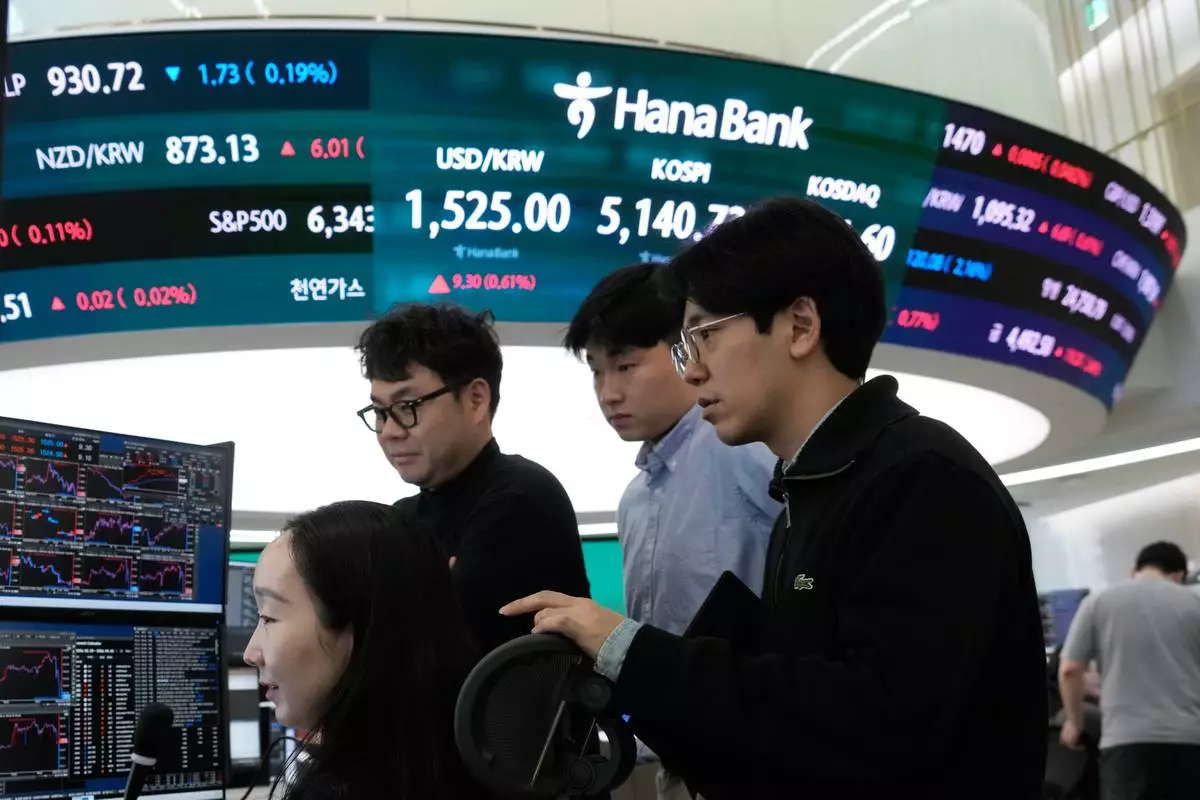
Currency traders watch monitors near a screen showing the Korea Composite Stock Price Index (KOSPI), top center, and the foreign exchange rate between U.S. dollar and South Korean won, top center left, at the foreign exchange dealing room of the Hana Bank headquarters in Seoul, South Korea, Tuesday, March 31, 2026. (AP Photo/Ahn Young-joon)
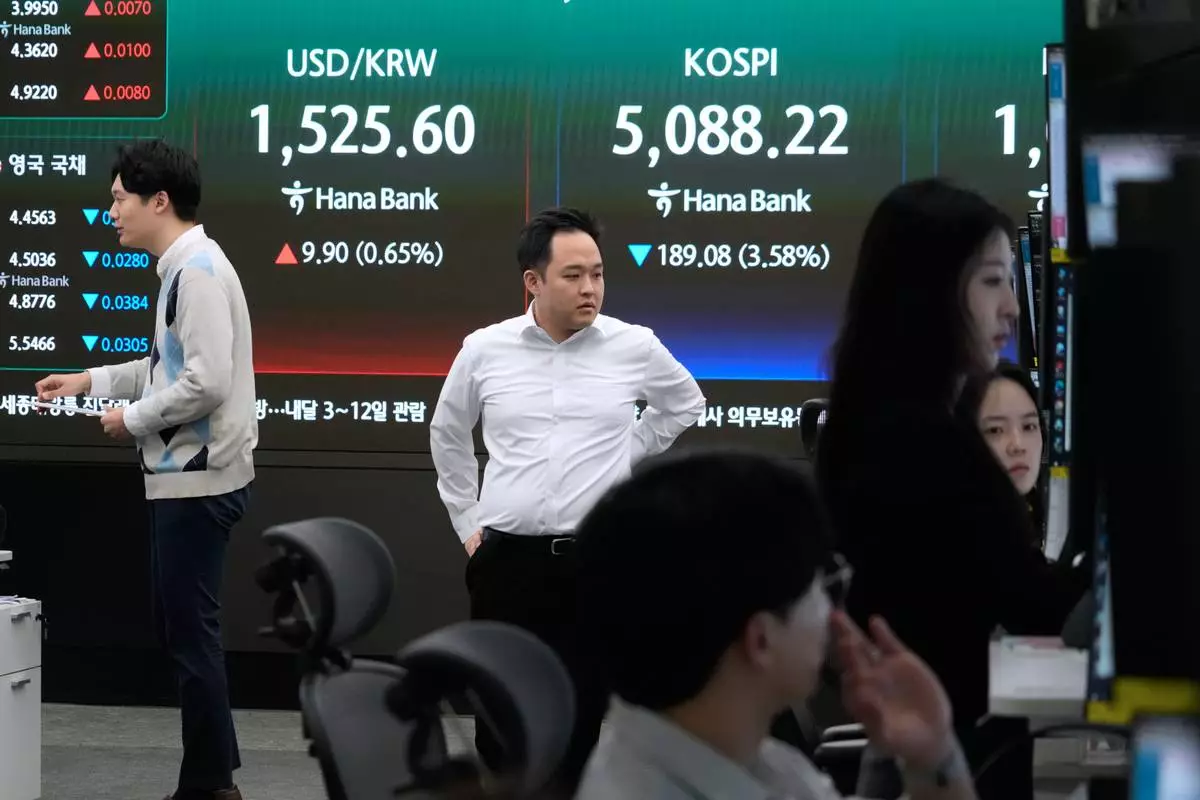
Currency traders work near a screen showing the Korea Composite Stock Price Index (KOSPI), top right, and the foreign exchange rate between U.S. dollar and South Korean won at the foreign exchange dealing room of the Hana Bank headquarters in Seoul, South Korea, Tuesday, March 31, 2026. (AP Photo/Ahn Young-joon)
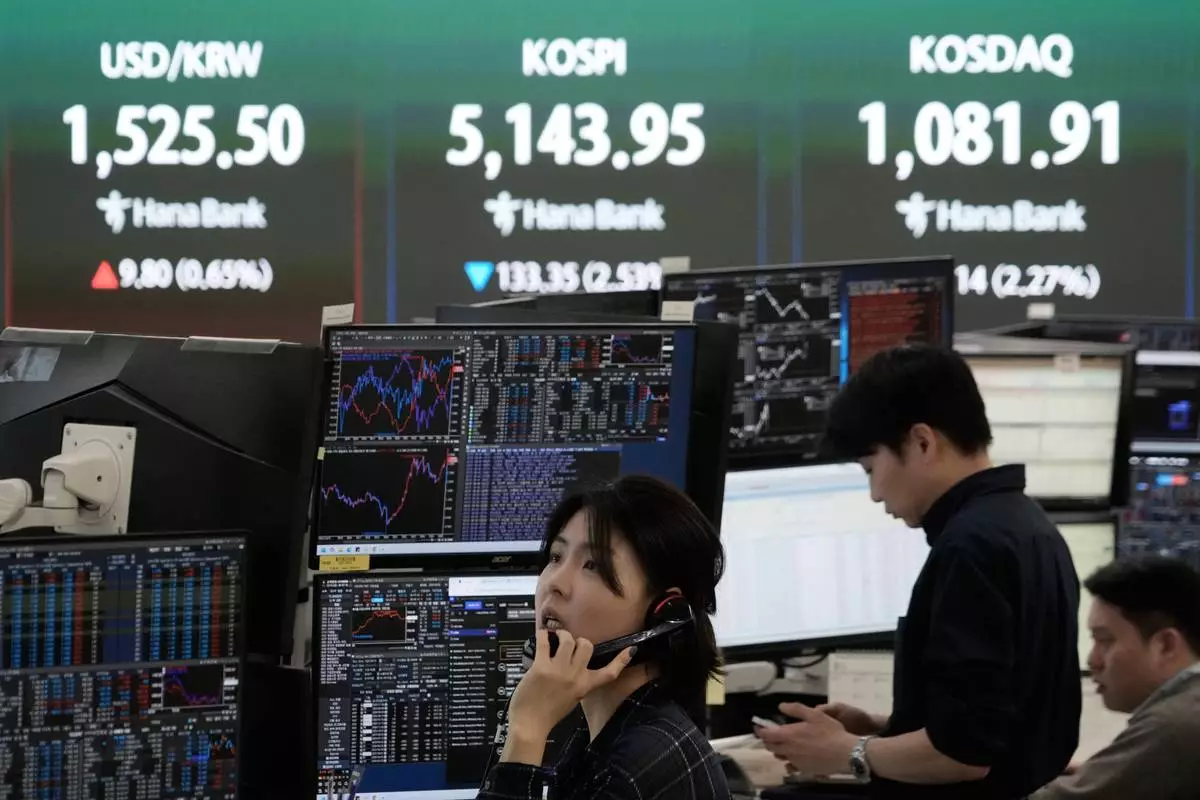
A currency trader talks on the phone near a screen showing the Korea Composite Stock Price Index (KOSPI), top center, and the foreign exchange rate between U.S. dollar and South Korean won, top center left, at the foreign exchange dealing room of the Hana Bank headquarters in Seoul, South Korea, Tuesday, March 31, 2026. (AP Photo/Ahn Young-joon)