WASHINGTON (AP) — The Supreme Court on Tuesday ruled against a law banning “conversion therapy” for LGBTQ+ kids in Colorado, one of about two dozen states that ban the discredited practice.
An 8-1 high court majority sided with a Christian counselor who argues the law banning talk therapy violates the First Amendment. The justices agreed that the law raises free speech concerns and sent it back to a lower court to decide if it meets a legal standard that few laws pass.
Justice Neil Gorsuch, writing for the court, said the law “censors speech based on viewpoint.” The First Amendment, he wrote, “stands as a shield against any effort to enforce orthodoxy in thought or speech in this country.”
In a solo dissent, Justice Ketanji Brown Jackson wrote that states should be free to regulate health care, even if that means incidental restrictions on speech. The decision, Jackson wrote, “opens a dangerous can of worms” that “threatens to impair states' ability to regulate the provision of medical care in any respect.”
The decision is the latest in a line of recent cases in which the justices have backed claims of religious discrimination while taking a skeptical view of LGBTQ+ rights.
Counselor Kaley Chiles, with support from President Donald Trump’s Republican administration, said the law wrongly bars her from offering voluntary, faith-based therapy for kids.
Chiles contends her approach is different from “conversion therapy” practices from decades ago, like shock therapy. Her attorneys argued that the ban makes it hard for parents to find therapists willing to discuss gender identity with kids unless the counseling affirms transition.
Colorado disagreed, saying its law does allow wide-ranging conversations about gender identity and sexual orientation and exempts religious ministries. The state says the measure simply bars using therapy to try to “convert” LGBTQ+ people to heterosexuality or traditional gender expectations, a practice that has been scientifically discredited and linked to serious harm.
The law doesn’t violate the First Amendment, Colorado argued, because therapy is different from other types of speech since it's a form of health care that the state has a responsibility to regulate.
The 2019 law carries the possibility of fines and license suspension, but no one has been sanctioned under it. The ruling is expected to eventually make similar laws in other states unenforceable.
Chiles was represented by the Alliance Defending Freedom, a conservative legal organization that has appeared frequently at the court in recent years. The group also represented a Christian website designer who successfully challenged Colorado anti-discrimination law because she didn’t want to work with same-sex couples.
Follow the AP’s coverage of the U.S. Supreme Court at https://apnews.com/hub/us-supreme-court.
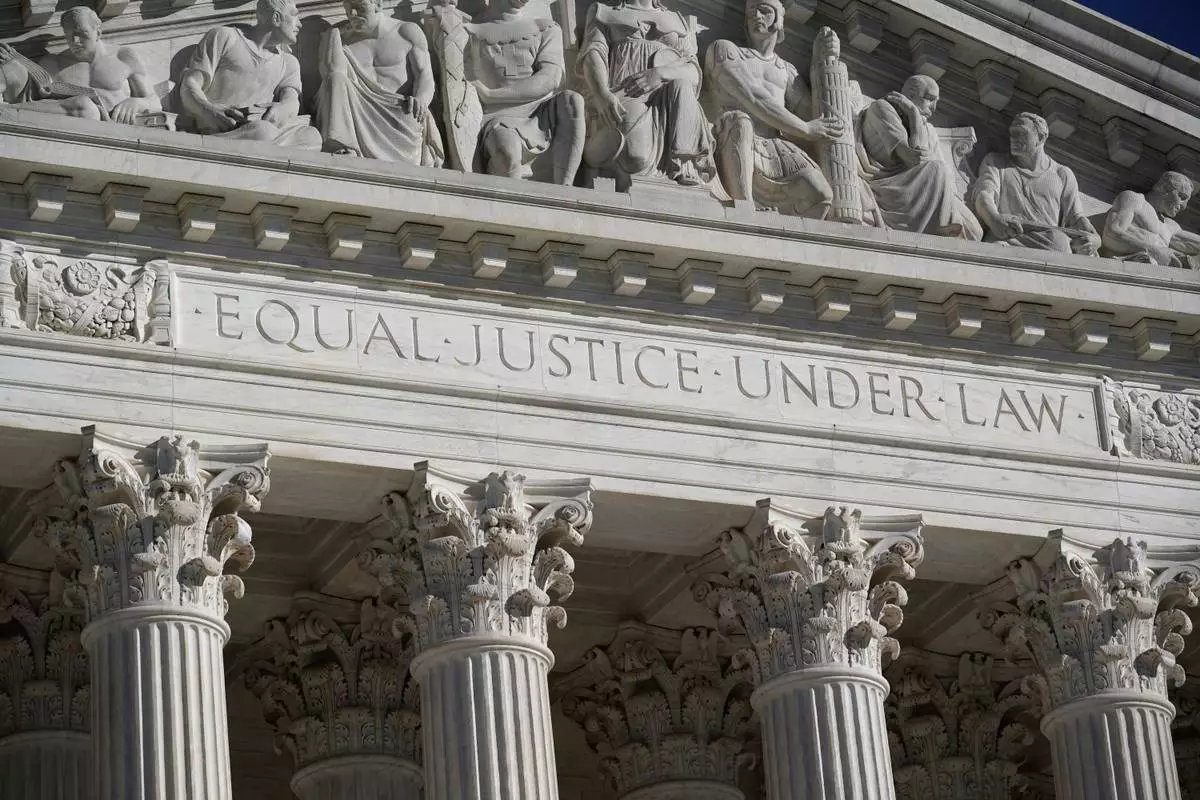
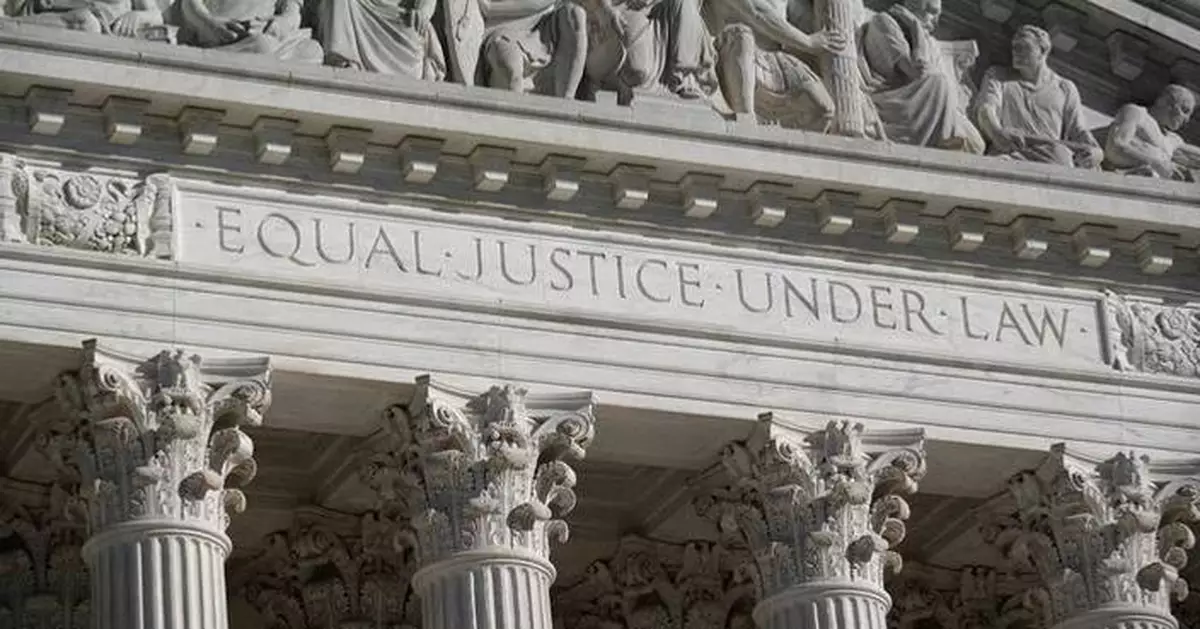
FILE - The Supreme Court in Washington, Nov. 4, 2020. (AP Photo/J. Scott Applewhite, File)
NEW YORK (AP) — Spice and flavorings company McCormick announced on Tuesday that it’s combining with Unilever’s foods division, which includes brands like Hellmann’s and Knorr.
Companies in the packaged food sector have struggled with inflation and changing consumer tastes in recent years, and have taken strong actions to revitalize sales. Last year, both Keurig Dr Pepper and Kraft Heinz announced plans to unwind huge mergers, although Kraft later put that plan on hold. Mars recently bought Cheez-It maker Kellanova while Nutella maker Ferrero bought WK Kellogg.
The combined company will maintain McCormick’s name and leadership. But upon closing, Unilever and its shareholders are expected to own 65% of the food company's outstanding equity, amounting $29.1 billion. Unilever would also get $15.7 billion in cash. Meanwhile, McCormick shareholders will own 35.0%.
McCormick and its red-capped array of spices is a $15 billion company and the stable of brands it’s adding from Unilever are worth billions more. The companies said on Tuesday that McCormick and Unilever would have a combined revenue of $20 billion for the 2025 fiscal year.
McCormick said the deal will give it better access to high-growth regions like Latin America and Asia, where Unilever has an extensive presence. It will also expand Unilever's footprint in North America, where McCormick has a stronger profile.
The companies expect to grow their presence in food service. Unilever has traditionally been a stronger player in restaurant kitchens, while McCormick's products are often found more in the dining room, on tables.
The combined companies said they expect to generate $600 million in annual cost savings.
“Together, we will be better positioned to accelerate growth in attractive categories,” McCormick CEO Brendan Foley said in a prepared statement.
The transaction is expected to close by mid-2027, the companies said Tuesday, pending both shareholder and regulatory approval. The deal excludes Unilever’s food business in India, Nepal and Portugal.
Unilever, which is based in London, was founded nearly a century ago when Dutch margarine maker Margarine Unie merged with British soap maker Lever Brothers. The conglomerate now makes dozens of different brands, including Dove soap, Vaseline, Hellmann’s mayonnaise, Liquid I.V. hydration, Axe body spray and Pepsodent toothpaste.
In recent years, Unilever has been shifting away from food in favor of beauty and wellness categories, where it sees more potential for growth.
“For Unilever, this transaction is another decisive step in sharpening our portfolio and accelerating our strategy towards high-growth categories,” Unilever CEO Fernando Fernández said in a statement.
In 2024, Unilever announced it was spinning off its ice cream business, which included the Ben & Jerry’s, Magnum and Breyers brands. That business became the Magnum Ice Cream Co., which is based in Amsterdam. Last year, Unilever sold The Vegetarian Butcher, a plant-based meat brand, and Graze, a healthy snacking brand.
Unilever's food sales, which make up one-quarter of its total sales, fell by 3% last year. Many packaged food companies have been hurt in recent years as consumers shift to cheaper store brands or less processed foods.
McCormick, based in Hunt Valley, Maryland, has been expanding its portfolio to take advantage of consumers’ growing interest in global flavors and sauces. The 137-year-old company bought Reckitt Benckiser’s food division — including the French’s mustard and Frank’s RedHot sauce brands — in 2017. In 2020, it bought Cholula, a Mexican hot sauce brand.
Foley said spices and flavors have remained resilient, transcending age, culture, dietary preferences and income levels. McCormick's net sales grew 2% last year.
“Flavor is fully aligned with today’s health and wellness priorities, as consumers increasingly focus on cooking at home, adding more protein and produce and pursuing healthier lifestyles,” Foley said Tuesday during a conference call with investors.
Unilever shares fell 4% Tuesday morning, while McCormick's shares slid 6%.
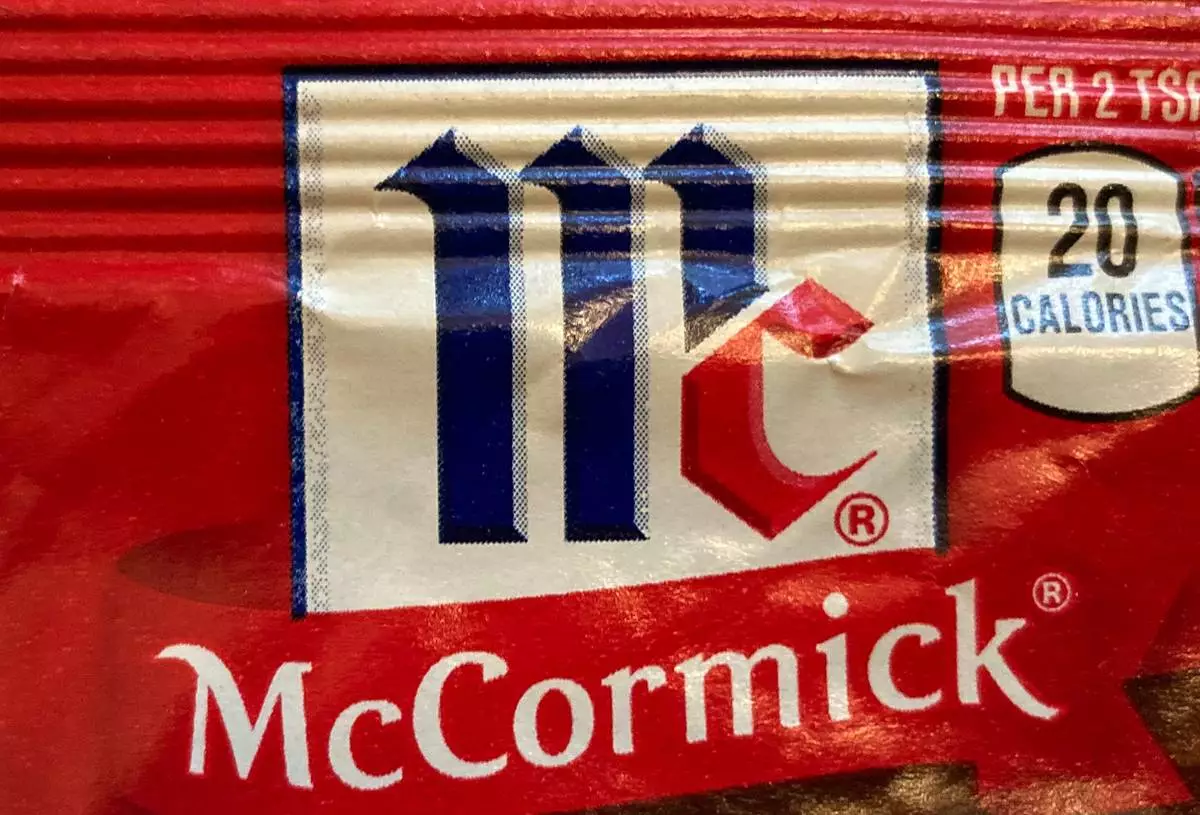
FILE - This Tuesday Nov. 24, 2020 photo shows the logo for McCormick & Co. AP Photo/Donald King, File)