A Chinese author and scholar has underlined new opportunities for China's pursuit of stability against an increasingly turbulent world.
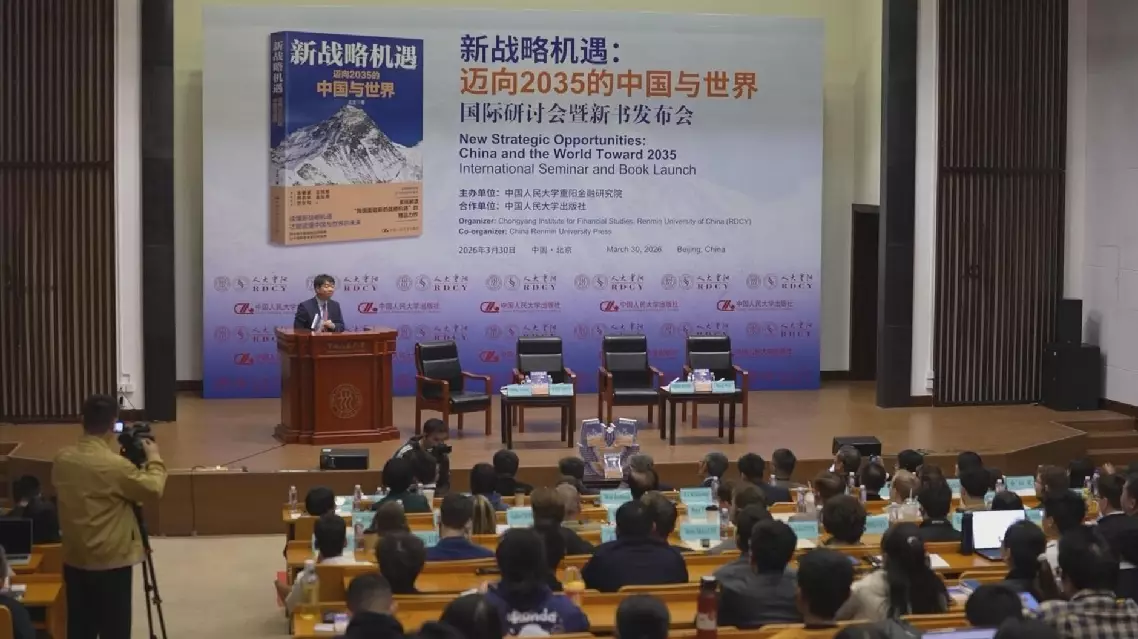
Over 100 guests and representatives from think tanks, universities and media from China and abroad attended an international seminar held in Beijing, which saw the launch of a book titled "New Strategic Opportunities: China and the World Toward 2035".
The guests exchanged views on topics such as China's development and international cooperation, with many speaking highly of the positive influence of China's Belt and Road Initiative and Global Development Initiative on promoting common development and improving the global governance system.
Wang Wen, dean of the Chongyang Institute for Financial Studies and author of the book, argues that China could leverage what he calls "new strategic opportunities" to sustain its growth and potentially become the world's largest economy by 2035.
"I think one of the biggest strategy opportunities is from the United States because in the coming many years the U.S. will throw into a very troubled domestic disorder, and the U.S. has totally lost the capacity of containment to China," he said in an interview with China Global Television Network (CGTN) on the sidelines of the event.
Wang said the other major opportunity is China's domestic confidence, which may be further underpinned by ensuring a stable environment.
"I think one very important thing is stability. China will always keep the social order and social stability. So this is very, very important. You can imagine 1.4 billion people, as long as the society will be stable, it is very natural to maintain the economic growth. So, I think, keeping stability is the key point to seize the new strategic opportunity for China," he said.
Wang also shared what he deemed the biggest long-term challenge to China's development.
"In my opinion, the biggest risk for China's development is not the U.S.; it's not a West containment; it's not a military war, but the aging problem. How to avoid the risks, in terms of the 15th Five-Year Plan? We try our best to push high-quality population policy," he said.
External turbulence, domestic confidence define "new strategic opportunities" for China: scholar
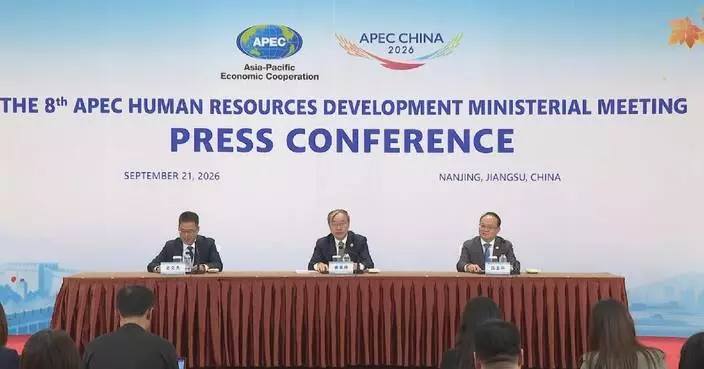
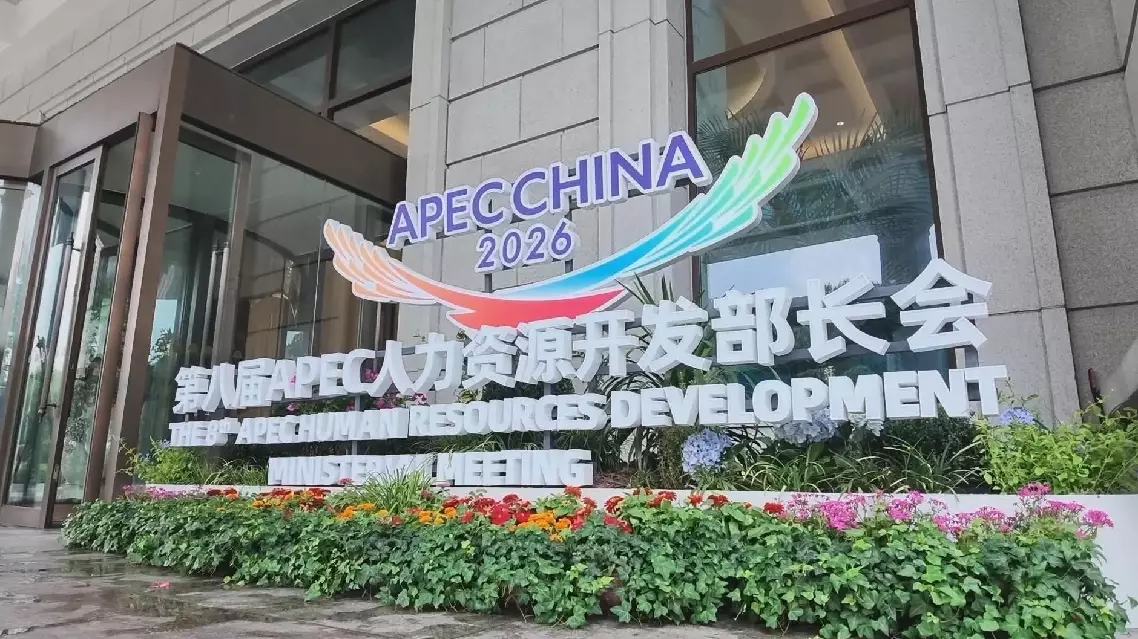
Asia-Pacific economies are stepping up cooperation to adapt to an employment landscape being reshaped by artificial intelligence, APEC Secretariat Executive Director Eduardo Pedrosa said on Sunday, urging governments to strengthen social safety nets so that the benefits of technological advancement are widely shared. The transformation that AI will bring to industries and daily life took center stage at the 8th APEC Human Resources Development Ministerial Meeting, which kicked off Monday in Nanjing, east China, where delegates exchanged ideas on creating better jobs and strengthening vocational training to help workers keep up with a shifting market.
Speaking in an exclusive interview with China Central Television (CCTV) ahead of the meeting, Pedrosa said education reform is a key priority in addressing AI's disruptive effects on employment, and that governments must play a crucial role in connecting workers with emerging opportunities.
"So we undertake projects, policy dialogues to improve understanding of how other regional economies are developing their education sector in response to the digital revolution. There are also those that APEC members are undertaking, and this includes, for example, partnerships between universities. We're here in Nanjing. Nanjing is working with a number of different universities to set up an innovation center," he said.
Pedrosa noted that while AI can boost productivity, serve daily life and advance health research, some groups will inevitably bear the brunt of the transition. Building a robust social safety net is therefore equally critical, he stressed.
He praised China's efforts to build an employment-friendly development model that coordinates employment targets with fiscal and industrial policies, saying the approach offers valuable lessons for other APEC economies.
"AI is such a rapidly evolving technology. We have to make sure that everybody benefits from this, that we have this sense of shared prosperity. We know that it will improve productivity. We know that these technologies can help us in everyday life. We know that it can help us in health research. But how do we make sure that those benefits are really there for everybody and not just a select group of people?" said the official.
APEC official urges AI benefits be shared by all