WASHINGTON (AP) — U.S. consumer confidence inched higher in March despite soaring energy prices brought on by the war in Iran.
The Conference Board said Tuesday that its consumer confidence index rose modestly to 91.8 in March from 91 in February.
The board said that while rising costs due to tariffs and spiking oil prices induced by the conflict in the Middle East did not affect the topline confidence reading, there was increasing pessimism in other measures of the survey, including expectations of higher inflation.
Respondents’ comments about oil, gas and the war spiked and consumers’ 12-month inflation expectations surged to levels last seen in August 2025 when anxiety over tariffs peaked.
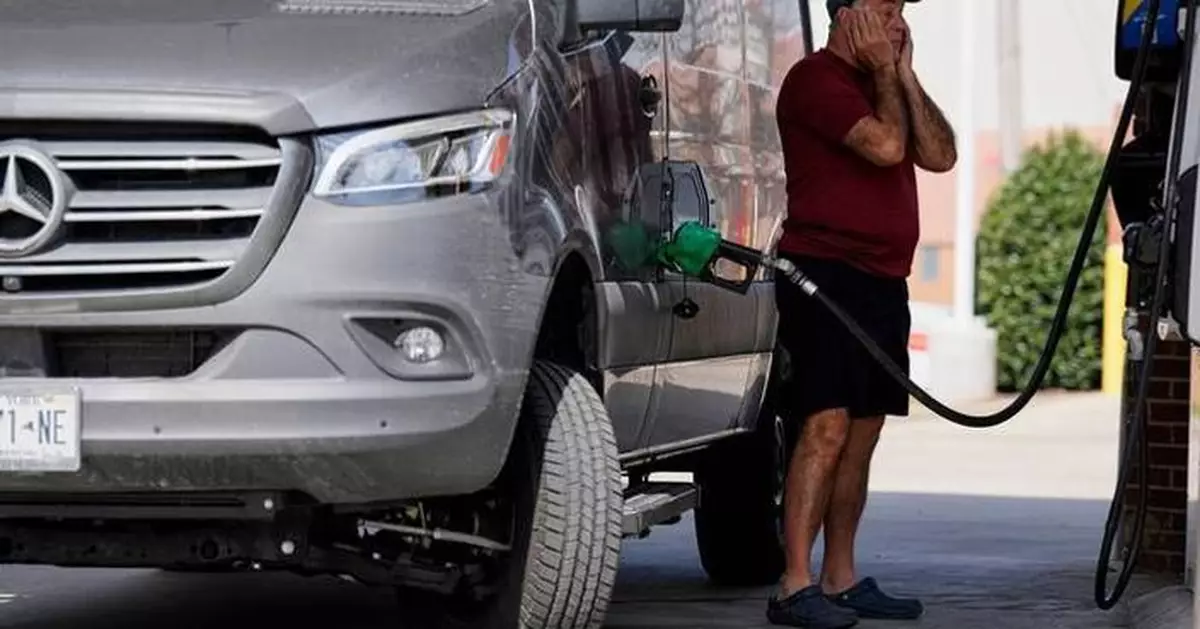
U.S. gas prices jumped past an average of $4 a gallon for the first time since 2022 on Tuesday as the war caused fuel prices to soar worldwide.
According to motor club AAA, the national average for a gallon of regular gasoline is now $4.02 — up more than a dollar before the war began. The last time U.S. drivers were collectively paying this much at the pump was nearly four years ago, following Russia’s invasion of Ukraine.
“This is the key concern as the war in Iran enters the second month – will the oil price shock turn into a demand destruction shock?,” wrote Heather Long, chief economist at Navy Federal Credit Union.
Long said that Navy Federal’s credit card data from March showed that consumers were still making purchases across categories even as gas prices rose. But she said that could change in the second quarter “as the worst of the inflation shock hits consumers.”
A measure of Americans’ short-term expectations for their income, business conditions and the job market fell 1.7 points to 70.9, remaining well below 80, a marker that can signal a recession ahead. It’s the 14th consecutive month that reading has come in under 80.
The index for consumers’ assessments of their current economic situation rose by 4.6 points to 123.3.
Government data from earlier in March showed that an inflation gauge closely monitored by the Federal Reserve moved 2.8% higher in January in the latest sign that prices were persistently elevated even before the Iran war caused spikes in oil and gas costs.
Excluding the volatile food and energy categories — which the Fed pays closer attention to — core prices rose 3.1%, up from 3% in the prior month and the highest in nearly two years.
Consumer prices and prices at the wholesale level also remain elevated.
Those higher prices and the prospect of even higher inflation due to the Iran war makes it unlikely that the Federal Reserve will cut interest rates any time soon.
The Fed cut its benchmark interest rate three times to close 2025 in an attempt to support a flagging labor market. However, because lower rates can exacerbate inflation, which remains above the Fed’s 2% target, the Fed has left its overnight lending rate alone at its past two meetings.
While consumers' views of current employment conditions improved slightly, perceptions of the labor market six months from now edged downward.
The Labor Department reported earlier in March that U.S. employers unexpectedly cut 92,000 jobs in February, a sign that the labor market remains under strain. Economists had expected 60,000 new jobs in February. The unemployment rate rose to 4.4%.
Another report Tuesday showed that U.S. job openings fell slightly in February to 6.9 million from 7.2 million in January.
The surprisingly weak employment picture in February adds to the economic uncertainty sparked by the war with Iran, which has caused oil prices to surge and saddled business and consumers with unforeseen costs.
The country’s labor market has been stuck in a “low hire, low fire” state, economists say, as businesses stand pat due to uncertainty over President Donald Trump’s tariffs and the lingering effects of elevated interest rates.
U.S. economic growth slowed to 1.4% in the final three months of last year, following two surprisingly strong quarters. Growth in the fourth quarter was dragged down by the six-week shutdown of the federal government and a pullback in consumer spending.
According to the Tuesday’s survey results, consumers’ plans to buy cars continued to rise in March, with used cars remaining the clear preference.
Homebuying expectations fell in March as the spring buying season kicks off in the midst of a yearslong housing market slump.
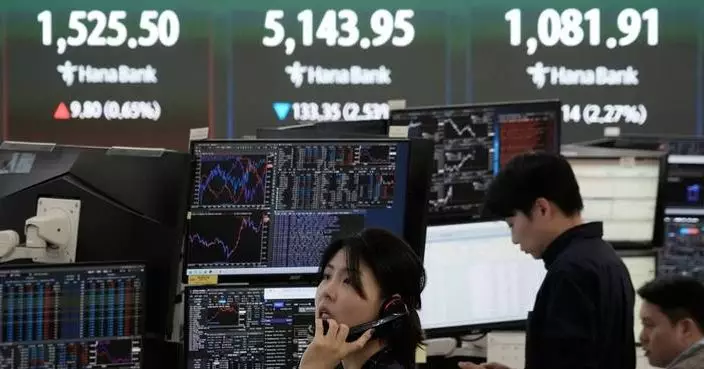
Expectations that stock prices will be higher a year from now plunged, the board said.
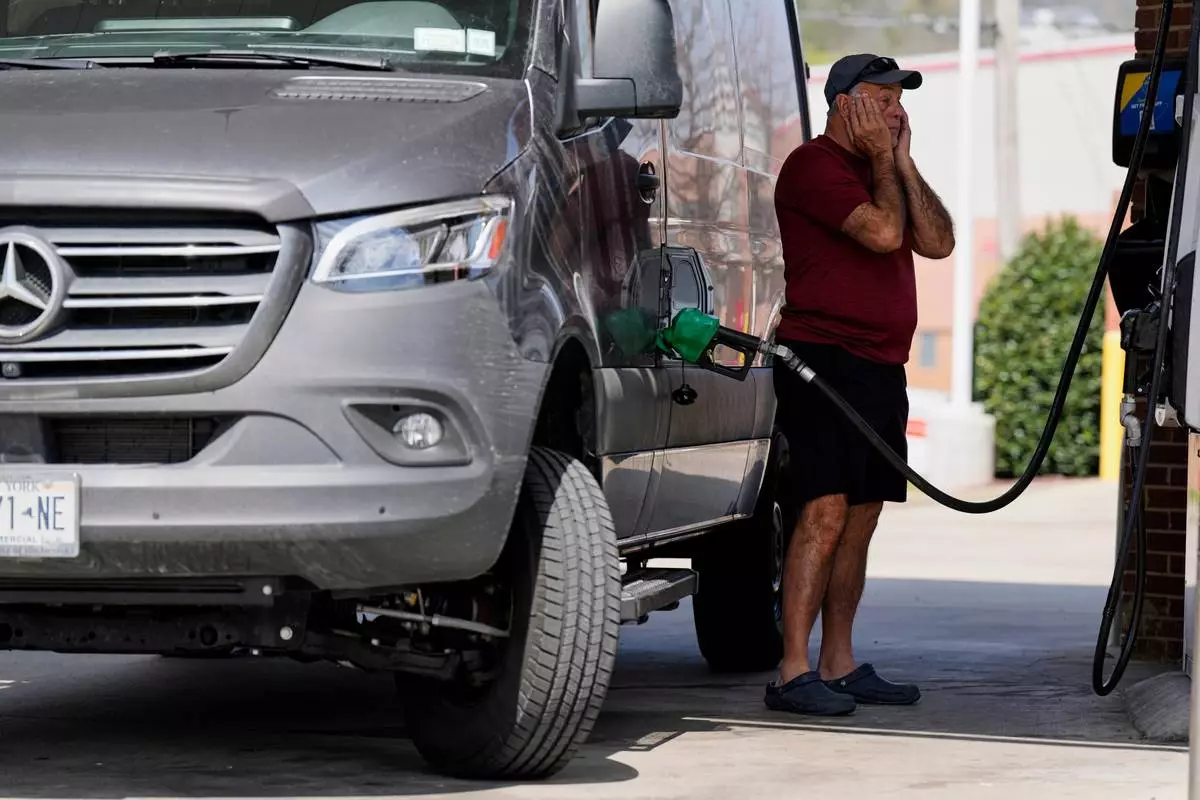
Ray Ruda fills his van with fuel at a gas station Wednesday, March 25, 2026, in Brentwood, Tenn. (AP Photo/George Walker IV)
NEW YORK (AP) — U.S. gas prices jumped past an average of $4 a gallon for the first time since 2022 on Tuesday, as the Iran war pushes fuel prices to soar worldwide.
According to motor club AAA, the national average for a gallon of regular gasoline is now $4.02 — over a dollar more expensive than before the war began. The last time U.S. drivers were collectively paying this much at the pump was nearly four years ago, following Russia’s invasion of Ukraine.
The price is a national average, meaning drivers in some states have been paying well over $4 a gallon for a while now. Prices vary from state to state due to factors ranging from nearby supply to differing tax rates.
Since the U.S. and Israel launched the joint war against Iran on Feb. 28, the cost of crude oil — the main ingredient in gasoline — has spiked and swung rapidly. That’s because the conflict has caused deep supply chain disruptions and cuts from major oil producers across the Middle East. Both Brent crude, the international standard, and benchmark U.S. crude are now going for more than $100 per barrel — up from roughly $70 before the war.
Motorists around the world are also coping with higher gas prices. In Paris, for example, gas is at 2.34 euros per liter ($2.68), which is about $10.27 a gallon.
Higher gas prices are impacting consumers and businesses as many households continue to face wider cost of living strains. And as drivers pay more to cover necessities like gas, or even utility bills impacted by soaring fuel costs, many may be forced to cut their budgets in other places.
“Americans (are) spending hundreds of millions of dollars more on gasoline every day,” said Patrick De Haan, the head of petroleum analysis at fuel-tracking service GasBuddy. That, he said, has a negative impact on the “psyche of the U.S. consumer," which carries consequences for the economy overall.
Before launching the war, President Donald Trump bragged about keeping gas prices low. And consumer prices and the cost of living already have become flashpoints in this midterm election year, with Democrats hammering Trump and Republicans as the GOP tries to hold majorities on Capitol Hill. A recent AP-NORC poll found that 45% of U.S. adults are "extremely” or “very” concerned about being able to afford gas in the next few months, up from 30% shortly after Trump won the 2024 presidential election with promises to lower costs.
Beyond visits to the pump, analysts point to groceries, which have to be restocked frequently and could also see price hikes as businesses’ transportation and packaging costs pile up. Hauling other cargo and packages has also been impacted. The United Postal Service, for example, is seeking a temporary 8% added charge on some of its popular products including Priority Mail.
U.S. diesel prices — the fuel used for many freight and delivery trucks — is now going for an average of $5.45 a gallon, up from about $3.76 a gallon before the war began, per AAA.
“It’s going to mean more expensive bills for truckers, tractors and trains that move the U.S. economy with diesel fuel. It’s going to mean consumers are likely greeted by rising grocery prices — and broadly speaking, a rise in U.S. inflation," said De Haan.
If the war drags on, it’s possible that those prices could tick up even higher. To Trump's frustration, most tanker movement in the key Strait of Hormuz — where roughly one-fifth of the world’s oil onced sailed through — has ground to a halt. That’s led to cuts from major producers in the region who have no way of getting their crude to market. Meanwhile, Iran, Israel and the U.S. have all struck oil and gas facilities, worsening supply concerns.
Analysts like De Haan reiterate that all eyes are on the Strait of Hormuz — noting that if the waterway remains blocked for long enough, the U.S. average price for gasoline could climb toward $4.50 a gallon, or even approach the record $5 mark hit in 2022.
In a search for some relief, the International Energy Agency pledged to release 400 million barrels of oil from emergency stockpiles of member nations. That includes the U.S., despite Trump initially downplaying the need for reserve oil.
The Trump administration has also eased sanctions to free up some oil from Venezuela, and temporarily Russia. The White House also says it’s waiving maritime shipping requirements under a more than century-old law, known as the Jones Act, for 60 days.
Still, a lot of factors contribute to gas prices.
Refineries buy crude oil in advance, meaning they could be processing more expensive oil for a while, and it will take time for any new supply to trickle down to consumers.
And while steep crude prices are a leading driver behind today’s surge, U.S. gas prices typically tick up a bit at this time of year. More drivers are hitting the road and trying to fuel up while they can, so there’s higher demand. Warming weather also brings a shift to summer blend fuel, which is more expensive to produce than winter blend.
And again, some states always have higher averages than others. On Tuesday, per AAA, California had the highest average at nearly $5.89 for a gallon of regular gas. Meanwhile, Oklahoma had the lowest at around $3.27 a gallon.
The U.S., which is a net oil exporter, hasn't seen as stark a shock as other parts of the world that rely more heavily on fuel imports from the Middle East, notably Asia. But that doesn’t mean America is immune to price spikes.
Oil is a globally-traded commodity. And most of what the U.S. produces is light, sweet crude — but refineries on the East and West coasts are primarily designed to process heavier, sour product. As a result, the country also needs imports.
The U.S. average for regular gasoline climbed to its highest level of more than $5 a gallon in June 2022, nearly four months after the Ukraine war began and world leaders imposed sanctions against Russia, a leading oil producer.
Prices at the pump later fell from that record. Before Tuesday, per AAA data, the national average had stayed below the $4 mark since mid-August of 2022.
Associated Press journalists Mike Householder in Detroit, Angela Charlton in Paris and Bill Barrow in Washington contributed to this report.
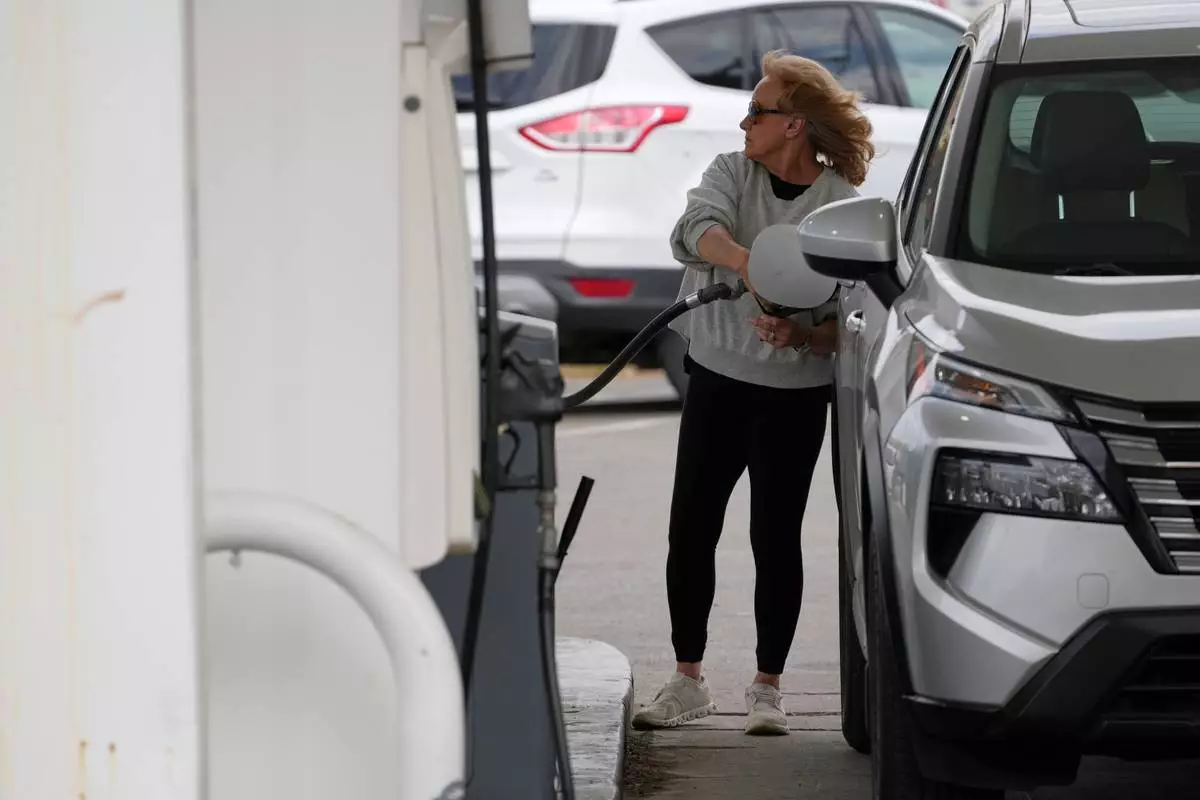
A woman fills her vehicle with fuel at a gas station, Monday, March 30, 2026, in Nashville, Tenn. (AP Photo/George Walker IV)
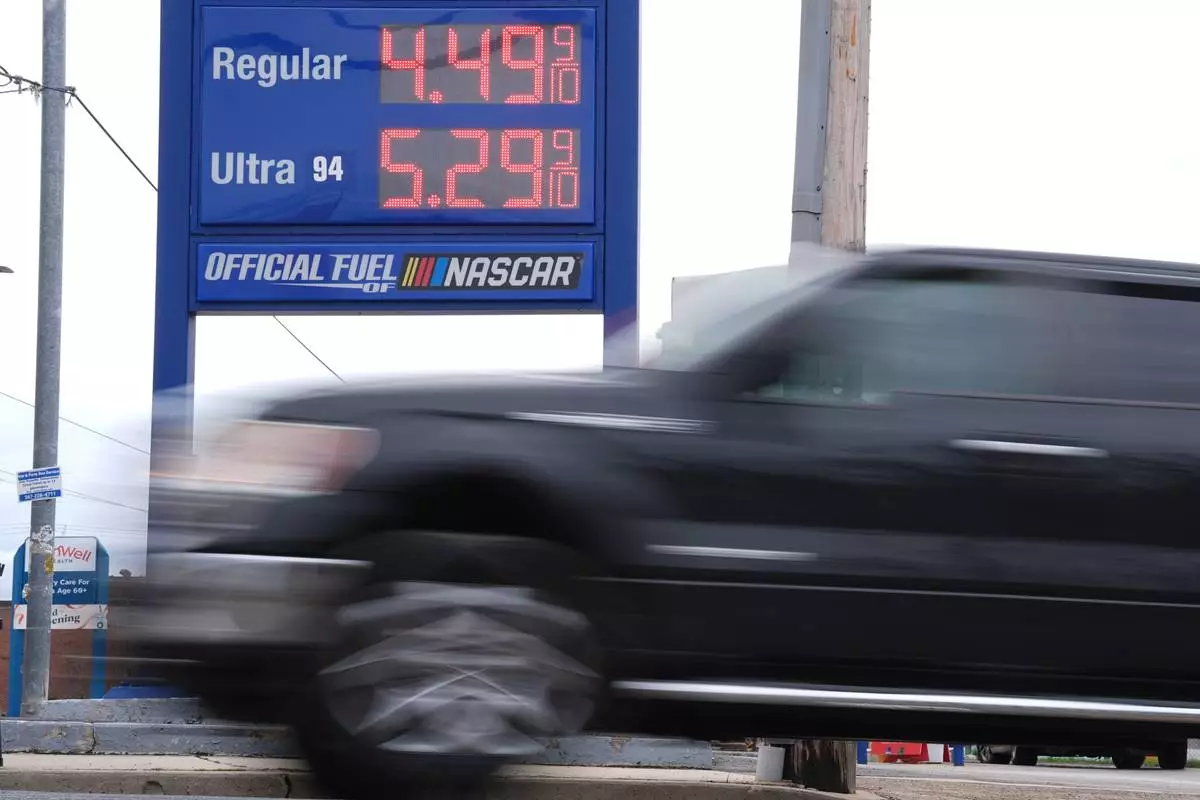
A vehicle passes a gasoline price board at a filling station in Philadelphia, Friday, March 27, 2026. (AP Photo/Matt Rourke)