INDIANAPOLIS--(BUSINESS WIRE)--Mar 31, 2026--
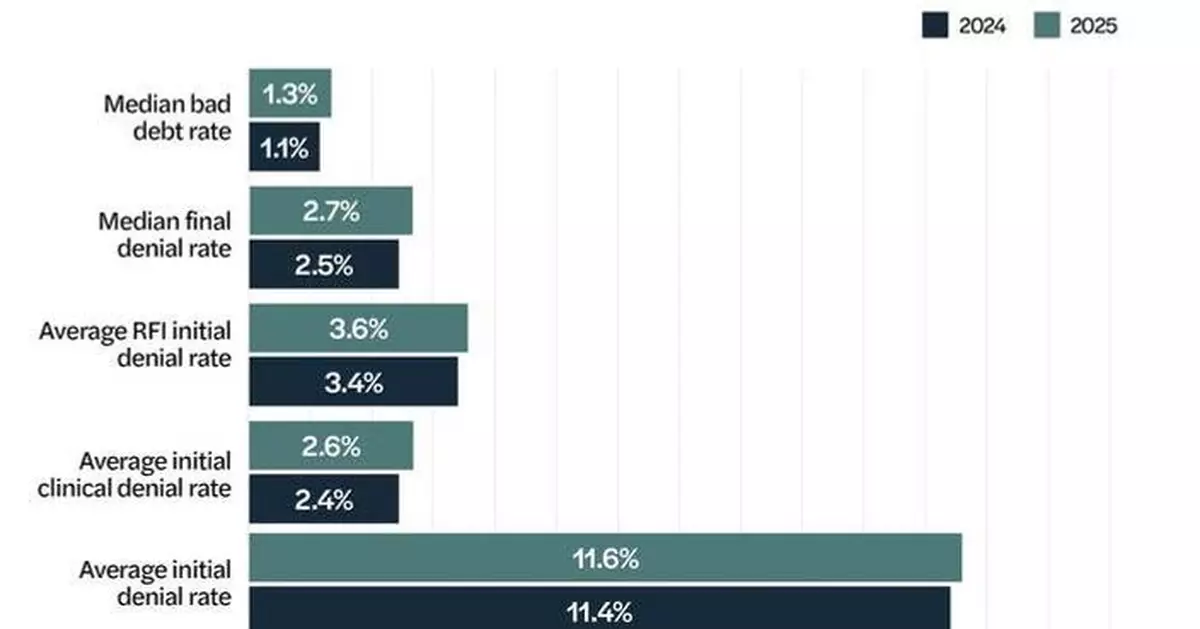
The more than 2,300 hospitals on the Kodiak platform lost more than $48 billon in net revenue in 2025 to final denials from payors and uncollected amounts owed by patients, up from $38.6 billion in 2024, according to the latest Kodiak Solutions Revenue Cycle Analytics benchmarking analysis.
This press release features multimedia. View the full release here: https://www.businesswire.com/news/home/20260331038554/en/
The 25% increase in net revenue leakage was driven by increases in the median final denial rate, from 2.5% in 2024 to 2.7% in 2025, and the median bad debt rate, from 1.1% in 2024 to 1.3% in 2025.
Clinical denial rates—covering denials for lack of precertifications or prior authorizations and for medical necessity—accounted for virtually all of the increase in denial rates, according to Kodiak’s analysis.
At the same time, hospitals, health systems and medical providers on the Kodiak platform recorded significant improvements on revenue cycle metrics related to cash flow. The average time to insurance payment, median days for claims in accounts receivable and median accounts receivable greater than 90 days all declined from 2024 to 2025, Kodiak data show.
“Payor behavior led to denial increases and a slight decline in the rate of overturning initial denials, with both driving the large overall increase in net revenue leakage from 2024 to 2025,” said Matt Szaflarski, Vice President, Revenue Cycle Intelligence for Kodiak. “The positive news on cash flow shows that revenue cycle teams can mitigate headwinds with strong performance on the things they can control.”
Kodiak’s data analysis comparing 2025 with 2024 also found:
“In comparing 2024 to 2025, we highlighted five revenue cycle trends, and four of them were negative for financial performance,” Szaflarski said. “In our work with the top performers on the Kodiak platform, however, we identified three best practices that revenue cycle leaders can focus on in 2026: practice tight accounts receivable discipline, focus limited denials resources on preventing clinical denials, and maintain rigor on front-end patient pay processes.”
More data from Kodiak’s “State of the healthcare revenue cycle” analysis and additional detail on these revenue cycle best practices can be found in the quarterly Kodiak RCA Benchmarking Analysis.
About Kodiak Solutions
Kodiak Solutions is a leading technology and tech-enabled services company that simplifies complex business problems for healthcare provider organizations. Over the past two decades, our team created and developed our proprietary net revenue reporting solution, Revenue Cycle Analytics. Kodiak also provides a broad suite of software and services in support of CFOs looking for solutions in financial reporting, reimbursement, revenue cycle, risk and compliance, and unclaimed property. Kodiak’s 450 employees engage with more than 2,300 hospitals and 375,000 practice-based physicians, across all 50 states, and serve as the unclaimed property outsourcing provider of choice for more than 2,000 companies. To learn more, visit Kodiak’s website.
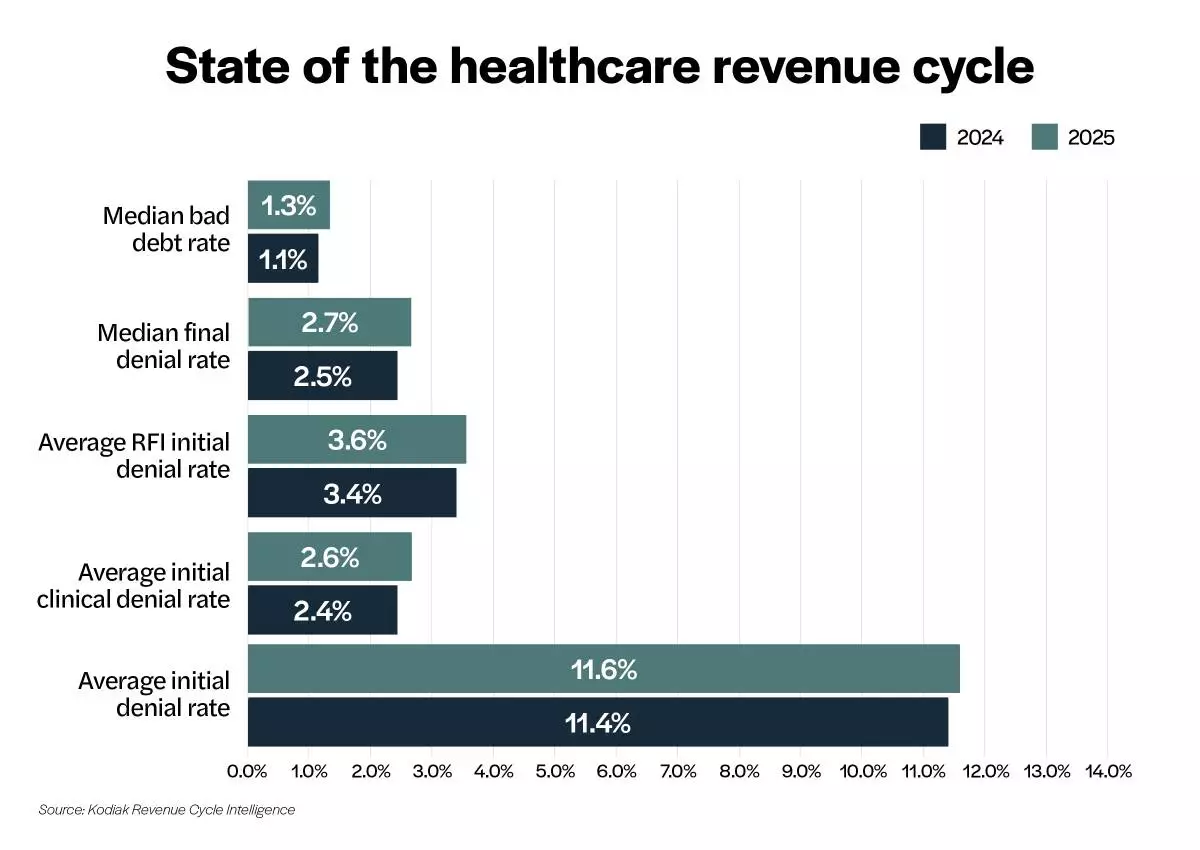
Hospitals and health systems experienced higher denial rates from insurance companies when comparing 2025 with 2024, driving up revenue leakage by 25%.
BERLIN (AP) — German Chancellor Friedrich Merz faced a struggle to stabilize his position and keep his agenda on track Monday after voters inflicted two more defeats on his party, ejecting it from a state legislature for the first time in its eight-decade history.
The unpopular Merz vowed to stay on and push through reforms to Germany, Europe's biggest economy, minutes after polls closed Sunday in regional elections in Berlin and in Mecklenburg-Western Pomerania, a largely rural eastern region on the Baltic Sea coast.
Still, final results underlined the extent of what Merz conceded was a “disaster” in Mecklenburg-Western Pomerania. His center-right Christian Democratic Union fell just below the 5% of the vote needed to keep seats in the regional parliament, the first time that has happened in 77 years of modern Germany's federal republic, after losing more than half its support.
The CDU also dropped to second place in Berlin behind the hard-left Left Party, which is in pole position to lead the next city government — though Merz's party could, depending on how coalition talks go, still retain city hall.
Neither state is one of Germany's political heavyweights. The CDU's 2023 win in Berlin was its only one in the past 25 years in the capital, which has tended to lean left, and the party was already weak in Mecklenburg-Western Pomerania.
But the manner of its defeat in the latter in particular adds to the headwinds Merz faces after a stinging defeat by the far-right Alternative for Germany two weeks ago in Saxony-Anhalt, another region in the formerly communist east, damaged his authority and set off speculation that he might be replaced.
Alternative for Germany, or AfD, emerged as the strongest party in Mecklenburg-Western Pomerania, but the center-left Social Democrats — the junior party in Merz's national governing coalition — were fairly close behind after a campaign focused squarely on the state governor, Manuela Schwesig, as a bulwark against the far-right party. That polarization helped squeeze other mainstream parties, including the CDU.
A left-leaning three-party coalition under Schwesig would have a majority in the new regional legislature.
Schwesig and others in the governing parties have cast doubt on aspects of the federal government's reform agenda, which is meant to bolster a chronically sluggish economy. The reform plans include a potentially painful overhaul of the creaking pension system, a reduction of Germany’s stifling bureaucracy and cuts to income tax for low- and middle-income families.
The head of the Social Democrats' group in the national parliament, Matthias Miersch, said it was clear that “we need reforms.” But he told ARD television that “we must also take people's concerns seriously.”
Merz faces more meetings Monday with his party's leadership. Much will depend on the CDU's influential regional leaders; the party's eight state governors last week backed the chancellor, though questions remained about how wholehearted their support was.
There are at least no more electoral tests this year. However, five state elections are scheduled next year, three of them in April.
They include one in North Rhine-Westphalia, Germany's most populous state, currently led by a prominent CDU figure often cited as a possible successor to Merz, Hendrik Wüst. None of the five elections is in the east, where AfD is strongest.
“I don't see that swapping out a leadership figure would really bring a change,” Education Minister Karin Prien, who is also a deputy CDU leader, told Phoenix television, adding that she doesn't see “another personnel offer” coming.
“So we must now discuss with one another — together with the chancellor as a government, and on the other hand as a party — how we win more acceptance and more credibility among the population,” Prien said.
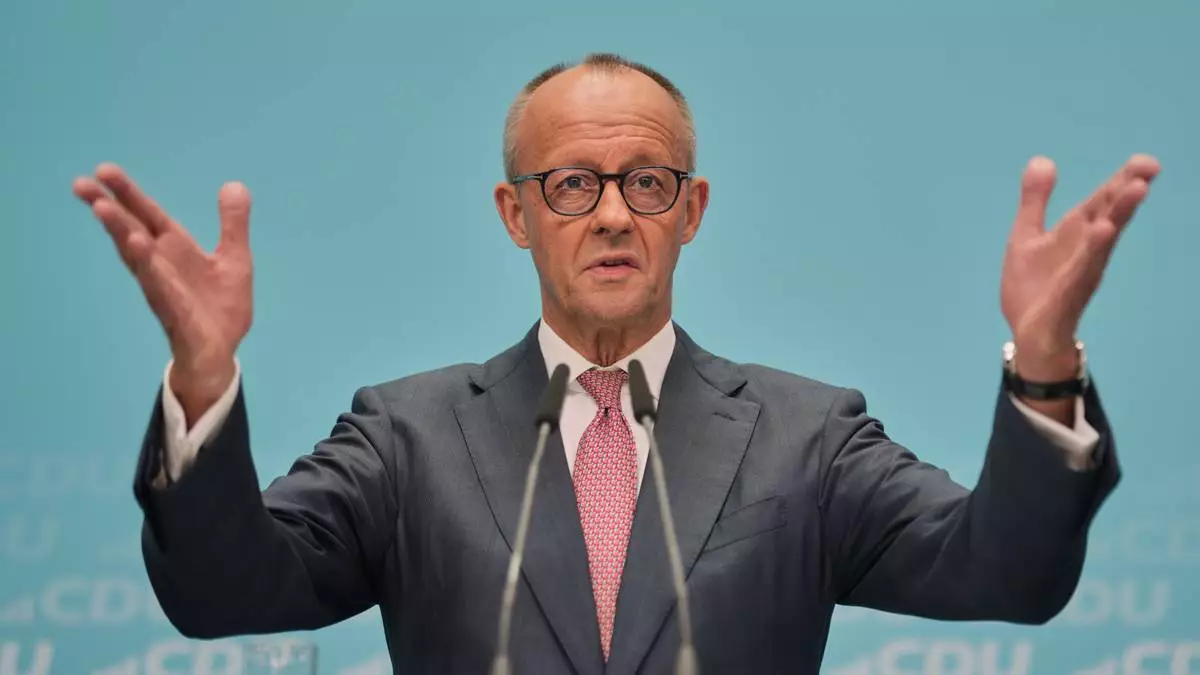
German Chancellor Friedrich Merz talks to the media during a press conference at the Christian Democratic Union (CDU) headquarters in Berlin, Germany, after yesterday's two state elections in Berlin and Mecklenburg-Western Pomerania, Monday, Sept. 21, 2026. (AP Photo/Markus Schreiber)
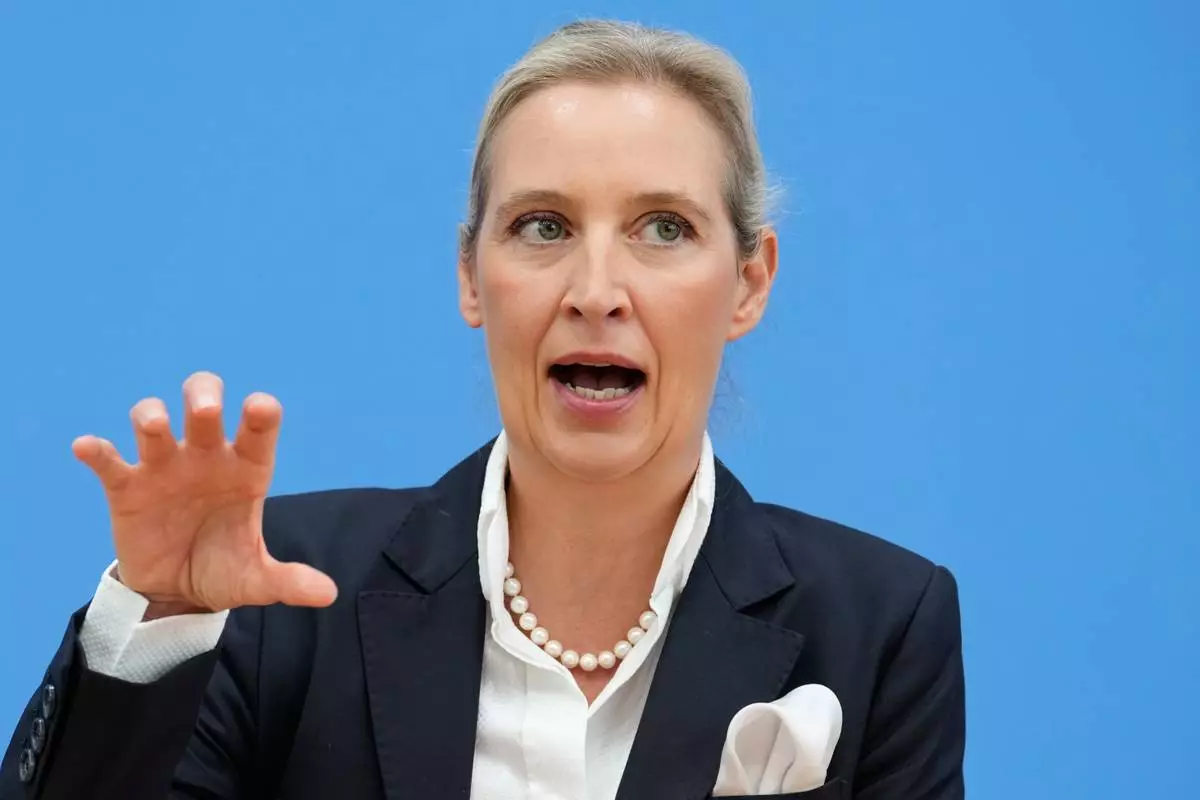
AfD party leader Alice Weidel talks to the media during a press conference of the "Alternative for Germany" (AfD) in Berlin, Germany, after yesterday's two state elections in Berlin and Mecklenburg-Western Pomerania, Monday, Sept. 21, 2026. (AP Photo/Ebrahim Noroozi)
German chancellor Friedrich Merz is seen ahead of a press conference at the Christian Democratic Union (CDU) headquarters in Berlin, Germany, after yesterday's two state elections in Berlin and Mecklenburg-Western Pomerania, Monday, Sept. 21, 2026. (AP Photo/Markus Schreiber)
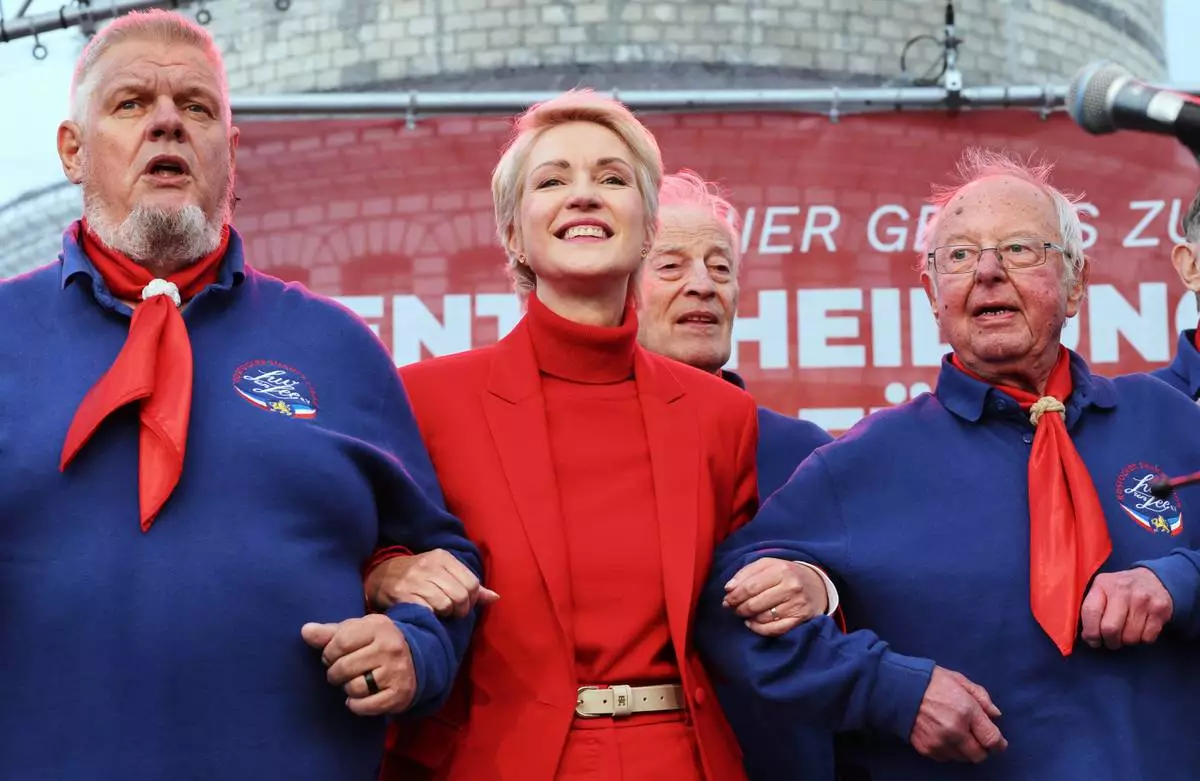
Manuela Schwesig (SPD), center, minister-president of Mecklenburg-Western Pomerania, stands on stage alongside members of the Rostock shanty choir Luv un Lee at a campaign event in Warnemünde, Germany, on Friday, Sept. 18, 2026. (Bernd Wüstneck/dpa/via AP)
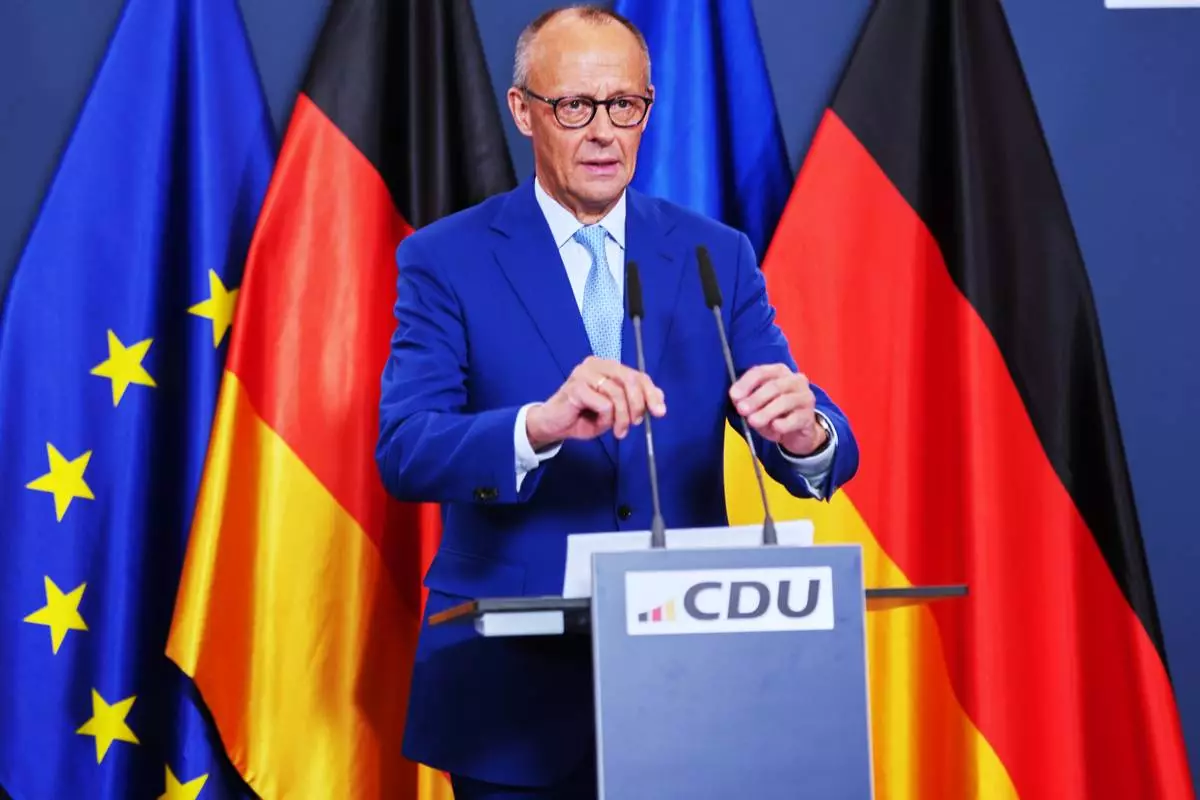
German Chancellor Friedrich Merz speaks to media at the Christian Democratic Union party headquarters in Berlin, Germany, Sunday, Sept. 20, 2026. (AP Photo/Markus Schreiber)