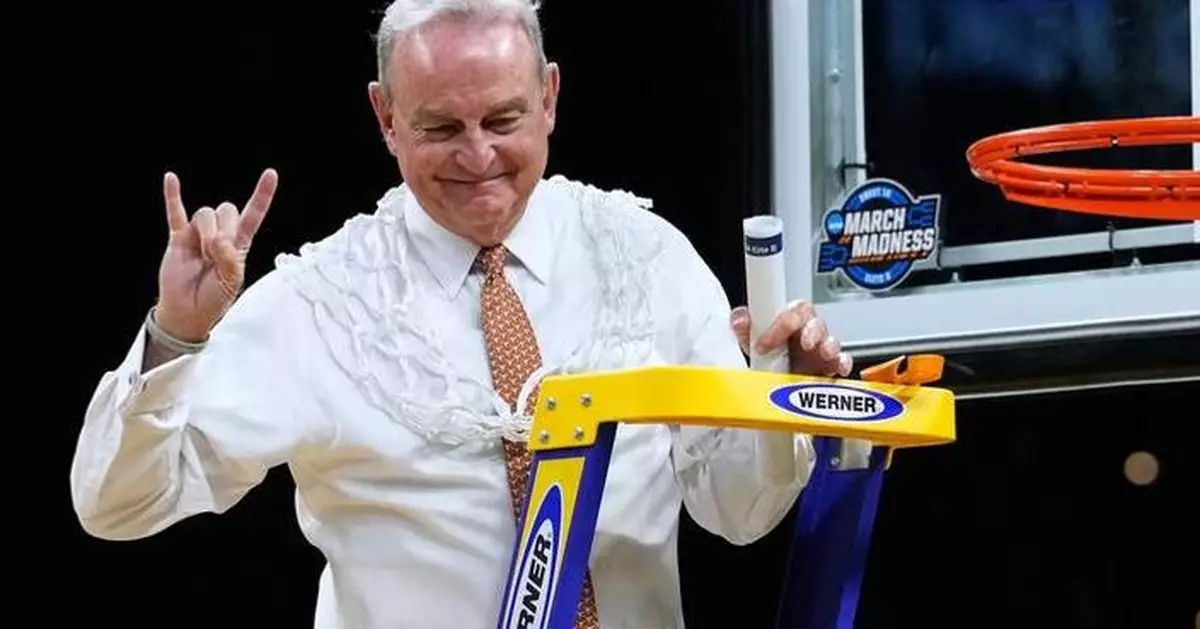
AUSTIN, Texas (AP) — Texas coach Vic Schaefer has come agonizingly close to winning a national championship.
Close as in three previous trips to the Final Four. And two title game appearances, including one lost on a last-second 3-pointer.
The 65-year-old Schaefer is close again. Only he's over being close in March Madness. He wants to win one. And the Longhorns just may have the team to do it this year.
Texas returns to the Final Four for the second consecutive year behind dominant three-time All-American forward Madison Booker and dynamic fifth-year point guard Rori Harmon. The Longhorns are chasing the program's first national championship since 1986, when Texas and Hall of Fame coach Jody Conradt barnstormed through a 34-0 season to become the first undefeated title winners.
And for Schaefer, it's a chance to exorcise some “close” ghosts from the past. The Longhorns (35-3) play UCLA (35-1) on Friday night. Texas handed the Bruins their only loss, 76-65, back on Nov. 26. Win again and they'll play either South Carolina (35-3) or UConn (38-0) in the final.
"With this team, how special they are, they’re good enough” to win the championship, Schaefer said. “I keep telling ’em, they’re good enough.”
Schaefer is leading his fourth team at two different schools to the Final Four. He won a national title as an assistant at Texas A&M in 2011, but the trophy has been elusive for Schaefer in 21 seasons as a head coach.
His Mississippi State Bulldogs played in the championship game in 2017 and 2018. The 2018 nail-biter against Notre Dame still leaves a bitter taste after the last-second defeat.
And before Texas advanced to the Sweet 16 this year, Schaefer said the best team he ever had was his 2019 Mississippi State team that lost to Oregon in the Elite Eight, a matchup in Portland that effectively was a home game for the Ducks.
“That team was better than the two previous teams that played in the national championship game," Schaefer said. “If we’d have beat (Oregon), we’d have won the national championship, no question.”
After Texas dismantled Michigan 77-41 on Monday night, Schaefer came around to saying his current team might be that good.
“Right now," Schaefer said, “they're playing as good as any team I've ever had."
Schaefer left the power program he'd built at Mississippi State for Texas in 2020. A Texas native, he loves to note how he was born in an Austin hospital right next to campus. The hospital has since been torn down, but the Longhorns' arena is just a short walk from the vacant lot.
Schaefer's impact in rebuilding Texas was immediate.
In his first season, the Longhorns made a surprising run to the Elite Eight. They have made it to at least the Sweet 16 in five of his six seasons. Last season's run to the Final Four was the program's first since 2003, when Conradt was still at the helm.
Along the way, he has recruited players like Harmon, the only player in Division I history with more than 1,500 points, 900 assists, 600 rebounds and 350 steals, and Booker, whose all-around skills and playmaking lead Schaefer to call her “a generational talent.”
After Texas beat Michigan, he and Harmon shared a long hug.
“We’ve been together for five years,” Harmon said. “There’s so much hard work, tears, blood, sweat, adversity that we go through together.”
Schaefer believes he must win a national championship at Texas, not just compete for one. If he can get to Sunday's final, he'll face either UConn's Geno Auriemma, who has won 12 championships, or South Carolina's Dawn Staley, who has won three.
Schaefer recently recalled a meeting of Longhorns coaches across all sports a few years ago. He noted the success that was in the room.
"(Texas) is a place of elite. It’s a place of greatness," Schaefer said. “There’s 20 head coaches at the table. As I’m sitting at the table, I look around, and there’s ten head coaches that played for the national championship. Ten. Four of them won it. Six of them finished second. I finished fifth in the country and went to the Elite Eight, and I’m not even in the top half in the room."
Schaefer is not easy on his teams. Even this one. At times, he can be downright harsh.
Schaefer benched Harmon for most the fourth quarter in regular-season losses at LSU and Vanderbilt. After an 18-point loss in Nashville on Feb. 12, he went on a postgame rant that questioned his team’s heart and called the Longhorns “probably the softest team I’ve had in years.”
Booker said the team responded to the scolding. Texas hasn't lost since, and the Longhorns have been in another gear in the postseason. They have won four NCAA Tournament games by an average of 36 points. Booker scored a career-high 40 in a second-round win over Oregon.
“For me and my teammates, we never want to hear our coach say that about us, especially because he does so much for us,” Booker said. “We say we have heart, and I think after that game we kind of turned it around. You know, I hope he sees we have heart now. Yeah, like, that will never happen again.”
AP March Madness bracket: https://apnews.com/hub/ncaa-womens-bracket and coverage: https://apnews.com/hub/march-madness
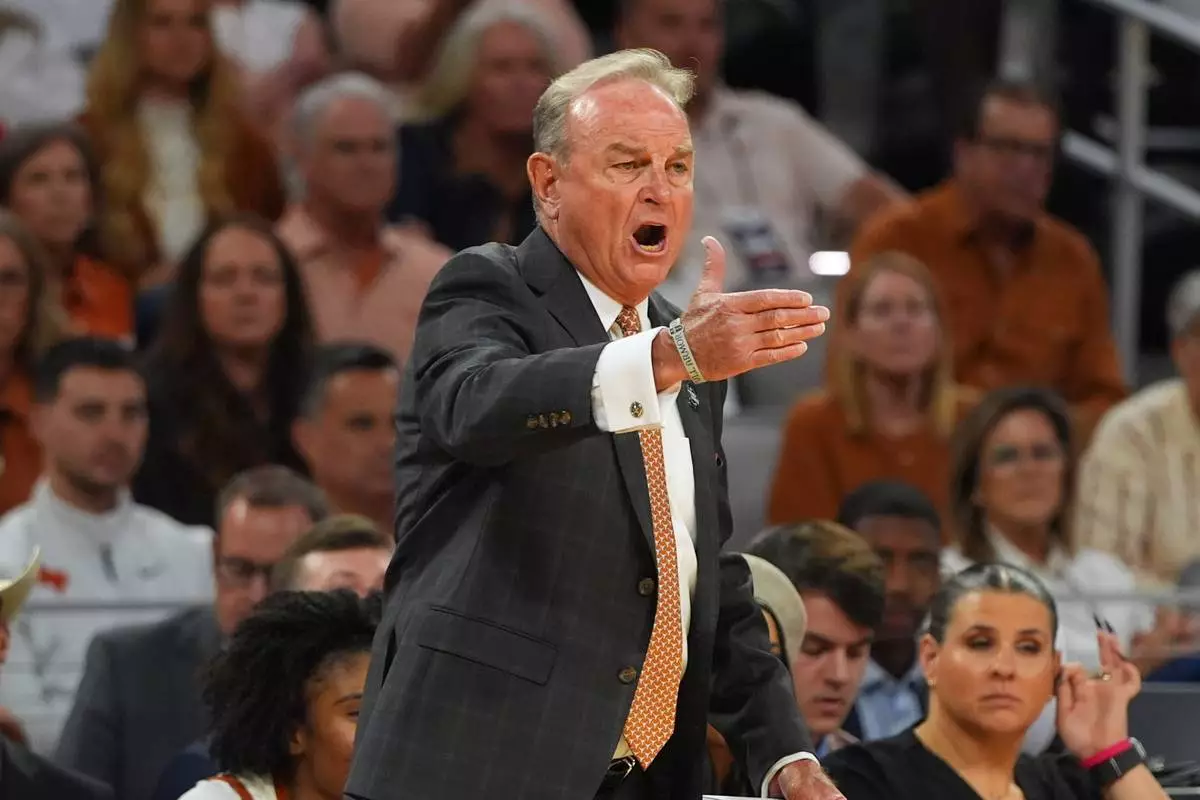
Texas head coach Vic Schaefer watches against Michigan during the first half in the Elite Eight of the NCAA college basketball tournament, Monday, March 30, 2026, in Fort Worth, Texas. (AP Photo/LM Otero)
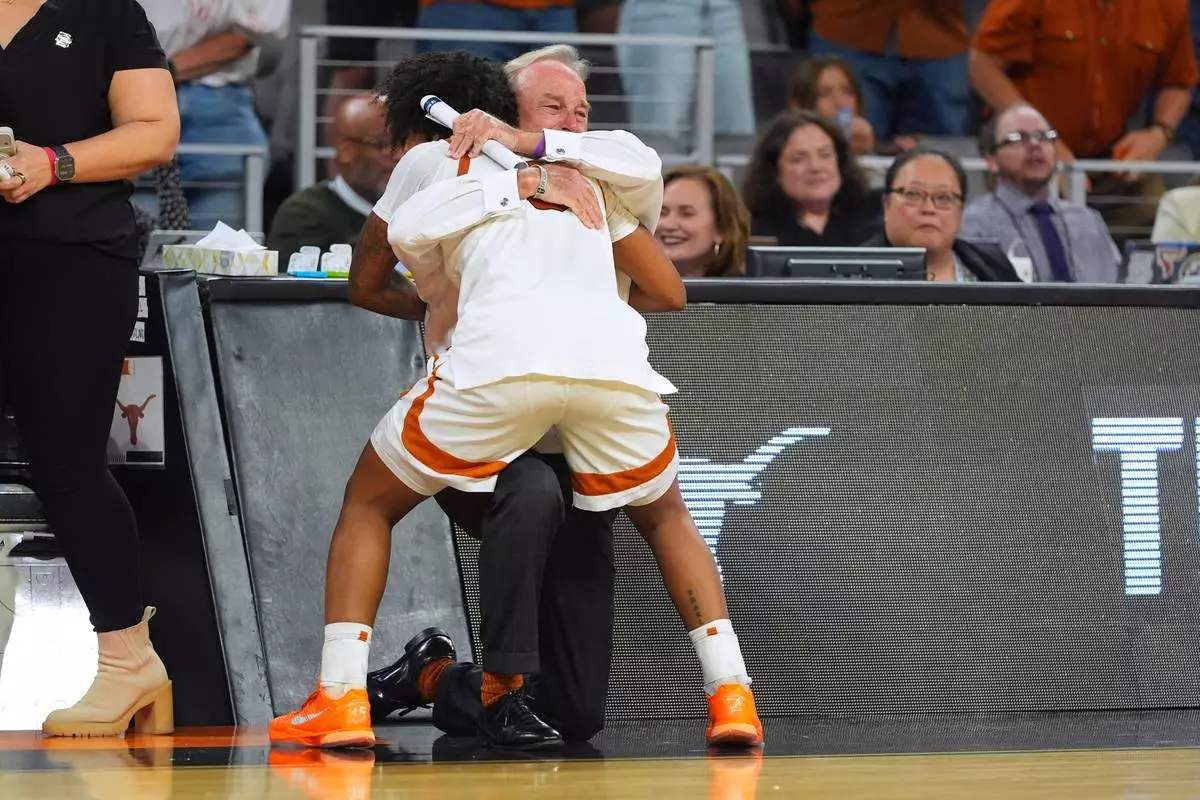
Texas guard Rori Harmon (3) hugs head coach Vic Schaefer against Michigan during the second half in the Elite Eight of the NCAA college basketball tournament, Monday, March 30, 2026, in Fort Worth, Texas. (AP Photo/LM Otero)
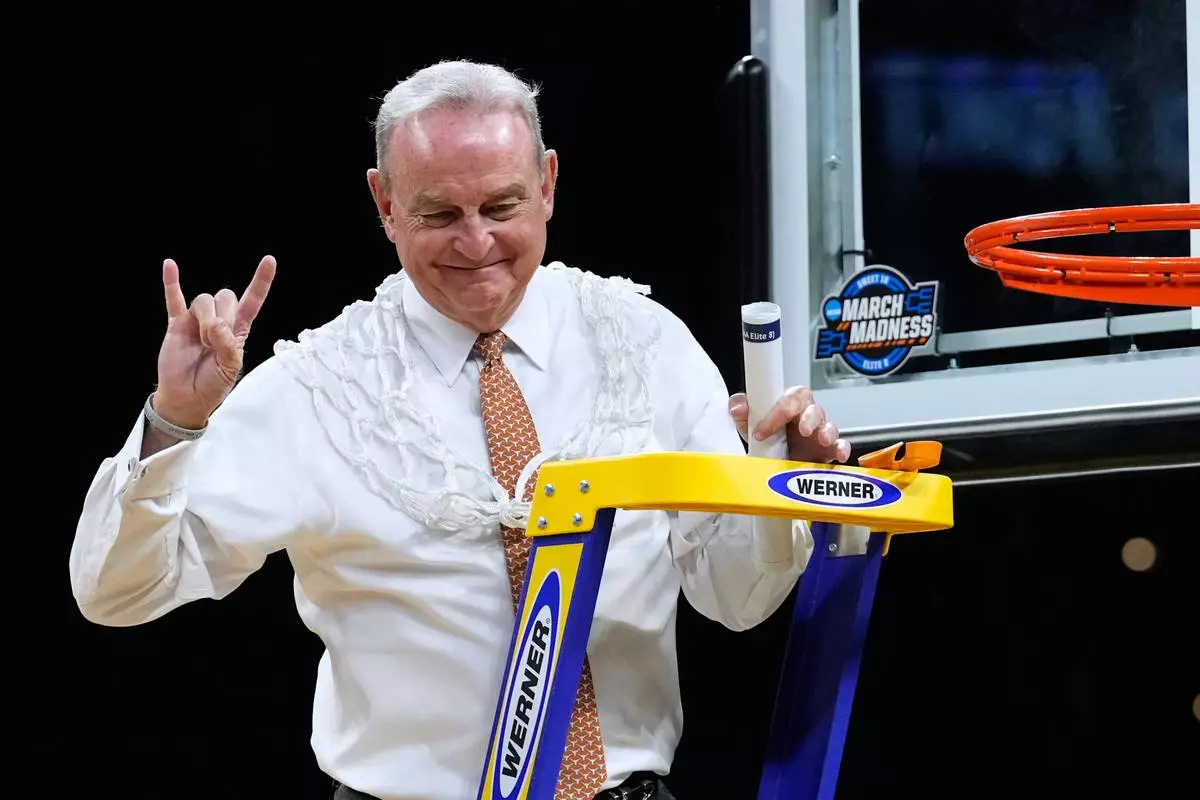
Texas head coach Vic Schaefer celebrates after beating Michigan during the Elite Eight of the NCAA college basketball tournament, Monday, March 30, 2026, in Fort Worth, Texas. (AP Photo/Tony Gutierrez)
Republican lawmakers in Louisiana are poised to eliminate a majority-Black congressional district that elected a Democrat in response to a recent U.S. Supreme Court ruling that its map constituted an illegal racial gerrymander.
A redistricting plan passed Thursday by the state House would give Republicans a chance at picking up an additional seat in this year’s midterm elections. It also would protect U.S. House Speaker Mike Johnson from facing a more difficult reelection. The plan needs only a final Senate vote, which could come Friday, to go to Republican Gov. Jeff Landry.
“We drew this map in an effort to safely maximize Republican strength,” said state Rep. Beau Beaullieu, a Republican who chairs the chamber's redistricting committee.
If passed by the House, the plan would need only a final Senate vote to go to Republican Gov. Jeff Landry.
Since the Supreme Court's decision in late April, several other Southern states already have seized upon a weakened federal Voting Rights Act to try to redraw their own congressional districts. It's the latest flare-up in a heated national redistricting battle heading into the November elections, spurred along by President Donald Trump.
So far, Republicans are winning the redistricting contest. But that doesn't necessarily mean they will win the U.S. House in November. Democrats need a net gain of only a few seats to flip control of the chamber. Trump faces negative approval ratings. And in midterm elections, the president's party typically loses congressional seats.
In 2022, Republicans in the Louisiana Legislature overrode the veto of Democratic Gov. John Bel Edwards to enact new congressional districts based on the 2020 census. Five Republicans and one Democrat won election under those lines. But the federal courts said the map violated the Voting Rights Act by not including a second district with a majority-Black population.
The Legislature responded in 2024 by creating a second majority-Black district, stretching more than 200 miles (321 kilometers) northwest from Baton Rouge to Shreveport. That map resulted in the election of Democratic U.S. Rep. Cleo Fields. But that map also was challenged, and the Supreme Court struck it down as an illegal racial gerrymander.
Landry then postponed the state's May 16 U.S. House primary until later this summer to allow time for state lawmakers to again redraw districts before Monday's scheduled end of their session.
The Republican-led House overwhelmingly passed a new plan Thursday, though three Republicans joined Democrats in voting against it.
The latest plan scraps the snaking district represented by Fields and instead clusters it around predominantly white communities in the Baton Rouge area and southern Louisiana. It adds part of Baton Rouge to a heavily Democratic, majority-Black district based in New Orleans currently represented by Democratic U.S. Rep. Troy Carter.
Beaullieu said Republicans opted against a new map aimed at winning all six of the state's U.S. House seats because it would have required adding more Democratic voters to Republican-held districts. He said that could have backfired by allowing Democrats to win two or three seats, potentially jeopardizing the reelection of Johnson or Majority Leader Steve Scalise.
Some people remained unsatisfied.
Republican U.S. Rep. Clay Higgins, a staunch Trump supporter whose southern Louisiana district contains several parishes split up by the redistricting legislation, denounced the plan in a social media post as a “Frankenstein looking thing” and an "insanely bad map.”
The plaintiffs behind the lawsuit that prompted the Supreme Court to strike down Louisiana’s 2024 map threatened further litigation because the state’s proposed redistricting still leaves a majority-Black district in place, according to court filings this week.
Louisiana state Rep. Kyle Green, who chairs the House Democratic Caucus, said Thursday that the proposed map could still constitute a racial gerrymander because it packs Black voters into a single congressional district.
State Sen. Jay Morris, the Republican sponsoring the redistricting bill, said he expects further litigation but is unconcerned.
“I believe this map is easily defendable under the Constitution because we did not racially gerrymander it,” Morris told The Associated Press.
Republican lawmakers said their latest redistricting considered political party affiliation but not race.
But Democratic state Rep. Edmond Jordan, who chairs the Louisiana Legislative Black Caucus, said party politics are inextricably tied to race in the state. He warned that “drawing a map around partisanship would produce exactly the racial results that the Constitution forbids.”
In the month since the Supreme Court's ruling, several Southern states already have acted on redistricting.
Florida's Republican-led legislature passed new congressional districts just hours after the ruling, completing a redrawing that already was in the works in anticipation of the decision. A state judge this week declined to block use of those districts, which could yield Republicans as many as four additional seats in the midterm elections.
Tennessee adopted new U.S. House districts a week after the ruling, carving up a majority-Black district based in Memphis in a Republican attempt to win an additional seat.
Alabama also attempted to change its congressional districts, though a federal judicial panel this week blocked a Republican-drawn map that it determined intentionally discriminates against Black people. The state's Republican attorney general has asked the U.S. Supreme Court to let the map be used this year. Republican Gov. Kay Ivey also pushed back a deadline to certify candidates for an Aug. 11 special congressional primary from Friday to next Wednesday, in hopes the Supreme Court will issue a decision by then.
Despite pressure from Trump, South Carolina's Senate this week opted against congressional redistricting. Some senators said it was too late to make changes since in-person early voting had begun. Other Republican lawmakers had reservations that the plan could backfire by allowing Democrats to win more seats.
Associated Press writer Kim Chandler contributed to this report.
__
This story has been corrected to show that Scalise is House Majority Leader, not Senate Majority Leader.
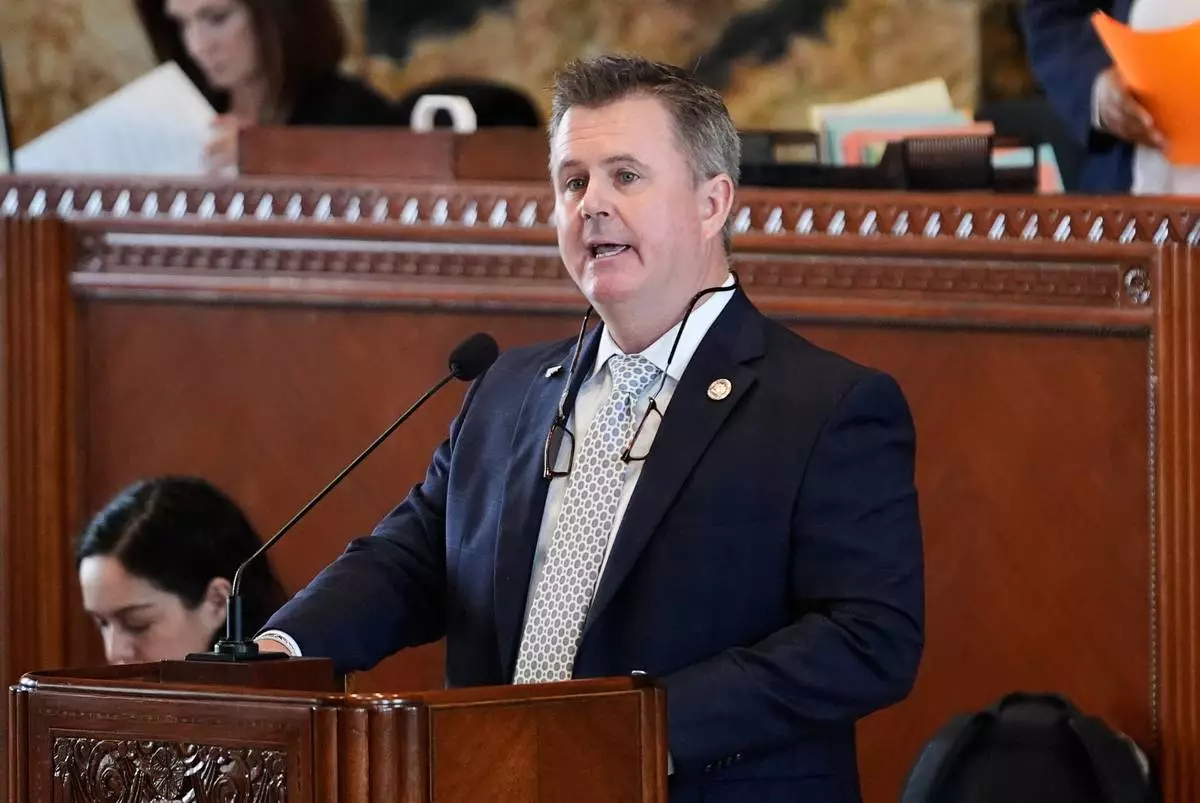
Louisiana Rep. Gerald Beaullieu, IV, R-Dist 48, speaks prior to a Louisiana House vote on a redistricting plan to eliminate a majority-Black congressional district in response to a U.S. Supreme Court ruling, in Baton Rouge, La., Thursday, May 21, 2026. (AP Photo/Gerald Herbert)
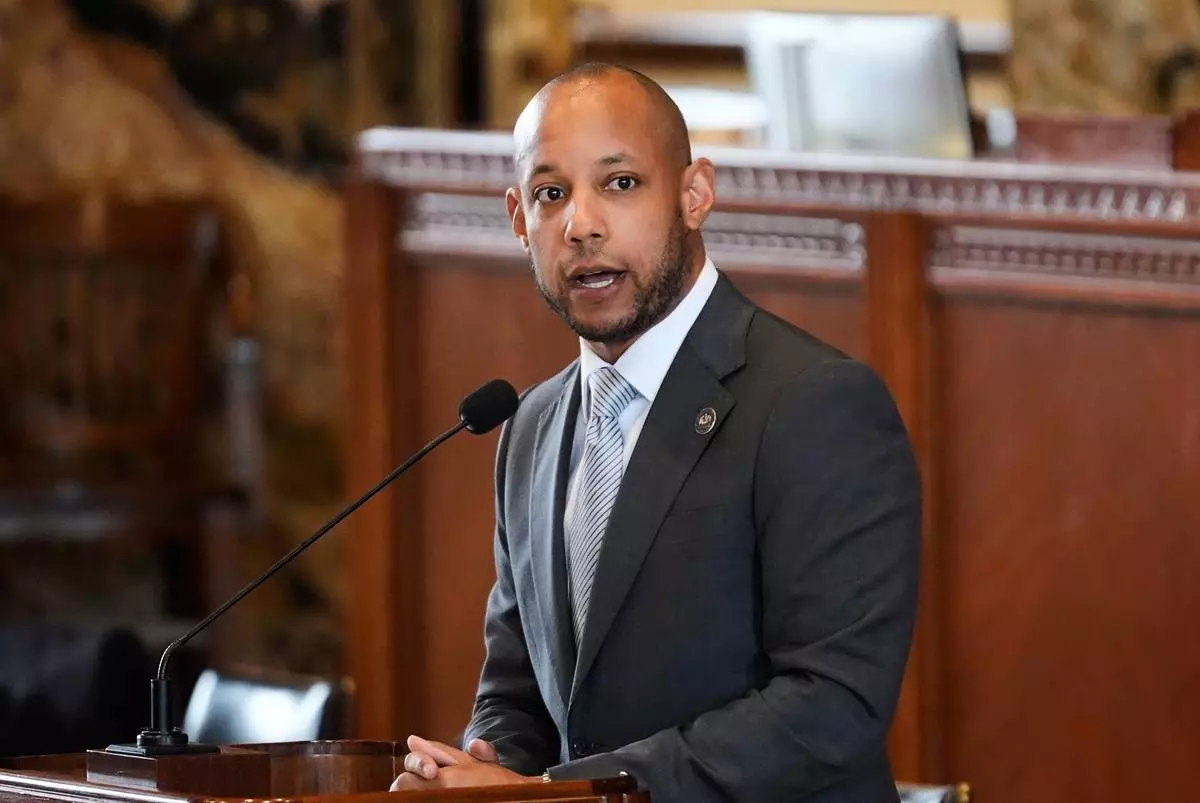
Louisiana Rep. Kyle M. Green, Jr., D-Dist 83, speaks prior to a Louisiana House vote on a redistricting plan to eliminate a majority-Black congressional district in response to a U.S. Supreme Court ruling, in Baton Rouge, La., Thursday, May 21, 2026. (AP Photo/Gerald Herbert)

Louisiana Rep. Edmond Jordan, D-Dist 29, talks with fellow lawmakers prior to a Louisiana House vote on a redistricting plan to eliminate a majority-Black congressional district in response to a U.S. Supreme Court ruling, in Baton Rouge, La., Thursday, May 21, 2026. (AP Photo/Gerald Herbert)
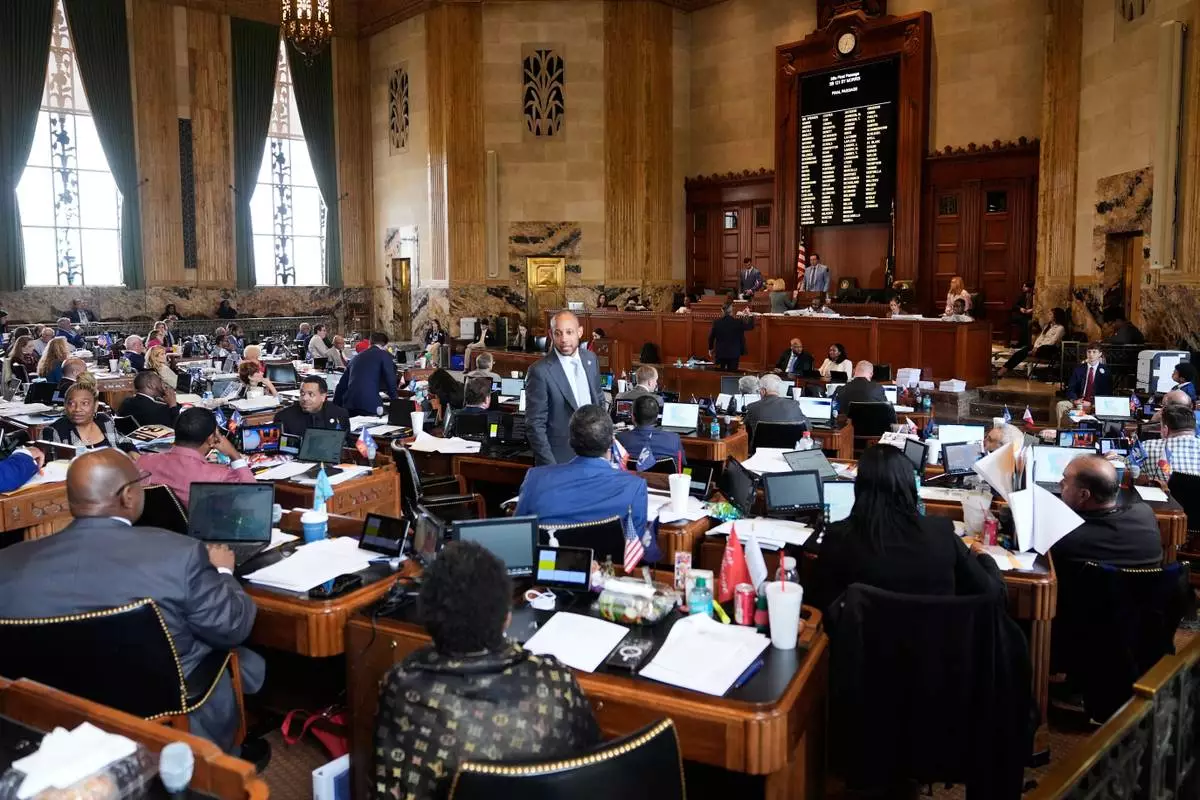
Louisiana Rep. Kyle M. Green, Jr., D-Dist 83, talks to fellow lawmakers prior to a Louisiana House vote on a redistricting plan to eliminate a majority-Black congressional district in response to a U.S. Supreme Court ruling, in Baton Rouge, La., Thursday, May 21, 2026. (AP Photo/Gerald Herbert)
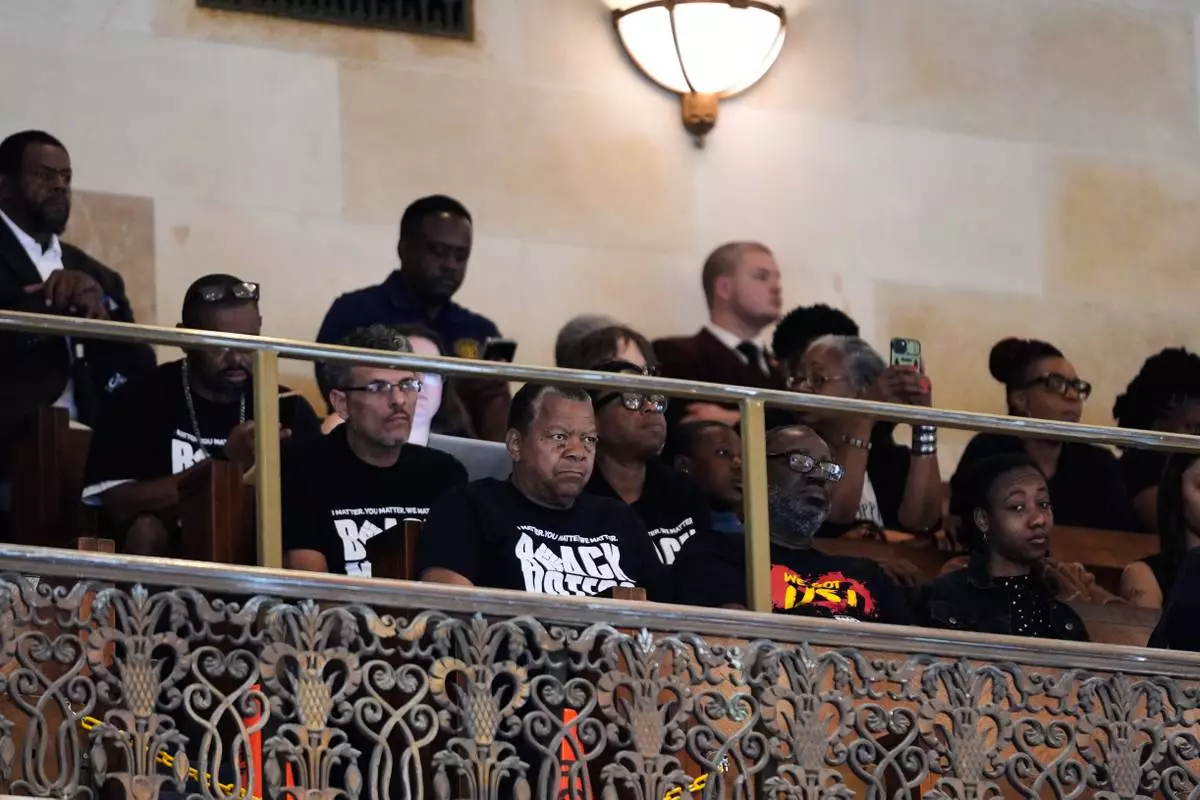
Members of the public who oppose a redistricting plan to eliminate a majority-Black congressional district in response to a U.S. Supreme Court ruling, listen to House members prior to a vote on it, in Baton Rouge, La., Thursday, May 21, 2026. (AP Photo/Gerald Herbert)
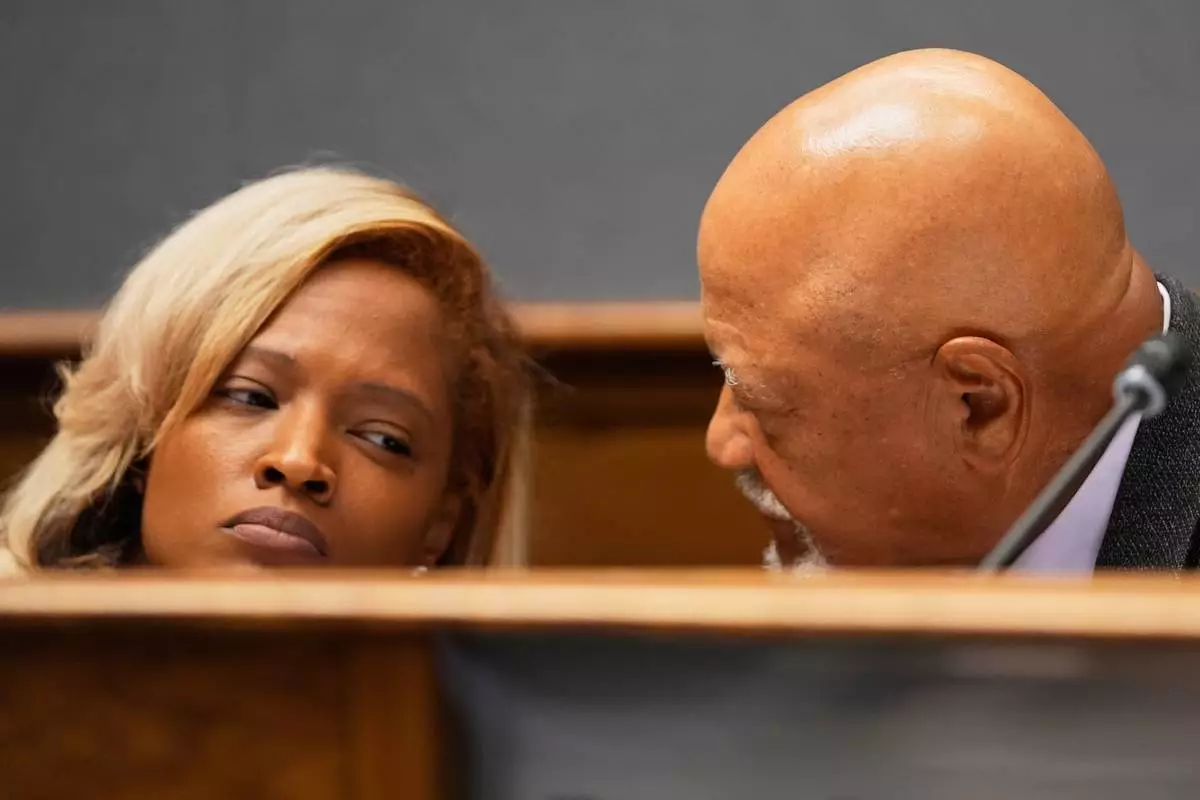
Louisiana state Rep. Wilford Carter, Sr., D-Dist. 34, talks with Rep. Joy Walters, D-Dist. 4, during a House and Governmental Affairs Committee hearing over redistricting in Baton Rouge, La., Thursday, May 21, 2026. (AP Photo/Gerald Herbert)

Louisiana state Rep. Gerald Beaullieu, R-Dist. 48, chairman of House and Governmental Affairs Committee, listens during a hearing over redistricting in Baton Rouge, La., Thursday, May 21, 2026. (AP Photo/Gerald Herbert)
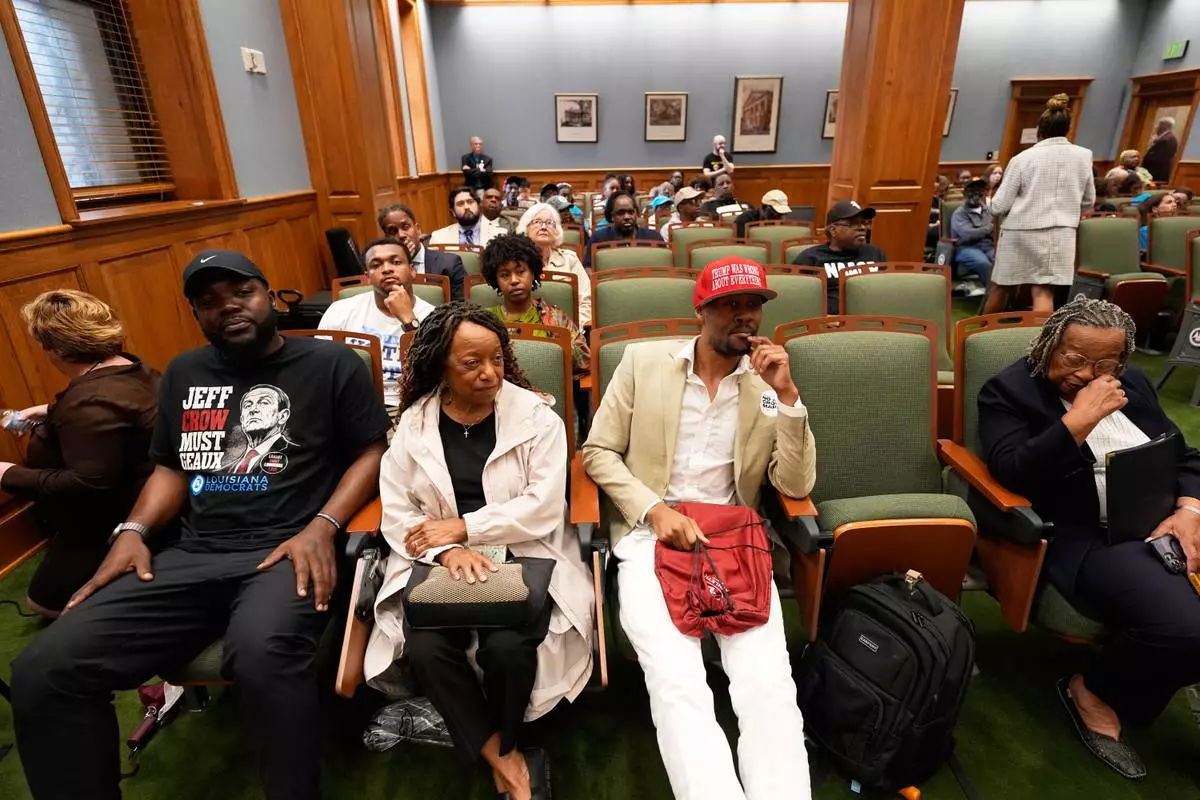
People watch and listen from an overflow room during a Louisiana House and Governmental Affairs Committee hearing over redistricting in Baton Rouge, La., Thursday, May 21, 2026. (AP Photo/Gerald Herbert)
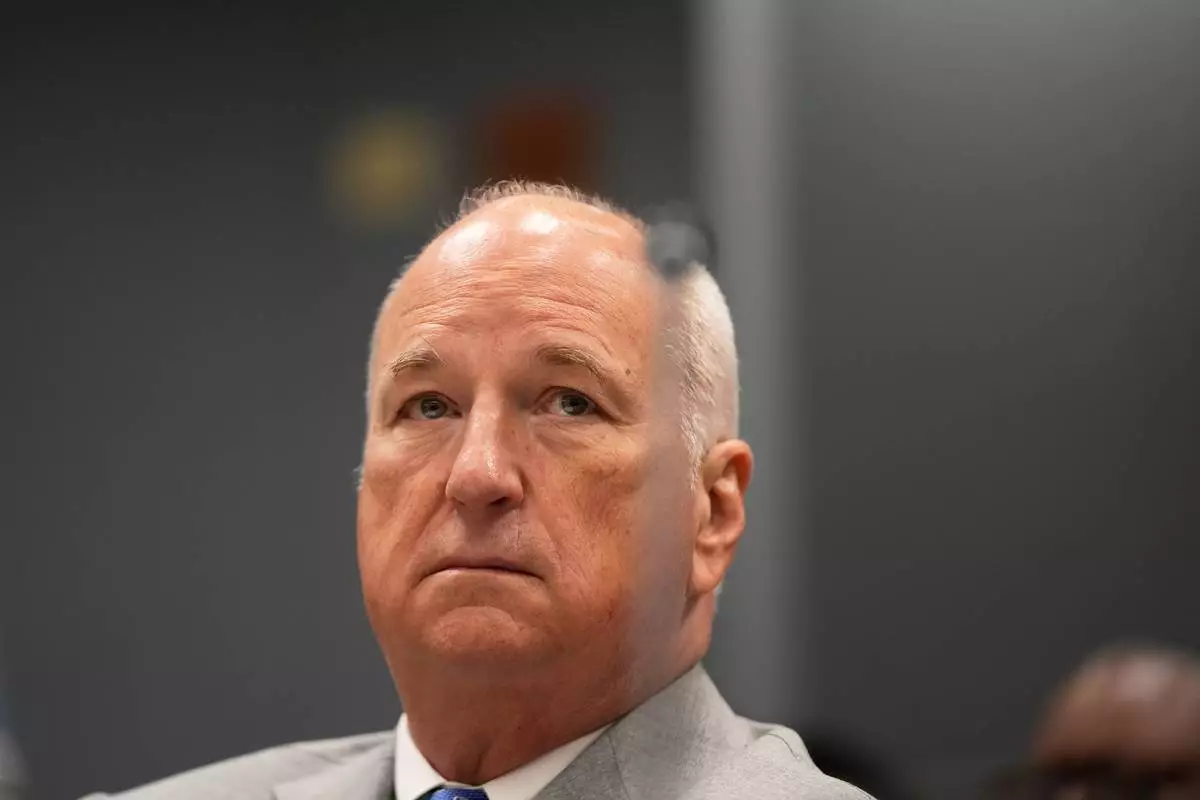
Louisiana Sen. John "Jay" Morris, R-Dist. 35, testifies during a House and Governmental Affairs Committee hearing over redistricting in Baton Rouge, La., Thursday, May 21, 2026. (AP Photo/Gerald Herbert)
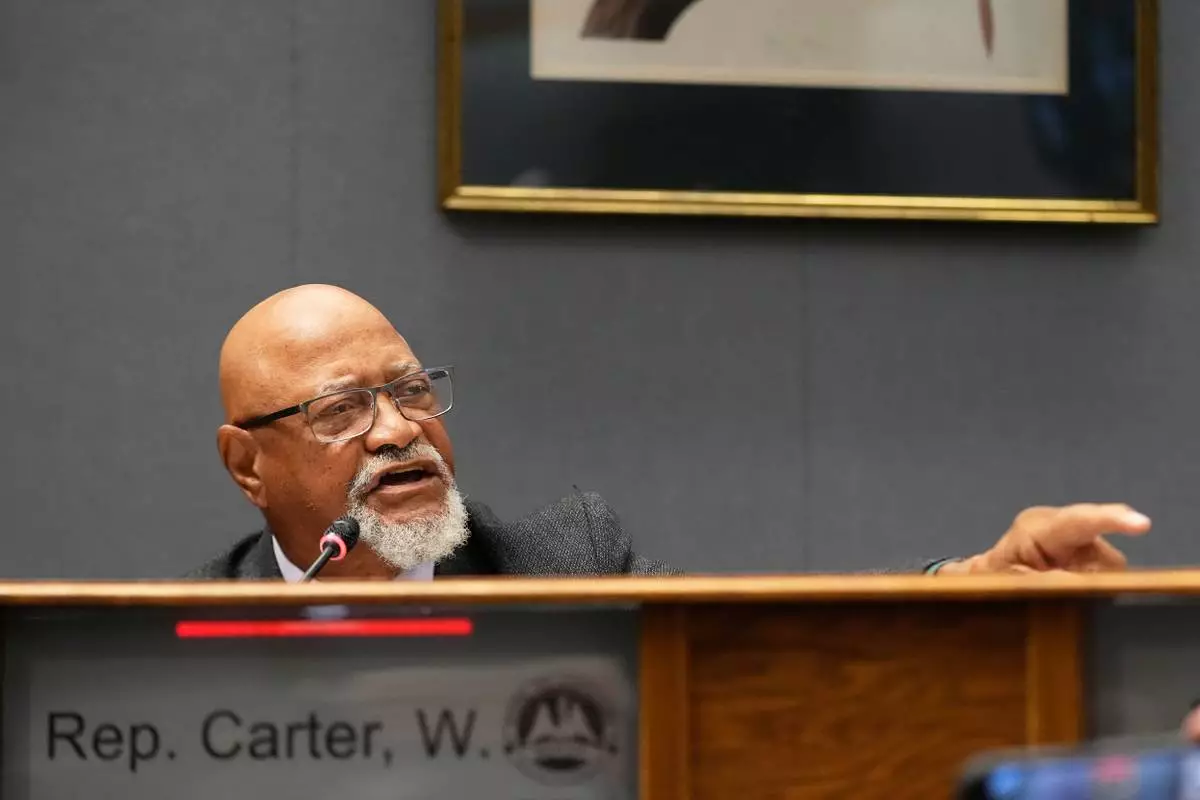
Louisiana state Rep. Wilford Carter, Sr., D- Dist. 34, speaks during a House and Governmental Affairs Committee hearing over redistricting in Baton Rouge, La., Thursday, May 21, 2026. (AP Photo/Gerald Herbert)
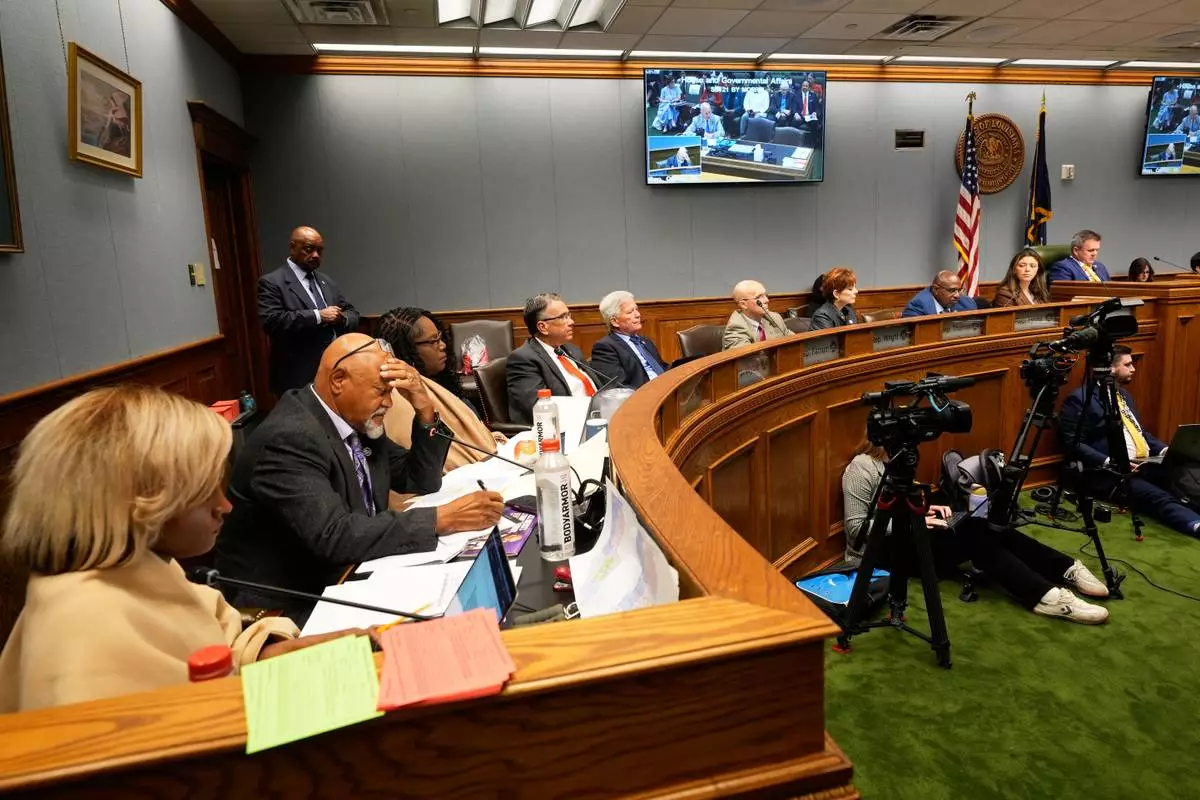
The Louisiana House and Governmental Affairs Committee holds a hearing over redistricting in Baton Rouge, La., Thursday, May 21, 2026. (AP Photo/Gerald Herbert)