Skip to Content Facebook Feature Image

No one in courtroom to speak on behalf of victims of man who killed 4 sleeping homeless men

News

No one in courtroom to speak on behalf of victims of man who killed 4 sleeping homeless men
News

News

No one in courtroom to speak on behalf of victims of man who killed 4 sleeping homeless men

2026-05-29 06:06 Last Updated At:11:38

NEW YORK (AP) — There was no one in the courtroom on Thursday to speak on behalf of the four men Randy Santos bludgeoned to death with a metal bar as they slept on the New York City streets.

No anguished friends or relatives to tell the judge about Florencio Moran, Nazario Vásquez Villegas, Anthony Manson and Chuen Kok ’s abruptly shortened lives. No one to confront Santos face-to-face about his psychosis-fueled rampage through Manhattan’s Chinatown neighborhood nearly seven years ago, or to hear him apologize.

More Images
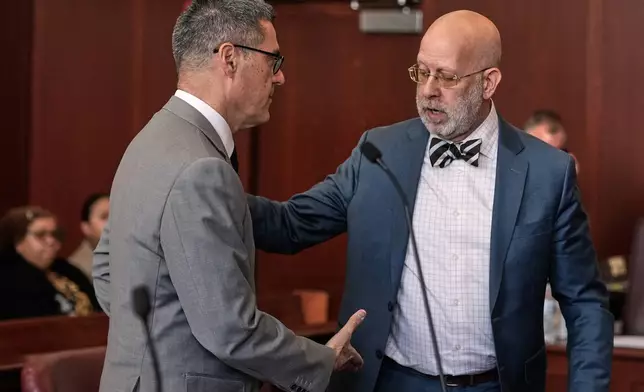
Manhattan Assistant District Attorney Alfred Peterson, left, prepares to shake hands with Arnold Levine, defense attorney for Randy Santos, after Santos was sentenced in court for fatally beating four sleeping men on the streets in 2019, in New York, Thursday, May 28, 2026. (AP Photo/Richard Drew)
Manhattan Assistant District Attorney Alfred Peterson, left, prepares to shake hands with Arnold Levine, defense attorney for Randy Santos, after Santos was sentenced in court for fatally beating four sleeping men on the streets in 2019, in New York, Thursday, May 28, 2026. (AP Photo/Richard Drew)

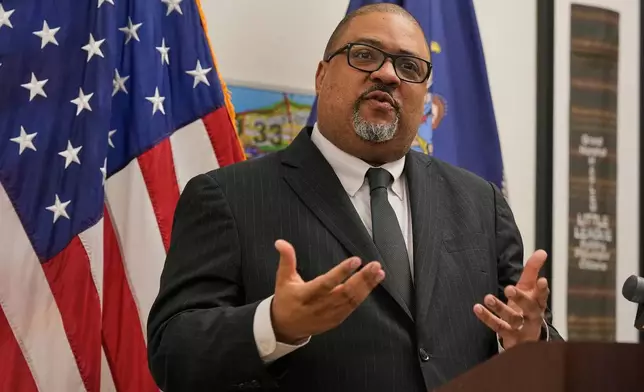
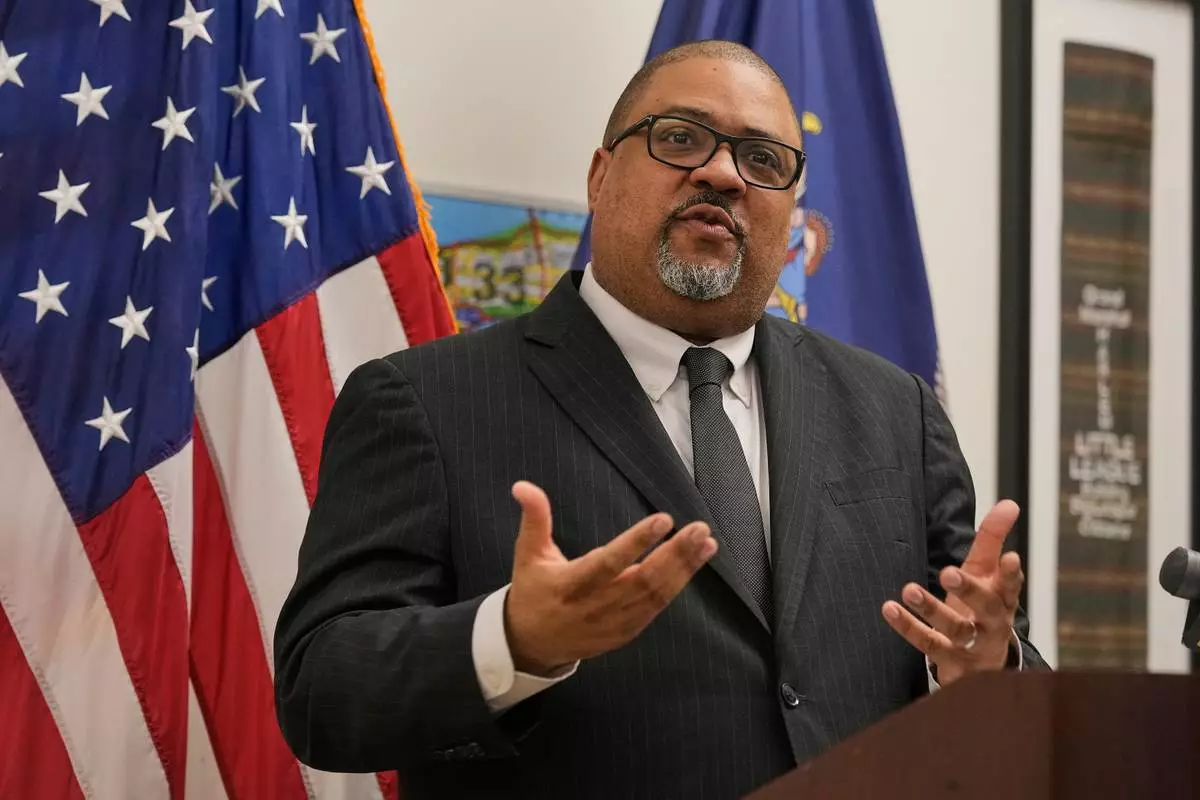
Manhattan District Attorney Alvin Bragg responds to questions during a press conference, in his office in New York, Thursday, May 28, 2026. (AP Photo/Richard Drew)
Manhattan District Attorney Alvin Bragg responds to questions during a press conference, in his office in New York, Thursday, May 28, 2026. (AP Photo/Richard Drew)

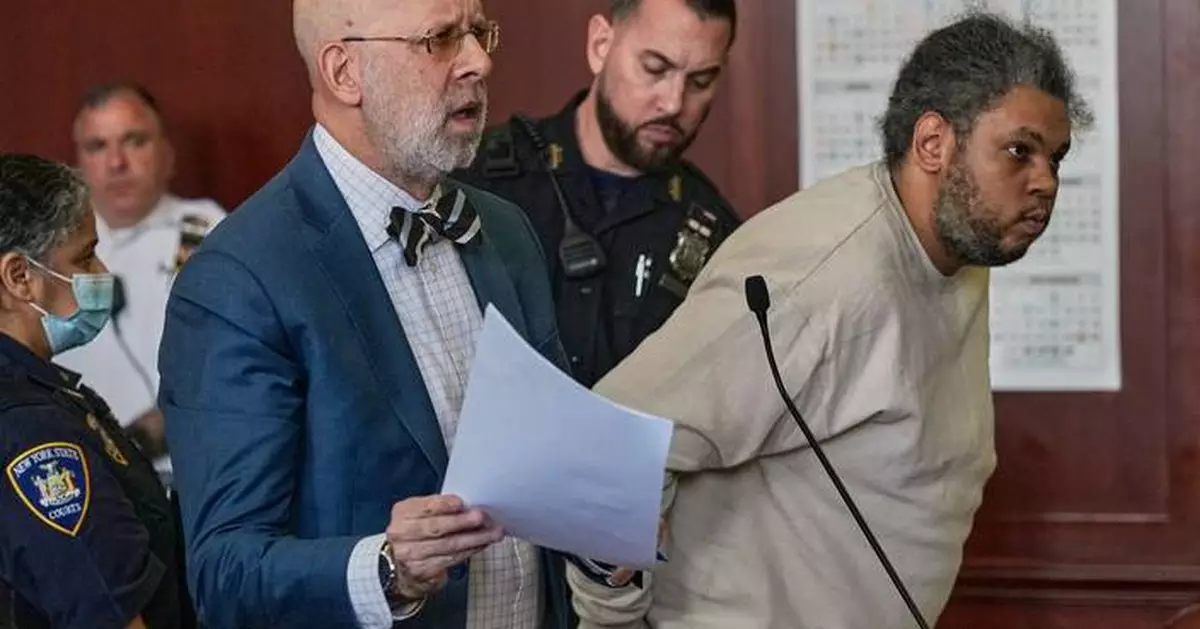
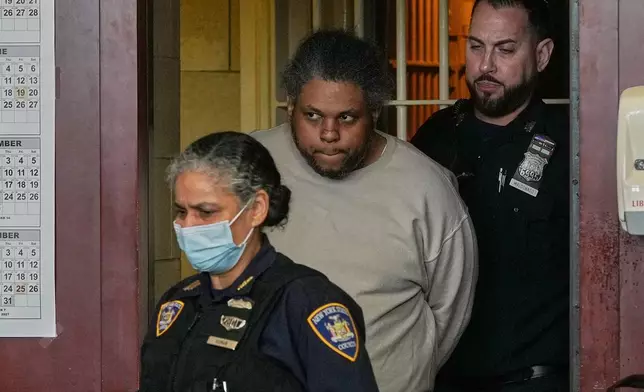
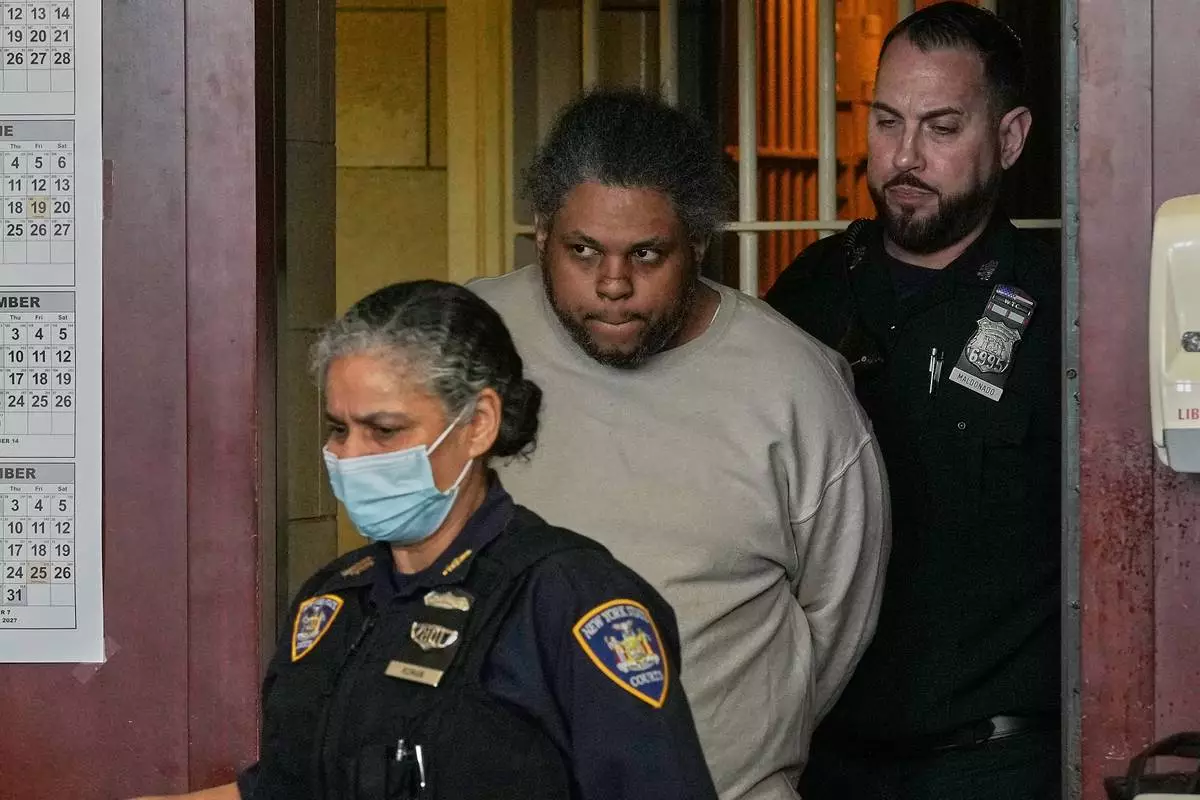
Randy Santos enters court for sentencing for fatally beating four sleeping men on the streets in 2019, in New York, Thursday, May 28, 2026. (AP Photo/Richard Drew)
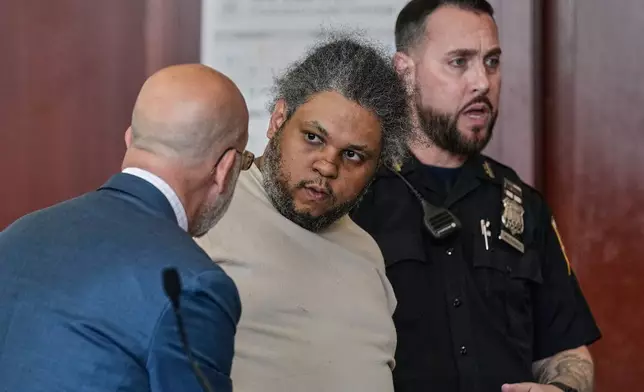
Randy Santos enters court for sentencing for fatally beating four sleeping men on the streets in 2019, in New York, Thursday, May 28, 2026. (AP Photo/Richard Drew)
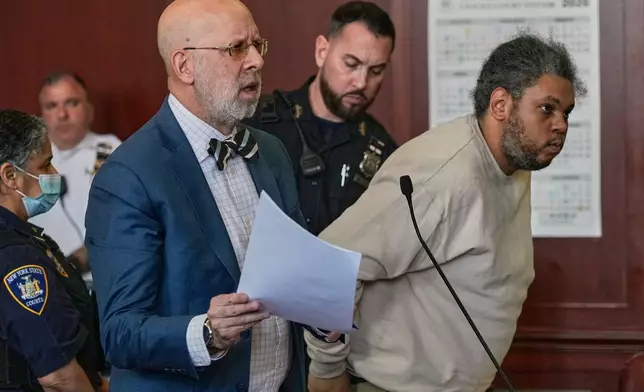
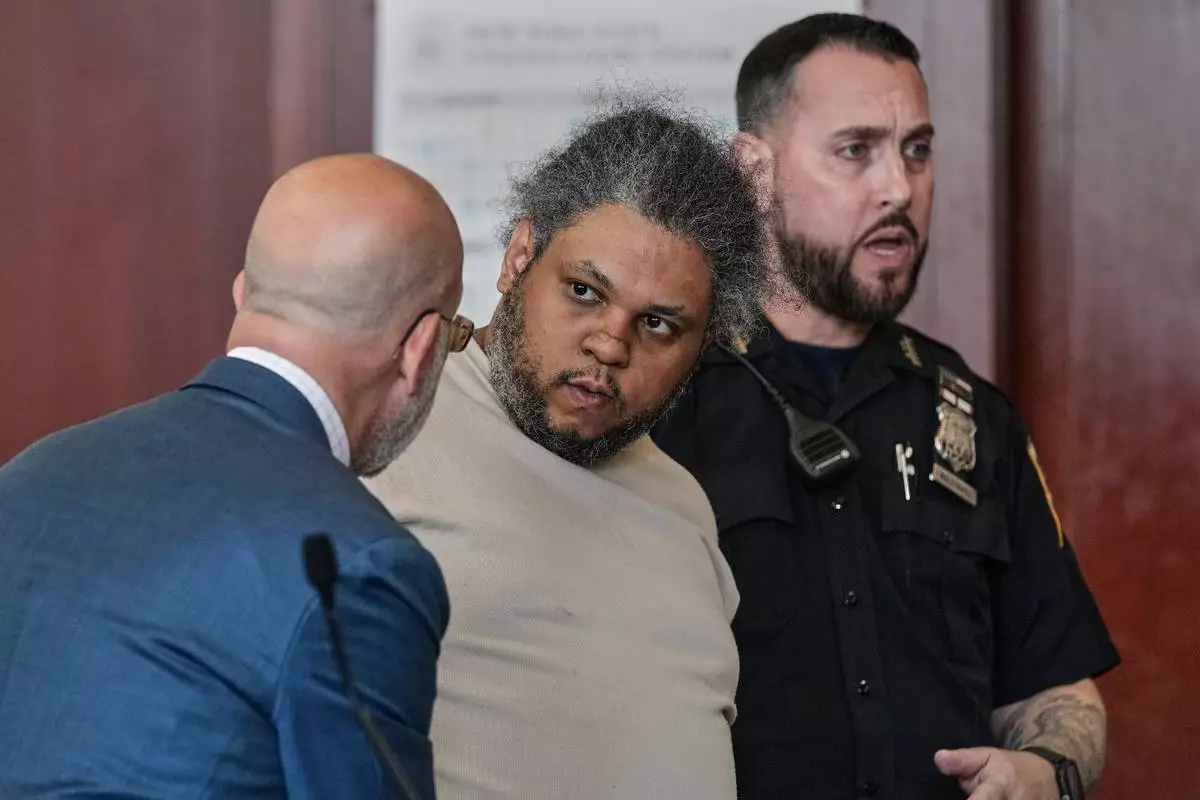
Randy Santos, right, listens to his attorney Arnold Levine in court after he was sentenced for fatally beating four sleeping men on the streets in 2019, in New York, Thursday, May 28, 2026. (AP Photo/Richard Drew)

Randy Santos, right, listens to his attorney Arnold Levine in court after he was sentenced for fatally beating four sleeping men on the streets in 2019, in New York, Thursday, May 28, 2026. (AP Photo/Richard Drew)

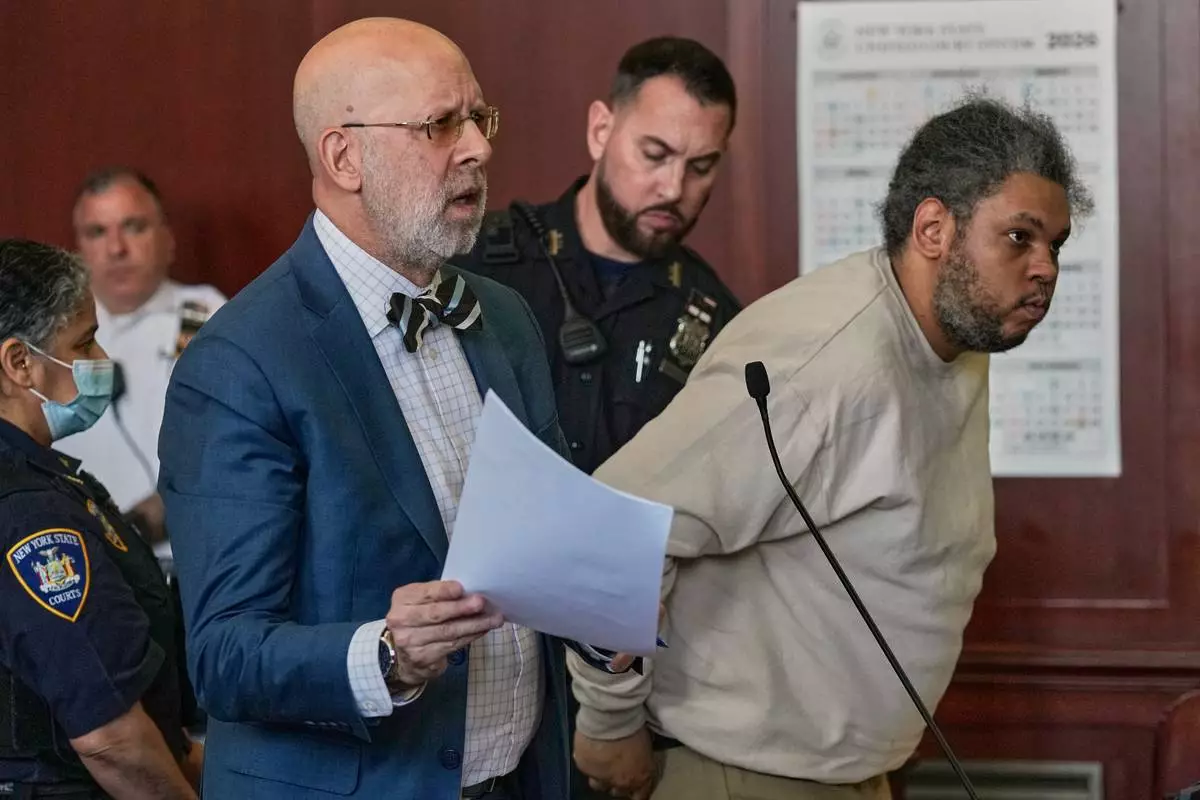
Randy Santos, right, and his attorney Arnold Levine appear in court after he was sentenced for fatally beating four sleeping men on the streets in 2019, in New York, Thursday, May 28, 2026. (AP Photo/Richard Drew)

Randy Santos, right, and his attorney Arnold Levine appear in court after he was sentenced for fatally beating four sleeping men on the streets in 2019, in New York, Thursday, May 28, 2026. (AP Photo/Richard Drew)

No one to see him sentenced to 40 years to life in prison.

“There are no victim impact statements here today. There’s nobody here to tell this court about their lives and how their absence is a loss,” Manhattan Assistant District Attorney Alfred Peterson told Judge Laura A. Ward.

“But I’m certain this court and this city understands the value of every life, and the gift of life that we’re afforded to live and make choices and have free will,” Peterson said, haltingly and emotionally at times. “That gift was taken away by Randy Santos.”

Santos, convicted in February of first-degree murder, sat solemnly between his court-appointed lawyers, listening through headphones as a Spanish interpreter translated the proceeding. A Chinatown activist who arranged Kok’s funeral watched quietly from the courtroom gallery, a few feet from Santos’ family.

Addressing the court in English, the 31-year-old pleaded for a sentence short enough to allow him to “be somebody” after prison.

He told the judge that his mind — which his lawyers said had deluded him into believing he had to kill 40 people or would die himself — "is much better now” with daily medication. And he promised to use his time in prison to finish school, improve his English and learn a trade.

“I just want to say, I’m very sorry for what I did,” Santos said. “I apologize to the people for what I did. I feel very bad about what I did. I wish it never happened.”

Ward described Santos' case as the “coming together of three horrible symptoms of this city: homelessness, mental illness and narcotics abuse.” Those, she said, “are the constant in all our violent crime cases.”

Peterson called the case “a study in how the life of a young man can go off track so horribly," and said Santos “clearly has his own challenges in life, much like the victims.”

Santos' lawyers argued at trial that his schizophrenia, diagnosed months before the killings, had polluted his mind with irrational thoughts and left him prone to violence. They tried, unsuccessfully, to convince a jury that he was not criminally responsible for the killings and that, instead of prison, he should be sent to a psychiatric treatment facility.

Santos has gone back and forth from jail to psychiatric treatment facilities since his arrest.

“We ask that Mr. Santos not be sentenced to die in prison," defense lawyer Arnold Levine told Ward, asking for a sentence of 20 years to life behind bars. "He is not incorrigible or beyond redemption or hope.”

Ward said she sympathized with Santos, but that she had a "difficult time getting past the fact that Mr. Santos targeted the most vulnerable people in our society. People who were doing nothing but sleeping on the street, homeless.”

Prosecutors had asked for a sentence of 50 years to life in prison. In addition to the murder charges, Santos was also convicted of attempted murder for assaults that left two other men severely injured.

Before determining the sentence, Ward said she reviewed surveillance video of the attacks. Among other things, the footage showed Santos repeatedly lifting a 4-foot (1.2 meter) bar over his head and bringing it down on the head of one victim.

A couple out on a date on saw Santos beating another man with the same weapon, which he had found on the street, prosecutors said. The lone survivor of the half-hour killing spree, critically injured 49-year-old David Hernandez, staggered to a nearby street where police officers were trying to revive another Santos victim.

Police later found Santos carrying the bar, which was covered with blood and hair. Testing showed it had his DNA on one end and blood from some of his victims on the other, prosecutors said. The victims ranged in age from 39 to 83.

After court officers led Santos out of the courtroom in handcuffs, the Chinatown activist, Karlin Chan, said the sentencing gives the community closure.

“He knew what he was doing,” Chan said, dismissing Santos' apology as performative. “At the end of the day here, he's going to a place where he deserves to be: jail.”
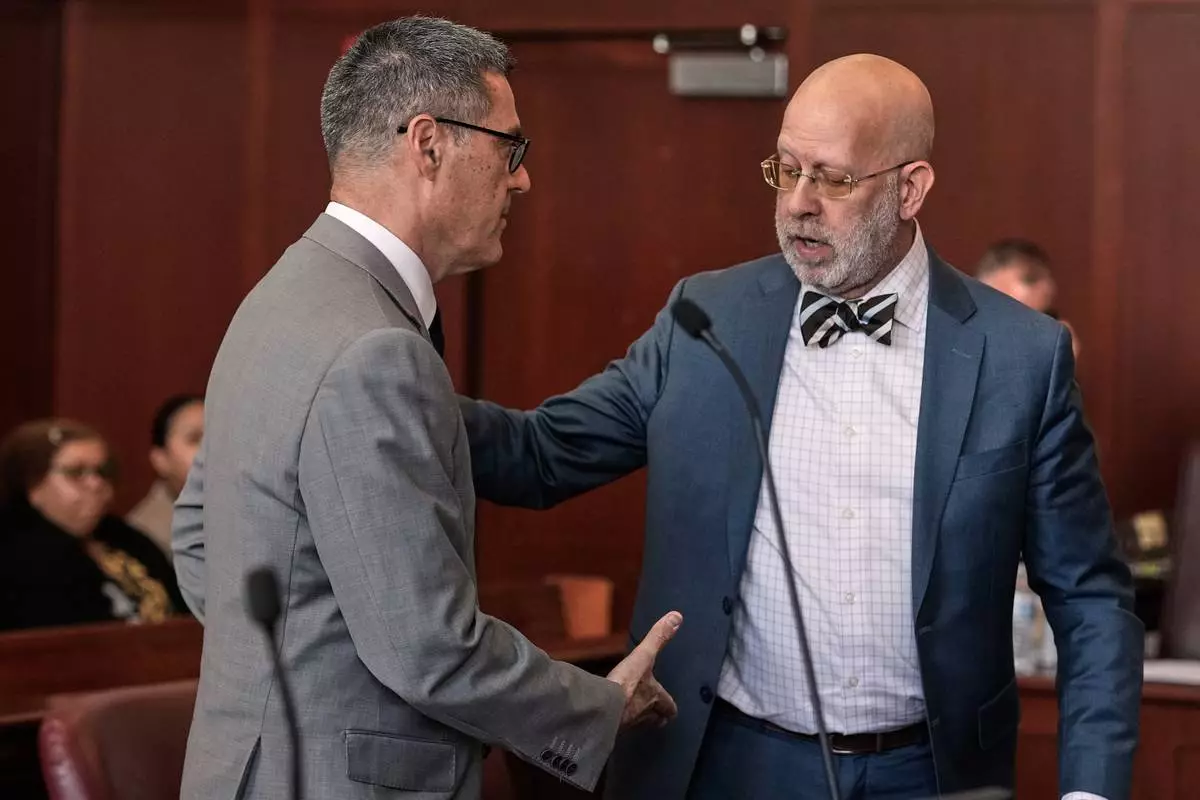
Manhattan Assistant District Attorney Alfred Peterson, left, prepares to shake hands with Arnold Levine, defense attorney for Randy Santos, after Santos was sentenced in court for fatally beating four sleeping men on the streets in 2019, in New York, Thursday, May 28, 2026. (AP Photo/Richard Drew)
Manhattan Assistant District Attorney Alfred Peterson, left, prepares to shake hands with Arnold Levine, defense attorney for Randy Santos, after Santos was sentenced in court for fatally beating four sleeping men on the streets in 2019, in New York, Thursday, May 28, 2026. (AP Photo/Richard Drew)

Manhattan District Attorney Alvin Bragg responds to questions during a press conference, in his office in New York, Thursday, May 28, 2026. (AP Photo/Richard Drew)
Manhattan District Attorney Alvin Bragg responds to questions during a press conference, in his office in New York, Thursday, May 28, 2026. (AP Photo/Richard Drew)

Randy Santos enters court for sentencing for fatally beating four sleeping men on the streets in 2019, in New York, Thursday, May 28, 2026. (AP Photo/Richard Drew)
Randy Santos enters court for sentencing for fatally beating four sleeping men on the streets in 2019, in New York, Thursday, May 28, 2026. (AP Photo/Richard Drew)
Randy Santos, right, listens to his attorney Arnold Levine in court after he was sentenced for fatally beating four sleeping men on the streets in 2019, in New York, Thursday, May 28, 2026. (AP Photo/Richard Drew)
Randy Santos, right, listens to his attorney Arnold Levine in court after he was sentenced for fatally beating four sleeping men on the streets in 2019, in New York, Thursday, May 28, 2026. (AP Photo/Richard Drew)
Randy Santos, right, and his attorney Arnold Levine appear in court after he was sentenced for fatally beating four sleeping men on the streets in 2019, in New York, Thursday, May 28, 2026. (AP Photo/Richard Drew)
Randy Santos, right, and his attorney Arnold Levine appear in court after he was sentenced for fatally beating four sleeping men on the streets in 2019, in New York, Thursday, May 28, 2026. (AP Photo/Richard Drew)
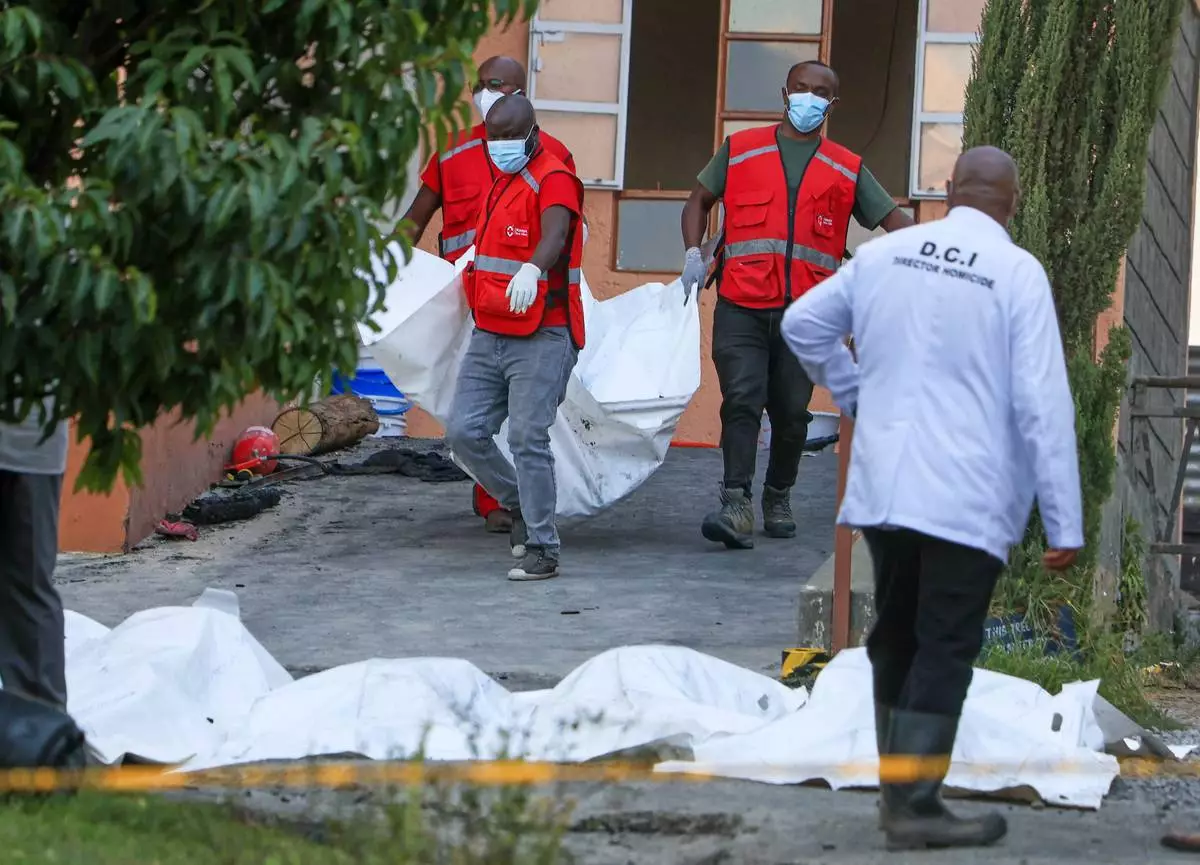
NAIROBI, Kenya (AP) — Police in Kenya have arrested eight female students on suspicion of arson, authorities said Friday, after a fire destroyed a dormitory at a boarding school, killing 16 children and injuring dozens of others. The motive is still unknown.

Police held 30 students overnight for questioning. Authorities said school administrators would face disciplinary action for safety violations after an exit door was found to be locked during the panicked rush to escape the building. At least 79 people were injured.

Education Minister Julius Ogamba said two teachers were aware that students were planning something but failed to take appropriate action, without elaborating.

A full day after the blaze, some parents said they had still not been told whether their children were under arrest or just being questioned.

“We have not even been told about the eight that police have arrested,” a parent, who spoke on condition of anonymity because of fear that her daughter could be victimized, told The Associated Press. “We are just here and no one is giving us any information.”

At a hospital morgue some 28 kilometers (18 miles) from the school, other parents awaited DNA tests to identify their children. A distraught father, John Muiruri, said they were being given conflicting information about the location of the bodies.

“They have just been doing some sideshows, trying to prevent us from knowing the truth, but the reality we have come to know is that we have lost our children," he said. “What we want to know is where are the remains of our daughters.”

The Utumishi Girls School, located about 120 kilometers (75 miles) from the capital, Nairobi, is managed and sponsored by the police, and many of the students are daughters of police officers.

“Investigators have conducted extensive interviews with students, teaching staff and other witnesses, while forensic teams carry out a detailed review of available CCTV footage,” John Marete, a spokesman for the investigative arm of the national police, said in a statement.

Education Minister Ogamba said the school's board of management had been dissolved and the principal would face disciplinary action for failing to comply with safety regulations.

“In particular, there was congestion in the dormitory and one exit door was locked, contrary to the prescribed safety requirements,” he said.

Fires at schools have long been a cause of concern for education officials in East Africa, where classrooms and dormitories are often crowded and firefighting equipment is rarely within reach.

Fires are sometimes attributed to electrical faults but there have also been cases of students burning down schools because of disciplinary issues.

Associated Press journalist Zelipha Kirobi in Gilgil, Kenya, contributed.

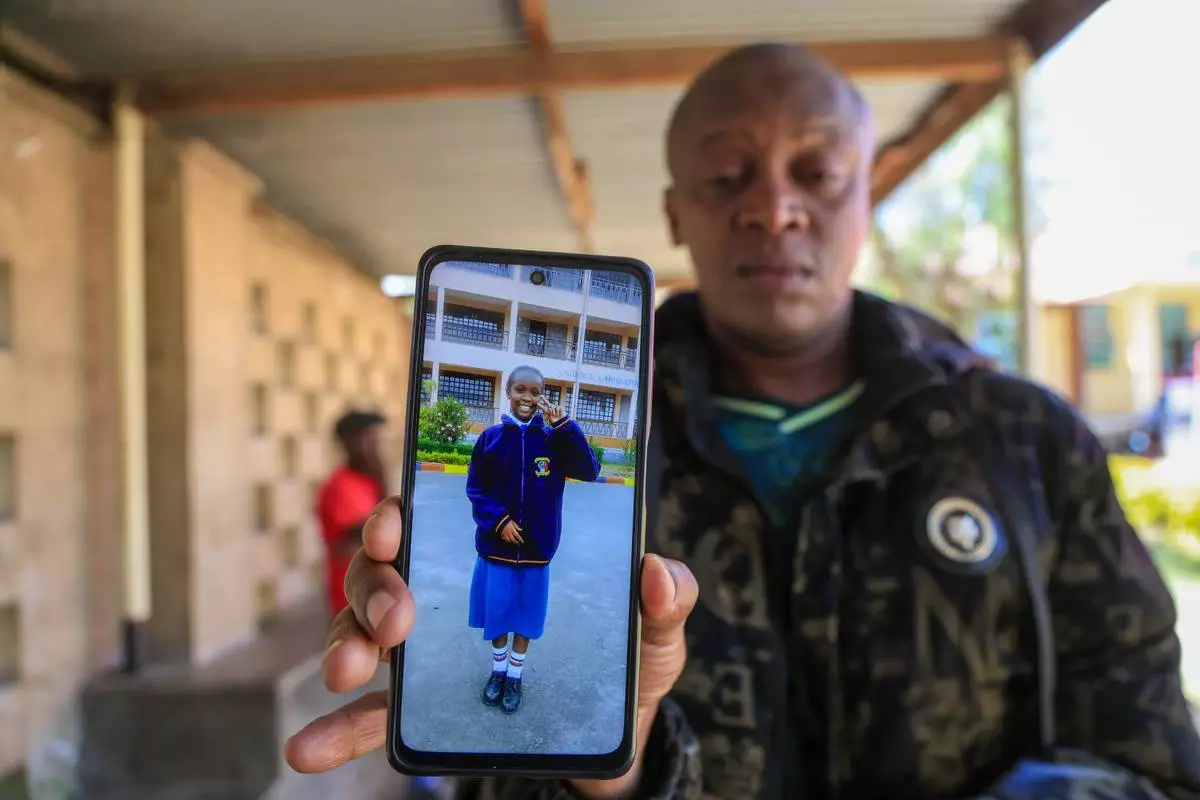
John Muiruri, father of Nicole Muiruri, who died in the fire at Utumishi Girls Academy, shows a photo of his daughter as he waits for body identification and DNA testing at Naivasha Funeral Home in Naivasha Town, Rift Valley region, Kenya, Friday, May 29, 2026. (AP Photo/Andrew Kasuku)

John Muiruri, father of Nicole Muiruri, who died in the fire at Utumishi Girls Academy, shows a photo of his daughter as he waits for body identification and DNA testing at Naivasha Funeral Home in Naivasha Town, Rift Valley region, Kenya, Friday, May 29, 2026. (AP Photo/Andrew Kasuku)

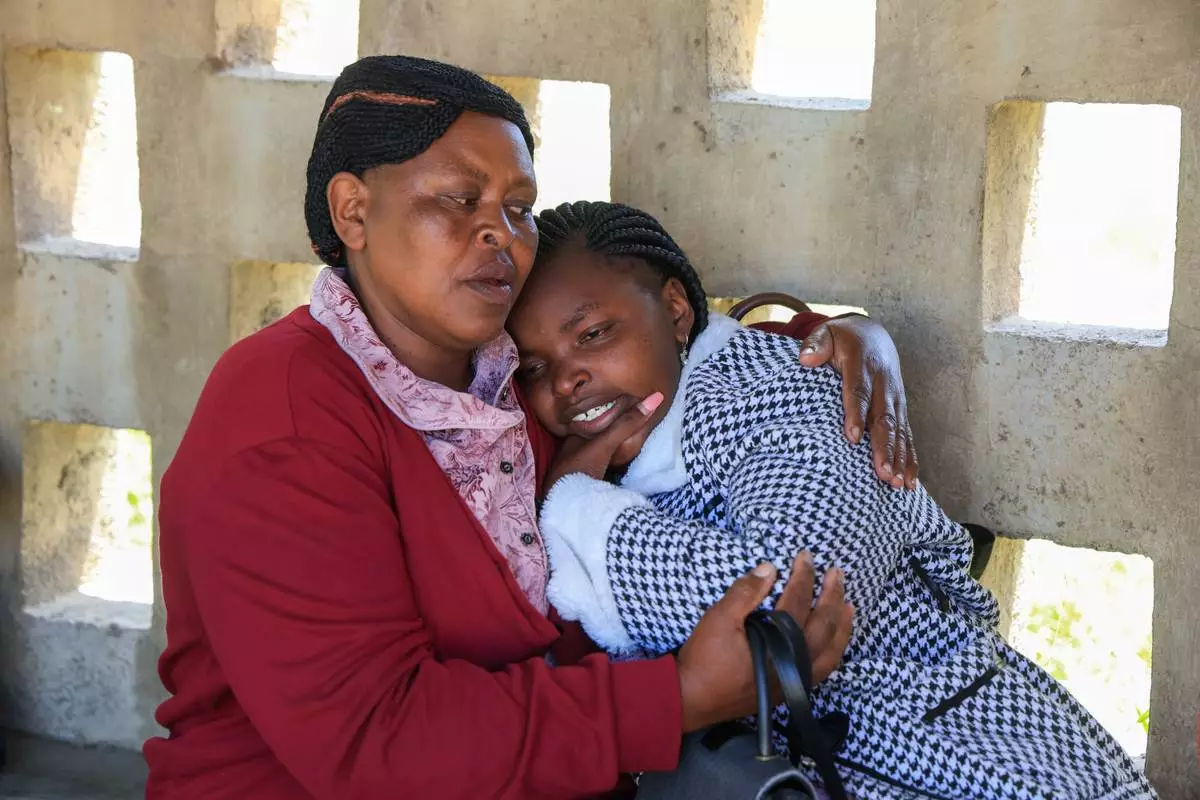
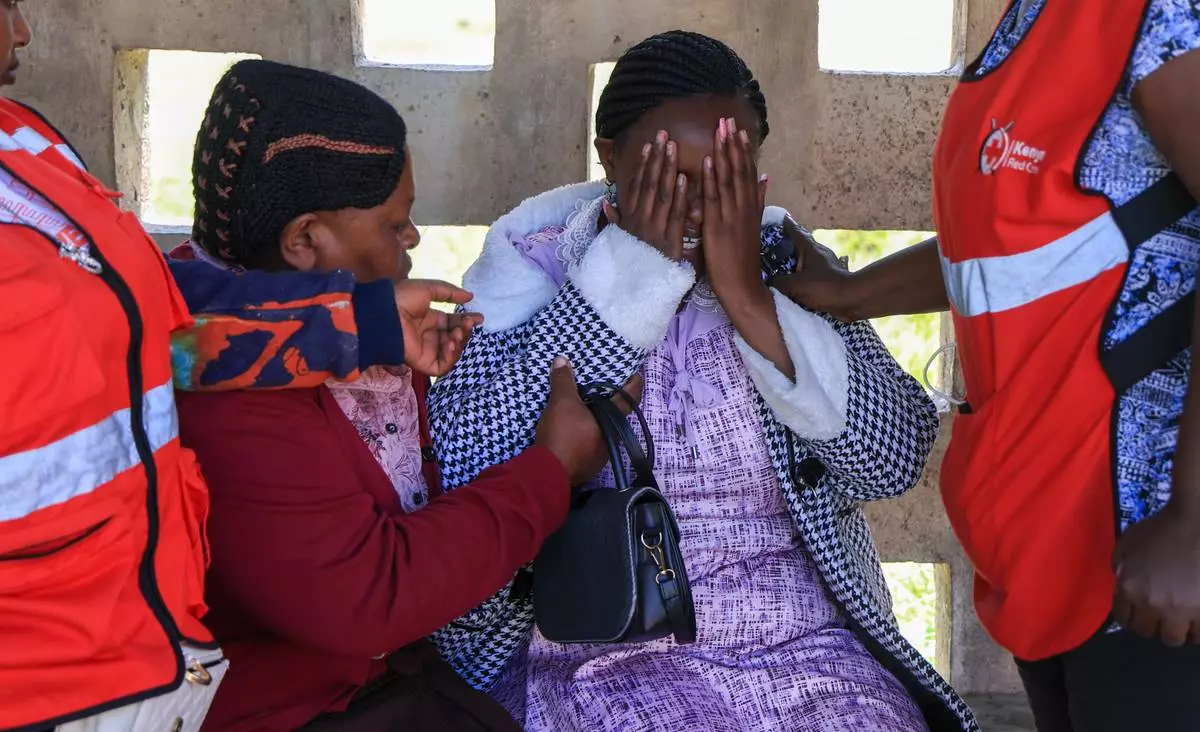
A parent of a victim of the fire at the Utumishi Girls Academy is consoled ahead of body identification and DNA testing at Naivasha Funeral Home in Naivasha Town, Rift Valley region, Kenya, Friday, May 29, 2026. (AP Photo/Andrew Kasuku)

A parent of a victim of the fire at the Utumishi Girls Academy is consoled ahead of body identification and DNA testing at Naivasha Funeral Home in Naivasha Town, Rift Valley region, Kenya, Friday, May 29, 2026. (AP Photo/Andrew Kasuku)

A parent of a victim of the fire at the Utumishi Girls Academy is consoled ahead of body identification and DNA testing at Naivasha Funeral Home in Naivasha Town, Rift Valley region, Kenya, Friday, May 29, 2026. (AP Photo/Andrew Kasuku)

A parent of a victim of the fire at the Utumishi Girls Academy is consoled ahead of body identification and DNA testing at Naivasha Funeral Home in Naivasha Town, Rift Valley region, Kenya, Friday, May 29, 2026. (AP Photo/Andrew Kasuku)

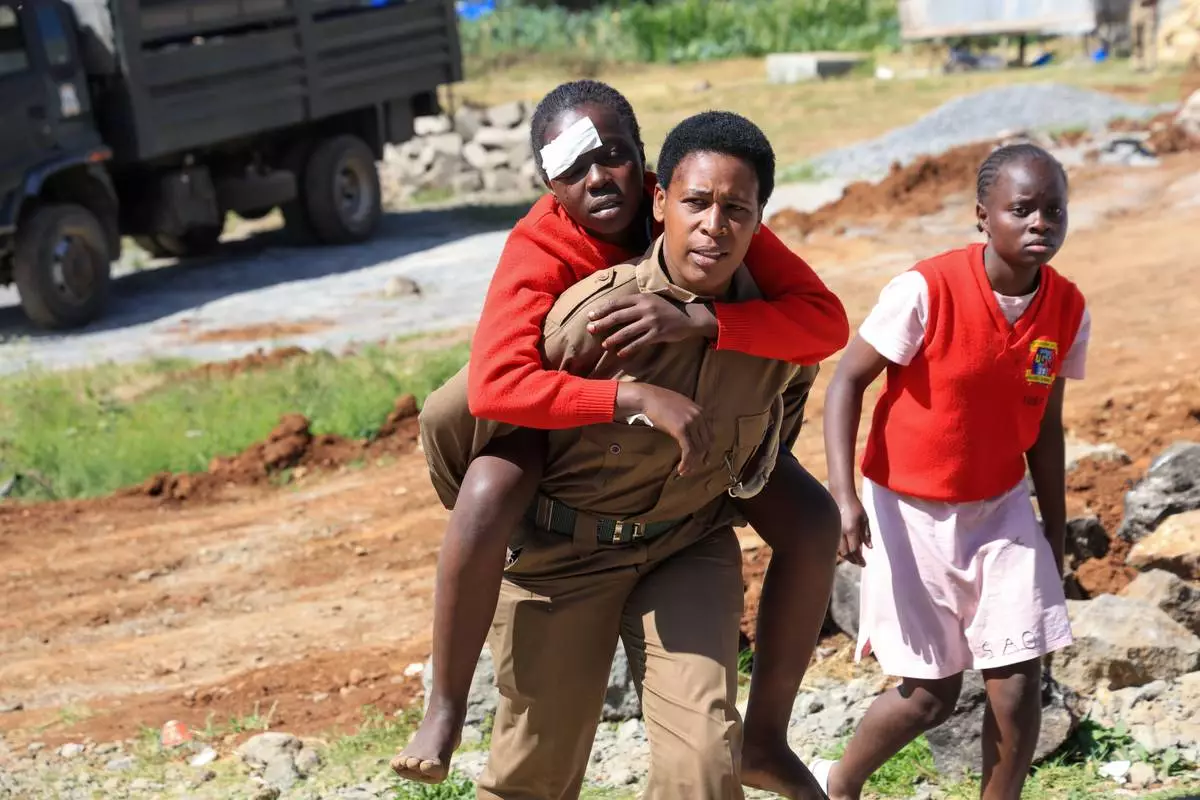
An injured student is evacuated following an early morning fire outbreak at Utumishi Girls School in the Gilgil area, central Kenya, Thursday, May 28, 2026. (AP Photo/Andrew Kasuku)

An injured student is evacuated following an early morning fire outbreak at Utumishi Girls School in the Gilgil area, central Kenya, Thursday, May 28, 2026. (AP Photo/Andrew Kasuku)

Red Cross members recover the bodies of students who died in the fire at the Utumishi Girls School in the Gilgil area, central Kenya, Thursday, May 28, 2026. (AP Photo/Andrew Kasuku)

Red Cross members recover the bodies of students who died in the fire at the Utumishi Girls School in the Gilgil area, central Kenya, Thursday, May 28, 2026. (AP Photo/Andrew Kasuku)

Recommended Articles