A federal judge in Rhode Island ruled on Tuesday that the Trump administration's effort to dramatically change the criteria to get tens of millions of dollars in funding to aid homeless people was unlawful.
Several nonprofits filed a lawsuit last year accusing the U.S. Department of Housing and Urban Development of changing the rules for receiving $75 million to build housing for homeless families and individuals. The plaintiffs accused the Trump administration of issuing a new Notice of Funding Opportunity, or NOFO, for the Continuum of Care Builds program to better align with its social policies.
U.S District Judge Mary McElroy, nominated by President Donald Trump, said the department’s “slapdash imposition of political whims” was unlawful and she ordered it to scrap the new policy.
“Once again, this Court is faced with a case in which an executive agency has made a last-minute decision to make major, disruptive changes to grants within its purview, all for the express purpose of accomplishing the current administration’s policy objectives,” McElroy said in her ruling that the NOFO violated the Administrative Procedure Act, a law governing how federal agencies develop and issue regulations.
A spokesperson for HUD did not immediately respond to a request for comment.
Advocates for plaintiffs welcomed the ruling.
“For more than three decades, the federal government has supported housing providers and communities through HUD’s programs to help people experiencing homelessness move into stable housing,” Skye Perryman, president and CEO of Democracy Forward, co-counsel for the plaintiffs, said in a statement. “We are pleased that the court has stopped the Trump-Vance administration from holding life-saving funding hostage to a political agenda.”
Ann Oliva, CEO of the National Alliance to End Homelessness, said the ruling was “a victory for people across this nation who have overcome homelessness and stabilized in HUD’s permanent housing programs.”
“Today’s news reinforces a fundamental truth: that the work to end homelessness is not partisan, and never should be interfered with for political means," Oliva said in a statement.
Plaintiffs argued the Trump administration was aiming to upend polices in place for decades to satisfy its political considerations, including whether jurisdictions “support sanctuary protections, harm reduction practices, or inclusive policies for transgender people.”
The Alliance and the Women’s Development Corporation argued that HUD lacked the authority to make the changes, adding that the new award process was “shockingly unlawful” and would “irreparably injure qualified applicants for these funds and the communities they serve.”
In its court filings, HUD argued the new criteria was an effort “to ensure the availability of funding to protect our Nation’s most vulnerable individuals and families from the trauma of homelessness while simultaneously promoting self-sufficiency.”
“Defendants acted reasonably and prudently because the NOFO conditions, focusing on public safety, cooperation with law enforcement and prohibitions on illegal drug use, are sufficiently related to the funding goals of self-sufficiency and reduction of trauma,” HUD wrote.
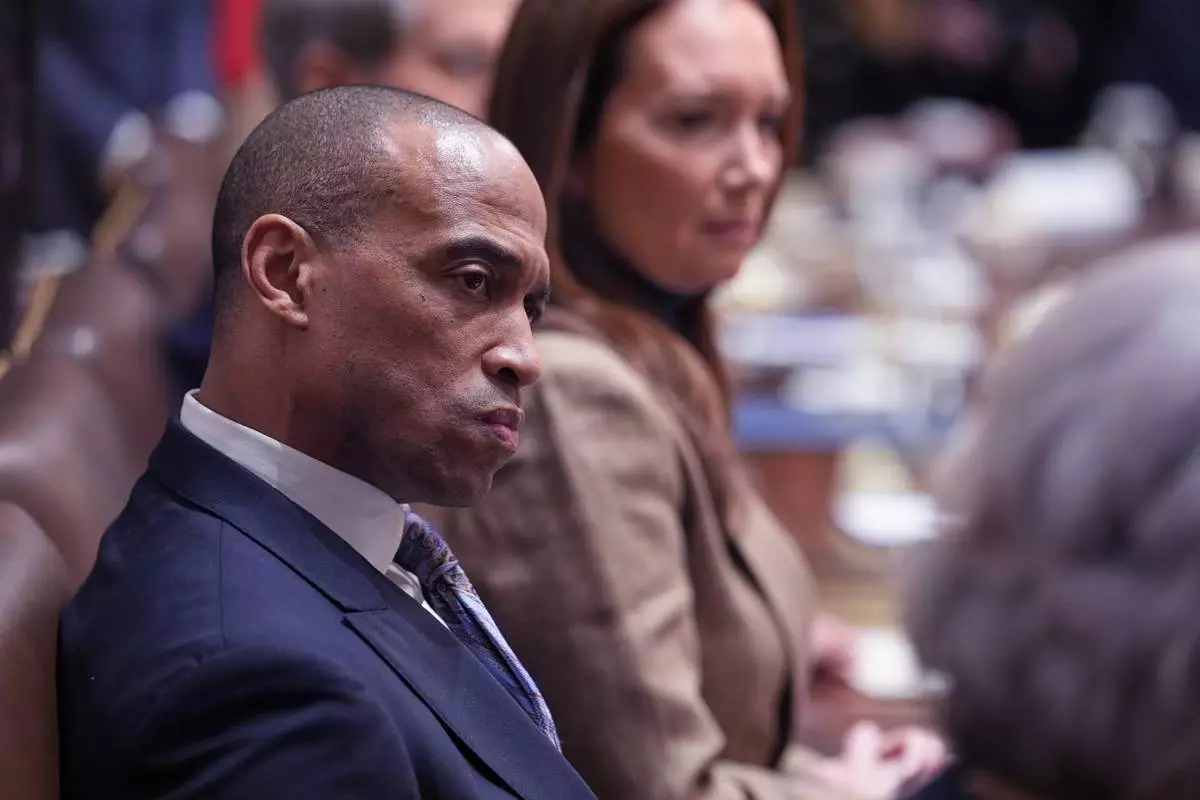
FILE - Housing and Urban Development Secretary Scott Turner listens during a cabinet meeting at the White House, Jan. 29, 2026, in Washington. (AP Photo/Evan Vucci, File)
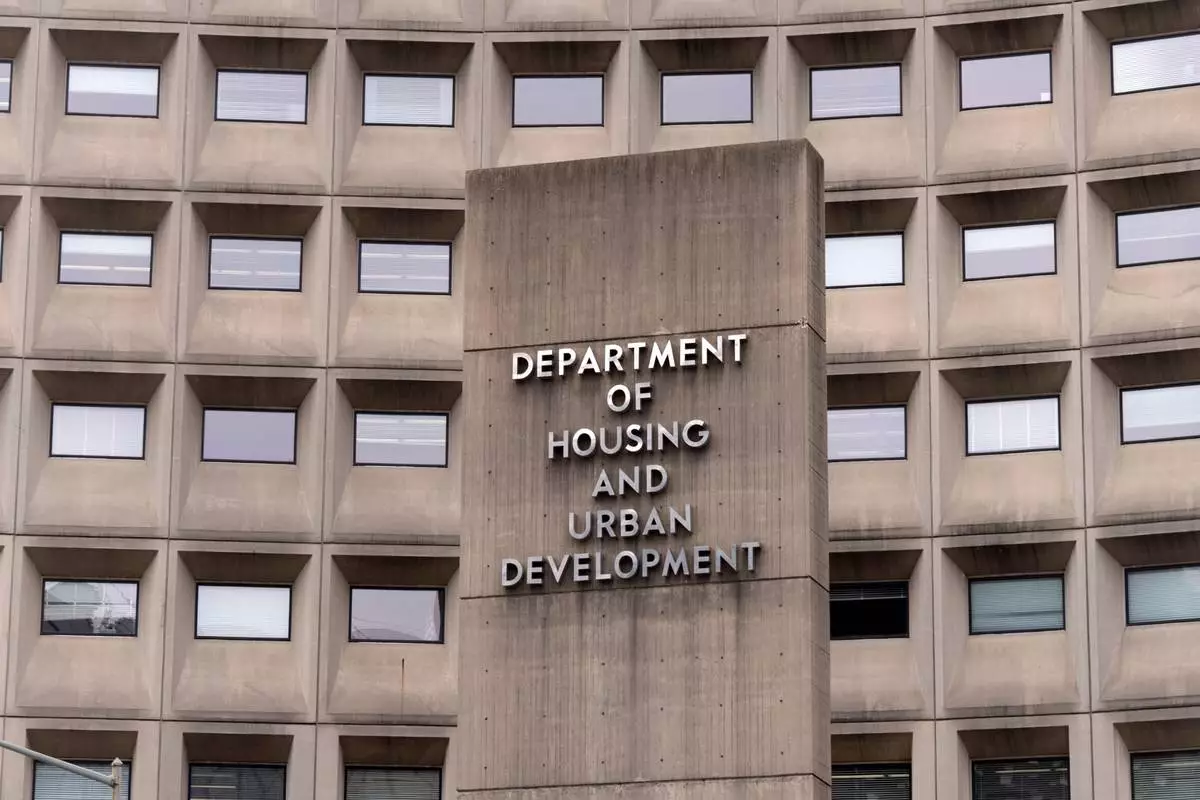
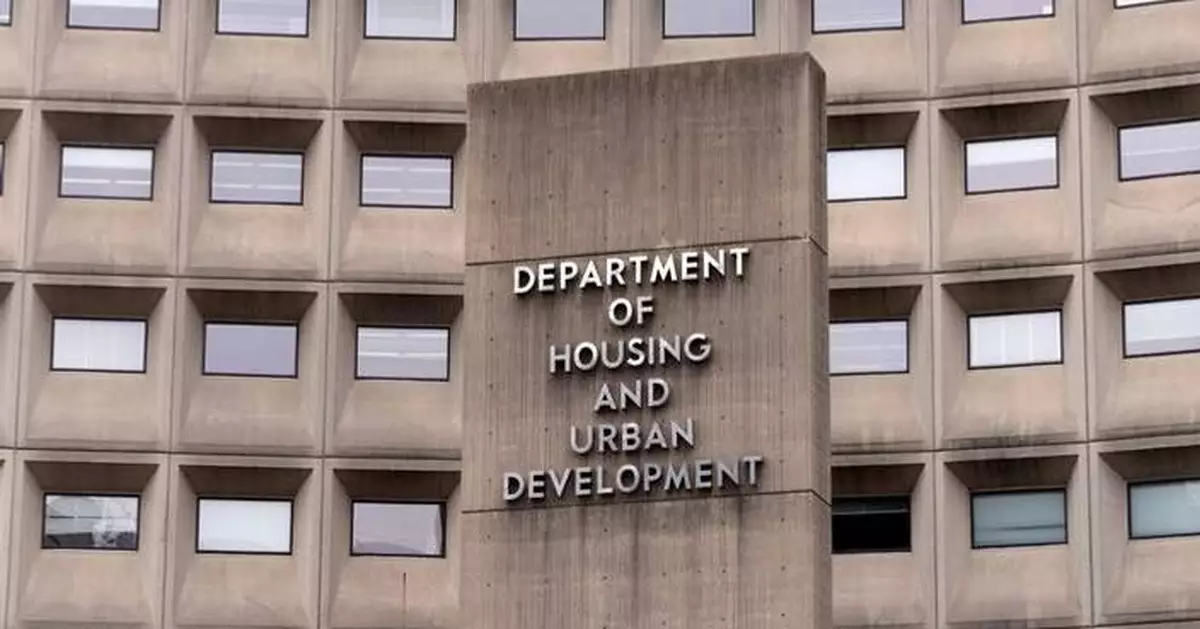
FILE - A sign for the Department of Housing and Urban Development stands outside the agency's headquarters, Jan. 16, 2026, in Washington. (AP Photo/Mark Schiefelbein, File)
A federal appeals court has denied a request from dozens of families to reopen a criminal case against Boeing over two fatal 737 Max crashes more than seven years ago.
Lawyers for the families had argued that the U.S. Department of Justice failed to properly consult them before reaching a deal last year with Boeing that led a lower court to dismiss a criminal conspiracy charge against the company. The charge stemmed from allegations that Boeing misled federal regulators about a flight-control system linked to the crashes, which killed 346 people.
In a unanimous decision released Tuesday, a three-judge panel of the 5th U.S. Circuit Court of Appeals said it disagreed with the families' claims that federal prosecutors had violated their rights under the Crime Victims’ Rights Act and therefore could not revive the case.
Paul Cassell, a lawyer for the families, called the ruling “badly flawed.”
“The victims’ families were never given a meaningful opportunity to shape the negotiations between the Justice Department and Boeing, dating back to 2020,” Cassell said in a statement.
The aircraft manufacturer declined to comment, but at a hearing last month in New Orleans before the appellate court, Boeing attorney Paul Clement said more than 60 other families “affirmatively supported” the deal and dozens more did not oppose it.
“Boeing deeply regrets” the tragic crashes, Clement had said, and “has taken extraordinary steps to improve its internal processes and has paid substantial compensation” to the victims’ families.
The deal allowed Boeing to avoid prosecution in exchange for paying or investing an additional $1.1 billion in fines, compensation to victims’ families, and internal safety and quality measures.
At the same hearing, federal prosecutors told the judges that the government has, for years, "solicited and weighed the views of the crash victims’ families as it’s decided whether and how to prosecute the Boeing Company.”
All passengers and crew died when the 737 Max jets crashed less than five months apart in 2018 and 2019 — a Lion Air flight that plunged into the sea off the coast of Indonesia and an Ethiopian Airlines flight that crashed into a field shortly after takeoff.
Catherine Berthet, whose daughter Camille Geoffroy was among the 157 killed in the second crash, said she is “sad and outraged” by the court’s decision. The ruling, she said in a statement, highlights the criminal justice system’s “inability to see where the public’s and passengers’ best interests truly lie.”
The case had taken many twists and turns. The Justice Department first charged Boeing in 2021 with defrauding the government but agreed not to prosecute if the company paid a settlement and took steps to comply with anti-fraud laws.
Federal prosecutors later determined in 2024 that Boeing had violated that agreement, and the company agreed to plead guilty to the charge. But U.S. District Judge Reed O’Connor in Texas, who oversaw the case for years, rejected the plea deal and directed the two sides to resume negotiations.
The Justice Department returned last May with the new deal and a request to withdraw the criminal charge altogether, which O'Connor approved in November. Prosecutors argued that going to trial carried the risk that a jury might acquit Boeing entirely.
In dismissing the case, O'Connor said prosecutors hadn’t acted in bad faith and had explained their decision and met their obligations under the Crime Victims’ Rights Act.
O'Connor also said that case law prevented him from blocking the dismissal simply because he disagreed with the government’s view that the new deal with Boeing served the public interest.
The case centered around a software system that Boeing developed for the 737 Max, which airlines began flying in 2017. Boeing billed it as an update to its 737 family that wouldn’t require much additional pilot training.
But the Max did include significant changes — most notably, the addition of an automated flight-control system designed to help account for the plane’s larger engines. Investigators found that Boeing did not inform key Federal Aviation Administration personnel about changes it had made to the software before regulators set pilot training requirements for the Max and certified it for flight.
In both of the fatal crashes, that software pitched the nose of the plane down repeatedly based on faulty readings from a single sensor, and the pilots were unable to regain control.
“One can only hope that another Boeing crash won’t be the outcome of this badly flawed ruling,” Cassell, the lawyer for the families, said Tuesday.
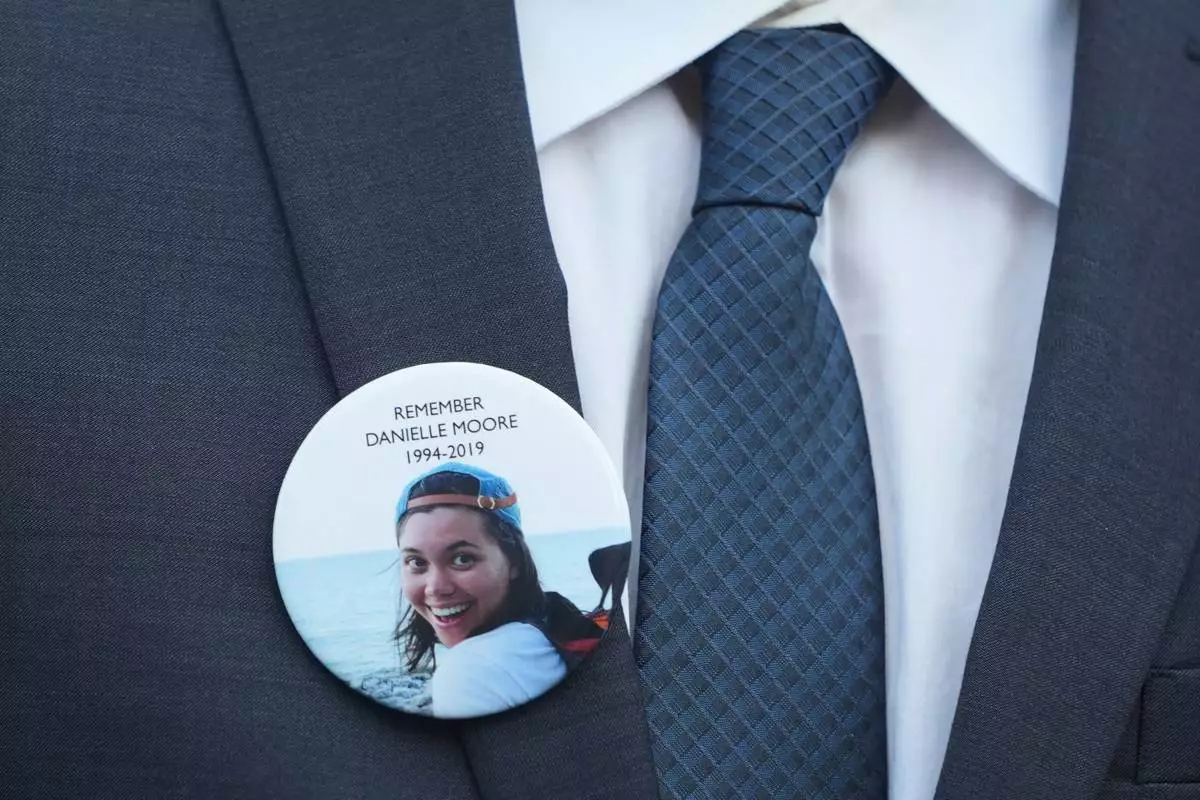
FILE - A family member wears a photo of a Boeing crash victim Danielle Moore before a hearing at federal court in Fort Worth, Texas, Sept. 3, 2025. (AP Photo/LM Otero, File)