DENVER (AP) — A federal judge on Tuesday threw out a U.S. Department of Justice lawsuit accusing Colorado and Denver of interfering with the enforcement of immigration laws.
The lawsuit claimed the state and its most populous city passed “sanctuary laws” violating the Supremacy Clause of the U.S. Constitution. At issue were four state laws and two Denver laws that limit the use of resources for immigration enforcement and protect the rights and personal information of immigrants.
U.S. District Judge Gordon P. Gallagher said the U.S. Supreme Court ruled in a 1997 case that the federal government can't “dragoon” state officers into carrying out federal law. He granted requests from Colorado and Denver officials to dismiss the lawsuit, concluding that “Colorado and Denver have the right to refuse to expend their resources to implement a federal regulatory program.”
The Department of Justice didn't immediately return an after-hours request for comment.
Denver Mayor Mike Johnston welcomed the ruling.
“Today's ruling makes clear that we cannot be required to use local resources to enforce federal policies,” he said in a statement.
The Department of Justice filed similar lawsuits targeting state or city policies seen as interfering with immigration enforcement, including those in Los Angeles, New York City and Minnesota and cities there. A federal judge dismissed a case challenging Chicago's laws last year.
There is no strict definition for sanctuary policies or sanctuary cities, but the terms generally describe limited local cooperation with Immigration and Customs Enforcement. ICE enforces U.S. immigration laws nationwide but seeks state and local help, particularly for large-scale deportations, and requests that police and sheriffs alert it about people it wants to deport and hold them until federal officers take custody.
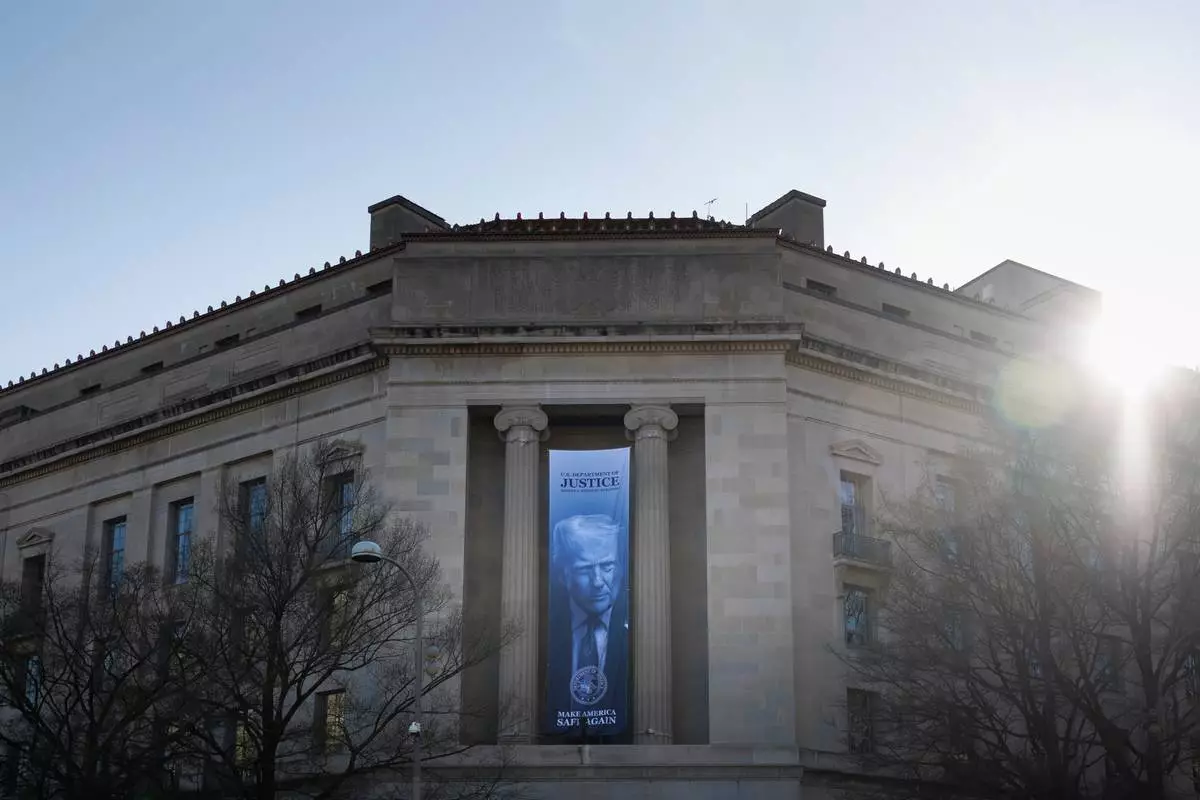
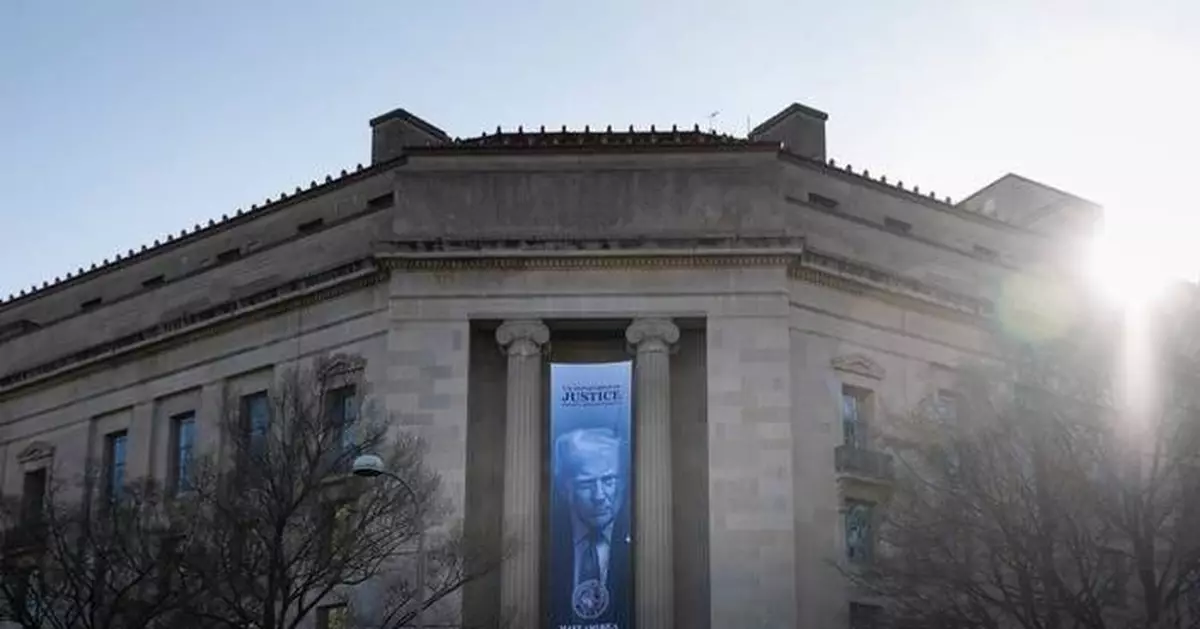
A banner of President Donald Trump hangs outside the U.S. Department of Justice on Saturday, March 21, 2026, in Washington. (AP Photo/Tom Brenner)
NEW YORK (AP) — Walmart delivered another quarter of impressive sales with speedy deliveries and low prices becoming a strong magnet for people across the income spectrum that are spending more on almost everything, particularly gasoline.
Yet like other major retailers posting financial results this week, Walmart was cautious about the rest of the year given the current economic uncertainty. On Thursday, it issued a forecast for the current quarter that was weaker than what Wall Street had been expecting.
Shares slipped about 7% Thursday.
Walmart has resonated with many Americans who are increasingly careful about where they spend their money as inflation takes a bigger bite out of paychecks, notably gasoline which has soared since the start of the Iran war in late February. Walmart can serve as a barometer of consumer spending given its vast customer base. More than 150 million customers are on its website or in its stores every week, according to Walmart.
One telling shift during the quarter that captures the stress many Americans are feeling: The number of gallons that customers put in their cars during visits to U.S. Walmart and Sam’s Club gas stations fell below 10 for the first time since 2022, which was the midst of the COVID-19 pandemic.
“That’s an indication of stress,” said Chief Financial Officer John David Rainey.
Walmart touted strong sales that were fueled by online shopping on Thursday.
Comparable sales at U.S. Walmart stores rose 4.1% during the three-month period ended April 30. Walmart’s U.S online sales rose 26%, the company said.
Walmart’s promise of lower prices, faster delivery and a refresh of its merchandise has attracted wealthier shoppers. The biggest gains in market share for Walmart are coming from households with annual income over $100,000. That shift is taking place as lower-income shoppers become more entrenched in what economists collectively call a K-shaped economy.
“We see with our customers that the high-income customer is spending with confidence into many categories, while the lower income consumer is more budget conscious and perhaps navigating financial distress,” Rainey told analysts on Thursday.
Rainey told analysts that higher fuel prices took a bite out of profits as it was forced to absorb higher transportation costs. And while the company is focused on offering low prices, Walmart may raise prices later if fuel costs remain high, he said.
U.S. retailers have spent months navigating an uncertain economic environment, from President Donald Trump’s tariffs to the impact of soaring gasoline prices due to the war. The average price for a gallon of regular gasoline raced higher this week and did so again overnight. Gasoline prices are about 45% above where they were at this time last year.
Based on quarterly financial reports from Walmart, Target, Home Depot, Lowe's and TJX, shoppers are cautious but still spending, helped by more generous tax refunds. Yet there is a widespread belief among economists that once those refunds dry up, shoppers will pull back on spending. Consumer spending is the dominant economic engine for the U.S., and retreat would have broad implications for the U.S.
Target reported the largest jump in comparable sales in four years Wednesday, but a cautious outlook overshadowed rather convincing evidence that changes under the company’s new CEO are landing solidly with customers. Target raised its annual revenue outlook Wednesday, but it was still below the pace of its first quarter this year.
The nation’s two largest home improvement retailers Home Depot and Lowe’s reported strong sales, but both companies said that customers are putting off larger home projects.
“I think, overall, this has been the most difficult housing market that I’ve faced in this business since the financial crisis,” Lowe’s CEO Marvin Ellison said this week.
Walmart, based in Bentonville, Arkansas reported first-quarter earnings of $5.33 billion, or 67 cents, for the quarter ended April 30. Adjusted per-share results were 66 cents, matching the 66 cents that analysts expected, according to FactSet.
For the year-ago quarter, the company reported net income of $4.48 billion, or 56 cents per share.
Sales rose 7.3% to $177.75 billion in the fiscal first quarter, above the $174.84 billion that analysts predicted.
Walmart said higher fuel prices took a bite out of profits as it was forced to absorb higher transportation costs.
The company highlighted its speedier deliveries, which is driving more shoppers to buy more often. Rainey said that roughly 60% of U.S. online deliveries arrive at customers' homes in 30 minutes or less.
For the second quarter, Walmart expects sales to be 4% to 5% higher than the same period a year ago. It also expects per-share profit to be between 72 cents and 74 cents. Analysts had been projecting per-share earns of 75 cents on sales of $186.2 billion, according to FactSet.
Walmart stuck to the annual guidance that it issued in February.
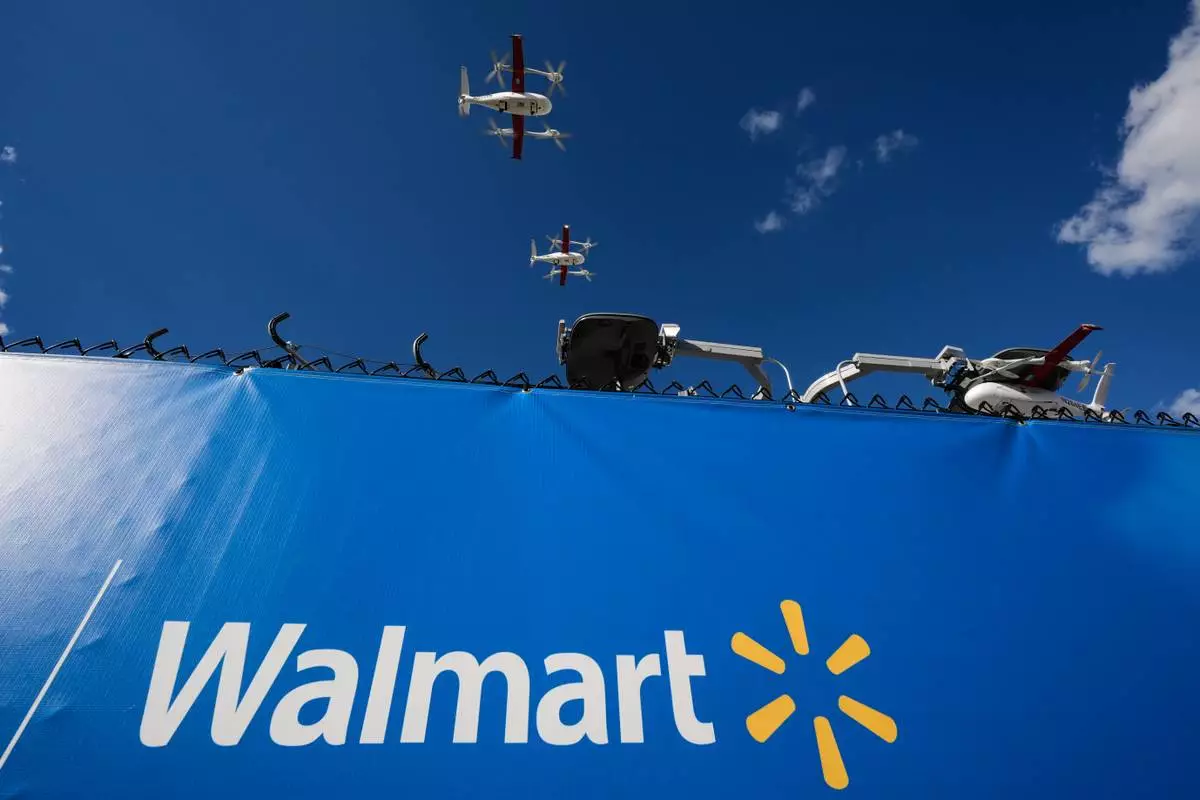
Drones operated by Zipline leave base to make deliveries from a Walmart store in Pea Ridge, Ark., Friday, Sept. 26, 2025. (AP Photo/Charlie Riedel)