NEW YORK (AP) — Walmart delivered another quarter of impressive sales with speedy deliveries and low prices becoming a strong magnet for people across the income spectrum that are spending more on almost everything, particularly gasoline.
Yet like other major retailers posting financial results this week, Walmart was cautious about the rest of the year given the current economic uncertainty. On Thursday, it issued a forecast for the current quarter that was weaker than what Wall Street had been expecting.
Shares slipped more than 6% Thursday.
Walmart has resonated with many Americans who are increasingly careful about where they spend their money as inflation takes a bigger bite out of paychecks, notably gasoline which has soared since the start of the Iran war in late February. Walmart can serve as a barometer of consumer spending given its vast customer base. More than 150 million customers are on its website or in its stores every week, according to Walmart.
One telling shift during the quarter that captures the stress many Americans are feeling: The number of gallons that customers put in their cars during visits to U.S. Walmart and Sam’s Club gas stations fell below 10 for the first time since 2022, which was the midst of the COVID-19 pandemic.
“That’s an indication of stress,” said Chief Financial Officer John David Rainey.
Walmart touted strong sales that were fueled by online shopping on Thursday.
Comparable sales at U.S. Walmart stores rose 4.1% during the three-month period ended April 30. Walmart’s U.S online sales rose 26%, the company said.
Walmart’s promise of lower prices, faster delivery and a refresh of its merchandise has attracted wealthier shoppers. The biggest gains in market share for Walmart are coming from households with annual income over $100,000. That shift is taking place as lower-income shoppers become more entrenched in what economists collectively call a K-shaped economy.
“We see with our customers that the high-income customer is spending with confidence into many categories, while the lower income consumer is more budget conscious and perhaps navigating financial distress,” Rainey told analysts on Thursday.
U.S. retailers have spent months navigating an uncertain economic environment, from President Donald Trump’s tariffs to the impact of soaring gasoline prices due to the war. The average price for a gallon of regular gasoline raced higher this week and did so again overnight. Gasoline prices are about 45% above where they were at this time last year.
Based on quarterly financial reports this week from Walmart, as well as Target, Home Depot, Lowe's and TJX, shoppers are cautious but still spending, helped by more generous tax refunds. Yet there is a widespread belief among economists that once those refunds dry up, shoppers will pull back on spending. Consumer spending is the dominant economic engine for the U.S., and retreat would have broad implications for the U.S.
Target reported the largest jump in comparable sales in four years Wednesday, but a cautious outlook overshadowed rather convincing evidence that changes under the company’s new CEO are landing solidly with customers. Target raised its annual revenue outlook Wednesday, but it was still below the pace of its first quarter this year.
The nation’s two largest home improvement retailers Home Depot and Lowe’s reported strong sales, but both companies said that customers are putting off larger home projects.
“I think, overall, this has been the most difficult housing market that I’ve faced in this business since the financial crisis,” Lowe’s CEO Marvin Ellison said this week.
Walmart, based in Bentonville, Arkansas reported first-quarter earnings of $5.33 billion, or 67 cents, for the quarter ended April 30. Adjusted per-share results were 66 cents, matching the 66 cents that analysts expected, according to FactSet.
For the year-ago quarter, the company reported net income of $4.48 billion, or 56 cents per share.
Sales rose 7.3% to $177.75 billion in the fiscal first quarter, above the $174.84 billion that analysts predicted.
Walmart said higher fuel prices took a bite out of profits as it was forced to absorb higher transportation costs.
The company highlighted its speedier deliveries, which is driving more shoppers to buy more often. Rainey said that roughly 60% of U.S. online deliveries arrive at customers' homes in 30 minutes or less.
For the second quarter, Walmart expects sales to be 4% to 5% higher than the same period a year ago. It also expects per-share profit to be between 72 cents and 74 cents. Analysts had been projecting per-share earns of 75 cents on sales of $186.2 billion, according to FactSet.
Walmart stuck to the annual guidance that it issued in February.
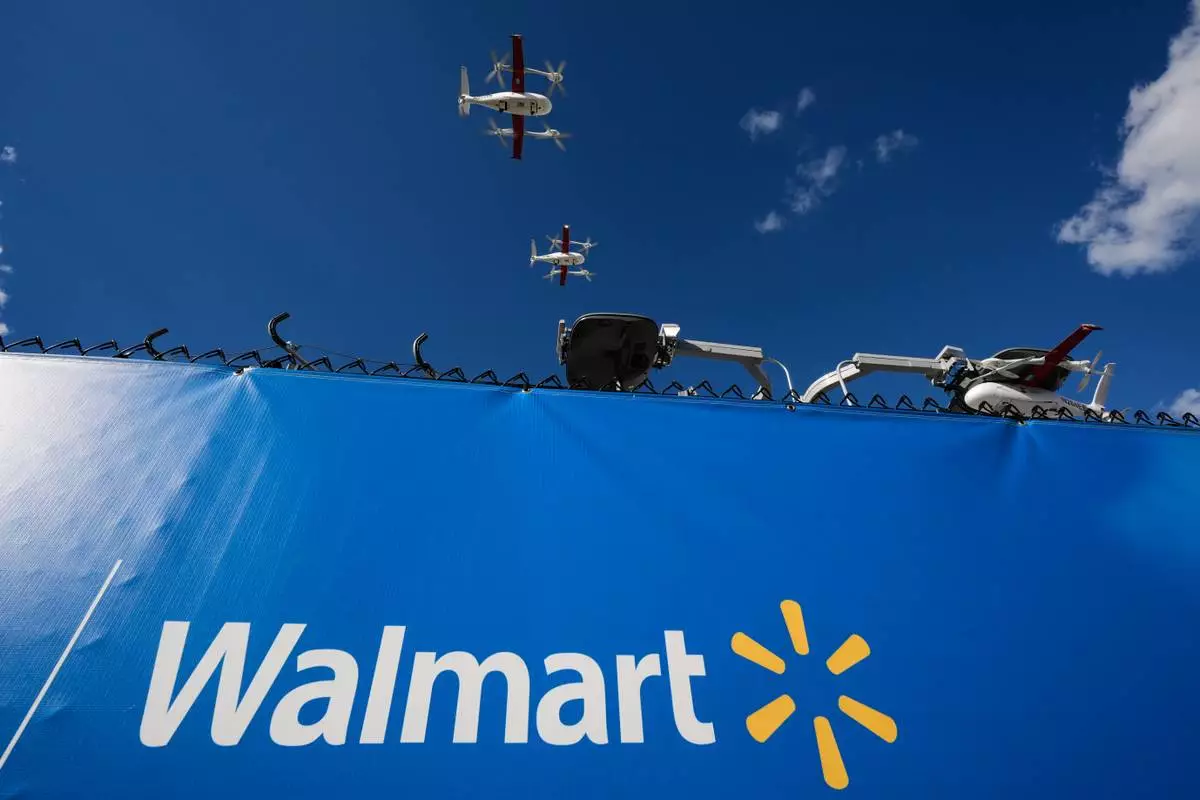
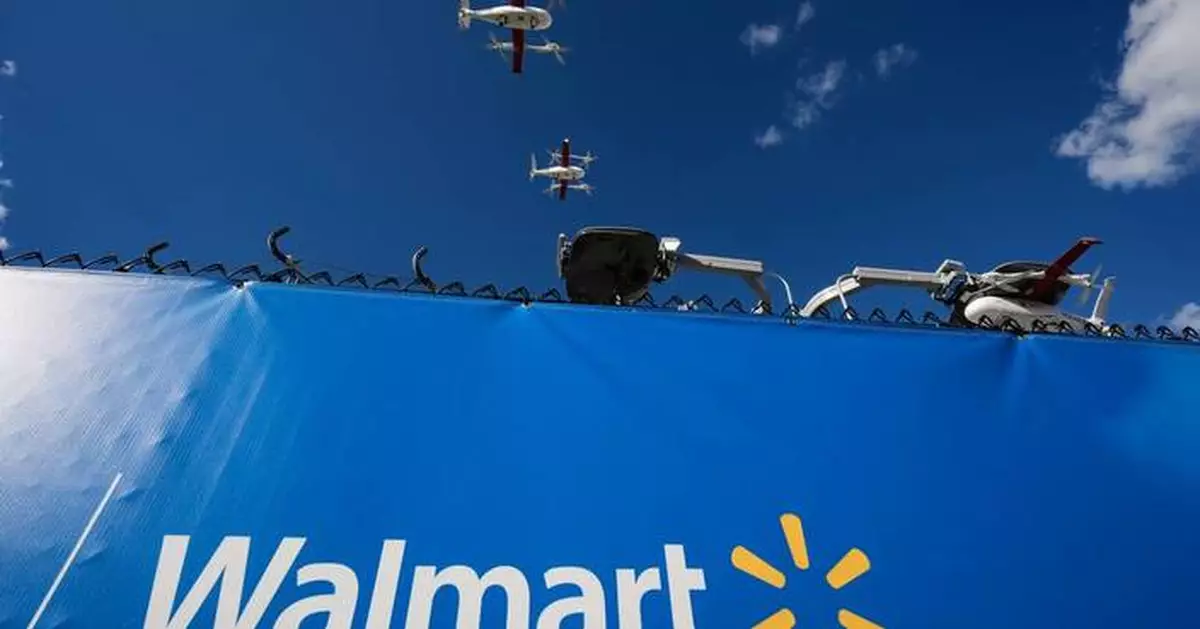
Drones operated by Zipline leave base to make deliveries from a Walmart store in Pea Ridge, Ark., Friday, Sept. 26, 2025. (AP Photo/Charlie Riedel)
NEW YORK (AP) — The U.S. stock market is drifting Thursday following a rebound for oil prices and mixed reports on the U.S. economy.
The S&P 500 fell 0.3% and is on track for a fourth drop in five days after setting its all-time high. The Dow Jones Industrial Average was up 37 points, or 0.1%, as of 10:30 a.m. Eastern time, and the Nasdaq composite was 0.6% lower.
A halt in the torrid run for stocks benefiting from the artificial-intelligence boom has slowed the U.S. market recently. Not even another better-than-expected profit report from Nvidia was enough to kick it back into gear.
The chip company reported stronger profit and revenue for the latest quarter than analysts expected, while also forecasting revenue for the current quarter that cleared analysts’ estimates. “The buildout of AI factories — the largest infrastructure expansion in human history — is accelerating at extraordinary speed,” CEO Jensen Huang said.
Such performances and such talk have become routine, though, and Nvidia's stock swiveled between losses and gains before slipping 1.9%.
Some analysts said the muted reaction may have simply been because investors were locking in profits after Nvidia’s stock had soared nearly 70% over the prior year, more than double the S&P 500’s 27% jump. The broad AI industry is also getting criticism for becoming too expensive, as well as too circular as Nvidia has bought ownership stakes in companies that use its own chips that drive Nvidia’s revenue.
Pressure built on Wall Street, meanwhile, as the price for a barrel of Brent crude oil climbed 2.1% to $107.26 and trimmed its loss for the week. Oil prices have been swinging up and down with uncertainty about how long the war with Iran will keep the Strait of Hormuz shut, which is preventing oil tankers from exiting the Persian Gulf to deliver crude.
That helped push Treasury yields upward in the bond market, resuming their rises following a slowdown the day before.
Climbing yields have cranked up the pressure on financial markets worldwide. They're slowing economies and weighing on prices for stocks and all kinds of other investments. Besides driving up rates for mortgages, high yields could also curtail companies’ borrowing to build the AI data centers that have been supporting the U.S. economy’s growth recently.
The yield on the 10-year Treasury rose to 4.60% from 4.57% late Wednesday.
It had gotten near 4.63% earlier in the morning, after a report gave the latest signal that the U.S. job market remains in better shape than economists expected. The number of U.S. workers applying for unemployment benefits last week unexpectedly declined in an indication of fewer layoffs.
But yields then eased a bit following a preliminary report showing weaker-than-expected growth for business activity among U.S. services businesses, but improved growth for U.S. manufacturers. Companies are feeling the effects of accelerating inflation and are seeing subdued growth in their order books, preliminary data from the S&P Global survey said.
“The damaging economic impact from the war in the Middle East is becoming increasingly evident in the business surveys,” according to Chris Williamson, chief business economist at S&P Global Market Intelligence.
Inflation is worsening even beyond the high oil prices caused by the Iran war, while U.S. households are showing widespread discouragement about the economy.
Elsewhere on Wall Street, Walmart fell 6.8% following its profit report. The retailer delivered another quarter of impressive revenue but offered up weaker forecasts for upcoming profit than analysts expected.
On the winning side of Wall Street was Ralph Lauren, which jumped 10.5% after reporting stronger profit and revenue for the latest quarter than analysts expected.
In stock markets abroad, indexes were mixed in Europe following bigger moves in Asian markets.
South Korea’s Kospi Kospi soared 8.4% thanks to strength for technology stocks. Samsung Electronics jumped 8.5% after its labor union and management reached an agreement late Wednesday that averted a potentially costly strike. SK Hynix, a chip company partnering with Nvidia, surged 11.2%.
Tokyo’s Nikkei 225 jumped 3.1%, while indexes fell 1% in Hong Kong and 2% in Shanghai.
AP Business Writers Matt Ott and Elaine Kurtenbach contributed.
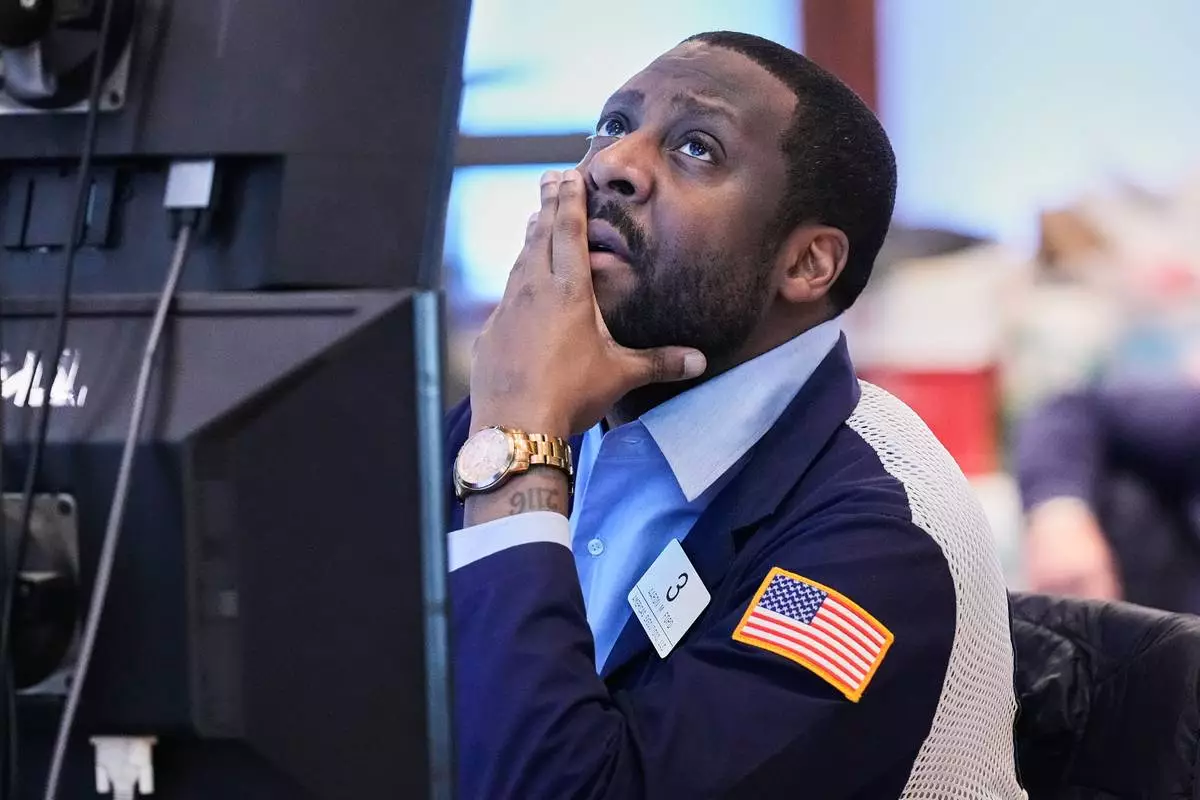
Trader Aaron Ford works on the floor of the New York Stock Exchange, Thursday, May 7, 2026. (AP Photo/Richard Drew)
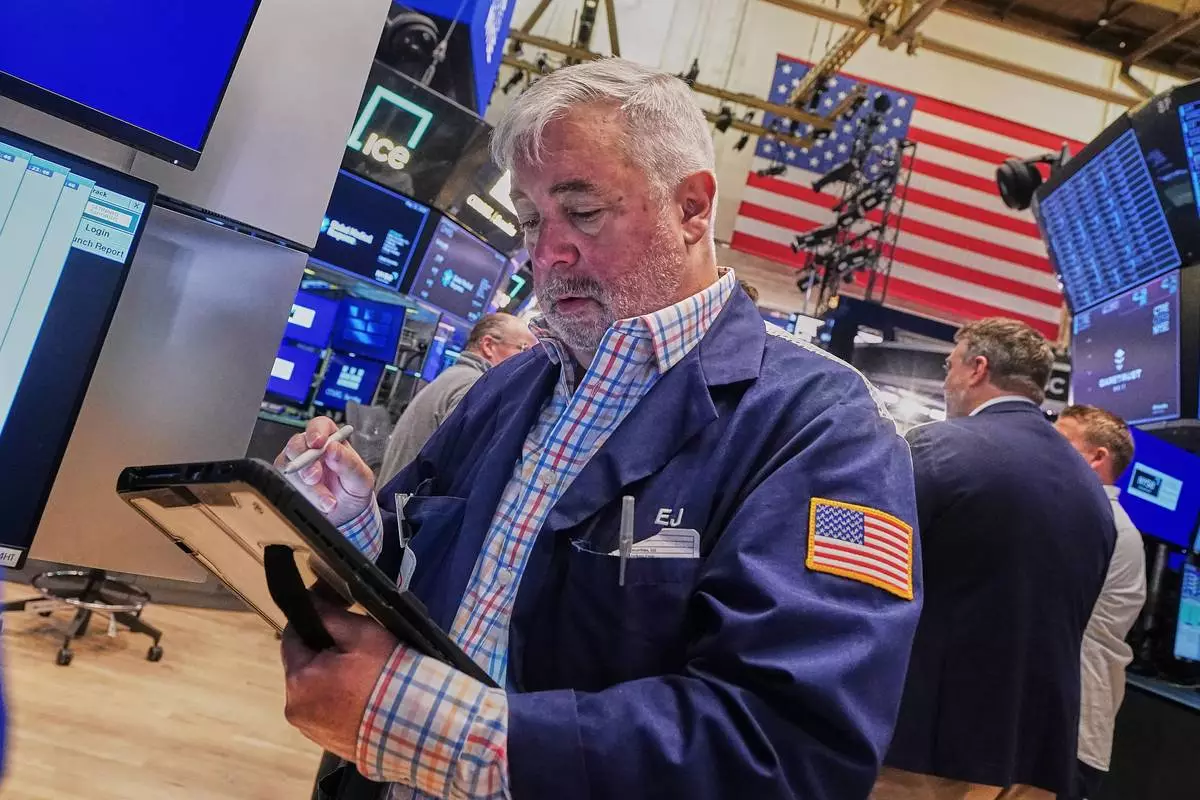
Trader Edward McCarthy works on the floor of the New York Stock Exchange, Wednesday, May 13, 2026. (AP Photo/Richard Drew)

A Global Medical Response helicopter sits in front of the New York Stock Exchange before the planned IPO of GMR Solutions, Inc., Wednesday, May 13, 2026. (AP Photo/Richard Drew)
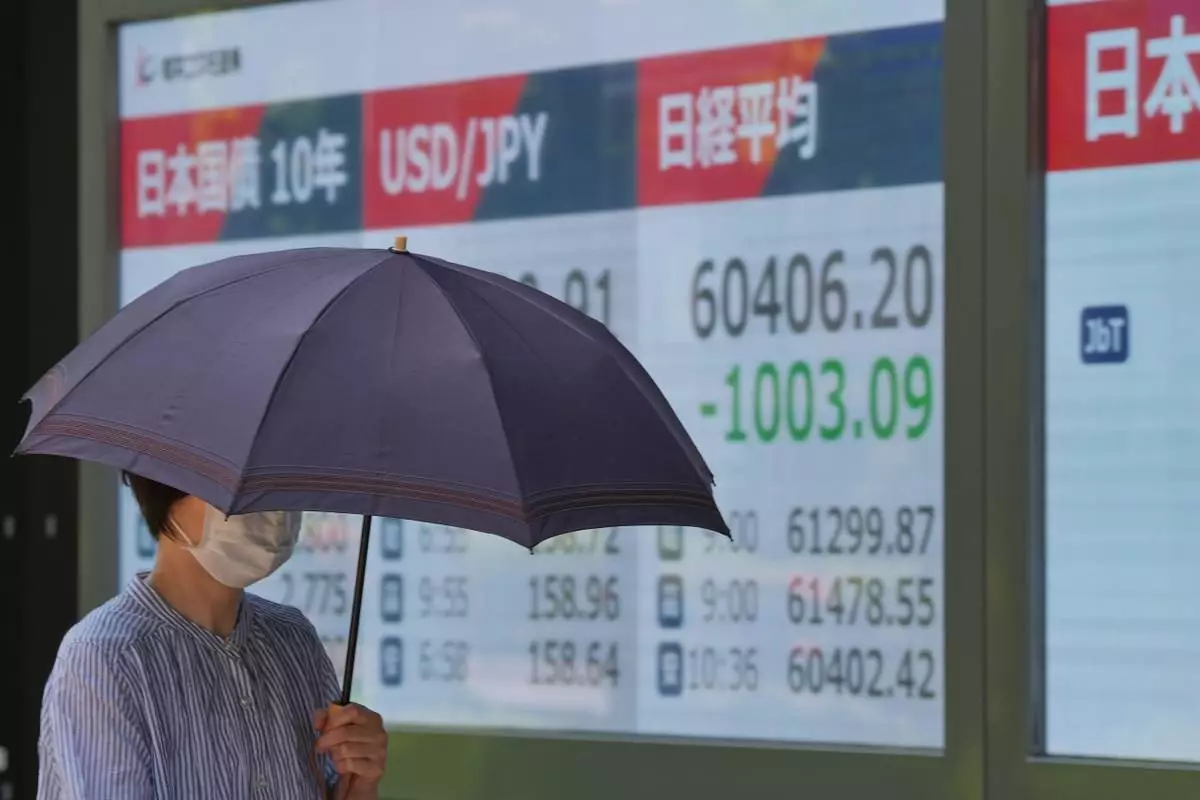
A person walks in front of an electronic stock board showing Japan's Nikkei index at a securities firm Monday, May 18, 2026, in Tokyo. (AP Photo/Eugene Hoshiko)
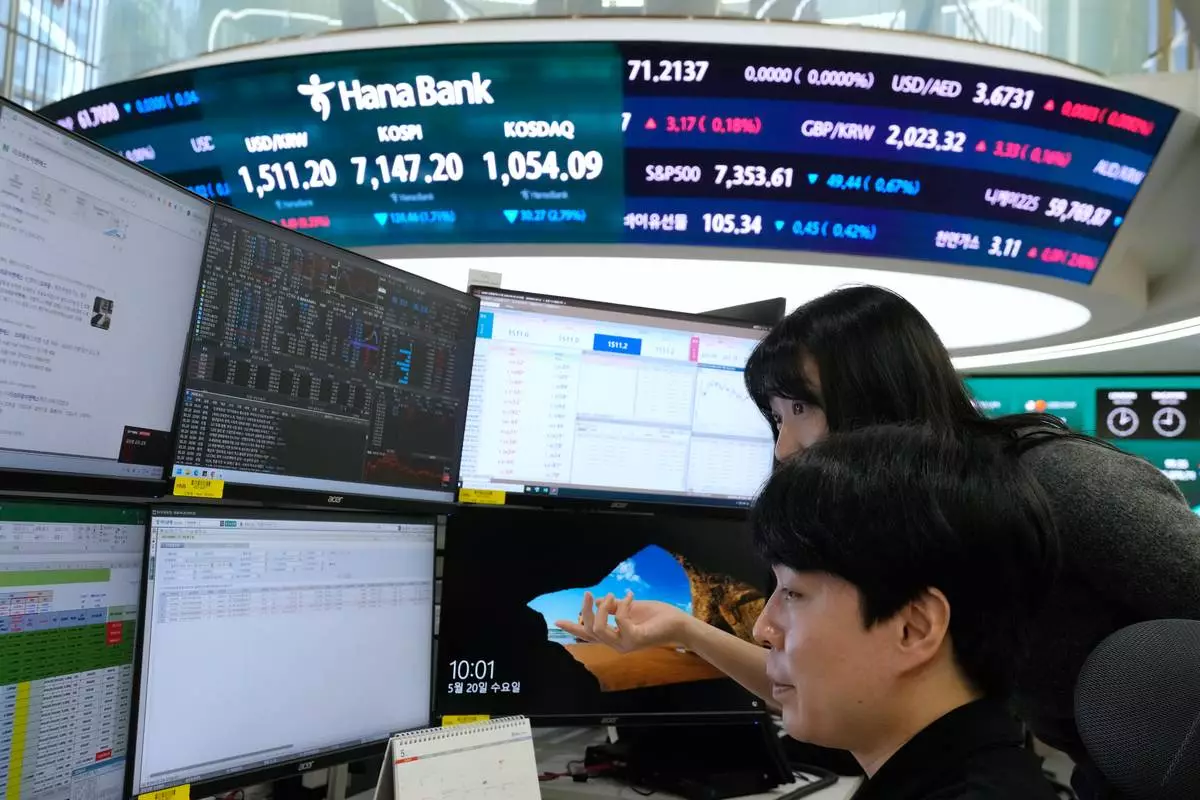
Currency traders watch monitors at the foreign exchange dealing room of the Hana Bank headquarters in Seoul, South Korea, Wednesday, May 20, 2026. (AP Photo/Ahn Young-joon)
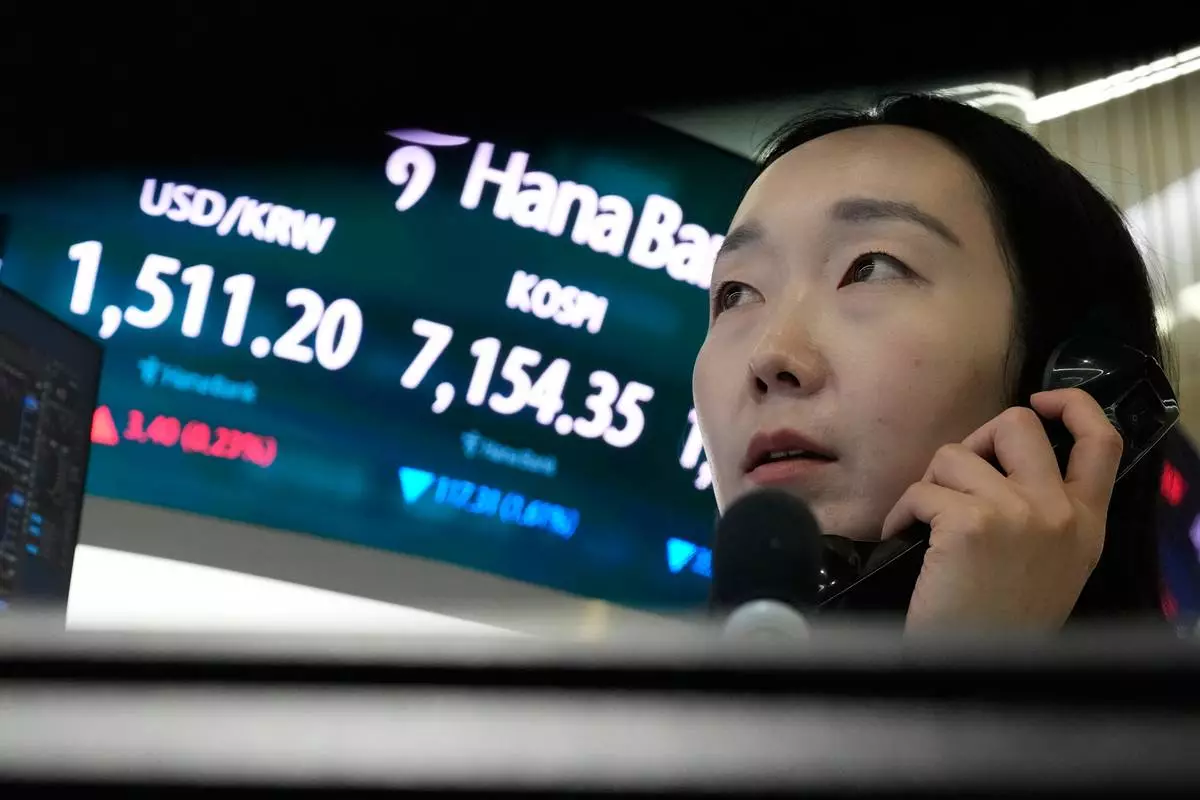
A currency trader talks on the phone near a screen showing the Korea Composite Stock Price Index (KOSPI) and the foreign exchange rate between U.S. dollar and South Korean won, left, at the foreign exchange dealing room of the Hana Bank headquarters in Seoul, South Korea, Wednesday, May 20, 2026. (AP Photo/Ahn Young-joon)