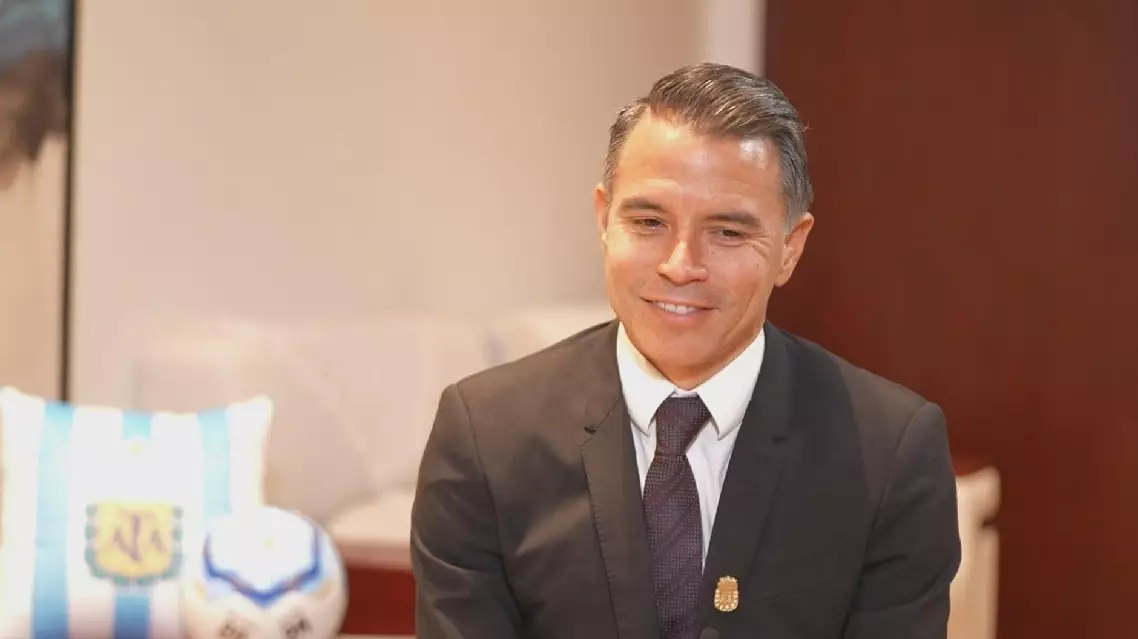
This summer's FIFA World Cup -- which will mark the biggest ever edition of the tournament -- will bring together the world's best footballers and showcase the talents of some of the sport's rising young stars, according to former Argentina forward Javier Saviola.
The expanded 2026 tournament will feature a record 48 teams and see the competition being hosted across three countries for the first time, with matches scheduled to take place in the United States, Mexico and Canada from June 11 to July 19.
The remaining places for the football showpiece were finalized on Tuesday as several countries battled it out in the play-offs, bringing an end to a hard-fought qualifying campaign that spanned nearly three years and has set the stage for the first ever 48-team edition.
The final day of qualifying was not without drama, as four-time champions Italy sensationally missed out after falling to an unexpected penalty shoot-out defeat to Bosnia and Herzegovina.
Reigning World Cup holders Argentina, however, faced no such problems as they comfortably cruised through their South American qualifiers to book their spot and former striker Saviola -- who was in the Argentinian squad for the tournament held in Germany 20 years ago -- believes the team can again be among the leading contenders following their thrilling win in Qatar in 2022.
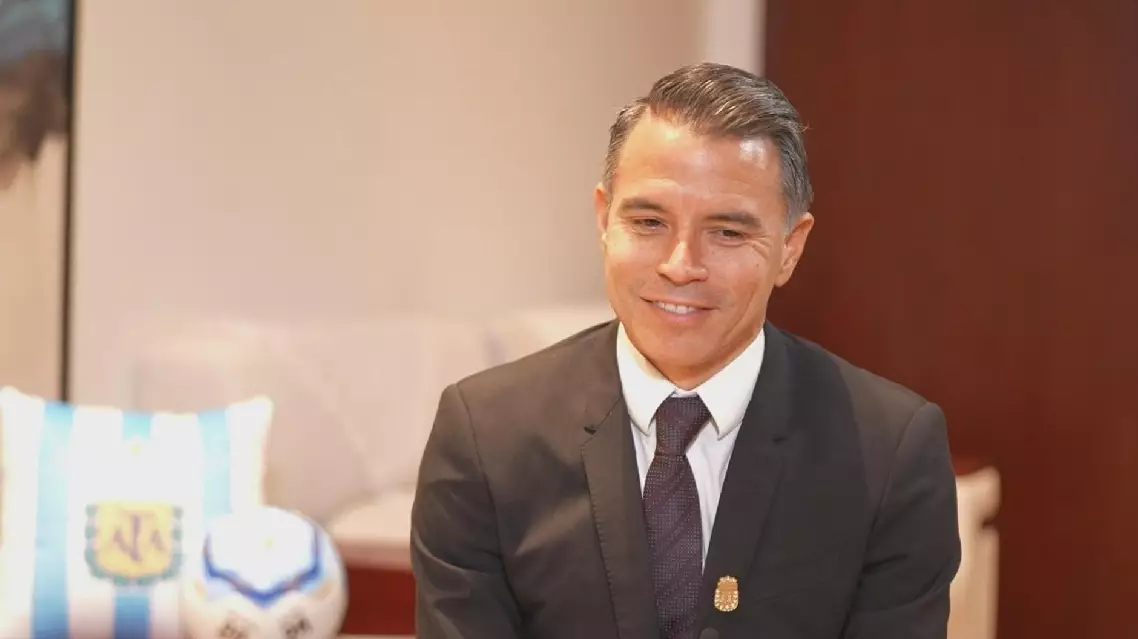
While visiting Beijing to promote the competition, Saviola reflected on his own World Cup experience in an interview with the China Global Television Network (CGTN), and described appearing at the tournament as the pinnacle of any player's career.
"Playing in a World Cup is always the most important thing that can happen to a player. I am very happy to have played in one -- it was a dream I always had as a football player. Playing at a World Cup is always complicated and difficult, because all the best teams and players in the world are there. I treasure the memories of the 2006 World Cup very much, because it really was something impressive in my career. And now I am happy that Argentina is also at the highest level again, having won the World Cup in Qatar [in 2022]. Hopefully, in the next World Cup, Argentina will also do well," he said.
While Argentina will again be captained by veteran superstar Lionel Messi, Saviola also believes a number of young talents will emerge on the global stage. He singled out 18-year-old Spanish wonderkid Lamine Yamal as one to watch.
"This will be a World Cup where there will be young rising stars, where there will be incredible players who are just starting their careers -- players like Lamine Yamal, as well as other important names, who will surely become the best players in the world over time. And they will carry the responsibility, just as Lionel Messi did for Argentina at his time, of beginning their careers at a very young age and taking on the responsibility of leading their country to the top. I believe Lamine Yamal has many qualities and plays very well, and that he can become one of the best players in the world in the coming years," he said.
Saviola also picked out several teams he believes could be in good shape to lift the trophy, but remains optimistic Argentina can defend the title as they retain much of the core group that secured the country's historic third World Cup triumph in Qatar.
"I think there are candidates like France, Spain, Morocco, and the Netherlands -- very strong, very tough teams. But us Argentinians are full of hope and belief that Argentina can win the World Cup again," he said.
World Cup to showcase best players, rising young stars: former Argentina striker Saviola
World Cup to showcase best players, rising young stars: former Argentina striker Saviola
World Cup to showcase best players, rising young stars: former Argentina striker Saviola
The three astronauts of China's Shenzhou-21 crewed spaceflight mission returned safely to Earth on Friday after completing their planned tasks aboard the Tiangong space station.
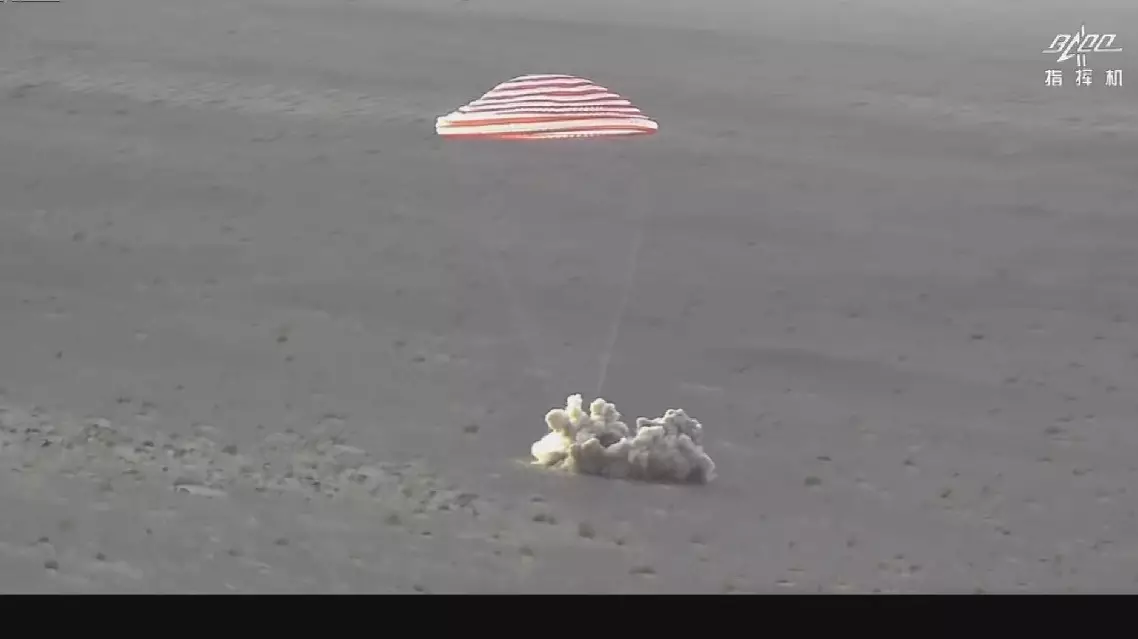
The return capsule of the Shenzhou-22 spaceship, carrying Shenzhou-21 astronauts Zhang Lu, Wu Fei and Zhang Hongzhang, touched down at the Dongfeng landing site in north China's Inner Mongolia Autonomous Region at 20:11 Beijing Time (1211 GMT), according to the China Manned Space Agency.
The returned astronauts were reported to be in good physical condition after landing, according to staff on site.
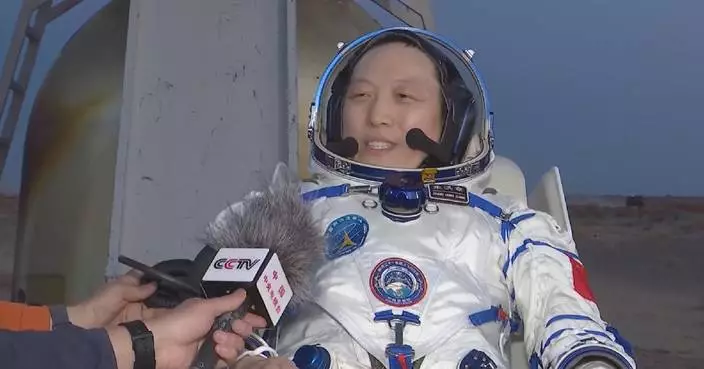
Zhang Lu was the first to exit the return capsule after it touched down on Earth.
"I'm thrilled to once again return to the embrace of our motherland. The Shenzhou-21 crew's seven-month stay in orbit would not have been possible without the care of our families and comrades, the support of leaders at all levels and all colleagues involved in the project, and above all, the backing of our country and our people. One sentence sums up my thoughts on my second space mission: 'It takes a whole team's devotion to make one person's voyage into the sea of stars,' " Zhang said in an interview with China Central Television (CCTV) shortly after he was carried out of the return capsule.
"I also have a gift to share with everyone. On the day of the Shenzhou-21 launch, the ground support team gave us an apple, wishing us a safe and smooth mission. Our safe return is their greatest wish. Tomorrow is May 30, the National Science and Technology Workers' Day. So when we left the space station, we specifically brought back an apple. We want to give it to all science and technology workers, and say 'thank you for your hard work'. At the same time, I wish our space industry continued prosperity, and every mission safe and smooth," he said.
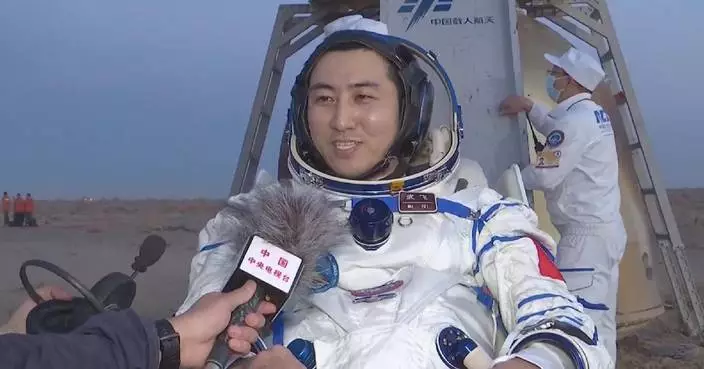
"Returning to Earth and to the embrace of our motherland, I feel extremely secure and proud. Being entrusted with such a significant responsibility in my first space mission is a great honor. It is the trust of my country, the guidance of my predecessors, and the teamwork of the entire crew that enabled me to successfully complete the mission. This mission has taught me that the most beautiful posture of youth is to march out for the country. I will turn this space experience into the driving force for my continued progress, and continue to fight and strive for the manned space program," said crew member Wu Fei.
"From the ground laboratory to China's space station, it is our great motherland that has enabled me to achieve a perfect integration of my scientific ideals and spaceflight dreams. With the support of the entire project team, the assistance of researchers and scientists, and the care of so many people, our crew has worked as one and successfully completed all assigned scientific projects, including the first successful in-orbit breeding of small mammals, the growing of a thriving space vegetable garden with an even wider varieties, and the collection of valuable data from projects such as in-situ electrochemical and optical studies on lithium-ion batteries," said Zhang Hongzhang, who was the last of the astronauts to exit the spacecraft.
"Looking at Earth from space, I deeply felt that humanity is an indivisible community with a shared future. Now that I am back on Earth and have returned to my motherland, I feel an immense sense of security and warmth. Going forward, I will continue to build on these achievements and contribute to making China a strong power in space, science and technology," he said.
The returned crew members will now head to Beijing by plane and enter a quarantined recovery period, during which they will undergo comprehensive medical examinations and health assessments and start their recuperation process.
Prior to their return, the astronauts completed all planned tasks and handed over the space station to their three colleagues of the Shenzhou-23 mission who boarded the space station on May 25.
The crew's planned stay in-orbit was extended by approximately one month to further verify the technologies regarding the long-term stay of astronauts in orbit and fully use the supplies delivered by the Shenzhou-22 spacecraft in an emergency launch.
The Shenzhou-21 crew's original spaceship, which sent them into space on Oct 31 last year, was previously returned to Earth carrying the astronauts of the preceding Shenzhou-20 mission after tiny cracks were found in the viewport window of the Shenzhou-20 manned spacecraft's return capsule. That spacecraft was later safely brought back to Earth.
Shenzhou-21 crew return to Earth after successful seven-month mission in space