WALTHAM, Mass.--(BUSINESS WIRE)--Apr 1, 2026--
Thermo Fisher Scientific Inc., the world leader in serving science, today announced a next-generation, integrated cell line development platform that enables biologics developers to accelerate time to clinic while maintaining regulatory confidence and commercial scalability.
This press release features multimedia. View the full release here: https://www.businesswire.com/news/home/20260401312925/en/
Global pipelines for protein therapeutics, including complex biologics and biosimilars used to treat conditions ranging from cancer to autoimmune and rare diseases, continue to expand. This growth is placing increasing pressure on manufacturers to shorten time to clinic, improve manufacturing consistency and control cost of goods without compromising quality or regulatory compliance. At the same time, regulatory agencies are placing greater emphasis on demonstrating product quality and comparability to innovator molecules.
The Gibco™ CHOvantage™ GS Cell Line Development (CLD) Kit enables researchers to generate high-performing, CHO cell lines, achieving protein titers of ≥7 g/L in fed-batch cultures, establishing stable pools in as little as four weeks, and supporting selection of stable clones within 14 weeks, helping to streamline progression from early development to commercial manufacturing.
“Biologics developers face increasing pressure to deliver therapies faster while managing cost, quality and regulatory complexity,” said Sara Henneman, vice president and general manager of Thermo Fisher Scientific’s cell culture and cell therapy business. “With the CHOvantage GS CLD Kit, we’re helping customers compress development timelines, increase confidence in quality and lower overall costs through a royalty-free, clinical-stage licensing model that helps minimize barriers to market. This platform reflects our commitment to simplifying and standardizing biologics development workflows from research through commercial production.”
Patent expirations are accelerating the development of lower-cost biosimilar medicines, increasing demand for reliable and scalable technologies that can help manufacturers bring these treatments to market more quickly while maintaining strict quality and regulatory standards. Integrated development platforms can help simplify complex manufacturing processes, shorten development timelines and support consistent large-scale production.
“The CHOvantage GS CLD Kit is our newest example of how we are advancing cell line productivity and process consistency across the biologics lifecycle,” said Andy Campbell, senior director of research and development at Thermo Fisher Scientific. “By integrating a transposon-based vector system with our Efficient-Pro media and feeds, we’re giving customers a reliable, high-quality, streamlined platform that helps to save time, reduces variability and supports scalability. Importantly, this harmonized workflow is designed to simplify tech transfer and enable a smoother transition from development to manufacturing.”
BioFactura (a developer and manufacturer of high-value biosimilars and novel drugs) was a key pre-launch testing partner for the Gibco CHOvantage GS Cell Line Development Kit. Lead Cell Line Development Scientist Carson Brackna stated, "Combining transposon vectors and optimized media and feeds, the CHOvantage platform offered a robust, end-to-end cell line package while remaining user-friendly and yielding quality protein with high productivity on a tight schedule.”
Simplified Licensing, No Clinical-Stage Royalties
Many cell line development systems require royalties or milestone payments during the clinical stage. The CHOvantage GS CLD Kit includes research-use rights with purchase, avoiding these common fees during development. Royalty-free, clinical-stage licensing options provide greater cost predictability and commercial flexibility, enabling a more seamless transition from development through full-scale production.
To learn more about the Gibco CHOvantage GS Cell Line Development Kit, please visitthermofisher.com/CHOvantage.
About Thermo Fisher Scientific
Thermo Fisher Scientific Inc. is the world leader in serving science, with annual revenue of more than $40 billion. Our Mission is to enable our customers to make the world healthier, cleaner and safer. Whether our customers are accelerating life sciences research, solving complex analytical challenges, increasing productivity in their laboratories, improving patient health through diagnostics or the development and manufacture of life-changing therapies, we are here to support them. Our global team delivers an unrivaled combination of innovative technologies, purchasing convenience and pharmaceutical services through our industry-leading brands, including Thermo Scientific, Applied Biosystems, Invitrogen, Fisher Scientific, Unity Lab Services, Patheon and PPD. For more information, please visit www.thermofisher.com.
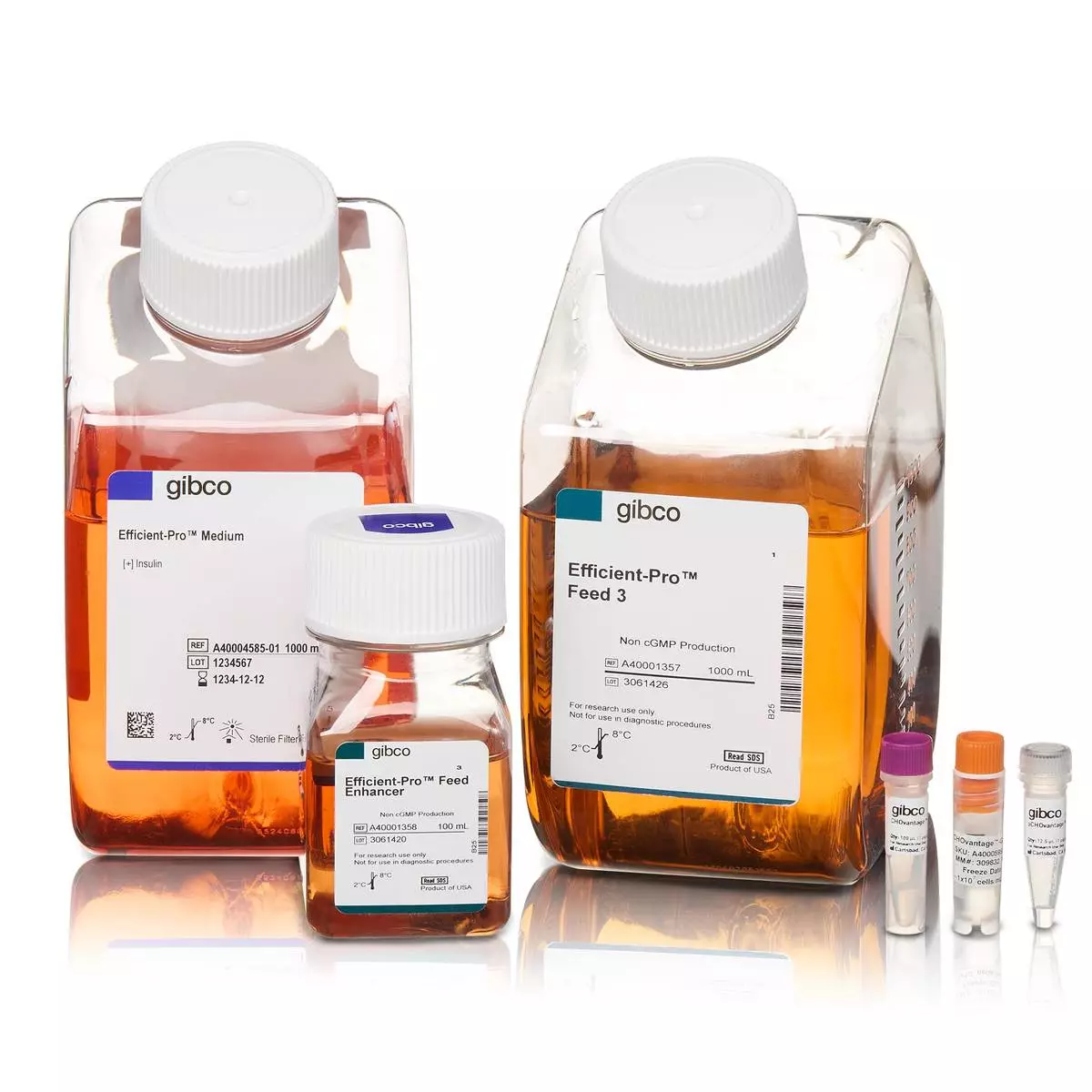
Gibco™ CHOvantage™ GS Cell Line Development Kit delivers high productivity, streamlined timelines and royalty-free, clinical stage licensing options to support scalable manufacturing.