NEW YORK (AP) — Two-year-old Bain Brandon has Type 1 diabetes and needs insulin to live. But even with health insurance, the price tag isn’t cheap.
A one-month supply of insulin vials and a three-month supply of backup pens for the Mississippi toddler cost his parents $194 last week, according to his mom, 29-year-old Marlee Brandon. They can afford it right now — but she worries about the future.
“One day, Bain will be an adult, and he won’t be able to be on our insurance anymore,” she said. “I feel like a lot of people don’t realize how much and how expensive it is.”
A bipartisan group of senators is aiming to relieve that cost burden with the INSULIN Act, a bill to cap the cost of the lifesaving drug at $35 per month for Americans with private insurance plans. The bill, introduced last week by Sens. Jeanne Shaheen, D-Maine, Raphael Warnock, D-Ga., Susan Collins, R-Maine, and John Kennedy, R-La., would also start a pilot program to provide more affordable insulin to uninsured Americans in 10 states. A somewhat similar bill passed in 2022, as part of the Biden-era Inflation Reduction Act, a sweeping package from Democrats that successfully capped the drug at $35 per month for older adults on Medicare.
The legislation, the latest in a long effort by some lawmakers of both parties to rein in the price of insulin, faces many hurdles, including concerns about the cost and other competing congressional priorities. Still, with Trump in the White House and Congress now controlled by his Republican Party, it creates an opportunity for a rare bipartisan victory on health affordability in a year when rising health care cost are a concern for voters of both parties.
About 8.1 million people in the U.S. use insulin, according to the U.S. Centers for Disease Control and Prevention. That includes more than 2 million who have Type 1 diabetes and will die without regular access to insulin. The drug also helps control glucose levels for people with other types of diabetes.
But the price of insulin can vary widely. While some people with private insurance pay zero or very little, others pay hundreds of dollars each month on top of other costs for their diabetes, like pumps, blood glucose sensors and other supplies.
In addition to the 2022 law lowering out-of-pocket costs on insulin for Medicare beneficiaries, more than half of states in recent years have passed their own insulin co-pay caps, ranging between $25 and $100 per month for patients with state-regulated insurance plans.
Major insulin makers Eli Lilly, Sanofi and Novo Nordisk also have moved to cut the cost of insulin, with different combinations of cutting list prices, capping out-of-pocket costs and expanding affordability.
Still, not all patients are covered. About 57% of Americans with private health insurance have self-insured plans that states can’t regulate, according to Matthew Fiedler, a senior fellow with the Center on Health Policy at the Brookings Institution. That means they are left out of state cost-cap bills. Some patients are also uninsured, or have difficulty accessing manufacturers' cost savings programs.
“It puts the onus on the patient, I think, to try to navigate and get the cost down,” said Dr. Leslie Eiland, an adult endocrinologist at the University of Nebraska Medical Center, who is advocating with the Endocrine Society for the latest bill.
Oliver Bogillot, Sanofi’s head of general medicines for North America, said in a statement that “no one should struggle to afford their insulin” and touted the company’s savings program that includes people without health insurance. Flavia Brakling, a spokesperson for Novo Nordisk, said expanding affordable access to medicine is a priority and noted the company hasn't raised list prices for its insulin products for 2026.
Chanse Jones, a spokesperson for the leading trade association for pharmaceutical companies, PhRMA, said pharmacy benefit managers and insurers are creating access and affordability barriers for patients even as manufacturers try to expand access.
“We look forward to working with policymakers to ensure middlemen don’t stand between patients and their medicines,” he said.
While the new INSULIN Act has bipartisan support, it would not be the first time such legislation seemed to have momentum, only to fail.
In 2022, the House passed a $35 monthly insulin cap that would have applied to Americans with private insurance, but it didn’t pass the Senate.
A similar attempt to include it in the Democrats’ Inflation Reduction Act that year ultimately failed after Republicans opposed it, saying it was attempted in a way that violated Senate rules.
Breana Glover, a 23-year-old restaurant server in Houston, moved to Texas from California because she needed cheaper living expenses to cover the high health costs associated with her Type 1 diabetes.
Paying for her insulin and other supplies is a balancing act. To afford her $50 co-pay for four vials of insulin, she limits her carbohydrate intake. That way, she can use less insulin each day and make it last longer.
Glover said a $35 per month cap would be a “small step towards everything becoming even more accessible,” in addition to helping her cover items like groceries and gas.
Advocates expect the young adult population to especially benefit from the bill, since many struggle to get high-quality health insurance plans or any insurance at all if they aren't able to access plans through parents, said Manny Hernandez, CEO of The Diabetes Link, a national nonprofit for young adults with diabetes.
Hernandez said he was encouraged by recent meetings with Republican members of Congress from his home state, Florida, but worries other priorities will drown out the bill, as has happened in the past.
“There’s many distractions and there’s many important things going on,” he said. “But I don’t lose hope.”
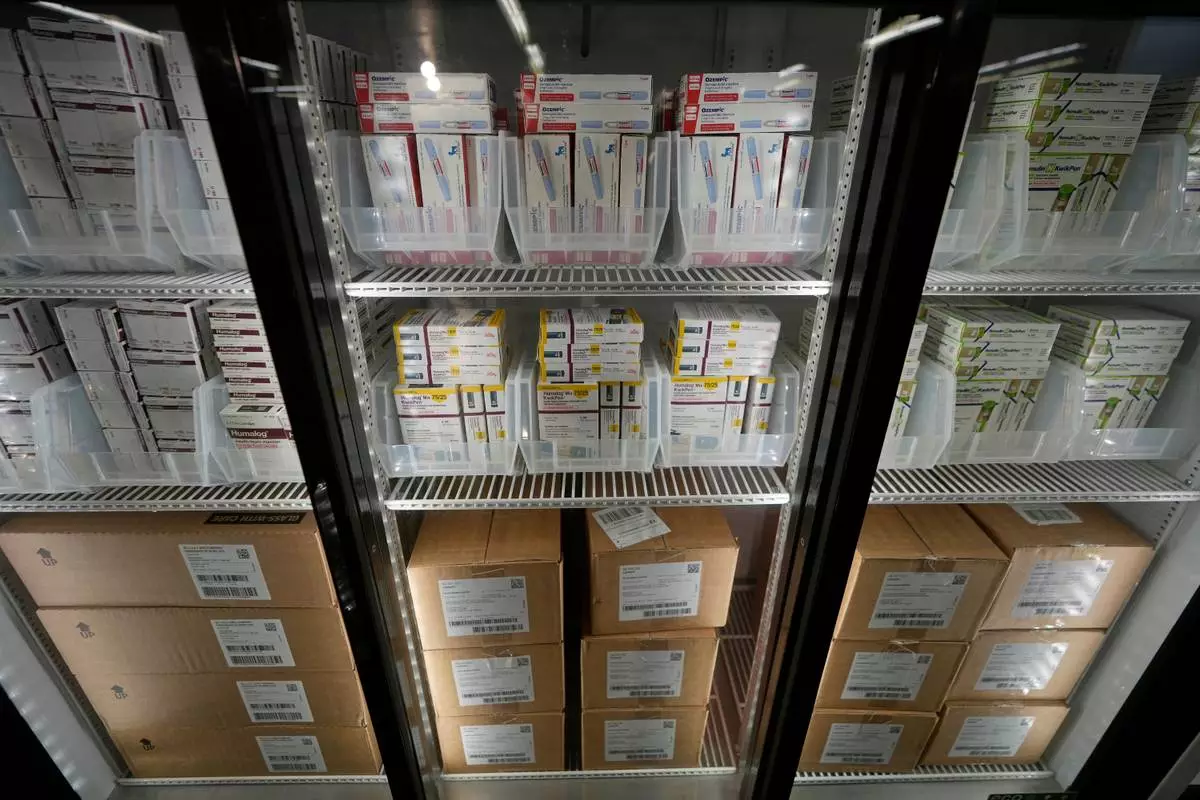
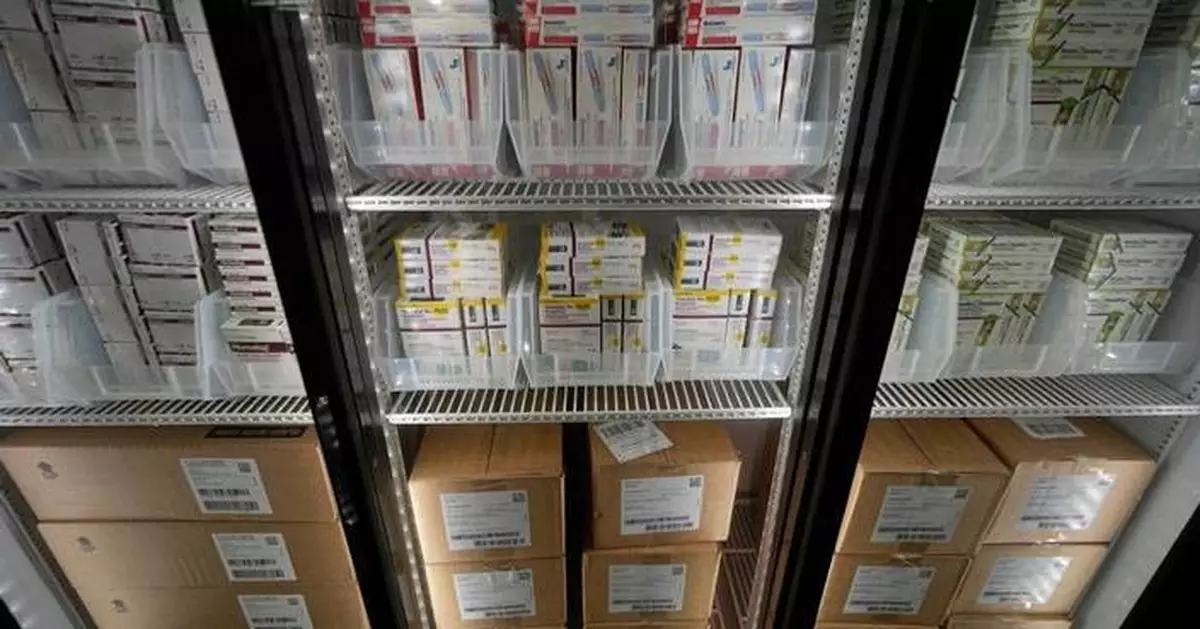
FILE - Packets of insulin vials and pens are warehoused at a Kaiser warehouse in Downey, Calif., March 18, 2023. (AP Photo/Damian Dovarganes, file)

The Strait of Hormuz is, by some accounts, named for a Zoroastrian deity destined to emerge victorious after a 9,000-year standoff with an adversary.
Iran's leaders feel their own victory is at hand and won't require the same epic patience.
They are betting that military pressure will ultimately force the United States to accept their control over the crucial waterway for global energy — and that time is on their side.
They know about the diminishing stockpiles of key U.S. weapons such as advanced missile interceptors. They know the war is deeply unpopular with Americans. They know that as long as the strait is largely closed, the price of gas and other goods will stay high ahead of U.S. congressional elections in November. They know that trying to open it by force would be costly and may require American ground troops. They know their Houthi allies in Yemen could widen the war and disrupt another major trade route.
By that logic, U.S. President Donald Trump has no choice but to capitulate.
But Iran's strategy carries risks.
Trump points to strikes that have decimated Iran's top leadership, navy and air force. He alternates between threatening escalation and saying talks are going well. Iran's own economy has been battered, in part because of a U.S. blockade. Iranians rose up in mass protests just months ago and could do so again.
And Iran's leaders need only look to how Trump's “short-term excursion” to the Middle East has bogged down to be reminded that wars rarely turn out as expected.
Iran says it is close to reaching a deal with Oman to manage the strait, which runs between the two countries. But it would be conditioned on the U.S. lifting its blockade, so even if there are no direct negotiations — as Iran says — Trump would have to approve.
It's unclear whether the deal would allow Iran to charge fees. But it would formalize its control over what had been an open international waterway before the war, one that carried a fifth of the world's traded oil and gas.
Abdolreza Davari, an analyst who once advised former President Mahmoud Ahmadinejad, said Iran's effective control of the strait has given it leverage with the U.S. and regional countries that can help guarantee its security.
“More than revenue from the strait, Iran wants to confirm its management and sovereignty over the strait,” he said by phone from Tehran.
Formal control over even part of the strait would be a clear win for Iran and a loss for the U.S., which has yet to accomplish some of its various and shifting goals in the war.
It would also deal a blow to global norms on freedom of navigation and set a precedent that much of the world would find disturbing — that nations can shut down trade choke points at will.
China, which buys oil from Iran and has influence over it, said as recently as May that “normal and safe passage” through the strait should be restored.
To borrow a phrase from Trump's own theory of geopolitics, Iran believes it holds the cards.
“They started the war, but its end was never with them. We always decide for ourselves when it ends," Mahdi Mohammadi, an adviser to Iran's chief negotiator, posted on social media. “Iran is going after the enemy’s defeat — not an agreement.”
He said a surprise Iranian attack on Jordan in July “compensated” for a drop in oil prices. That contributed to the collapse of an interim agreement reached in June that had offered significant concessions to Iran, including a U.S. waiver to sell oil internationally and the promise of broader sanctions relief.
Iran has repeatedly said the Strait of Hormuz will not go back to being an open waterway, and that it will keep attacking ships trying to transit without its permission. Iran's joint military command has called it an “unbreakable red line.”
“For Iran, the Strait of Hormuz has become a strategic lever for deterrence, maintaining the regional balance of power, and reshaping the security rules in the Persian Gulf," said Mostafa Najafi, a Tehran-based security analyst.
That poses a major obstacle to ending the war, much less resolving the even more complex, long-standing dispute over Iran's nuclear program.
"The atomic issue, because of the conflict in the Strait of Hormuz, has been pushed to the side, and in reality, that is in Iran’s interests,” said Rahman Ghahremanpour, an Iran-based analyst. Control of the strait would give Iran leverage if the nuclear talks resume, he added.
The economic fallout from the war has spread worldwide but is particularly acute in Iran.
U.S. and Israeli strikes have pummeled its industrial base. The U.S. blockade has choked off much of its oil exports. Iranians are grappling with triple-digit food inflation. Trump has repeatedly threatened major strikes on civilian infrastructure like water and electricity.
In December, a currency crisis sparked some of the biggest anti-government protests in the 47-year history of the Islamic Republic. Authorities responded with a bloody crackdown in which thousands were killed and tens of thousands detained.
Many in Iran, including those close to its moderate President Masoud Pezeshkian, fear it may go too far.
Mohammad Javad Zarif, who as foreign minister helped negotiate the 2015 nuclear deal, wrote in a recent essay that Iran's achievements in the war had opened “an exceptional window for diplomacy.” But he warned that if it doesn't strike a deal soon, then “economic recovery will be difficult, and the possibility of internal unrest or renewed aggression, especially after the U.S. elections, cannot be ruled out.”
The war has already been marked by surprises.
After the first wave of U.S. and Israeli airstrikes on Feb. 28 killed Iran's supreme leader and other top officials, Trump suggested it would be over in a matter of weeks.
Instead, the conflict has emboldened Iran's leaders and mobilized their supporters. Tehran is using the strait “to show that it has not been defeated," Ghahremanpour said. "It can increase its legitimacy at home.”
But the strategy could also backfire. Iran's resilience has limits and there are concerns that an economic crash could trigger unrest. “Iran cannot continue with this strategy forever, and at a certain point, in reality, it has to reach a deal with America," he said.
But Davari said that for now, Iran can withstand the pressure. "It’s unlikely, despite the difficulties of the economic situation, that Iran will retreat from its positions," he said.
Associated Press reporter Hend Kortam in Cairo contributed.
Krauss has reported from across the Middle East for more than 20 years, including postings in Cairo, Baghdad and Jerusalem. Radjy is a Cairo-based journalist who has reported on Iran for over a decade.
President Donald Trump speaks in the Oval Office of the White House, Thursday, Aug. 6, 2026, in Washington. (AP Photo/Alex Brandon)
Women walk past a banner showing portraits of the late Iranian revolutionary founder Ayatollah Khomeini, left, Supreme Leader Ayatollah Mojtaba Khamenei, center, and the late Supreme Leader Ayatollah Ali Khamenei, who was killed in the U.S. and Israel strike on Feb. 28, under a bridge in northern Tehran, Iran, Sunday, Aug. 2, 2026. (AP Photo/Vahid Salemi)
People spend time at a beach as commercial vessels are anchored in the Strait of Hormuz off Bandar Abbas, Iran, Wednesday, Aug. 5, 2026. (Amirhosein Khorgooi/ISNA via AP)