MIAMI (AP) — Hurricane Polo grew into a Category 4 storm in the eastern Pacific late on Monday and was forecast to bring heavy rain to southwestern Mexico but remain offshore.
It had maximum sustained winds of 130 mph (215 kph) and may intensify further and reach Category 5 strength Tuesday or Wednesday, the U.S. National Hurricane Center in Miami said. Category 4 storms have winds of 130-156 mph (210-250 kph) on the Saffir-Simpson scale, and Category 5 hurricanes have winds exceeding 157 mph (250 kph).
Polo was moving east-southeast at 5 mph (7 kph) and was forecast to sharply turn northwest and west-northwest. On that path, Polo would skirt the Mexican coast for a few days without directly making landfall.
A tropical storm watch was issued for part of the coast south of Manzanillo in Colima state to Tecpan de Galeana in Guerrero state, meaning tropical storm conditions were possible in the area within two days. Polo was centered about 330 miles (530 kilometers) south-southeast of Manzanillo as of late Monday.
Heavy rain with the potential for flooding and landslides was forecast for coastal Guerrero and Michoacán states through Thursday. Smaller amounts of rain were possible in coastal portions of Oaxaca, Colima and Jalisco states.
Farther west in the Pacific Ocean, Tropical Storm Odalys was far from land but expected to become a hurricane by midweek. Odalys had maximum sustained winds of 50 mph (85 kph) on Monday.
In the Atlantic Ocean, Tropical Storm Fay had weakened to 40 mph (65 kph) southwest of the Azores and was forecast to be a remnant low by late Tuesday.
No Atlantic hurricanes have formed yet this year, and this year has set a record for the longest a season has begun without a hurricane. The effects of this year’s El Nino crush storms before they get going.

This photo provided by NOAA shows Hurricane Polo intensifying in the Pacific Ocean off the coast of Mexico on Monday, Sept. 21, 2026. (NOAA via AP)
SEOUL, South Korea (AP) — With North Korea refusing dialogue and ramping up its provocative missile tests, South Korea's liberal President Lee Jae Myung is pushing for a step-by-step effort to end a decades-long standoff over the North's nuclear program.
The goal, he told The Associated Press, would be to first halt advances in North Korea's nuclear and missile capabilities, before then rolling back its arsenal and ultimately moving toward dismantlement. Political and economic concessions would be offered for each progression forward.
It’s an approach that may face an uphill battle as North Korea steadfastly refuses to engage in diplomacy over weapons it sees as the only security guarantee for the survival of its authoritarian leadership. The North has recently ramped up weapons testing activities, despite U.S. President Donald Trump’s recent push to resume diplomacy.
Lee will advance his plan during this week’s U.N. General Assembly meetings in New York, saying that both Seoul and Washington are willing to reengage with Pyongyang.
“To change the direction of a moving vehicle, it must be brought to a halt first,” Lee told the AP in written responses to questions before his departure Monday for the United States. “A phased approach of stopping, reduction and dismantlement is a practical way of effectively resolving the North Korean nuclear issue."
Lee will make a speech at the U.N. General Assembly on Tuesday.
North Korea's evolving nuclear program has raised questions about whether its nuclear disarmament can be achieved in a single step — or at all. Trump said last month that North Korea has 57 nuclear weapons, while some experts say the North has more than 100 warheads.
Many have pushed for efforts to convince North Korea to disarm in phases in return for economic and political benefits.
“Given the extent to which North Korea’s nuclear and missile capabilities have advanced, it is not a realistic solution to wait until complete denuclearization can be achieved all at once,” Lee said. “This is because, in the interim, North Korea’s nuclear capabilities will continue to advance, escalating the threat.”
Lee recently pushed for talks to formally end the 1950-53 Korean War, through which he said ways to curb North Korea's nuclear program could be explored.
Some are worried that Lee's approach would result in North Korea refusing to fully abandon its nuclear program after winning what it wants — like sanctions relief.
To prevent that, Lee said negotiators would need to show North Korea that “moving toward stable and lasting peace is a realistic and feasible path to a secure and prosperous future.”
Whatever approach is taken, it's far from certain whether North Korea will return to talks anytime soon.
When Trump, citing a “very good relationship” with North Korean leader Kim Jong Un, scaled back a major military exercise with South Korea last month, North Korea dismissed the U.S. president's move, saying that just cutting parts of the drill won't change its provocative nature.
Pyongyang has since performed three rounds of weapons launches and repeatedly criticized what it called U.S. hostility. Experts say North Korea likely wants bigger U.S. concessions.
Lee, who hopes a resumption of Trump-Kim diplomacy would lead to reopening dialogue between the two Koreas, called Trump’s action “a deliberate step to send a clear message that the United States has no hostile intent toward North Korea.” He said that both South Korea and the United States “remain open to engaging in dialogue with North Korea without preconditions.”
“What is needed now is a political decision at the leaders’ level. The two leaders should build trust and work together to identify a common ground, face-to-face,” Lee said.
Trump's social media post on the exercise's downsizing came without prior consultation with South Korea. It also mentioned what Trump called Lee's refusal to join the United States in the “denuclearization” of Iran. This raised worries about the U.S.-South Korea alliance.
Lee acknowledged that Trump's decision came “somewhat unexpectedly.” But Lee said that Trump expressed his commitment to creating conditions that would lead to dialogue and that he wants to reduce confrontation on the Korean Peninsula.
Lee said that the strategic interests of South Korea and the United States are deeply intertwined across a wide range of areas and that he intends to build a more mutually beneficial partnership during the rest of Trump's term. For example, Lee said that planned cooperation in shipbuilding won't only revitalize U.S. shipbuilding and naval power, but also create new growth opportunities for South Korean businesses.
Lee said Friday that he won't let his military be drawn into the Iran war. He said that his government was considering expanding the operations of a naval unit deployed in the Gulf of Aden to protect South Korean vessels and oil shipping routes. Lee was expected to meet with Trump on the sidelines of the U.N. General Assembly.
Asked about the prominent teenage daughter of the 42-year-old North Korean leader, Lee said that his government has taken note of “her rising status” and is keeping all possibilities open.
“However, I believe we have to be careful about expressing a definite view at this stage,” he said.
South Korea's spy agency has repeatedly described her as Kim's likely heir. Some experts disagree with that view, citing North Korea's male-dominated power hierarchy.
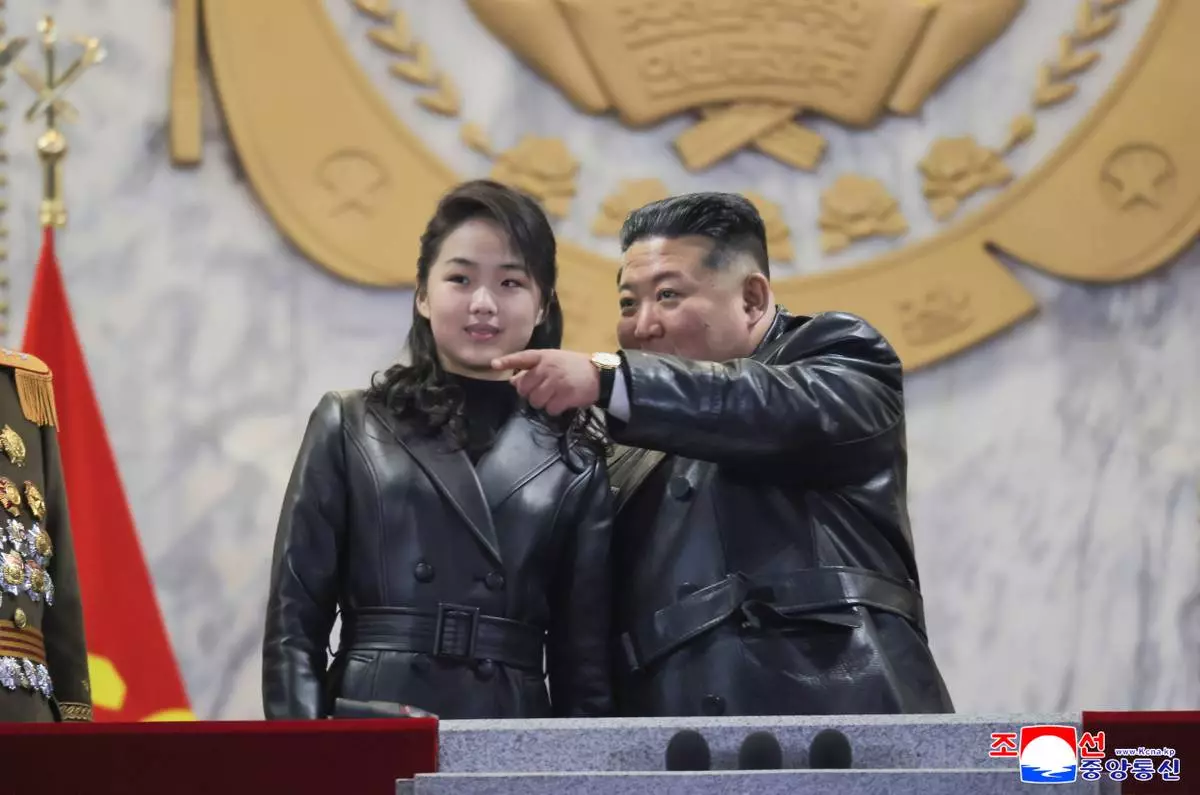
FILE - In this photo provided by the North Korean government, its leader Kim Jong Un attends a parade with his daughter in Pyongyang, North Korea, on Feb. 25, 2026 as the North wrapped up the Workers' Party congress. Independent journalists were not given access to cover the event depicted in this image distributed by the North Korean government. The content of this image is as provided and cannot be independently verified. Korean language watermark on image as provided by source reads: "KCNA" which is the abbreviation for Korean Central News Agency. (Korean Central News Agency/Korea News Service via AP, File)
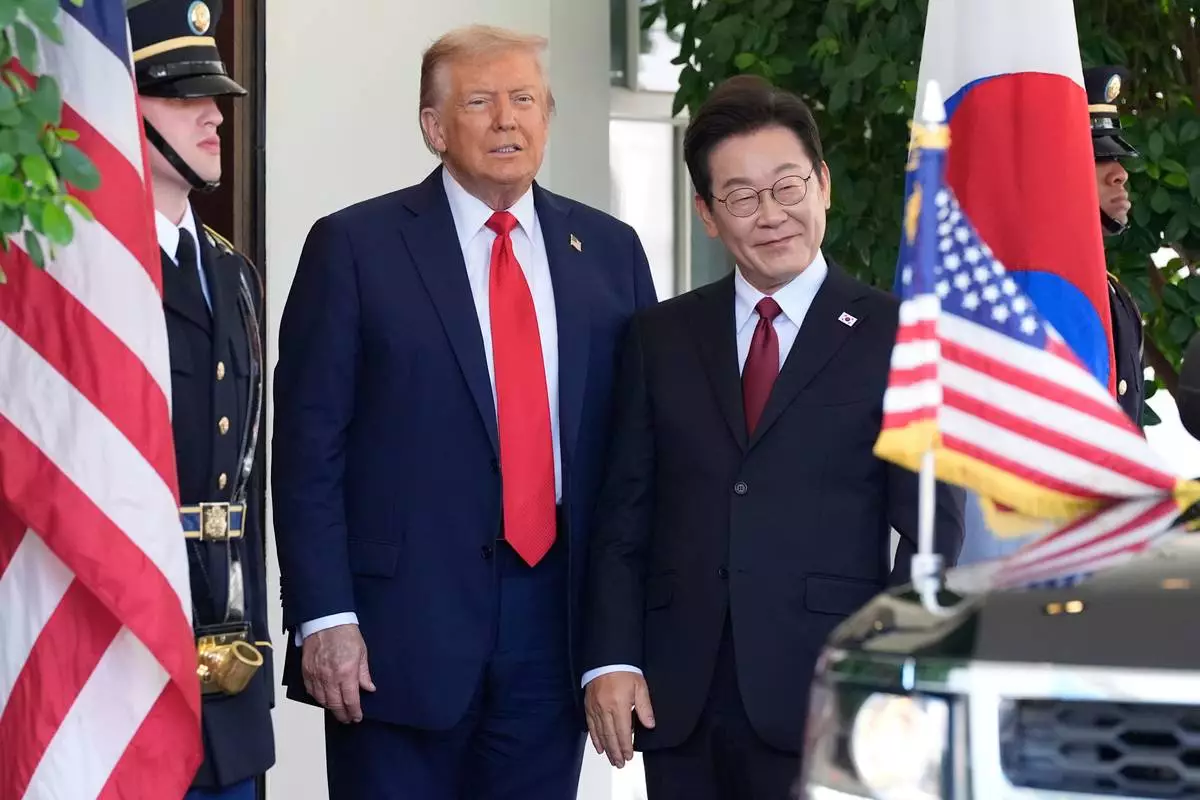
FILE - President Donald Trump, left, greets South Korean President Lee Jae Myung upon his arrival at the White House, on Aug. 25, 2025, in Washington. (AP Photo/Alex Brandon, File)
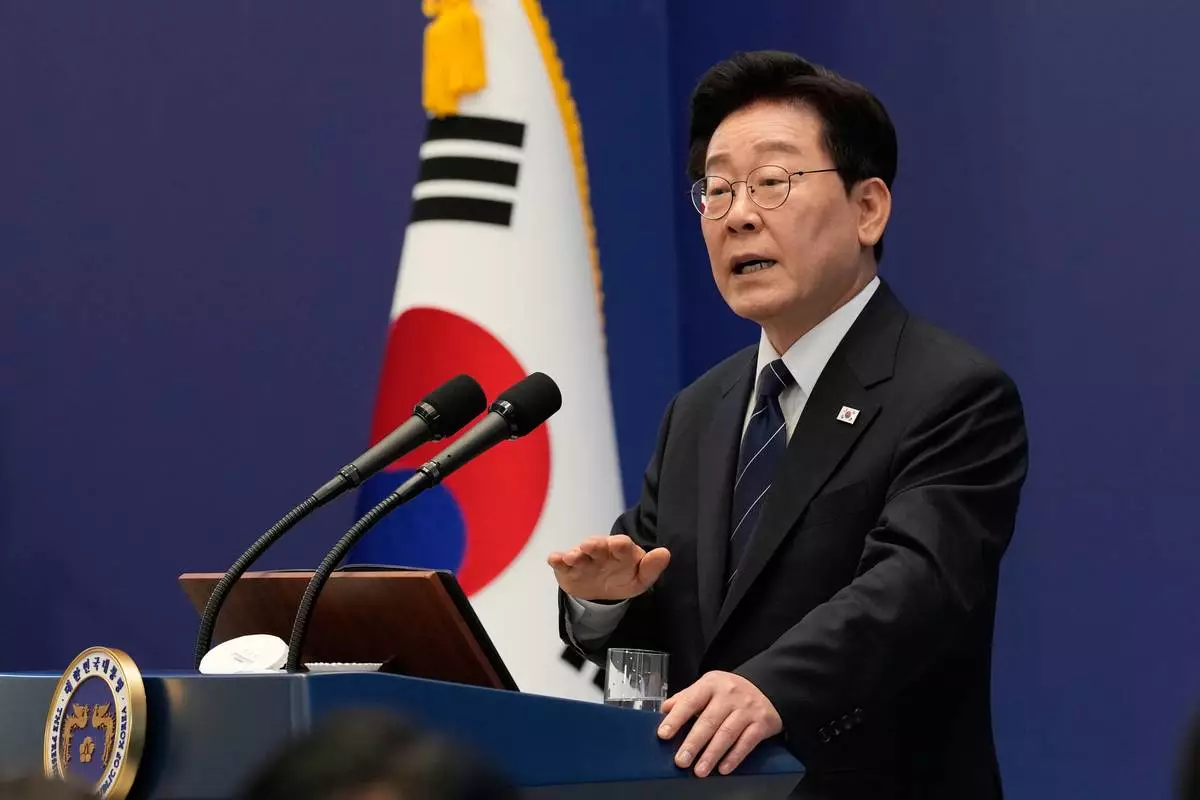
South Korean President Lee Jae Myung speaks during a press conference at the presidential Blue House in Seoul, South Korea, Friday, Sept. 18, 2026. (AP Photo/Ahn Young-joon, Pool)