AI-generated content is everywhere these days, making it increasingly difficult to separate fact from fiction, particularly when it comes to breaking news.
Look no further than the Iran war. Since the U.S. and Israel attacked Iran on Feb. 28, researchers have identified an unprecedented number of false and misleading images that were generated using artificial intelligence and have reached countless people around the world. Among them, fake footage of bombings that never happened, images of soldiers who were supposedly captured and propaganda videos created by Iran that depict President Donald Trump and others as a blocky, Lego-like miniatures.
Today, the 10th annual International Fact-Checking Day, provides a good opportunity to look at these evolving challenges.
Misinformation created with AI is being shared with unprecedented speed from an endless number of sources. From the outset of the Iran war, accounts from all sides of the conflict promoted such content.
The Institute for Strategic Dialogue, which tracks disinformation and online extremism, has been examining social media posts around the Iran war. Among their findings was a group of X accounts that regularly post AI-generated content and collectively gained more than one billion views since the conflict began. This was done by roughly two dozen accounts, many of which had blue check verification.
Here are some tips for distinguishing AI-generated content from reality in an online world where that continues to get harder.
When AI-generated images first began spreading widely online, there were often obvious tells that could identify them as fabricated. Perhaps a person had too few — or too many — fingers or their voice was out of sync with their mouth. Text may have been nonsensical. Objects were frequently distorted or missing key components. As the technology continues to evolve, these clues aren’t as common as they once were, but it’s still worth looking for them. Watch for inconsistencies such as a car that is in a video one moment and gone the next or actions that aren’t possible according to the laws of physics. Some images may also be overly polished or have an unnatural sheen.
AI-generated images get shared over and over again. One way to determine their authenticity (or lack thereof) is to hunt for their origin. Using a reverse image search is a simple way to do this. If you’re looking at a video, take a screenshot first. This can lead to a social media account that specifically generates AI content, an older image that is being misrepresented, or something entirely unexpected.
Look for multiple verified sources that can help authenticate the image. For example, that can mean a fact-check from a reputable media outlet, a statement from a public figure, or a social media post from a misinformation expert. These sources may have more advanced techniques for identifying AI-generated content or access to information about the image that is not accessible by the general public.
There are many AI detection tools that can be a helpful place to start. But be wary, as they are not always correct in their assessments. Images that have been generated or altered with AI using Google’s Gemini app include an invisible digital watermarking tool called SynthID, which the app can detect. Other AI creation tools have added visible watermarks to content they generate. They are often easy to remove though, meaning the absence of such a watermark is not proof that an image is genuine.
Sometimes it’s just about going back to basics. Stop, take a breath and don’t immediately share something you don’t know is real. Bad actors are often counting on the fact that people let their emotions and existing viewpoints guide their reactions to content. Looking at the comments may provide clues about whether the image you’re looking at is real or not. Another user might have noticed something you didn’t or been able to find the original source. Ultimately though, it’s not always possible to determine with 100% accuracy whether an image is AI-generated so remain alert to the possibility it might not be real.
See something that looks false or misleading? Email us at FactCheck@ap.org.
Find AP Fact Checks here: https://apnews.com/APFactCheck.

FILE - In this image from video circulating on social media, protesters dance and cheer around a bonfire as they take to the streets of Tehran, Iran, on Jan. 9, 2026. (UGC via AP, File)
TORONTO--(BUSINESS WIRE)--Sep 22, 2026--
Blair Health, a clinical infrastructure company that enables generalist healthcare providers to deliver specialist-level care, has raised CAD $4.24 million in pre-seed financing, marking the company's first institutional round and bringing total capital raised to date to CAD $4.5 million. The oversubscribed round was co-led by Business Development Bank of Canada's (BDC) Thrive Venture Fund, Accelia Capital, and Ogaei, with participation from Ontario Centre of Innovation (OCI) through its Life Sciences Innovation Fund (LSIF), and angel investors.
This press release features multimedia. View the full release here: https://www.businesswire.com/news/home/20260922407114/en/
Blair will use the funding to accelerate engineering and product development, expand its commercial presence across Canada and into the U.S., and invest in the clinical operations, provider network, team and infrastructure required to scale the business. This includes growing its employer channel in Canada, collaborating with public-sector health systems, and expanding its U.S. employer business.
“The fundamental problem in healthcare today is that the traditional model for delivering specialist care doesn’t scale,” said Madge Rumman, co-founder and CEO of Blair Health. “We’ve spent the last year proving that specialist knowledge can be encoded into technology without removing the clinician from care, and that the same architecture can be applied across specialties. The clinical infrastructure we are building enables specialist expertise to reach far more patients, particularly in areas of medicine where backlogs are greatest and subspecialists are scarce.”
A clinical model built to scale access to specialist care
Blair's clinical infrastructure is built with medical subspecialists, encoding their assessment logic, guideline-informed treatment protocols, escalation triggers, and follow-up pathways into software. That infrastructure enables Blair's in-house nurse practitioners and family physicians to deliver specialist-level care, with subspecialists providing oversight and support for complex cases. It is also why patients can see a provider within days instead of waiting months or years for an appointment.
Blair is also built around what happens between appointments. Patients track their symptoms over time, and those trends feed back into the care plan so treatment is adjusted based on evidence. Each patient receives guidance personalized to their own assessments and clinical diagnoses, and can message their provider between visits.
“Expanding access to specialized care is a significant opportunity to improve outcomes for women while building innovative healthcare businesses,” said Roxanne Turcotte, SVP, Inclusive and Government Funds, BDC. “This investment reflects our fund's commitment to backing women-led companies with strong growth potential and BDC's mandate to help Canadian innovators scale and create lasting economic impact.”
From clinical validation to national scale
Blair proved its model in menopause, one of the largest specialist backlogs in Canadian healthcare, where women can wait up to two years for an appointment. The menopause pathway was built with Blair co-founder and Chief Medical Officer, Dr. Lindsay Shirreff, one of the few fellowship-trained menopause subspecialists practising in Canada, and was clinically validated against Blair's own clinical data set ahead of commercial launch in May 2025.
“The menopause pathway performs at 98.7% clinical accuracy, and we can train a provider to deliver it in under four hours,” adds Dr. Shirreff.
Blair also established that the architecture behind its clinical model extends across specialties. Working with leading specialists, the company has built new verticals in urology and pelvic health, led by urologist Dr. Sarah Peltz, and in clinical nutrition and weight management, led by Dr. Pooja Singhal, a board-certified gastroenterologist and obesity medicine physician. Each new vertical runs on the same technology stack.
Blair launched direct-to-consumer in May 2025 and has since grown to more than 2,300 users in Canada. Between 55 and 65 percent of steady-state visits are follow-ups, which reflects a longitudinal care model rather than one-off consultations.
Blair is available to women in every Canadian province, with French-language provider matching, and in six U.S. states, with more to come.
Employer pilots converting into annual workplace benefit contracts
In the U.S., employers are absorbing healthcare costs that rise every year without producing answers. Women cycle through appointments, referrals, and tests and still leave without a diagnosis or a treatment plan, and the employer pays for every step. When offered as a workplace benefit, Blair gives employees direct access to specialist-level assessment and treatment, so plan spend goes toward resolving a condition.
Blair piloted its employer offering in Canada with leading organizations across professional services, hospitality, and financial services, and those pilots have converted into recurring annual contracts. The employer channel went from close to zero a year ago to roughly half of Blair's revenue in the first half of 2026.
Fairmont Royal York introduced Blair to colleagues through an onsite education session before moving to a paid pilot. “Even employers with strong health and wellness programs can have gaps when it comes to supporting women’s health needs across different stages of life,” said Ian McLaren, Health & Wellness Manager at Fairmont Royal York. “Working with Blair Health has shown us how important it is to give colleagues timely access to specialist care and resources that meet those needs. When employees feel their health is understood and supported, it can have a meaningful impact on their wellbeing, confidence and how they experience work.”
“Women's health remains one of the largest underserved opportunities in healthcare, and Blair Health is tackling this gap with a fundamentally different approach,” said Catherine Poulin-Filion, Partner at Accelia Capital. “What stood out to us was the team's ability to rethink how care can be delivered rather than simply digitizing an existing model. Blair has paired a significant market need with a strong clinical foundation and a clear vision for building a new category of healthcare company.”
About Blair Health
Blair Health is a clinical infrastructure company building technology that scales specialist medical knowledge. Its proprietary clinical models encode specialist-designed assessments, clinical pathways, treatment protocols, guardrails and escalation rules into software that enables generalist healthcare providers to deliver specialist-level care with continuous clinical oversight. Blair currently provides specialist-designed care across menopause and perimenopause, urology and pelvic health, and clinical nutrition and weight management, across Canada and in a growing number of U.S. states. For more information, visit Blair Health online.
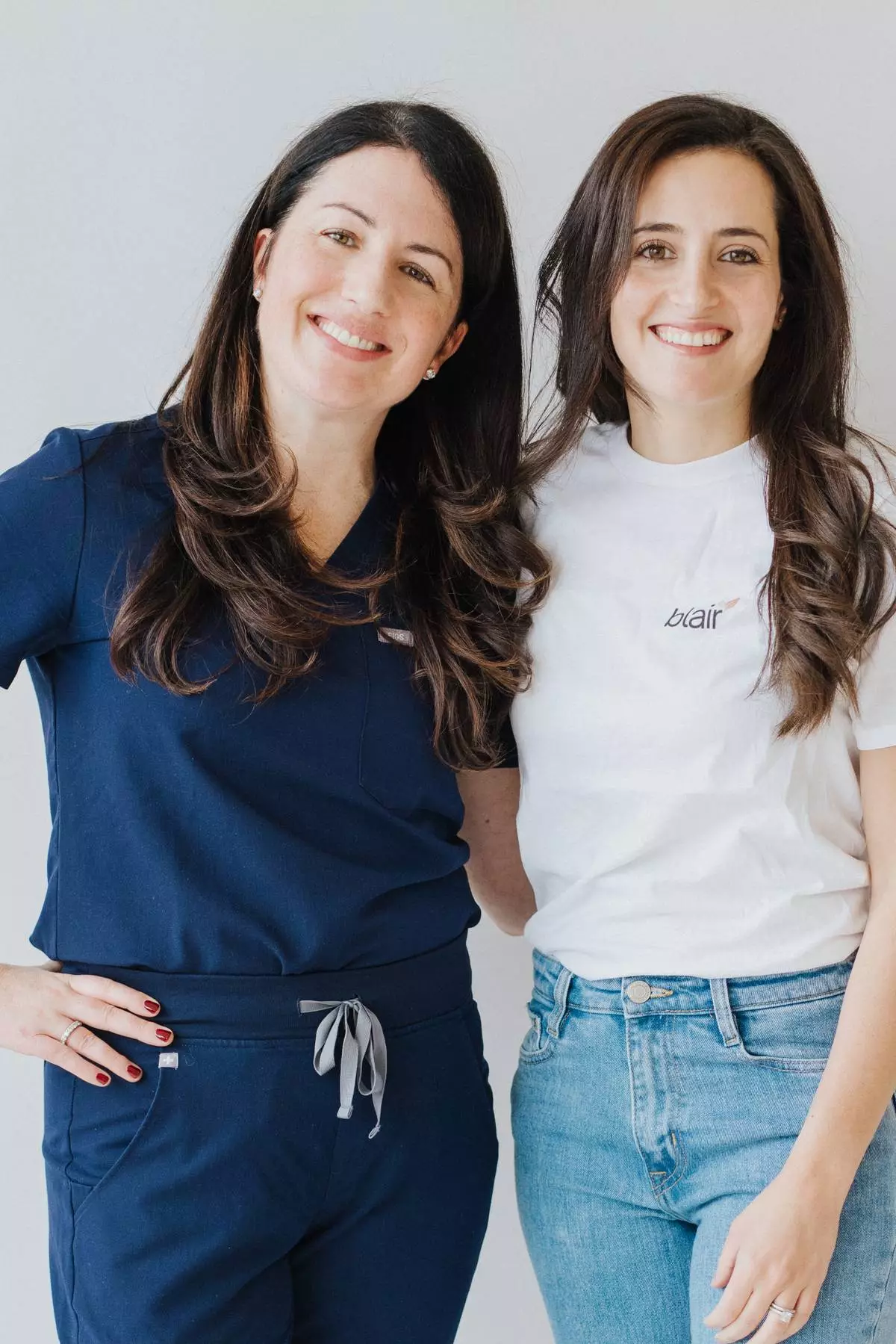
Blair was co-founded in December 2024 by Madge Rumman, Chief Executive Officer and Dr. Lindsay Shirreff, Chief Medical Officer