Chelsea coach Sonia Bompastor whipped out her cell phone in a post-match interview and replayed footage of a hair-pulling incident missed by match officials in the Women's Champions League game against Arsenal.
The clip played by Bompastor in a TV interview showed Arsenal defender Katie McCabe pulling back the flowing hair of Chelsea forward Alyssa Thompson as the U.S. international broke forward in the final seconds in search of a goal to take Wednesday's game to extra time.
The French coach, who felt McCabe should have been sent off, complained to Danish referee Frida Klarlund from the sideline and was shown a red card. Bompastor continued to vent her anger afterward.
“I brought the phone with me — I don’t know if you can see that. That’s probably not usual,” said Bompastor, who held up the screen and pressed play to show the incident. “But if you look at this video, and I don’t know if you can see, for me it is clearly a red card for the Arsenal player. She’s pulling Alyssa’s hair. So I think, for me, if the VAR again is not able to check that situation, I don’t know why we have the VAR.”
Bompastor said Thompson “was crying” after the incident, which happened soon after Chelsea scored in the fourth minute of stoppage time to make it 1-0. That’s how it stayed and Arsenal advanced 3-2 on aggregate.
McCabe took to social media after the game, posting on Instagram Stories: “I just want to clarify that I was genuinely reaching for the shirt, I wouldn’t ever want to pull someone’s hair. Full respect to Thompson.”
UEFA was still waiting on Thursday for the match delegate’s report.
Hair-pulling can be regarded as violent conduct and punished with a red card, as was the case in the Women's European Championship last year when the video assistant referee spotted Germany midfielder Kathrin Hendrich yanking the ponytail of France captain Griedge Mbock at a free kick.
In men's soccer, Paris Saint-Germain midfielder João Neves was sent off for pulling down Marc Cucurella by his hair toward the end of Chelsea’s 3-0 victory in the Club World Cup final last year.
In the Premier League, Everton defender Michael Keane was sent off in January after a video review for pulling the hair of Wolverhampton's Tolu Arokodare as they competed for a header. Everton failed with an appeal to the Football Association that it did not constitute violent conduct.
AP soccer: https://apnews.com/hub/soccer

Chelsea's Alyssa Thompson, right, and a teammate react following defeat in the Women's Champions League quarterfinal second leg soccer match against Arsenal in London, Wednesday, April 1, 2026. (John Walton/PA via AP)
DUBAI, United Arab Emirates (AP) — Iran fired more missiles at Israel and Gulf Arab states Thursday, demonstrating Tehran’s continued ability to attack even as U.S. President Donald Trump claimed the threat from the country was nearly eliminated and predicted the war would end soon.
Iran’s strikes on its neighbors along with its chokehold on the Strait of Hormuz have disrupted the world’s energy supplies with effects far beyond the Middle East. That has proved to be Iran’s greatest strategic advantage in the war. Britain planned to hold a call with nearly three dozen countries about how to reopen the strait, through which 20% of all traded oil passes in peacetime, once the fighting is over.
Trump has insisted the strait, which was open to traffic before the U.S. and Israel launched their war on Iran, can be taken by force — but said it is not up to the U.S. to do that. In his address to the American people Wednesday night, he encouraged countries that depend on oil passing through Hormuz to “build some delayed courage” and go “take it.”
Iran responded defiantly to Trump’s speech, in which the American president claimed U.S. military action had been so decisive that “one of the most powerful countries” is “really no longer a threat.”
A spokesman for Iran’s military insisted Thursday that Tehran maintains hidden stockpiles of arms, munitions and production facilities. “The centers you think you have targeted are insignificant, and our strategic military productions take place in locations of which you have no knowledge and will never reach,” Lt. Col. Ebrahim Zolfaghari claimed.
Just before Trump began his address — in which he said U.S. “core strategic objectives are nearing completion” — explosions were heard in Dubai as air defenses worked to intercept an Iranian missile barrage.
Less than a half-hour after the president was done, Israel said its military was also working to intercept incoming missiles. Sirens sounded in Bahrain, home to the U.S. Navy’s 5th Fleet, immediately after the speech.
Attacks continued across Iran on Thursday, with strikes reported in multiple cities.
More than 1,900 people have been killed in Iran during the war, while 19 have been reported dead in Israel. More than two dozen people have died in Gulf states and the occupied West Bank, while 13 U.S. service members have been killed.
More than 1,200 people have been killed and more than 1 million displaced in Lebanon, home to Iran-backed Hezbollah militants who are fighting Israel, which has launched a ground invasion. Ten Israeli soldiers have also died there.
Iranian attacks on some two dozen commercial ships, and the threat of more, have halted nearly all traffic in the waterway that connects the Persian Gulf to the open ocean.
The 35 countries speaking Thursday, including all G7 industrialized democracies except the U.S., as well as the United Arab Emirates and Bahrain, signed a declaration last month demanding Iran stop blocking the strait. British Prime Minister Keir Starmer said the countries will discuss “viable diplomatic and political measures” to resume shipping.
But no country appears willing to try to open the strait by force while the war is raging. There is a concern that Iran might limit traffic through the strait even after U.S. and Israeli attacks on it cease.
The idea of an international effort has echoes of the “coalition of the willing,” led by the U.K. and France, that was assembled to underpin Ukraine’s security in the event of a ceasefire in that war. The coalition is, in part, an attempt to demonstrate to Washington that Europe is doing more for its own security in the face of frequent criticism from Trump.
The U.S. has presented Iran with a 15-point plan for a ceasefire, but Trump didn’t say anything in his speech about the diplomatic efforts or bring up his April 6 deadline for Iran to reopen the Strait of Hormuz or face severe retaliation.
The conflict is driving up prices for oil and natural gas, roiling stock markets, pushing up the cost of gasoline and threatening to make a range of goods, including food, more expensive.
On Thursday, Brent crude, the international standard, rose again and was at $108 in spot trading, up about 50% from Feb. 28 when Israel and the U.S. started the war.
Though the oil and gas that typically transits the strait is primarily sold to Asian nations, Japan and South Korea were the only two countries from the region joining Thursday's call about the strait. The supply of jet fuel has also been interrupted by the conflict, with consequences for travel worldwide.
Weissert reported from Washington and Rising from Bangkok.
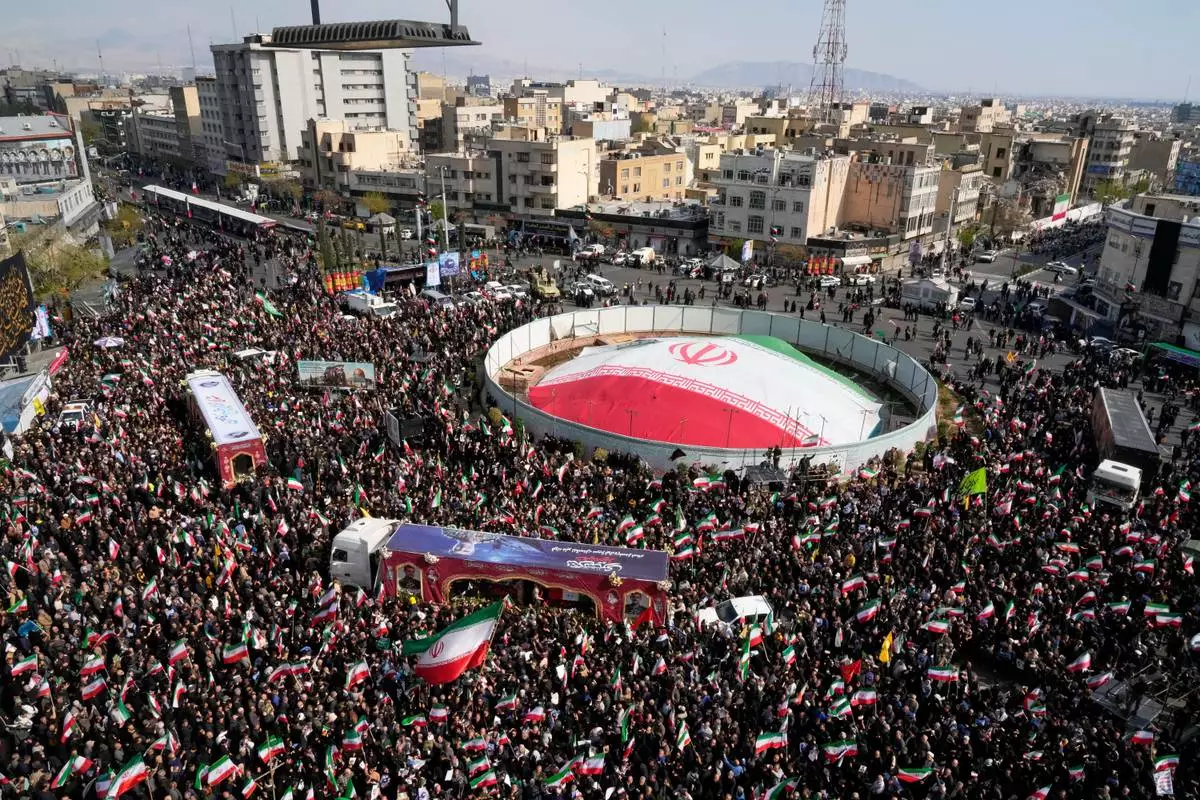
Mourners gather during a funeral procession for Alireza Tangsiri, head of Iran's Islamic Revolutionary Guard Corps Navy, and others killed in Israeli strikes in late March, in Tehran, Iran, Wednesday, April 1, 2026. (AP Photo/Vahid Salemi)
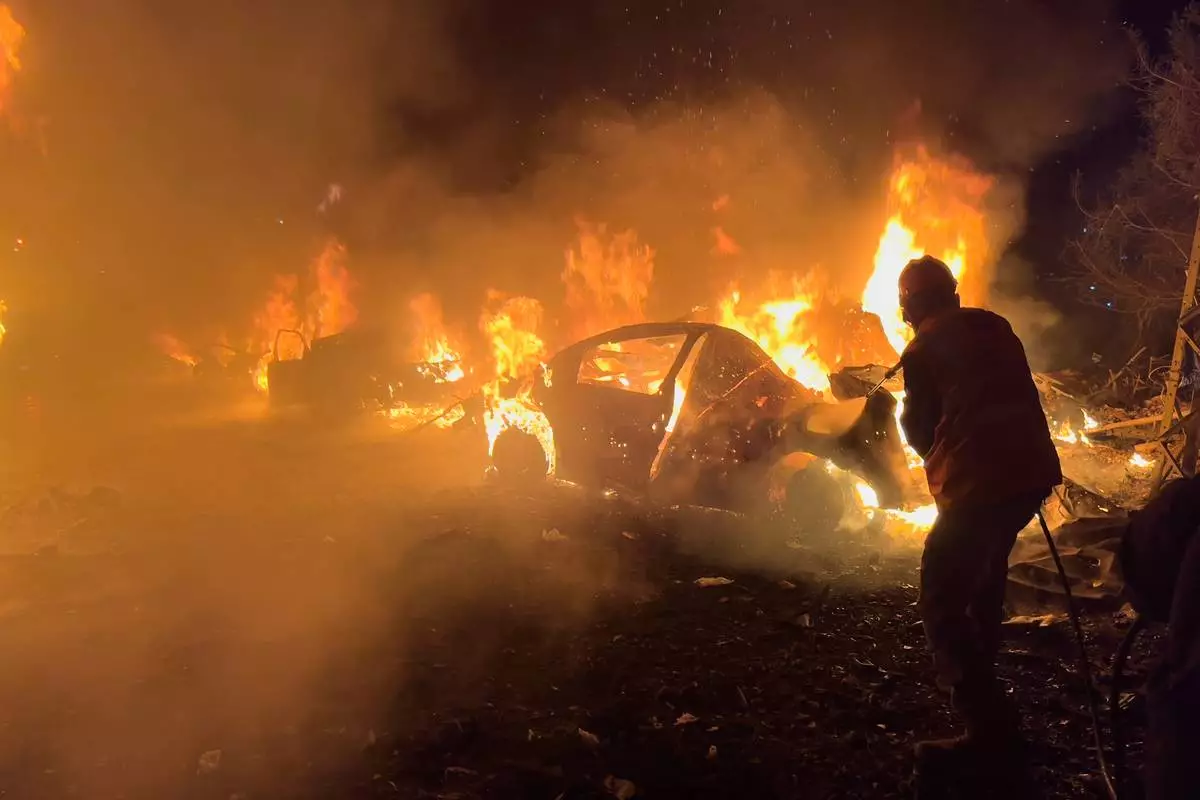
A firefighter extinguishes a car at the site of Israeli airstrikes, in Beirut, Lebanon, Wednesday, April 1, 2026. (AP Photo/Hussein Malla)
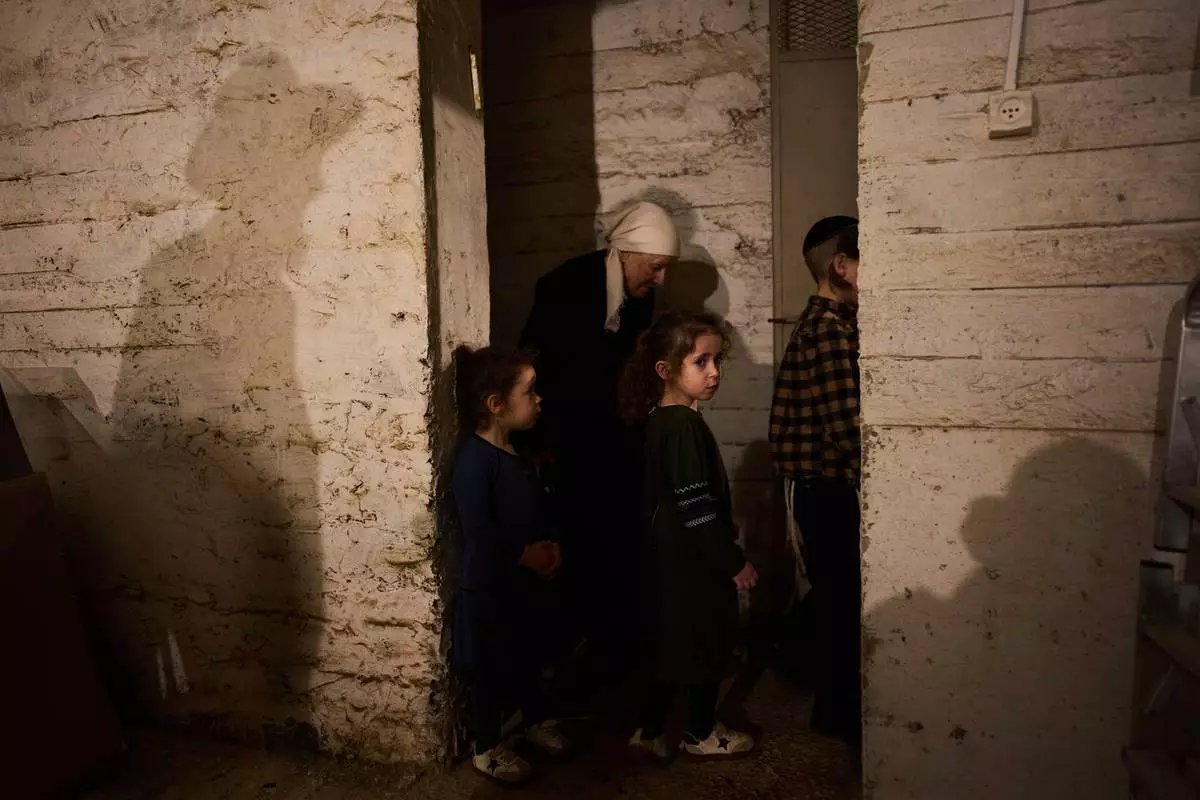
People take cover in a bomb shelter as air raid sirens warn of incoming Iranian missile strikes in Bnei Brak, Israel, Wednesday, April 1, 2026. (AP Photo/Oded Balilty)
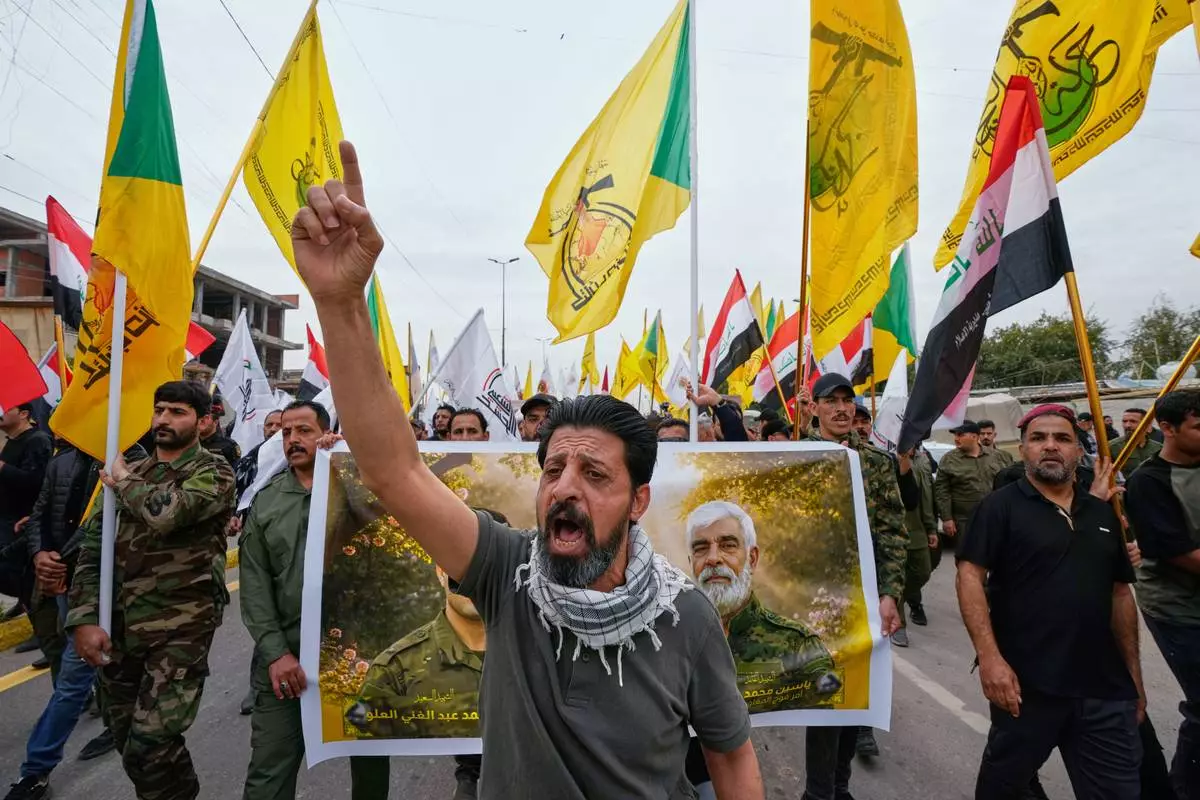
Members from the Popular Mobilization Forces attend a funeral of fighters who were killed in a U.S. airstrike, in Tal Afar, Nineveh province, north of Baghdad, Iraq, Thursday, April 2, 2026. (AP Photo/Hadi Mizban)
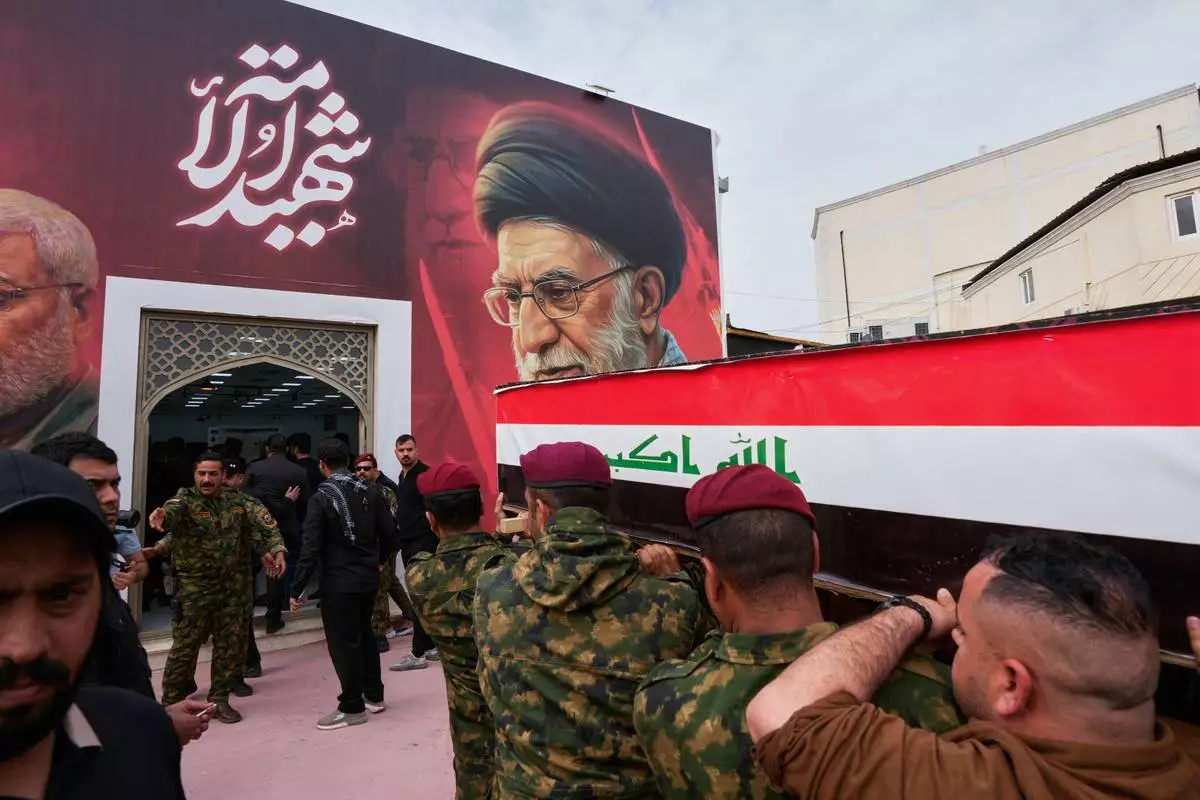
Members from the Popular Mobilization Forces attend a funeral of fighters who were killed in a U.S. airstrike, in Tal Afar, Nineveh province, north of Baghdad, Iraq, Thursday, April 2, 2026. (AP Photo/Hadi Mizban)
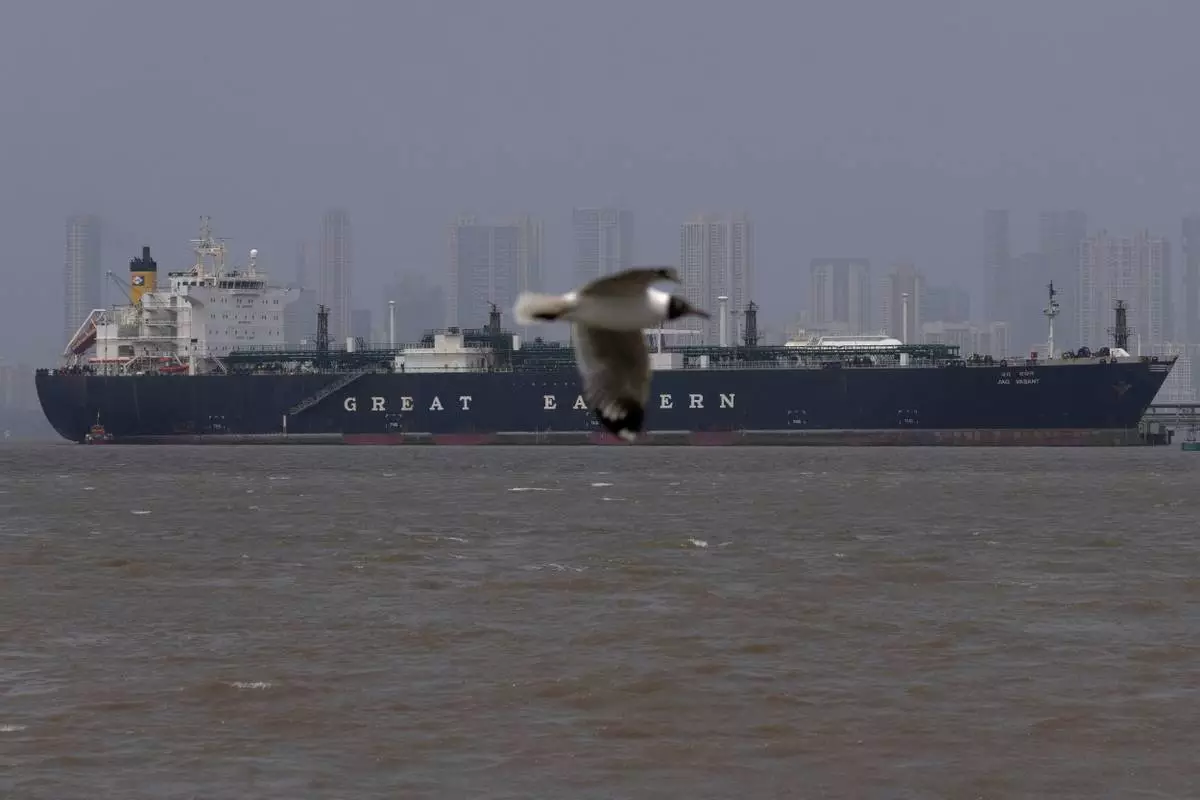
The Indian flagged LPG carrier Jag Vasant transporting liquefied petroleum gas, is seen at the Mumbai Port in Mumbai, India, after it arrived clearing the Strait of Hormuz, Wednesday, April 1, 2026. (AP Photo/Rafiq Maqbool)
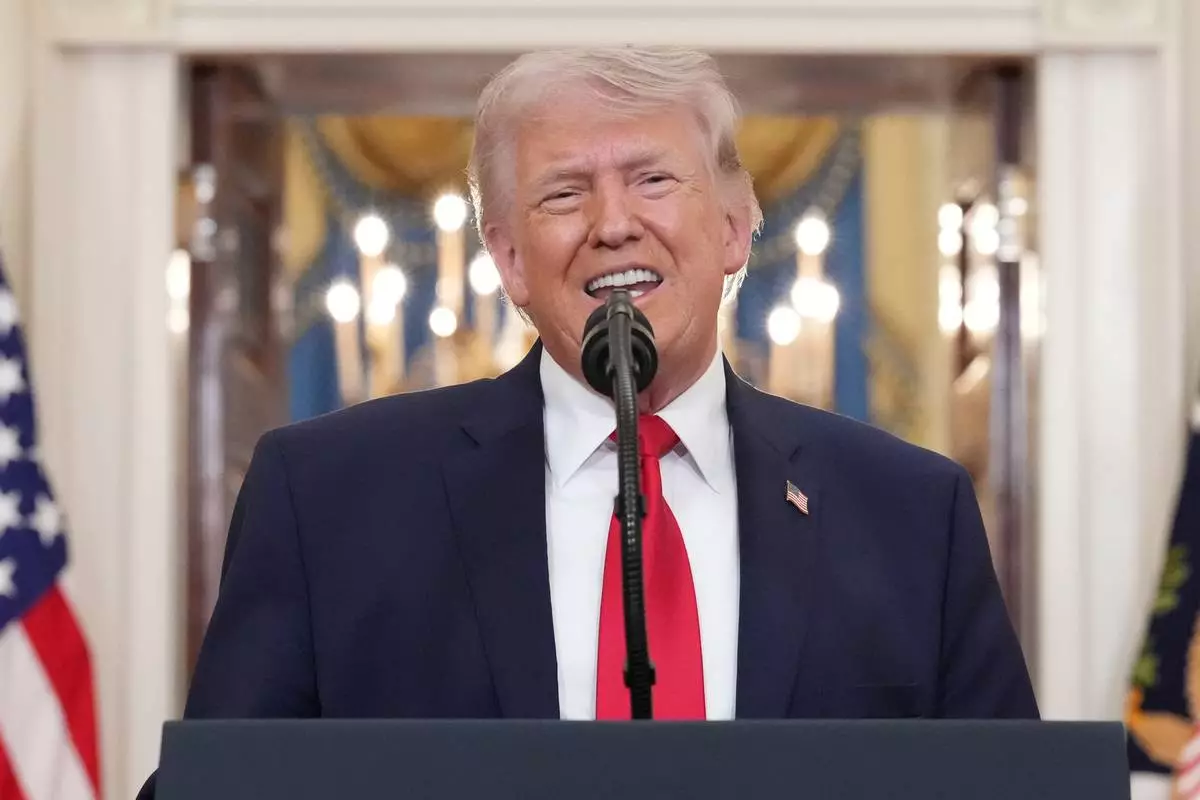
President Donald Trump speaks about the Iran war from the Cross Hall of the White House on Wednesday, April 1, 2026, in Washington. (AP Photo/Alex Brandon, Pool)
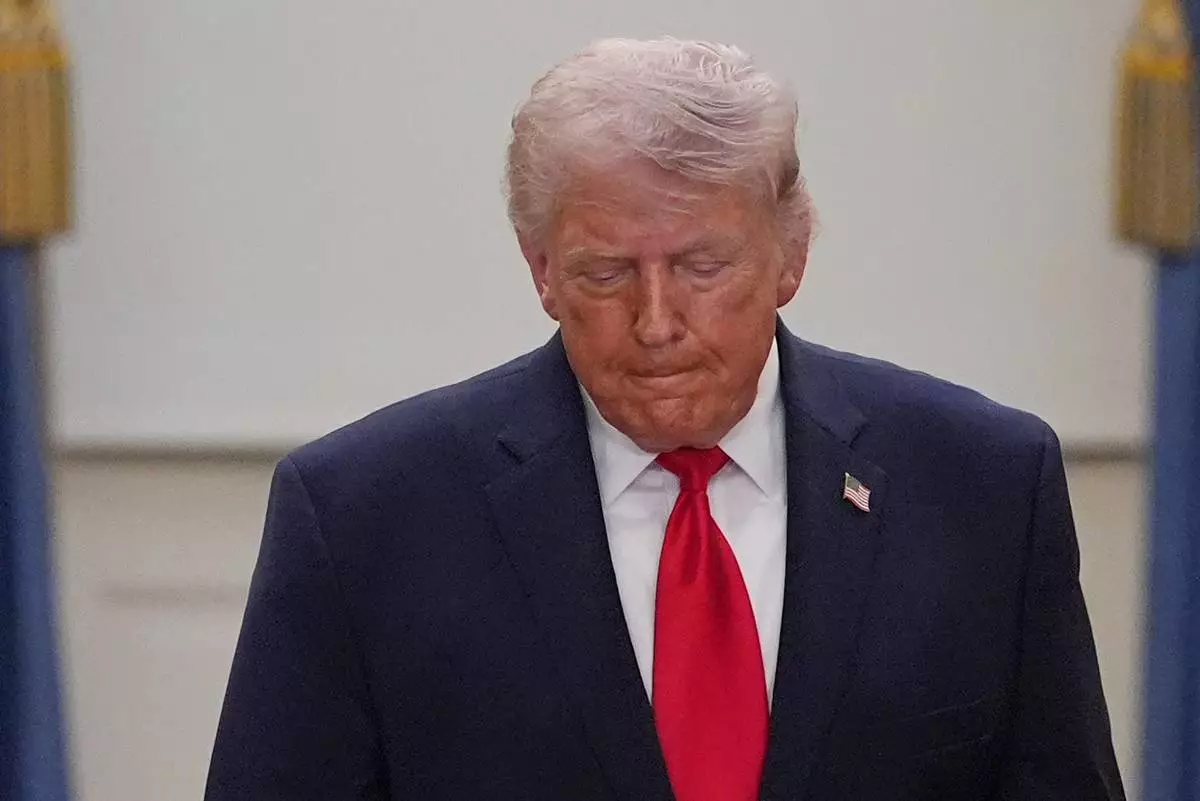
President Donald Trump walks from the Blue Room to speak about the Iran war from the Cross Hall of the White House on Wednesday, April 1, 2026, in Washington. (AP Photo/Alex Brandon, Pool)
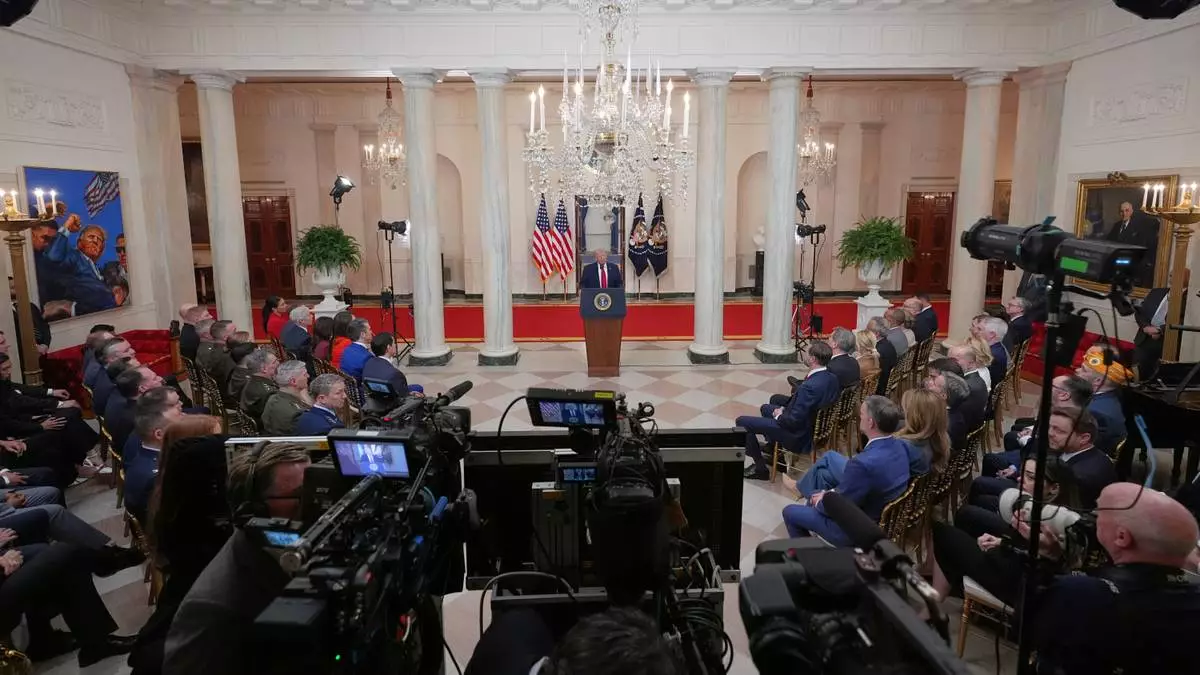
President Donald Trump speaks about the Iran war from the Cross Hall of the White House on Wednesday, April 1, 2026, in Washington. (AP Photo/Alex Brandon, Pool)
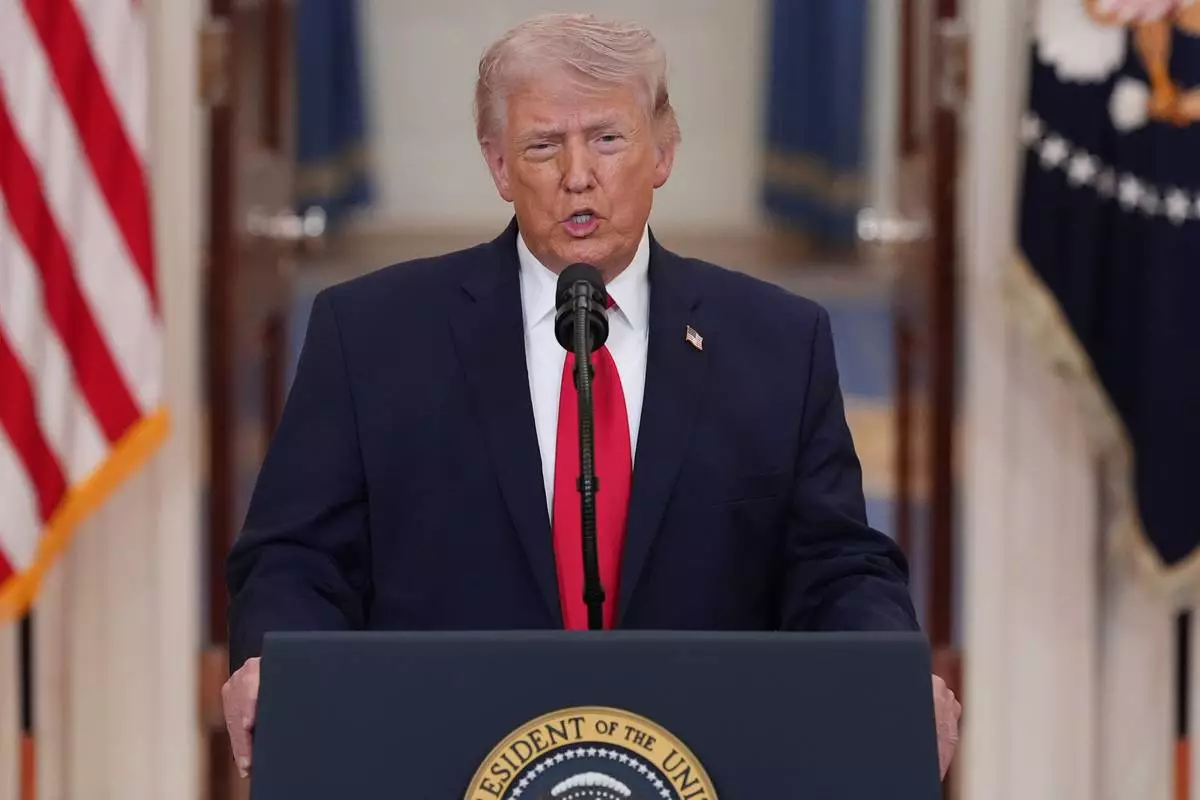
President Donald Trump speaks about the Iran war from the Cross Hall of the White House on Wednesday, April 1, 2026, in Washington. (AP Photo/Alex Brandon, Pool)