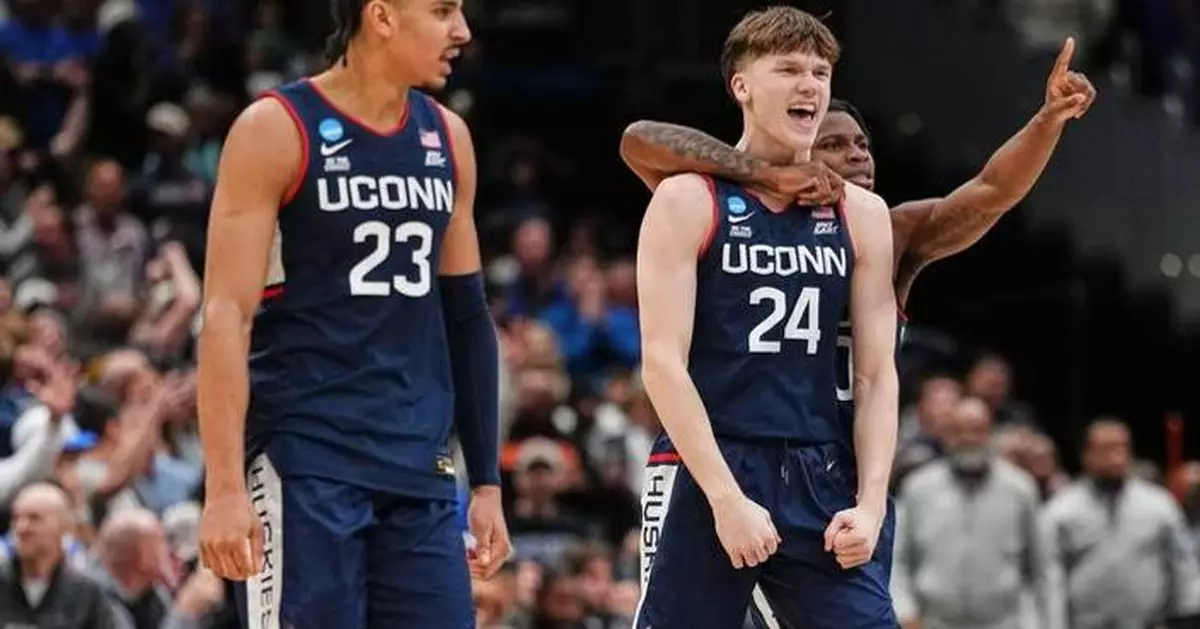
INDIANAPOLIS (AP) — Everywhere UConn guard Braylon Mullins looked Sunday night and Monday, he saw the same thing — another replay of his heroic 35-foot, game-winning 3-pointer to beat Duke.
He couldn't avoid it.
Click to Gallery
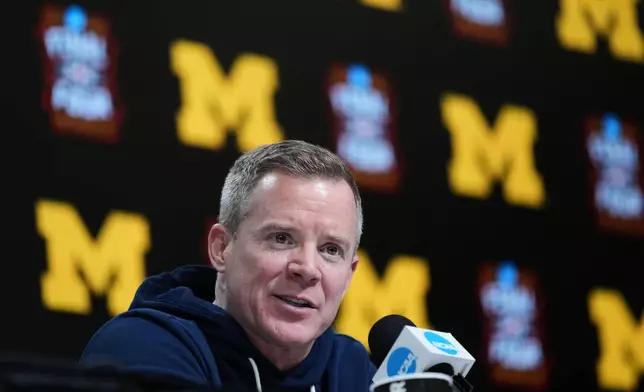
Michigan head coach Dusty May speaks during a news conference ahead of a national semifinal NCAA college basketball tournament game against Arizona at the Final Four, Thursday, April 2, 2026, in Indianapolis. (AP Photo/Abbie Parr)
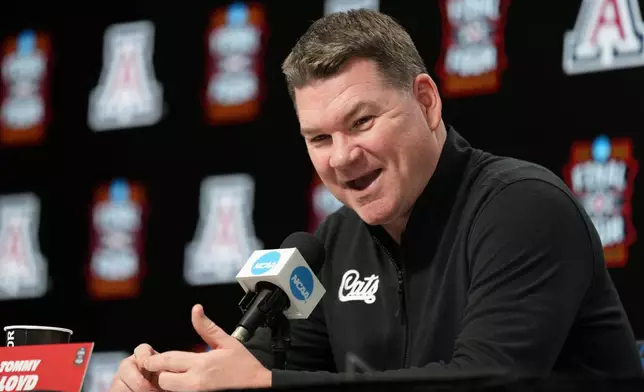
Arizona head coach Tommy Lloyd speaks during a news conference ahead of a national semifinal NCAA college basketball tournament game against Michigan at the Final Four, Thursday, April 2, 2026, in Indianapolis. (AP Photo/Abbie Parr)
Illinois' Zvonimir Ivisic celebrates after an Elite Eight game against Iowa in the NCAA college basketball tournament Saturday, March 28, 2026, in Houston. (AP Photo/Eric Gay)
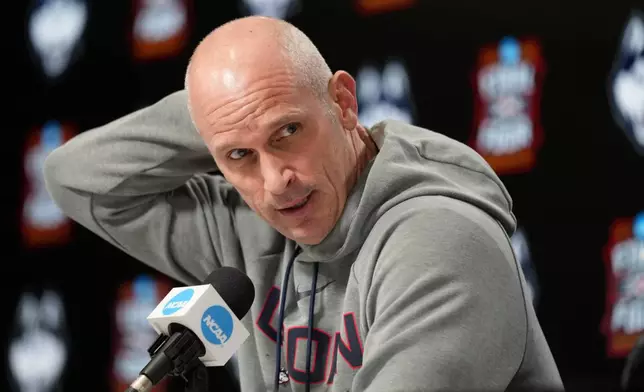
UConn head coach Dan Hurley pauses during a news conference ahead of a national semifinal NCAA college basketball tournament game against Illinois at the Final Four, Thursday, April 2, 2026, in Indianapolis. (AP Photo/Abbie Parr)
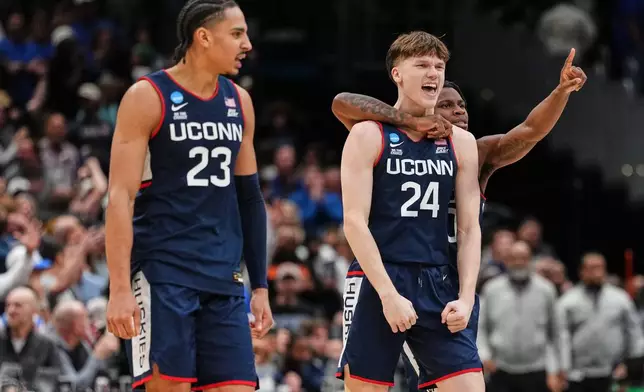
UConn guard Braylon Mullins (24) reacts with teammates after scoring the winning basket against Duke in the Elite Eight of the NCAA college basketball tournament, Sunday, March 29, 2026, in Washington. (AP Photo/Abbie Parr)
Eventually, though, the freshman guard decided he needed to turn off the television, tune out the chatter and move on.
“The first day, it was countless,” Mullins said Thursday when asked how many times he'd seen the replay. “I was like every scroll on the feed. But it's just after the first day, I was like ‘Hey, you’ve got to scroll past it. You've got to move on, flip the page.'"
Of course, just because Mullins — and the Huskies — want to leave that memorable moment in the past doesn't mean others will, as they found out in Indianapolis.
On the first day of Final Four weekend at Lucas Oil Stadium, Mullins' interviews with national television and radio outlets ran long, delaying his arrival to the locker room. When he finally made it, a horde of reporters swarmed his locker and, naturally, the topic turned to the shot that sent UConn to its third Final Four in four years.
“It's insane just knowing that shot's going to be played every March Madness and I'm a part of that moment," he said. “That's something I can cherish.”
Dan Hurley made one thing perfectly clear: UConn doesn’t intend to settle for anything less than leaving Indianapolis with another title.
In his first seven seasons with the Huskies, he already won back-to-back championships in 2023 and 2024. The run ended with a 77-75 second-round loss to eventual national champ Florida last season, but now UConn is back looking for the school’s seventh title — the first coming in 1999.
“Everyone that comes to the Final Four gets a beautiful watch, but only one group is going to get a ring,” the coach said. “So get off social media, stop injecting the dopamine into your arm and get serious about the preparation and the practice because we don’t hang banners for Final Fours at UConn. We hang national championship banners. If you want to hang a banner, you’ve got to get your eyes off social media, get your face out of the phone and get locked in on Illinois.”
Arizona coach Tommy Lloyd said Thursday he isn’t focusing on anything beyond his team’s goal of winning a national championship. That includes questions about him as a potential candidate to fill the coaching vacancy at blueblood program North Carolina.
“Listen, I’ve got my full focus on this team,” Lloyd said.” Nothing is distracting me. That’s just how I’ve decided to approach it.”
UNC fired Hubert Davis on March 24 after five seasons, leaving the job vacant for nearly 10 days.
“I’m a simple guy. I am kind of just one thing at a time,” Lloyd said. “I’m not a multitasker. You can ask my wife. I’m 100% locked in on Arizona basketball right now, and I’m excited to see what this team can do.”
At least Michigan coach Dusty May has a better idea of what to expect at this Final Four.
It's his second trip to the sport’s biggest stage in four seasons, the other coming in 2023 with a 35-win Florida Atlantic upstart. He recalled spending a full day talking to other coaches who had reached the Final Four “about what to do and what not to do and how to prepare.”
This year's Michigan team ranked no lower than fourth in the AP Top 25 poll after November, and the Wolverines ranked No. 1 according to KenPom in 58 of 94 daily rankings between Christmas and the start of March Madness.
“I think here we probably clinched an NCAA Tournament bid after Players Era (tournament) in November, so just the entire thing has felt different,” May said.
For Arizona director of player relations Jason Gardner, this is not just another tourney trip. It's a homecoming.
The two-time All-American point guard led the Wildcats to a national runner-up finish in 2001 in their last Final Four appearance prior to this year.
But before he played at Arizona, he had quite the reputation in Indiana where he won the state's prestigious Mr. Basketball Award in 1999. He later spent five seasons coaching IUPUI, now known as IU-Indianapolis, and spent one season as head coach at North Central High School in Indy, where he played prep ball. And now his son, Jason Gardner Jr., is considered a top recruit out of Fishers High School in suburban Indy.
“No matter where you go, there's always an argument about which state is better, who has the best players, who has the most NBA guys?” Gardner said. “The good thing about Indiana is that everybody knows the coaching in Indiana is great, the players are very good, so being from Indiana everybody knows what basketball means and I think always kind of gives the state a leg up.”
Illinois post players Tomislav and Zvonimir Ivisic certainly fit the term of “twin towers” — in more ways than one.
Both top 7 feet, grew up in Croatia and played club basketball in Europe before attending college in the U.S. and eventually reuniting this season with the Fighting Illini. The 7-foot-1 Tomislav, the older brother by four minutes, starts. Zvonimir comes off the bench.
Injuries made it difficult to get the two working in sync early this season.
“There were some challenges early because of Tommy’s tonsillitis. He hurts his knee. Those were kind of in the formative times of practice where Tommy missed a lot of them,” Underwood said. “Their chemistry is unbelievable. Their competitiveness is unbelievable. They go at each other all the time. They’re very different people, even though they’re twins, and yet their synergy is really fun to see.”
AP Basketball Writer Aaron Beard also contributed to this report.
AP March Madness bracket: https://apnews.com/hub/ncaa-mens-bracket and coverage: https://apnews.com/hub/march-madness
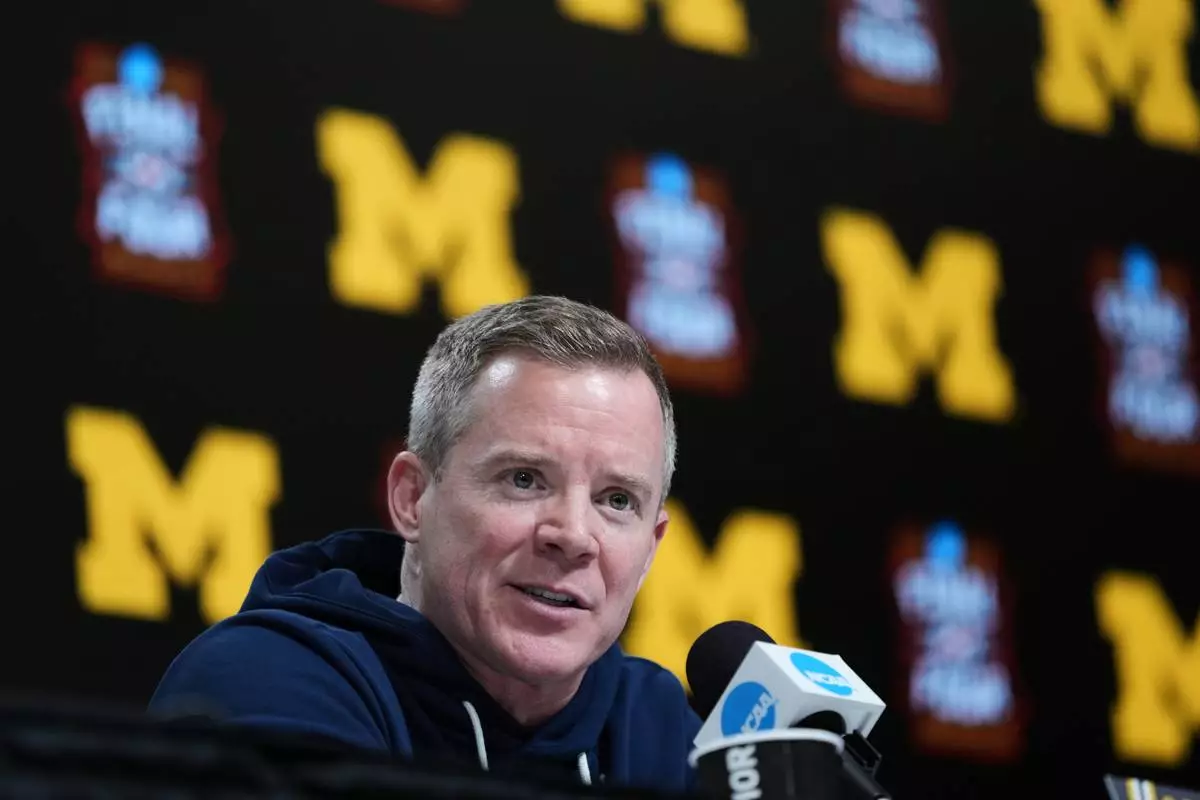
Michigan head coach Dusty May speaks during a news conference ahead of a national semifinal NCAA college basketball tournament game against Arizona at the Final Four, Thursday, April 2, 2026, in Indianapolis. (AP Photo/Abbie Parr)
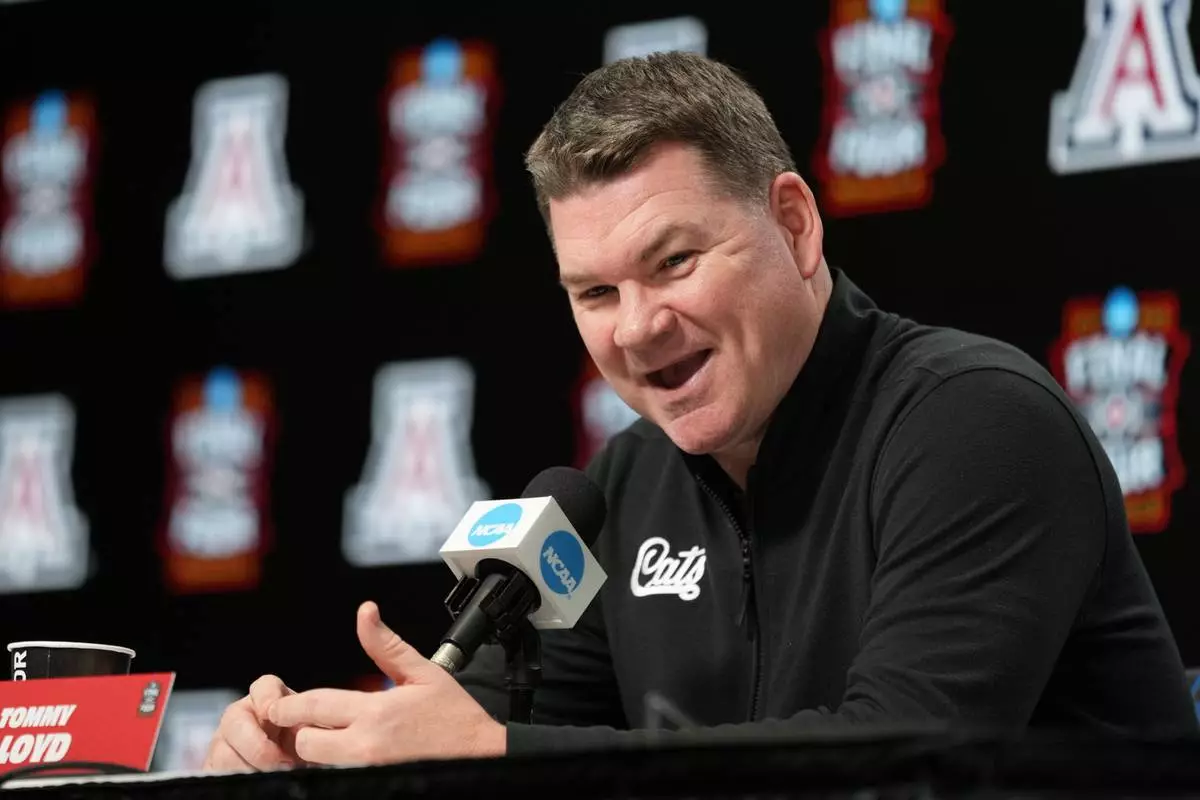
Arizona head coach Tommy Lloyd speaks during a news conference ahead of a national semifinal NCAA college basketball tournament game against Michigan at the Final Four, Thursday, April 2, 2026, in Indianapolis. (AP Photo/Abbie Parr)

Illinois' Zvonimir Ivisic celebrates after an Elite Eight game against Iowa in the NCAA college basketball tournament Saturday, March 28, 2026, in Houston. (AP Photo/Eric Gay)
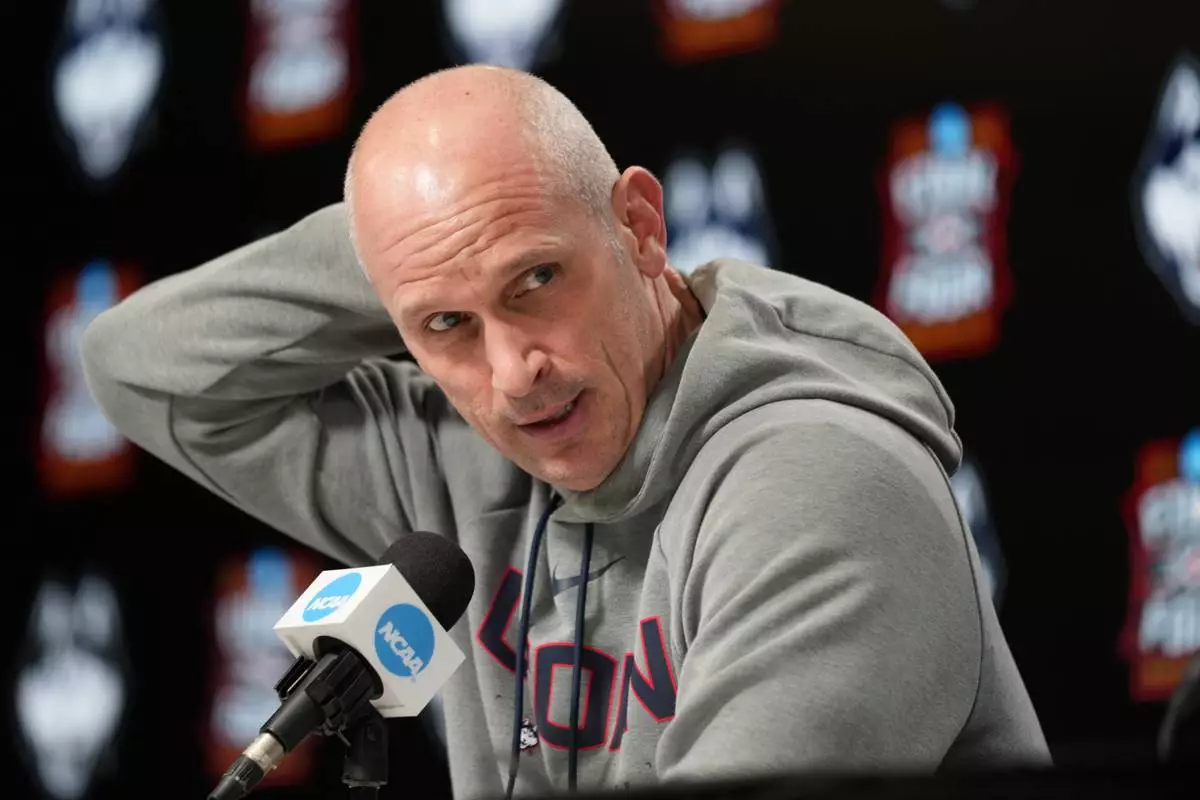
UConn head coach Dan Hurley pauses during a news conference ahead of a national semifinal NCAA college basketball tournament game against Illinois at the Final Four, Thursday, April 2, 2026, in Indianapolis. (AP Photo/Abbie Parr)
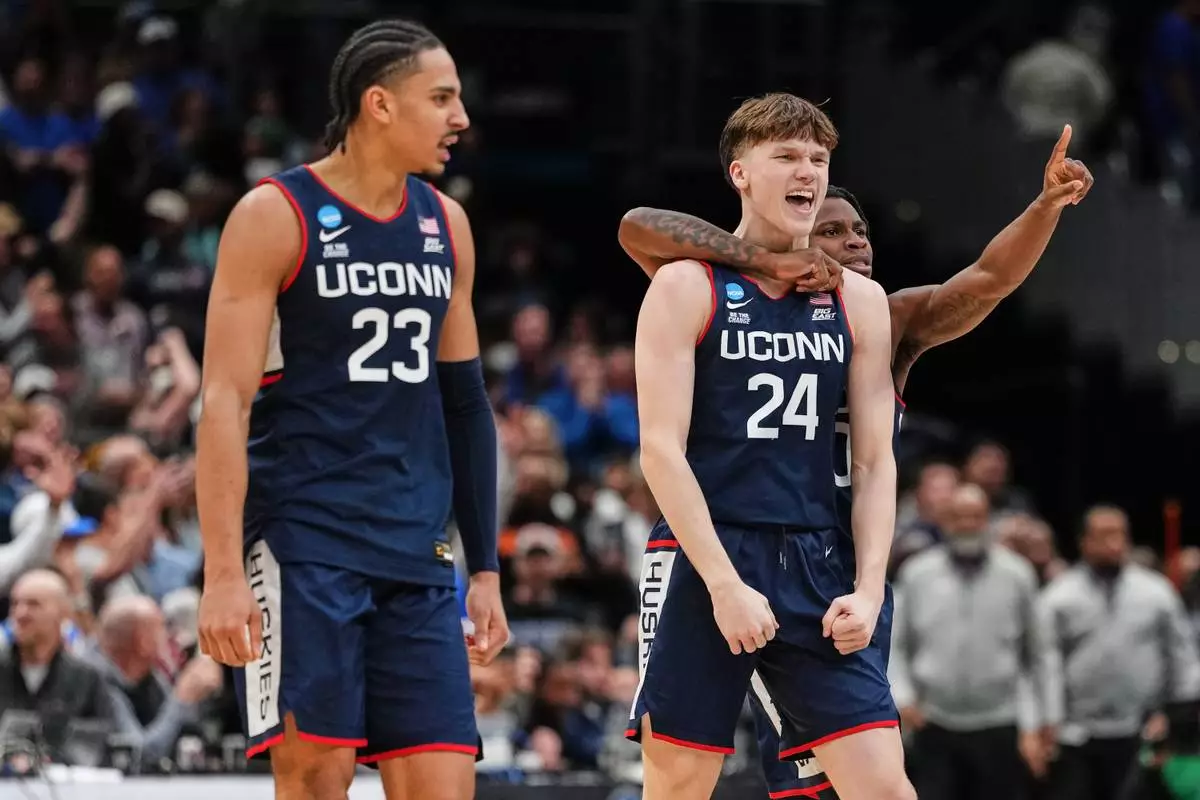
UConn guard Braylon Mullins (24) reacts with teammates after scoring the winning basket against Duke in the Elite Eight of the NCAA college basketball tournament, Sunday, March 29, 2026, in Washington. (AP Photo/Abbie Parr)
COLUMBUS, Ohio (AP) — In rain, snow and bitter cold, a steady drumbeat of small protests have been held in recent months on the Ohio State University main campus with a single goal in mind: removing billionaire retail mogul Les Wexner's name from buildings where it's emblazoned.
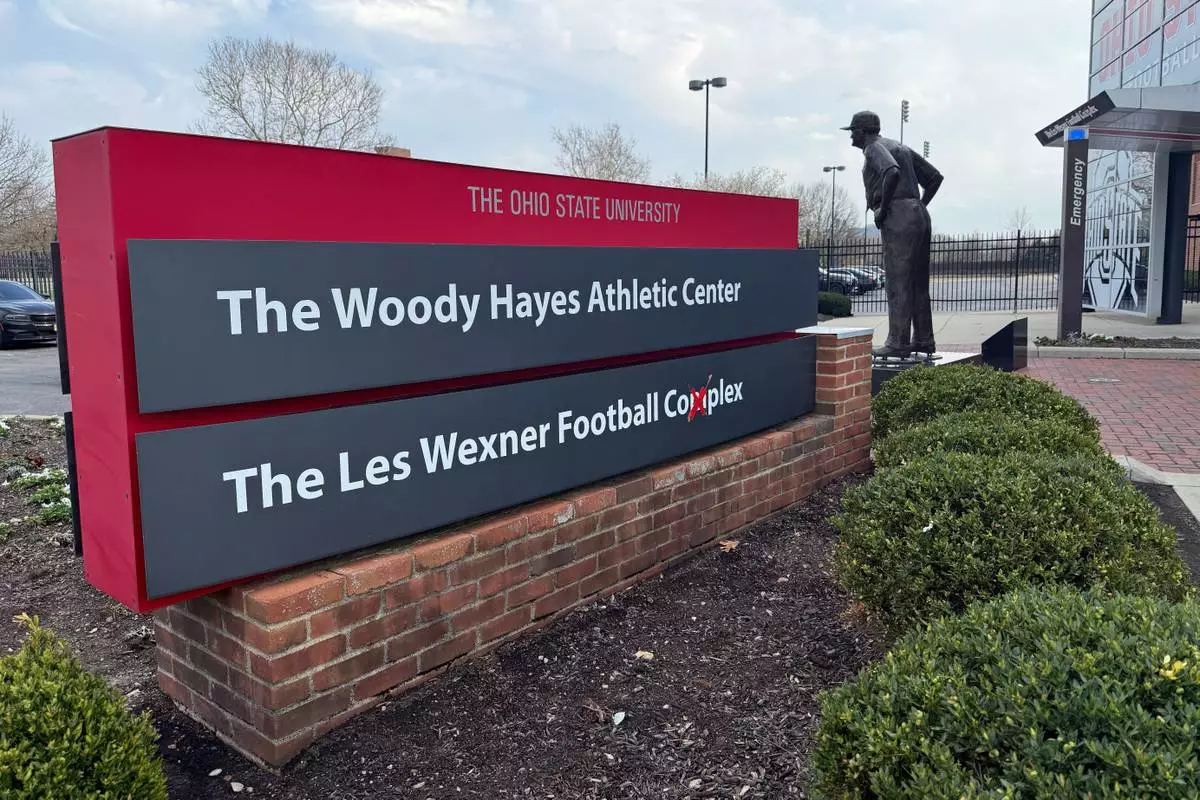
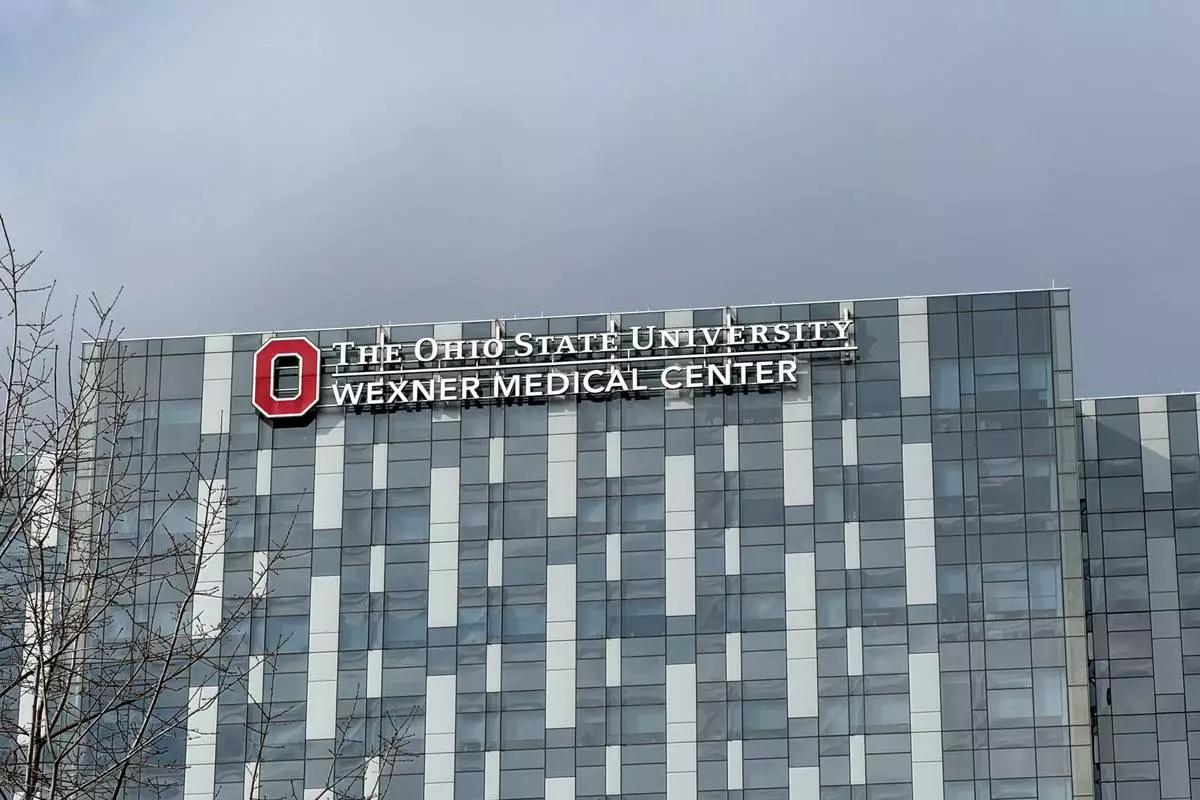
At issue — for union nurses at OSU's Wexner Medical Center, for former athletes at the Les Wexner Football Complex, and for some student leaders who may walk past the Wexner Center for the Arts near the campus oval — is Wexner's well-documented association with the late sexual predator Jeffrey Epstein.
Similar cries are arising over a Wexner-named building at Harvard University and others around the country whose names appeared in the Epstein files, including Steve Tisch, Casey Wasserman, Glenn Dubin and Howard Lutnick.
It's all part of the backlash across higher education against figures with ties to Epstein, who cultivated an extensive network including powerful people in the arts, business and academia. Scrutiny has landed on university donors as well as several academics whose emails with Epstein surfaced in the latest files, including some who have resigned.
Wexner hasn't been charged with any crime in connection with Epstein, the one-time financial adviser by whom he says he was “duped.”
But a group of former Ohio State athletes who survived a sweeping sexual abuse scandal at the school argues that the retired L Brands founder 's generosity to his alma mater is now tainted by the knowledge that Epstein was entangled in many of his family's spending decisions, including around the football complex's naming.
“Ohio State University cannot credibly separate itself from these facts, nor can it justify continuing to honor Les Wexner with an athletic facility,” their naming removal request read. It went on, “To do so is to ignore the voices of survivors, former athletes, and the broader community who expect accountability, transparency, and moral leadership.”
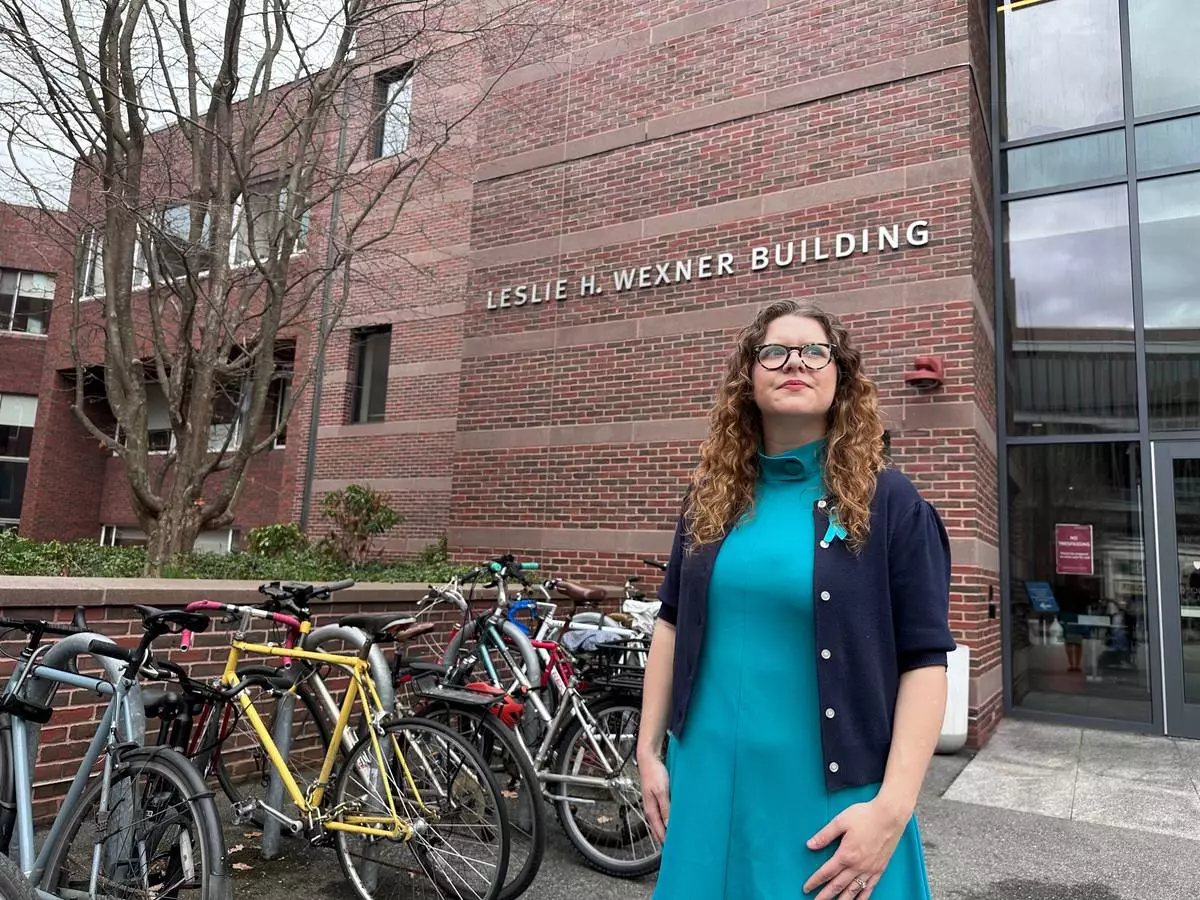
At Harvard, a group of students and faculty at the prestigious Kennedy School has targeted the Leslie H. Wexner Building and the Wexner-Sunshine Lobby. The renaming request submitted in March cites Wexner’s “strong ties to Epstein” and argues Epstein profited off Wexner, “which enabled Epstein to use his wealth and power to traffic and abuse children and women.”
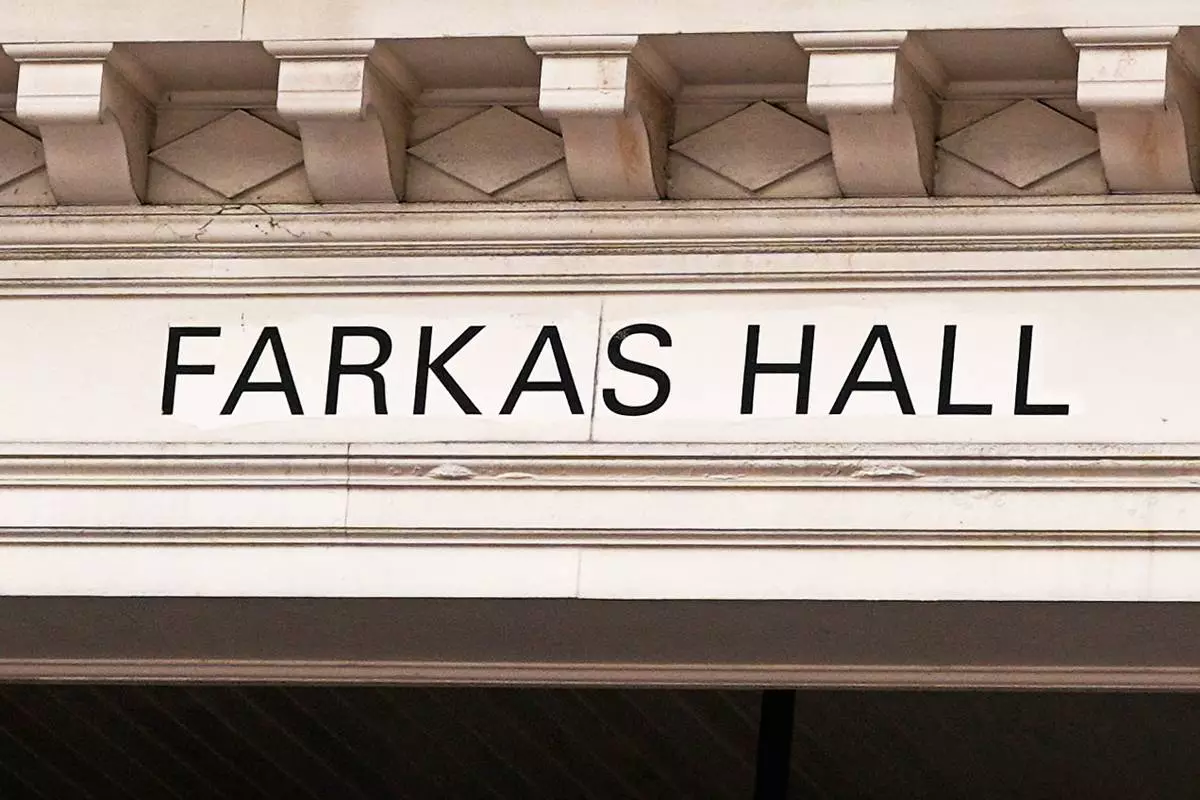
Some Harvard students and alumni also want the Farkas name removed from Farkas Hall, which hosts the Hasty Pudding Theatricals Man and Woman of the Year. The building was renamed in 2011 following a significant donation from Andrew Farkas, graduate chairman of the Hasty Pudding Institute, in honor of his father.
Farkas had a longtime personal and business relationship with Epstein, including co-owning a marina with him in the Caribbean. He also repeatedly asked Epstein to donate to Hasty Pudding. Between roughly 2013 and 2019, Epstein regularly donating $50,000 annually to secure top-tier donor status, for a total of more than $300,000.
“As I’ve said repeatedly, I deeply regret ever having met this individual, but at no time have I conducted myself inappropriately,” Farkas said in a statement.
Pushback against buildings named for Epstein associates and others named in the Epstein files is growing on some U.S. campuses.
Just last weekend, the student body at Haverford College in Pennsylvania voted to urge President Wendy Raymond to forge ahead with the renaming process for the Allison & Howard Lutnick Library. The building is named for the U.S. commerce secretary who has faced resignation calls over his relationship with Epstein.
Raymond had said in a February open letter that she wasn't ready to do that. In a statement to The Associated Press following Sunday’s vote, Raymond said she respected the process and would respond to the resolution within the customary 30-day period.
At Ohio State, pleas against the Wexner name are making their way through a five-step review procedure, most of which takes place outside public view and with no set timeline. The university's new president, Ravi Bellamkonda said, “I think the process is thorough, fair, and open, and I will promise you that we will give each request a full consideration.”
A spokesman for Harvard confirmed the school has received the Wexner-related name removal request but would not comment further. It would be the university's second name change, after the John Winthrop House, which bore the name of a Harvard professor and a like-named ancestor, was changed to Winthrop House in July over their connections to slavery.
Tufts University, home to the Tisch Library and the Steve Tisch Sports and Fitness Center, said it continues to look at the matter. The library has moved to clarify that it was not named for Steve, but, in 1992, for his father Preston Tisch, an honored alum. The sports center removed a set of Steve Tisch's handprints during spring break. The university said that was part of a planned renovation.
UCLA's Wasserman Football Center and Stony Brook University's Dubin Family Athletic Performance Center also are named for individuals who appear in the files.
The current clamor bears some resemblance to the controversy that surrounded the wealthy Sackler family's culpability in the deadly opioid crisis, because in both cases the institutions involved had received vast sums from the family.
Some major institutions — including museums in New York and Paris, Tufts and the University of Oxford in England — did remove the Sackler name, but Harvard chose not to. In a 15-page report explaining its 2024 decision, the university said the legacy of Arthur M. Sackler, whose company Purdue Pharma made the potent opioid OxyContin, was “complex, ambiguous and debatable.”
The Epstein-tainted names are on campus buildings also are typically generous donors, as well as alumni.
Wexner, his wife Abigail and their charities have given Ohio State well over $200 million over the years, for example. That included $100 million to benefit the Wexner Medical Center; at least $15 million for the Wexner Center, a contemporary art museum named for Wexner's father, Harry; and $5 million split with an Epstein-run foundation toward construction of the football complex. The Wexners have given another $42 million to the Harvard Kennedy School.
Anne Bergeron, a museum consultant and author who specializes in the ethics of building naming rights in the cultural sector, said universities are serious about their gift acceptance standards while also recognizing that the conduct of individual donors may be judged differently over time.
“It’s no surprise that a lot of these situations arise within the university sphere, because with students — especially the younger generation — there is virtually no tolerance for being associated with anyone who doesn’t represent the best of humanity,” she said
She called this “a moment of reckoning” for universities and said they have to guard against the appearance of a quid pro quo in their building namings.
Michael Oser, a Columbus-area resident, articulated the frustration of some defenders of retaining the Wexner name in a recent letter-to-the-editor of The Columbus Dispatch.
“OSU took the money. Built the buildings. Cut the ribbons. Smiled for the photos There were no formal ‘morality clauses’ attached back then, just gratitude and applause,” he wrote. “Now, years later, some want to play moral referee while the university keeps the cash and the concrete. That’s not accountability. That’s convenience.”
Lauren Barnes, a student in the Kennedy School's master's program leading the effort to remove Wexner's name, said she struggles most days as a survivor of sexual abuse and the mother of a 14-year-old to walk into a building with a name linked to Epstein.
“Thinking about all the children in this world that deserve safety and also all the survivors on campus that have to walk under the Wexner name, I know what that’s like to have my heart race and my hands get sweaty,” she said. “I hate that anyone else has to have that feeling walking under that name and just dealing with it kind of everywhere on campus.”
One protester at Ohio State, Audrey Brill, told a local ABC affiliate that it now “feels gross” thinking of women delivering babies at OSU's Wexner Medical Center “given everything that we’re learning about where this money went” — and she feels removing Wexner's name could help.
Some protesters also want the name of Dr. Mark Landon, a prominent Ohio State gynecologist who received five-figure quarterly payments from Epstein between 2001 and 2005, removed from a visitor’s lounge in the hospital’s new $2 billion, 26-story tower. Landon have said the money was for biotech investment consulting for Wexner, not health care for Epstein or any of his victims.
This story corrects headlines, summary and story to replace “Epstein associates” with individuals “whose names appeared in the Epstein files.”
Casey contributed from Boston.
A sign is displayed on Farkas Hall, which was endowed by Harvard University alum Andrew Farkas, Friday, Jan. 31, 2025, in Cambridge, Mass. (AP Photo/Charles Krupa, File)
A sign is seen outside of the Les Wexner Football Complex at the Wood Hayes Athletic Center, Monday, March 30, 2026, in Columbus, Ohio. (AP Photo/Patrick Aftoora-Orsagos)
The Ohio State University Wexner Medical Center is seen Monday, March 30, 2026, in Columbus, Ohio. (AP Photo/Patrick Aftoora-Orsagos)
Lauren Barnes, a student in the Kennedy School's master's program, stands in front of the Leslie H. Wexner Building at Harvard University in Cambridge, Mass., on Wednesday, April 1, 2026. (AP Photos/Michael Casey)
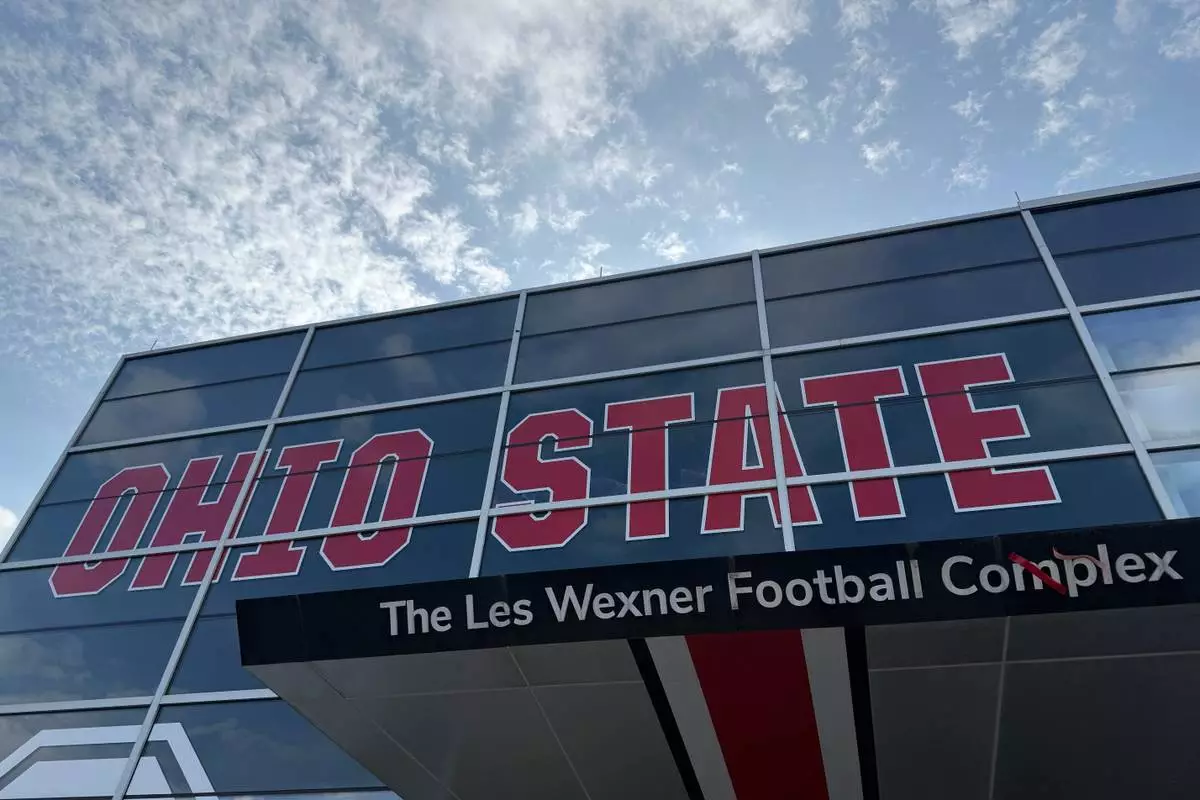
The Les Wexner Football Complex at the Wood Hayes Athletic Center is seen Monday, March 30, 2026, in Columbus, Ohio. (AP Photo/Patrick Aftoora-Orsagos)