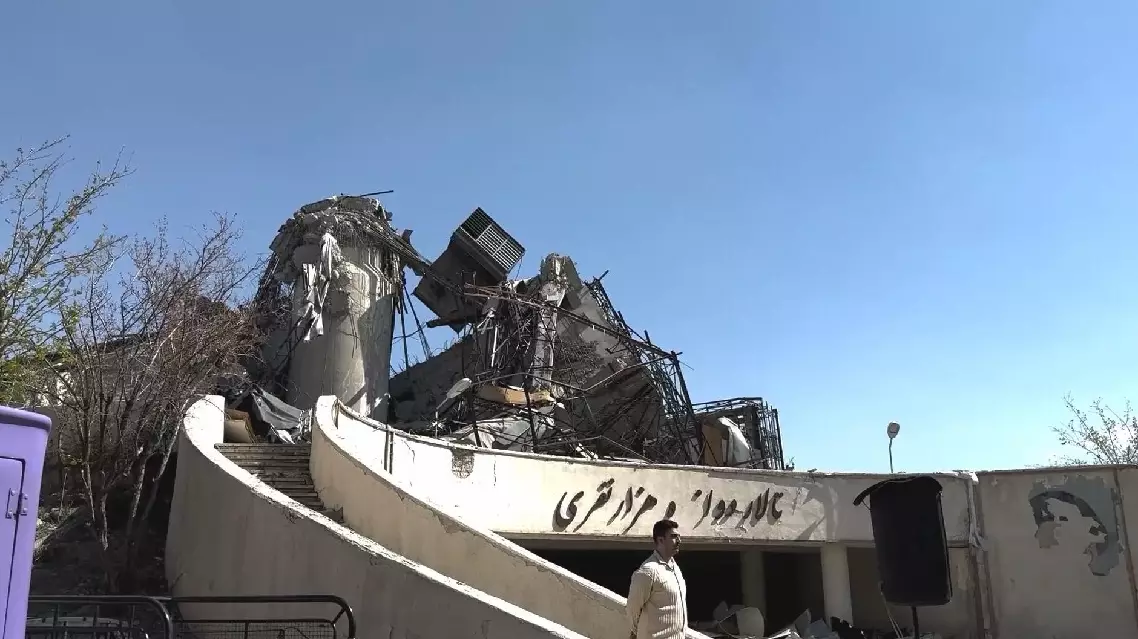
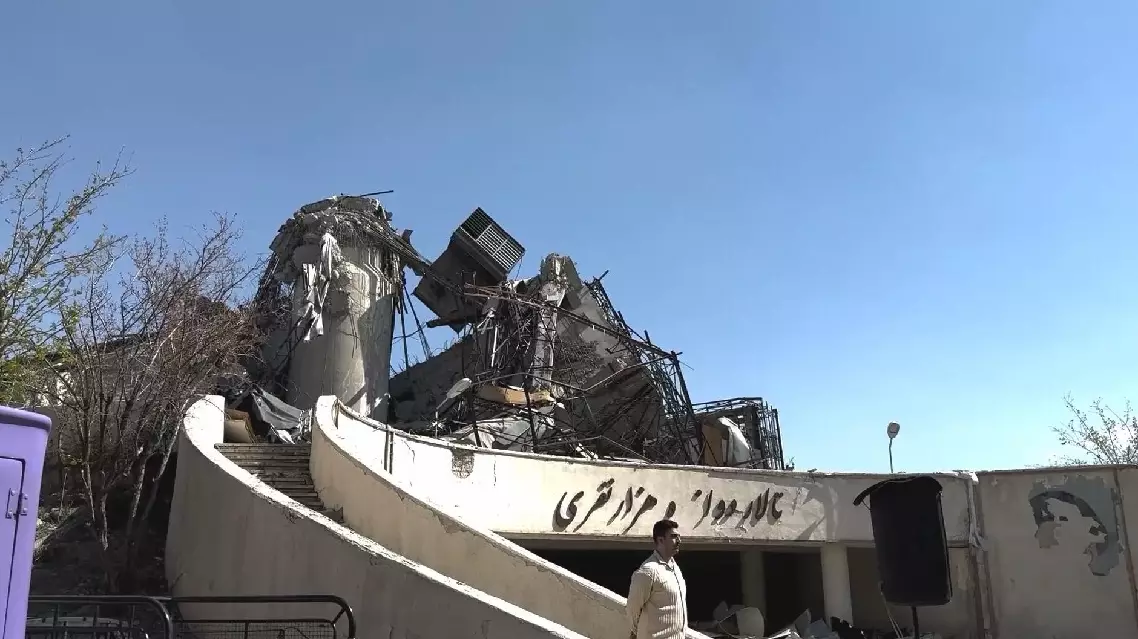
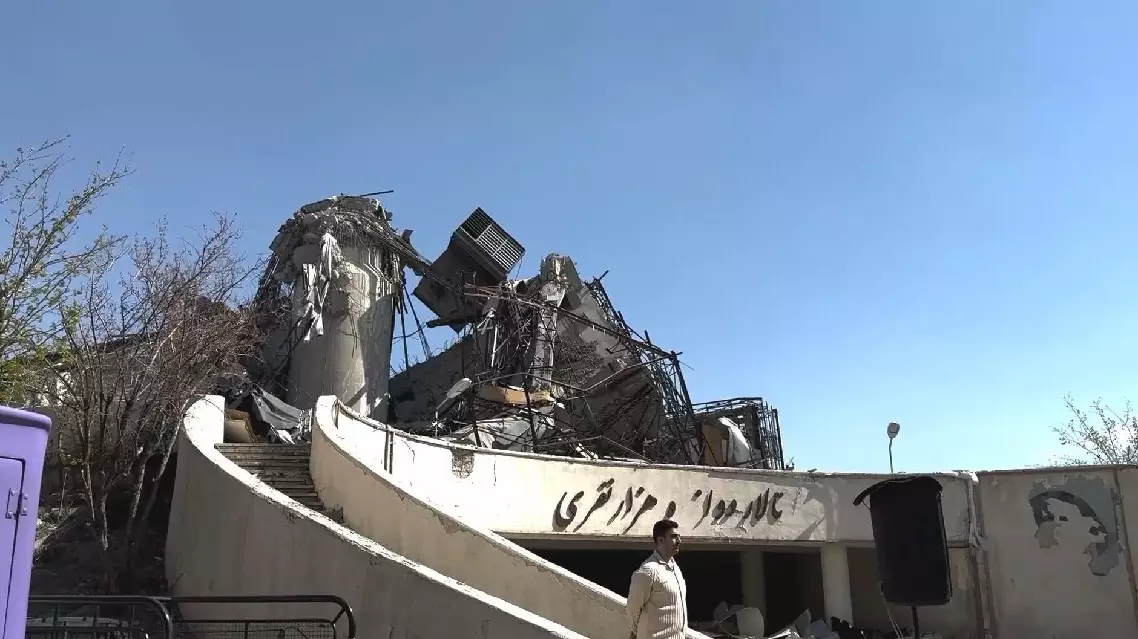
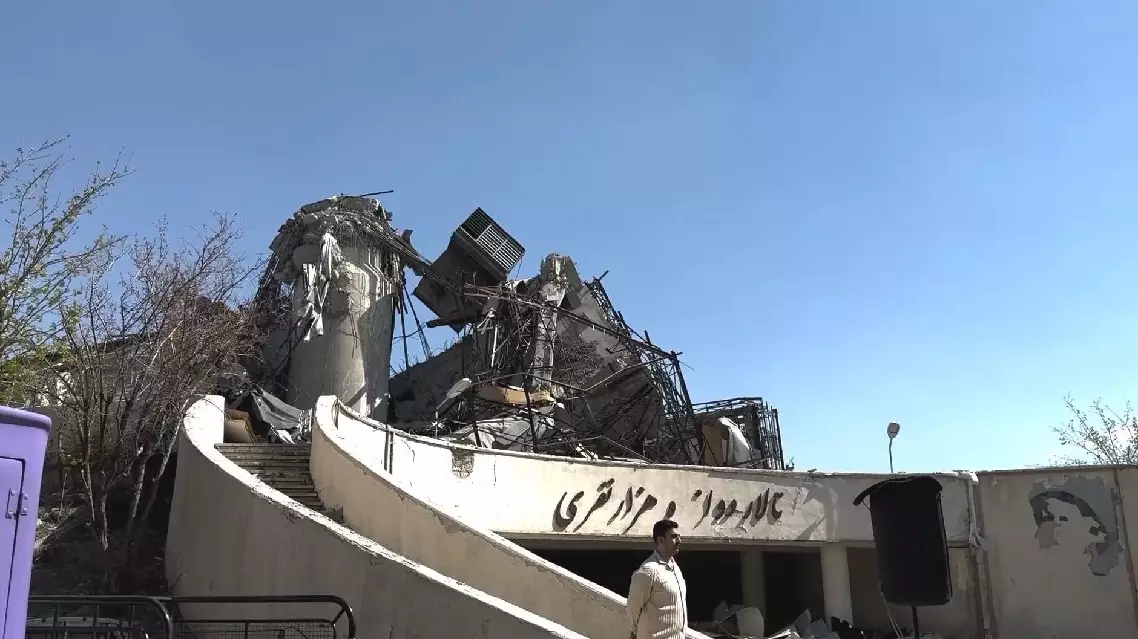
Iranians continue to mourn the destruction of Tehran's Azadi Sports Complex nearly a month after U.S.-Israeli strikes leveled the landmark on March 5, leaving a 12,000-seat stadium and adjoining facilities in ruins.
The attack wiped out the dormitory and new building of Iran's Cycling Federation, a main swimming pool, and parts of the Rowing Federation. Built for the 1974 Asian Games, the complex had for decades hosted football, wrestling, volleyball and basketball matches, becoming a fixture of national sporting life.
Click to Gallery
Iranians mourn loss of landmark sports stadium destroyed in US-Israeli March strikes
Iranians mourn loss of landmark sports stadium destroyed in US-Israeli March strikes
Iranians mourn loss of landmark sports stadium destroyed in US-Israeli March strikes
Iranians mourn loss of landmark sports stadium destroyed in US-Israeli March strikes
As of early April, the site still lies in rubble. Athletes and sports officials say the devastation has left a void in the country's collective memory.
"All of Iran's hearts ache over this incident. This was a place that everyone used. All the major basketball and volleyball games were held here, and we have so many memories," said Ashkan Jafari, a national basketball player.
"All my youthful memories are tied to this place. Seeing it like this truly broke my heart. Witnessing this destruction is unbearable, and it is an unforgivable war crime," said Bijan Taheri, former national football player and Coach.
Five days after the March 5 stadium attack, Tehran city council's cultural heritage committee reported that Iran's wider cultural fabric had also suffered.
Ahmad Alavi, head of the committee, said at least 120 museums, historical buildings, and cultural sites across the country were directly struck, sustaining varying degrees of damage.
One month on, the ruins stand as a visible reminder of the scale of loss and the enduring emotional impact. For residents and athletes, the destruction of Azadi is not just about bricks and mortar, but about the erasure of a venue tied to generations of national pride, alongside damage to cultural institutions that form part of Iran's identity.
Iranians mourn loss of landmark sports stadium destroyed in US-Israeli March strikes
Iranians mourn loss of landmark sports stadium destroyed in US-Israeli March strikes
Iranians mourn loss of landmark sports stadium destroyed in US-Israeli March strikes
Iranians mourn loss of landmark sports stadium destroyed in US-Israeli March strikes
A Chinese envoy Thursday stressed that China opposes the push to reimpose sanctions on Iran at the Security Council out of a commitment to upholding fairness and justice, safeguarding peace and stability in the Middle East, and bearing in mind the overall interests of a political and diplomatic solution to the Iran nuclear issue.
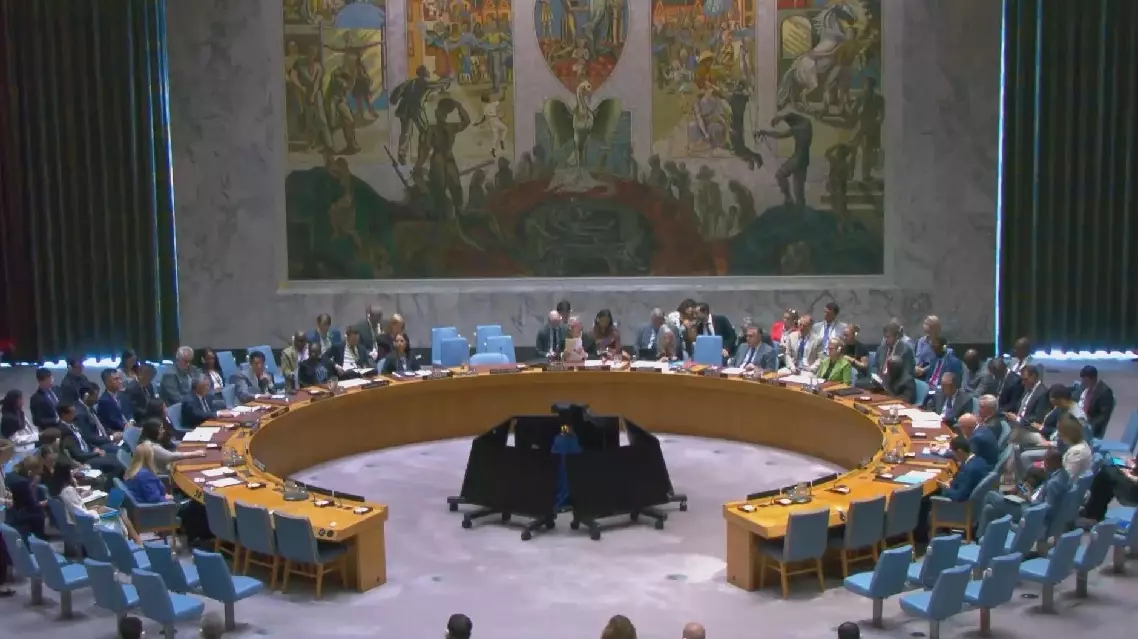
The UN Security Council on Thursday failed to adopt a draft resolution that would have extended the mandate of the Panel of Experts supporting the 1737 Iran Sanctions Committee for one year.
The resolution, drafted by the United States, received 11 votes in favor, two against and two abstentions. Russia and China, both permanent members of the UN Security Council, voted against the draft resolution, blocking the measure.
Fu Cong, China's permanent representative to the United Nations, pointed out that the United States' unilateral withdrawal from the Joint Comprehensive Plan of Action (JCPOA), maximum pressure on Iran, two uses of force during negotiations with Iran, and military strikes on Iran's peaceful nuclear facilities under IAEA safeguards are the root causes of the current crisis.
"The push to restore sanctions on Iran at the Security Council, and put forward a clearly controversial draft resolution will only undermine the unity and credibility of the Security Council and create obstacles for diplomatic efforts. China firmly opposes this," Fu said.
Fu said that repeated conflicts in the Middle East have inflicted severe harm and losses on the people of various countries, including Iran, with the spillover effects continuing to expand, undermining the common interests of the international community.
The urgent task for all parties in the international community, including the Security Council, is to urge the parties concerned to remain calm and exercise restraint, stop the use or threat of force, ease tensions, and actively create the necessary conditions for the parties to resume the implementation of the ceasefire, return to negotiations, and reach a peace agreement, so as to maintain peace and stability in the Middle East and the world, he added.
"Military means and sanctions pressure do nothing to resolve the problem and only serve to exacerbate tensions. An escalation serves no one's interests. Equal dialogue and negotiation represent the only right path forward," Fu said.
He noted that any action by the Security Council should help the parties concerned conduct negotiations on an equal footing, find the greatest common denominator that accommodates each other's legitimate concerns, and reach a solution that meets the expectations of the international community.
As a participant in the JCPOA and a permanent member of the Security Council, China has always upheld fairness, advocated for peace and talks, sought no geopolitical self-interests, and engaged in no political confrontation. China has played a constructive role in de-escalating the situation in the Middle East and advancing the political settlement of the Iran nuclear issue, Fu said.
The envoy said China will continue to work with all parties to make unremitting efforts to promote a political solution to the Iran nuclear issue, safeguard the international nuclear non-proliferation regime, and promote peace and stability in the Middle East.
China opposes reactivating Iran sanctions at UN Security Council