The people at the Pingbei Anti-Japanese Martyrs Memorial Park have carried on a decade-long tradition of holding a poetry recital to honor fallen heroes in the war against Japanese aggression before the Qingming Festival.
This year the recital was held in northern Beijing on Saturday, one day before the festival, also known as the Tomb-Sweeping Day.
Performers told stories about a nationally recognized all-female unit dedicated to protecting the legacies of fallen heroes, the selfless donation of wartime letters by a martyr's sister, a legendary guerrilla commander who fought to his last breath, and heroes from all ethnic groups who stood shoulder to shoulder. Together, they transformed these martyrs into a living testament to the fight against fascism.
"Today, we told the heroic deeds of a Mongolian martyr. I realized more profoundly that whenever it is, wherever we are or whatever ethnic group we belong to, we are all children of the Chinese nation and constructors of our great motherland. In the times of war, we stood united against aggression. In the years of peace, we support each other as one family. This unity is a shared wisdom for humanity to face common challenges and uphold lasting peace," said Li Huijian, a performer from north China's Inner Mongolia Autonomous Region.
"Taking part in this activity has deepened my understanding of history, strengthened my resolve to pass on the revolutionary traditions, and carry forward the aspirations of our forerunners," said Zhu Yuhan, a student from the Beijing International Studies University.
These dedicated efforts meticulously chronicled the Chinese people's historic struggle against Japanese aggression at the main Eastern Theater of World War II, where local soldiers and civilians stood united, sacrificed their lives, and pinned down large enemy forces in the face of brutal Japanese atrocities.
Organizers say that honoring is about more than looking back; it's about defending peace for all.
"By guarding every memorial site and telling every heroic story, we aim to present the historical truth to the world and pass down the great spirit of anti-Japanese war and promote our core national values with patriotism at its core. We also aim to send a clear message to the international community that China remains firm in upholding the victorious outcomes of World War II and international justice, resolutely opposes any attempt to distort history and whitewash aggression, advocates for peace, creates a better future and works for a shared future for humanity," said Wu Chenchen, director of the Service Center with the Pingbei Anti-Japanese Martyrs Memorial Park.
This April, three nameless anti-fascist heroes have also been laid to rest at this martyrs' cemetery. They may have fallen without names, but they do not rest in silence as their legacy lives on and their torch are being passed to the future.
The Qingming Festival falls on April 5 this year. It is a traditional Chinese festival to honor the deceased and pay tribute to ancestors.
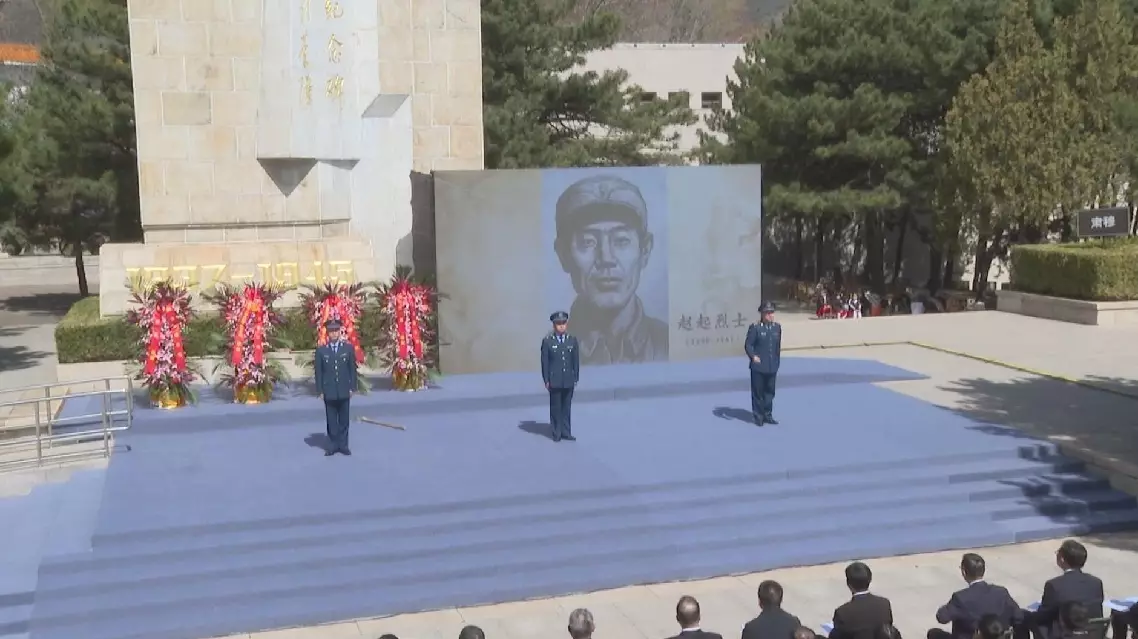
Beijing poetry recital honors anti-Japanese war martyrs