Skip to Content Facebook Feature Image

Sri Lankan PM lauds China's commitment to multilateralism, free trade, UN system

China

China

China

Sri Lankan PM lauds China's commitment to multilateralism, free trade, UN system

2026-04-04 17:18 Last Updated At:04-05 00:37

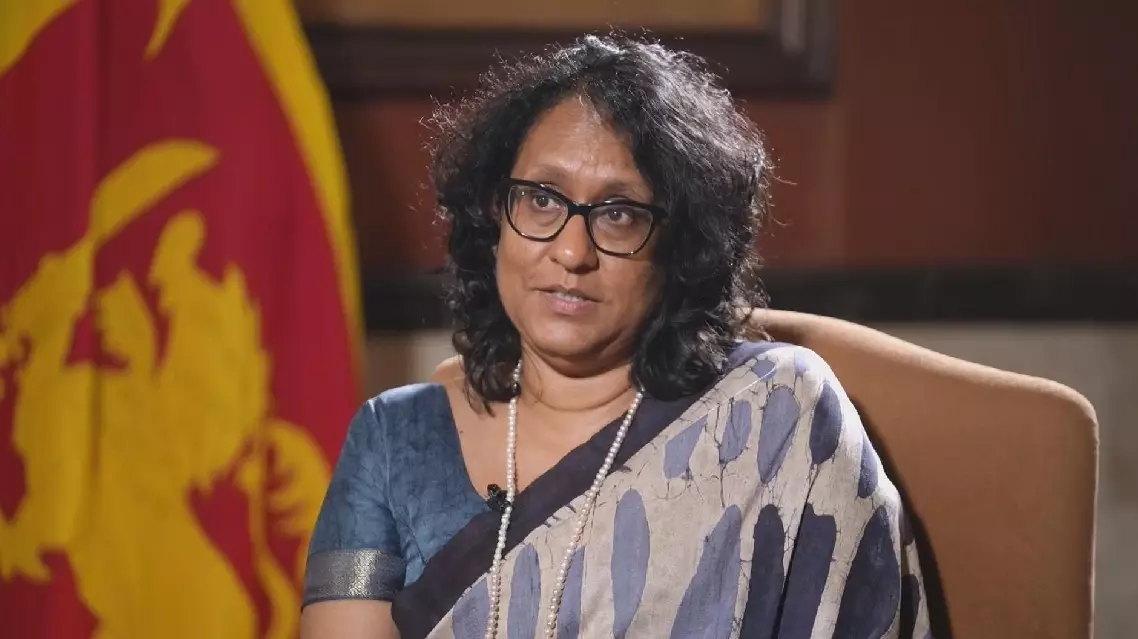
Sri Lankan Prime Minister Harini Amarasuriya lauded the efforts China has made to practice multilateralism, safeguard free trade, and uphold the UN-centered international system.

In an interview with China Media Group (CMG) released on Friday, Amarasuriya said China's commitment to multilateralism is critical for a world faced with severe global governance challenges.

"I think China's commitment to multilateralism, China's commitment to the UN system, I think all of this is very critical at this moment and very important. China's commitment to fair trade, to free trade, all of this is very important," she said.

Regarding the current challenges facing the world, she said world leaders should look for collaboration instead of isolation.

"The world is going through many disruptions and quite uncertain. Things are much more complicated and complex than it has been. War and conflict is never a good thing, and often it's the most vulnerable segments of any community that is most affected. And we saw what happened in Gaza and in the Middle East when the conflict was at its height, what it did to women and children in particular. I think it's really important that as leaders, we continue to look for peaceful solutions, look to conflict resolution, look towards working with each other based on mutual respect and collaboration and cooperation. And that we ensure that what we do is sustainable but also peaceful," said the prime minister.

"Ultimately, as leaders, we are responsible for the lives of human beings. And the decisions we make really have consequences that sometimes can be quite terrible. So, we really need to always make sure that the consequences of our decisions do not harm even the most vulnerable, specially, I would say, the most vulnerable in our countries, in our nations. And I don't think we can think in isolation anymore. What we do affects other countries, other nations, other societies, and we have to be mindful of that. We live in a globally connected world. I think in the words of President Xi, we have to think of a shared future and a shared journey, and this is something that we need to be mindful of all the time and not think in isolation," said Amarasuriya.
Sri Lankan PM lauds China's commitment to multilateralism, free trade, UN system
Sri Lankan PM lauds China's commitment to multilateralism, free trade, UN system

Farmers in India, a major agricultural producer and fertilizer importer, are raising concerns over fertilizer availability ahead of the planting season, as the escalating Middle East conflict and disruptions to shipping through the Strait of Hormuz put global supplies at risk.

The Middle East serves as both a vital energy hub and a major global fertilizer supplier, yet the ongoing U.S.-Israeli war with Iran has heightened risks of disruption to international supplies.

Chand Singh Yadav, a farmer in Haryana, a northern Indian state, said poor crop yields would be disastrous for the country and called on the government to ensure adequate supplies of fertilizers, agrochemicals and seeds to prevent a food crisis. "Without fertilizers, our crops will not grow well, and this would be disastrous for the entire country. If farmers cannot grow crops, people will not be able to buy food in the market. We urge the government to improve the supply system for fertilizers, agrochemicals and seeds to prevent the country and society as a whole from sliding into a food crisis," he said.

The Indian government is stepping up subsidies for farmers and optimizing fertilizer distribution and allocation to stabilize the supply. Prices have remained broadly stable, but demand is expected to surge ahead of the planting season, potentially exacerbating supply pressures.

"The current situation is worrying for us farmers. Spring sowing has not yet started, and the rainy season has not arrived. Fertilizer prices are temporarily stable, but in two months, demand for agricultural fertilizers will become pressing. Without fertilizers, it will be difficult to properly cultivate various types of crops. Urea and diammonium phosphate are especially critical. Crops can only grow normally when these fertilizers are applied. As these fertilizers are largely imported, if the conflict persists, supplies cannot be guaranteed," said Santosh Mishra, a farmer in India's eastern state of Odisha.

Escalating Middle East conflict strains India’s fertilizer supply

Escalating Middle East conflict strains India’s fertilizer supply

Escalating Middle East conflict strains India’s fertilizer supply

Escalating Middle East conflict strains India’s fertilizer supply

Recommended Articles