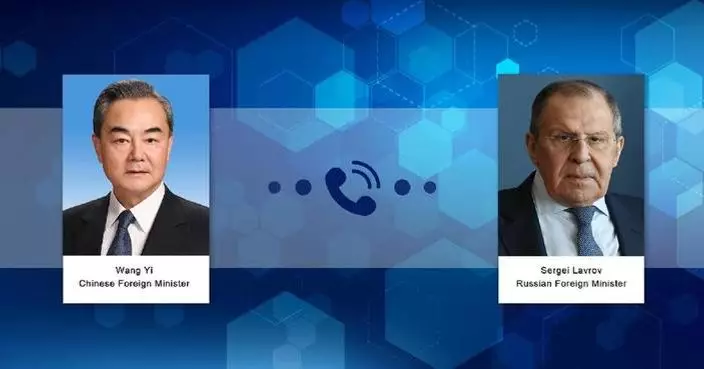
Iranian Foreign Minister Seyed Abbas Araghchi said in a social media post on Sunday that he had exchanged views with his Russian counterpart Sergei Lavrov on the ongoing regional conflict involving the United States, Israel and Iran.
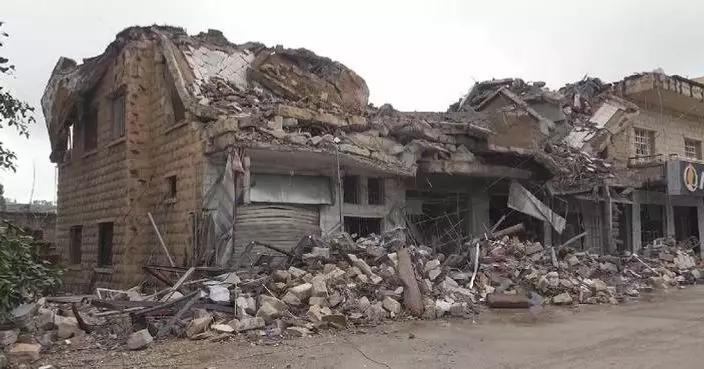
In the phone call, Araghchi noted that the United States and Israel have been attacking Iran's industrial infrastructure, hospitals, schools, residential areas, and nuclear facilities, emphasizing the need for urgent action by relevant international institutions, especially the International Atomic Energy Agency, to condemn these attacks and hold the aggressors accountable.
Araghchi also referred to the U.S. threats to attack Iranian energy facilities, saying this rhetoric is a clear admission of committing war crimes.
Meanwhile, the Russian Foreign Ministry said in a press release on Sunday that the two ministers stressed that "reckless and illegal attacks" on Iran's civilian, industrial and energy facilities, including the Bushehr nuclear power plant, must be halted.
They warned that such actions pose a threat to the plant workers' lives and health and could lead to a radioactive disaster affecting the broader region.
The ministers spoke out against any actions that could undermine the remaining chances for promoting political and diplomatic efforts to settle the crisis.
Lavrov expressed the hope that efforts by certain countries to de-escalate the tensions around Iran would succeed, adding that the United States' abandoning the language of ultimatums and returning to negotiations would be instrumental.
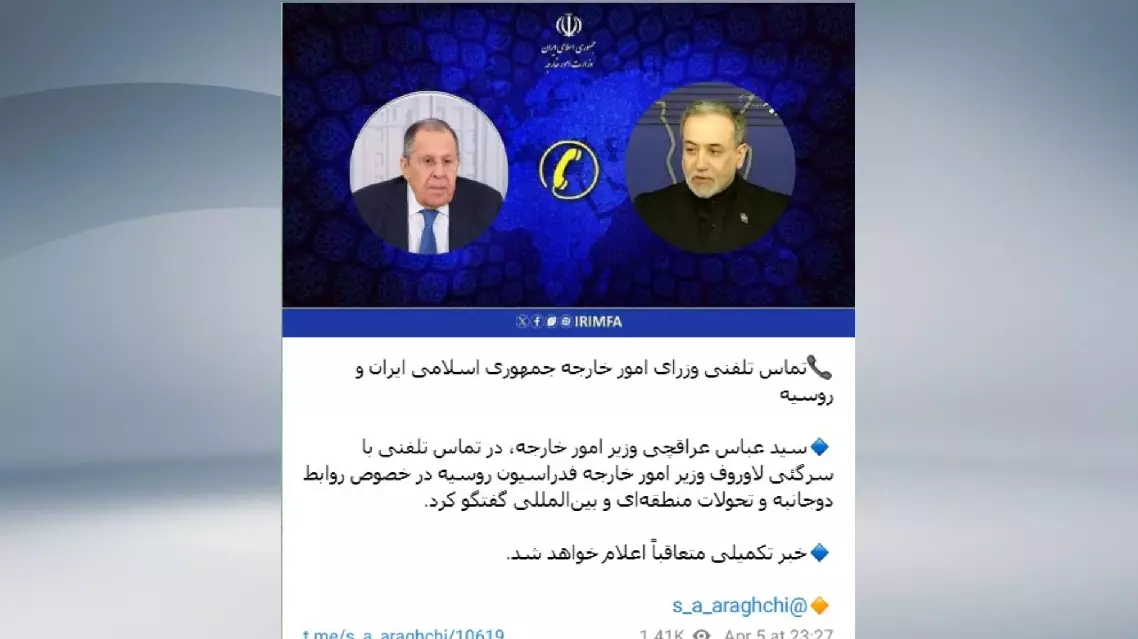
Iran's FM discusses ongoing war with Russian counterpart over phone
Facing record fuel price hikes triggered by the ongoing U.S.-Israeli war with Iran, more and more Thais are turning to new energy vehicles (NEVs) to cut transportation costs.
Since the outbreak of the war on Feb 28, the shipping crisis in the Strait of Hormuz has now become the largest supply disruption in the history of the global oil market, accelerating high energy costs. As a result, Thais have experienced a sharp increase in fuel prices in their country and are spending much more on public transportation.
Diesel prices in Thailand have risen from 29.94 baht (nearly 0.92 U.S. dollars) per liter to 47.74 baht (about 1.46 U.S. dollars), a surge of about 59 percent.
Gasoline prices have also shot up by about 34.24 percent.
Recently, at gas stations across Thailand, people are lining up to fill up their tanks before further price rises.
"We have to pay more for the same amount of fuel now. So, we motorcycle drivers are making less money than before. This is affecting our families' livelihoods," said a motorcycle driver.
The worsening fuel crisis has prompted Thai people to take a pragmatic look at vehicle costs, and NEVs are gaining favor due to their lower operating costs.
At the Bangkok International Motor Show which concluded on Sunday, the visitors' focus had shifted from traditional gasoline-powered vehicle to NEVs.
"High fuel costs are causing increasing pressure. NEVs perfectly meet people's current mobility needs. Using electricity significantly reduces transportation costs," said a visitor at the auto show.
The event featured 37 major exhibitors, with Chinese brands accounting for 14 booths, nearly 40 percent of the total.
As many Chinese NEV manufacturers actively participated in the exhibition, Chinese brands became the top choice for many Thai consumers when purchasing vehicles.
Data released by the organizing committee of the auto show showed that in the first seven days of the event, vehicle pre-orders exceeded 40,000 units, a year-on-year increase of 68.8 percent.
Among them, NEV models including pure electric vehicles and plug-in hybrids accounted for as much as 80 percent of the total.
And among the top five brands by pre-order volume, Chinese brands occupied three spots.
"The selection of NEVs we are offering right now comes at a perfect time and also provides a great opportunity for Thai consumers," said Ke Yubin, a person with a Chinese NEV company.
"Rising oil prices are an unavoidable topic. The introduction of NEVs has offered Thai consumers more choices," said Cui Junyuan, local head of another Chinese NEV company.
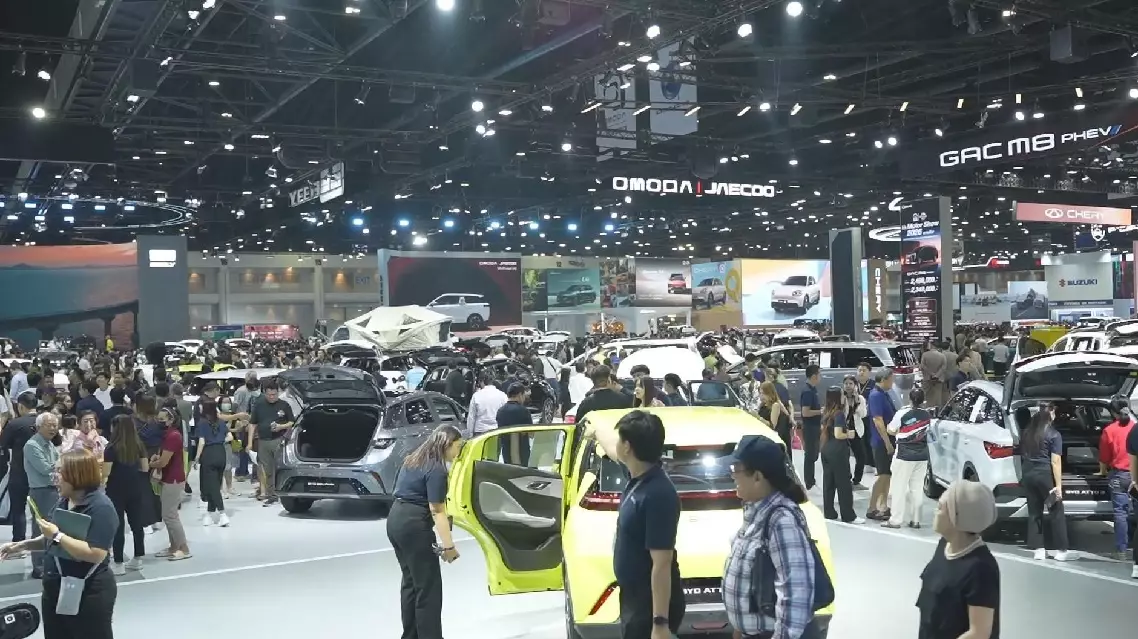
Soaring fuel prices triggered by ongoing Middle East conflict drive Thais to NEV purchases