Skip to Content Facebook Feature Image

Japanese rally against PM Takaichi's attempt to revise constitution

China

China

China

Japanese rally against PM Takaichi's attempt to revise constitution

2026-04-06 03:59 Last Updated At:16:57

Japanese civic groups gathered on Sunday evening in Tokyo, voicing opposition to the government's efforts to expand military power and revise the country's pacifist constitution.

Japan's Constitution, which took effect in 1947, is often referred to as the pacifist Constitution because Article 9 states that the Japanese people forever renounce war as a sovereign right of a nation which will not threaten or use force to settle international disputes.

After her party won by a landslide in general elections in mid February, Japan’s Prime Minister Sanae Takaichi, a long-time advocate of amending Article 9, reiterated her commitment to revising the constitution, raising widespread concern across Japanese society.

"Because Sanae Takaichi's remarks and actions are very dangerous. I believe it is very important that Japan does not wage war and does not possess military force. I want people to realize that the idea of holding weapons for peace is completely self-contradictory," said a protester.

"We must continue to keep the promise of never repeating the devastation of war. I believe the Japanese Constitution must not be revised," said another protester.

Japanese opposition party figures also gave speeches at the gathering, expressing concerns over constitutional revision and military expansion.

"Article 9 of the Japanese Constitution is extremely important. No matter what happens, we must use the power of everyone to stop attempts to revise the constitution," said Mizuho Fukushima, leader of the Social Democratic Party.

"Politics that do not address the hardships of people's livelihoods and are detached from public opinion. In other words, politics that ignore the constitution, which will inevitably head in the wrong direction," said Harada Hiromi, mayor of Kiyose City.

"Sanae Takaichi is now trying to put constitutional revision on the agenda. She wants to change Article 9 of the Constitution in the Diet, to change the pacifist constitution into a constitution that allows waging war. Japanese people do not want to fight. They want to live in friendship with people from all countries. For this reason, we call on Takaichi to step down. In any case, we must never revise the constitution," said another protester.

Japanese rally against PM Takaichi's attempt to revise constitution

Japanese rally against PM Takaichi's attempt to revise constitution


Japanese rally against PM Takaichi's attempt to revise constitution

Japanese rally against PM Takaichi's attempt to revise constitution

Iran has rejected a U.S.-proposed 15-point peace plan, calling instead for a permanent end to the conflict, the official news agency IRNA reported on Monday.

Iran delivered its response via Pakistan in a 10-point document, citing past experiences as the reason it would not accept a ceasefire.

The response outlines Iran's demands, including ending regional conflicts, establishing safe passage through the Strait of Hormuz, reconstructing war-affected areas, and lifting international sanctions.

IRNA claimed the text was presented following recent developments in Iran's western and central regions and the unsuccessful outcome of a U.S. helicopter operation, with U.S. President Donald Trump extending a previously set deadline again and adjusting earlier threats.

In a press conference on Monday, Trump called Iran's 10-point response a "significant step" but said it was "not good enough."

Meanwhile, Trump said that the Tuesday deadline he has set for Iran to make a deal is final.

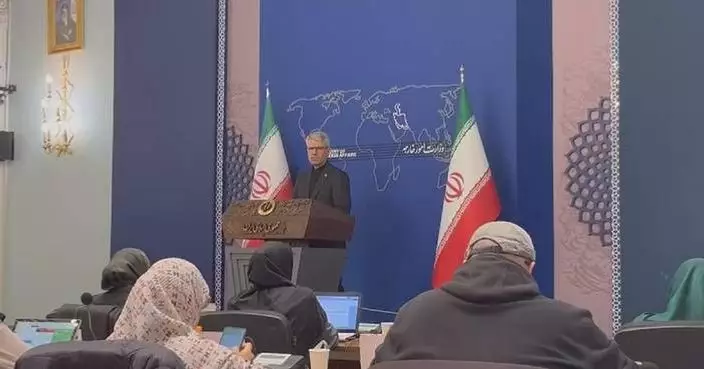
Also on Monday, Iran's Foreign Ministry spokesperson Esmaeil Baghaei said that Iran will present its position based on its national interests, security, and the legitimate demands of the Iranian people.

In late March, U.S. media reported that Washington sent a 15-point plan to Iran through Pakistan to try to end the war. Iran later rejected the plan, calling it "excessive and disconnected from the realities on the battlefield."

The Islamic Republic set several preconditions for peace. These include ending U.S. and Israeli aggression, creating mechanisms to prevent future attacks, compensating for war damage, stopping fighting across all fronts in West Asia, and recognizing Iran's sovereignty over the Strait of Hormuz.

Since Feb 28, Israel and the United States have been jointly attacking Tehran and several other Iranian cities, killing Iran's then Supreme Leader Ali Khamenei, along with senior military commanders and civilians. Iran continues to respond by launching missile and drone strikes targeting Israel and U.S. assets in the Middle East.

Iran rejects U.S. ceasefire offer, issues 10-point plan calling for permanent end to war

Iran rejects U.S. ceasefire offer, issues 10-point plan calling for permanent end to war

Recommended Articles