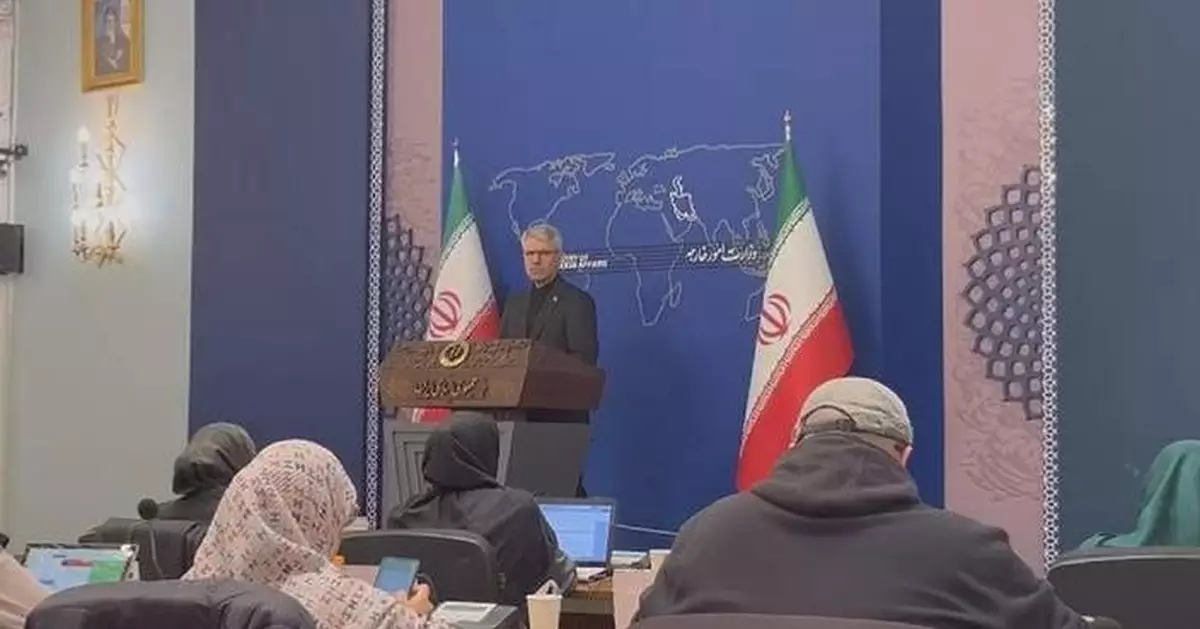
The United States' military presence in the Middle East has brought nothing but insecurity to the region, Iran's Foreign Ministry spokesman Esmaeil Baghaei said on Monday.
At a press conference in Tehran, Baghaei said that if the U.S. had not been carrying out attacks on Iran from its military bases in the region, Iran would have no reason to fire missiles at its neighbors.
"If the territory of neighboring countries had not been used to launch attacks against Iran, we certainly would not have allowed even a single drone to be fired toward countries in the region. The problem is not with us. We did not leave Iran to go to the Gulf of Mexico or to the eastern and western coasts of the United States to act against America. It is the United States that has established its military bases throughout the region, near our borders, and uses those bases to carry out attacks against Iran," he told reporters.
He also said that Iran is currently focusing all its efforts on national defense, adding that the country is clear in its position on the issue of war and peace, and decisions will be made as necessary in accordance with the Constitution and the directives of the Supreme Leader.
Baghaei said that a few days ago, the U.S. 15-point plan was relayed to Iran through intermediaries, and Iran announced at that time that the plan contains very "excessive, unusual and unreasonable demands."
He said despite some "acceptable" terms, Iran has compiled a series of demands based on its own interests and considerations.
Iran's continuing resistance against the U.S. and Israel in the ongoing conflict are believed by some analysts to have come as a big surprise to Washington.
Matteo Capasso, a professor of Middle East studies from Northwest University in China's Shaanxi Province, said on Monday that the U.S. had "grossly underestimated" Iran. "I think what we're witnessing is the unraveling of a war based on a systematic miscalculation from the very beginning. The U.S. entered this conflict, assuming that an overwhelming force would compress Iran's decision making and force a rapid capitulation. It has not happened, and will not happen, I think. The mistake was fundamental on the U.S. side, because Iran's military capacity, institutional resilience, are being all grossly underestimated in Washington," he told China Global Television Network.
"There is something I think also more structural happening here, which is the U.S. has always relied on a particular temporal logic in the use of its force, meaning they thought that a compressed window of overwhelming violence designed to induce subordination before resistance can consolidate, before alternatives can organize, so basically the political cost would be visible for Iran. Tehran has really dismantled this logic, it has not responded to Washington's time table. It's constructing its own time, absorbing pressure, calibrating responses and denying the U.S. the quick resolution its entire operational doctrine depends on," said Capasso.
Since Feb 28, Israel and the United States have been jointly attacking Tehran and several other Iranian cities, killing Iran's then Supreme Leader Ali Khamenei, along with senior military commanders and civilians. Iran continues to respond by launching waves of missile and drone strikes targeting Israel and U.S. assets in the Middle East.
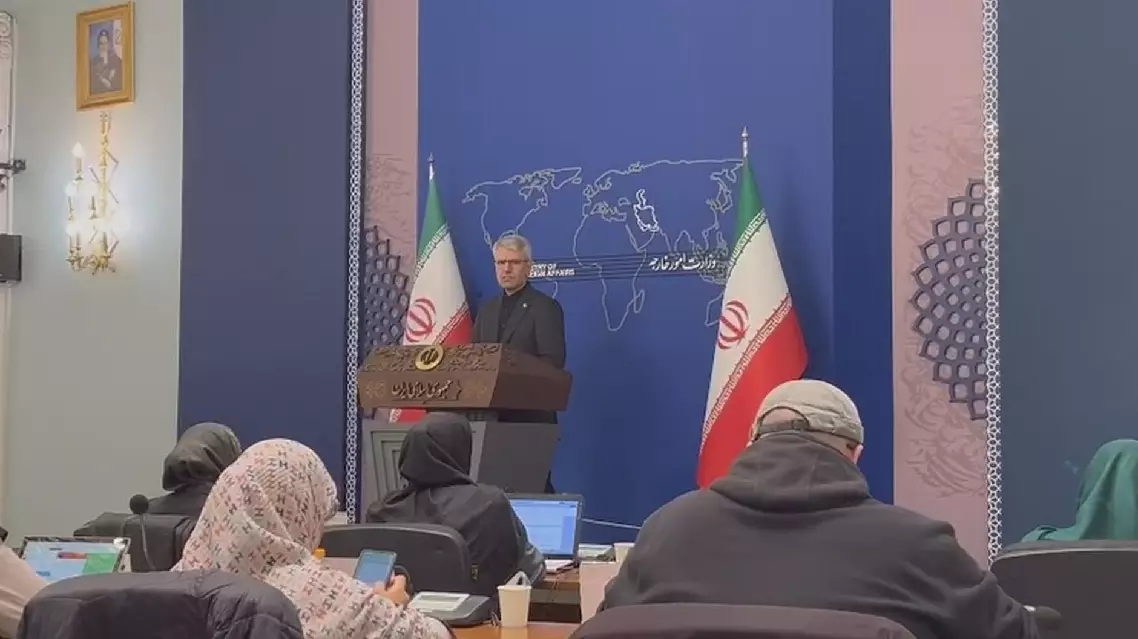
U.S. military presence brings "nothing but insecurity" to Middle East: Iranian spokesman