Skip to Content Facebook Feature Image

African leading organizations warn Middle East conflict poses "serious risk" to African economies

China

China

China

African leading organizations warn Middle East conflict poses "serious risk" to African economies

2026-04-06 19:06 Last Updated At:21:57

The African Union (AU) and its partners have warned that the ongoing Middle East conflict poses a "serious risk" to African economies.

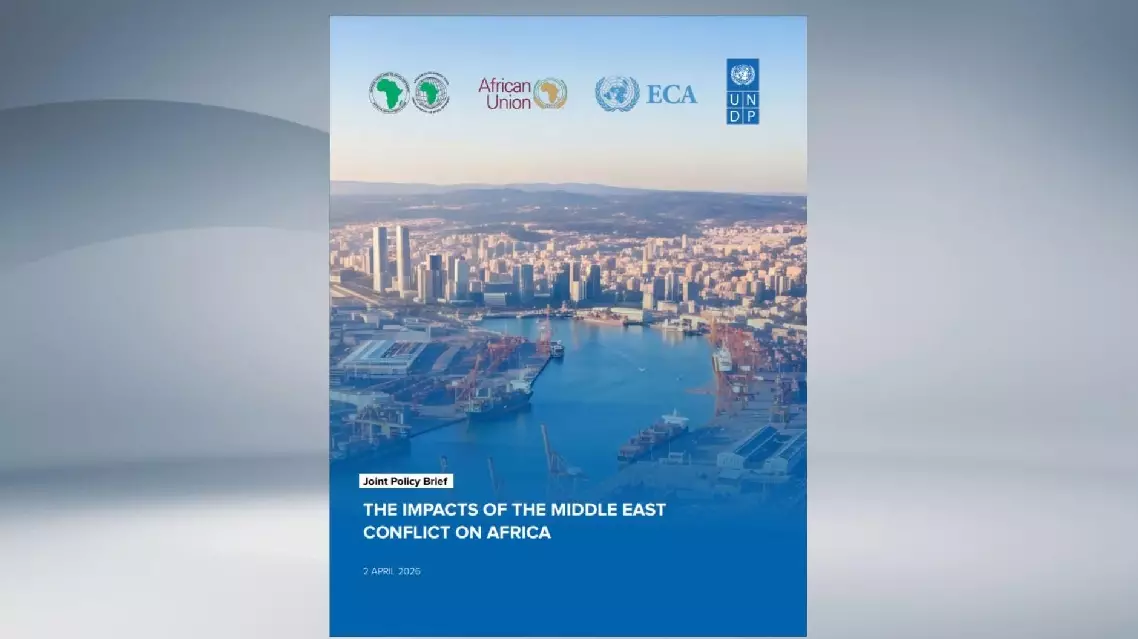
In a recent joint policy brief, the AU, the United Nations (UN) Economic Commission for Africa, the African Development Bank, and the UN Development Program warned that the longer the conflict lasts and the more severe the disruption of shipping routes, energy, and fertilizer supplies, the greater the risk of a significant growth slowdown across Africa.

With most African countries still growing at rates below pre-COVID levels, the brief projected a 0.2 percentage-point decline in Africa's gross domestic product growth in 2026 if the conflict lasts more than six months.

The organizations stressed that the conflict, which has already triggered a trade shock, could quickly become a "cost-of-living crisis" due to higher fuel and food prices. Rising shipping costs, insurance premiums, exchange rate pressures, and tighter fiscal conditions could further compound the crisis, with vulnerable households bearing the heaviest burden.

The Middle East accounts for 15.8 percent of Africa's imports and 10.9 percent of its exports, underscoring the critical implications of the current situation for African economies, according to the brief.

Highlighting that the fertilizer channel may prove more consequential than oil shocks for some countries, the brief noted that disruptions to Gulf liquid natural gas supply would affect ammonia and urea production, raising fertilizer costs during the crucial March-to-May planting season.

It warned that the phenomenon will put further upward pressure on food prices and hit vulnerable households hardest, with significant negative impacts on food security in Africa.

Expressing concern over potential geopolitical spillover effects that could reshape Africa's security, it also warned that a wider conflict could intensify competition for influence in Africa, with regional conflicts in Sudan, Somalia, and Libya already reflecting external sponsorship.

The brief emphasized the importance of strengthening energy security, safeguarding and restoring fiscal space, accelerating the implementation of the African Continental Free Trade Area, and establishing financial safety nets across Africa as essential strategies for building resilience.
African leading organizations warn Middle East conflict poses "serious risk" to African economies
African leading organizations warn Middle East conflict poses "serious risk" to African economies

African leading organizations warn Middle East conflict poses "serious risk" to African economies

African leading organizations warn Middle East conflict poses "serious risk" to African economies

The conflict in the Middle East has disrupted traffic through the Strait of Hormuz, leading to a systemic economic shock that has reverberated through energy markets, industrial supply chains and critical maritime routes.

As part of its response to U.S. and Israeli attacks, Iran has restricted navigation through the Strait of Hormuz, targeting ships associated with the United States and Israel. The blockade of this vital global energy route has driven up oil and gas prices worldwide.

As a key energy shipping lane, the strait saw 20 million barrels crude and oil product flowing through per day, around 25 percent of the world's seaborne oil trade in 2025, according to a report released by the International Energy Agency (IEA) this March.

In addition, about 20 percent of global liquefied natural gas (LNG) trade transited Hormuz in 2024, primarily from Qatar, with a smaller volume from the United Arab Emirates (UAE).

Over 70 percent of the oil flowing through the strait is transported to the Asian market. Japan and Republic of Korea (ROK) import 90 percent and 95 percent of their respective oil consuption.

The IEA estimates that as of the end of March, Hormuz disruptions have led to an oil supply gap of roughly 10 million to 16 million barrels per day.

Though the IEA made 400 million barrels of emergency oil stocks available in March -- the largest-ever release coordinated by the agency, it still failed to curb the rapid rise in international oil prices.

Based on Fitch Ratings' March outlook, should the Middle East conflict persist until the end of June, it could see global real GDP growth shrink by approximately 0.8 percentage points.

"Shipping costs are rising because of insurance premiums, because of higher fuel costs, and because of longer trips as you have to avoid certain parts. Then that starts feeding through to higher prices of other goods as well. That could be food, commodities, etc. And then the other thing to think about is inventory and supply chain disruptions. And then when you combine all of these factors together, it feeds into producer price indices and consumer price indices," said Cedric Chehab, chief economist at BMI, a Fitch Solutions company.

Middle East tensions hit global economy

Middle East tensions hit global economy

Recommended Articles