Skip to Content Facebook Feature Image

Chinese pickup-truck exports surge 30 pct as global demand rises

China

China

China

Chinese pickup-truck exports surge 30 pct as global demand rises

2026-04-06 07:52 Last Updated At:04-08 10:54

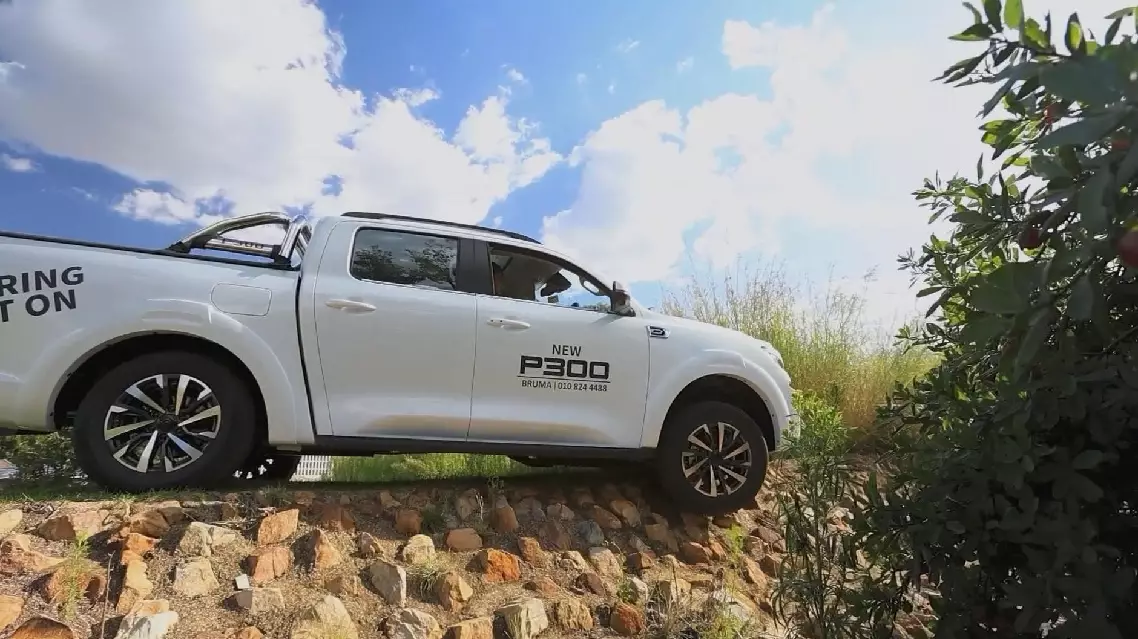
Chinese pickup trucks are carving out a stronger presence in global markets, driven by rising demand across sectors from construction to family travel.

Data shows that in the first two months of this year, China exported 50,000 pickups, a 30 percent year-on-year increase, with exports continuing to account for a high share of total industry sales.

Lyle Stowe, a business manager at a roofing repair company in Sydney, Australia, first turned to Chinese-made pickups years ago to haul construction materials. His firm has now added several more vehicles from Chinese brands, illustrating their growing role in the company's operations.

"So they'll put some rooftiles in the back of the tray or there could be a short guttering, which have the long racks on the top of the trucks. So it just allows them to get the stuff to site in a safe manner. The vehicle is a very safe car to drive. It has got all the safety features," said Stowe.

According to a dealer representing Chinese pickup brand SAIC Maxus in Sydney, more and more Chinese auto brands are entering the Australian market. In February, the sales of SAIC Maxus pickups rose 58.7 percent year-on-year.

In South Africa, pickups are used in a wide range of scenarios, from farm transport and construction to weekend family trips with camping gear. Consumers prioritize load capacity, off-road performance, and comfort.

"So the vehicle is also suitable for rocks, sand and tarred roads of course. We got different modes such as sand modes like in case your vehicle gets stuck in the sand," said Nadir Amra, a consumer.

"So they're very family oriented, they also like to use the bakkie for work. It really makes it so much easier for everybody," said Marion Taylor, Senior Manager, South African Car Sales Company.

According to data from NAAMSA (the Automotive Business Council of South Africa), sales of new pickups and minibuses in South Africa rose 11.9 percent year-on-year in February.

In Peru, the pickup has long transcended its role as a mere vehicle. From agricultural bases in the Andes to mining sites above 3,000 meters and the coastal desert, the country's rugged and varied terrain has made the pickup an indispensable work partner across all industries. Chinese brands are now playing a growing role in meeting that demand.

"Compared to other brands, many models in this price range only offer basic features, while this pickup truck is very well-equipped," said Martin Zapana, a customer.

"More and more Chinese brands are entering the market, bringing more attractive product solutions. This advantage is not only reflected in price, but also in technology, comfort, and features," said Lucero Gagon, Head of Marketing of JAC Motors in Peru.

After a record-breaking 2025 when more than half of China's pickup sales - about 300,000 units - went overseas, early 2026 data suggests the export boom is continuing.
Chinese pickup-truck exports surge 30 pct as global demand rises

Chinese pickup-truck exports surge 30 pct as global demand rises

Cancer patients in the Gaza Strip have been left without lifesaving treatments as the enclave's only specialized cancer facility, the Friendship Hospital, has ceased functioning due to fuel shortages and damage.

As the Friendship Hospital was completely destroyed in the latest round of the Israeli-Hamas conflict, the temporary "Gaza Cancer Center", consisting of the Al-Shifa Hospital in the north and the Nasser Hospital in the south, was urgently established this year.

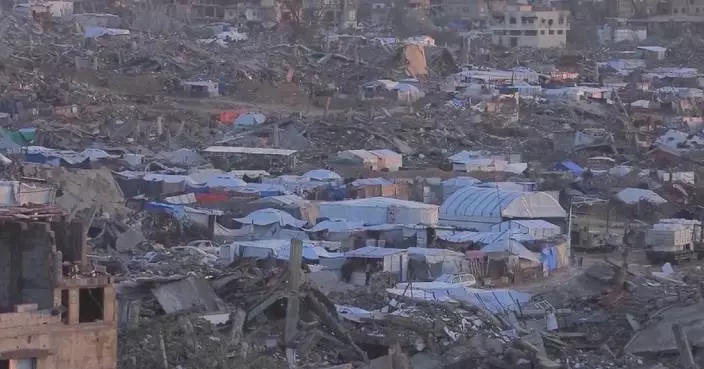
The Al-Shifa Hospital in Gaza City was largely destroyed in the conflict, and the cancer center is built in the remaining building, which is riddled with bullet holes and possesses extremely fragile infrastructure.

Patients and their families need to pass through the surrounding ruins before they can enter the treatment area.

Doctors there have to provide treatments based only on the existing conditions, rather than diagnosis based on the needs of patients.

Mohammed Abu Nada, director of the Gaza Cancer Center, said at the current cancer center, all kinds of sophisticated instruments and equipment have long been wiped out in air raids, resulting in about 40 percent of cancer patients who are completely unable to receive the urgently needed radiotherapy during the treatment cycle.

"The services currently provided by the center are far fewer than those we offered at the Friendship Hospital. We faced many problems there at that time, but we had a system to track patients at various treatment stages and some equipment such as computed tomography (CT) and magnetic resonance imaging (MRI) devices, as well as the ability to conduct sample testing. However, after the conflict broke out, we completely lost these devices and testing capabilities," Nada said.

And an even more fatal difficulty than the paralysis of medical equipment is the complete depletion of chemotherapy drugs.

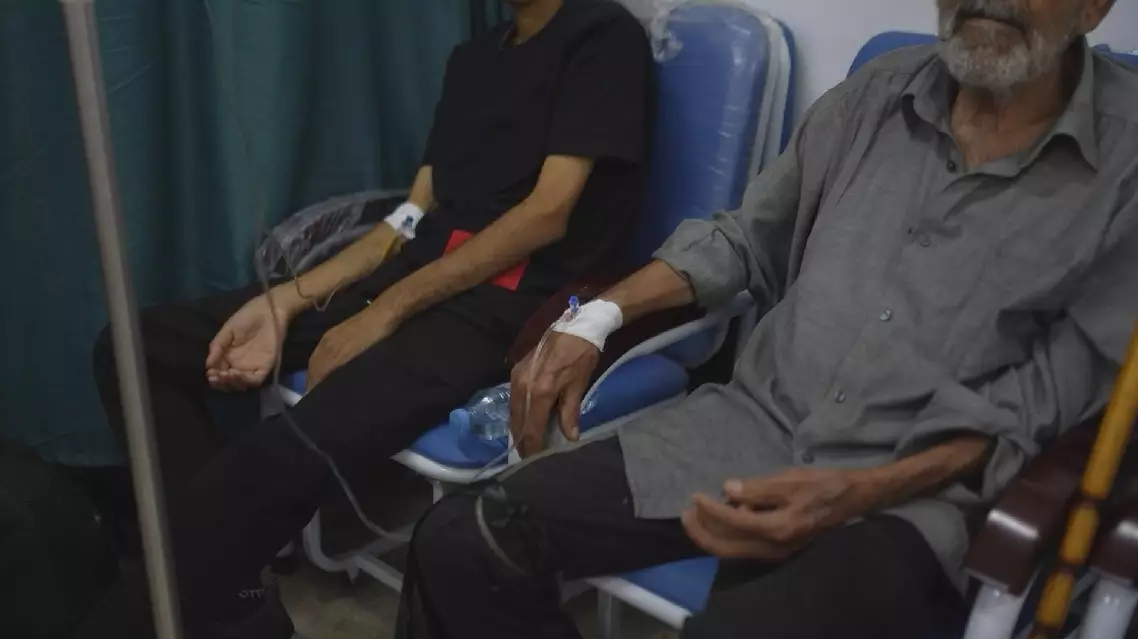
Nada said that the current supply of chemotherapy drugs across Gaza can only meet 20 percent of the normal demand, meaning that four fifths of the nearly 10,000 cancer patients in the Gaza Strip are either out of medication or have insufficient doses.

"There are no drugs in the hospital. That's exactly why we have to keep running back and forth. This piece of paper is from the pharmacy saying they don't have the medication, so they sent us back to find the doctor," said Khaled Abu Obaid, a family member of a patient.

"Every day we went there and came back again, with no results. The doctors here are helpless too," said Mohammed Abu Obaid, the patient.

Lifesaving care slips away for Gaza cancer patients as basic medical support collapses

Lifesaving care slips away for Gaza cancer patients as basic medical support collapses

Recommended Articles