Taiwan residents are calling for greater cross-Strait communication and lasting peace, emphasizing that stability is essential for improving livelihoods, according to Cheng Li-wun, chairperson of the Chinese Kuomintang (KMT) party, ahead of her planned visit to the Chinese mainland.
Cheng will lead a delegation to visit the Chinese mainland from April 7 to 12, with stops in east China's Jiangsu Province, Shanghai and Beijing. The visit is in line with the mainstream public opinion in Taiwan, she said at a press conference in Taipei on March 30.
Interviews conducted by China Global Television Network (CGTN) with Taiwan residents appear to echo that view, with many expressing hopes for more exchanges and reduced tensions across the Taiwan Strait.
One resident said greater dialogue would directly benefit the public, especially as economic pressures continue to mount.
"I think we can actually sit down and talk. Because I've always said we should be more open to communication. It actually benefits the public. I feel sorry for the people. Seriously, the ordinary people are in a sorry state. As a civil servant, I still have some basic guarantees. But what about ordinary people? House prices are so high, and my child's salary is just over 30,000 new Taiwan dollars (about 939 U.S. dollars). How can he afford a house worth over 10 million new Taiwan dollars (about 313,000 U.S. dollars)," she said.
"What we need is definitely peace, right? This is what the people of the Taiwan region truly need. No one stands to gain from fighting," said another local resident.
Others also highlighted the mainland's development, saying there is much to learn from its progress.
"I believe there is a great deal for us to learn from the mainland. I've been there many times. Honestly, it has progressed beyond words. First-tier, second-tier, and third-tier cities are all superior to Taipei," he said.

Taiwan residents call for cross-Strait dialog, peace
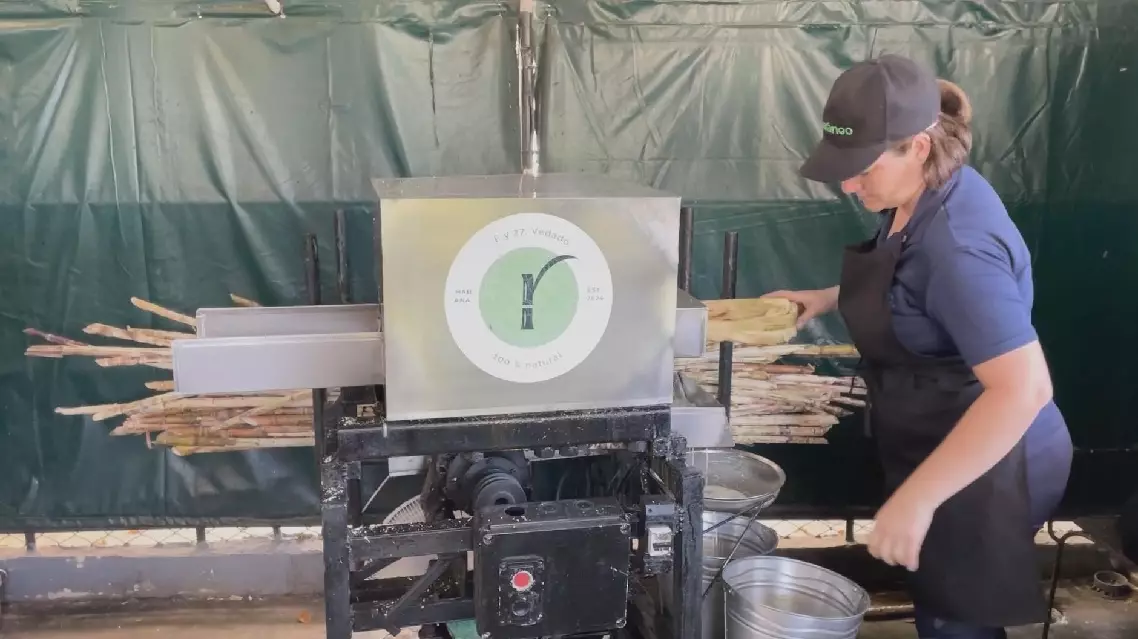
Once the backbone of the island economy and the world's largest sugar exporter in 1989, Cuba's sugar industry has plummeted, forcing the nation to import sugar to meet its domestic needs.
For years, vast sugar cane plantations provided Cuba with significant benefits, including sugar itself and by-products such as alcohol for rum distilleries and biotech industries, molasses for animal feed, and fibers (bagasse) used in paper and foodservice packaging. Sugar mills also burned bagasse to generate electricity.
But in the early 1990s Cuba's sugar industry went into steep decline.
"This country used to export over six million tons of sugar. But the sugar industry consumes lots of raw material, like steel, fuels, and others, so its production costs are very high, and by the 1990s, sugar prices at the world market began to fall, and the industry became unsustainable by 2002. The decision was to shut down a large number of sugar factories," said Omar Everleny, a Cuban economist.
This deactivation in 2002, which saw 71 out of over 150 sugar mills closed, had profound economic and social impacts. Hundreds of workers were relocated to other agricultural activities, vast tracts of land and machinery lay idle, and the active life in communities surrounding the mills faded away.
Cubans consume approximately 700,000 metric tons of sugar annually. With production plunging to less than 200,000 tons in 2025, the country has been compelled to import sugar from nations like Brazil, Colombia, Spain, the United States, and Chile to satisfy domestic demand.
Over the past years, the Cuban government has taken steps to revive its national sugar industry, a goal considered viable by experts.
"In a country, where you find vast experience in the sugar industry, many mechanical engineers and other professionals in the field, you have what you need to recover this national industry. I would not dare say that sugar production would again reach historically large outputs, but at least 4 to 5 million tons of sugar a year. There is interest in recovering the industry, but it requires foreign investment," said Everleny.
Recently, Cuba's National Innovation Council proposed a comprehensive plan to revitalize the sugar industry. This initiative aims to boost the production of sugar and sugarcane byproducts, with the dual objectives of generating export revenues and stimulating the country's struggling economy.
Cuba's sugar industry collapses from global giant to importer