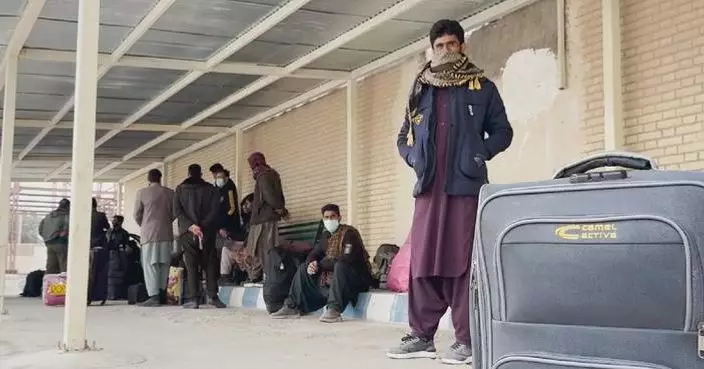
Yemen is grappling with an energy shortage as disruptions continue at the Strait of Hormuz, with no end in sight to the U.S. and Israeli attacks on Iran.
Maritime route disruptions in the region are tightening the global energy supply chain. In Yemen's southern port city of Aden, the impact is becoming more visible as local fuel stations are running dry, and thousands of households are struggling to access basic cooking fuel.
"The gas crisis is still ongoing; nothing has changed, past or present. I haven't had a single gas cylinder since before Eid al-Fitr. I swear to you, I am suffering. I have two cylinders that I've tried to refill, but found nothing. The people are exhausted," said local resident Mohammed Obead.
Experts warned that the crisis is spreading beyond energy, driving sharp increases in the cost of basic goods and transport.
Local suppliers are taking efforts to mitigate the price hikes and stabilize the market.
"Currently, most military operations are taking place at sea, which has disrupted shipping routes. This has led to an increase in maritime insurance costs as well as a global rise in fuel prices. As we are part of the international system, we have been directly affected by these price hikes. However, given the difficult conditions in Yemen, the Aden Petroleum Company is doing its utmost to mitigate these price increases and ensure a steady supply of fuel for the local market," said Yasser Al-Habeel, deputy director of the Aden branch of the Yemen Petroleum Company.
On Feb. 28, Israel and the United States launched joint attacks on Tehran and several other Iranian cities, killing Iran's then-Supreme Leader Ali Khamenei, along with senior military commanders and civilians. Iran responded by launching waves of missile and drone strikes targeting Israel and U.S. bases and assets in the Middle East, and halting the passage of ships linked to the U.S., Israel, and their allies through the Strait of Hormuz.

Yemen grapples with energy shortage as Hormuz disruptions persist

Yemen grapples with energy shortage as Hormuz disruptions persist
Chinese logistics companies are scaling back operations in the Middle East and reallocating resources to Africa, Southeast Asia, and the Americas as the region's geopolitical risks continue to intensify, driving up freight rates.
A senior executive of an international logistics company with a full-chain operation in Dubai, UAE, said that the company operates a customs brokerage, overseas warehouses, container truck fleets, and pickup truck fleets in the region, with a team of over 100 people.
Due to the current situation, most of their Dubai-based colleagues are now working on a flexible basis, and some staff have already returned home early for holidays.
"In light of the development trends of the Middle East war, our business footprint in the region will further shrink. Therefore, we will increasingly allocate our resources to routes serving Africa, Southeast Asia, and the Americas, including redeploying personnel to other countries as part of our new layout," said Fan Jiansheng, head of an international logistics company based in Shenzhen, Guangdong Province.
While companies are actively adjusting their layouts and shifting to other regional routes, the pressure of rising freight rates cannot be ignored.
"On other routes - the U.S., Europe, South America, and Southeast Asia - freight rates have risen by 10 to 20 percent or even more, whether by air, courier, or sea, due to rising fuel surcharges. From the end of February to the beginning of April, rates have gone up four or five times in just one month. All these costs have become uncontrollable for us, posing a huge challenge to sellers," said Li Liangjuan, head of a freight forwarding company based in Shenzhen, Guangdong Province.
In response to the continuing trend of rising freight rates, many European and American trading companies and cross-border e-commerce businesses have begun bulk purchasing and stockpiling in advance to hedge against further rate increases.
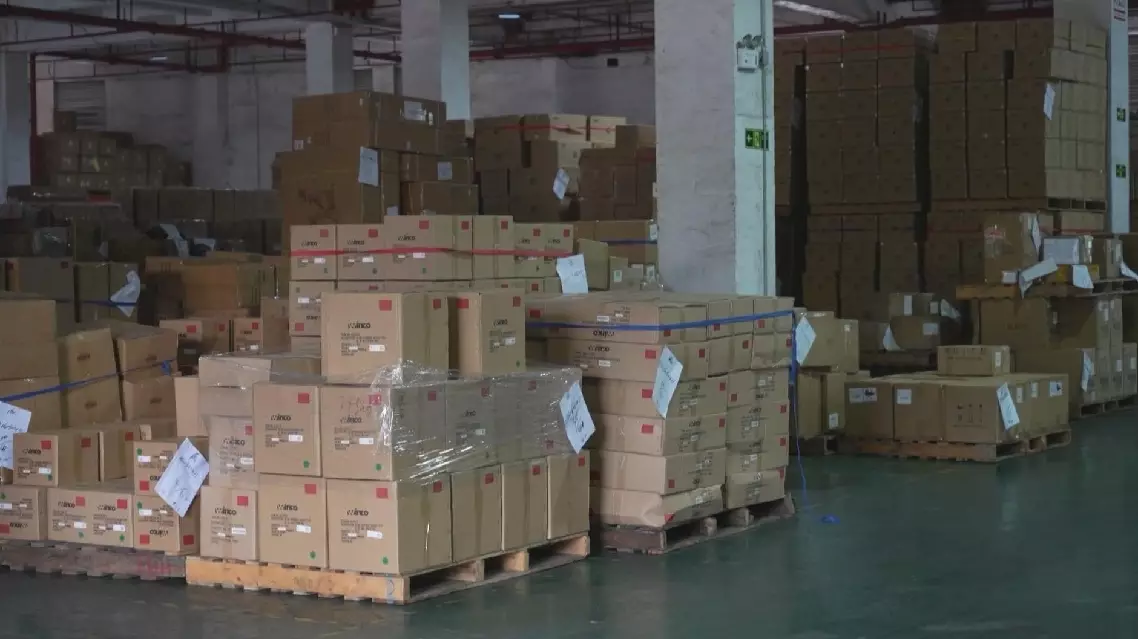
"Domestic cargo owners or cross-border e-commerce business owners are preparing their goods much earlier than in previous years and stockpiling for longer periods. Combined with current order demand, many of our warehouses in North America are now completely overloaded," said Zhao Kaijie, head of a warehousing and logistics company based in Shenzhen, Guangdong Province.
Logistics firms shift away from Middle East as conflict raises costs