TEMPE, Ariz. (AP) — Rising household electricity prices and controversy over data centers are reshaping low-profile elections for control over utilities that build power plants and power lines — and then bill people for the cost.
The tensions played a prominent role during last year's elections in Georgia, New Jersey and Virginia, and now they're sweeping through Arizona and Alabama, where once-sleepy contests are becoming political brawls.
Click to Gallery
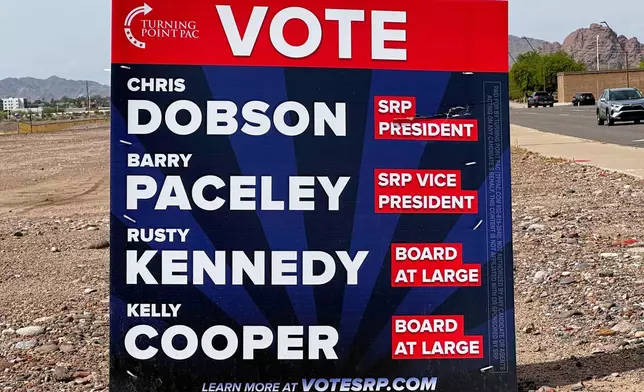
A sign supporting candidates for the Salt River Project board sits next to an intersection Monday, March 30, 2026 in Tempe, Ariz. (AP Photo/Jonathan J. Cooper)
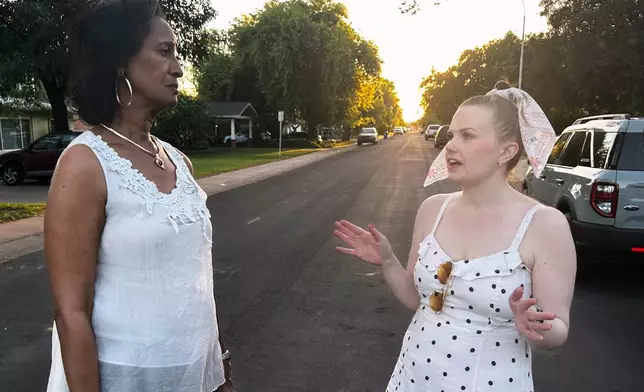
Sandra Kennedy, left, and Casey Clowes, candidates for the Salt River Project governor board, speak while canvassing in Tempe, Ariz., on Wednesday, April 1, 2026. (AP Photo/Jonathan J. Cooper)
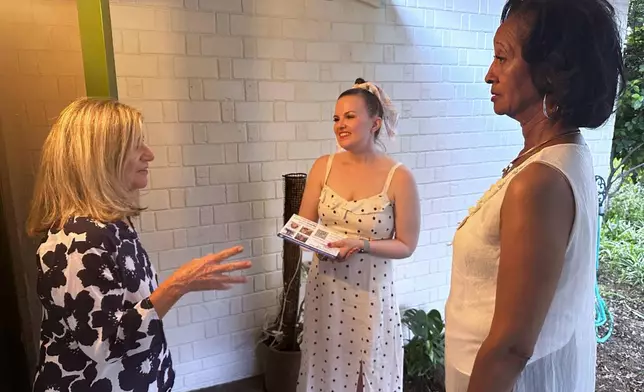
Laura Kajfez, left, speaks with Casey Clowes, center and Sandra Kennedy, candidates for the Salt River Project governing board, outside her home in Tempe, Ariz., on Wednesday, April 1, 2026. (AP Photo/Jonathan J. Cooper)
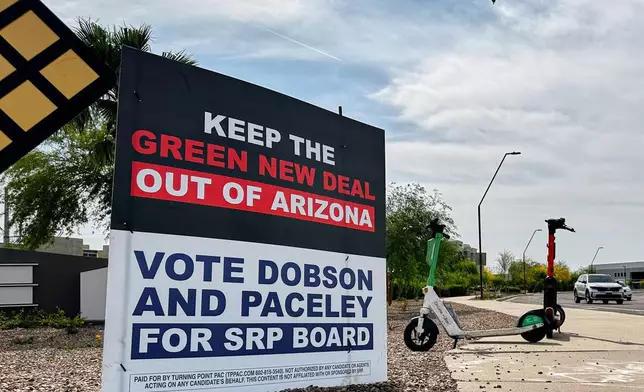
A sign supporting candidates for the Salt River Project board sits next to an intersection Monday, March 30, 2026 in Tempe, Ariz. (AP Photo/Jonathan J. Cooper)
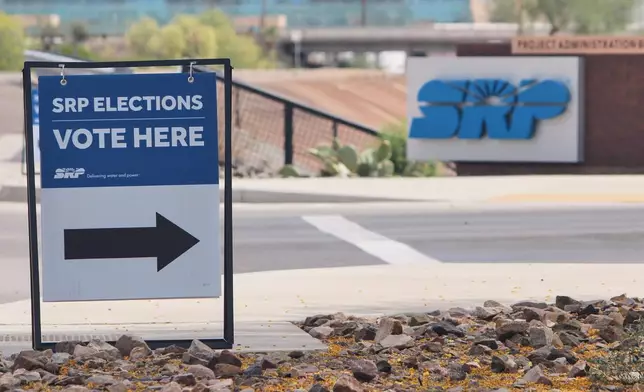
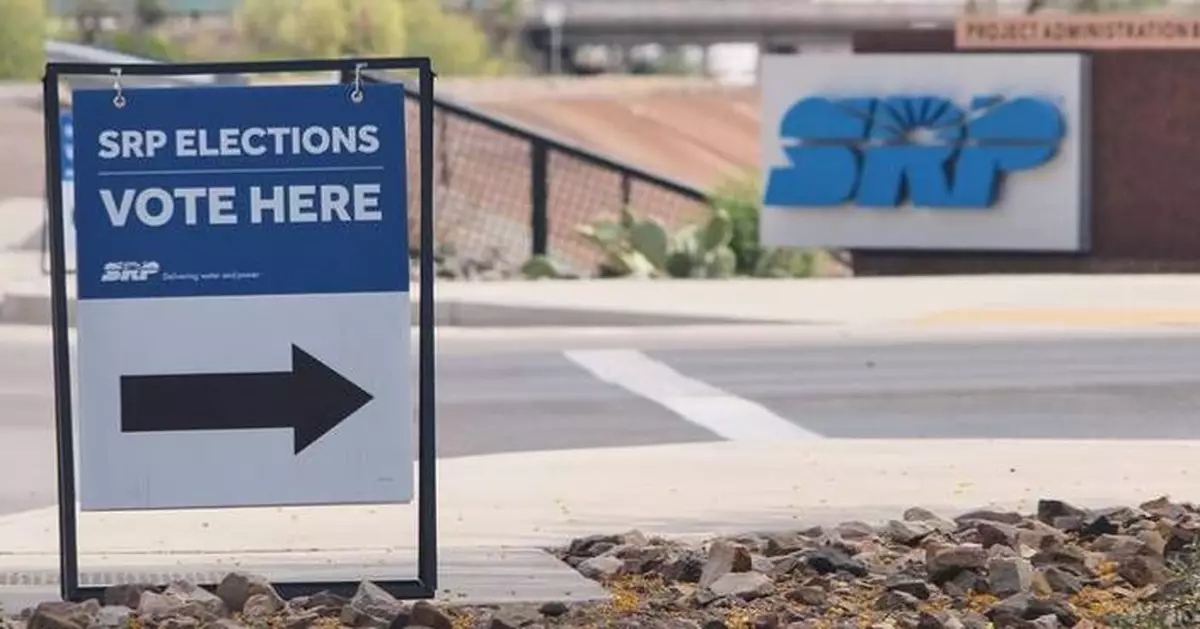
A sign directing voters sits outside the headquarters of Salt River Project on Monday, March 30, 2026, in Tempe, Ariz. (AP Photo/Jonathan J. Cooper)
Even national groups like Turning Point Action — better known for its role mobilizing young conservatives behind President Donald Trump — are getting involved by knocking on doors and texting campaign messages. The organization wants to curb environmentalists' influence over the Phoenix-area Salt River Project, the largest public utility in the country, in a Tuesday election.
The skirmishes are a preview for more campaigns later this year, when at least a half-dozen states will hold elections for utility regulators. That includes Georgia, where a second-straight hotly contested campaign is anticipated.
The burst of attention is dragging the behind-the-scenes politics of elected utility commissioners — long dominated by power brokers or monopolistic companies, critics say — into an intensely national debate over how to power artificial intelligence without driving up electricity costs.
"And that means suddenly there’s all this pressure,” said Dave Pomerantz of the Energy and Policy Institute, which pushes utilities to keep rates low and use renewable energy sources.
In Tuesday's election that will determine control of Salt River Project, more than three times as many people requested early ballots than two years ago. Yard signs pepper street corners and ratepayers — they must own land to vote — are getting text messages, fliers and door-knockers.
The utility has already been under pressure to reduce its reliance on fossil fuels like coal and natural gas that emit planet-warming greenhouse gases. But now campaign organizations are converging on the race as the fast-growing Phoenix area becomes a destination for data centers and semiconductor factories. The utility projects that it will need to double its power capacity within a decade.
Two rival slates are vying for the board's majority. One is backed by Turning Point Action, which wants to stop “radical environmentalists.” The other is supported by the Jane Fonda Climate PAC, which is opposing “oil-loving candidates.” Also involved are local chapters of progressive groups, energy interests, construction firms and data center developers.
“If they want to just overnight switch us to solar, there’s a reliability issue, there’s a cost issue there, and we just can’t keep up," said Jimmy Lindblom, a construction executive who formed the business-backed Arizonans for Responsible Growth. “We’d have blackouts. And so these things are really important to the growth of Arizona.”
Turning Point Action is putting its muscle behind the Arizonans for Responsible Growth slate. They're also using the election to build momentum ahead of this year's midterms in the battleground state.
The slate running as the “clean energy” team said Salt River Project's current majority is too eager to hook up to natural gas, raise rates and embrace data centers. They also said the board is too dismissive of clean energy technologies to meet spiking demand and offers no incentives to install solar panels.
“It’s insane, especially now,” said Randy Miller, a clean energy advocate on SRP's board.
About a dozen supporters gathered around picnic tables last week at a park in Tempe, arriving as the sun set to canvass for voters who had requested ballots but not returned them. After a brief pep talk, they fanned out.
Some voters were bothered by Turning Point's involvement.
“Very, very, very troublesome,” said Laura Kajfez, a 66-year-old retiree from Tempe. “We don’t need that intervention in our local politics. We have enough problems as it is."
In the last two elections, an average of 7,500 ballots were turned in. As of Thursday, with five days of voting remaining, turnout had already topped 22,000, according to SRP.
Campaigning for the Salt River Project board is a complex puzzle. The utility has more than 2 million power and water customers and is governed by byzantine rules. Votes for most positions are weighted by acreage, so large landowners carry outsized sway.
In the heavily Republican state of Alabama, anxiety over rising power bills is spilling into the statehouse and onto the campaign trail, fueling a push to reshape the Alabama Public Service Commission. Alabama has some of the highest power rates in the South, according to the U.S. Energy Information Administration.
State lawmakers this week voted to overhaul the commission, effectively shifting more authority to the governor. Supporters described it as a way to address affordability. But it comes ahead of this year's elections, which some candidates are seeking to make a referendum on electricity prices — similar to how Georgia Democrats won blowout victories in two races for their state's commission in 2025.
Former U.S. Sen. Doug Jones, who is a Democratic candidate for Alabama governor, called the bill a “first-rate con job” on voters.
“Republicans in the Alabama Legislature want to completely revamp the PSC because all of the sudden after two wins in Georgia, they realize that maybe the people don't like what's going on with the PSC,” Jones said on social media.
The legislation, which was signed by Gov. Kay Ivey, will expand the three-member commission to seven elected members. The four new members will be initially appointed by the governor. In addition, utilities will be forbidden from raising retail base rates until 2029.
Republican legislative leaders said the bill was a significant step forward for consumer protection.
“The Alabama Legislature passed HB475 to put a freeze on electric rates and to give the people of Alabama broader representation on the Public Service Commission," Ivey said. House Speaker Nathaniel Ledbetter and Senate President Pro Tem Garlan Gudger said in a joint statement that lawmakers “stood united to reform how utilities are regulated and demand an unprecedented amount of accountability for consumers across the state.”
Two of the current three seats on the commission are up for election this year, and Republican incumbents face both primary challengers and Democratic opponents running on the message of affordability.
Democrats are pointing to Georgia’s election as a model for how the party can be successful, even in a GOP-dominated state like Alabama.
“What happened in Georgia could happen in Alabama,” said Tabitha Isner, vice chair of the Alabama Democratic Party. “That’s why the alarm bells are going off and so much money is being poured into maintaining the status quo.”
Levy reported from Harrisburg, Pa., and Chandler from Montgomery, Ala.
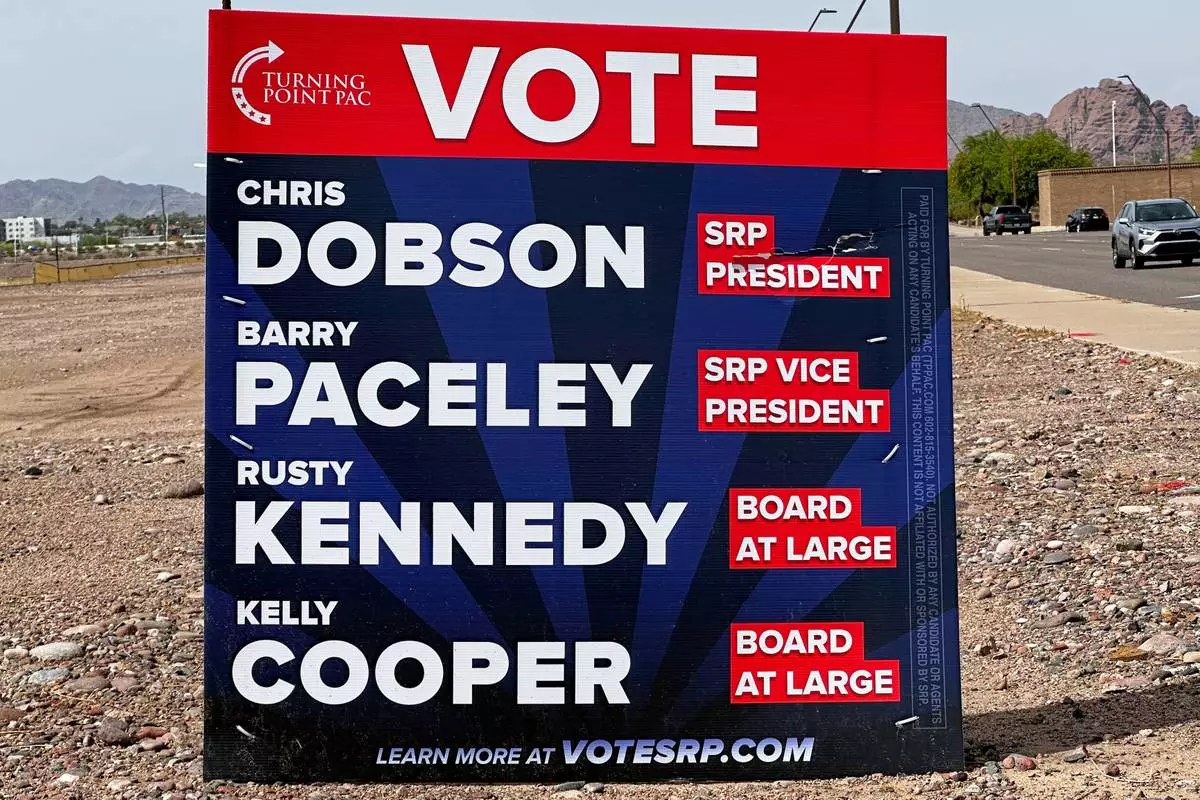
A sign supporting candidates for the Salt River Project board sits next to an intersection Monday, March 30, 2026 in Tempe, Ariz. (AP Photo/Jonathan J. Cooper)
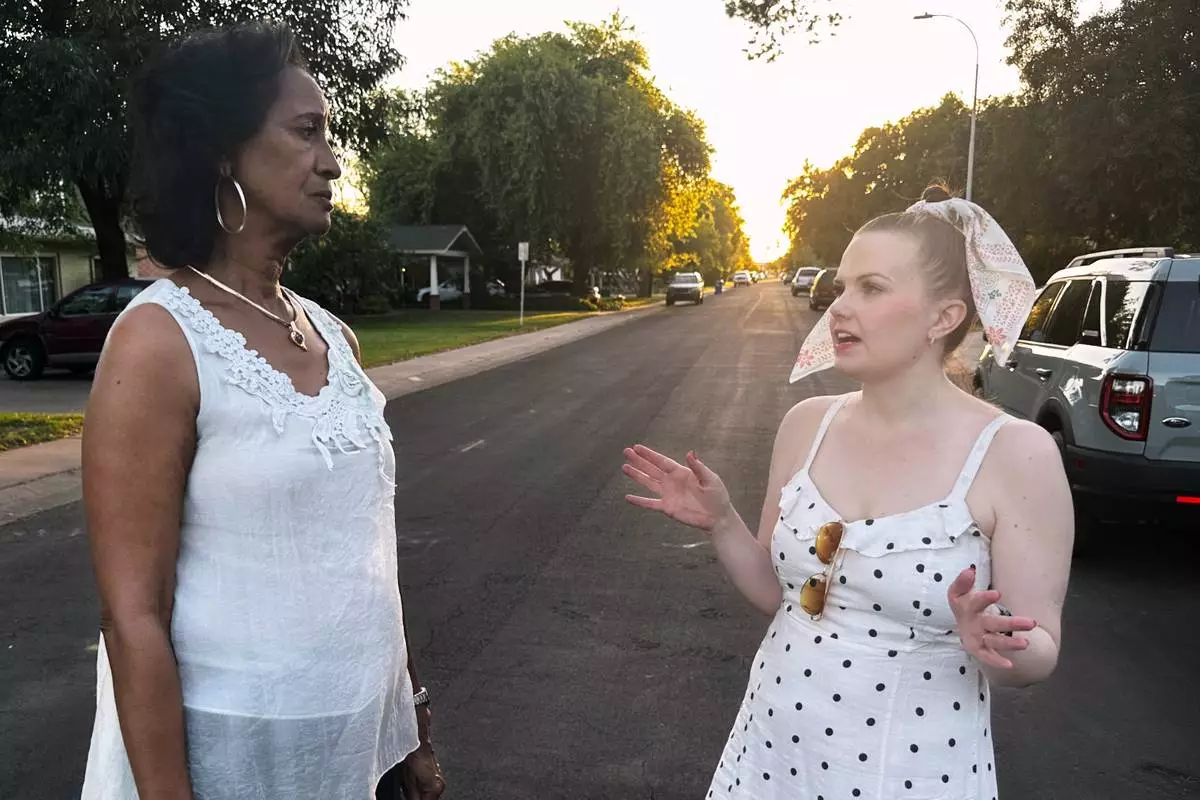
Sandra Kennedy, left, and Casey Clowes, candidates for the Salt River Project governor board, speak while canvassing in Tempe, Ariz., on Wednesday, April 1, 2026. (AP Photo/Jonathan J. Cooper)
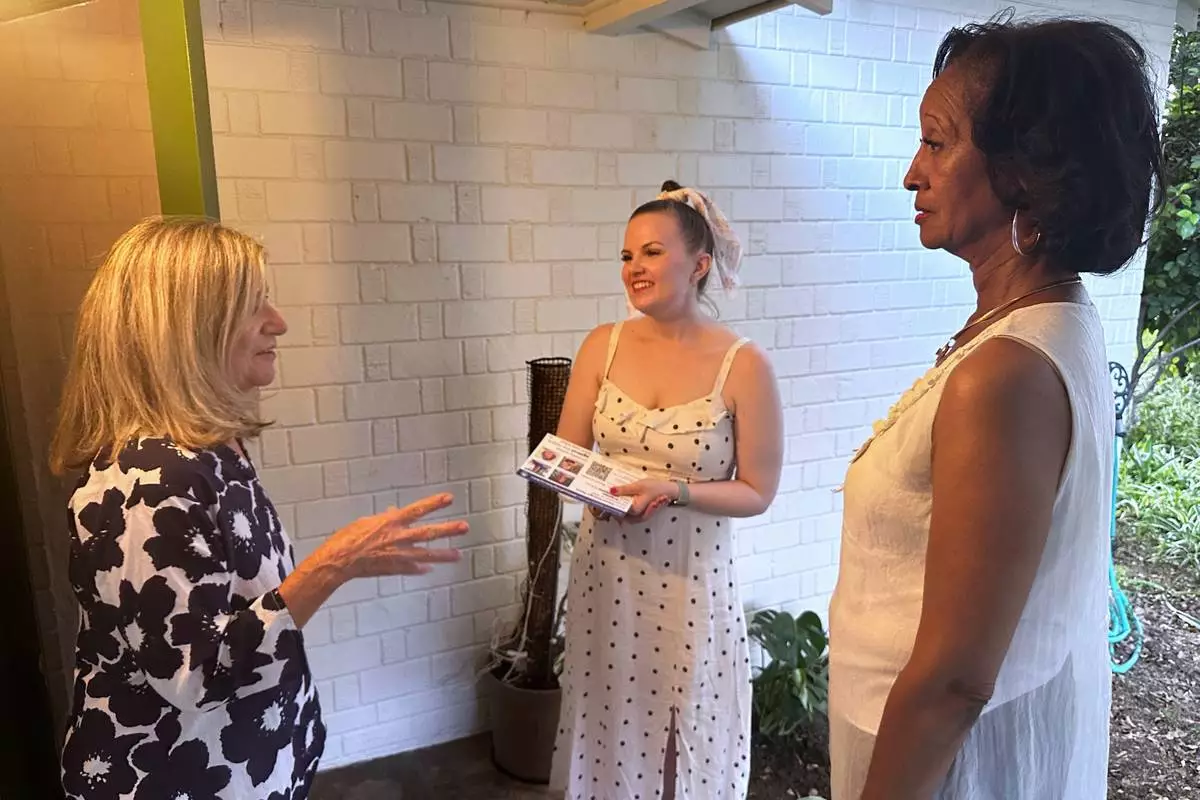
Laura Kajfez, left, speaks with Casey Clowes, center and Sandra Kennedy, candidates for the Salt River Project governing board, outside her home in Tempe, Ariz., on Wednesday, April 1, 2026. (AP Photo/Jonathan J. Cooper)
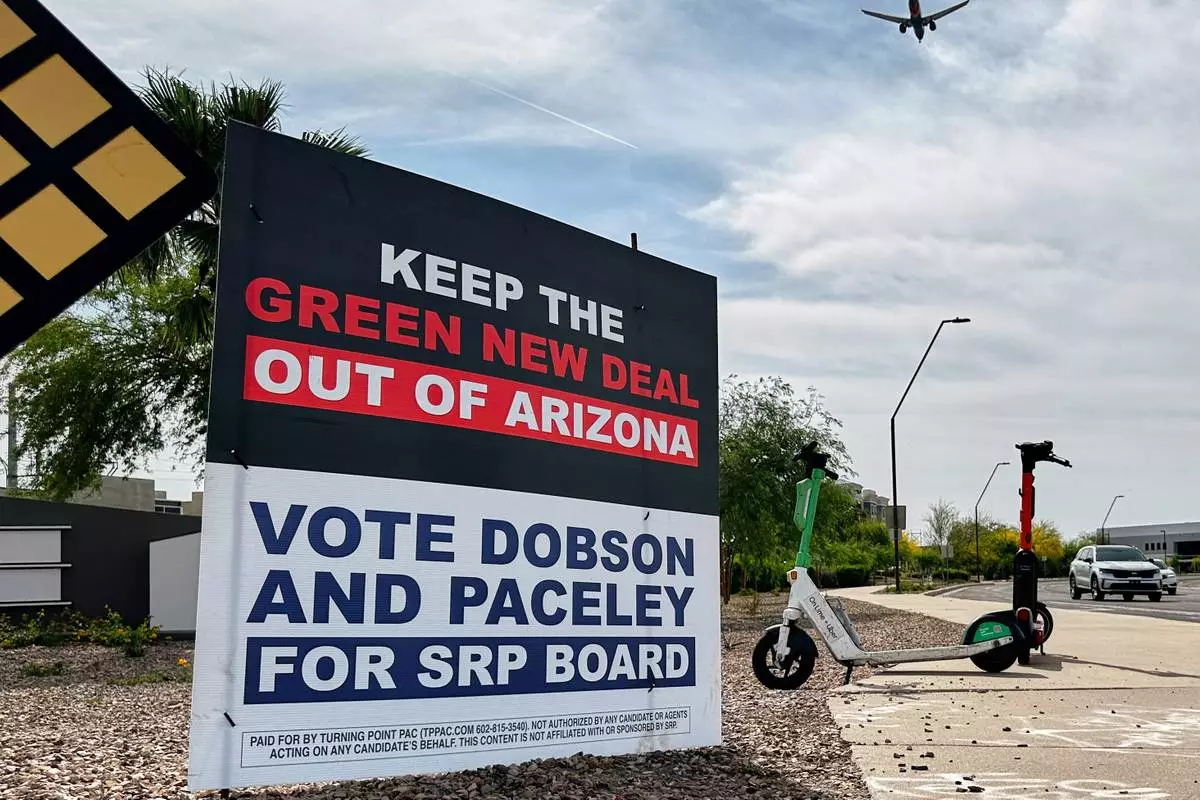
A sign supporting candidates for the Salt River Project board sits next to an intersection Monday, March 30, 2026 in Tempe, Ariz. (AP Photo/Jonathan J. Cooper)
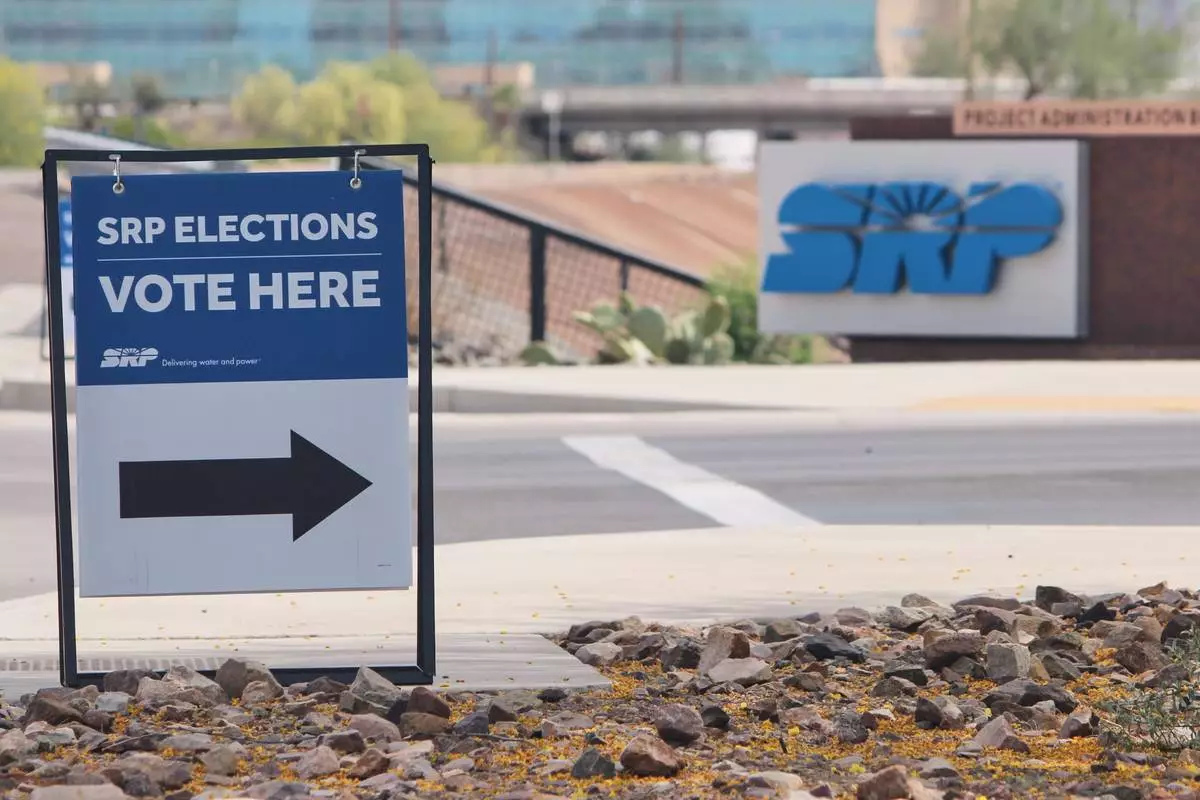
A sign directing voters sits outside the headquarters of Salt River Project on Monday, March 30, 2026, in Tempe, Ariz. (AP Photo/Jonathan J. Cooper)