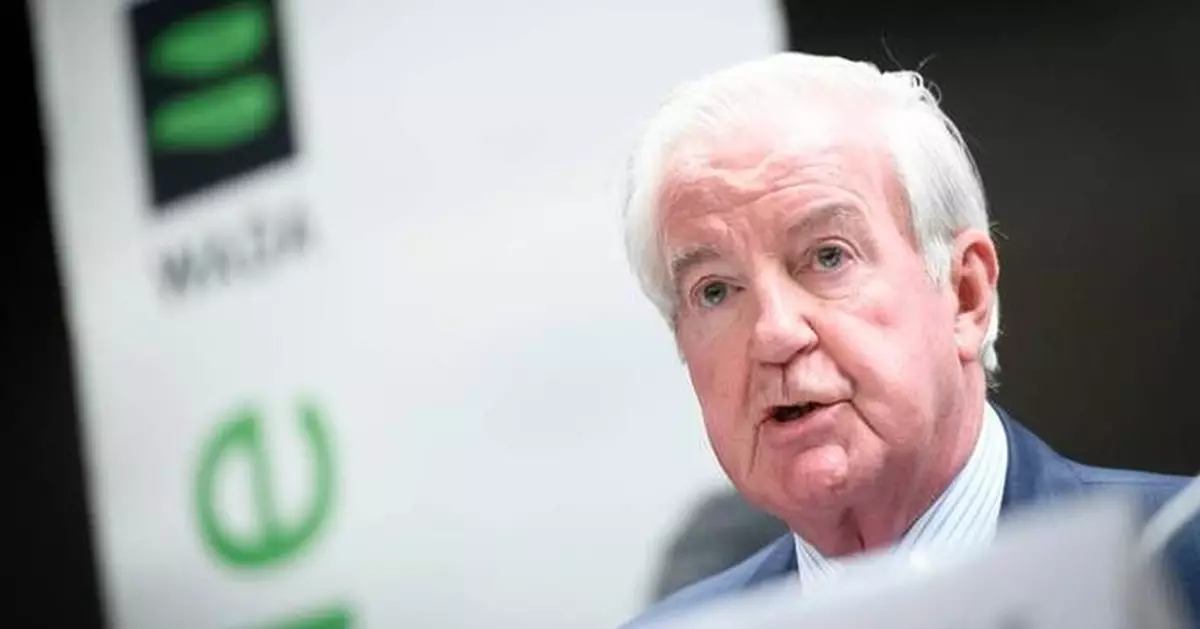
GENEVA (AP) — Craig Reedie, the former World Anti-Doping Agency president whose position on the Russian doping scandal a decade ago brought him into conflict with the IOC where he was a vice president, has died. He was 84.
The International Olympic Committee confirmed his death on Monday without stating the cause.
Reedie played key roles in London’s unexpected win in bidding to host the 2012 Olympics and in getting his own sport badminton on to the Olympic program for the 1992 Barcelona Games.
“Craig was my mentor, wise counsel, passionate advisor, and great friend,” said Sebastian Coe, who worked alongside Reedie in bidding for and organizing the London Summer Games.
“He was the distinguished elder statesman with a reservoir of Olympic knowledge and experience which he shared willingly and to great effect,” Coe wrote in a social media post on Monday.
Reedie’s standing in Olympic politics helped to elevate him to lead the global anti-doping watchdog in 2013, when the presidential nomination was effectively the turn of the IOC to decide.
Three years later, the lead-in to the Rio de Janeiro Summer Games was dominated by the scandal of learning the scale of Russia’s state-backed doping program at the 2014 Sochi Winter Games.
The push by Reedie’s WADA to remove the entire Russian team from Rio was fiercely resisted by the IOC and its president Thomas Bach. Both men sat on the IOC’s 15-member executive board that ultimately decided to let governing bodies of Olympic sports decide their entry policy for Russian athletes.
The public pressure put on Reedie by influential Olympic figures continued for months until he and Bach met to clear the air. Since Rio, no Russian team has competed at an Olympics with its own country name, flag and anthem.
Current IOC president Kirsty Coventry said on Monday that Reedie’s contribution “to the Olympic Games, to clean sport and to the development of athletes worldwide will endure for generations to come.”
“He was a steadfast guardian of integrity, guiding the global sporting community through some of its most challenging moments with dignity and resolve,” Coventry added in an IOC statement.
Coe described Reedie, a Scotsman who was knighted in 2006, as the “epitome of a gentleman.”
“He was equal parts opinionated, wise, canny, and, most of all, loyal to those who legitimately wanted to serve sport,” the World Athletics president said. “He certainly did not suffer fools gladly, was authentic, and would speak his mind.”
Reedie was elected as an IOC member in 1994 and became an honorary member in 2021.
The IOC said its flag would fly at half-staff for three days at its headquarters in Lausanne, Switzerland.
AP Winter Olympics at https://apnews.com/hub/milan-cortina-2026-winter-olympics
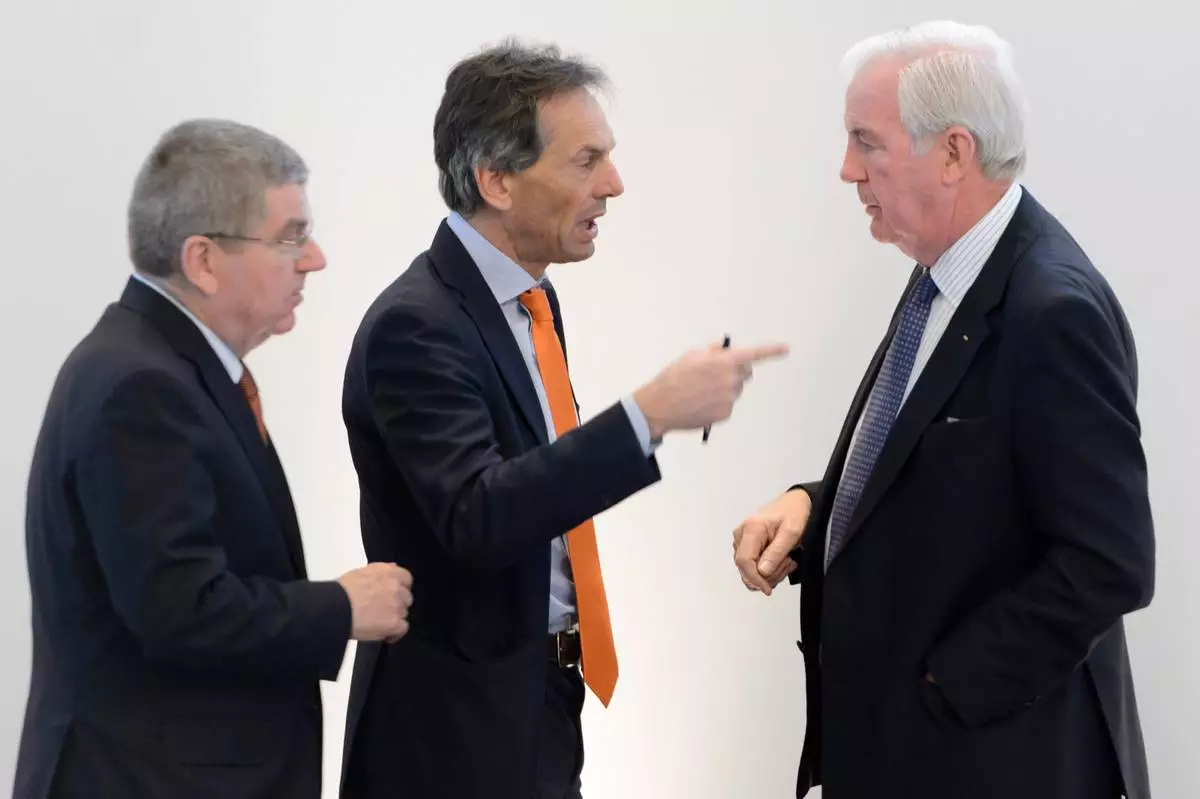
FILE - International Olympic Committee (IOC) president Thomas Bach, left, from Germany, stands next to IOC member Craig Reedie, right, from Britain, and IOC Director General Christophe de Kepper, centre from Belgium, at the opening of the second and last day of the executive board meeting of the International Olympic Committee (IOC), in Lausanne, Switzerland, Wednesday, March 2, 2016. (Laurent Gillieron/Keystone via AP, File)
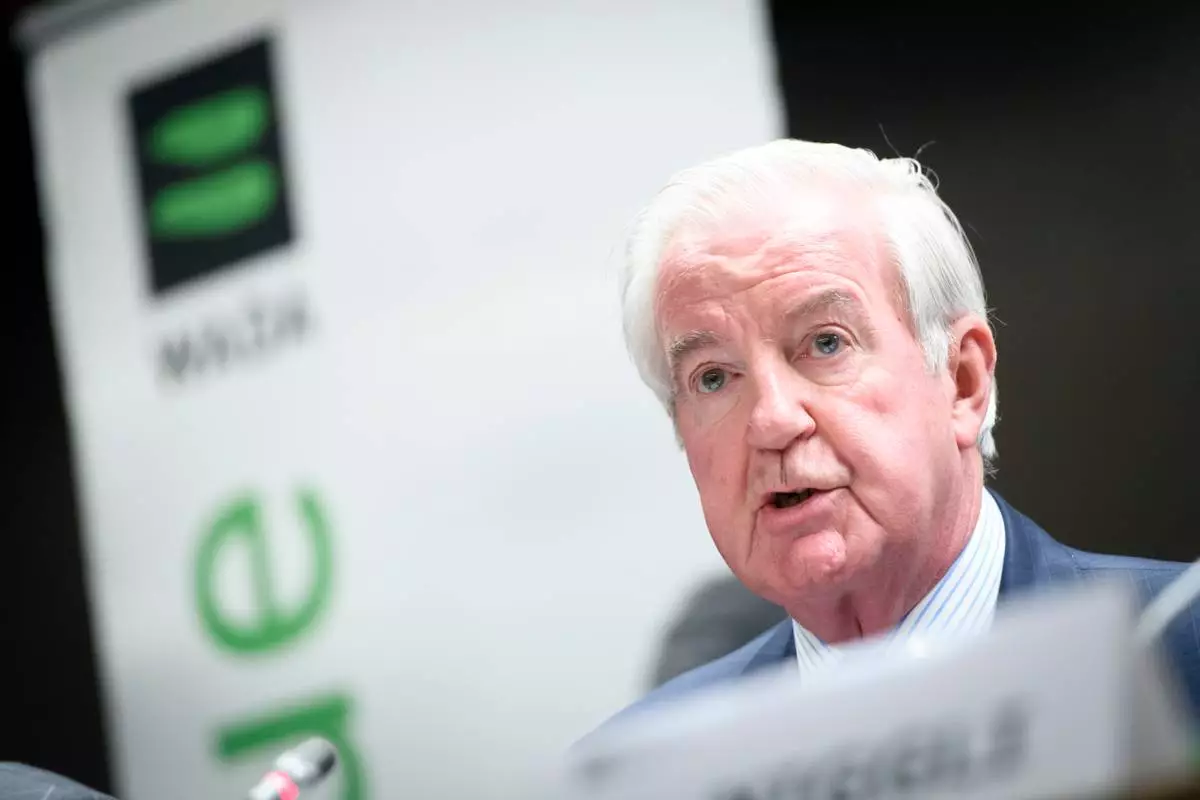
PFILE - Then-president of World Anti-Doping Agency (WADA) Craig Reedie speaks during a press conference after the WADA's extraordinary Executive Committee (ExCo) on the Russian doping data manipulation, in Lausanne, Switzerland, Monday, Dec. 9, 2019. (Laurent Gillieron/Keystone via AP, File)
Iran rejected a 45-day ceasefire proposal and said it wants a permanent end to the war as U.S. President Donald Trump's ultimatum to make a deal ticked closer with an expanded threat of strikes against the Islamic Republic to include all power plants and bridges.
Trump said Monday he is “not at all” concerned about committing possible war crimes as he again threatened to destroy Iranian infrastructure if Tehran does not meet his Tuesday 8 p.m. EST deadline to reopen the Strait of Hormuz.
U.N. Secretary-General António Guterres warned the U.S. that attacking civilian infrastructure is banned under international law, his spokesperson said Monday.
Israel carried out a new wave of attacks on Iran early Tuesday, while Iran responded with missile fire against Israel and its Gulf Arab neighbors.
More than 1,900 people have been killed in Iran since the war began, but the government has not updated the toll for days.
In Lebanon, more than 1,400 people have been killed and more than 1 million people have been displaced. Eleven Israeli soldiers have died there.
In Gulf Arab states and the occupied West Bank, more than two dozen people have died, while 23 have been reported dead in Israel and 13 U.S. service members have been killed.
Here is the latest:
Iran has reported fatalities from airstrikes overnight into Tuesday.
At least nine people were killed in the city of Shahriar, west of the capital, Tehran, Iranian media reported.
In the city of Pardis, east of Tehran, at least six people were killed in a strike and recovered from buildings, Iranian media reported.
A Revolutionary Guard general in Iran has urged parents to “send your kids to man checkpoints.”
Gen. Hossein Yekta, previously identified as leading plainclothes units of the all-volunteer Basij force, made the comments on an Iranian state television channel.
“Moms, dads, take your kids hands and go out on streets,” he said. “Do you want your kid to become a real man? Let him feel like a hero standing right at the heart of the battlefield. Moms, dads, at night send your kids to man checkpoints. They become men!”
Basij checkpoints have been repeatedly targeted in airstrikes.
The Basij has been accepting children as young as 12 to man checkpoints. Amnesty International has warned some even carry firearms, calling their recruitment a war crime.
During nationwide protests in January, Yekta warned parents to keep their children home or they would be shot.
An adviser to Sheikh Mohamed bin Zayed Al Nahyan, the president of the United Arab Emirates, says they have lost trust in the Iranian government after its attacks on Arab neighbors.
“We are facing a perfidious regime that cannot be trusted,” Anwar Gargash wrote in a social media post Tuesday, adding that his country had sought to avoid the war.
He also claimed the UAE’s position toward Iran’s attacks in the Gulf Arab countries is appreciated across the region.
Iranian state television on Tuesday claimed 14 million people had volunteered to fight for the country if there is a ground invasion by the United States and Israel.
The claim by state TV, which included no other information, doubles an April 2 claim by Iranian Parliament speaker Mohammad Bagher Qalibaf that 7 million had volunteered.
Iran is home to some 90 million people. Iran had conducted a bloody crackdown on nationwide demonstrations in January that killed thousands and saw tens of thousands detained.
State media and text message campaigns have urged people to volunteer. The government also has called on retired soldiers to express their interest in fighting, while the paramilitary Revolutionary Guard’s all-volunteer Basij force has begun accepting children as young as 12 into its ranks.
After the 1979 Islamic Revolution, Ayatollah Ruhollah Khomeini, for instance, called for a 20-million Basij force.
Iranian media reported Tuesday that a synagogue in the capital, Tehran, was damaged in an airstrike.
They identified the house of worship as the Rafi Niya Synagogue.
Video from the site showed rescuers moving around and what looked like a book of Hebrew scripture in the rubble.
Iran has a small Jewish population still living in the country. Many fled during the 1979 Islamic Revolution.
Likely signaling a new target for their airstrikes, the Israeli military warned Iranians in Farsi on Tuesday to avoid taking trains until at least 9 p.m. local time.
“Your presence puts your life at risk,” the warning posted on X read.
Iran has shut off access to the internet for weeks, making it difficult for the average Iranians to see these warnings. However, Farsi-language satellite news networks abroad report them, allowing the information to make its way back into the Islamic Republic.
South Korean President Lee Jae Myung is dispatching his chief of staff as a special envoy to Kazakhstan, Oman and Saudi Arabia in a diplomatic push to secure more fuel and mitigate the energy crunch caused by the war in the Middle East.
Kang Hoon-sik said he will depart Tuesday evening, with the visits aimed at securing additional sources of crude oil and naphtha, a key petroleum product used in plastics manufacturing.
South Korea last month reached an agreement with the United Arab Emirates to receive 24 million barrels of crude and initial shipments have arrived in recent weeks.
More than 60% of crude and 50% of naphtha supplies imported by South Korea last year passed through the Strait of Hormuz, a narrow waterway that is now largely blocked by Iran as it seeks to exert leverage against the U.S. and Israel.
The King Fahd Causeway, a key bridge linking Saudi Arabia to the island kingdom of Bahrain, closed early Tuesday over threats from Iranian attacks.
The King Fahd Causeway Authority made the announcement on X.
Vehicle movements had been “suspended as a precautionary measure” over Iranian attacks targeting Saudi Arabia’s Eastern Province, the authority said.
The 25-kilometer (15.5-mile) bridge is the only connection by road for Bahrain, home to the U.S. Navy’s 5th Fleet, to the Arabian Peninsula.
While there has been no formal threat against the King Fahd Causeway, some hard-liners within Iran have increasingly identified it as a possible target.
That risk likely would grow if Trump carries out his threatened strikes against bridges in Iran.
Saudi Arabia said early Tuesday that seven ballistic missiles from Iran targeted the kingdom’s oil-rich Eastern Province, with “debris from the missiles” crashing into the ground near energy facilities.
The brief statement from Maj. Gen. Turki al-Malki, a spokesman for the Saudi military, did not elaborate on the extent of the damage on the ground, though he said an “assessment is underway.”
It wasn’t immediately clear what energies facilities had been impacted.
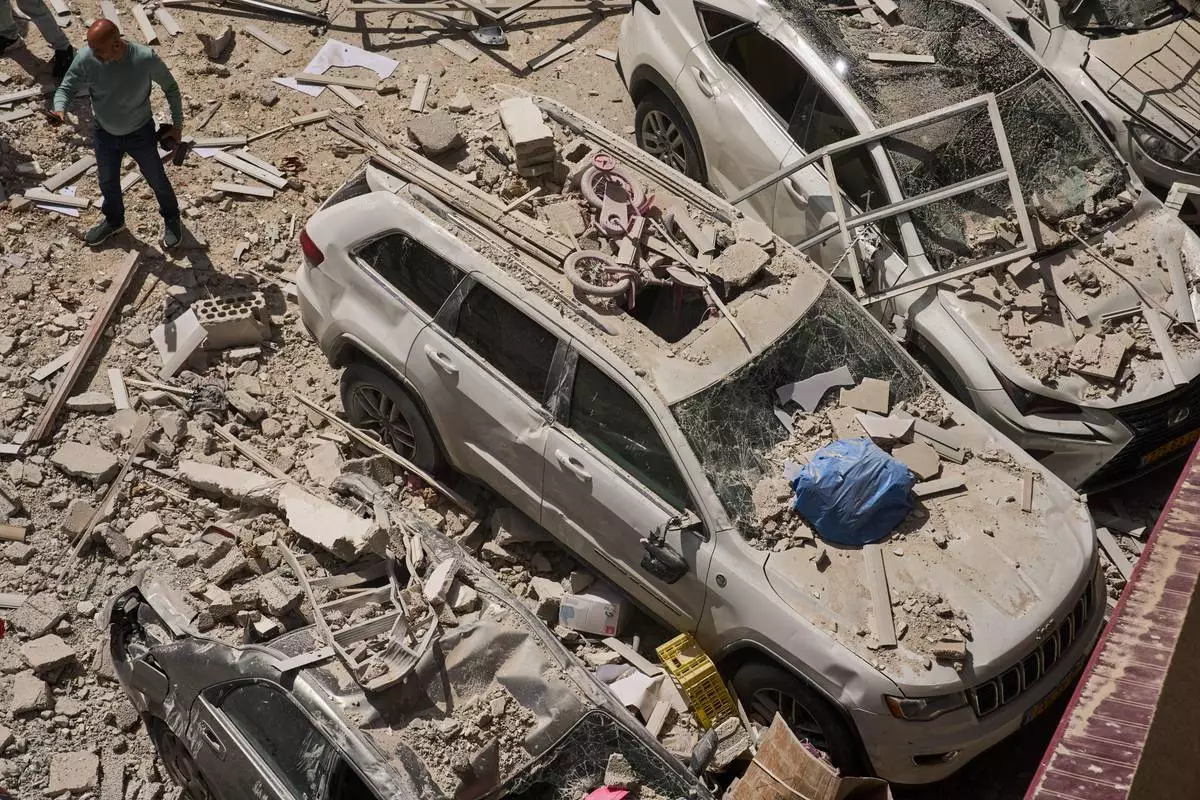
A man inspects the damage to cars and an apartment building struck by an Iranian missile in Ramat Gan, Israel, Monday, April 6, 2026. (AP Photo/Oded Balilty)
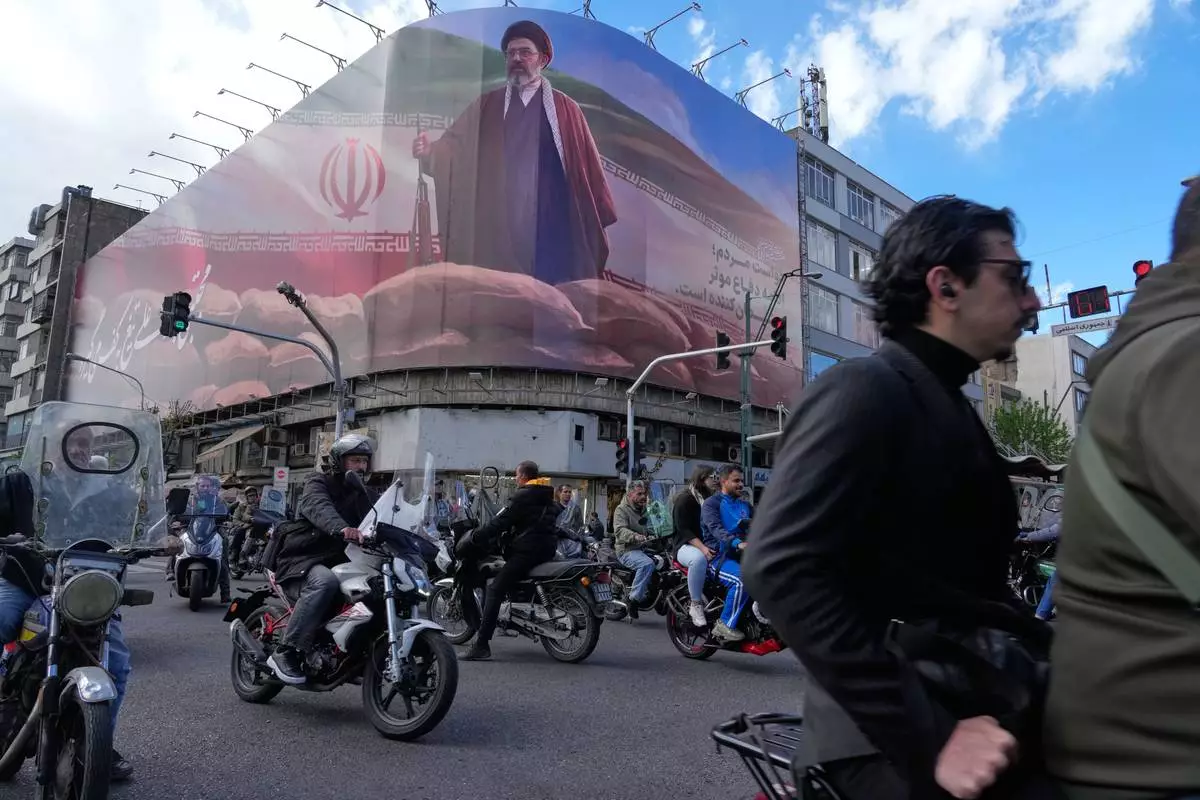
People drive their motorbikes past a billboard that shows a graphic depicting Iran's Supreme Leader Ayatollah Mojtaba Khamenei in downtown Tehran, Iran, Monday, April 6, 2026. (AP Photo/Vahid Salemi)
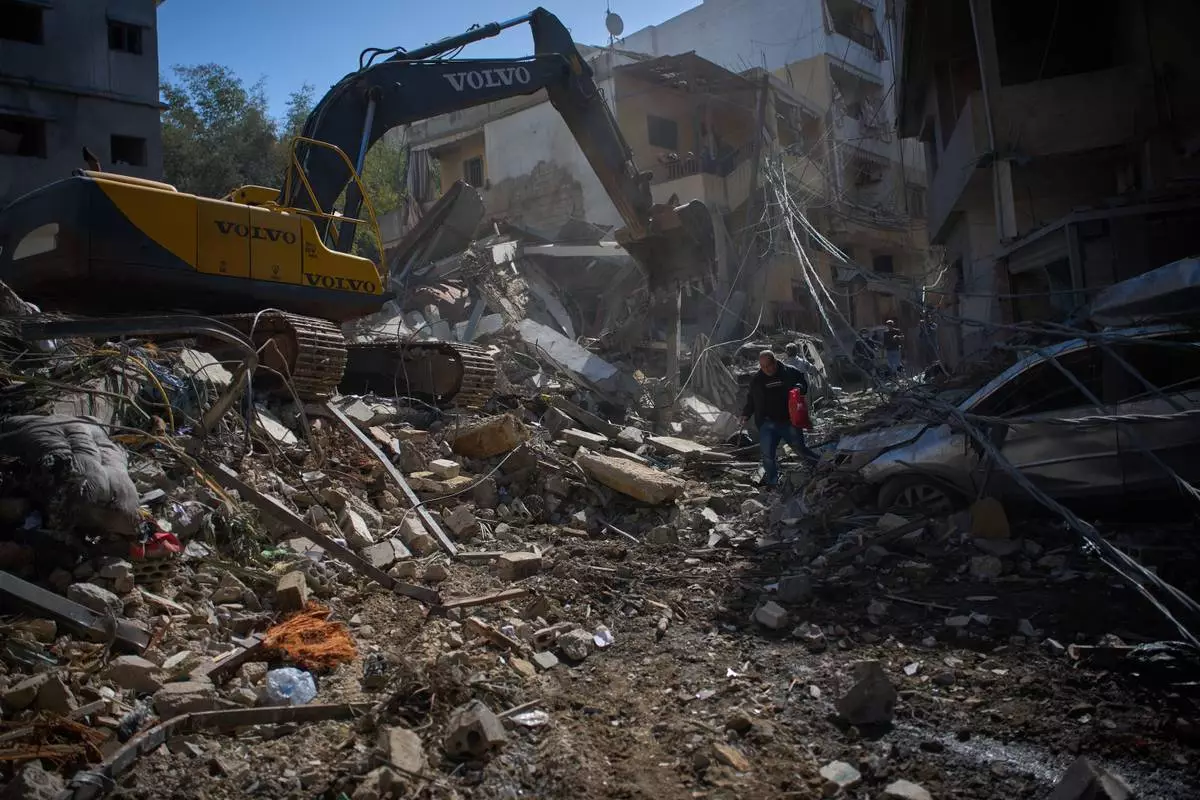
An excavator works removing the rubble as people walk at the site of Sunday's Israeli strike on a building in Beirut's Jnah neighborhood, Lebanon, Monday, April 6, 2026. (AP Photo/Emilio Morenatti)
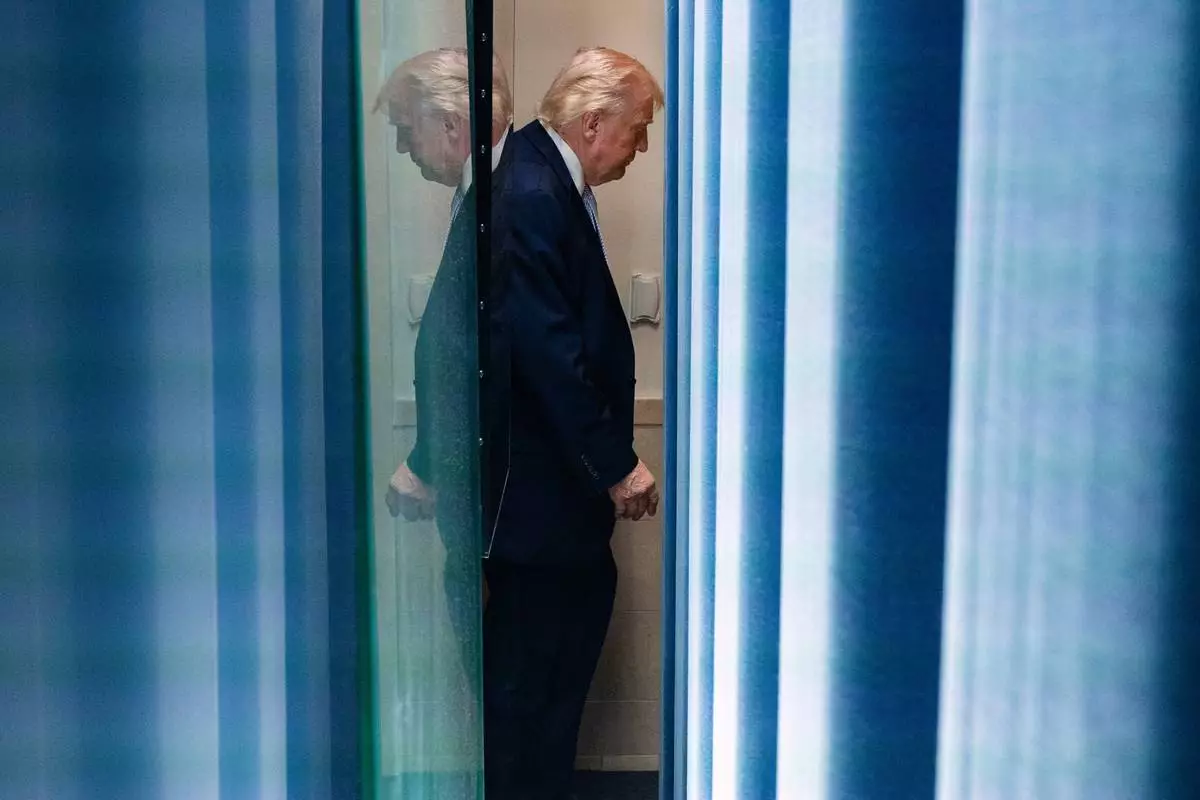
President Donald Trump departs after speaking with reporters in the James Brady Press Briefing Room at the White House, Monday, April 6, 2026, in Washington. (AP Photo/Alex Brandon)
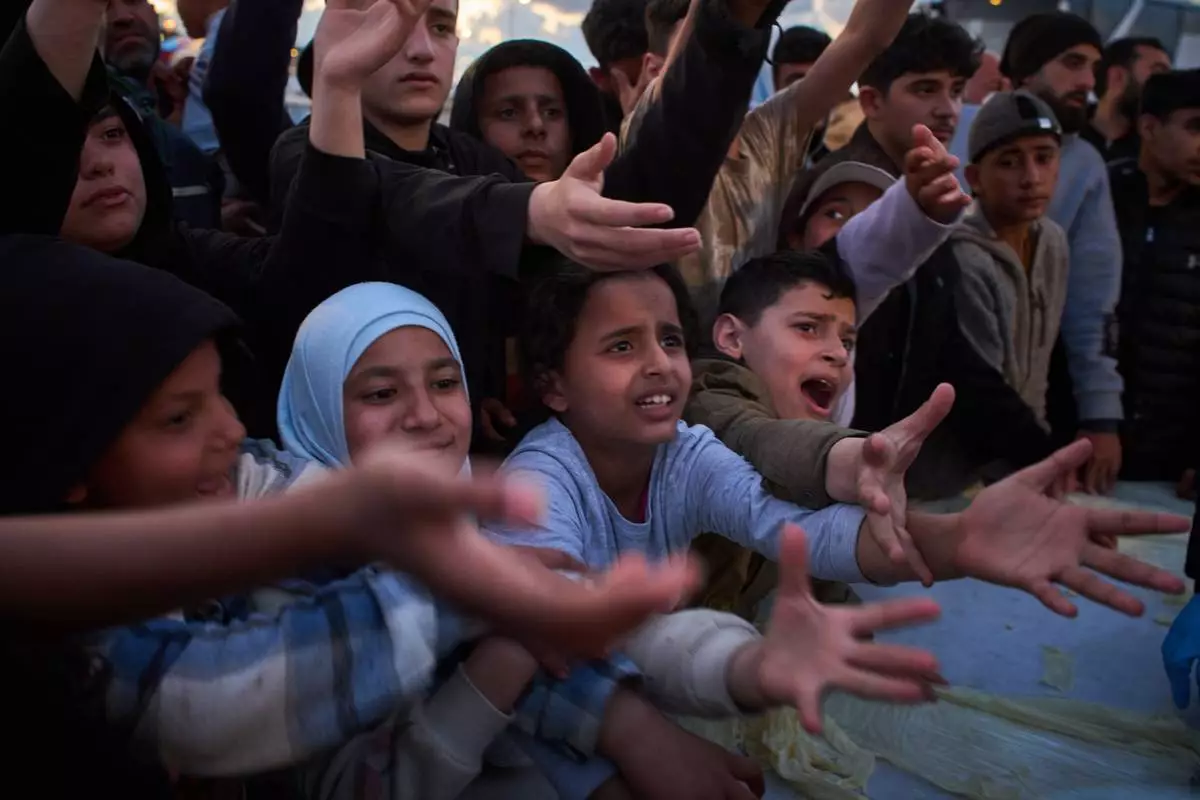
Displaced people wait to receive donated food beside the tents they use as shelters after fleeing Israeli bombardment in southern Lebanon, in Beirut, Lebanon, Monday, April 6, 2026. (AP Photo/Emilio Morenatti)