PARIS--(BUSINESS WIRE)--Apr 7, 2026--
Europe is navigating a period of intense turbulence, where geopolitical crises, pressure on critical raw materials, and climate‑related shocks are reinforcing one another. This polycrisis is no longer cyclical: it is structurally reshaping the continent’s value chains and testing its industrial competitiveness.
This press release features multimedia. View the full release here: https://www.businesswire.com/news/home/20260406787383/en/
In this context, Ardabelle is releasing Greening the Arteries of Industry, a groundbreaking study that quantifies for the first time the economic gap between a Europe that endures and a Europe that invests. Conducted under the scientific supervision of economist Xavier Jaravel, this work represents the first attempt to model, in an integrated way, industrial resilience, ecological transition, and European competitiveness through 2035 - 2050.
The study was presented under the high patronage of Roland Lescure, Minister for the Economy, Finance and Industrial, Energy and Digital Sovereignty, and Agnès Pannier‑Runacher, Minister for Ecological Transition and Territorial Cohesion, reflecting the strategic importance of these issues for France and for Europe.
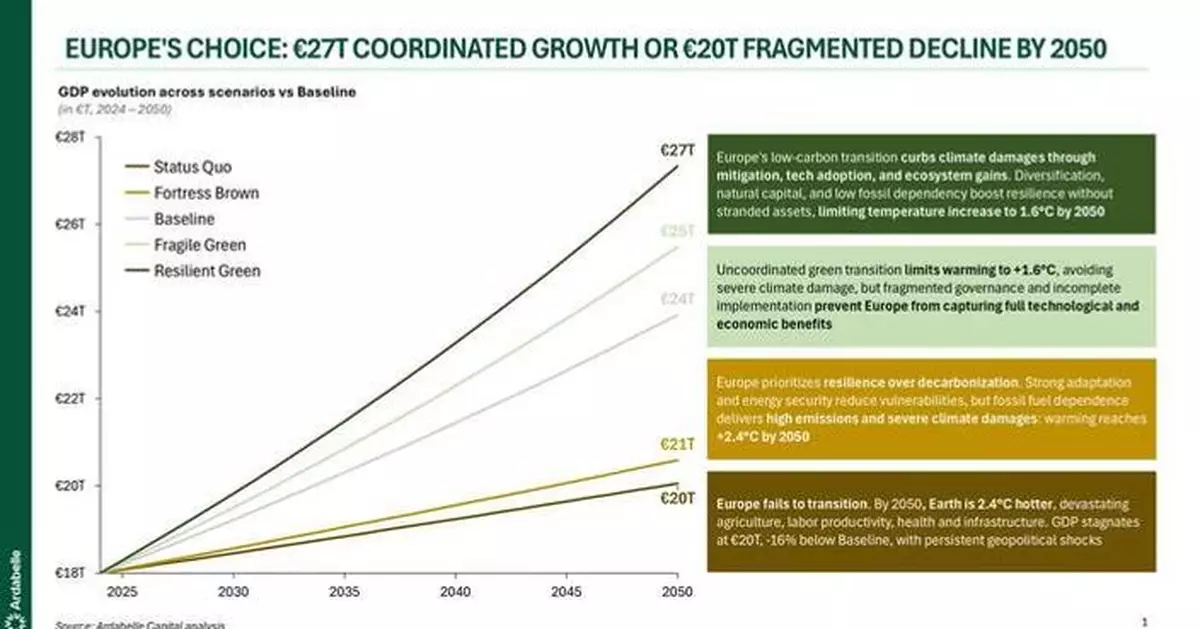
The conclusion is unequivocal: a €7 trillion differential by 2050, nearly twice the current GDP of Germany.
The study shows that the inaction scenario - with GDP stagnating at €20 trillion in 2050 - exposes the continent to compounding climate damages, supply chain disruptions, and strategic dependencies. By contrast, a coordinated trajectory of green transition and industrial resilience would lift GDP to €27 trillion, driven by innovation, energy security, and the reconfiguration of supply chains.
Investing 2% of GDP per year between 2025 and 2030 would be enough to trigger this trajectory, with a 218% return on investment. Every euro invested generates €3.18 in benefits, including €2.50 from avoided climate damages alone.
Ardabelle: an architect of Europe’s value chains
Ardabelle positions itself as one of the few investment funds capable of combining macroeconomic analysis, micro‑level value chain expertise, financial acumen, and operational experience. This integrated approach enables the firm to support Europe’s SMEs and mid‑caps - 99% of European companies - as they transition toward more resilient, circular, and competitive business models.
Virginie Morgon, co-founder of Ardabelle declares: “This is not an ideological debate, but a battle for resilience and competitiveness. Europe’s value chains must be fundamentally rethought, and it is SMEs and mid-cap companies that hold the keys. Ardabelle is betting on a Europe that rebuilds, accelerates, and regains control of its industrial destiny.”
Eric Hazan, co‑founder of Ardabelle, states: “Europe is facing a €7 trillion bet. This is not a slogan - it is an economic choice. We are at a decisive moment for Europe’s industrial sovereignty. Either we invest now to build resilient value chains, or we accept structural decline. At Ardabelle, we believe resilience has become the new competitiveness - and we intend to be its architects.”
The full study is available here: https://ardabelle.com/articles/greening-arteries
About Ardabelle
Ardabelle Capital is a pioneering private equity firm focused on accelerating the transition to a sustainable, resilient economy. The firm is led by a world-class team of partners who bring together a rare blend of expertise from private equity, industry, and sustainability, combining decades of experience in transforming businesses and driving value across global markets. Ardabelle targets mid-market industrial, services, and technology businesses poised for international growth. With a unique value chain-driven strategy and a strong ecosystem of corporate partners, industry experts, and sustainability strategists, Ardabelle invests to drive long-term sustainable value.
For more information, visit ardabelle.com
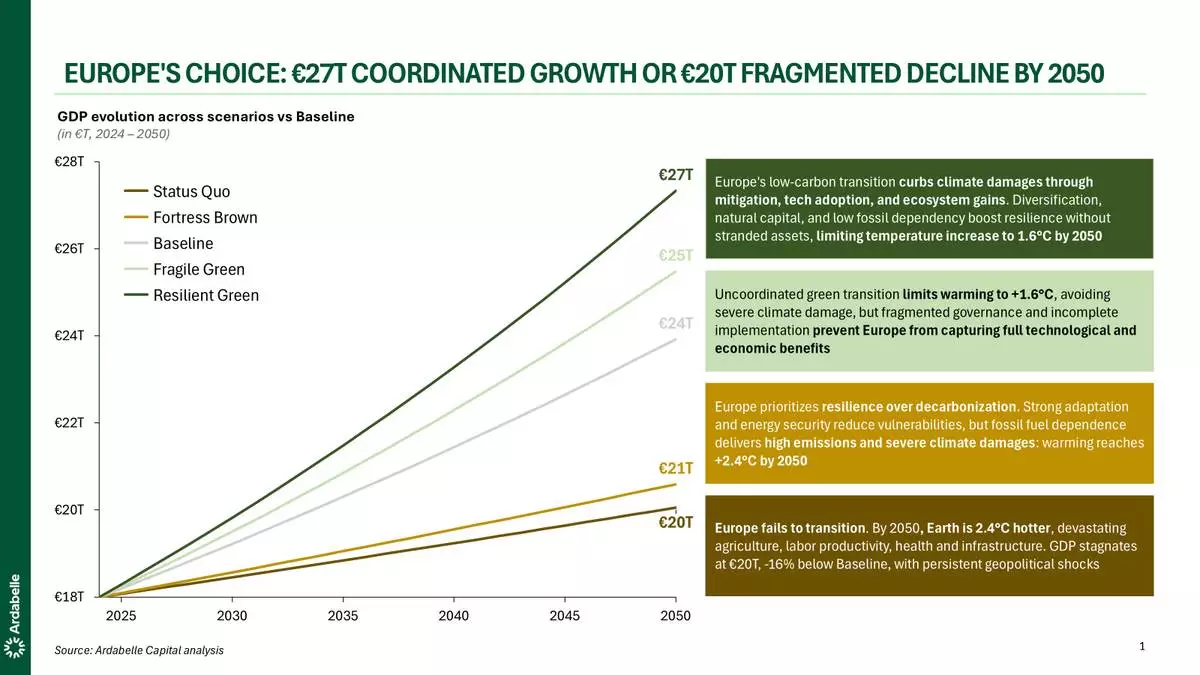
Europe's Choice: €27T Coordinated Growth or €20T Fragmented Decline by 2050
NEW YORK (AP) — The U.S. stock market is rising Tuesday as it catches up with others around the world that climbed the day before, when President Donald Trump said negotiations were “proceeding nicely” with Iran on ending their war.
The S&P 500 rose 0.8% after trading resumed following Monday’s holiday. The Dow Jones Industrial Average was up 41 points, or 0.1%, as of 10:15 a.m. Eastern time, and the Nasdaq composite was 1.3% higher. All three indexes are on track to set all-time highs.
The gains came even though fighting continued in the region, and the U.S. military said it carried out “self-defense” strikes in southern Iran, including on missile launch sites and boats placing mines. Markets have rallied in the past on hopes for a coming end to the war with Iran, only to see the conflict drag on.
The price for a barrel of Brent crude, the international standard, rose 4.3% to $100.27, but that reclaimed only some of its 7.1% plunge from Monday. The price for a barrel of U.S crude oil, meanwhile, fell 2.9% to $93.83 after resuming trading following the Memorial Day holiday.
Oil prices have been at the center of the action for financial markets since the United States and Israel attacked Iran in late February. The ensuing war has closed the Strait of Hormuz to most oil tankers, keeping crude pent up in the Persian Gulf instead of flowing to customers worldwide. That in turn has driven up oil’s price and sent a wave of painful inflation around the world.
Hopes for a deal to improve the flow of oil helped lift stocks of companies with big fuel bills. United Airlines rose 5.8%, and cruise operator Carnival steamed 3.8% higher.
The lower oil prices also helped pull yields down in the U.S. bond market, which eased the pressure on Wall Street. The yield on the 10-year Treasury fell to 4.49% from 4.56% late Friday.
It’s a respite following recent gains for yields in bond markets worldwide, which threatened to slow economies and undercut prices for stocks and all kinds of other investments. High yields have already forced the average long-term U.S. mortgage rate to its most expensive level since last summer, and they could curtail companies’ borrowing to build the artificial-intelligence data centers that have supported the U.S. economy’s growth recently.
Big technology stocks also continued their big runs. Micron Technology jumped 14.4% and was the strongest force lifting the S&P 500 after analysts at UBS led by Timothy Arcuri raised their 12-month price target for the stock to $1,625 from $535. They're forecasting continued strength in demand for computer memory, and Micron's stock has already tripled so far this year.
That helped offset a drop of 9.5% for AutoZone, which reported slightly weaker revenue for the latest quarter than analysts expected, though its profit topped expectations. CEO Phil Daniele said performance for the retailer’s stores in Brazil and Mexico was below its plan.
Most big U.S. companies have been reporting both profit and revenue for the start of 2026 above what analysts expected. The strong performances have helped vault U.S. stocks to records, even with all the uncertainty around oil prices and the war with Iran.
U.S. households have been feeling discouraged about the economy because of accelerating inflation, and a report on Monday said consumer confidence edged downward in May, though the number was not as bad as economists expected. It followed a report on Friday that said sentiment among U.S. consumers hit its lowest level on record.
In stock markets abroad, indexes were mixed. South Korea’s Kospi jumped 2.5% as it also caught up with other markets following a Monday closure for a holiday.
London’s FTSE 100 added 0.6% even though British petroleum giant BP fell 4.1% there. BP ousted its chairman over what it called serious concerns related to “important governance standards, oversight and conduct.”
Japan’s Nikkei 225 fell 0.2% from its all-time high set the day before.
AP Business Writer Elaine Kurtenbach contributed to this report.
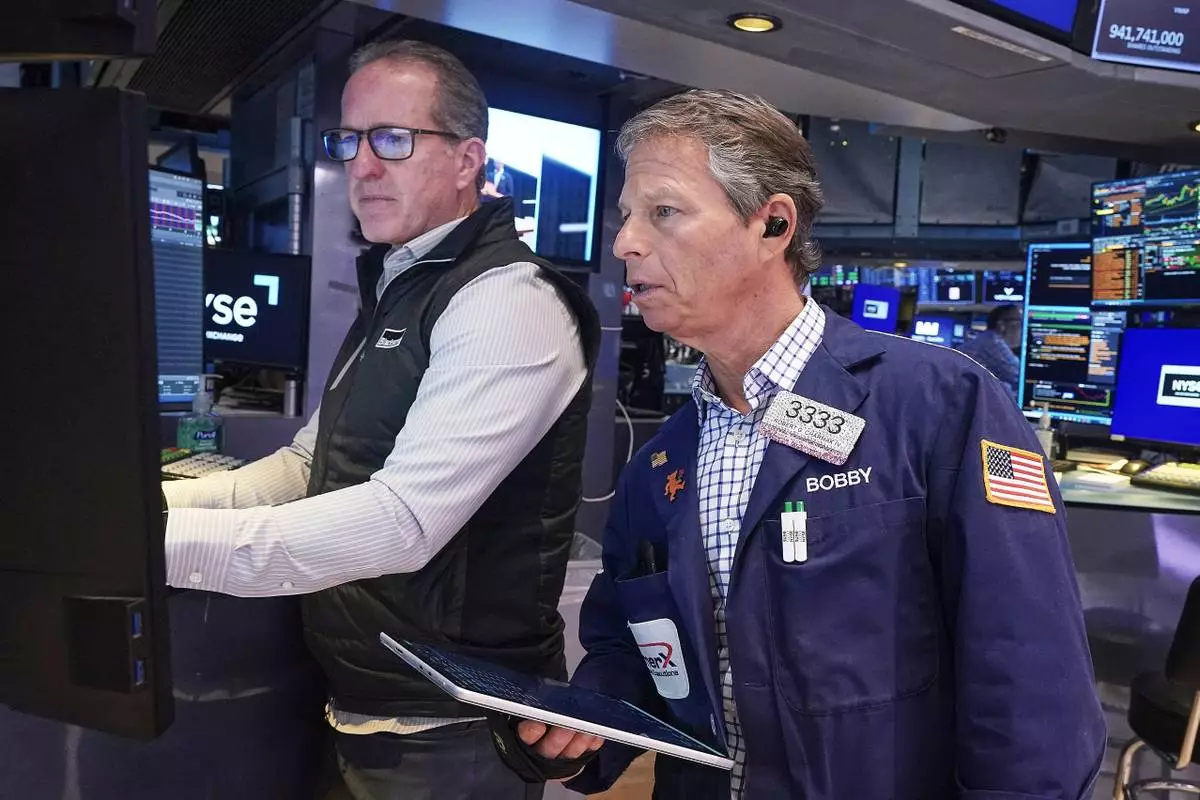
Specialist Glenn Carell, left, and trader Robert Charmak work on the floor of the New York Stock Exchange, Friday, May 22, 2026. (AP Photo/Richard Drew)
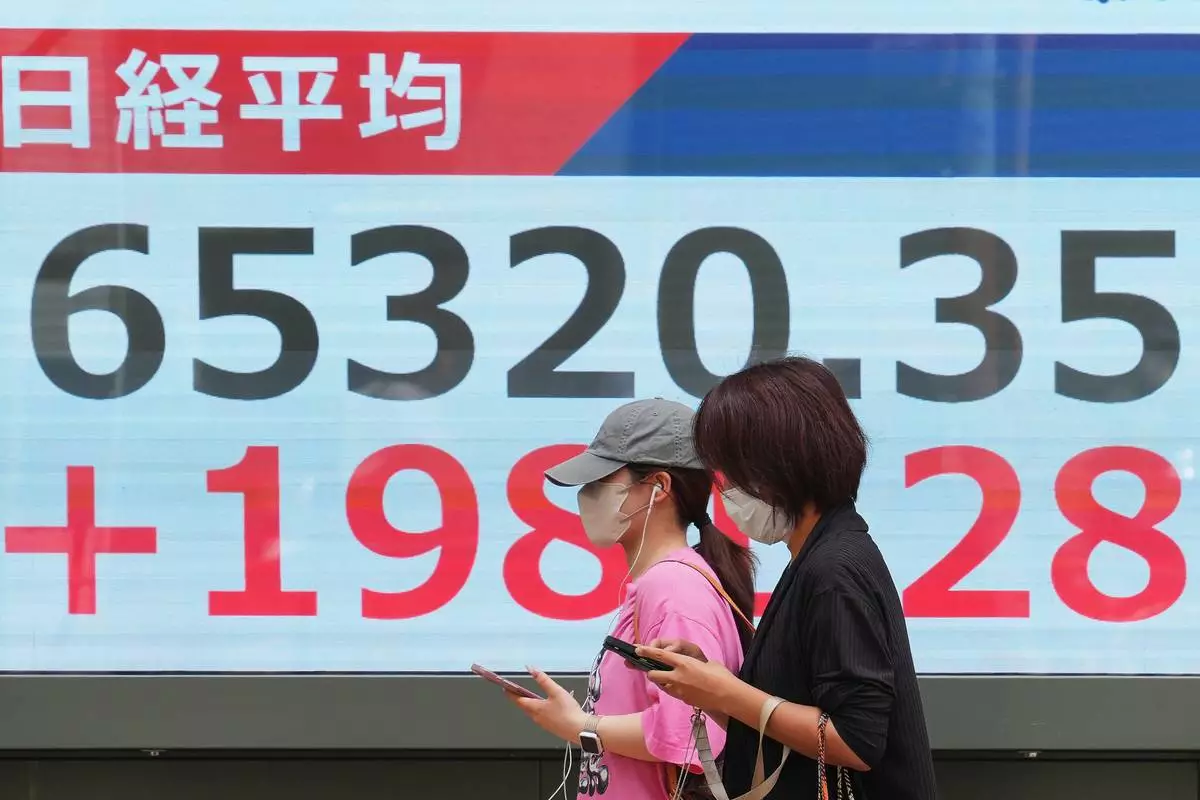
People walk in front of an electronic stock board showing Japan's Nikkei index at a securities firm Monday, May 25, 2026, in Tokyo. (AP Photo/Eugene Hoshiko)
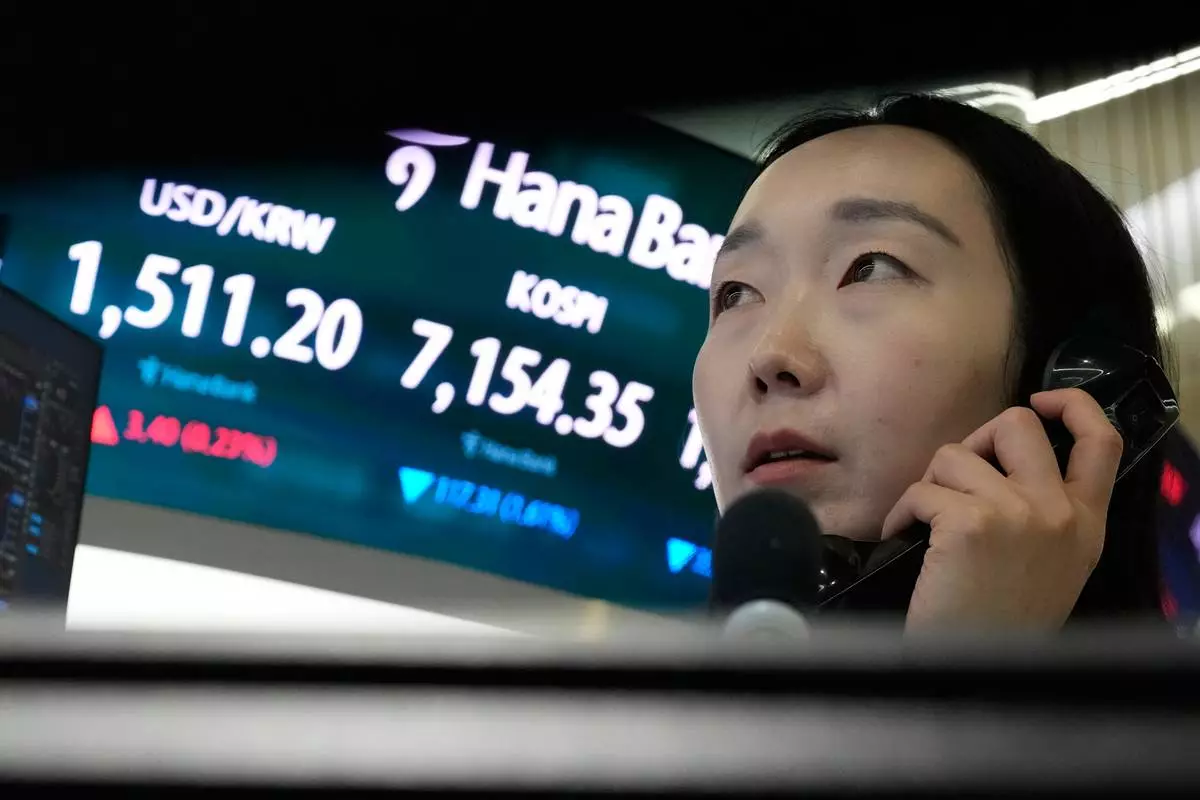
A currency trader talks on the phone near a screen showing the Korea Composite Stock Price Index (KOSPI) and the foreign exchange rate between U.S. dollar and South Korean won, left, at the foreign exchange dealing room of the Hana Bank headquarters in Seoul, South Korea, Wednesday, May 20, 2026. (AP Photo/Ahn Young-joon)
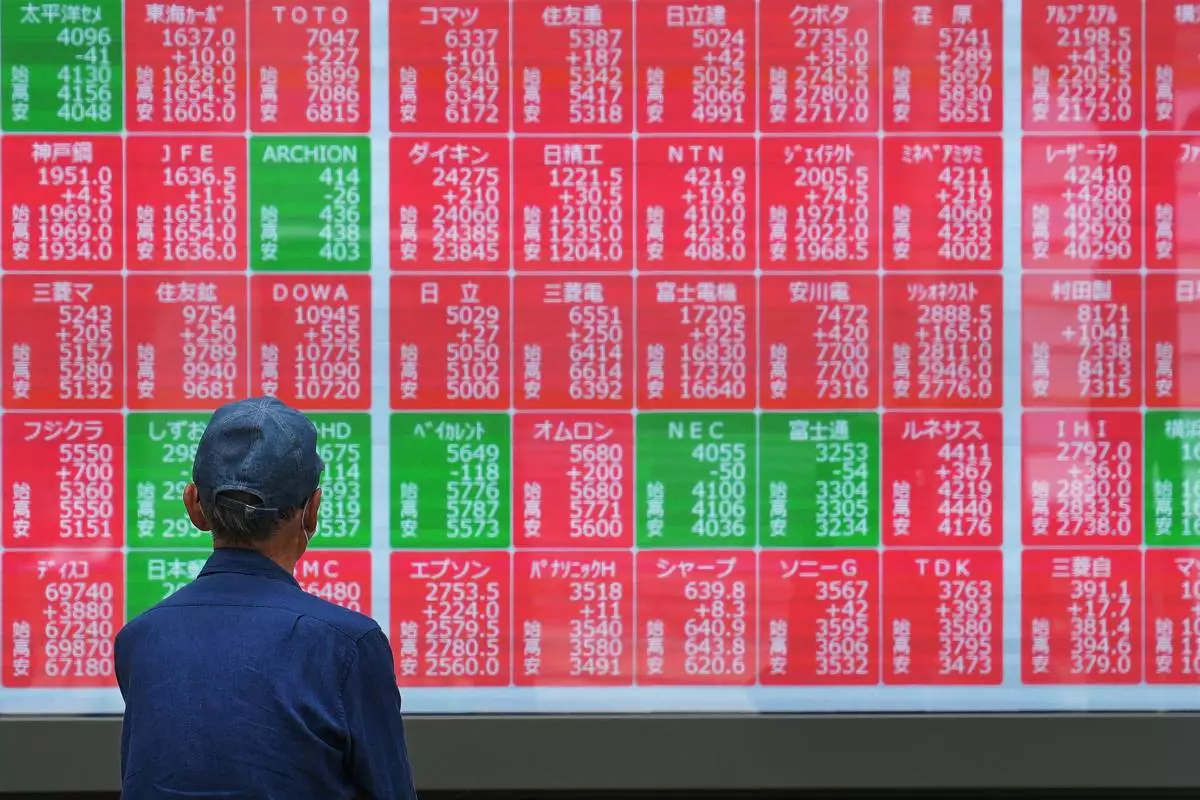
A person looks at an electronic stock board showing Japan's Nikkei index at a securities firm Monday, May 25, 2026, in Tokyo. (AP Photo/Eugene Hoshiko)
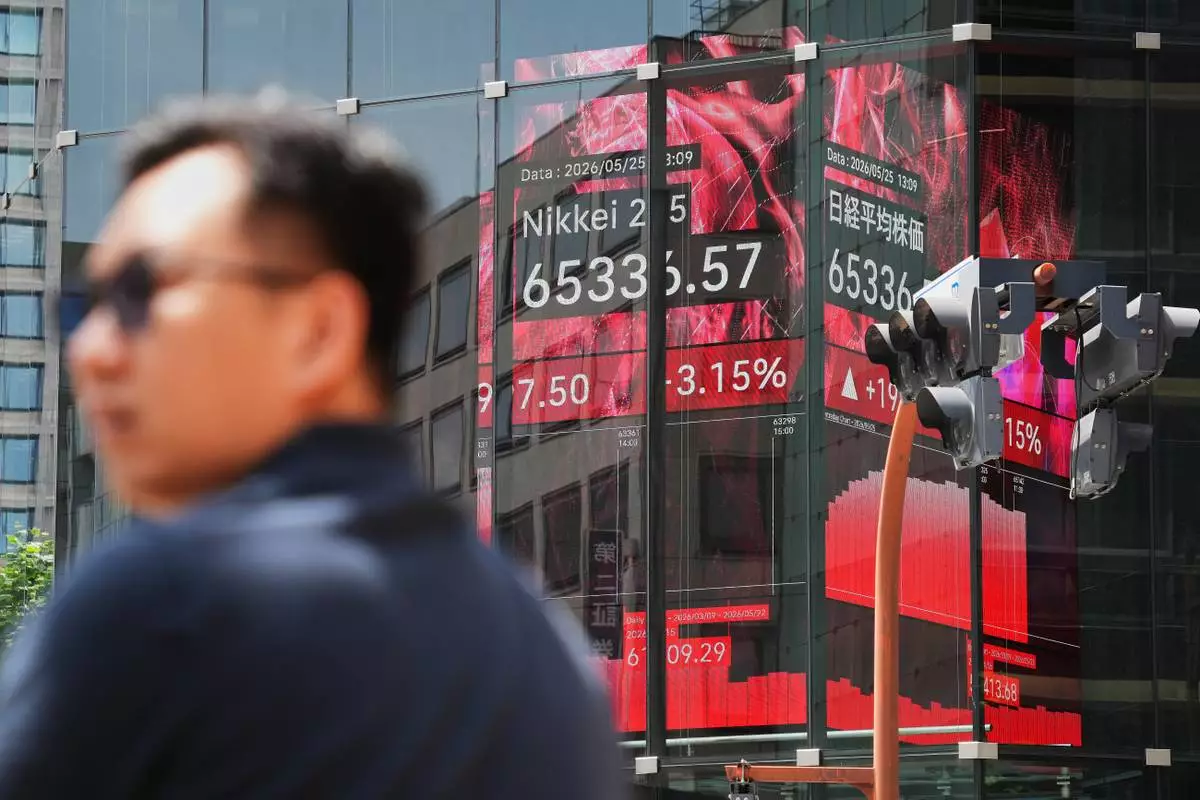
A person stands in front of an electronic stock board showing Japan's Nikkei index, seen through the glass wall of an office building Monday, May 25, 2026, in Tokyo. (AP Photo/Eugene Hoshiko)