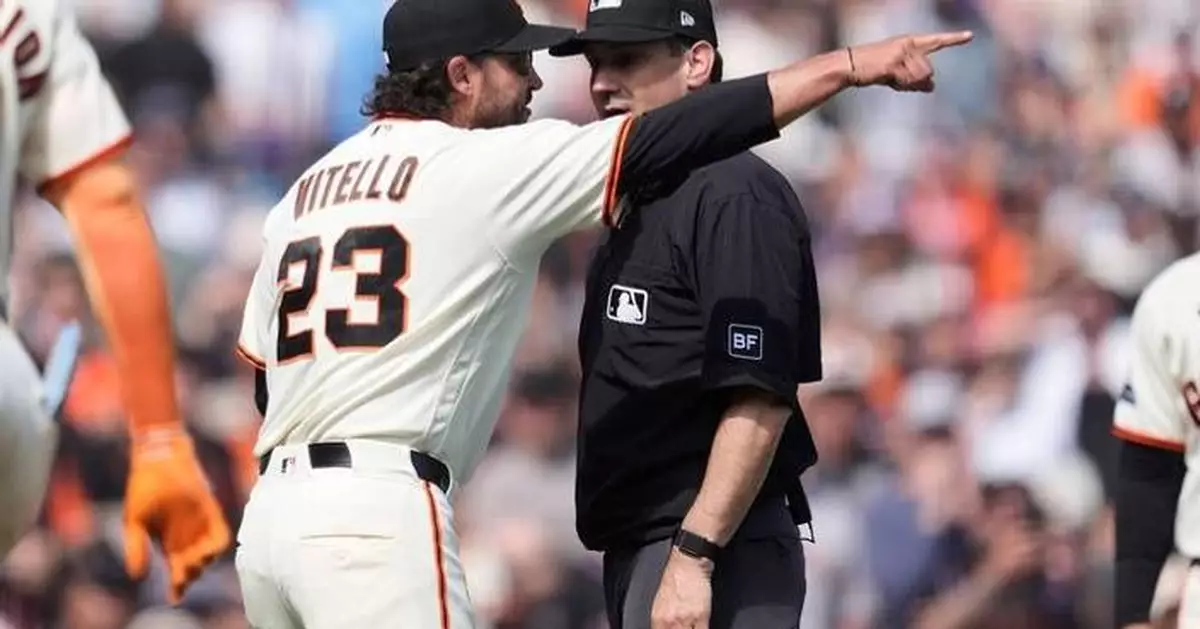
SAN FRANCISCO (AP) — Lately, Tony Vitello has been apologizing to his own family for how San Francisco is playing, and when they have a chance to go out for dinner everybody is used to his mind still being on baseball and little else.
There's been a lot of thinking to do given the new Giants manager's frustrating 3-7 start in his jump from college coach to the major leagues.
Vitello had a little extra time following Sunday afternoon's game with a night contest the next day to ponder everything that went wrong in San Francisco's third straight defeat, when he was ejected for the first time in his career for arguing in the seventh after Jerar Encarnación was ruled out for running inside the designated lane on his way to first base.
Yes, he constantly dissects the various decisions he makes and is determined to figure this out.
“At 3-7 and how yesterday went, I didn't think yesterday was the proper time for me to go gallivanting around San Francisco, so, yeah, I was in my condo the whole night,” Vitello said. “Whether I'm there or sitting with family I apologize to them, ‘Find something better to watch if you’re watching this.' We're at dinner, I am thinking about this more than that. So, yeah, yesterday sitting at home you finish on a day game and you have a night game, you've got a lot of time to go over that stuff. You replay it all.”
Before the start of a new series Monday against the Philadelphia Phillies, Vitello and Matt Chapman connected to discuss the third baseman getting caught stealing after his leadoff single in the ninth inning of a 5-2 loss to the Mets that gave New York a weekend sweep.
Vitello knows those kinds of mistakes would be more magnified later in the season, and said the Giants are “trying” so hard to win "it's probably something that everybody's been a little guilty of, of not going about it the way they would if they were thinking clearly but when you're trying to win games as hard as possible sometimes it actually contradicts what your end goal is.”
Coming into Monday's game, the Giants had been outscored by 25 runs over their initial 10 contests — the worst mark through 10 games for the franchise since it was minus-49 in 1896. And the club's 3-7 record was tied for its second-worst through 10 games since moving to San Francisco in 1958 — the Giants began 2-8 in 1983.
Chapman, for one, hopes a few things will go the Giants' way so they can grab some much-needed momentum to climb their way up in the powerful NL West after falling to the bottom of the standings, and he is thankful the struggles are happening now when there is plenty of time left. San Francisco has missed the playoffs the past four years.
“Whatever it is, I think it's more of an accumulation of maybe some frustrating things happening because we're right there and we're not able to get the job done,” Chapman said. “... It sucks when it looks like it's sloppy baseball and we're making some sloppy mistakes that kind of shot us in the foot last year and was one of the reasons why we probably weren't able to finish as strong. But I don't think it's going to be something that's going to be the story of our season by any means.”
After his ejection, Vitello offered a long explanation to what had upset him. The former University of Tennessee coach regularly shares stories from his experiences in the college ranks.
“I’m sure he got it exactly technically right,” Vitello said postgame Sunday. “It’s just a play I’ve got a lot of history for. A little frustrated about something else that occurred in the game. … Got a ton of history with that play. Lost a game to Lipscomb on that play, lost the game to (Oklahoma State coach) Frank Anderson and a Big 12 championship on that play. The difference between the two that I’m talking about, and I can talk about others, is the runner in Frank’s instance — and I’ve called his team cheaters — completely interfered with the throwing lane for the pitcher. So again, umpires are held accountable by what the rules are, and they enforce those rules."
Several of his players and coaches have said dating back to spring training how much they appreciate the passion, energy and approach Vitello takes.
From Day 1, Vitello acknowledged he would be learning on the fly from the dugout's top step and there would be plenty of ups and downs.
“Listen, Tony's great, I like Tony, he's cool,” said center fielder Harrison Bader, who began the series batting .118 (4 for 34) with a home run and determined to get on track. “At the major league level, a little different in terms of the fans and the speed but he won at a really high level in the SEC. It's the same game, so he's familiar to winning and what it looks like to help players win and what that feeling looks like and how to maintain it. So he's in the right spot.”
AP MLB: https://apnews.com/mlb
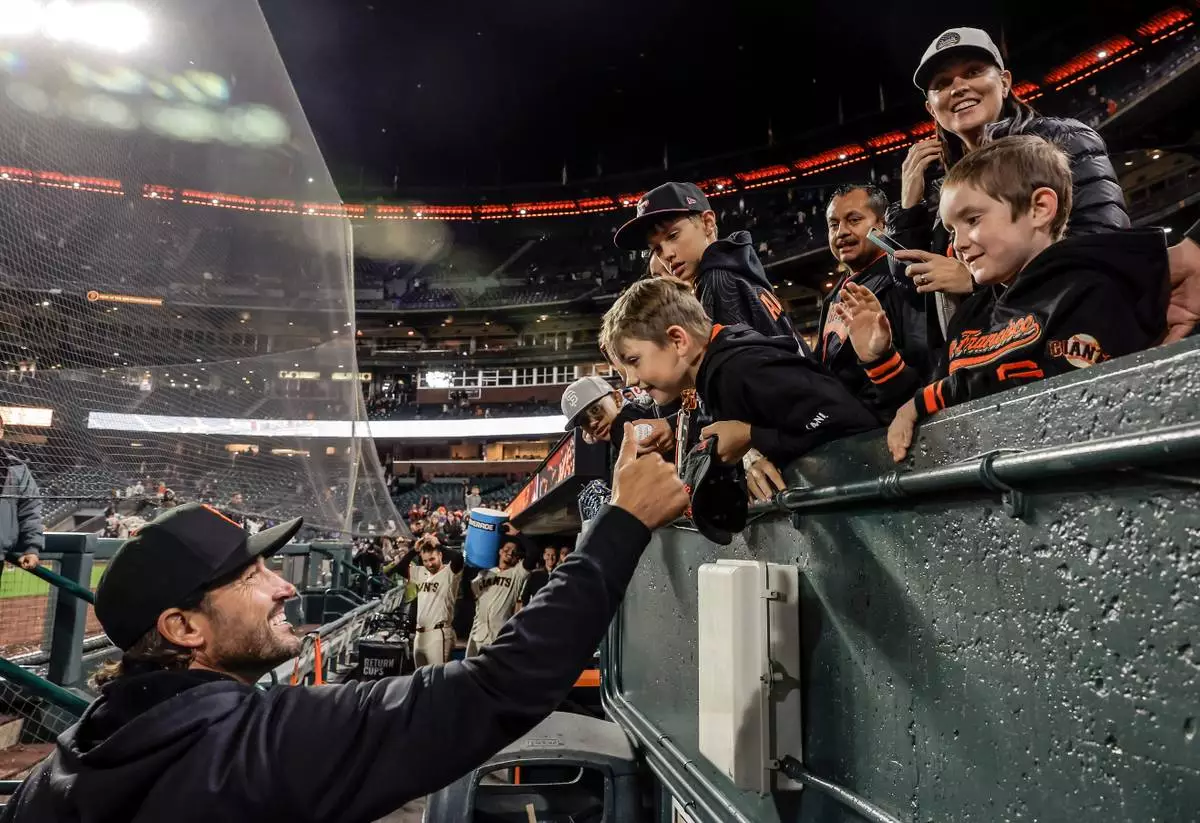
San Francisco Giants Manager Tony Vitello signs autographs after the Giants defeated the New York Mets for his first win at home as the manager during a baseball game at Oracle Park in San Francisco, Thursday, April 2, 2026. (Carlos Avila Gonzalez/San Francisco Chronicle via AP)
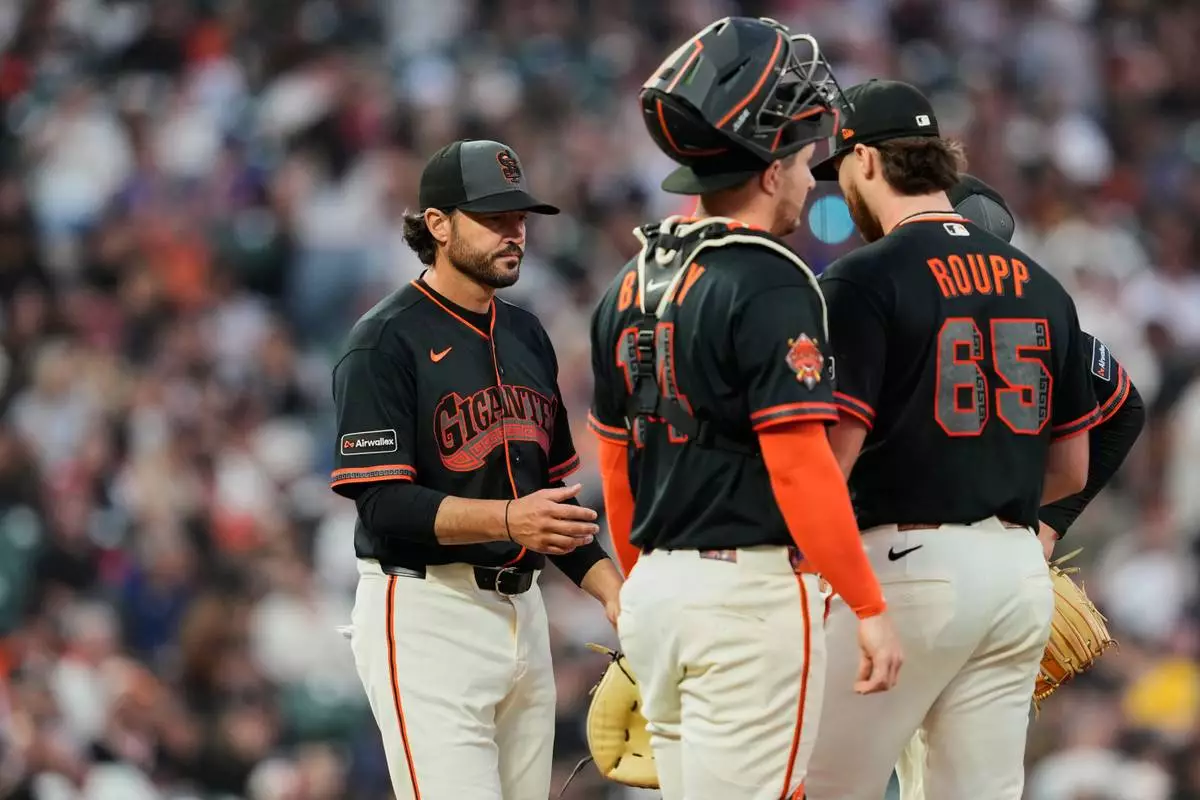
San Francisco Giants pitcher Landen Roupp (65) hands the ball over to manager Tony Vitello, left, as he exits during the fifth inning of a baseball game against the New York Mets, Saturday, April 4, 2026, in San Francisco. (AP Photo/Godofredo A. Vásquez)
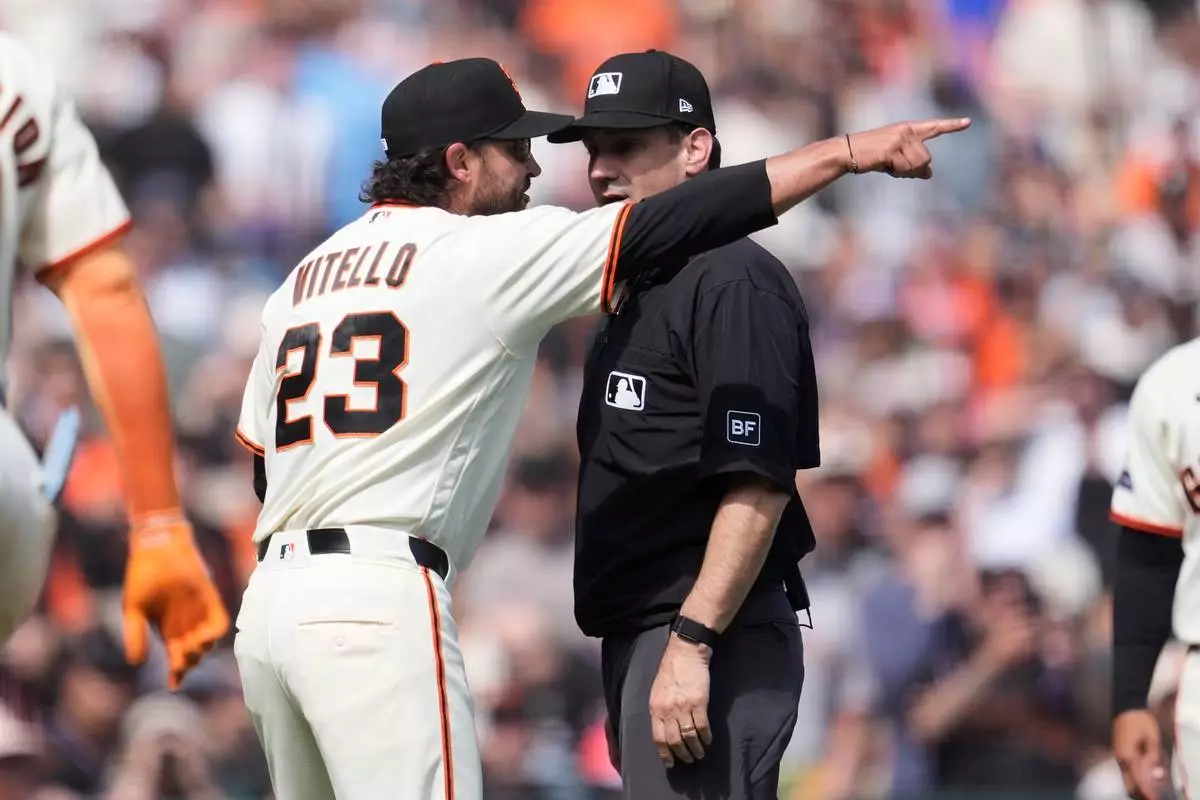
San Francisco Giants manager Tony Vitello (23) gestures after being ejected by umpire David Rackley, right, during the seventh inning of a baseball game between the Giants and the New York Mets in San Francisco, Sunday, April 5, 2026. (AP Photo/Jeff Chiu)
HOUSTON (AP) — With the moon now filling their windows, the Artemis II astronauts sailed into their lunar flyby Monday, taking in magnificent views of the far side never before witnessed while setting a new distance record for humanity.
The six-hour flyby was the highlight of NASA’s first return to the moon since the Apollo era with three Americans and one Canadian — a step toward landing boot prints near the moon’s south pole in just two years.
First came a prize — and bragging rights — for Artemis II.
Less than an hour before kicking off the fly-around and intense lunar observations, the four astronauts surpassed the distance record of 248,655 miles (400,171 kilometers) set by Apollo 13 in April 1970.
They kept going, hurtling ever farther from Earth. Before it was over, Artemis II beat the old record by 4,101 miles (6,600 kilometers).
“It is blowing my mind what you can see with the naked eye from the moon right now. It is just unbelievable,” Canadian astronaut Jeremy Hansen radioed ahead of the flyby. He challenged “this generation and the next to make sure this record is not long-lived.”
Moments after breaking Apollo 13’s record, the astronauts asked permission to name two fresh lunar craters already observed. They proposed Integrity, their capsule’s name, and Carroll in honor of commander Reid Wiseman’s wife who died of cancer in 2020. Wiseman wept as Hansen put in the request to Mission Control, and all four astronauts embraced in tears.
“Such a majestic view out here,” Wiseman radioed once he regained his composure and started picture-taking. The astronauts called down that they managed to capture the moon and Earth in the same shot, and provided a running commentary to scientists back in Houston on what they were seeing.
Some peaks were so bright, pilot Victor Glover noted, that they looked as though they were covered in snow. Besides photographing the scenes with high-powered Nikon cameras, the astronauts also pulled out their iPhones for some impromptu shots.
Wiseman, Glover, Hansen and Christina Koch started the momentous day with the voice of Apollo 13 commander Jim Lovell, who recorded a wake-up message just two months before his death last August. “Welcome to my old neighborhood,” said Lovell, who also flew on Apollo 8, humanity’s first lunar visit. “It’s a historic day and I know how busy you’ll be, but don’t forget to enjoy the view.”
They took up with them the Apollo 8 silk patch that accompanied Lovell to the moon, and showed it off as the crucial flyby approached. “It’s just a real honor to have that on board with us,” said Wiseman. “Let’s go have a great day.”
Artemis II is using the same maneuver that Apollo 13 did after its “Houston, we’ve had a problem” oxygen tank explosion wiped out any hope of a moon landing.
Known as a free-return lunar trajectory, this no-stopping-to-land route takes advantage of Earth and the moon’s gravity, reducing the need for fuel. It’s a celestial figure-eight that put the astronauts on course for home, once they emerged from behind the moon Monday evening.
The Artemis II crew ducked behind the moon more than halfway through the lunar flyby. During the 40-minute communication blackout, they made their closest approach to the moon — 4,067 miles (6,545 kilometers) — and reached their maximum distance of 252,756 miles (406,771 kilometers) from Earth. At that point, they were homeward bound, taking four days to get back with a Pacific splashdown concluding their test flight on Friday.
Their estimated speed at closest approach to the moon: 3,139 mph (5,052 kph).
Wiseman and his crew spent years studying lunar geography to prepare for the big event, adding solar eclipses to their repertoire during the past few weeks.
Topping their science target list: Orientale Basin, a sprawling impact basin with three concentric rings, the outermost of which stretches nearly 600 miles (950 kilometers) across.
Other sightseeing goals: the Apollo 12 and 14 landing sites from 1969 and 1971, respectively, as well as fringes of the south polar region, the preferred locale for future touchdowns. Farther afield, Mercury, Venus, Mars and Saturn — not to mention Earth — were visible. A total solar eclipse graced the sky as they rounded the moon and aimed for home, their lunar observations and photography still ongoing.
Their moon mentor, NASA geologist Kelsey Young, expects thousands of pictures.
Artemis II is NASA’s first astronaut moonshot since Apollo 17 in 1972. It sets the stage for next year’s Artemis III, which will see another Orion crew practice docking with lunar landers in orbit around Earth. The culminating moon landing by two astronauts near the moon’s south pole will follow on Artemis IV in 2028.
While Artemis II may be taking Apollo 13’s path, it’s most reminiscent of Apollo 8 and humanity’s first lunar visitors who orbited the moon on Christmas Eve 1968 and read from the Book of Genesis.
Glover said flying to the moon during Christianity’s Holy Week brought home for him “the beauty of creation.” Earth is an oasis amid “a whole bunch of nothing, this thing we call the universe” where humanity exists as one, he observed over the weekend.
“This is an opportunity for us to remember where we are, who we are, and that we are the same thing and that we’ve got to get through this together,” Glover said, clasping hands with his crewmates.
The Associated Press Health and Science Department receives support from the Howard Hughes Medical Institute’s Department of Science Education and the Robert Wood Johnson Foundation. The AP is solely responsible for all content.
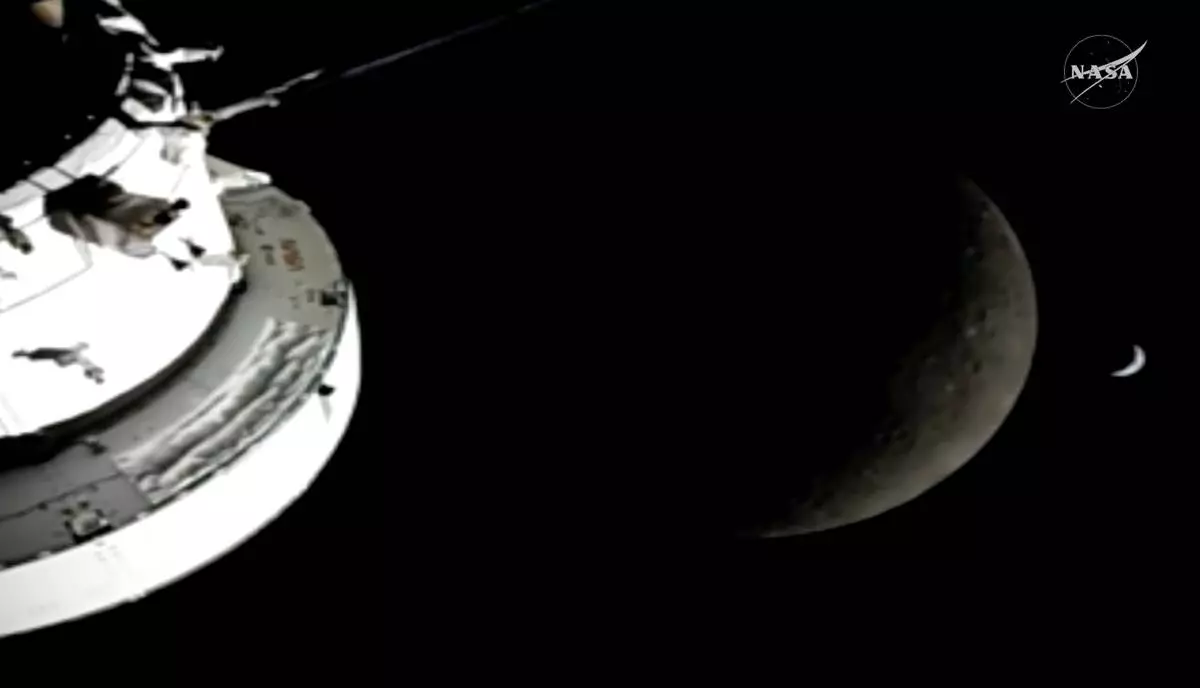
In this image from video provided by NASA, the Orion Spacecraft, the Earth and the Moon are seen from a camera as the Artemis II crew and spacecraft travel farther into Space, Monday, April 6, 2026. (NASA via AP)
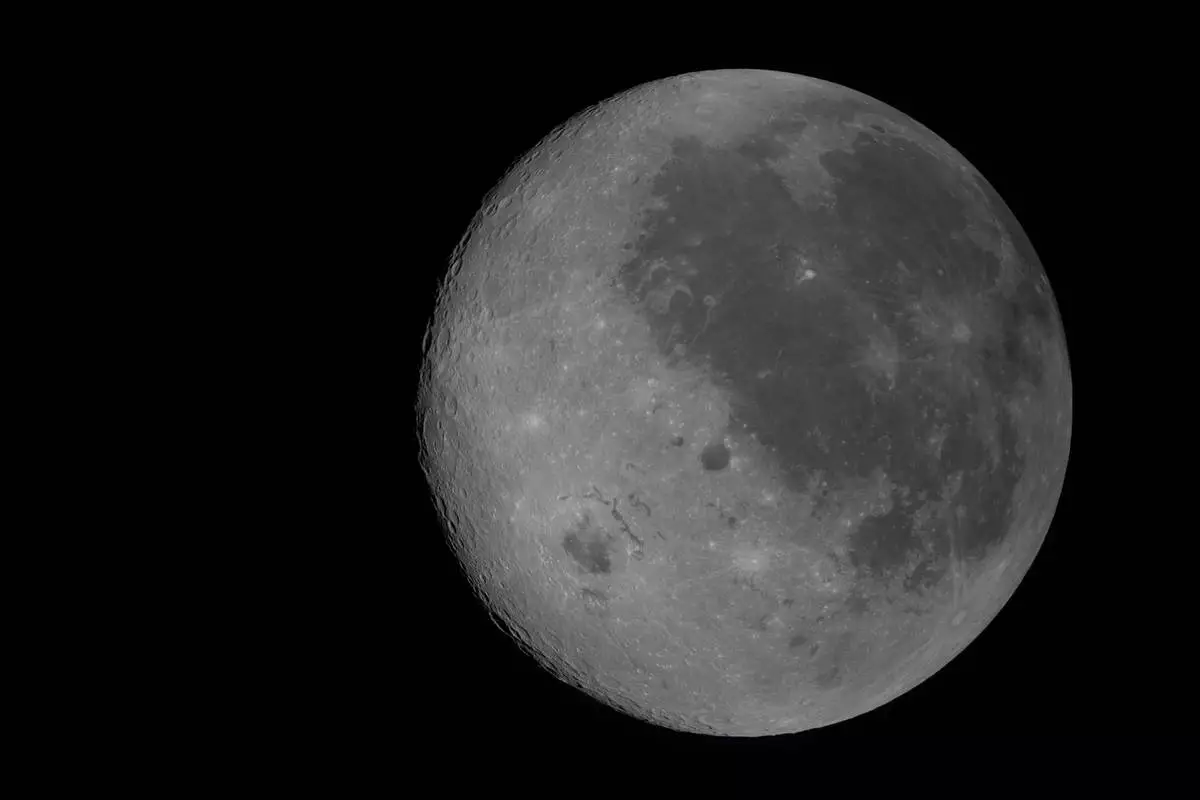
This image provided by NASA Monday, April 6, 2026, shows the Moon, the near side (the hemisphere we see from Earth) visible at the right side of the disk, identifiable by the dark splotches. At lower left is Orientale basin, a nearly 600-mile-wide crater that straddles the Moon’s near and far sides. Everything to the left of the crater is the far side. (NASA via AP)
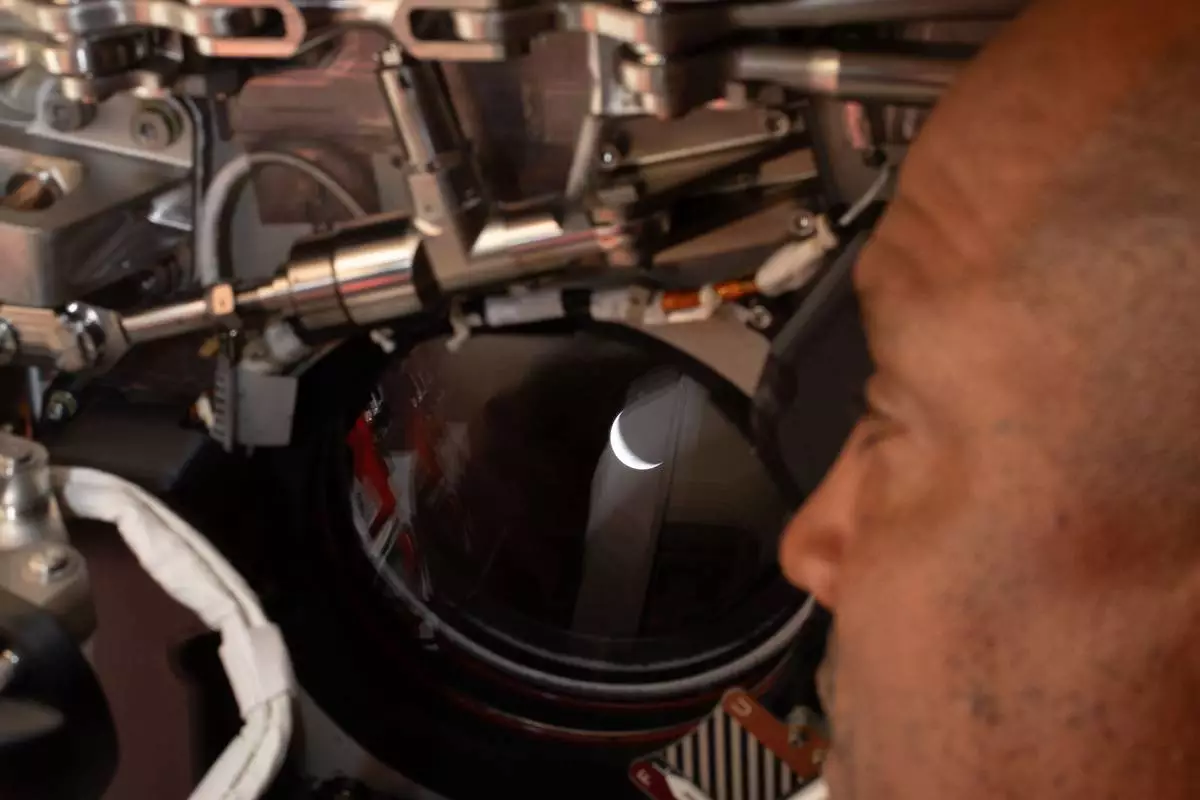
In this photo provided by NASA, Artemis II pilot and NASA astronaut Victor Glover peers out one of the Orion spacecraft's windows looking back at Earth ahead of the crew's lunar flyby, Monday, April 6, 2026.(NASA via AP)
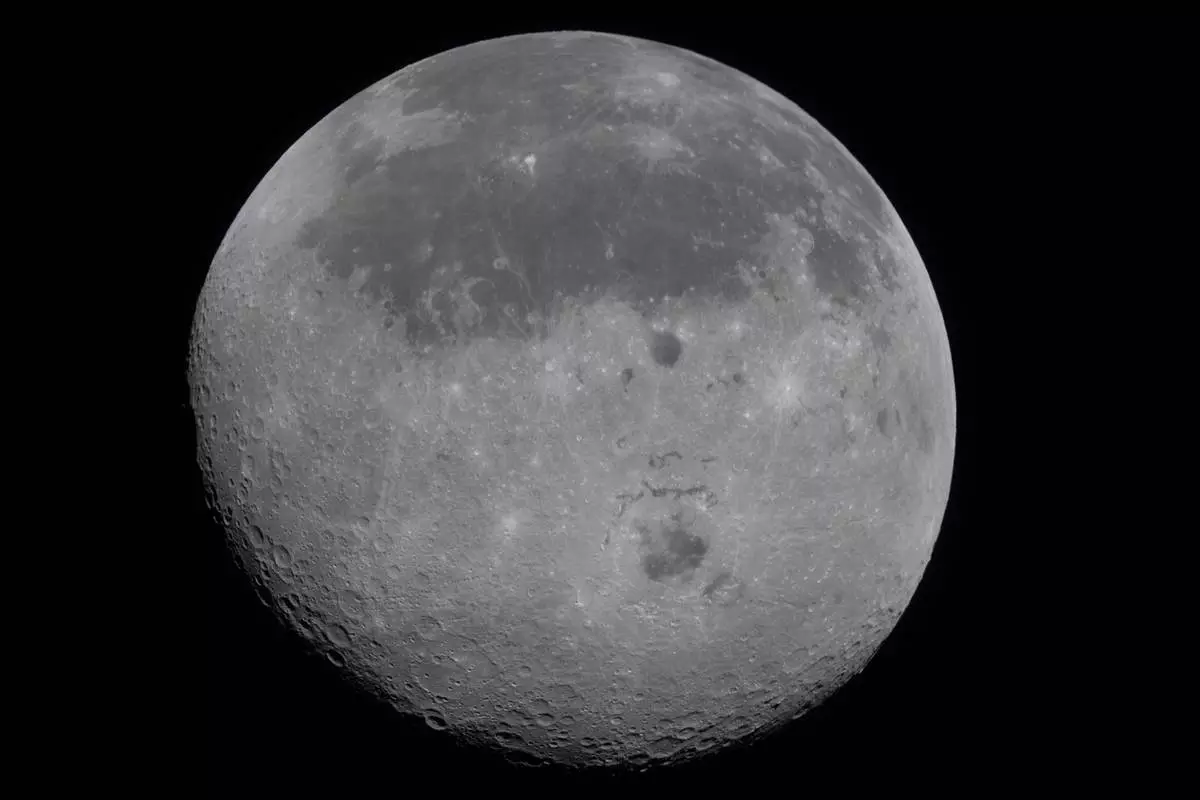
This image provided by NASA Monday, April 6, 2026, shows the Moon, the near side (the hemisphere we see from Earth) visible at the top half of the disk, identifiable by the dark splotches. At the lower center is Orientale basin, a nearly 600-mile-wide crater that straddles the Moon’s near and far sides. Everything below the crater is the far side. (NASA via AP)
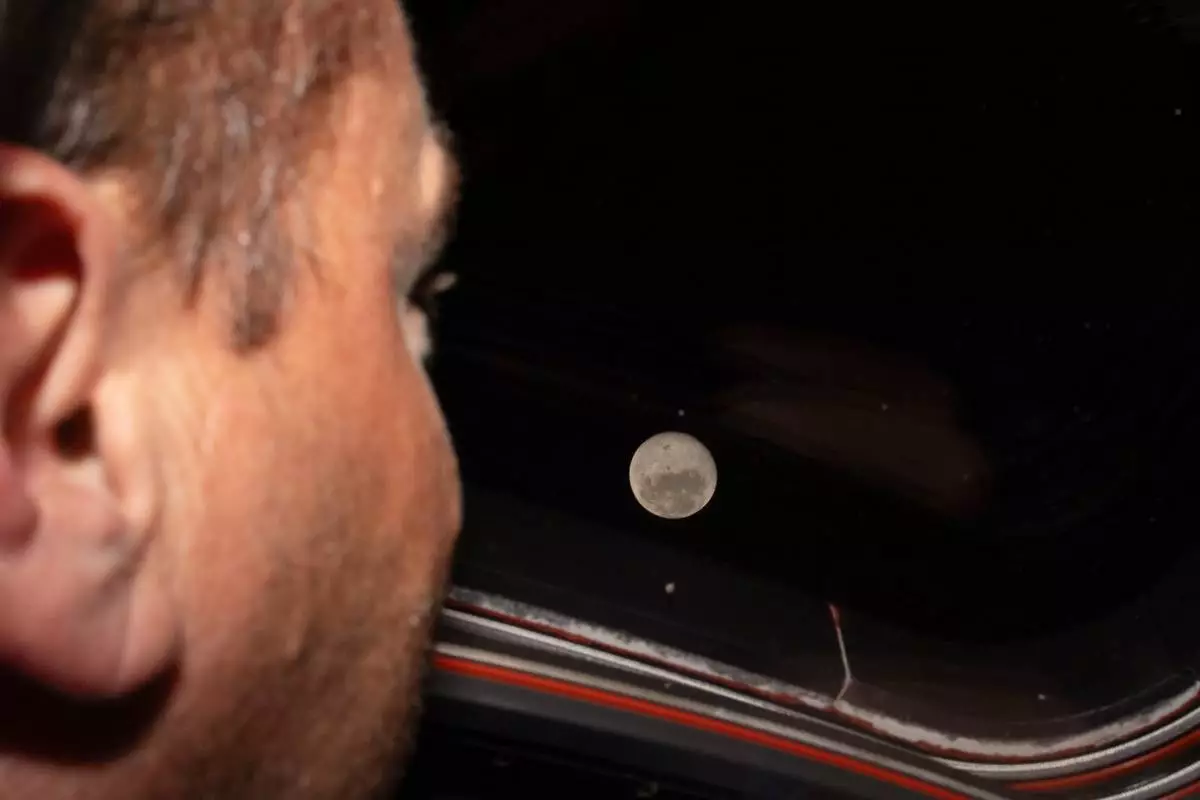
In this photo provided by NASA, Artemis II commander and NASA astronaut Reid Wiseman looks out one of the Orion spacecraft's main cabin windows at the Moon ahead of the crew's lunar flyby on April 6, 2026. (NASA via AP)
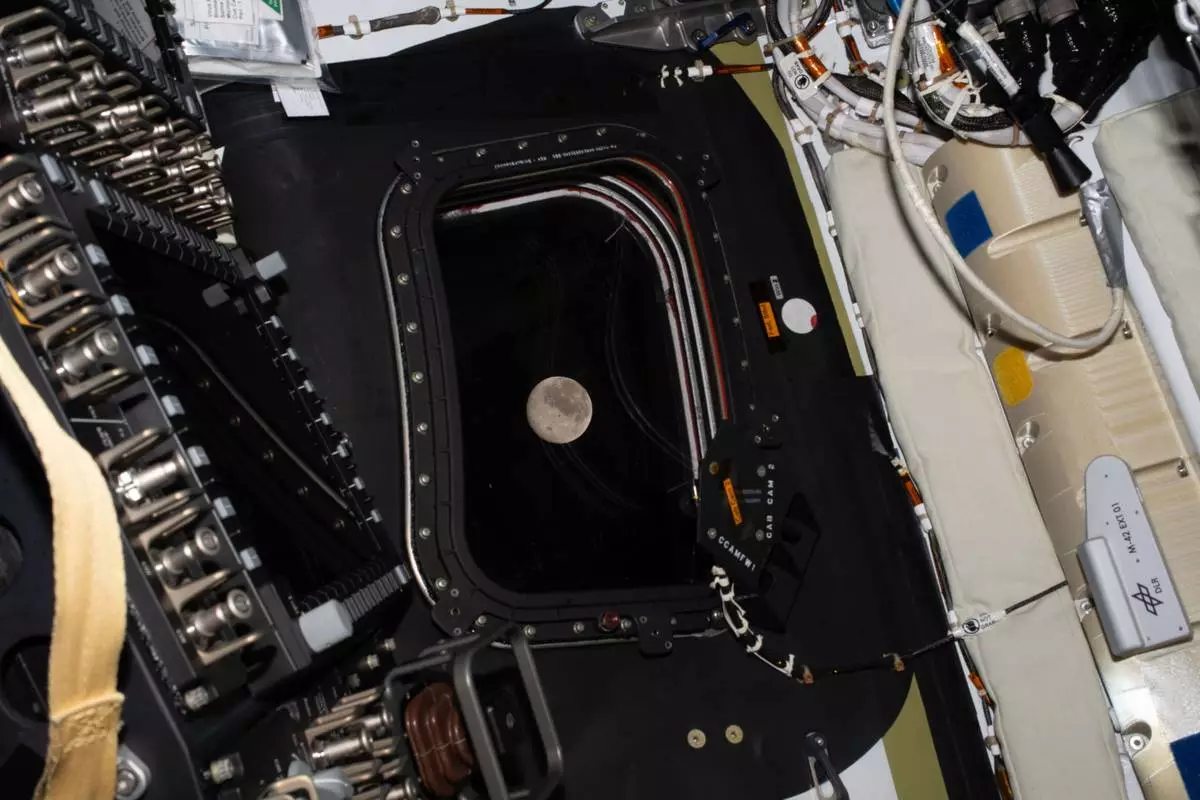
In this photo provided by NASA, the Moon is seen in the window of the Orion spacecraft, photo taken by The Artemis II crew, at the end of day 5 of journey to the Moon on Monday, April 6, 2026. (NASA via AP)

In this photo provided by NASA, astronaut Christina Koch is pictured on the fourth day of the mission, prepping for lunar flyby activities after completing aerobic exercise on the flywheel device, during the The Artemis II crew's journey to the Moon, Saturday, April 4, 2026. (NASA via AP)
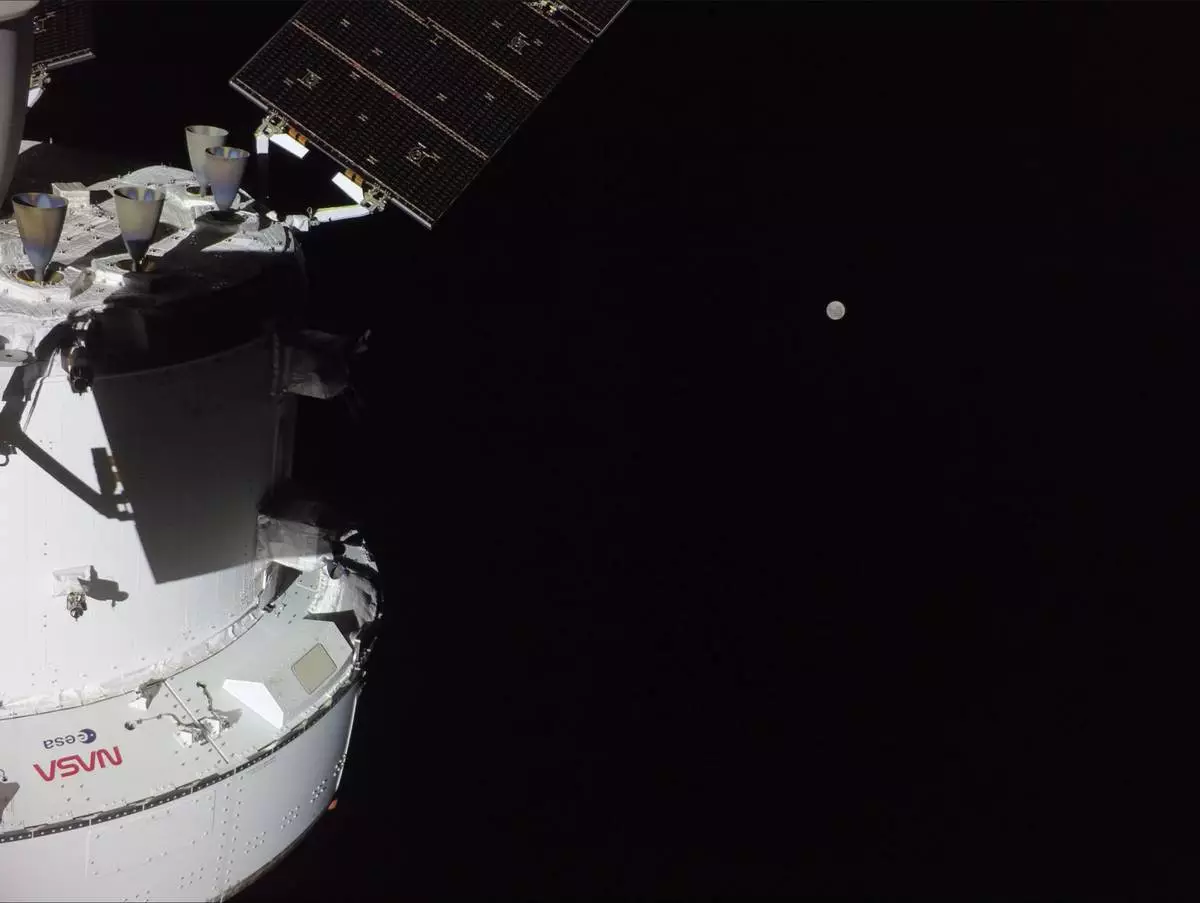
This image provided by NASA shows the Orion spacecraft with the Moon in the distance, as captured by a camera on the tip of one of its solar array wings, April 3, 2026. (NASA via AP)
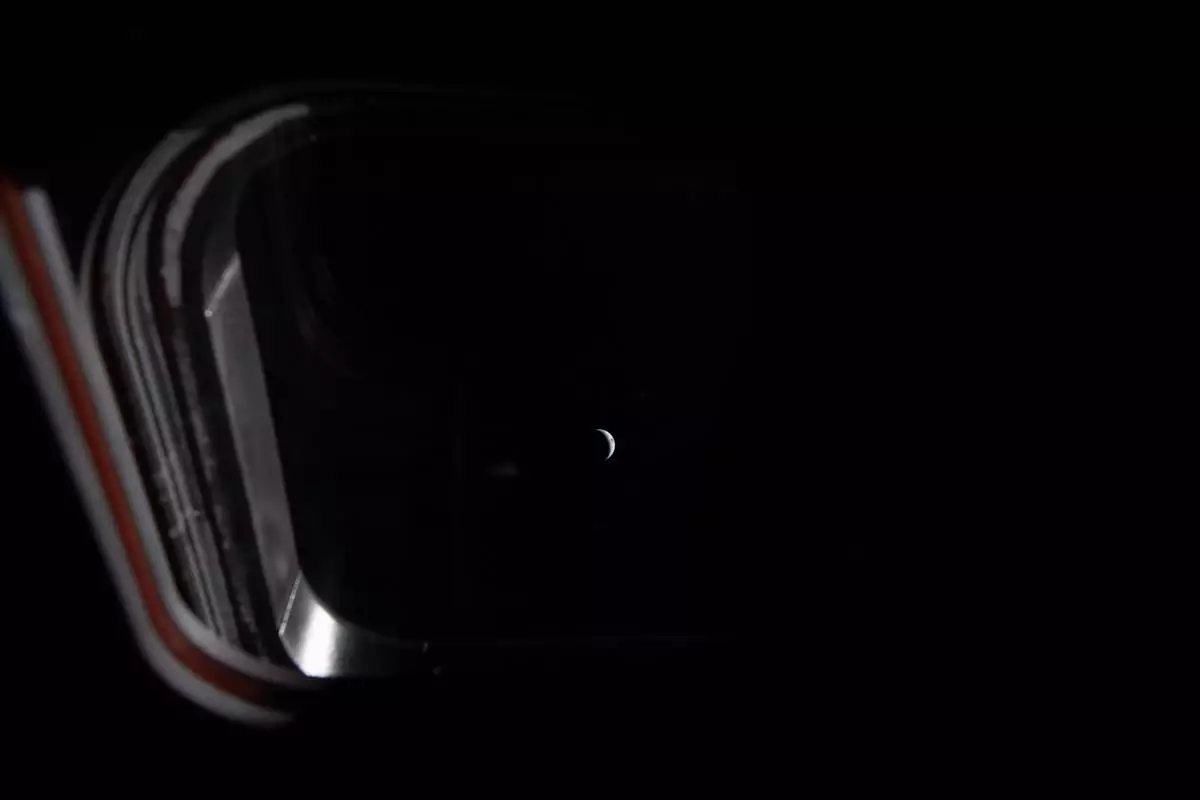
This photo provided by NASA shows the Earth seen from a window on the Orion spacecraft Integrity during the Artemis II mission, Sunday, April 5, 2026. (NASA via AP)
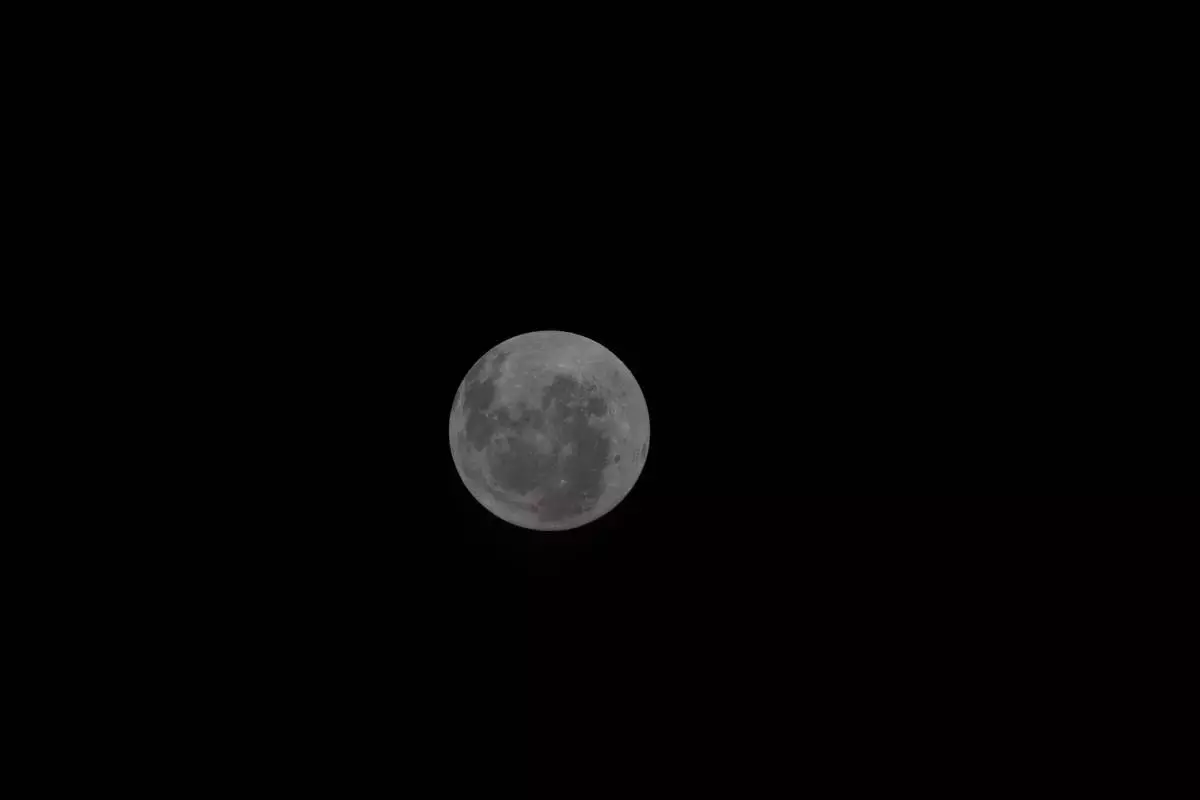
This image provided by NASA shows the moon from a photo taken by The Artemis II crew on day 4 of their journey to the Moon on Saturday, April 4, 2026. (NASA via AP)
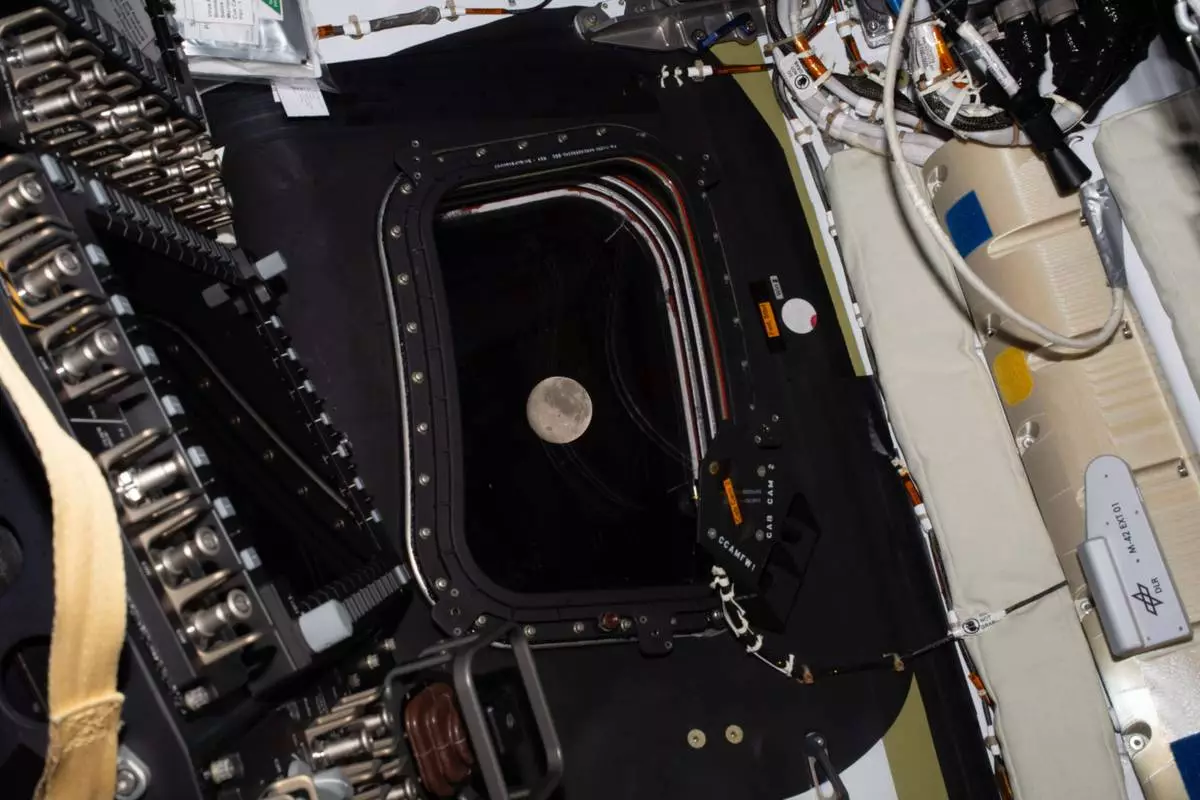
This image provided by NASA on Monday, April 6, 2026, shows a view of the moon taken by the Artemis II crew before going to sleep on flight day 5. (NASA via AP)