ARLINGTON, Texas (AP) — Two-time Cy Young Award winner Jacob deGrom said he felt something in his right knee before Monday night’s start, which limited him to five innings and 78 pitches in the Texas Rangers’ 2-1 win over the Seattle Mariners.
The Rangers said deGrom had mild right knee discomfort, and manager Skip Schumaker said the staff didn’t want to push the 37-year-old too hard. DeGrom allowed only one hit — a first-inning home run to 2025 homer champ Cal Raleigh on a 12-pitch at-bat — walked one and struck out six.
“I feel OK,” deGrom said, “It’s a little tender, but I think we’ll be OK.
“I gave up the homer to Cal, and I was like: ‘I’d better lock this in. This might be a pretty close game.’”
DeGrom went 4 2/3 innings while throwing 78 pitches last Tuesday at Baltimore in an 8-5 Rangers win in his only previous outing this season. He was scheduled to make his first start March 28 at Philadelphia but was scratched with neck stiffness.
DeGrom made his 250th career start, ranking 18th among active pitchers. He was voted the AL Comeback Player of the Year last season, going 12-8 with a 2.97 ERA, after returning late in the 2024 season from a second major reconstruction surgery on his pitching elbow.
“Obviously any day you’re able to put this uniform on you’ve got to be thankful for that,” he said.
AP MLB: https://apnews.com/mlb

Texas Rangers starting pitcher Jacob deGrom waits for a new ball as Seattle Mariners' Cal Raleigh, right, runs the bases after hitting a solo home run off him during the first inning of a baseball game Monday, April 6, 2026, in Arlington, Texas. (AP Photo/Julio Cortez)

Texas Rangers starting pitcher Jacob deGrom throws a pitch to the Seattle Mariners during the fourth inning of a baseball game Monday, April 6, 2026, in Arlington, Texas. (AP Photo/Julio Cortez)

Texas Rangers starting pitcher Jacob deGrom reacts after pitching to the Seattle Mariners during the fourth inning of a baseball game Monday, April 6, 2026, in Arlington, Texas. (AP Photo/Julio Cortez)
TEHRAN, Iran (AP) — Iranian officials on Tuesday urged young people to form human chains to protect power plants, as U.S. President Donald Trump warned that a “whole civilization will die tonight” if Tehran does not meet his latest deadline for the Islamic Republic to agree to a deal that includes reopening the crucial Strait of Hormuz.
Meanwhile, airstrikes hit two bridges and a train station in Iran, and the U.S. struck military targets on the Iranian oil hub of Kharg Island. The attack marked the second time the island was hit by American forces.
Trump has extended previous deadlines but suggested the one set for 8 p.m. in Washington was final, and the rhetoric on both sides reached a fever pitch, leaving Iranians on edge. Trump threatened to destroy all of Iran’s power plants and bridges if Tehran does not allow traffic to fully resume in the strait, through which a fifth of the world’s oil transits in peacetime. Iran’s president said 14 million people, including himself, have volunteered to fight.
It was not clear if the latest airstrikes were linked to Trump’s threat to attack bridges. At least two of the targets were connected to Iran’s rail network.
Israeli Prime Minister Benjamin Netanyahu said Israeli warplanes struck bridges and railways in Iran. In a statement released by his office, Netanyahu claimed Iran’s paramilitary Revolutionary Guard was using them to transport materials to make weapons. Israel had earlier issued a Farsi-language warning telling Iranians to avoid trains throughout the day.
Iran, meanwhile, fired on Israel and Saudi Arabia, prompting the temporary closure of a major bridge.
While Iran cannot match the sophistication of U.S. and Israeli weaponry or their dominance in the air, its chokehold on the strait is roiling the world economy and raising the pressure on Trump both at home and abroad to find a way out of the standoff.
Officials involved in diplomatic efforts said talks were ongoing, but Iran has rejected the latest American proposal, and it was unclear if a deal would come in time to head off Trump’s threatened attacks. World leaders and experts warned that strikes as destructive as Trump threatened could constitute a war crime.
“A whole civilization will die tonight, never to be brought back again,” if a deal isn’t reached, Trump said in a post Tuesday morning, while keeping open the possibility of an off-ramp, saying that “maybe something revolutionarily wonderful can happen.”
Earlier, Iranian official Alireza Rahimi issued a video message calling on “all young people, athletes, artists, students and university students and their professors” to form human chains around power plants.
Iranians have formed human chains in the past around nuclear sites at times of heightened tensions with the West. Some images of people surrounding power plants were posted by local Iranian media Tuesday, though it was unclear how widespread the practice was or if the photos were simply brief shows of government-encouraged defiance.
President Masoud Pezeshkian posted on X that 14 million Iranians had answered campaigns urging people to volunteer to fight — and said he would join them — while a Revolutionary Guard general urged parents to send their children to man checkpoints.
The Guard, meanwhile, warned that Iran would “deprive the U.S. and its allies of the region’s oil and gas for years” and expand its attacks across the Gulf region if Trump carries out his threat.
In Tehran, the mood was bleak. A young teacher said that many opponents of Iran's Islamic system had hoped Trump's attacks would quickly topple it.
Now, as the war drags on, she fears U.S. and Israeli strikes will spread chaos. “If we don’t have the internet, and if we don’t have electricity, water, and gas, we’re really going back to the Stone Age, as Trump said,” she said told The Associated Press, speaking anonymously for her safety.
French Foreign Minister Jean-Noël Barrot joined a growing chorus of international voices and calling for restraint, saying attacks targeting civilian and energy infrastructure “are barred by the rules of war, international law.”
“They would without doubt trigger a new phase of escalation, of reprisals, that would drag the region and the world economy into a vicious circle,” the minister said on France Info television.
U.N. Secretary-General António Guterres also warned the U.S. that attacks on civilian infrastructure are banned under international law, according to his spokesperson.
Such cases are notoriously difficult to prosecute, and Trump told reporters he’s “not at all” concerned about committing war crimes.
A series of intense airstrikes pounded Tehran, including in residential neighborhoods. Such strikes in the past have targeted Iranian government and security officials.
Israel’s military said it attacked an Iranian petrochemical site in Shiraz, the second day in a row it hit such a facility.
Iranian officials later said that a railway bridge, a train station and a highway bridge were among targets hit in airstrikes.
Details of the U.S. strikes on Kharg Island were not immediately available. A U.S. official, who spoke on condition of anonymity to discuss sensitive military operations, described the strikes overnight as hitting targets previously struck and not directed at oil infrastructure.
Earlier in the war, American forces hit air defenses, a radar site, an airport and a hovercraft base there, according to satellite analysis by the Institute for the Study of War and the American Enterprise Institute’s Critical Threats Project.
Saudi Arabia said it intercepted seven ballistic missiles and four drones launched by Iran.
Saudi Arabia temporarily closed the King Fahd Causeway, the only road connection between Bahrain, home to the U.S. Navy’s 5th Fleet, and the Arabian Peninsula. Iran also fired on Israel.
More than 1,900 people have been killed in Iran since the war began, but the government has not updated the toll for days.
In Lebanon, where Israel is fighting Iran-backed Hezbollah militants, more than 1,500 people have been killed. and more than 1 million people have been displaced. Eleven Israeli soldiers have died there.
In Gulf Arab states and the occupied West Bank, more than two dozen people have died, while 23 have been reported dead in Israel, and 13 U.S. service members have been killed.
Iran choked off shipping through the strait after Israel and the U.S. attacked on Feb. 28, starting the war. That stranglehold and Iran’s attacks on the energy infrastructure of its Gulf Arab neighbors have sent oil prices skyrocketing, raising the price of gasoline, food and other basics far beyond the Middle East.
In spot trading Tuesday, Brent crude, the international standard, was above $108 per barrel, up around 50% since the start of the war.
On Monday, Tehran rejected a 45-day ceasefire proposal and said it wants a permanent end to the war. But as Trump's deadline neared Tuesday, an official said indirect communications between the United States and Iran remained underway. The official said mediators from Pakistan, Egypt and Turkey “are racing against time” to reach a compromise before the deadline.
He said Iran has linked the reopening of the Strait of Hormuz to sanctions relief, and the U.S. was open to easing some sanctions, especially on Iran's oil sector, in part to stabilize the global oil market.
The official spoke on condition of anonymity to discuss ongoing diplomacy.
Gambrell reported from Dubai, United Arab Emirates. Corder reported from The Hague, Netherlands, and Magdy from Cairo. Associated Press writers David Rising in Bangkok, John Leicester in Paris, Rod McGuirk in Melbourne, Australia, Natalie Melzer in Jerusalem, and Seung Min Kim and Michelle Price in Washington contributed to this report.
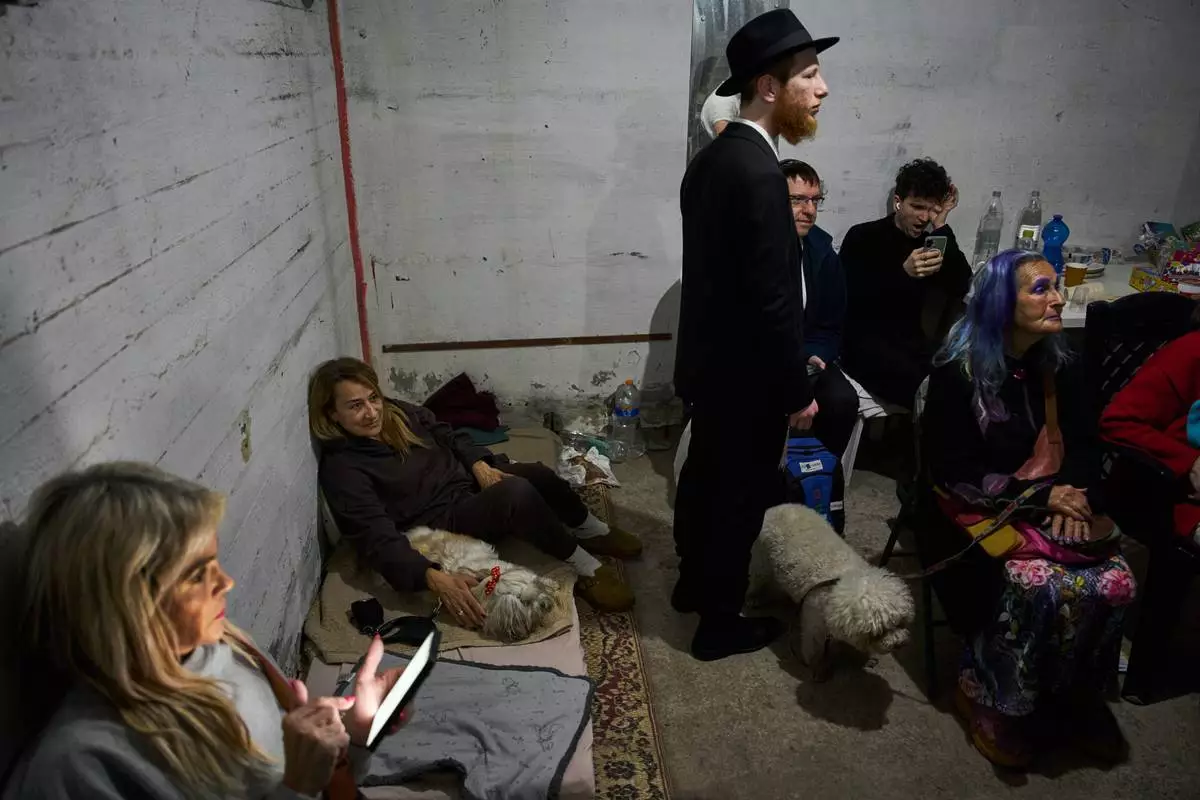
People take cover in a bomb shelter as air raid sirens warn of incoming Iranian missile strikes in Ramat Gan, Israel, Tuesday, April 7, 2026. (AP Photo/Oded Balilty)
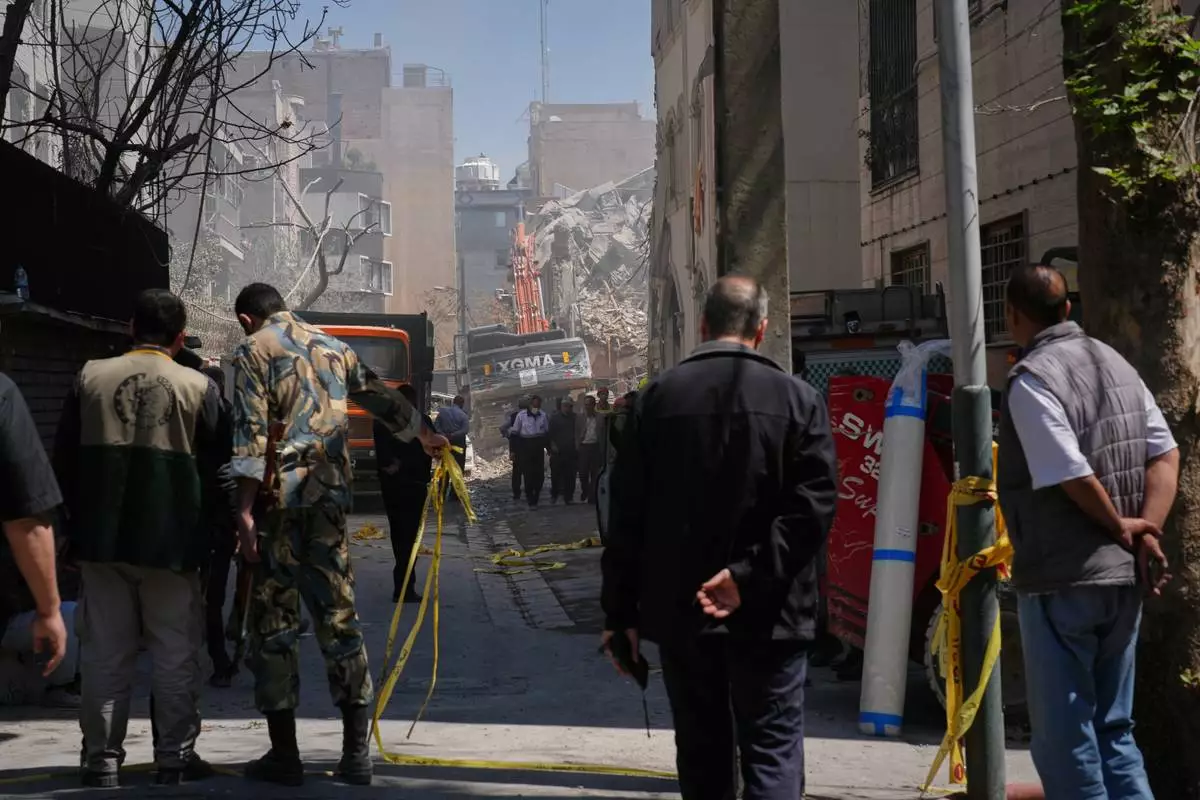
Bystanders watch from a distance as rescue teams and first responders work at the site of a strike that, according to a security official at the scene, destroyed half of the Khorasaniha Synagogue and nearby residential buildings in Tehran, Iran, Tuesday, April 7, 2026. (AP Photo/Francisco Seco)
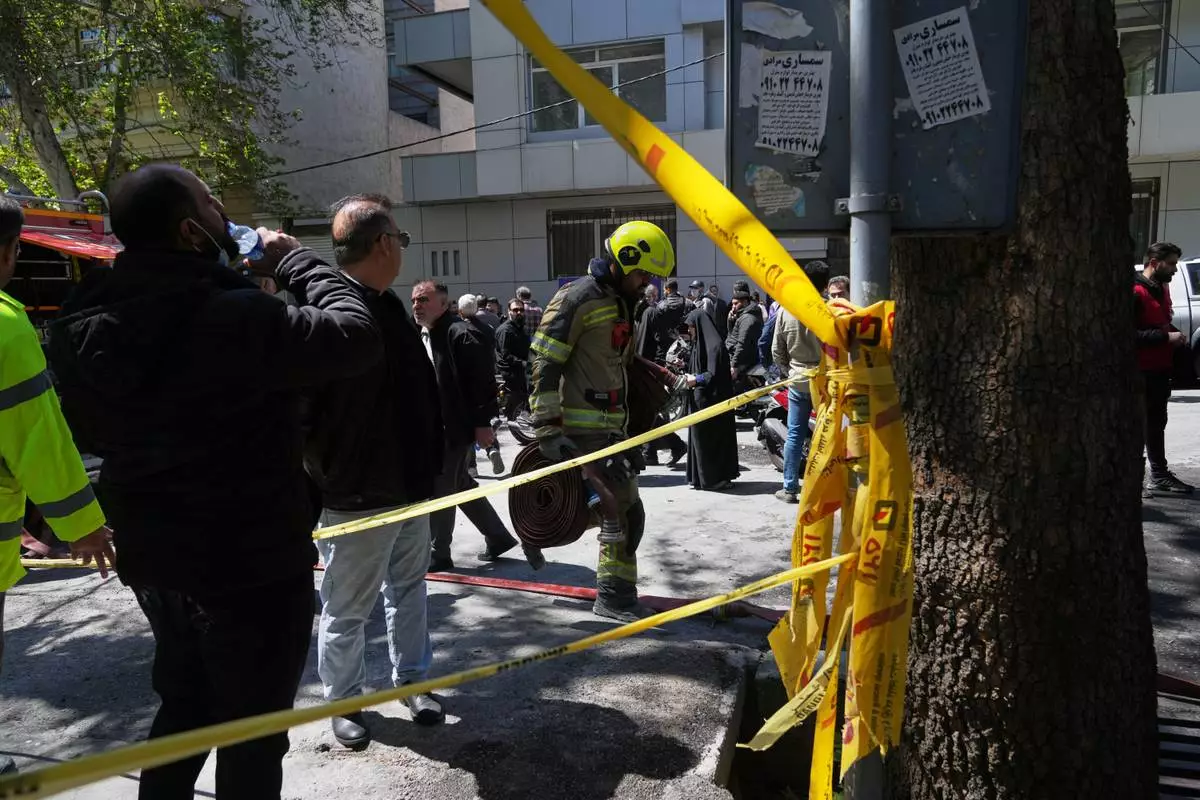
A first responder leaves the site of a strike that, according to a security official at the scene, destroyed half of the Khorasaniha Synagogue and nearby residential buildings in Tehran, Iran, Tuesday, April 7, 2026. (AP Photo/Francisco Seco)
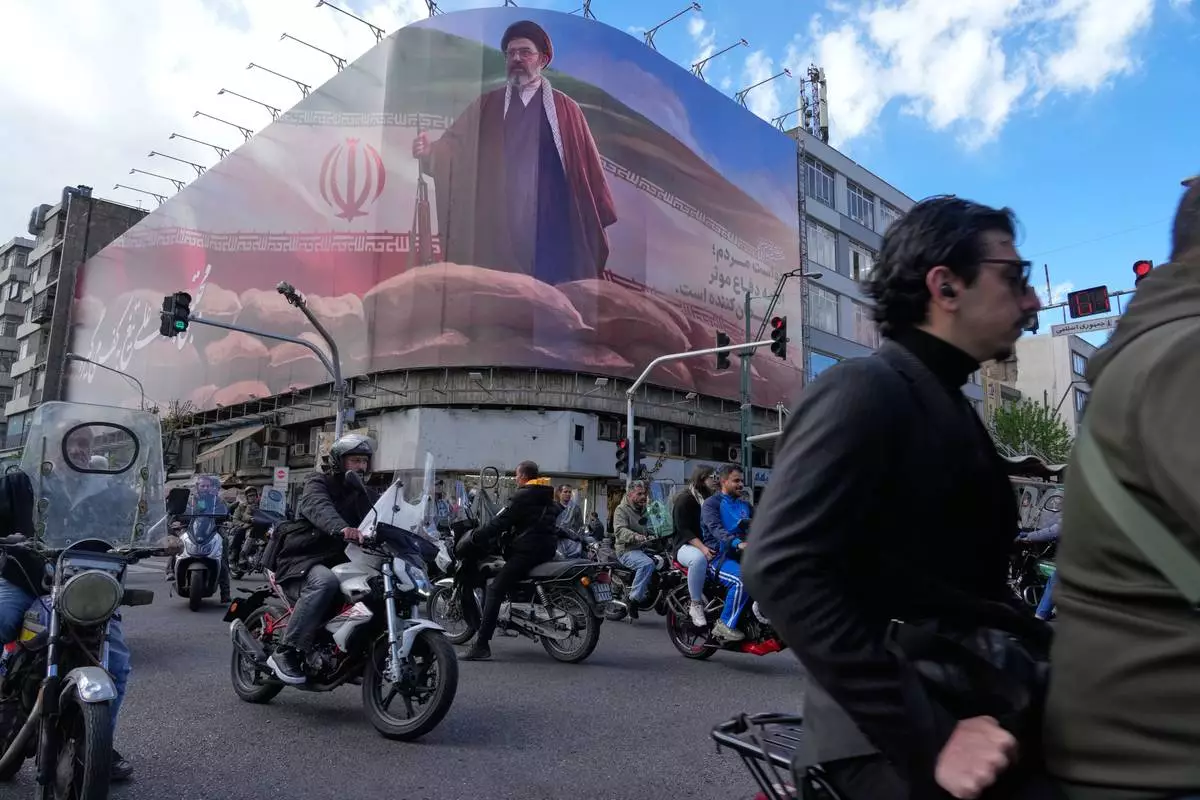
People drive their motorbikes past a billboard that shows a graphic depicting Iran's Supreme Leader Ayatollah Mojtaba Khamenei in downtown Tehran, Iran, Monday, April 6, 2026. (AP Photo/Vahid Salemi)
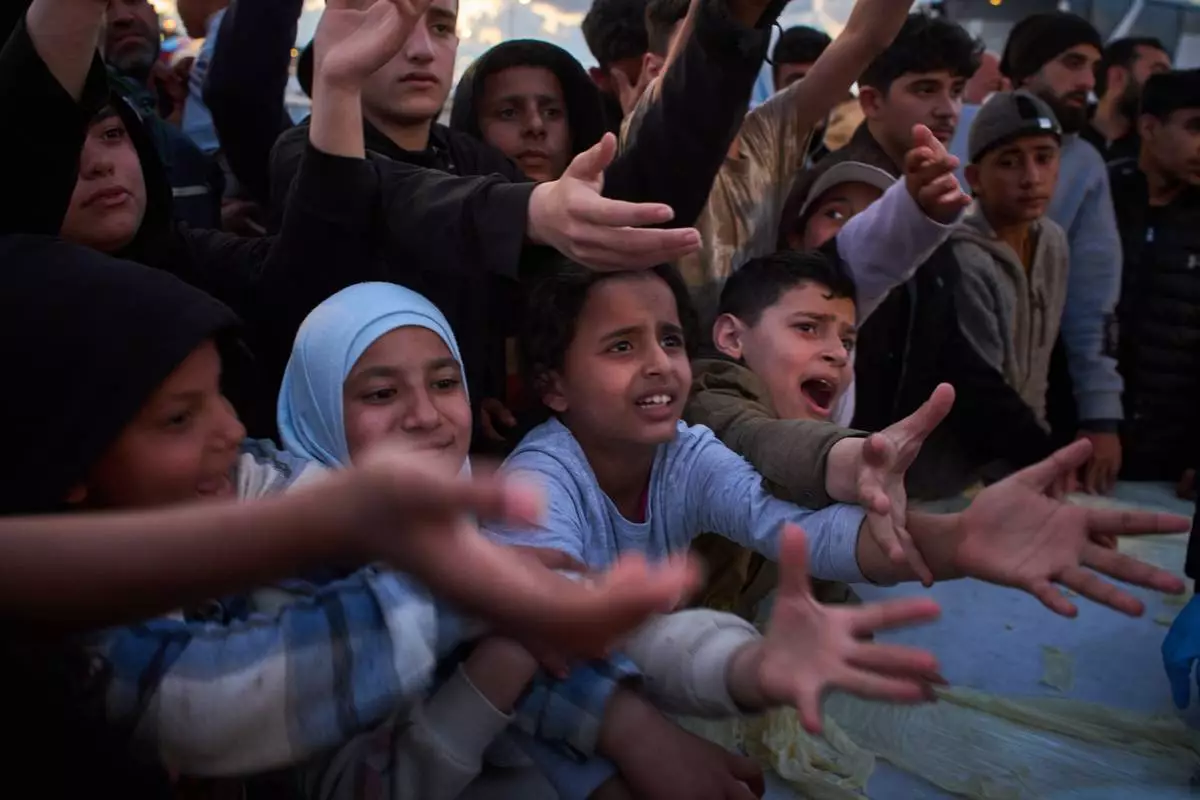
Displaced people wait to receive donated food beside the tents they use as shelters after fleeing Israeli bombardment in southern Lebanon, in Beirut, Lebanon, Monday, April 6, 2026. (AP Photo/Emilio Morenatti)
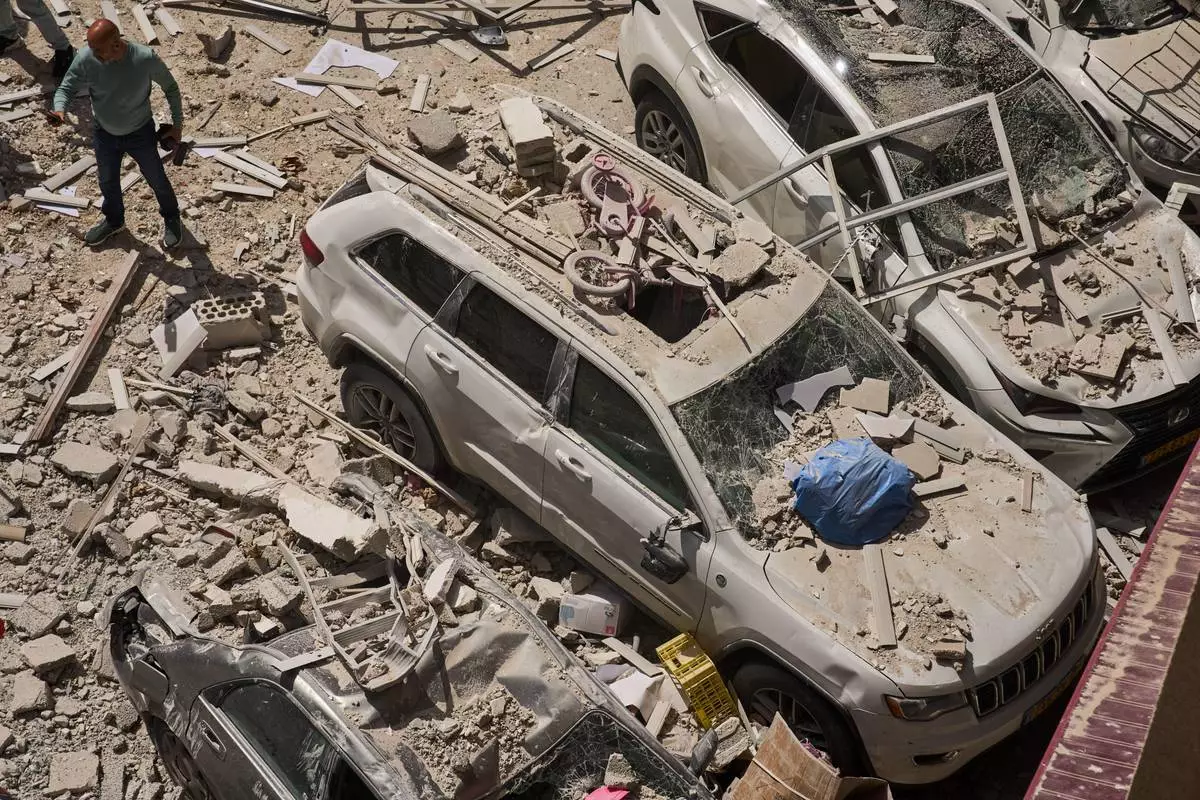
A man inspects the damage to cars and an apartment building struck by an Iranian missile in Ramat Gan, Israel, Monday, April 6, 2026. (AP Photo/Oded Balilty)